Operations Stories
They Blew Up a 326-Room Luxury Hotel. And Built Something With Fewer Rooms.

They Blew Up a 326-Room Luxury Hotel. And Built Something With Fewer Rooms.

Swire Properties imploded the 26-year-old Mandarin Oriental Miami on Sunday to replace it with a $1 billion development featuring just 121 hotel rooms... plus 228 residences priced up to $100 million each. The hotel business was never the point.

Available Analysis

I watched a guy tear down a perfectly good Holiday Inn once. Mid-90s, secondary market, the building was maybe 20 years old. Ownership group looked at the land value, looked at the room revenue, looked at the trajectory of both lines, and said "the dirt is worth more than the business." Everybody thought they were crazy. They weren't. They understood something most hotel operators never want to admit... sometimes the highest and best use of a hotel site isn't a hotel.

Sunday morning in Miami, Swire Properties turned a 326-room Mandarin Oriental into a pile of rubble in less than 20 seconds. Controlled implosion. The building opened in 2000. Twenty-six years old. By hotel lifecycle standards, that's middle age... not end of life. You don't blow up a 26-year-old luxury hotel on Brickell Key because the building is failing. You blow it up because the math changed.

And the math here tells you everything. The replacement project is $1 billion. Two towers. The hotel component drops from 326 keys to 121. Read that again. They're spending a billion dollars to build FEWER hotel rooms. The other tower? Sixty-six stories of branded residences, 228 units, $4.9 million to $100 million each. Fifty percent of the south tower was pre-sold by mid-2025. The hotel isn't the revenue engine anymore. It's the amenity package that justifies $100 million penthouses. The Mandarin Oriental flag isn't selling room nights... it's selling a lifestyle wrapper around real estate.

This is the luxury hotel model now, and if you're paying attention, you've been watching it evolve for a decade. The hotel becomes the brand anchor for a residential play where the real money lives. Think about what Swire's VP of construction reportedly said... rates at the old hotel weren't trending upward. A 326-key luxury hotel on one of Miami's most exclusive islands, and it couldn't push rate. So they didn't try harder. They changed the entire business model. The 121 remaining hotel rooms will exist to service the brand standard, maintain the flag, and provide the infrastructure (restaurants, spa, pool, concierge) that makes someone write a $50 million check for a condo. That's not a hotel development. That's a branded residential development with a hotel component.

Here's what keeps me up about this trend. Those hundreds of hotel employees who lost their jobs when the old property closed about a year ago? The new development opens in 2030, four years from now, with roughly a third of the hotel rooms. Do the math on the staffing. Even at luxury service ratios, 121 keys doesn't employ what 326 keys employed. The residential component creates some positions, sure. But if you worked at that hotel... if you were a housekeeper, a front desk agent, a banquet server who built a career there over two decades... the building that replaces your workplace was never designed to bring you back. It was designed to sell condos to people who want the Mandarin Oriental logo on their mailbox. The economics are rational. Swire isn't wrong. But rational and painless aren't the same thing, and nobody's putting that in the press release.

Operator's Take

If you're running a luxury or upper-upscale hotel on land that's appreciated significantly since your property was built, pay attention to what just happened in Miami... because your owner already is. Swire didn't demolish a failing hotel. They demolished one that couldn't push rate in a market where the land value outran the operating income. That gap between what your dirt is worth and what your rooms generate is the number that determines whether you're operating a hotel or sitting on a future development site. If you're a GM at a high-value urban luxury property, the smartest thing you can do right now is understand your owner's basis, your land value trajectory, and whether the long-term plan includes you running a hotel or someone else selling condos. Don't wait for that conversation to come to you. Have it ready. Know where you stand.

Read full analysis → ← Show less
Source: Google News: Resort Hotels
MGM Fed 1,400 TSA Workers to Keep Vegas Running. That's Not Charity. That's the P&L Talking.

MGM Fed 1,400 TSA Workers to Keep Vegas Running. That's Not Charity. That's the P&L Talking.

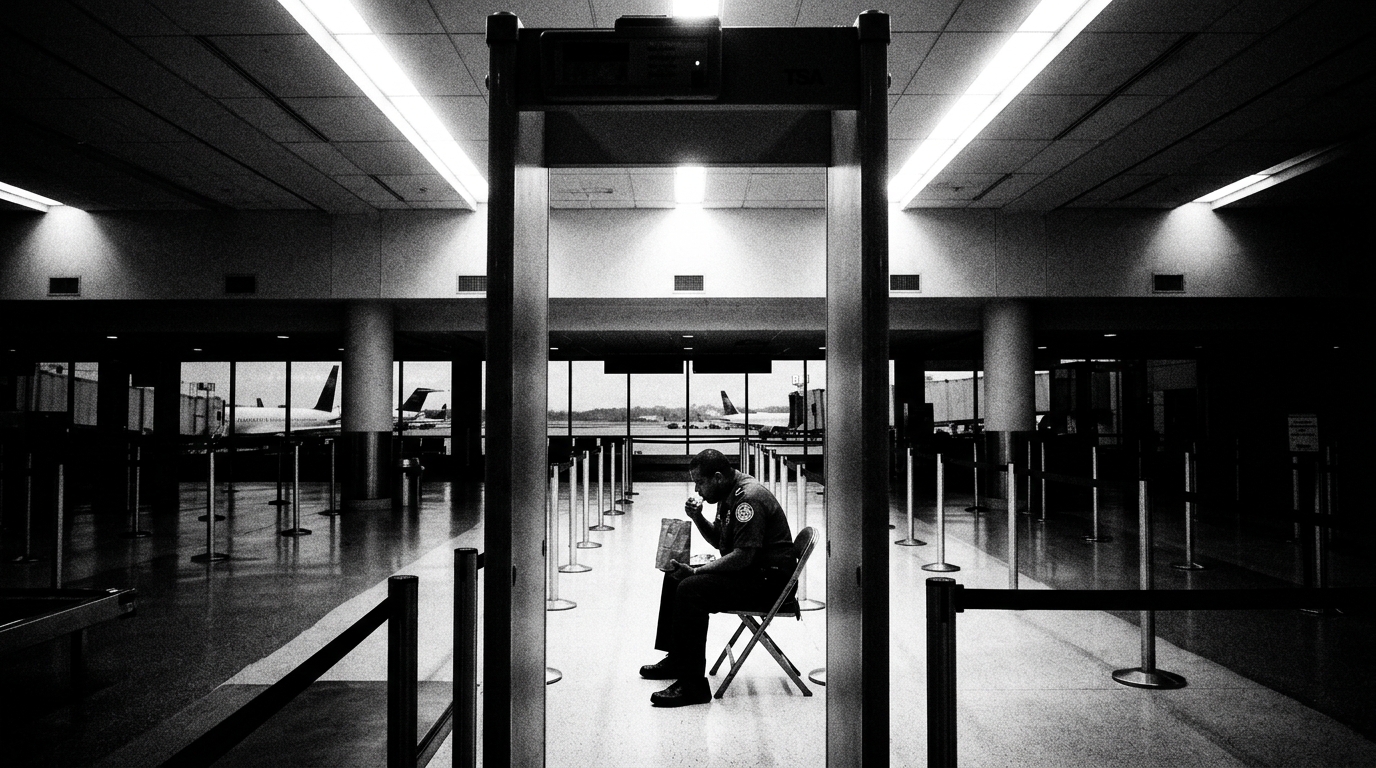
When the government shutdown left 1,000 TSA agents at Harry Reid Airport working without pay, MGM didn't send thoughts and prayers... they sent 1,400 lunches. The interesting part isn't the generosity. It's what it tells you about how exposed your revenue is to things completely outside your control.

I managed a casino resort once during a government shutdown back in the mid-2010s. Different shutdown, same movie. The moment TSA lines started creeping past 90 minutes at the airport, our reservation cancellations spiked within 48 hours. Not because guests couldn't get there. Because they saw the news coverage of people standing in line for two hours and decided it wasn't worth the hassle. Perception killed us faster than reality did.

So when I read that MGM delivered 1,400 lunches and 700 hygiene kits to unpaid TSA workers at Harry Reid International during this latest shutdown... I don't see a feel-good corporate responsibility story. I see a company doing the math. The American Hotel & Lodging Association pegs the industry cost of a government shutdown at roughly $31 million a day. The U.S. Travel Association says the broader travel economy bleeds about a billion a week. MGM's lunch bill was probably $15,000 to $20,000. Maybe less. That's not philanthropy. That's one of the cheapest risk mitigation strategies I've ever seen. Keep the TSA agents fed and showing up, keep the security lines under 30 minutes, keep the planes landing on time, keep 150,000 hotel rooms in Las Vegas occupied. The return on that investment is absurd.

And here's the part that should bother every operator who isn't in Las Vegas. While Harry Reid was running smooth because the resort industry stepped up, airports in other cities were a mess. Long lines. Delays. Frustrated travelers deciding to stay home. If you're running a hotel in a market where nobody thought to feed the TSA... you ate the cancellations while Vegas kept humming. That 45% of consumers who told AHLA they'd change travel plans because of shutdown disruptions? Those aren't hypothetical people. Those are the bookings that disappeared from your March pace report with no explanation other than "demand softened." Demand didn't soften. Demand got rerouted to markets that kept their airports functional.

This is one of those stories that reveals a vulnerability most of us don't spend enough time thinking about. Your revenue depends on an airport that depends on federal employees who can go weeks without a paycheck every time Congress can't get its act together. That's your supply chain. And unlike your linen vendor or your food distributor, you can't switch to a backup. You've got one airport. Maybe two if you're lucky. And every TSA agent who calls in sick because they can't afford gas to get to work is a longer security line, a missed connection, a cancelled trip, and a room that sits empty tonight.

MGM understood something that most hotel companies still haven't internalized: the infrastructure around your property IS your property. The airport, the roads, the transit system, the workforce that operates all of it. When any piece of that breaks, your P&L feels it before your brand's corporate office even notices. Vegas figured this out because Vegas has to... the entire city is a single-industry economy built on people getting on planes. But the principle applies everywhere. Your hotel doesn't exist in isolation. It exists inside a system. And the cheapest thing you can do is make sure the weakest link in that system doesn't snap.

Operator's Take

Look... if you're a GM in any market that depends on air travel (and that's most of you), here's what I'd do this week. Find out who your local TSA Federal Security Director is. Introduce yourself. Build the relationship now, before the next shutdown. Because there will be a next one. If your hotel has F&B, figure out what it costs you to provide meals to federal workers at your local airport during a disruption. Run the number against one night of lost occupancy. You'll find it's not even close. A few hundred dollars in food buys you goodwill, community visibility, and an airport that keeps functioning. And if you're part of a local hotel association, get this on the agenda now. MGM did this alone because MGM can. Most of us need to do it together. The properties that build these relationships before the crisis are the ones that don't lose three points of occupancy when Congress decides to play chicken with the budget again.

Read full analysis → ← Show less
Source: Google News: MGM Resorts
Houston's STR Crackdown Before the World Cup Is a Brand Positioning Test for Every Hotel in Town

Houston's STR Crackdown Before the World Cup Is a Brand Positioning Test for Every Hotel in Town

Houston just became the first major unzoned U.S. city to regulate short-term rentals, and the timing is not accidental... 500,000 World Cup visitors are about to land, and the question isn't whether hotels benefit. It's which ones are ready to capture the demand that STR operators are about to fumble.

So Houston finally did it. After years of being the Wild West of short-term rentals (no zoning, no registration, no accountability), the city passed a comprehensive STR ordinance, started accepting registrations last August, and flipped the enforcement switch to "on" as of April 1. Registration fee: $275 per property. Fines for operating without one: $100 to $500 per day. Platforms like Airbnb and Vrbo are required to pull non-compliant listings within 10 days of city notification. And every operator has to collect and remit hotel occupancy tax quarterly... the same tax that branded hotels have been paying all along. You know what that sound is? That's the playing field leveling, and it's about time. But here's the part that matters more than the regulation itself: the timing. Houston hosts seven FIFA World Cup matches between June 14 and July 4. Projected visitors: 500,000. Projected local economic impact: somewhere north of $1.4 billion. Airbnb is literally paying first-time hosts a $750 bonus to list their homes. And into this demand tsunami, the city drops a regulatory framework that a significant chunk of casual STR operators either don't understand, aren't prepared for, or will simply ignore until they get fined. Some of those listings are going to disappear. The demand isn't going anywhere.

I've watched this exact pattern play out in other host cities before major events. A brand VP I used to work with once told me, "Regulation doesn't kill supply... it redistributes it." She was right. What happens is the bottom 20-30% of STR inventory (the party houses, the unlicensed garage apartments, the hosts who never collected a dime of occupancy tax) either scramble to comply or go dark. The top-tier professional STR operators adapt and survive. And the demand that would have gone to those bottom-tier listings? It flows back to hotels. But only to hotels that are positioned to catch it. That's the part nobody's talking about.

If you're an owner or a GM in the Houston market right now, the question you should be asking isn't "will the World Cup be good for my hotel?" (Of course it will. Seven matches. 500,000 visitors. The math is obvious.) The question is: what are you doing RIGHT NOW to make sure the guests who would have booked a sketchy Airbnb in Montrose end up at your property instead? Because those guests aren't traditional hotel bookers. They're younger. They're international. They want flexibility, personality, and value... and they've been trained by STR platforms to expect a certain kind of experience. If your pre-arrival communication is a confirmation email from 2019 and your lobby feels like a waiting room, you're not capturing that demand. You're watching it drive past to the Marriott down the street that updated its mobile check-in and put a mural in the lobby bar. This is a brand positioning moment, and it's happening whether you're ready or not.

Here's the other thing the regulation tells us (and this is where I get protective). The city is requiring human trafficking awareness training for STR operators. They're mandating 24-hour emergency contacts. They're prohibiting STRs from advertising as event spaces. You know why? Because the unregulated STR market in Houston had a real public safety problem. Shootings at rental properties made the news as recently as January. The mayor called short-term rentals a "serious problem." These regulations aren't anti-business... they're an admission that an unregulated accommodation market is dangerous. And for every branded hotel operator who has been collecting HOT, maintaining fire code compliance, training staff on safety protocols, and absorbing the cost of all of it while the house next door undercuts you with zero oversight? This is vindication. Expensive, slow, incomplete vindication... but vindication. The question is whether the city has the resources to actually enforce any of it. (I have opinions about that, and none of them are optimistic. Enforcement is the promise. Execution is the test. Sound familiar?)

The smart play for Houston hotel operators... especially independents and soft-branded properties in leisure-heavy submarkets... is to treat this summer like the brand audition of a lifetime. Your comp set just got smaller (some STR supply is going offline). Your demand pool just got bigger (half a million soccer fans). And your differentiation story just got easier to tell (you're legal, you're safe, you're professional, you collect the tax, you have a front desk at 2 AM). But you have to actually TELL that story. Update your OTA profiles. Push your direct booking channels. Rethink your rate strategy for those seven match windows... and don't leave money on the table by pricing like it's a normal June. It's not a normal June. It's not even close.

Operator's Take

Here's what nobody's telling you... if you're running a hotel in the Houston metro, you have about 90 days to capture demand that's being shaken loose from the STR market. Don't wait for the World Cup to start. Get your rate strategy locked for June 14 through July 4 NOW. Call your revenue management team tomorrow and model what happens when 15-20% of STR supply goes non-compliant. If you're independent, this is your moment to outposition the brands on flexibility and personality. If you're branded, use the loyalty engine. Either way, the guests are coming. The only question is whether they're coming to you or to the guy down the street who's already moving.

— Mike Storm, Founder & Editor
Read full analysis → ← Show less
Source: Google News: Airbnb
Portland Marriott Waterfront Sells for $30M. Someone Paid $82.7M in 2013.

Portland Marriott Waterfront Sells for $30M. Someone Paid $82.7M in 2013.

A 506-key downtown Portland Marriott just traded at $59 per key. That number tells you everything about what's happening in distressed urban hotel markets right now... and what the buyer is betting on.

$30 million for a 506-key full-service Marriott on the waterfront in Portland. That's $59,288 per key. The previous owner paid $82.7 million in 2013 and refinanced with a $71 million loan in 2018. They stopped making payments in February 2024. The loss here is total. Not partial. Total.

Let's decompose this. A $71 million loan on a property that just sold for $30 million means the lender ate roughly $41 million (before fees, carrying costs, receivership expenses). The equity from the 2013 acquisition... gone. Every dollar. The per-key price implies the buyer is underwriting this at something close to a 10-12% cap rate on current NOI, or (more likely) they're pricing off a recovery scenario where Portland's upper upscale segment climbs back toward pre-pandemic RevPAR. That segment is still down over 22% from 2019 levels. Occupancy has dropped 11 points. The buyer, linked to a New York-based opportunistic fund that has acquired 68 hotel properties, is not buying today's cash flow. They're buying optionality on a city that might recover in 3-5 years. "Might" is doing a lot of work in that sentence.

The Portland context makes this worse. Downtown office vacancy hit 34.6% in late 2025. Retail vacancy: 32%. The 20 largest office buildings in Portland collectively lost nearly 70% of their market value since 2019. Leisure and hospitality employment in the county is still 15% below pre-pandemic. This isn't a hotel problem. This is a city problem. A 506-key convention-oriented Marriott needs group business, corporate transient, and a functioning downtown to generate the NOI its capital structure requires. Portland is delivering none of those at pre-pandemic levels.

I audited a distressed hotel sale once where the new buyer's pro forma assumed a 40% NOI increase within 36 months. When I asked what operational changes justified that assumption, the answer was "market recovery." That's not underwriting. That's a prayer with a spreadsheet attached. The buyer here may have a more sophisticated thesis (their fund has done $24 billion in gross real estate acquisitions), but the fundamental question remains: what specifically changes in downtown Portland that turns a $30 million basis into a profitable hold? The Marriott management agreement is long-term, which means fees are fixed regardless of whether the asset earns its cost of capital. The new owner is paying Marriott either way.

The real number for anyone watching distressed hotel transactions: 63.8% value destruction in 13 years on a branded, full-service, waterfront asset in a top-40 market. That's the data point. If you're an asset manager holding upper upscale hotels in challenged urban cores (and you know which cities I'm talking about), this comp just reset your downside scenario. Check again.

Operator's Take

Here's what I'd tell you if we were talking. If you're an owner or asset manager sitting on a full-service hotel in a downtown market that hasn't recovered... Portland, San Francisco, a handful of others... stop using 2019 comps for your hold analysis. They're fiction now. Run your downside off current trailing NOI, not the recovery you're hoping for. And if your debt service coverage is getting tight, have the conversation with your lender NOW, not after you've missed a payment. The guy who owned this Portland asset waited. It cost him everything.

— Mike Storm, Founder & Editor
Read full analysis → ← Show less
Source: Google News: Marriott
Pebblebrook's $1.58 FFO Masks a Portfolio in Transition... and the Real Math Is Messier

Pebblebrook's $1.58 FFO Masks a Portfolio in Transition... and the Real Math Is Messier

Pebblebrook beat its own guidance by $0.05 per share while posting a $62.2 million net loss. The headline number and the real number are telling two very different stories about what this REIT is actually worth.

Pebblebrook reported $1.58 in Adjusted FFO per diluted share for 2025, $0.05 above the midpoint of its own outlook. Same-Property Hotel EBITDA came in at $348.2 million, $2.2 million above guidance. The stock price tells you the market doesn't care. PEB has been trading around $11 for months. The company repurchased 6.3 million shares at an average of $11.37. Management says that's an attractive discount to NAV. The question is whether management is right about the NAV.

Let's decompose what happened. The net loss of $62.2 million includes $48.9 million in impairment charges from hotel dispositions. That's not operational failure. That's the accounting reality of selling hotels below their book value. Pebblebrook generated $116.3 million in disposition proceeds in Q4 alone and used $100 million of that to pay down debt. They also closed a new $450 million unsecured term loan maturing in 2031, replacing a $360 million facility due in 2027. The balance sheet is getting cleaner. But cleaner isn't the same as stronger (my parents ran a small business... I learned early that paying off one bill by selling the furniture works exactly once).

The 2026 guidance is where it gets interesting. Adjusted FFO per share of $1.50 to $1.62. The midpoint is $1.56. That's lower than 2025's $1.58. Same-Property Total RevPAR growth of 2.25% to 4.25%. Adjusted EBITDAre of $325 to $339 million, down from $342.5 million in 2025. Net income range of negative $10.4 million to positive $3.6 million. Management is guiding to lower EBITDA year-over-year while projecting RevPAR growth. That gap needs explaining. Part of it is the reduced portfolio from dispositions. Part of it is $65 to $75 million in capital investments. But the flow-through question remains: if RevPAR grows 3% and EBITDA shrinks, where is the money going?

Q4 2025 offers a clue. Same-Property Total RevPAR grew 2.9%, driven by occupancy gains and 5.5% growth in out-of-room revenues. The out-of-room number is the one I'd watch. Pebblebrook has been repositioning toward urban and resort lifestyle assets with higher ancillary revenue potential. That strategy works when you can staff F&B outlets and programming. It breaks when labor costs eat the incremental revenue. The 35% jump in Q4 Adjusted FFO per share looks impressive until you realize it's partly a function of a smaller share count from buybacks, not just operational improvement. Buybacks at a discount to NAV can be accretive. Buybacks that mask flat operating performance are a different story.

The real number here is the implied cap rate on recent dispositions. $116.3 million in Q4 proceeds across two hotels. Without per-property detail, I can't decompose precisely, but Pebblebrook has been selling assets in markets they're exiting (West Coast urban, primarily) at prices that generated impairment charges. That means they're selling below book. They're calling it portfolio optimization. An owner I talked to once put it differently: "I'm making money for everyone except myself." The management company collects fees on the way up and the way down. The REIT investor absorbs the write-down. If you own PEB, the question isn't whether the strategy is directionally correct. It probably is. The question is whether you'll still own it long enough for the repositioned portfolio to deliver.

Operator's Take

Here's the thing about Pebblebrook's numbers that matters to you on the ground... they're betting big on out-of-room revenue growth at their urban and resort lifestyle properties. If you're a GM at one of their hotels, that means your F&B, spa, and ancillary revenue targets are about to get a lot more scrutiny. Start tracking out-of-room revenue per occupied room now, because that's the metric corporate is watching. And if you're at a property that hasn't had its renovation yet... look at the $65-75M capex budget and the disposition history. Know where you stand in the portfolio pecking order. Properties that don't fit the lifestyle thesis are the ones that get sold.

— Mike Storm, Founder & Editor
Read full analysis → ← Show less
Source: Google News: Pebblebrook Hotel Trust
The World Cup Hotel Boom That Isn't: 38,000 Cancellations and Counting

The World Cup Hotel Boom That Isn't: 38,000 Cancellations and Counting

Hotels in World Cup host cities are getting FIFA room blocks handed back with zero reservations attached. If you built your summer forecast around this event, it's time for a very honest conversation with your revenue manager.

I talked to a GM in a host market last week who told me he'd been sitting on a FIFA room block for months... 40 rooms per night, guaranteed pickup, the works. He got the block back two weeks ago. Not a single reservation in it. Not one. He laughed when he told me, but it was the kind of laugh that means someone's about to update their forecast and it's not going up.

Here's what's actually happening. More than 38,000 World Cup hotel reservations have been canceled. FIFA's pre-negotiated room blocks, which were supposed to lock up inventory 90 to 120 days out, are coming back to properties like returned Christmas gifts. The demand that everyone projected... the "once in a generation" event that was going to juice June and July... is looking a lot more like a Tuesday night concert than a month-long Super Bowl. CoStar's revised numbers tell the story: host markets are looking at a 12.7% RevPAR bump during the tournament months. Sounds great until you realize that same number translates to a 0.4% lift for the full year nationally. That's not a boom. That's a rounding error for anyone outside the 16 host cities.

I've seen this movie before. Big event gets announced. Revenue managers build aggressive rate strategies 18 months out. ADRs in host cities are already showing 55% premiums over last year for the tournament window. But here's the part nobody wants to talk about... those rates are pushing out regular demand. Your corporate travelers, your leisure weekenders, your group bookings... they see a $400 rate for a room that's normally $189 and they book somewhere else or don't come at all. You end up with these weird occupancy holes on shoulder nights (the days between matches) where you've priced yourself out of your normal market and the World Cup traffic hasn't materialized to fill the gap. The 1994 World Cup showed a similar pattern... host cities got an 11.9% RevPAR bump, but the properties that won were the ones smart enough to manage rate by the night, not by the month.

The reasons this is softer than projected aren't mysterious. Pick your poison: ticket prices that would make a Taylor Swift scalper blush, a geopolitical environment that's actively discouraging international travel (the Iran situation in late February didn't help), and an immigration policy climate that's got foreign visitors thinking twice about whether they want to deal with a U.S. port of entry right now. Flight bookings to North America for the tournament window are up 15% year over year, which sounds good until you remember how many millions of fans were supposed to descend on 16 cities. The math doesn't lie... this is going to be a rate-led event in tight windows around match days, not the sustained demand wave that the early projections promised. Suburban hotels at lower price points are actually outperforming urban core properties right now because fans are doing the math too and deciding that a $149 room 20 minutes from the stadium beats a $450 room two blocks away.

Look... the World Cup is still going to be a net positive for host markets. I'm not saying cancel your plans. I'm saying recalibrate them. If you're a GM in a host city who built your summer P&L around sustained high-rate occupancy for six weeks straight, you need to have an honest conversation this week. The demand is going to come in spikes... match days and the day before, then valleys. Your rate strategy needs to reflect that reality, not the PowerPoint from last September. And if you're in a market that's NOT hosting matches but thought you'd get spillover? That spillover isn't coming. Not in the volume anyone projected. Adjust now while you still have time to rebuild your summer sales strategy around the guests who actually want to be in your market, not the ones who were supposed to show up for soccer.

Operator's Take

If you're a GM or revenue manager in one of the 16 host cities, stop managing your World Cup window as a block and start managing it night by night. Match nights get premium rate. Shoulder nights need to come back to reality... drop them to capture displaced leisure demand before your comp set does. Call your corporate accounts this week and offer protected rates for non-match nights so you don't lose Q3 relationship business over a six-week rate spike. And for the love of everything, if you're still holding FIFA room blocks with no reservations attached, release that inventory today and get it into your distribution channels. Every night those rooms sit in a dead block is revenue you're not getting back.

Read full analysis → ← Show less
Source: Google News: CoStar Hotels
Holiday Inn's "New Playbook" Is the Same Old Song With Better Staging

Holiday Inn's "New Playbook" Is the Same Old Song With Better Staging

IHG is dressing up Holiday Inn's refresh as a strategic revolution, but when you strip away the lobby renderings and the press-friendly language, the real question is whether owners will see returns that justify the capital... or just another round of brand theater with a nicer font.

Available Analysis

So IHG had a monster 2025. Record openings, 443 hotels, over 65,000 rooms added, operating profits up 15% to $1.2 billion, and a shiny new $950 million share buyback announced for 2026. The pipeline is 340,000 rooms deep. The fee margin expanded 360 basis points. If you're an IHG shareholder, you're having a wonderful year. If you're an IHG franchise owner staring down a property improvement plan tied to this "new playbook"... your year is about to get more complicated. And more expensive. And nobody at headquarters is going to sit across the table from you when the math doesn't work.

Let's talk about what this "playbook" actually is when you peel the press release off it. IHG has been pushing hard on conversions... roughly 60% of their openings and 40% of organic signings were conversions in early 2025. That tells you something important about the growth strategy: they're not building new hotels, they're rebadging existing ones. Which means they need a product model that's conversion-friendly, cost-efficient, and visually compelling enough to justify the flag change. Enter Holiday Inn Express 5.0, the "Dawn" model, with its emphasis on "space design, service details, and smart experiences." (That last phrase, "smart experiences," is doing a LOT of heavy lifting and I'd love for someone to define it in a sentence that an actual front desk agent could execute.) The per-room construction cost target of roughly $20,000 is a China-specific number, by the way. If you're an owner in Memphis or Boise expecting that figure to translate, I'd encourage you to sit down first.

Here's the part that makes my filing cabinet twitch. IHG's Americas RevPAR was up just 0.3% for the full year and actually declined 2% in Q4 2025... underperforming both Hilton and Marriott. So the domestic engine is cooling. And into that cooling environment, IHG is asking owners to invest capital in a refreshed product standard while simultaneously pushing conversion-heavy growth that dilutes the existing system's pricing power. You know what that looks like from the owner's chair? It looks like you're spending money to maintain a brand premium that's shrinking. I sat in a franchise review once where the brand rep kept talking about "the halo effect of system growth" and the owner next to me leaned over and whispered, "The halo is costing me $4,200 a month in fees and I can't tell you what it's doing for my rate." That owner wasn't wrong. And there are a lot of owners feeling exactly that way right now.

The FIFA World Cup narrative is interesting... IHG's CEO is publicly citing it as a 2026 demand catalyst, and he's probably right that select markets will see a lift. But "the World Cup will help" is not a brand strategy. It's a weather event. What happens in 2027 when the tournament is over and your PIP payments are still due? The Deliverable Test on this refresh is the same one I apply to every brand evolution: can the team at a 140-key Holiday Inn Express in a secondary market, staffed the way hotels are actually staffed right now (which is to say, thinly), deliver whatever "elevated experience" this playbook promises? Because if the answer requires a dedicated team member, a specialized amenity, or a technology integration that assumes broadband speeds your 1990s-era building can't support... you don't have a playbook. You have a fantasy document with a timeline attached.

I want to be clear... I'm not anti-IHG, and I'm not anti-refresh. Holiday Inn is one of the most recognized names in hospitality and it SHOULD evolve. But evolution that primarily serves the franchisor's fee margin (up 360 basis points, remember?) while the franchisee's RevPAR in the Americas barely moved? That's not a partnership. That's a subscription. And owners need to read the actual FDD, compare the projected loyalty contribution to what properties in their comp set are actually receiving, and make the decision with their calculator, not with the brand's slide deck. The slide deck always looks beautiful. The P&L is where the truth lives.

Operator's Take

If you're a Holiday Inn or HI Express franchisee getting the call about this refresh... before you agree to anything, pull your actual loyalty contribution numbers for the last 24 months and compare them to what was projected when you signed. Then ask your franchise rep to show you the same comparison for properties in your comp set. If they can't or won't provide it, that tells you everything you need to know. The shiny new playbook means nothing if the math underneath it hasn't changed. Get the math first. Decide second.

— Mike Storm, Founder & Editor
Read full analysis → ← Show less
Source: Google News: IHG
Disney's Summer Discount Blitz Is a Gift to Their Hotels. It's a Problem for Yours.

Disney's Summer Discount Blitz Is a Gift to Their Hotels. It's a Problem for Yours.

Disney just rolled out 30-40% room discounts, free dining plans, and discounted afternoon tickets for summer 2026. If you're running a hotel within ten miles of the parks, the Mouse just changed your pricing ceiling whether you like it or not.

I've been watching Disney's promotional calendar for decades now, and every time they push this hard on value... free dining, 40% off rooms for passholders, discounted afternoon tickets starting at $116 a day... it tells me something about how they're reading demand. And right now, the read is clear: they're worried about summer softness. Maybe it's Epic Universe pulling first-time Orlando visitors to the other side of I-4. Maybe it's the broader travel slowdown everyone keeps whispering about. Maybe it's both. But when Disney starts giving away meals and cutting room rates 30-40% at their own resorts, they're not being generous. They're filling beds. And when Disney fills beds by dropping price, every non-Disney hotel in greater Orlando feels the compression.

Here's what the headlines won't tell you. Disney simultaneously raised base prices roughly 15% on 2026 vacation packages. So the "discounts" aren't discounts in the way your guests think about discounts. They're strategic rate fences. Full price went up. Then targeted segments (passholders, resort guests, people willing to show up after 2 PM) get pulled back down to something close to where the old price was. It's brilliant yield management dressed up as generosity. The guest feels like they got a deal. Disney protects rate integrity at the top while still filling rooms on soft nights. Meanwhile, you're sitting at a 180-key select-service on International Drive trying to figure out why your May pace just went sideways.

The competitive math is what matters here. Disney can afford to discount their hotel rooms because they make it back on park tickets, merchandise, food, character breakfasts, and the $7 bottle of water your kids are going to scream for at 2 PM. Their room rate is a loss leader for a $2,000 family trip. Your room rate IS the trip. When a family sees "save 30% at a Disney resort" and your property is listed on the OTA at $139... you're not competing on rate anymore. You're competing against an experience ecosystem that subsidizes its own lodging. That's a fight you cannot win by matching price. You win by being something Disney isn't: close, easy, affordable, and honest about what you are.

I knew a GM in a major theme park market who used to track Disney's promotional calendar more carefully than his own marketing plan. Every time they announced a free dining promotion, he'd shift his own strategy away from rate and toward value-adds... free parking, complimentary breakfast upgrades, late checkout guaranteed. He told me once, "I can't beat the Mouse on price. But I can beat them on friction. Nobody wants to take a bus to their hotel room at 11 PM with two sleeping kids." He was right. His occupancy held while properties around him panicked and dropped rate. Because he understood something fundamental: the family that books off-property in Orlando is already a different customer than the one booking on-property. Stop trying to convert the Disney guest. Start owning the guest who already chose you.

This is also about what's coming. Universal's new park changes the Orlando landscape permanently. Disney's aggressive promotional push for summer 2026 isn't just about this summer... it's about establishing booking patterns before families start splitting trips between two mega-resort complexes. The window where Orlando was essentially a one-ecosystem destination is closing. That's actually good news for independent and branded hotels in the corridor, because more demand drivers mean more total visitors. But it also means the promotional noise is going to be deafening. You need a strategy for operating in a market where the two biggest players are in an arms race for attention, and your property is the one without a Super Bowl commercial.

Operator's Take

If you're running a hotel in the Orlando corridor, do not react to Disney's summer discounts by dropping rate. That's a trap you won't climb out of by September. Instead, pull your comp set data right now and look at what happened the last time Disney ran a free dining promotion... your occupancy probably held closer than your ADR did, which means the damage was self-inflicted by properties that panicked. Build your May and June strategy around value-adds that cost you $8-12 per occupied room but feel like $50 to the guest: guaranteed late checkout, free parking, a shuttle schedule that actually works. This is what I call the Rate Recovery Trap... you cut rate to fill rooms today, and you spend the next eighteen months retraining the market to pay what you were worth before the cut. Own the off-property guest. They chose you for a reason. Remind them why.

Read full analysis → ← Show less
Source: Google News: Resort Hotels
Your Linen Vendor Isn't Answering the Phone. Now What.

Your Linen Vendor Isn't Answering the Phone. Now What.

A Midwest blizzard just turned your supply chain into a guessing game and your staffing plan into fiction. The GMs who survive this week are the ones who stopped waiting for normal about 48 hours ago.

Available Analysis

I managed through a blizzard once where we ran out of bath towels on day two. Not low on towels. Out. The laundry service couldn't get a truck through, our on-premise machines could handle maybe 30% of daily volume, and I had 280 occupied rooms full of people who expected a clean towel when they stepped out of the shower. You know what we did? We bought every towel at the Target two miles away that was still open. They weren't white. They weren't our brand standard. Nobody cared. Guests got towels. That's the whole job sometimes.

This Midwest storm is doing what every major weather event does to hotel operations... it's exposing the difference between GMs who have a crisis playbook and GMs who assumed the supply chain would always just work. When Winter Storm Fern hit in January, national RevPAR dropped 4% for the week. But airport hotels saw demand jump 32% on the first day. That's the pattern. Overall market goes down, captive-audience properties go through the roof, and everybody in the middle scrambles. If you're sitting at a highway interchange property or near a regional airport right now, your phones are ringing. The question is whether you have the inventory, the staff, and the pricing strategy to capitalize on it... or whether you're turning away revenue because you can't make beds.

Let's talk about what's actually breaking. Food deliveries are the first thing to go because refrigerated trucks don't run in whiteout conditions. Your linen service is probably 24-48 hours behind already, and if you're outsourced (most select-service properties are), you have zero control over when that truck shows up. Toiletries, paper goods, cleaning supplies... all of it moves on the same roads that are closed. And here's the part that kills you quietly: your staff can't get to work either. I've seen properties try to operate a 200-key hotel with 40% of their housekeeping team unable to make the commute. You're not cleaning every room. You're triaging. So you better have already decided which rooms get serviced and which get a door-knock and fresh towels only (see above re: towels you may not have).

The energy cost piece is the one nobody talks about until the bill shows up. Heating demand in a blizzard can spike utility costs 25-40% for the week depending on your building envelope and system age. If you're running a property built before 1990 with original HVAC, you're hemorrhaging BTUs through every window and exterior wall. That's real money... money that comes straight off your bottom line in a month where your F&B revenue just cratered because your kitchen is working off a contingency menu of whatever didn't require a delivery truck. I've watched GMs celebrate capturing stranded-traveler revenue at premium rates and then give it all back in utility overage and emergency purchasing costs. You have to run the full math.

Here's what separates the operators who come out of this okay from the ones who spend March explaining a bad month to ownership. The good ones made three phone calls 48 hours before the storm hit: one to their primary food distributor to pull forward deliveries, one to their linen service to confirm contingency plans, and one to a local restaurant supply house to establish an emergency account. They texted every employee and asked who lives within walking distance. They identified which rooms they'd take out of inventory if staffing dropped below threshold. They already adjusted their PMS to extend lengths of stay and they set rate floors that capture the demand without gouging (because the internet remembers, and a $499 rate on a room that was $129 last Tuesday will end up on social media by Thursday). The ones who are struggling right now? They waited. They assumed it would be manageable. It's always manageable until it isn't.

Operator's Take

If you're a GM in the affected region and you haven't already called your backup suppliers, stop reading this and do it now. Every restaurant supply store, every Costco, every Sam's Club within driving distance of your property is your temporary vendor. Get linens on an extended cycle... two-night minimum before change-out, and tell guests proactively so they don't think you're just being cheap. If you're running below 60% staff, pull rooms out of inventory rather than sell what you can't service. And for the love of everything, document every incremental cost. Your owners or management company need a full storm impact report with line-item detail, not a shrug and a bad P&L. The GMs who come out of this looking good are the ones who can show exactly what it cost and exactly what they did about it.

Read full analysis → ← Show less
Source: CNN
LA's $32.65 Hotel Wage Is Coming. Here's What Happens Next.

LA's $32.65 Hotel Wage Is Coming. Here's What Happens Next.

Los Angeles just handed the hotel industry a real-time case study in what happens when labor policy outruns operating economics. The numbers coming out of that market should terrify every operator in a city with an activist council.

I sat on a panel once with a city councilmember who told a room full of hotel operators that "the industry can absorb it." I asked her what she thought the average GOP margin was at a full-service hotel. She didn't know. I told her. The room got very quiet. She moved on to her next talking point.

That's what's happening in Los Angeles right now, except nobody's moving on because the math won't let them.

Here's what you need to understand. LA hotels are already running with RevPAR roughly 15% below pre-pandemic levels when you adjust for inflation. Labor cost per occupied room at full-service properties has climbed 36% since 2019... and that was BEFORE this ordinance kicked in last September at $22.50 an hour. Now it's headed to $25 base plus a $7.65 health benefit add-on by July. That's $32.65 fully loaded. And it hits $30 base by 2028. We're talking about roughly 150 hotels, 40,000 rooms, and an ownership community that was already bleeding.

The industry association survey of 92 owners tells the story the city council doesn't want to hear. Six percent of positions already eliminated... about 650 jobs gone. Sixty-two percent of those hotels plan to cut staff hours this year, with three-quarters of those cuts running 10% or deeper. Fourteen properties expect to close their restaurants entirely. Half anticipate shutting other on-site operations... F&B outlets, gift shops, the amenities that are supposed to differentiate your property. Parking operators are raising rates at least 10%. Two-thirds of third-party vendors are hiking prices, and one in five are walking away from hotel contracts altogether. I've seen this movie before. I've seen it in cities that passed similar ordinances and then watched their hotel tax revenue decline 18 months later and couldn't figure out why. You can't tax what isn't there.

Look... I'm not anti-worker. I've been saying for years that housekeeping staff are the most undervalued people in this industry. I've managed union properties. I've negotiated contracts at 2 AM. I understand the argument that people deserve a living wage in an expensive city. But here's what nobody on the policy side ever wants to engage with: the money has to come from somewhere. And in a market with limited pricing power and weak demand growth, it's not coming from rate increases. It's coming from hours. It's coming from positions. It's coming from the restaurant that closes and the 14 jobs that go with it. It's coming from the renovation that doesn't happen because the owner can't pencil the return anymore. And ultimately it's coming from the guest experience... which is coming from the reviews... which is coming from future demand. It's a spiral. West Hollywood already lived through this. They passed their hotel worker wage ordinance, watched it gut the restaurant scene at hotel properties, and had to postpone future increases. That's not speculation. That happened.

Here's what concerns me most. The 2028 Olympics are supposed to be LA's moment. That's the whole theory behind calling this the "Olympic Wage"... build the workforce, ride the demand wave. But you're watching owners defer capital investment right now. You're watching service levels decline right now. You're watching properties shed the amenities and outlets that make a hotel competitive right now. By the time the Olympics arrive, what exactly are those tourists checking into? A $30-an-hour market with fewer staff, closed restaurants, deferred maintenance, and room rates that had to jump 20% to cover the gap. The city is essentially betting that a two-week event will justify permanent structural cost increases. I knew an owner once who made every decision based on one good month of the year. He doesn't own that hotel anymore.

Operator's Take

If you're running a hotel in any major West Coast city... not just LA... start scenario-planning for this wage structure hitting your market within 36 months. Pull your labor model today and run it at $30/hour fully loaded for every hourly position. Figure out your break-even ADR at that cost structure and ask yourself honestly whether your market supports it. If the answer is no, you need to be having the renovation, disposition, or flag conversation with your owners right now, not when the ordinance passes. The owners who survive this are the ones who restructured their operating model before the mandate, not after.

Read full analysis → ← Show less
Source: Google News: Hotel Industry
The World Cup Is Less Then 100 Days Out. Your Staffing Plan Is Already Late.

The World Cup Is Less Then 100 Days Out. Your Staffing Plan Is Already Late.

Eighty-five million international visitors are projected for 2026, and every hotel in an NFL host city is about to discover whether their operation is actually built for prime time... or just built for Tuesday nights in October.

Available Analysis

I managed a hotel during the '96 Olympics. Not one of the flagship properties downtown that got all the press. A 280-key about 20 minutes from the venues that nobody thought would see much action. We saw plenty of action. We also saw our housekeeping team buckle under the pressure by day three because we'd staffed for a 15% occupancy bump and got a 40% one. By the second week, I was stripping beds myself at 11 PM. My AGM was running towels in her personal car from a linen supplier 45 minutes away because our par levels were a joke.

That experience taught me something I've never forgotten: major international sporting events don't just fill your hotel. They fundamentally change who's IN your hotel, how long they stay, what they expect, and how fast everything breaks when you're running at 97% occupancy with a staff built for 78%.

So let's talk about what's actually coming. The National Travel and Tourism Office is projecting 85 million international arrivals in 2026... a 10% jump over 2025 and well past the pre-pandemic high of 79.4 million in 2019. The primary driver is obvious: the FIFA World Cup, running June 11 through July 19, with 78 matches across 11 U.S. cities. Tourism Economics estimates 1.24 million international visitors specifically for the tournament, and roughly 60% of those are incremental trips (meaning people who wouldn't have come to the U.S. otherwise). Post-draw booking data is already showing the impact. For the week of the final at MetLife Stadium, booking volumes are up 102% year-over-year with ADR climbing 72%. Some host city markets are already showing 14% ADR growth for the first nine months of 2026 versus the national average. The revenue opportunity is real. Nobody's debating that.

Here's what nobody's debating loudly enough: the service delivery risk. AHLA's own numbers from early 2024 showed 67% of hotels still reporting staffing shortages, with housekeeping cited as the most critical gap by nearly half of respondents. That was during NORMAL demand. Now layer on a five-week international mega-event where your guest mix shifts overnight from domestic business travelers who know how everything works to international leisure guests who need more front desk time, more concierge interaction, more patience, and more towels. A lot more towels. If you're a GM at a 200-key select-service in Dallas or a 350-key full-service in Miami, your current labor model was not designed for this. And if you're waiting until April 2026 to start building your tournament staffing plan, you're going to be the hotel that earns a 30% ADR premium and a 1.5-star review drop that haunts you for 18 months after the final whistle.

The 1994 World Cup is the historical parallel everyone cites... host city hotels saw revenue increases of 40-60% during tournament months. What people forget is the other side of that data. Properties that couldn't maintain service standards during the surge saw review damage (and this was before TripAdvisor and Google Reviews made every bad experience permanent and searchable). In 2026, a single viral social media post about a filthy room or a 45-minute check-in line doesn't just cost you a guest. It costs you a year of rate integrity. The math on this is brutal: you can push ADR to $400 a night during the group stage, but if your post-tournament reviews tank your ranking, you're discounting your way back to $180 by September. I've seen this exact pattern play out after every major event I've worked through. The hotels that win aren't the ones that charge the most during the event. They're the ones that maintain their standards WHILE charging more, and come out the other side with their reputation intact.

Let me be direct about what the revenue management conversation should look like right now. Yes, model your ADR scenarios. The 30-50% premium during tournament periods is achievable and probably conservative for properties within 30 minutes of a venue. But model it against cost to achieve. What does your labor cost look like at 95% occupancy for five consecutive weeks with a 40% international guest mix? What's the incremental cost of multilingual front desk coverage? What happens to your laundry operation when every room is turning daily instead of every three days? What's your linen par level for a five-week period where you can't rely on your normal vendor delivery cadence because every hotel in your market is ordering more at the same time? These aren't hypothetical questions. These are P&L line items that will eat your rate premium alive if you don't plan for them now. Revenue managers love to model the top line. The GMs who survive events like this are the ones modeling the bottom line just as aggressively.

Operator's Take

If you're a GM in any of the 11 host cities, stop reading and put three things on your calendar this week. First: schedule a meeting with your HR director (or your department heads if you don't have one) to build a tournament-specific staffing model... you need to know exactly how many incremental FTEs you need for June 11 through July 19, and you need to start recruiting for them by Q3 of this year. Second: call your linen vendor and lock in guaranteed delivery volumes and frequency for the tournament period before every other hotel in your market does the same thing. Third: sit down with your revenue manager and model the FULL picture... not just the rate premium, but the cost to achieve at sustained peak occupancy with an international guest mix. The hotels that are going to win the World Cup aren't the ones charging the most. They're the ones that can actually deliver at the rate they're charging.

Read full analysis → ← Show less
Source: Staffingindustry
Airbnb Lost 4.5% in a Day. Your OTA Mix Just Became a Geopolitical Problem.

Airbnb Lost 4.5% in a Day. Your OTA Mix Just Became a Geopolitical Problem.

Middle East tensions just wiped billions off travel stocks and redirected international booking patterns overnight. If you're an independent relying on cross-border demand through any channel, the disruption isn't theoretical... it's already in your pipeline.

So here's what's actually happening. Airbnb dropped 4.5% to $127 on March 12 after escalating conflict between the U.S., Israel, and Iran spooked every investor holding travel exposure. But if you're running a hotel and your takeaway is "well, I'm not Airbnb, so this doesn't affect me"... you're missing the point entirely.

This isn't an Airbnb story. This is a demand-source story. Crude blew past $115 a barrel. Over 46,000 flights have been canceled since the conflict escalated. Economy airfares on some routes jumped by more than $1,300 one way. The region is hemorrhaging an estimated $600 million per day in lost tourism revenue. And the ripple doesn't stop at the Middle East border... travelers are redirecting toward Southern Europe and the Caribbean, which means comp sets in those markets are about to see inflated demand numbers that have nothing to do with their own sales efforts, while properties that depended on international inbound (especially from Gulf states or through connecting hubs) are watching bookings evaporate. I talked to an operator last week running a 140-key boutique in a gateway city who told me 30% of his Q2 pipeline was international leisure. He's now stress-testing at 18%. That's not pessimism. That's the math when airfares double and flight routes disappear.

Look, the broader travel sector got hammered across the board. Carnival dropped 12%. InterContinental fell 6.2%. Accor lost 11%. Marriott, Hyatt, Hilton... all down. The market is pricing in something that operators need to take seriously: when energy costs spike and geopolitical risk rises, discretionary international travel is the first thing that contracts. And "discretionary international travel" is a fancy way of saying "the guest who books your premium room type three months out." That guest just paused. Maybe for a week. Maybe for a quarter. You need to know which one before you react.

What makes this interesting from a technology standpoint is how exposed most properties are to demand shifts they can't see coming. Your RMS is optimizing against historical patterns and comp set data. It doesn't have a "Middle East conflict" variable. It doesn't know that your feeder market just lost half its direct flight capacity. The systems most hotels run were built for normal volatility, not for $115 oil and 46,000 canceled flights. So the question becomes... what's your manual override process? Who on your team is actually watching source market data, not just trailing pace reports? Because by the time the pace report shows the softness, you've already lost three weeks of repositioning time. This is where technology fails the Dale Test hard... when the world changes overnight and your algorithm is still pricing off last Tuesday.

Here's the other piece nobody's talking about. Airbnb's Q4 2025 was strong... $2.8 billion in revenue, 12% growth, 28% adjusted EBITDA margin. Their Q1 2026 guidance projected 14-16% growth. Brian Chesky was talking about 20%+ revenue growth potential. That confidence was priced into a stock that's now getting punished not because the product broke but because the world broke. For hotel operators, that's actually the scarier scenario. Your property can be running perfectly... clean rooms, great reviews, strong rate strategy... and an event 6,000 miles away rewrites your demand picture in 48 hours. You can't optimize your way out of geopolitics. But you can build a response playbook before the impact hits your books, and most properties don't have one.

Operator's Take

Here's what I'd do this week if I'm running any property with more than 10% international source mix. Pull your booking data by origin market for the next 90 days. Identify which feeder markets are connected to disrupted air routes or regions where travelers are pulling back. Then have a real conversation with your revenue manager about shifting rate strategy toward domestic demand segments before your competitors in the comp set do the same thing and you're all racing to the bottom. This is what I call the Shockwave Response... know your floor and your breakeven before the shock hits your books, not after. If you're sitting in a market that's about to benefit from redirected demand (Southern Europe, Caribbean, select U.S. leisure markets), don't get drunk on the surge. That demand is borrowed, not earned, and it'll leave as fast as it arrived. Price it accordingly and resist the temptation to build your forecast around someone else's crisis.

— Mike Storm, Founder & Editor
Read full analysis → ← Show less
Source: Google News: Airbnb
Spain Is Training in Chattanooga. The GM Down the Street Just Got the Weirdest Demand Surge of Their Career.

Spain Is Training in Chattanooga. The GM Down the Street Just Got the Weirdest Demand Surge of Their Career.

FIFA is scattering 48 national teams across smaller U.S. cities for World Cup base camps this summer, and the hotels near those training sites are about to experience something no forecast model prepared them for. The question isn't whether demand shows up... it's whether you're ready for demand that travels with a security detail and a nutritionist.

Available Analysis

I worked a major sporting event once at a property that wasn't even in the host city. We were 45 minutes away, technically in the overflow zone, and we figured we'd pick up a few extra room nights from people who couldn't afford downtown rates. What actually happened was a foreign delegation's advance team showed up three weeks early, wanted to inspect every room on the fourth floor, asked if we could remove all the furniture from the meeting room and install temporary flooring, and then negotiated a rate that was 15% below our published rack. We made money on it. But nobody on my team was remotely prepared for what "hosting a national delegation" actually looks like at property level.

That memory is exactly what I think about when I read that FIFA has placed World Cup base camps in cities like Chattanooga, Greensboro, Winston-Salem, Lawrence (Kansas), and Morristown, New Jersey. These aren't your host cities. These aren't the markets with 11 matches and $500 million economic impact projections. These are secondary and tertiary markets where a 150-key select-service property might suddenly have a national soccer team's entourage filling 30-40 rooms for three weeks... with dietary requirements, security protocols, media blackout zones, and an expectation of service that would make your typical corporate group look like a walk-in.

Here's the part that CoStar's RevPAR forecast doesn't capture. The national number... 1.2% RevPAR lift in June, 1.5% in July... is almost meaningless if you're in one of these base camp markets. This is what I call the National Number Trap. That 1.2% is a weather report averaged across every hotel in the country. The GM in Chattanooga hosting Spain's training camp isn't living in a 1.2% world. They're living in a world where their property is about to operate more like a boutique resort for a very specific, very demanding client for 20-plus consecutive nights. And meanwhile, the GM in a mid-market city 90 miles from any base camp or host venue is looking at potential tourism displacement... leisure travelers who decided to skip their summer trip because they assumed everything was sold out or overpriced. Same national average. Completely different realities.

The other thing nobody's talking about is the FIFA reservation "wash." In mid-March, FIFA canceled thousands of hotel room reservations across multiple markets... roughly 2,000 in Philadelphia alone. If you're in a base camp market and you blocked rooms based on FIFA's initial commitments, check those blocks right now. Today. Not Monday. Some of those rooms may have already been released, and your revenue manager needs to know the real number so they can adjust pricing strategy for the compression window around them. The demand is real but it's reshaping, and the properties that win this summer won't be the ones who sat on a FIFA block and assumed the rooms would fill themselves. They'll be the ones who priced dynamically around whatever confirmed demand actually materializes.

And look... for the 60% of U.S. hotels that aren't near a host city or a base camp, this event is mostly noise. The full-year national RevPAR forecast is 0.4% growth, and without the World Cup it would be 0.2%. That's not a rising tide. That's a rounding error with a soccer ball attached to it. The opportunity here is hyperlocal. If you're in it, it could be the best June your property has ever had. If you're not, don't chase it. Focus on the business that's actually in your three-mile radius.

Operator's Take

If you're a GM or revenue manager at a property within 20 miles of a confirmed base camp site, stop reading and go verify your group blocks against what FIFA actually has on the books right now... not what they committed to six months ago. That "wash" in March changed the math. Second, talk to your front office and F&B teams this week about what hosting a delegation-style group actually means... restricted floors, custom meal requirements, media and security coordination. This isn't a wedding block. It's closer to a diplomatic visit. Price accordingly. If you can identify the team's advance coordinator, reach out directly... don't wait for the reservation to show up in your PMS. And if you're NOT near a base camp or host city, don't let the World Cup hype distract you from your actual summer strategy. The national lift is negligible. Your energy is better spent on rate integrity for the demand you already have than chasing demand that isn't coming to your market.

Read full analysis → ← Show less
Source: Google News: CoStar Hotels
Airbnb's CFO Has Sold Shares Every Month This Year. The Pattern Is the Point.

Airbnb's CFO Has Sold Shares Every Month This Year. The Pattern Is the Point.

Airbnb's chief financial officer just offloaded another 3,750 shares under a pre-arranged trading plan, and she's been doing it like clockwork since March. For hotel operators watching short-term rental competition, the interesting question isn't why she's selling... it's what 91 insider sells with zero buys in a year tells you about where the smart money thinks this platform is headed.

So here's something that caught my eye. Airbnb's CFO, Elinor Mertz, sold 3,750 shares on April 8th at about $131 a pop. That's roughly $491,000. Not a huge number for a C-suite exec sitting on 394,000+ shares. By itself, this is a non-story. A blip on an SEC filing.

But zoom out. Mertz also sold 4,308 shares on March 5th. And 3,750 more on March 2nd. Co-founder Joseph Gebbia dumped 58,000 shares in the last 90 days. In total, Airbnb insiders have logged 91 sell transactions over the past year. Buy transactions? Zero. That's not diversification. That's a direction. Over $116 million in net insider selling in the last quarter alone. And all of this is happening while the company just had to refinance $2.5 billion in debt to cover maturing convertible notes. Their Q4 earnings missed EPS estimates ($0.56 actual vs. $0.66 expected), even though revenue grew 12.9%. Revenue up, earnings down... that's a cost problem. And the people closest to the financials are consistently reducing their exposure.

Look, I'm a technology person. I evaluate systems, architectures, platforms. And Airbnb is, at its core, a technology platform. So when I see the CFO... the person who knows exactly what the cost structure looks like, what the debt load requires, what the growth model assumes... selling on a monthly cadence, I pay attention. Not because one sale means anything. Because the aggregate pattern means something. Insiders use 10b5-1 plans specifically so they can sell without raising eyebrows. And yeah, these are pre-scheduled trades adopted back in May 2025. That's the standard defense. But someone still chose to set up that schedule. Someone still looked at the numbers and decided "I'd like to have less of my net worth tied to this company over the next 12 months." That's a decision.

Now here's why this matters if you run a hotel. Airbnb trades at a P/E of roughly 32, which is nearly double the industry median of about 19. That valuation assumes growth. Massive, sustained growth. It assumes Airbnb continues to take share from traditional lodging, continues to expand into new verticals, continues to justify a premium multiple. But the people actually running the company's finances aren't betting more of their own money on that assumption. They're betting less. Analyst consensus is "Hold" with an average target of $147, but ratings range from $107 (sell) to $185 (buy). That spread tells you nobody actually knows what this company is worth in two years. What I do know is that when a platform's growth costs start outpacing its earnings growth, that platform eventually has to do one of two things: raise prices on hosts (which reduces supply and makes it less competitive with hotels) or raise prices on guests (which narrows the rate gap that was its entire value proposition). Either path is good news for hotel operators.

The thing about Airbnb that hotel people still get wrong... they think it's a permanent, ever-expanding threat. I talked to a hotel group last month that was building its entire technology strategy around "competing with Airbnb's guest experience." And I said the same thing I'll say here: stop building your strategy around a company whose own executives are quietly walking toward the exit. Not running. Walking. Calmly. On a schedule. Which, if you think about it, is almost worse.

Operator's Take

Here's what to actually do with this. If you're an independent or select-service GM who's been losing bookings to short-term rentals and feeling like the walls are closing in... take a breath. The competitive pressure from Airbnb is real but it's not accelerating the way the narrative suggests. Their cost structure is growing faster than their earnings, and the people who can see the full picture are reducing exposure. Don't panic-invest in "Airbnb-style experiences" you can't staff or sustain. Instead, double down on what platforms can't deliver: consistency, immediate problem resolution, and a human being at the desk who can fix something at 2 AM without filing a support ticket. That's your moat. It always has been.

— Mike Storm, Founder & Editor
Read full analysis → ← Show less
Source: Google News: Airbnb
Wynn Just Resumed a $5.1 Billion Bet in a Country That Legalized Casinos Two Years Ago

Wynn Just Resumed a $5.1 Billion Bet in a Country That Legalized Casinos Two Years Ago

Construction on Wynn Al Marjan Island is back online after a geopolitical security pause, and the $5.1 billion integrated resort is still targeting a Spring 2027 opening. The part that should keep every luxury operator up at night isn't the drone threat... it's what happens to rate ceilings across the Gulf when the UAE's first licensed casino opens its doors.

Available Analysis

I worked with a GM once who took a job opening a brand-new resort in a market with zero comparable product. No comp set. No STR data worth using. No historical demand pattern. Just a shiny building, a fat pre-opening budget, and a theory. He told me something I never forgot: "Opening a hotel without a comp set is like playing poker in the dark. You might win big. But you won't know why, and you won't be able to repeat it." That property did fine, eventually. But the first 18 months were brutal because every assumption in the pro forma was exactly that... an assumption.

That's what I keep thinking about with this Wynn Al Marjan Island project. Construction paused briefly in March over security concerns... drone debris near the site, regional tensions, the kind of thing that makes insurance underwriters earn their keep. Now it's back up and running. The 70-story tower topped out in December. They're targeting Spring 2027. And look... from a pure construction standpoint, the project appears to be executing. Two-thirds of the $5.1 billion budget spent or committed. Financing locked at $2.4 billion in debt against 53% equity. Over 18,000 construction jobs created. The building is going up.

But here's the thing nobody in the trade press seems to want to say out loud: Wynn is building a 1,530-key integrated resort with 225,000 square feet of gaming floor in a country that removed gambling from its civil code two years ago. The regulatory authority is brand new. The gaming license (the first and currently only one in the UAE) was issued in October 2024. The revenue projections... $1.63 billion net revenue, $465 million EBITDA, gaming at 73-89% of total revenue... are modeled on a market that doesn't exist yet. There is no trailing data. There is no comparable operation in the Gulf. The analysts projecting $1 billion to $1.66 billion in gross gaming revenue are smart people making educated guesses about a customer base that has never had legal access to a casino in this region before. That's not analysis. That's a thesis. And the difference between a thesis and a business plan is about $5.1 billion.

Now, do I think this could work? Actually, yes. The bones of the thesis are sound. Ultra-wealthy GCC clientele who currently fly to Monaco, Macau, or London to gamble... you give them a luxury option two hours from Riyadh and one hour from Dubai, with the Wynn name on it, and you've got something. Ras Al Khaimah is projecting 5.3 million annual visitors by 2030, up from 1.2 million in 2023. Land prices on Al Marjan Island have nearly tripled since 2021. The demand signal is real. But demand signal and stabilized NOI are two very different things, and the gap between them is where fortunes get made or destroyed. Wynn holds 40% equity. RAK Hospitality Holding has 59%. The geopolitical risk that just caused this construction pause? That's not a one-time event. That's the operating environment. Every revenue projection needs to be stress-tested against a world where regional tensions don't go away... because they won't.

The security halt itself was brief and managed correctly. Wynn communicated with both governments, implemented safety protocols, got people back to work. That's execution. I'm not worried about the construction team. I'm thinking about the operator who's going to open 1,530 keys, hire 4,000-plus people, and try to deliver a Wynn-level guest experience in a market with zero institutional muscle memory for integrated resort operations. The building is the easy part. The next 18 months of pre-opening hiring, training, and culture-building in a region where gaming hospitality has never existed at this scale? That's where the real risk lives. And that risk doesn't show up in a construction update press release.

Operator's Take

If you're running a luxury or upper-upscale property anywhere in the Gulf, start paying very close attention to what this does to talent. Wynn needs 4,000-plus permanent employees by Spring 2027, and they're going to recruit aggressively from every five-star hotel in the UAE. That's your housekeeping supervisors, your F&B managers, your front office leads... anyone with integrated resort experience or high-end service training becomes a target. Run your retention numbers now. Know who you can't afford to lose. If you're an owner with Gulf-region assets, ask your management company what their retention strategy looks like in a market where a new Wynn is about to start recruiting. Don't wait for the job postings to hit LinkedIn. By then you're already backfilling instead of protecting.

Read full analysis → ← Show less
Source: Google News: Wynn Resorts
A Scorpion Stung a Guest in His Hotel Room. The Lawsuit Isn't the Expensive Part.

A Scorpion Stung a Guest in His Hotel Room. The Lawsuit Isn't the Expensive Part.

A Las Vegas visitor got stung by an Arizona bark scorpion in his hotel room and is now eyeing litigation. The sting will heal. The operational failure that let it happen is the kind of thing that quietly eats a property alive from the inside out.

Let me tell you what this story is really about. It's not about a scorpion. It's not even about a lawsuit. It's about the thousand small decisions that determine whether a guest finds a venomous arachnid in their bed or doesn't.

A visitor from Los Angeles checked into an off-Strip casino hotel last May and got stung on the arm by an Arizona bark scorpion... the most venomous species in the country. His roommate caught it on video before killing it. The guest says he never got an apology. Now, almost a year later, he's talking to a lawyer. The same attorney, by the way, who represented a guest stung multiple times at a major Strip resort back in 2023. That guest claimed PTSD and filed a lawsuit alleging the hotel was dismissive and unapologetic. See the pattern? It's not just the sting. It's the response after the sting. That's where properties turn a bad night into a six-figure problem.

Here's what nobody's telling you about pest control in desert markets. Every hotel in southern Nevada knows scorpions exist. Every single one. The Mojave Desert didn't sneak up on anybody. Which means the question isn't "could this happen?" The question is "what's your program, how often do you inspect, and what does your team do in the first 90 seconds after a guest reports it?" I worked with a GM years ago in a desert market who had pest control on a biweekly rotation and still found a scorpion in an electrical panel during a routine walk. His response? He sealed every ground-floor penetration point in the building within a week, added monthly inspections for the lower floors, and trained his front desk team on exactly what to say and do if a guest ever reported a critter. Cost him maybe $8,000 total. He never had an incident reach a lawyer. Not once in seven years.

The bed bug litigation wave that's hit Vegas properties since 2022 should have been the wake-up call. Multiple Strip and off-Strip hotels have faced complaints and lawsuits over pest issues in the last few years. The legal theory is premises liability... the hotel has a duty to provide a safe, habitable environment, and in a region where scorpions are endemic, "we didn't know" isn't a defense. Nevada courts expect you to take reasonable precautions against known dangers. If your pest management vendor comes quarterly and you're in a market where bark scorpions are part of the ecosystem, a plaintiff's attorney is going to have a very good day explaining to a jury why quarterly wasn't enough.

But here's the thing that will cost you more than the settlement. The video. The guest's roommate recorded the scorpion in the room. That footage lives forever. It gets shared. It gets embedded in news stories (it already has). One guest with a phone and a legitimate grievance can do more damage to your online reputation than a year of five-star reviews can repair. And when potential guests Google your property and find scorpion footage... they don't read the part where you upgraded your pest control program afterward. They just book somewhere else.

Operator's Take

If you're running a property anywhere in the Sun Belt... Vegas, Phoenix, Texas, Southern California... pull your pest control contract this week and read it line by line. How often are they treating? Are they inspecting interior spaces or just perimeter spraying? Do they specifically address scorpions, or is it a generic program? Then walk your ground-floor rooms and look at every exterior wall penetration... pipes, conduit, HVAC lines. Bark scorpions enter through gaps smaller than a credit card. Seal them. Total cost for caulking and expanding foam on a 200-key property is under $2,000 in materials. Now train your front desk on the response protocol: immediate room move, genuine apology, manager on scene within minutes, incident documented with photos, and a follow-up call the next day. The pest is a facilities problem. The lawsuit is almost always a service recovery failure. Fix both.

Read full analysis → ← Show less
Source: Google News: Casino Resorts
A Michelin Star Just Moved Into an All-Inclusive. That's Not a Food Story.

A Michelin Star Just Moved Into an All-Inclusive. That's Not a Food Story.

When a resort group relocates a Michelin-starred restaurant into its adults-only property, it's not about the 27-course tasting menu. It's about what happens when F&B stops being a cost center and starts being the reason someone books the room.

Available Analysis

I watched a resort owner in the Caribbean blow $400K on a celebrity chef pop-up series about six years ago. Beautiful food. Stunning presentation. Instagram gold. He couldn't tell you within $100K what it did for his room revenue. The chef left after eight months. The kitchen staff he'd hired at premium wages expected to keep those wages. The guests who came for the food didn't come back when the food changed. It was the most expensive marketing campaign that nobody measured.

That memory is what I think about when I read that Xcaret Group just moved Le Chique... a Michelin-starred restaurant with a 27-course tasting menu... into Hotel Xcaret Arte, their adults-only resort in the Riviera Maya. Chef Jonatán Gómez Luna stays at the helm. The restaurant earned its star in both 2024 and 2025 from the Michelin Guide Mexico. On paper, this is a brilliant play. A resort acquiring a credentialed dining experience that most standalone restaurants would kill for. Mexico's luxury hotel market is projected to grow from $1.9 billion to $3.2 billion by 2033, and the properties that win will be the ones with a reason to choose them over the place next door. A Michelin star is a reason. A damn good one.

But here's where I start asking questions that the press release doesn't answer. A 27-course tasting menu is a multi-hour, highly choreographed experience that requires a specific brigade of trained culinary staff operating at a level most hotel kitchens never approach. That's not your breakfast buffet team pulling double duty. That's a separate operation with separate labor, separate sourcing, separate training, and a guest expectation level where one bad night becomes a TripAdvisor story that undermines the whole investment. Who manages that quality when the chef is traveling (and Michelin-starred chefs travel... that's how they stay relevant)? What happens when three of your specialized line cooks leave in the same month (and in hospitality, they will)? The operational complexity of maintaining Michelin-level execution inside a resort... where F&B already runs on razor-thin margins and labor headaches are constant... is something I've rarely seen discussed honestly. Grand Velas is doing it, reportedly the only all-inclusive brand with two Michelin-starred restaurants, and they just restructured their entire culinary leadership to sustain it. That tells you something about how hard this is to maintain. If it were easy, everyone would have done it already.

The bigger story is the strategic bet itself. Xcaret is building what I'd call a gastronomic moat... assembling enough culinary firepower (Gómez Luna is part of their broader "Gastronomic Collective") that the dining becomes inseparable from the destination. That's smart if you can execute it, because it turns F&B from the line item every owner wants to shrink into the line item that justifies the ADR. It changes the math entirely. Instead of "how do we minimize our food cost percentage," the question becomes "how much incremental room rate does this restaurant support?" And that's a question almost nobody in resort operations is equipped to answer, because we've spent 30 years training ourselves to see F&B as a cost center. The properties that figure out this math first... and can actually deliver the experience consistently... are going to create separation from their comp set that no renovation or loyalty program can match. The ones that try it without the operational infrastructure are going to spend a fortune on a kitchen that slowly becomes a very expensive embarrassment.

This is where the industry is heading in luxury and upper-upscale, and most operators aren't ready for the conversation. The Michelin Guide didn't even exist in Mexico until 2024. Now it's reshaping how resorts compete, how they staff, and how they justify their rates. That happened fast. And it's not slowing down.

Operator's Take

If you're running a luxury or upper-upscale resort property, especially in a leisure market, this is the competitive shift you need to get ahead of. Don't wait for your brand to tell you F&B matters... start quantifying what your dining experience contributes to rate and repeat bookings right now. Pull your guest surveys and reviews and isolate the F&B mentions. Calculate what percentage of your five-star reviews reference food. That's your baseline for understanding whether your dining program is driving revenue or just surviving. If you're an owner watching this from the sidelines thinking "that's a Mexico thing," it's not. The expectation that great hotels have great food is spreading into every leisure market. This is what I call the Price-to-Promise Moment... for a growing segment of luxury guests, dining IS the moment where they decide the rate was worth it. Design for that. Budget for that. And for the love of everything, staff for that before you promise it.

Read full analysis → ← Show less
Source: Google News: Resort Hotels
Houston Neighbors Just Sued an Airbnb Developer. And Won. Your Market Could Be Next.

Houston Neighbors Just Sued an Airbnb Developer. And Won. Your Market Could Be Next.

Third Ward residents used a deed restriction lawsuit to halt construction of a purpose-built short-term rental, and the playbook they used works in almost every neighborhood with covenants on the books. If you're an independent operator watching STR supply eat your comp set, this is the most important case you'll read about all year.

Available Analysis

A state district judge in Houston just stopped a developer mid-pour on a two-story structure going up behind an existing home in the Third Ward. The neighbors didn't call their councilmember. They didn't start a petition. They filed a lawsuit arguing the build violated their subdivision's deed restrictions... one house per lot, period... and a judge agreed. Construction halted. Trial set for May.

Here's why this matters to anyone running a hotel in a market where short-term rentals have been quietly eating your occupancy for the last five years. Houston is the largest city in America with no zoning laws. None. If deed restrictions can stop an STR build in Houston, they can stop them almost anywhere. The playbook is now public. The precedent is forming. And the developer in this case? Already had a permanent injunction against them from a different neighborhood for the exact same kind of violation. This isn't a one-off. This is a pattern... developers testing boundaries, neighbors pushing back, and courts siding with the covenants.

I've watched the STR conversation in this industry go through phases. First it was denial ("Airbnb is for couches, not competition"). Then it was panic ("they're going to destroy us"). Then it was resignation ("nothing we can do about it"). We skipped the phase where operators actually engage with the regulatory and legal tools that exist in their own markets. Houston now has about 8,500 to 15,000 short-term rentals operating across the city. They passed a registration ordinance that took effect January 1st... $275 annual fee, platforms required to delist non-compliant properties by January 2027. Only about 4,000 have registered so far. That means somewhere between 4,500 and 11,000 STRs are operating without registration in a single metro. Every one of those unregistered units is vulnerable to enforcement action that hasn't happened yet.

I knew a GM once in a mid-size Southern market who spent two years complaining about a cluster of STR houses pulling weekend leisure demand off his property. RevPAR was flat, and he couldn't figure out why rate resistance had gotten so stiff when his comp set hotels weren't discounting. Turned out eight purpose-built STRs had opened within a mile of his hotel in 18 months... none of them collecting the local hotel occupancy tax, none of them complying with fire code, none of them on anyone's radar except the guests booking them on their phones. He finally took the data to his city council. Two of those properties got shut down within 90 days for code violations. His weekend ADR recovered $11 in the next quarter. The tools were there the whole time. He just didn't think it was his fight.

It is your fight. Houston's 17% hotel occupancy tax applies to STRs. Most aren't collecting it. That's not a philosophical debate about the sharing economy... that's a competitive advantage your unlicensed competition is getting for free while you write the check every month. The Third Ward case just proved that neighborhoods can enforce their own rules when the city won't. For hotel operators, the lesson isn't to sit back and hope the neighbors file lawsuits. The lesson is that the legal and regulatory infrastructure to level this playing field already exists in most markets. Someone just has to use it.

Operator's Take

If you're a GM or owner in any market where STRs are pulling demand, here's what to do this week... not this quarter, this week. Pull up your local STR ordinance (most cities over 100,000 have one now). Check whether the short-term rentals in your comp radius are registered, collecting occupancy tax, and complying with fire and safety codes. Most aren't. Take that data to your local hotel association or directly to your city's code enforcement office. This is what I call the Three-Mile Radius... your revenue ceiling is set by what's happening within three miles of your property, and right now unregulated STRs are lowering that ceiling while you're focused on rate strategy against other hotels. The operators who treat this as an operations problem instead of a policy problem are leaving money on the table. The Houston case just handed you the blueprint. Use it.

Read full analysis → ← Show less
Source: Google News: Airbnb
700 Box Lunches Tell You More About Vegas Than Any Earnings Call

700 Box Lunches Tell You More About Vegas Than Any Earnings Call

MGM Resorts is feeding TSA agents who are working without paychecks at Harry Reid International, and it's a genuinely good thing. But if you're an operator in a tourism-dependent market, the story underneath is what should keep you up tonight.

Available Analysis

I worked with a GM once in a gateway city... big convention hotel, airport was the lifeblood. He used to say "my hotel doesn't start at the front door. It starts at baggage claim." He meant it literally. He'd send bellmen to the airport with signage during citywide events. He understood something most operators don't think about until it's too late: the guest experience begins before the guest is your guest. And when the airport breaks down, your hotel breaks down right behind it.

So MGM sends 700 box lunches to TSA agents who are screening bags and patting down tourists without a paycheck. They've done it twice now across two separate shutdowns... 1,400 meals total, with more planned. Good for them. I mean that without a shred of sarcasm. There are over 1,000 TSA employees at Harry Reid, and when those folks are demoralized or calling out sick because they can't afford gas to get to work, the line at security backs up, flights get delayed, and the tourism machine that feeds every hotel on the Strip starts grinding slower. The U.S. Travel Association estimated a government shutdown costs the travel industry over $1 billion per week. A billion. Per week. And Vegas visitor numbers were already down 7.6% year-over-year through October 2025 before anyone stopped getting paid.

Here's what nobody's saying out loud. MGM isn't doing this because they're nice (though the people organizing it probably are). They're doing this because they can do the math. John Flynn, their SVP of Global Security and Aviation, said it plainly... supporting TSA agents keeps airport lines short and the tourism engine running. That's not spin. That's a company protecting its revenue pipeline at the source. The cost of 700 box lunches is... what, maybe $8-10K? Against a shutdown that's bleeding a billion dollars a week out of the industry? That's the best ROI in hospitality right now and it's not close.

But here's the part that should bother every operator in a tourism-dependent market. You are exposed to risks you cannot control, did not create, and cannot negotiate your way out of. A political fight in Washington about DHS funding can crater your airport traffic. Harry Reid saw a 9.6% year-over-year decline in November 2025. That's not a demand problem. That's not a rate problem. That's not a problem your revenue management system can solve. That's the federal government failing to fund itself, and your occupancy taking the hit. And the people standing between functional air travel and chaos... the ones actually doing the screening... are working for free. Let that reality sit with you for a minute.

The lesson from MGM isn't "go buy sandwiches." The lesson is that the smartest operators in this business understand their entire ecosystem, not just their four walls. They know where their guests come from, what has to function before those guests ever see their lobby, and what breaks first when the system gets stressed. MGM has the scale to feed a thousand TSA agents. You probably don't. But you can know your exposure. You can know what percentage of your demand comes through that airport. You can have a contingency rate strategy for when arrivals drop 10% because security lines hit two hours. You can build relationships with the local tourism bureau and the airport authority so you're in the information loop before the impact hits your books. The operators who survive disruption aren't the ones with the biggest budgets. They're the ones who saw it coming one week before everyone else.

Operator's Take

If you're running a hotel where 40% or more of your demand comes through an airport, you need a shutdown contingency plan and you need it written down before the next one hits (because there will be a next one). Map your airport-dependent demand as a percentage of total bookings. Know your breakeven occupancy number cold. Have a rate strategy ready that protects ADR while filling the gap... not panic discounting, but targeted offers to drive-to segments that don't need a plane. And if you want to do something small and smart, call your local TSA Federal Security Director's office and ask what the team needs. A few hundred dollars in coffee and food buys you goodwill with the people who literally control whether your guests arrive happy or furious. That's not charity. That's operations.

Read full analysis → ← Show less
Source: Google News: MGM Resorts
Pine Bluff Just Bet $250 Million That Entertainment Saves a Casino Market. I've Seen This Bet Before.

Pine Bluff Just Bet $250 Million That Entertainment Saves a Casino Market. I've Seen This Bet Before.

The Quapaw Nation is dropping $250 million on a 320-room tower and a 1,600-seat event center at Saracen Casino Resort in Pine Bluff, Arkansas. The question isn't whether John Legend sells out opening night... it's what happens on a random Wednesday in October when the headliner is a regional tribute band and you're carrying debt service on a 14-story hotel.

Available Analysis

I worked with a casino GM years ago who had a saying I've never forgotten. He'd look at the entertainment calendar every month, point to the big-name acts, and say "those are the nights we don't need help." Then he'd flip to the blank Tuesdays and Wednesdays and say "THOSE are the nights that tell you whether you have a business or a party."

The Quapaw Nation just opened the latest phase of what's now a $500-million-plus bet on Pine Bluff, Arkansas. A 14-story, 320-room hotel tower (nearly half suites). A 1,600-seat event center with a permanent stage. John Legend headlining the grand opening on June 13. The total Saracen footprint is pushing a million square feet. In a Jefferson County market of roughly 70,000 people. Let that context sit for a second.

Here's what I respect about this project. The Quapaw Nation has been a genuine economic engine for a community that desperately needed one. Over $236 million in annual economic impact to the county. More than $96 million in gambling taxes over five years. Employment going from 750 to over 1,000 with this expansion. That's not corporate talking points... that's payroll in a market where payroll options are thin. And they've done it with their own capital and conviction, which is more than most developers can say.

But here's where my 40 years of pattern recognition kicks in. I've watched this exact movie play out at regional casino properties three or four times. Phase one succeeds because the market is underserved and the novelty factor drives traffic. So you expand. Bigger hotel. Event center. Celebrity bookings. And the expansion economics work... as long as the incremental revenue from the hotel and entertainment actually exceeds the incremental cost of operating a 320-key luxury tower and booking headline acts in a secondary market. John Legend isn't performing for free. That 1,600-seat room at $149 a ticket sounds impressive, but run the math on talent fees, production costs, marketing, and the F&B operation required to support event nights versus dark nights. The spread between a sold-out Saturday with a headliner and a Tuesday with 40% occupancy in your hotel tower is enormous... and your debt service doesn't care which night it is.

The other thing nobody's talking about is the staffing reality. Going from 750 to 1,000-plus employees in Pine Bluff means you're hiring 260 people in a market that doesn't have a deep hospitality labor pool. You're not pulling from a metro area with hotel school graduates and experienced F&B professionals. You're training from scratch, which means your opening months (maybe your opening year) are going to look very different from your stabilized pro forma. I've seen properties open beautiful rooms and event spaces and then struggle for 18 months because the service execution couldn't match the physical product. The building doesn't deliver the experience. The people do. And 260 new hires in a rural market is a massive operational challenge that no press release is going to mention.

Operator's Take

If you're running a casino resort in a secondary or tertiary market and your ownership group is looking at Saracen's expansion as a template... slow down. Before anyone greenlights a hotel tower or event center addition, you need an honest dark-night analysis. Not the pro forma with 72% occupancy and headliner weekends. The Tuesday-in-February model. What does your hotel run at when there's no event? What's your F&B cost when that 1,600-seat room is sitting empty? What's your all-in cost per hire when you're training 260 people in a market with no hospitality labor pipeline? This is what I call the Flow-Through Truth Test... revenue growth from entertainment and room nights only matters if enough of it reaches GOP after you've covered the talent fees, the incremental staffing, and the debt service on a $250 million buildout. Run the numbers on 55% occupancy, not 75%. If the deal still works there, you might have something. If it only works in the base case, it doesn't work.

Read full analysis → ← Show less
Source: Google News: Casino Resorts
End of Stories