Today · Jul 15, 2026
Five Aces Won $118K at Horseshoe. The Bigger Story Is the $808M Month Behind It.

Five Aces Won $118K at Horseshoe. The Bigger Story Is the $808M Month Behind It.

A Pai Gow progressive hit at Horseshoe Las Vegas makes a nice headline, but the real signal is what's happening underneath... Strip gaming revenue just posted its eighth-highest month ever, and the operators paying attention are asking very different questions than the ones celebrating jackpot photos.

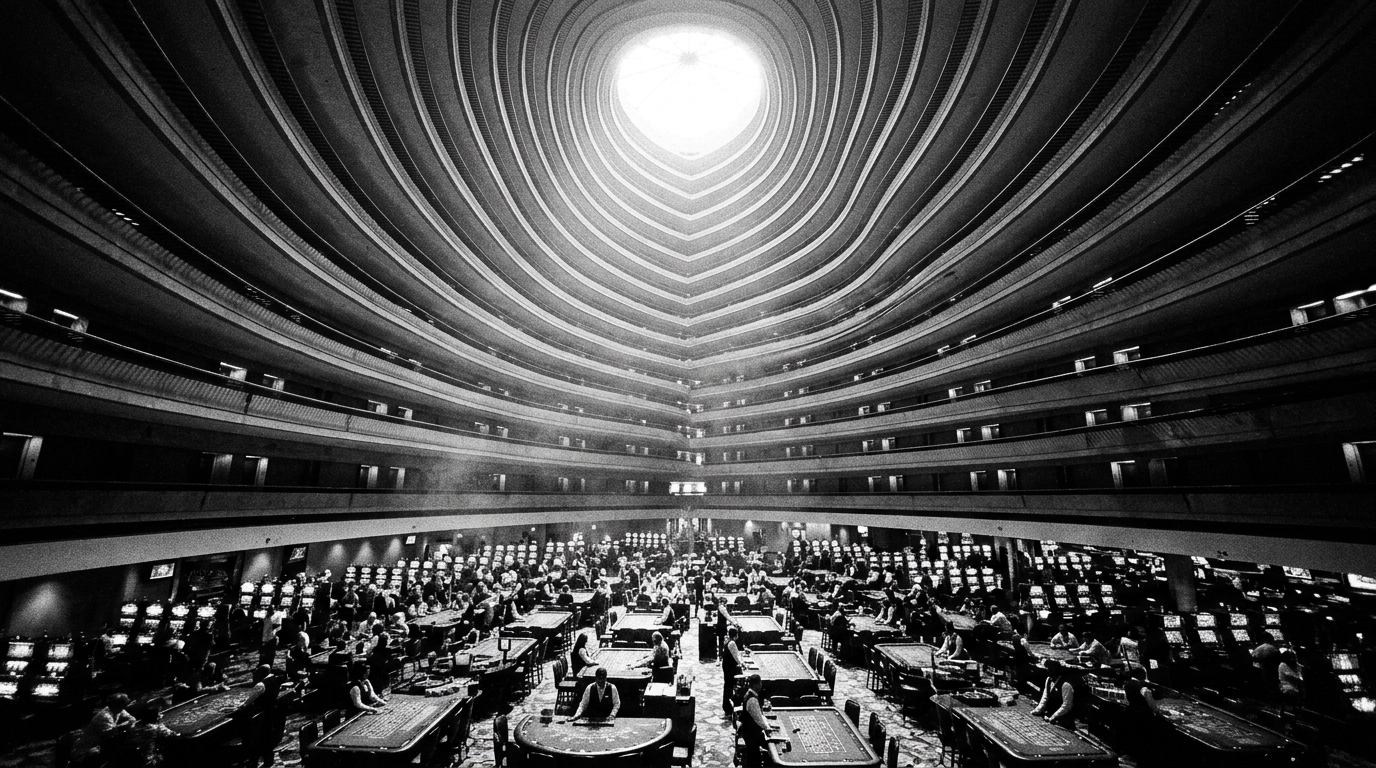
A woman from LA sat down at a Pai Gow table at Horseshoe Las Vegas last Sunday night, drew five aces with a joker, and walked away $118,005 richer. Good for her. Genuinely. That's a life-changing Tuesday morning when the direct deposit clears.

But here's what caught my eye. She was in town for the World Series of Poker. Which means she's exactly the kind of guest that makes a casino-resort GM's week... a motivated traveler with discretionary income, booking a room during a major event, spending time on the gaming floor. She's not an anomaly. She's the prototype of what's driving the Strip right now. May 2026 gaming revenue on the Strip hit $807.9 million, up 13.2% year-over-year. That's the eighth-highest month ever recorded for that corridor. Baccarat alone surged 59%. The Caesars CFO went on record saying the Strip is in "great shape" after a sluggish 2025. Those aren't jackpot-winner press releases. Those are structural indicators.

I've seen this movie before. The jackpot story is the shiny object... the thing that gets shared on social media and makes people in Omaha think about booking a Vegas trip. And honestly, that's fine. That IS the marketing. Progressive jackpots exist precisely to generate these moments. A portion of every wager feeds the pool, the number grows, someone eventually hits, and the casino gets a press release that costs them nothing because the players funded the prize themselves. It's one of the most elegant marketing mechanisms in the business. But if you're an operator... if you're running rooms, F&B, entertainment, or anything adjacent to the gaming floor... the jackpot isn't your story. The $808 million month is your story. The 13.2% year-over-year growth is your story. The baccarat surge tells you something specific about WHO is coming and WHAT they're spending on.

And here's the context that makes this even more interesting. Caesars is in the middle of a $17.6 billion merger with Fertitta Entertainment that'll take them private. MGM just formed a special committee to evaluate an $18 billion buyout offer. The Cosmopolitan opened a remodeled high-limit room with $5 million linked slot progressives. These aren't isolated events. The smart money is looking at Strip performance data and making enormous bets (no pun intended) on the trajectory. When you see two of the largest gaming companies in the world simultaneously moving toward going private while revenue numbers are posting near-record months... that tells you the people with the deepest access to the data believe there's significant upside that public markets aren't pricing in. Or at least upside they'd rather capture without quarterly earnings calls.

For those of us who've operated in markets where gaming drives the room night, the lesson is always the same. Follow the floor. When table game revenue surges, high-end F&B follows. When slot volume climbs, mid-market rooms fill. When baccarat spikes 59%, your premium suite inventory should already be priced accordingly. The jackpot photo is for Instagram. The revenue trend is for your forecast.

Operator's Take

If you're running a property on or near the Strip, pull your May and June gaming-adjacent revenue and compare it to the same period in 2025. The Strip just posted 13.2% year-over-year gaming growth, and if your rooms revenue and F&B aren't moving with it, you've got a capture rate problem worth diagnosing this week. Look at your rate strategy around marquee gaming events like WSOP... these guests have higher ancillary spend than your typical convention attendee, and if you're pricing rooms without factoring gaming floor revenue contribution, you're leaving money on the table. For GMs at non-gaming properties in the Las Vegas market, the rising tide is real, but it lifts the boats closest to the action first. Know your comp set's rate moves and make sure you're not the last property to adjust.

Read full analysis → ← Show less
Source: Google News: Caesars Entertainment
AI Search Sends Hotels 14.2% Conversion Rates. Most Properties Aren't Even in the Conversation.

AI Search Sends Hotels 14.2% Conversion Rates. Most Properties Aren't Even in the Conversation.

AI-referred visitors convert at 14.2% versus 2.8% for traditional search, and 40% of travelers now plan trips using AI tools. If your property's data isn't structured for the machines doing the recommending, you're not losing a marketing channel... you're becoming invisible.

Available Analysis

So here's what's actually happening. The way travelers find hotels is splitting into two completely different systems, and most properties are only optimized for the one that's shrinking.

Traditional SEO... the stuff you've been paying agencies to do for a decade... is built around getting clicks from a Google results page. That still matters. But Google AI Overviews now appear on over 25% of searches, up from about 13% in early 2025. When an AI overview answers the traveler's question directly, click-through rates to the top organic result drop by more than half. Forty percent of travelers are using AI tools for trip planning. Seventy percent of bookings now involve an AI-driven recommendation somewhere in the journey. And the conversion rate gap is staggering: visitors who arrive at your website through an AI recommendation convert at 14.2%, versus 2.8% for conventional organic search. That makes an AI-referred visitor roughly 4.4 times more valuable. Those aren't vendor projections. Those are measured outcomes.

The problem is that most hotel websites, especially independents and smaller branded properties, are structured for humans browsing, not for AI models parsing. What these AI systems need is structured data... clean, consistent, machine-readable information about your property, your rates, your amenities, your location context. If your Google Business Profile is half-filled-out, if your website content is generic marketing copy instead of specific factual detail, if your rate feeds are fragmented across three different systems that don't talk to each other... the AI just skips you. It doesn't penalize you. It doesn't even know you exist. You're not losing a ranking. You're absent from the conversation entirely.

Look, I've been in vendor meetings where someone pitches "AI-powered search optimization" and what they actually mean is "we updated your meta tags and added some schema markup." That's not nothing, but it's also not what we're talking about here. Real optimization for AI search means your property data has to be authoritative, structured, and consistent across every platform where an AI model might pull information. Your PMS data, your CRS, your Google Business Profile, your OTA listings, your website... they all need to tell the same story, with the same details, in formats that machines can parse without guessing. I consulted with a hotel group last year that had three different room-type naming conventions across their website, their OTA listings, and their PMS. Three different systems, three different versions of what the hotel actually offers. No human noticed. An AI model trying to synthesize that into a recommendation? It just moved on to the property down the street that had clean data.

The bigger structural issue here is one that should make independent operators especially uncomfortable. The major chains are already building conversational AI tools into their direct booking platforms. They're integrating with large language models. They have teams working on this. A 90-key independent doesn't have that. What a 90-key independent DOES have is the ability to move fast, control their own data, and make changes without waiting for a brand technology committee to approve a rollout in Q3 of next year. But only if they actually do it. The window where this is a competitive advantage and not just table stakes is probably 12-18 months. After that, it's the cost of being findable.

The vendors are going to flood this space. They already are. Before you sign anything, ask the question that actually matters: what specific, measurable change will this make to how AI platforms surface my property? If the answer involves the words "holistic," "ecosystem," or "comprehensive visibility platform"... you already know what I'm going to say.

Operator's Take

Here's what to do this week. Pull up your Google Business Profile and audit it like your bookings depend on it... because increasingly, they do. Every field filled. Every photo tagged. Every attribute accurate. Then check your website: can a machine extract your room types, rate ranges, amenities, and location context without interpreting marketing fluff? If your site says "experience elevated comfort in our thoughtfully appointed accommodations," that's invisible to an AI. If it says "king room, 340 square feet, 12th floor, city view, walk-in shower, 0.3 miles from convention center"... now you're in the conversation. This is what I call the Vendor ROI Sentence... if the agency or tool you're paying for search optimization can't tell you exactly how their work changes your visibility in AI-generated recommendations, you're paying for last decade's playbook. The operators who clean up their data now, while their comp set is still running generic SEO, are the ones who capture that 14.2% conversion rate. The ones who wait are going to wonder why their website traffic is fine but their bookings are falling.

— Mike Storm, Founder & Editor
Read full analysis → ← Show less
Source: Google News: Hotel AI Technology
Universal Just Built a $550M Theme Park in Frisco. Every Hotel Within 30 Miles Should Be Paying Attention.

Universal Just Built a $550M Theme Park in Frisco. Every Hotel Within 30 Miles Should Be Paying Attention.

Universal Kids Resort opened this week with 300 hotel rooms and a target demo of families with kids under eight. If you're running a hotel in the DFW sprawl, the demand wave is real... but so is the new comp set you didn't have last month.

Available Analysis

I managed a property once about four miles from a major entertainment venue that opened with enormous fanfare and a lot of promises about "rising tides lifting all boats." The first 90 days were incredible. Compression nights we'd never seen before. ADR bumped $15 on peak weekends. We were all high-fiving in the morning meetings. Then the venue's own hotel finished its soft opening, their loyalty program kicked in, and the demand that had been spilling over to us started staying on-site. Our RevPAR gains didn't disappear overnight... but they settled into something much more modest than those first three months suggested. The lesson stayed with me for 20 years.

Universal Kids Resort opened July 1st in Frisco, Texas. Twenty acres of theme park, 300 hotel rooms priced $200-$400 a night, and a concept designed specifically for families with kids aged 3-8. Total investment around $550 million. That's roughly $1.8M per key on the hotel alone if you back out the park cost (and yes, that math is rough, but it tells you how seriously they're taking the lodging component). This isn't a bolt-on hotel next to a roller coaster. This is Universal building a self-contained demand engine where families check in, walk into the park, and never need to leave the property.

For the DFW hotel market... and it's worth remembering that Frisco is one of the fastest-growing corridors in the country... there are two realities happening simultaneously. Reality one: a $550M destination attraction generates incremental travel demand that didn't exist before. Families are going to drive from Oklahoma City (three hours), San Antonio (four and a half), Houston (four hours), Little Rock. These are families who weren't coming to Frisco before. That's new demand, and some of it will absolutely spill into surrounding hotels. The on-site hotel has 300 rooms. On a peak Saturday in July, that's not enough for the volume this park will draw. Select-service and extended-stay properties within a 15-mile radius are going to see weekend compression they haven't experienced before, especially during school breaks and holidays.

Reality two: Universal didn't build 300 rooms on-site because they enjoy the hotel business. They built them because the highest-margin guest is the one who sleeps, eats, and plays without ever leaving your ecosystem. Early park admission. Dedicated entrance. Those aren't amenities... they're demand capture tools. The families willing to pay $300 a night for a themed hotel room are the same families who would have been your $159 king room at the Hilton Garden Inn down the tollway. And Universal's IP advantage (SpongeBob, Minions, Jurassic World) creates something most hotel loyalty programs can't touch... a four-year-old pulling on their parent's arm saying "I want to sleep in the SpongeBob hotel." Try competing with that using your rewards points.

Here's what I'd be watching if I were running a property anywhere in that corridor. The early reviews mention lack of shade and limited indoor attractions... in Texas, in July. That matters. If families start cutting park visits short because their toddler is melting in the heat and spending afternoons at nearby hotel pools instead, the spillover patterns change. If Universal adjusts (and they will... they didn't spend $550M to get killed by a weather problem they could have predicted), the on-site capture rate goes up and spillover goes down. Either way, this isn't a static situation. The operators who win are the ones watching weekly booking patterns, not quarterly STR reports. And if you're within that 30-mile radius and you haven't already adjusted your family-friendly positioning, your weekend package strategy, and your pricing for peak park days... you're already behind.

Operator's Take

If you're running a select-service or extended-stay within 20 miles of Frisco, pull your weekend booking data from the last two weeks right now and compare it to the same period last year. You should already be seeing movement. Build a family package that acknowledges the park without competing with it... shuttle partnerships, "cool down" pool packages for afternoon returns, breakfast-included rates that save a family of four $60 a day versus eating on-site. This is what I call the Three-Mile Radius in action... your revenue ceiling just shifted because the demand drivers around your property changed overnight. Price your peak dates aggressively now while the park is new and generating maximum buzz. That window won't last. And talk to your revenue management team about building rate fences between park weekends and regular weekends before your transient mix gets permanently repriced.

Read full analysis → ← Show less
Source: Google News: Resort Hotels
Expedia's Board Members Are Getting Paid in Stock Nobody's Buying on the Open Market

Expedia's Board Members Are Getting Paid in Stock Nobody's Buying on the Open Market

Expedia directors pocketed stock units worth $0 on paper as routine compensation while executives quietly sold $1.3 million in shares over the last 90 days. The divergence between who's accumulating and who's cashing out tells you more than the Q1 earnings headline ever will.

A batch of Form 4 filings hit the wire on July 1 for Expedia Group, and the financial press dutifully reported them like they meant something. Directors picking up a few dozen stock units each as part of their deferred compensation plan. Price paid: $0.00. Not because the stock is worthless... because these aren't purchases. They're grants. The kind of thing that happens every quarter at every publicly traded company in America. It's the corporate equivalent of direct deposit hitting your checking account on a Friday.

Here's why I'm writing about something this mundane. Because what's interesting isn't the filing. It's the contrast. While board members are accumulating small positions through automatic compensation (we're talking 37 units here, 34 units there... rounding errors against Expedia's market cap), executives inside the company have been net sellers to the tune of $1.3 million over the last 90 days. That's not a scandal. Executives sell stock all the time for perfectly legitimate reasons. But when the people running the company are lightening their positions while the board is only "buying" because their comp plan requires it... that's a data point. Write it down. Don't panic over it. Just write it down.

The bigger picture matters more to anyone in this industry who depends on OTA volume. Expedia just posted a 15% revenue jump in Q1 to $3.4 billion. Gross bookings up 13% to $35.5 billion. Highest first-quarter profitability in company history. They're buying CarTrawler, expanding their B2B segment (which grew 25%), and rolling out AI tools that will make their marketplace stickier for suppliers. That's you, by the way. You're the supplier. And "stickier" means harder to leave, not better for your margins. Their B2B revenue growing at 25% means more of your distribution is flowing through pipes they control, priced the way they want to price it. Every percentage point of growth on their earnings call is a percentage point of leverage at your negotiating table.

I've seen this movie before. An OTA posts record numbers, analysts upgrade the stock, and the trade press writes it up like it's good news for hotels. It is good news... for Expedia. For you, the operator paying 15-25% commission on every booking they send you, their record profitability is your cost of acquisition going in exactly the wrong direction. Their $700 million share buyback came from somewhere. Some meaningful chunk of it came from your rooms revenue. That filing cabinet of Form 4s everybody got excited about? It's a distraction from the real filing you should be reading... your own channel cost analysis.

The stock is trading around $263 with analysts split between buy and hold, and at least one valuation model suggesting it's 27% overvalued. The board members accumulating units at zero cost aren't making a bet on the company. They're collecting compensation. The executives selling $1.3 million aren't making a statement. They're managing personal portfolios. None of this changes your Monday morning. What should change your Monday morning is the 25% B2B growth number, because that's the wave coming at your direct booking strategy whether you're watching Expedia's insider trades or not.

Operator's Take

If you're a GM or revenue manager at a branded or independent property, stop reading SEC filings and start reading your own channel mix report. Pull your OTA commission spend for the last 12 months and calculate it as a percentage of total revenue... not rooms revenue, total revenue. If it's trending up, you have a distribution problem that no amount of Expedia earnings analysis will fix. This week, sit down with your director of sales (or whoever owns your digital strategy) and identify your top 20 OTA-sourced repeat guests. Those are the ones you can convert to direct. Start there. The OTAs are getting stronger, more profitable, and more embedded in your distribution every quarter. The only hedge you have is owning more of your own demand. Build that muscle now while your top line is still healthy enough to invest in it.

Read full analysis → ← Show less
Source: Google News: Expedia Group
MGM Bet $625M That Your Casino Guest Was Already Gone. They Were Right.

MGM Bet $625M That Your Casino Guest Was Already Gone. They Were Right.

BetMGM just posted its first profitable year and returned $270 million to its parents, which means the thesis that casino guests would migrate to their phones wasn't a gamble... it was a forecast. If you're running a property that still thinks the slot floor is the revenue engine, this is the part where the engine moves.

Available Analysis

I worked with a casino resort GM once who had a ritual every Monday morning. He'd walk the slot floor at 6 AM, coffee in hand, counting butts in seats. Not a metaphor. He literally counted how many people were playing before the breakfast buffet opened. He'd been doing it for 15 years. "If Monday 6 AM is up, the week's going to be fine," he told me. Sometime around 2022, Monday 6 AM stopped being up. The seats weren't empty... they just weren't as full. He kept counting anyway, because that's what he knew. But the people who used to be in those seats? They were in bed. On their phones. Placing bets through an app.

That's the story MGM just told Wall Street, except with a $2.8 billion exclamation point. BetMGM hit its first profitable fiscal year in 2025... $220 million in adjusted EBITDA after burning through a $244 million loss the year before. They returned $270 million in cash to MGM and Entain in Q4 alone. The iGaming side grew 24% to over $1.8 billion in revenue. Online sports wagering jumped 63%. And here's the number that should keep every casino operator awake tonight: MGM's loyalty program, 42 million members deep, now drives an estimated 60% of domestic resort revenue. The digital arm isn't supplementing the physical properties. The physical properties are becoming the loyalty fulfillment centers for the digital operation. Read that again.

This is a complete inversion of how casino hotels have worked for 50 years. The old model was simple... build the building, fill the floor, comp the room, extract the gaming revenue. The room was a loss leader. The restaurant was a loss leader. Everything existed to keep you at the table or the machine. MGM is flipping that. BetMGM acquires the customer digitally, the loyalty program tracks every dollar across every channel, and then the resort experience becomes the reward tier... the thing you earn by betting enough on your phone. The $625 million MGM has invested in BetMGM since 2018 wasn't a hedge. It was a thesis that the casino floor's gravitational pull was weakening, and the replacement was going to be a 5-inch screen. The CFO basically said the quiet part out loud in March... if the market doesn't value BetMGM properly within MGM's stock price, they'll find "other ways to monetize" it. That's not a threat. That's a company telling you the digital arm might be worth more separated than attached.

For those of you running non-gaming hotels in casino markets, pay attention to the second-order effects. When MGM says they're targeting "premium mass" players through the app, they're describing a customer acquisition strategy that doesn't require that customer to walk through your lobby to get to their casino. The convention delegate who used to wander into your property's restaurant because MGM was sold out? MGM's app is now offering that person a room upgrade and a dining credit before they even land. The 42 million loyalty members aren't just a database. They're a distribution channel that competes directly with your OTA visibility in every market where MGM operates. And MGM operates in a lot of markets.

Here's what bothers me, though, and nobody in the press release is talking about it. BetMGM just revised its 2026 revenue guidance downward... from $3.1-$3.2 billion to $2.9-$3.1 billion... while maintaining EBITDA guidance of $300-$350 million toward the lower end. That means they're expecting to make similar profit on less revenue, which either means they've gotten more efficient (possible) or they're pulling back on customer acquisition spend to protect the bottom line (more likely). When a growth story starts managing for margin instead of market share, it usually means the easy growth is done. The 2027 target of $500 million EBITDA is ambitious against a backdrop of slower revenue expansion. That gap between aspiration and trajectory is where reality lives. I've seen this movie before in other segments... aggressive growth, first profitability, then the market asks "okay, but what's the sustainable run rate?" That question is coming. And the answer matters for every operator whose market overlaps with MGM's footprint.

Operator's Take

If you're running a hotel in a casino market... Vegas, Atlantic City, Detroit, Mississippi Gulf Coast, any of them... your competitive set just shifted in ways that STR doesn't capture. MGM's 42 million loyalty members and 60% domestic revenue from that program means they're not competing with you on rate anymore. They're competing with you on relationship, and they have a $2.8 billion digital machine doing the relationship-building before the guest ever books a room. Pull your production reports for the last 12 months and look at walk-in F&B revenue, casino overflow room nights, and any segment where you've historically benefited from spillover demand. If those numbers are softening, this is why. The play isn't to out-tech MGM. You can't. The play is to own the guest experience they can't digitize... the local restaurant recommendation, the staff member who remembers a name, the property that feels like a discovery instead of a loyalty tier. Double down on what an app can't replicate. That's your moat.

Read full analysis → ← Show less
Source: Google News: MGM Resorts
Your Next Celebrity Wedding Is a Revenue Event. Treat It Like One.

Your Next Celebrity Wedding Is a Revenue Event. Treat It Like One.

Zendaya and Tom Holland's wedding just reminded every hotel operator in America that celebrity events generate more operational chaos per square foot than any brand mandate ever will. The question isn't whether it happens at your property... it's whether your team knows what to do when it does.

I once managed a property where a B-list cable TV actor booked a rehearsal dinner. Not the wedding. The rehearsal dinner. Within 48 hours we had paparazzi in the parking garage, a local news van blocking the loading dock, two guests who checked out early because of the "circus," and a front desk team fielding calls from entertainment reporters pretending to be guests trying to confirm reservations. Total incremental revenue from the event: about $11,000. Total cost in comps, staff overtime, displaced regular guests, and one broken planter from a photographer who climbed it: closer to $8,000. We netted maybe three grand and my team was wrecked for a week.

The Zendaya-Tom Holland wedding news is entertainment gossip. I get that. But here's why I'm bringing it up... because somewhere right now, a sales director at a resort or a full-service property is fielding an inquiry from a celebrity's wedding planner, or an event coordinator, or a publicist, and that inquiry is going to feel like winning the lottery. Big spend. Great PR. Instagram exposure that money can't buy. And if you don't have a playbook for what actually happens when that event hits your building, you're going to learn the hard way that fame is an operational multiplier. It multiplies everything... revenue, yes, but also security needs, staff stress, liability exposure, noise complaints, and the very real chance that your 200 other paying guests get a worse experience because every resource in the building is pointed at one ballroom.

The properties that handle this well (and I've seen a few do it brilliantly) treat celebrity and high-profile events the way they'd treat a hazmat situation... with a plan that exists before the event shows up. Dedicated security protocols. Media management that's assigned to a specific person, not whoever happens to be at the front desk. Contractual language around photography, social media, and property access that protects the hotel, not just the client. A realistic cost model that accounts for the invisible expenses... the displaced revenue from guests who won't book during the event, the overtime, the wear and tear on staff who are operating at 150% for 72 hours straight. You price all of that into the contract or you eat it.

What I see too often is the opposite. The sales team books the event based on the food and beverage minimum and the room block. The GM finds out the details two weeks before arrival. Security is an afterthought. The operations team scrambles. And afterward, everyone tells the owner it was "great exposure" because nobody wants to run the actual P&L on the event and admit it was a break-even at best. I've seen this movie before. The sequel is always the same... the GM swears "never again" and then the sales team books another one six months later because the top-line number looks irresistible.

Look... I'm not saying don't take these events. High-profile bookings can be genuinely profitable and they can build a reputation that attracts more high-value business for years. But only if you run it like a business decision, not a fan moment. The celebrity doesn't care about your P&L. Their planner doesn't care about your other guests. Your job is to care about all of it, simultaneously, while making it look effortless. That's the gig. And it starts with having the plan before the phone rings.

Operator's Take

If you're a GM or director of sales at any property that handles events north of $50K, build a high-profile event playbook this quarter. Not after you need it. Before. Include a realistic cost model that goes beyond F&B minimums... factor in security ($2,500-$5,000 for a single event isn't unusual), staff overtime, potential displaced revenue, and a media management protocol with one named point person. Put contractual language in your event agreements that covers photography restrictions, property access limitations, and liability for third-party disruptions. And when the next big-name inquiry comes in, run the real numbers before you say yes. Revenue is only revenue if it actually flows to the bottom line.

Read full analysis → ← Show less
Source: Google News: Four Seasons
Belgium Just Showed Every Hotel Operator What Regulation Actually Looks Like When It Has Teeth

Belgium Just Showed Every Hotel Operator What Regulation Actually Looks Like When It Has Teeth

An ING study estimates nearly 5,000 homes in Brussels, Antwerp, and Ghent have been pulled from long-term housing by short-term rentals, and Belgian authorities are responding with registration mandates, €7 million in potential fines, and an EU-wide data sharing framework that could reshape how Airbnb operates across the continent.

Available Analysis

So here's something that should matter to every hotel operator who's been watching the short-term rental regulation debate play out in slow motion for the last decade: Belgium just stopped talking about it and started doing something.

An ING bank study published this month estimates that roughly 5,000 homes across Brussels, Antwerp, and Ghent have been effectively removed from the long-term rental market because they're being operated as short-term rentals... primarily through Airbnb. Brussels alone accounts for about 3,000 of those. And here's where it gets interesting: the Brussels tax authorities are now preparing a massive regularization campaign targeting approximately 5,000 Airbnb properties for the years 2023-2025, with theoretical fines approaching €7 million and an estimated €6 million in unpaid tourist accommodation taxes. Meanwhile, the Flemish government has introduced mandatory registration numbers for all tourist accommodations advertised on platforms... effective now. No registration number, no listing. And backing all of this up is the EU Short-Term Rental Data Regulation (that's Regulation 2024/1028 for the compliance nerds), which went live on May 20, 2026, requiring platforms to share booking data with local authorities monthly.

Look, I've been watching cities try to regulate Airbnb for years. Most of them pass rules and then have zero mechanism to enforce them. What's different here is the technology layer. The EU regulation doesn't just say "hosts must register." It requires platforms... Airbnb, Vrbo, all of them... to actually verify registration numbers and share granular booking data with municipal authorities every month. That's not a suggestion. That's an API mandate. And as someone who's spent a lot of time thinking about how data flows between platforms and the people who need it, I can tell you: once the data pipeline exists, enforcement becomes automated. You go from "we hope hosts comply" to "we know exactly which ones don't." That's a fundamentally different enforcement architecture. Brussels has already acknowledged that over 90% of Airbnb listings in the city are technically illegal due to non-registration. When you combine that stat with a system that actually surfaces non-compliant listings to tax authorities in real time... the math changes fast.

Now, before the hotel industry takes a victory lap: ING economist Alissa Lefebre makes a point worth hearing. Short-term rentals are not the primary driver of housing shortages in these cities. Insufficient supply, rising construction costs, changing demographics... those are the structural problems. The 5,000 homes represent roughly 0.8% of total rental housing stock. That's real, but it's not the whole story. What IS significant for hotel operators is the pricing dynamic. European hotel RevPAR grew 4.7% year-over-year in mid-2025, with regulated cities showing particular strength. When non-compliant supply gets pulled or taxed into parity, the competitive landscape shifts. Not dramatically overnight, but structurally over time. And Airbnb's stock already reflected this... ABNB dropped 3.4% when the EU rules went live in May. Investors are pricing in a world where the regulatory arbitrage that made short-term rentals so profitable starts to narrow.

The piece of this that most people are missing is the data sharing requirement. I've consulted with hotel groups that have spent years trying to understand their actual competitive set when it includes hundreds of untracked short-term rental units. Has anyone actually built internal tools to ingest this municipal data once it becomes available? Because it will become available. The EU regulation requires it. And the hotel operator who figures out how to use that data... actual booking volumes, occupancy patterns, seasonal shifts in short-term rental supply... to inform their own revenue strategy is going to have an advantage that didn't exist six months ago. This isn't theoretical. The data pipeline is being built right now. The question is whether hotel technology vendors are building the tools to use it, or whether they're going to show up 18 months late with a "proprietary AI-powered competitive intelligence platform" that's really just a dashboard on top of a public dataset. (I have my suspicions about which one it'll be.)

Operator's Take

Here's the actionable part, and it's not about celebrating regulation. If you're running a hotel in any European market... or frankly, any market where short-term rental regulation is tightening... do two things this week. First, find out what registration and data-sharing requirements exist or are coming in your municipality. Not the national headline. Your city. Your zip code. The rules vary wildly and the ones that matter are local. Second, start asking your revenue management vendor whether they can ingest municipal short-term rental data as it becomes available under these new frameworks. If they look at you blankly, that tells you something about how seriously they're taking this shift. The competitive set you've been guessing at for years is about to become visible. The operators who are ready to use that data will reprice smarter. The ones who aren't will keep competing against supply they can't see. That's been the game for a decade. It's about to change. Be ready before it does.

— Mike Storm, Founder & Editor
Read full analysis → ← Show less
Source: Google News: Airbnb
Airbnb Just Told Hotels Exactly What Guests Want This Summer. Most Hotels Aren't Listening.

Airbnb Just Told Hotels Exactly What Guests Want This Summer. Most Hotels Aren't Listening.

Airbnb's summer travel data shows one-third of travelers choosing rural, activity-driven trips over traditional destinations. If you're a hotel operator wondering why your summer leisure pace is soft, the answer might be that your property is selling a bed when the guest is buying an experience.

Available Analysis

So Airbnb dropped their 2026 summer travel trends report, and buried inside the marketing language about "playcations" is something hotel operators should actually pay attention to. One-third of summer travelers are staying closer to home, booking rural properties near golf courses, surf breaks, and lakeside recreation areas. Searches for activity-driven listings more than doubled. That's not a trend piece for a lifestyle magazine. That's demand data telling you where the leisure dollar is going... and it's not going to your lobby.

Look, I get it. "Playcations" sounds like something a PR team invented during a brainstorm with too many kombucha seltzers. But strip away the branding and what Airbnb is actually reporting is a fundamental shift in how leisure travelers define value. They're not searching for "hotel near downtown." They're searching for "place near the thing I want to do." The accommodation is secondary to the activity. And here's what that means for hotels: if your property's value proposition starts and ends with "clean room, good location, free breakfast," you're competing on a dimension the guest has stopped prioritizing. You're selling inputs. They're buying outcomes.

I talked to an independent operator last month who runs a 140-key property about 20 minutes from a popular lake recreation area. She told me she started listing kayak and paddleboard rentals on her website... not as a separate booking, just information about where to get them nearby, with driving directions and a suggested itinerary. No technology investment. No app. Just a page on her existing site. Her direct bookings from organic search jumped 18% in the first quarter she did it. Why? Because Google started surfacing her property for activity-related searches instead of just "[city name] hotel." She didn't build a platform. She just answered the question the guest was actually asking.

Here's what bugs me about the hotel industry's response to this kind of data. When Airbnb publishes that activity-driven travel is surging, the brand response is usually some version of "we're launching an experience-curated partnership ecosystem" (I think I just threw up in my mouth a little). The technology response is "here's an AI-powered concierge chatbot." Neither of those actually solves the problem. The problem is discoverability. Guests searching for "best places to surf near [destination]" are finding Airbnb listings because those listings describe the activity, not the property. Most hotel websites describe the property. The amenities. The room types. The brand loyalty points. All stuff the guest already assumes exists. Nobody's searching for "hotel with a fitness center." They're searching for "weekend golf trip under $200 a night." The technology gap here isn't AI or chatbots... it's basic content strategy and SEO that most hotel websites haven't updated since 2019.

The deeper structural issue is that Airbnb's 17% active listing growth means supply keeps expanding in exactly the markets where this demand is heading... rural, recreation-adjacent, experience-driven. Hotels in secondary and tertiary markets near outdoor recreation are going to feel this compression first. Your comp set isn't just the Hampton Inn down the road anymore. It's the three-bedroom cabin on the lake that sleeps eight, has a full kitchen, and costs $175 a night. That's a per-person value proposition most select-service hotels can't touch on paper. What you CAN compete on is reliability, consistency, service, and the fact that nobody has ever shown up at a hotel and found the "amenities" were a broken hot tub and a host who doesn't respond to texts. But you have to actually articulate that value in the language the guest is using to search. And right now, most hotels aren't even in the conversation.

Operator's Take

If you're running a property anywhere near outdoor recreation... lake, coast, trails, golf... pull up your website right now and ask yourself: does this site answer the question "what can I DO here?" or just "what does the room look like?" If it's the second one, you're invisible to the fastest-growing leisure segment this summer. This week, build a simple "things to do" page with specific activities, distances, and local recommendations. Cost you nothing. Takes a couple hours. Then check your Google Search Console in 60 days and tell me your organic traffic didn't move. For branded properties, talk to your DOS about updating your OTA listing descriptions to include activity-specific keywords... "near [lake/trail/course name]" isn't brand dilution, it's revenue capture. The guests Airbnb is winning right now aren't lost to you. They just can't find you because you're not speaking their language.

— Mike Storm, Founder & Editor
Read full analysis → ← Show less
Source: Google News: Airbnb
Caesars Is Done Buying Gamblers. Now They're Harvesting Them.

Caesars Is Done Buying Gamblers. Now They're Harvesting Them.

Caesars Digital just posted record Q1 revenue of $374 million while spending less to acquire customers, and their secret weapon is the same loyalty program that fills your hotel rooms. If you're running a Caesars-affiliated property, the sportsbook strategy is about to change what walks through your lobby door.

I worked with a casino resort GM once who kept two whiteboards in his office. One tracked gaming revenue. The other tracked what he called "the real number"... total property spend per guest, broken out by how they found the place. Loyalty program guests outspent walk-ins by 40% on rooms, F&B, and spa. Not because they were richer. Because the program had already trained them to spend. Every dollar Caesars puts into that rewards ecosystem comes back through your rate, your minibar, your steakhouse check. That GM understood something most hotel operators don't think about enough... the acquisition channel shapes the guest behavior long after check-in.

So here's what's happening at Caesars Digital, and why it matters even if you've never placed a bet in your life. Their sportsbook division just hit $374 million in first-quarter net revenue, up nearly 12% year over year. But here's the part that should get your attention... they did it while mobile betting volume actually dropped 3%. Revenue up, volume down. That means they're squeezing more out of every player. Average revenue per monthly unique player jumped 15% to $219. Hold percentage climbed to 8.3%, up from 5.4% a couple years ago. CEO Tom Reeg called it the "free cash flow harvesting stage." That's not a throwaway line. That's a strategic declaration. They're done spending wildly to acquire new bettors. They're monetizing the ones they already have. And they're doing it through the Caesars Rewards program... the same program that drives room nights, comps, and tier-based loyalty across the entire property portfolio.

This matters to hotel operators because the profile of the guest walking through your doors is shifting. Caesars isn't running $1,000 risk-free bet promotions anymore to lure in casual bettors who'll never come back. Their current offer... bet a dollar, get ten profit boosts capped at $25 each... is designed to keep existing users engaged, not to create new ones from scratch. That's a fundamentally different acquisition philosophy. It means the sportsbook is feeding the loyalty program more efficiently, which means the guests being driven to Caesars properties are increasingly repeat, higher-value, rewards-motivated travelers. If you're operating a Caesars-affiliated hotel, your comp mix is going to look different. More loyalty-driven bookings, fewer transient walk-ins chasing a Super Bowl promo they saw on Instagram.

There's another move here worth paying attention to. Caesars pulled credit card deposits from their sportsbook platform back in April, joining DraftKings, FanDuel, BetMGM, and bet365 in what's become an industry-wide shift. The responsible gambling angle is real and it matters. But from an operational perspective, it also means the sportsbook customer base is self-selecting for people with actual bankrolls, not people borrowing from Visa to chase a parlay. That's a healthier customer for your hotel too. Someone funding a sportsbook account with a debit card or bank transfer is more likely to be a planned-trip, budgeted guest than an impulse gambler on a credit card bender. The downstream effect on your property... fewer comps going to guests who were never going to spend beyond the freebie, more comps going to guests who are already in the spending mindset.

The bigger picture here is that Caesars is proving something the rest of the industry should study. They figured out that the most expensive thing in any customer relationship is the first transaction. Once you own that customer through a loyalty ecosystem that crosses digital betting, hotel stays, dining, and entertainment... you stop paying acquisition costs and start collecting margin. The sportsbook isn't a standalone business anymore. It's a funnel. And the hotel is where the funnel delivers its highest-margin output. If you're on the Caesars platform, understand that dynamic and lean into it. If you're not, understand that your competitors who ARE on it are getting guests pre-qualified by a digital engagement engine you don't have access to.

Operator's Take

If you're a GM at a Caesars-affiliated property, pull your loyalty contribution numbers for Q1 and compare them to the same period last year. I'd bet they're up, and if they are, that's not an accident... it's the direct result of this digital strategy shift. Build your forecasting around higher loyalty mix, not higher volume. That means your rate integrity on loyalty bookings matters more than ever because these guests are worth more over their lifetime. Talk to your revenue manager about protecting rate on rewards-driven segments instead of discounting to fill gaps. And if you're running F&B or entertainment, look at your Caesars Rewards redemption data... that's where the incremental spend lives now. The sportsbook is doing the prospecting for you. Your job is to convert the visit into a repeat stay.

Read full analysis → ← Show less
Source: Google News: Caesars Entertainment
Wynn Palace Is Running 99% Occupancy. So They're Spending $900 Million on Rooms, Not Tables.

Wynn Palace Is Running 99% Occupancy. So They're Spending $900 Million on Rooms, Not Tables.

Wynn Macau just posted a billion-dollar quarter with one property doing all the heavy lifting and the other one flatlined. The $900 million bet they're making next tells you everything about where casino-resort economics are actually heading.

Available Analysis

I worked with a casino resort GM years ago who kept two whiteboards in his office. One tracked gaming revenue. The other tracked non-gaming spend per guest night. When the owner visited, the owner always looked at the first board. The GM always pointed to the second one. "That board," he told me once, "is the one that tells me whether we have a business or a slot parlor." He was right then. He's even more right now.

Wynn Macau Ltd just closed Q1 2026 with $989 million in operating revenue... up 14.2% year over year. Sounds like a clean win. But the headline number is doing what headline numbers always do... it's hiding two completely different stories under one roof. Wynn Palace, over on the Cotai Strip, drove $659 million of that total, a 23% jump. Casino revenue at the Palace alone climbed 27%. Meanwhile, the original Wynn Macau property on the peninsula? Flat. $330 million, essentially identical to last year's Q1. And its adjusted EBITDAR dropped 16% because win percentages fell off a cliff... VIP tables went from 1.09% to 0.39%. That's not a bad quarter. That's a structural shift in where the money goes. Two properties, same company, same market, two entirely different trajectories.

Here's what caught my attention. Wynn Palace is running 99.1% occupancy. Not during a holiday week. Not during a special event. Every night. And the company's response isn't to add more gaming floor. It's to spend $900 to $950 million on a 432-suite hotel tower called "The Enclave"... zero new gaming positions. Think about that for a second. A casino company is betting nearly a billion dollars that rooms, not tables, are where the growth is. They're not chasing gaming capacity. They're chasing the premium guest who already wants to be there and can't get a room. That's a fundamentally different bet than the one Macau operators were making five years ago, and it tells you where the smartest money in this space thinks the margin is going.

Look at the debt picture too. Wynn Macau Ltd is carrying just over $5.85 billion in long-term debt. Adding another billion in development spend on top of that is a statement of conviction... or a leap of faith, depending on how you model the next cycle. They've got $608 million in short-term investments and about $96 million in restricted cash. The math works right now because the premium mass segment is printing money. But I've been through enough cycles to know that "right now" is the most dangerous phrase in this business. You stress-test that debt stack against a 25-30% revenue decline (which Macau has experienced more than once in the last decade), and the conversation gets very different very fast.

What's actually interesting here isn't Wynn's earnings. It's the signal. The largest, most sophisticated operators in the casino-resort world are shifting capital from gaming floor to guest room. They're betting that the next dollar of margin comes from a premium suite, not a baccarat table. That's a thesis about the future of hospitality-driven gaming that every resort operator... not just in Macau, but in Vegas, in the UAE (where Wynn is building right now, with delays), in any integrated resort market... should be paying attention to. The era of build-more-tables-and-they-will-come is over. The era of build-better-rooms-and-charge-more is here. I've seen this movie before in non-gaming hotels. The operators who figured it out early captured a decade of margin advantage. The ones who didn't spent years catching up.

Operator's Take

If you're running any kind of resort property... gaming or not... this is a signal worth reading carefully. When a company with Wynn's resources looks at 99% occupancy and decides the answer is premium rooms rather than more gaming capacity, they're telling you where they think the margin lives. Ask yourself the same question about your own property: where is your next dollar of profit actually coming from? For most of you, it's not another revenue stream. It's extracting more value from the guests you already have. Run your current occupancy against your ADR ceiling. If you're consistently above 85% and your rate hasn't moved meaningfully in 18 months, you're leaving money on the table every single night. That's the operational lesson here. Don't build more. Charge what you're worth. And if you can't charge more because your product doesn't justify it... that tells you where your capital should go.

Read full analysis → ← Show less
Source: Google News: Wynn Resorts
RLJ Beat the Street by 22%. That's Not the Part That Should Get Your Attention.

RLJ Beat the Street by 22%. That's Not the Part That Should Get Your Attention.

RLJ Lodging Trust posted a first quarter that made Wall Street happy, with AFFO beating estimates by six cents and RevPAR outpacing the industry by 100 basis points. But the number buried in the earnings call tells you more about where this cycle is heading than the headline ever will.

Available Analysis

I worked with a REIT asset manager once who had a phrase he used every earnings season. He'd read the press release, put it down, and say "okay, now show me where they're scared." Not cynical... just experienced. Because every earnings beat has a tell. The good news is always in the headline. The strategy is always in the footnotes.

RLJ posted a strong Q1. No argument there. RevPAR at $148.55, up 4.8%, beating the broader industry by roughly 100 basis points. AFFO came in at 33 cents versus the Street's 27-cent estimate. Revenue topped consensus by $17.5 million. Hotel EBITDA margins expanded 45 basis points to 26.4%. Those are real numbers from real operations, and Leslie Hale's team deserves credit for executing the urban-centric strategy they've been talking about for years. Northern California surged 27%. New York pushed 8%. Houston and Denver both ran 14% growth. When your thesis is "urban recovery plus premium brands," and your urban markets deliver like that, the thesis is working.

But here's where I want you to slow down. They raised full-year guidance to 1.5% to 3.5% RevPAR growth. Read that again. Q1 came in at 4.8%... and they're guiding 1.5% to 3.5% for the full year. That means management is telling you, quietly and politely, that the back half of 2026 is going to be softer. Maybe meaningfully softer. They're not panicking (they have $950 million in liquidity and no debt maturities until 2029 after extensions... that's a fortress balance sheet). But they're not projecting Q1's momentum forward either. When a management team beats by this much and doesn't raise guidance proportionally, they're seeing something in the booking pace or the rate environment that gives them pause. That's not a criticism. That's experience talking. Conservative guidance after a beat is what smart operators do when the macro picture has more questions than answers.

The conversion play is the other story worth watching. RLJ is actively repositioning properties into lifestyle flags... Curio, Autograph... and reporting 16% EBITDA growth from completed conversions versus 10% from straight renovations. That delta matters. It tells you the brand premium is real, at least at the properties they've chosen to convert. But conversions are selection-biased by definition. You convert your best candidates first. The question is whether hotel number 15 in the conversion pipeline delivers the same lift as hotel number 3. In my experience, it usually doesn't. The early wins are always the biggest because you're picking the low-hanging fruit... the assets in the right markets with the right bones. As you move deeper into the portfolio, the marginal return on conversion shrinks. I've seen this movie at three different companies.

The $250 million buyback authorization is the cherry on top, and what it signals about capital allocation priorities is the part worth reading carefully. When a lodging REIT with 84 of 92 hotels unencumbered and nearly a billion in liquidity decides to buy back stock instead of acquire assets, they're telling you one of two things: either they think their stock is cheap (it's trading below NAV by most estimates), or they think the acquisition market is expensive. Probably both. For operators at RLJ properties, this is actually good news... it means ownership isn't about to layer on aggressive acquisition debt or chase a deal that stretches the balance sheet. They're playing defense with their capital structure while running offense with their operations. That's the combination you want from your REIT owner heading into uncertain territory.

Operator's Take

If you're a GM at an RLJ property, here's what this earnings call actually means for your building. The good news: ownership has the balance sheet to invest in your asset. The $80-90 million in planned CapEx tells you renovations are coming (or continuing), and the conversion premium data gives you ammunition if you're lobbying for a repositioning. The watch-out: that guidance gap between Q1 actuals and full-year projections means corporate is already modeling softer demand in the back half. Don't wait for the revenue management call in August to start building your contingency plan. Pull your pace reports now. Look at your group base for Q3 and Q4 versus last year. If there's a gap, go to your revenue manager this week with a rate strategy that protects ADR while you still have pricing power. This is what I call the Rate Recovery Trap... the temptation to chase occupancy with rate cuts when pace softens is real, but once you discount, you spend the next year retraining the market to pay what your asset is worth. Don't be the property that panics in September. Be the one that planned in May.

Read full analysis → ← Show less
Source: Google News: RLJ Lodging Trust
Sands Made $1.42 Billion in EBITDA Last Quarter. They Don't Own a Single U.S. Hotel.

Sands Made $1.42 Billion in EBITDA Last Quarter. They Don't Own a Single U.S. Hotel.

Las Vegas Sands just posted a quarter that would make any domestic operator's jaw drop... 25% revenue growth, 95.7% occupancy in Singapore, and nearly $800 million in EBITDA from a single property. The part worth studying isn't the gambling. It's the integrated resort model that American hotel companies keep talking about and never actually build.

Available Analysis

I worked with a casino resort GM years ago who had a saying that stuck with me. He'd look at the monthly P&L and say, "The rooms don't make the money. The rooms make the money possible." Meaning the hotel operation was the engine that kept everything else... the gaming floor, the restaurants, the retail, the convention space... fed with warm bodies who had wallets. His job wasn't to maximize RevPAR. His job was to maximize the total spend of every human being who walked through those doors.

That's exactly what Las Vegas Sands just reported. $3.59 billion in net revenue for Q1, up 25% year over year. $1.42 billion in adjusted property EBITDA. Net income up 57% to $641 million. And here's the thing that should make every hotel operator in America stop and think... they did this with two markets. Singapore and Macao. That's it. They sold everything in the U.S. back in 2022 for $6.25 billion, took the cash, and went all in on integrated resorts in Asia. Marina Bay Sands alone generated $788 million in EBITDA on $1.49 billion in revenue at 95.7% occupancy. One property. Nearly $800 million in EBITDA. Let that number sit with you for a second if you're looking at your own EBITDA line and trying to figure out how to squeeze another point of flow-through.

Now look... I'm not suggesting you can replicate Marina Bay Sands in Des Moines. That's not the point. The point is the model. Sands doesn't think of itself as a hotel company that happens to have casinos. It thinks of itself as a destination company where every revenue stream... gaming, rooms, F&B, retail, entertainment, conventions... is engineered to amplify the others. VIP gaming turnover at Marina Bay more than doubled to nearly $18 billion, driving a 115% jump in that segment's revenue. But those VIP players are also eating in the restaurants, booking suites, shopping in the retail. The room isn't the product. The room is the anchor that holds the guest in the ecosystem long enough to capture total wallet share. American hotel companies talk about "ancillary revenue" like it's a bonus. Sands treats it like it's the entire strategy.

Here's what makes the financial picture even more interesting. They've got $15.57 billion in total debt and $3.33 billion in unrestricted cash, and they're still buying back $740 million in stock while paying a quarterly dividend. Patrick Dumont took over as CEO in March after Robert Goldstein stepped into an advisory role, and the transition has been seamless enough that the earnings didn't blink. But the stock dropped 8.3% the day after the report. Why? Because the market is worried about Macao margins. Competitive intensity. The cost of maintaining premium service levels. In other words... the market looked at a company that just posted 25% revenue growth and said "but what about your expenses?" Sound familiar? It should. That's the exact conversation happening at every hotel in America right now. Revenue is one thing. What it costs to achieve that revenue is the whole ballgame.

The lesson from Sands isn't about gaming or Asia or $18 billion in VIP turnover. It's about what happens when you stop thinking of hotel rooms as the product and start thinking of them as the platform. Every hotel has some version of this opportunity (your version is just smaller and probably involves a restaurant that's underperforming and meeting space you're not programming aggressively enough). The integrated resort model works because every dollar of capital investment is evaluated against total guest spend, not just room revenue. When Sands invests billions in expanding Marina Bay, they're not calculating ROI against ADR. They're calculating it against the total economic output of every guest who walks through the door. Most American hotel owners are still doing the math on rooms alone. And then they wonder why the margins feel thin.

Operator's Take

Here's what to take from this if you're running a 200-key full-service or a resort with F&B and meeting space. Stop looking at your rooms revenue and your ancillary revenue as separate lines. Pull last month's data and calculate total revenue per occupied room... not just ADR, but every dollar the guest spent on property divided by occupied rooms. If that number isn't at least 40-50% above your ADR, you're leaving money on the floor. Then look at your programming. Your restaurant, your bar, your meeting space, your spa if you have one... are they designed to capture more of the guest's wallet, or are they just there because the brand standards say they should be? Sands made $788 million in EBITDA from one property because every square foot is engineered to generate revenue. You don't need a casino floor. You need the mindset. Bring that total-spend-per-guest number to your next ownership meeting. It's a better story than RevPAR and it opens a conversation about investment that ADR alone never will.

Read full analysis → ← Show less
Source: Google News: Las Vegas Sands
A $200 Treehouse Is Airbnb's Hottest NC Listing. Your Hotel Is Losing to a Fire Pit and Farm Animals.

A $200 Treehouse Is Airbnb's Hottest NC Listing. Your Hotel Is Losing to a Fire Pit and Farm Animals.

Airbnb's most wishlisted property in North Carolina isn't a luxury condo or a beach house... it's a treehouse on a 40-acre farm charging $200 a night, 25 miles from Charlotte. The uncomfortable question for every hotel operator in the market isn't whether this matters, but why you can't name what makes your property worth remembering.

So here's what's happening. Airbnb just flagged a "Romantic Treehouse Glamping on 40-Acre Farm" in Concord... about 25 miles northeast of uptown Charlotte... as its most in-demand property in all of North Carolina. Not most booked. Most wishlisted. Meaning more people saved this listing to their "I want to go there" list in 2025 than any other property in the state. A treehouse. With a fire pit, a pond, and farm animals. At $200 a night.

Look, I'm not going to pretend this is some existential threat to the Charlotte hotel market. It's not. Charlotte's hotel ADR was running around $126 through mid-2024, occupancy at 65.9%, RevPAR at $83. Those are real numbers driven by convention traffic, corporate travel, and Panthers games... not by people who want to pet goats. But here's what actually matters about this story, and it's the thing nobody in hotel tech or hotel operations wants to talk about honestly: Airbnb isn't winning the "unique stays" category because their technology is better. They're winning because their hosts understand something fundamental about what travelers actually want to buy. The hosts of this treehouse describe it as "more luxurious than camping but cooler than a hotel." That positioning... that single sentence... is sharper than most brand decks I've read in the last five years.

And this isn't a one-off. Last year, the most wishlisted NC property was a luxury dome in the mountains. The year before that, a sky-high treehouse in a small town about 33 miles from Charlotte, at $175 a night. The pattern isn't "people like treehouses." The pattern is that travelers are actively seeking experiences that feel distinct, and they're willing to drive 30 miles past your lobby to find one. Meanwhile, Charlotte's hotel market actually showed a monthly occupancy decline of about 13% year-over-year through October 2025, with RevPAR dropping 15% in the same snapshot. I'm not saying a treehouse caused that (it didn't). I'm saying the demand environment is softening while the supply of alternatives... short-term rentals in Charlotte, Raleigh, and Durham are all seeing significant growth... keeps expanding.

I talked to a hotel operator last month who was losing weekend leisure bookings to a renovated barn on a vineyard 20 minutes outside his market. He showed me the Airbnb listing on his phone and said, "I can't compete with that. I have a Keurig and a parking lot." And he was right... he can't compete with THAT. But he wasn't even trying to compete with anything. His property had zero personality. No story. No reason for a guest to take a photo, tell a friend, or come back. His website looked like it was generated by the brand's template engine in 2019 (because it was). The technology existed to let him tell a better story... dynamic content, local partnerships piped into the booking flow, experience packages... and none of it was deployed. Not because the tech wasn't available. Because nobody on his team, or at his management company, or at his brand, had asked the most basic question: what is the one thing a guest will remember about staying here?

That's the actual technology problem underneath this treehouse headline. It's not that hotels need to build fire pits (please don't). It's that the platforms guests use to discover and book travel are increasingly optimized for distinctiveness. Airbnb's algorithm rewards unique amenity lists, high-quality images, and detailed experience descriptions... hosts who list 35-plus amenities and tell a visual story outperform generic listings by a mile. Hotels have access to the same tools. Revenue management systems, CRM platforms, dynamic website builders, social integration... all of it exists. The question is whether anyone at the property level is actually using those tools to create something worth wishlisting. Or whether the PMS is just processing check-ins while a treehouse 25 miles away captures the imagination your lobby never bothered to compete for.

Operator's Take

Here's what I want you to do this week if you're running a hotel anywhere near a leisure-driven market. Pull up Airbnb and search your area. Sort by "most wishlisted" or highest-rated. Look at the top five listings. Read how they describe themselves. Look at their photos. Then go look at your own property's booking page. If your listing looks like it was written by a compliance department and photographed by someone who also shoots insurance claims... that's your problem. You don't need a treehouse. You need a story. One distinct, photographable, retellable thing about your property that gives a guest a reason to choose you over the 14 other options within three miles. This is what I call the Price-to-Promise Moment... every stay has one moment where the guest decides the rate was worth it. If you can't name yours, neither can your guest. Talk to your front desk team this week. Ask them: "What do guests say they love about us?" If the answer is "the location" or "it was clean," you've got work to do. And it doesn't cost $15,000. It costs attention.

— Mike Storm, Founder & Editor
Read full analysis → ← Show less
Source: Google News: Airbnb
BetMGM Lost 68% of Its Expected EBITDA in One Quarter. Casino Hotels Should Be Watching.

BetMGM Lost 68% of Its Expected EBITDA in One Quarter. Casino Hotels Should Be Watching.

BetMGM's Q1 revenue missed forecasts by 14% and EBITDA cratered 68% below expectations, forcing a full-year guidance cut. If you're running a casino-adjacent hotel and assuming the gaming floor will keep subsidizing your room rates, this is the quarter that should make you nervous.

I watched a casino hotel GM lose his job once because he built his entire revenue strategy around the assumption that gaming would always carry the rooms. "The floor pays for everything," he used to say. The floor did pay for everything... until it didn't. His RevPAR collapsed not because anything changed in his hotel. Because something changed in the casino's math. He never saw it coming because he never looked at the gaming P&L. It wasn't his department.

That memory is what hit me when I saw BetMGM's Q1 numbers. Revenue of $696 million against an $810 million forecast... a 14% miss. EBITDA of $25 million against expectations of $78 million... a 68% miss. And now the full-year revenue guidance is cut from a range topping $3.2 billion down to a ceiling of $3.1 billion. These aren't hotel numbers, but if you think the hotel side of casino operations lives in a different economic universe, you haven't been paying attention. MGM is a 50% owner of BetMGM. When the digital gaming venture underperforms by that margin, the pressure moves somewhere. It always moves somewhere.

Here's what's actually happening inside these numbers. Monthly active users dropped 9% year-over-year. Online sports betting users specifically fell 16%. BetMGM's response has been to deliberately shed lower-value, promotion-chasing players and focus on higher-spending users... handle per active user jumped 23%, and revenue per active user in sports betting rose 25%. That's not panic. That's a strategic pivot. But it's a pivot that means fewer bodies in the funnel. Fewer bodies in the funnel means fewer people being marketed hotel rooms, fewer people being cross-sold resort experiences, fewer loyalty program members being driven to physical properties. The digital operation was supposed to be the top of the customer acquisition funnel for the entire MGM ecosystem. When you voluntarily shrink that funnel by 16% on the sports side, the downstream effects don't stay in the app.

The other piece nobody's connecting is the competitive squeeze. BetMGM's sports betting revenue grew 4% while DraftKings is projecting 17% growth and Rush Street Interactive is at 26%. When you're the laggard in a category that's supposed to be your growth engine, corporate attention and capital allocation shift. The CFO of MGM Resorts said publicly that he thinks BetMGM "is worth more than many analysts believe." That's the kind of statement you make when the numbers aren't making the case for you. For operators at MGM-affiliated properties, the question isn't whether BetMGM survives (it will... $696 million in quarterly revenue isn't a distress signal). The question is whether the digital business generates the kind of returns that keep capital flowing toward property-level reinvestment, or whether it becomes the thing that soaks up management attention and investment dollars that would otherwise flow to the physical hotels.

Look... if you're running a casino hotel or a property that feeds off casino-adjacent traffic, the lesson here isn't about BetMGM specifically. It's about the assumption that digital gaming growth is a one-way escalator that lifts hotel performance along with it. BetMGM just showed you that customer-friendly sports outcomes (bettors winning instead of the house), prediction market competition, and shifting consumer confidence can crater expected profitability by two-thirds in a single quarter. That kind of volatility in what's supposed to be your cross-selling engine should change how you model your own revenue expectations. The gaming floor... physical or digital... is not a guarantee. It never was. But the last five years of growth made a lot of hotel operators forget that.

Operator's Take

If you're a GM at a casino resort or a property that benefits from gaming-driven traffic, stop treating gaming revenue as someone else's problem. Pull your room night mix and figure out what percentage of your occupancy is driven by casino loyalty programs, gaming packages, or comp rooms tied to the digital platform. If that number is north of 15%, you need a contingency plan for what happens when those programs get tighter... because when EBITDA misses by 68%, marketing budgets get scrutinized and comp allocations get squeezed. Build a 90-day plan that shows your owner how you'd hold rate and occupancy if gaming-driven demand drops 10%. Don't wait for the corporate call. Be the one who already has the answer.

Read full analysis → ← Show less
Source: Google News: MGM Resorts
BetMGM Just Told You Where the Casino Resort Model Is Headed. Most GMs Weren't Listening.

BetMGM Just Told You Where the Casino Resort Model Is Headed. Most GMs Weren't Listening.

BetMGM's Q1 miss and lowered 2026 outlook isn't a sports betting story. It's a signal about which guests your casino hotel is going to be fighting over for the next three years... and what that fight costs at property level.

I worked with a casino resort GM once who tracked a number nobody asked him to track. Every month, he'd pull the percentage of his room nights tied to players who came through the online gaming funnel versus traditional casino hosts versus OTAs versus direct bookings. He did it on a spreadsheet his revenue manager thought was a waste of time. Within a year, he could tell you exactly what was happening to his comp set before the STR report confirmed it... because the shift in WHERE his players were coming from told him everything about WHERE the industry was going. The revenue manager stopped complaining about the spreadsheet.

That's what I think about when I read BetMGM posting $696 million in Q1 revenue (up 6% year-over-year but 14% below what Wall Street expected) and then cutting their full-year outlook from $3.1-$3.2 billion down to $2.9-$3.1 billion. The headline is about sports betting. The story underneath it is about the guest pipeline that feeds casino hotels. BetMGM's active monthly users dropped 9% year-over-year. Online sports actives fell 16%. That's not a rounding error. That's a shrinking funnel of potential heads-in-beds for every MGM property running an omnichannel strategy... and for every competitor trying to build one.

Here's what matters for operators. BetMGM's leadership is explicitly saying they're abandoning the volume game. They're shedding lower-value, promotion-dependent users and focusing on "premium mass" players. CEO Adam Greenblatt is talking about multi-product states, iGaming (which grew 9% to $481 million), and leveraging the land-based rewards integration. Translation for those of us running properties: the digital side of the house is sending you fewer players, but they want each one treated like a whale. That changes your staffing model, your comp strategy, your F&B approach, and your definition of a "good night" at the tables. If you're a casino resort GM who's been staffing and programming for volume... that world is ending. Not slowly. Now.

The competitive pressure piece is the part that should keep you up at night. BetMGM holds about 7% of the online sports betting market and 20% of iGaming. Those numbers are under assault from Hard Rock Digital, Fanatics, and what Greenblatt called "prediction markets" with "hyper spend" tactics. Every one of those competitors is building their own property pipeline or partnership strategy. Every one of them wants the same premium player BetMGM just decided to focus on. When five operators chase the same high-value guest, the cost of acquisition goes up for everyone... and that cost gets absorbed at property level through comps, rate concessions, and amenity expectations that your current margin probably can't support.

The maintained EBITDA guidance ($300-$350 million, now expected at the lower end) while revenue guidance drops tells you everything about where the cuts are coming. Marketing spend. Customer acquisition budgets. The promotional dollars that used to drive trial visits to physical properties. That first parent fee payment of $3 million to MGM Resorts and Entain is symbolic... the digital side is finally returning cash to ownership, but the implied message is clear: we're done lighting money on fire to grow user counts. If your property was benefiting from that promotional fire (and a lot of casino hotels were, whether they realized it or not), you need to find the replacement guests yourself. Because the digital marketing machine that was doing it for you just got dialed back.

Operator's Take

If you're running a casino resort property... any flag, any market... stop treating the online gaming funnel as "corporate's thing" and start tracking where your player acquisition actually comes from. Build that spreadsheet. Know what percentage of your room nights are driven by online-to-physical conversions, know what those guests spend versus traditional players, and know what happens to your occupancy forecast if that funnel shrinks 10-15%. Because that's exactly what BetMGM just told you is happening. The premium mass pivot means fewer but higher-expectation guests showing up from the digital side. Make sure your front-of-house team and your casino hosts understand what that guest looks like and what they expect... because losing one of them now costs you three times what it did when the volume game was still running. Bring this to your ownership group before they read the stock price headlines and ask you what it means. The operator who walks in with a plan always looks better than the one who walks in with an explanation.

Read full analysis → ← Show less
Source: Google News: MGM Resorts
Disney's Spending $60 Billion on Parks. Your 200-Key Down the Road Feels Every Dollar.

Disney's Spending $60 Billion on Parks. Your 200-Key Down the Road Feels Every Dollar.

Disney is gutting and renaming Pop Century Resort as part of a $60 billion parks investment blitz. If you're an independent or branded select-service within 30 miles of Orlando, the competitive pressure just changed shape... and not in the direction you were hoping.

I watched a GM in the Orlando market lose 11 points of occupancy over 18 months once. Not because he did anything wrong. Not because his product deteriorated. Because the 800-pound gorilla three exits up on I-4 decided to renovate, reprice, and reposition... and every family that used to book his 160-key property as a "close enough to Disney" value play suddenly had a shinier option at a price point that made his rate look like a compromise instead of a deal.

That's the story nobody's writing about Disney sanding down the paint on Pop Century's sign and handing it a new name. The headline is cute... iconic resort gets a facelift, maybe a rebrand, the nostalgia crowd weighs in on social media. Fine. But here's what I see when I read it: Disney is methodically refreshing its entire value and moderate tier at the same time. Pop Century. Contemporary. Animal Kingdom Villas. Polynesian. BoardWalk Inn. Wilderness Lodge. Fort Wilderness. That's not maintenance. That's a portfolio-wide repositioning, and it's happening against the backdrop of a company that has publicly committed $60 billion to Parks and Experiences over the next decade, with $17 billion earmarked specifically for Walt Disney World expansion. New theme park potential. New water parks. More hotel rooms. More commercial space. When Disney decides to get serious about capturing a larger share of the Orlando lodging wallet, they don't send a memo. They send a wrecking ball.

And here's the part that should make every non-Disney hotel operator in Central Florida sit up. Disney has been pushing pricing hard enough that analysts are publicly questioning whether they've gone too far... attendance softened, occupied room nights dipped. So what does Disney do? They don't cut rate (they never cut rate). They renovate the product to re-justify the rate. Fresh rooms, new lobbies, updated theming, possibly entirely new brand identities for properties like Pop Century. That's the playbook. You raise the price, some guests push back, so you raise the product to meet the price. Meanwhile, the independent down the road is still competing on "we're cheaper and closer to the parks." Except now "cheaper" means "dated" in the guest's mind because they just saw what a renovated Disney value resort looks like, and "closer" doesn't matter as much when Disney's transportation infrastructure makes their bubble self-contained.

The timing matters too. Universal's Epic Universe is about to open, and the Orlando market is already seeing promotional activity ramp up. Disney Springs hotels are running spring deals. There's a land grab happening for the Orlando leisure traveler, and it's being fought with capital, not just rate. Disney alone is prepared to deploy billions. Universal is spending billions of its own. If you're a 150-key property on International Drive running 3-star product with a 2019 soft goods package, you are not in the same fight as these people. You're in a different sport entirely. The question isn't whether you can compete with Disney. You can't. The question is whether you understand that the competitive set you've been measuring yourself against just became irrelevant because the entire market is being reshaped above you.

This is what I call the Three-Mile Radius... your revenue ceiling is set by the three miles around your property, not your room count. And when the properties within that radius (or the ones that dominate your demand generators) invest at this scale, your ceiling moves. It doesn't move up. It moves in a direction that compresses your rate power and forces you to re-answer a fundamental question: why does a guest choose you instead of the option that just got $200 million in renovations? If you don't have a crisp, honest answer to that question, you're about to have a very uncomfortable budget season.

Operator's Take

If you're running a non-Disney hotel anywhere in the Orlando-Kissimmee corridor, pull your STR data from the last two quarters and look at your rate premium (or discount) versus the Disney value tier. That gap is about to shift. Disney is renovating its cheapest product to look like what its moderate tier looked like five years ago. Your comp set analysis needs to reflect that reality, not last year's positioning. Talk to your revenue manager this week about what happens to your rate strategy when a freshly renovated Disney resort at $189 is competing with your $139 room that hasn't been touched since 2020. If you're an owner with an Orlando asset and you haven't budgeted a meaningful rooms refresh in the next 18 months, you're not saving money... you're watching your asset depreciate in real time against competitors spending billions. Get a realistic PIP or renovation scope on paper now, before you're negotiating from weakness.

Read full analysis → ← Show less
Source: Google News: Resort Hotels
BetMGM Lost 9% of Its Players and Made More Money. Casino Hotel GMs Should Be Watching.

BetMGM Lost 9% of Its Players and Made More Money. Casino Hotel GMs Should Be Watching.

BetMGM's first quarter shows fewer users, higher revenue per player, and a deliberate shift toward premium customers that mirrors a strategy casino hotel operators have been arguing about for years. The question is what happens to your floor traffic when the feeder system changes who it's feeding you.

I spent a decade working in casino hotels, and every single GM I ever reported to or worked alongside had the same recurring nightmare. Not the health inspector. Not the surprise brand audit. The nightmare was waking up one morning and discovering that the marketing department had quietly changed the player development strategy without telling operations... and suddenly the restaurants are staffed for one kind of guest while an entirely different kind is walking through the door.

That's what just happened at BetMGM, and if you're running rooms, F&B, or anything else at an MGM property (or any casino hotel where the digital gaming arm is a feeder), you need to understand what's underneath this headline.

Here's the short version. BetMGM's average monthly active users dropped 9% in Q1... from roughly 1.07 million to 975,000. Online sports betting users fell 16%. But revenue went UP 6% to $696 million. Handle per active user climbed 23%. Net gaming revenue per active user jumped 25%. They're making more money from fewer people, and that's not an accident. That's a strategy they're calling "disciplined acquisition and ongoing player management." Translation: they stopped chasing the $50 parlay guy and started focusing on the player who bets $500 and books a suite.

For casino hotel operators, this is the thing you need to understand right now. The digital gaming arm is no longer trying to get as many people as possible into your funnel. It's trying to get the RIGHT people into your funnel. That sounds great in a boardroom. At property level, it means your player mix is shifting... possibly faster than your staffing, your comp structure, your F&B outlets, and your room allocation can adjust. Fewer players, higher value per player means your casino host team matters more than it did last quarter. It means your high-limit room better be spotless and your steakhouse better have the right bottle list, because the casual bettor who was happy with a buffet comp and a standard king is being replaced (deliberately) by someone with different expectations. If your operations are still calibrated for volume, you're about to disappoint the exact customer BetMGM is spending money to attract.

And there's a bigger signal buried in the numbers. BetMGM lowered its full-year revenue guidance to $2.9-$3.1 billion, down from $3.1-$3.2 billion. But they kept their EBITDA target essentially intact at $300-$350 million. That tells you everything about where their head is. They're willing to accept less top-line revenue if the dollars that do come in are more profitable. Meanwhile, MGM's CFO floated just a few weeks ago that BetMGM might be worth "billions" and the company could explore ways to unlock that value if the market doesn't recognize it. That's not idle chatter. That's a signal that the digital gaming operation is being positioned as an asset, not just a marketing tool. When someone starts talking about "monetization strategies" for the thing that feeds your casino floor, pay attention to what that means for how they invest in (or extract from) property-level operations.

I've seen this movie before... not in digital gaming, but the pattern is identical. A company decides to go "premium" or "higher yield" on the customer acquisition side, and everyone in the C-suite celebrates the per-customer revenue numbers. Meanwhile, at property level, the GM is staring at a Wednesday night with 40% fewer covers in the restaurant and a half-empty casino floor, wondering why nobody told her the playbook changed. The premium strategy works. Right up until it doesn't. And the gap between "working" and "not working" is whether operations got the memo in time to adjust.

Operator's Take

If you're a GM or ops director at a casino hotel property that relies on BetMGM (or any digital gaming platform) as a customer acquisition channel, here's what to do this week. Pull your player development data from Q1 and compare it to Q4. Look at new player registrations, average bet size, comp redemption patterns, and room-night bookings tied to gaming activity. If you're seeing fewer players but higher average spend, your mix is already shifting and your staffing model needs to reflect it... fewer casual dining covers, more high-touch service moments, more casino host availability during off-peak. Talk to your marketing team about what the digital side is actually targeting right now, because that targeting IS your future floor traffic. Don't wait for someone to tell you the customer profile changed. Go find out. The operator who figures out the new mix first and adjusts before occupancy patterns force the issue... that's the one who protects margin instead of chasing it.

Read full analysis → ← Show less
Source: Google News: MGM Resorts
24 Keys on a Lake. A Summer Membership Club. This Is Either Genius or a Beautiful Mess.

24 Keys on a Lake. A Summer Membership Club. This Is Either Genius or a Beautiful Mess.

A developer just turned a shuttered Lake Martin resort into a hybrid boutique hotel and seasonal membership club, selling families an entire summer in a dedicated room instead of a second home. The model is fascinating... and it has about four ways to go sideways that nobody's talking about.

Available Analysis

I once watched a guy buy a 40-key lakefront property that had been running at maybe 35% occupancy for years. Beautiful bones. Gorgeous location. Previous owner just couldn't crack the code on demand outside of summer weekends. New owner walks in, spends a fortune on renovations, reopens with a "lifestyle resort" concept, and within 18 months he's running the same 35% occupancy with nicer furniture. Location wasn't the problem. Demand pattern was the problem. And no amount of marble countertops changes a demand pattern.

That story is what I kept thinking about reading the plans for this Lake Martin redevelopment. A developer picked up a waterfront property in Dadeville, Alabama... 24 hotel rooms and three suites on 3.5 acres... and has turned it into something genuinely interesting. Part boutique hotel, part seasonal private club. The club piece is what caught my eye. Memorial Day through Labor Day, members get a dedicated room for the entire summer. Their room. Their spot. No booking, no availability anxiety, just show up whenever you want between May and September. Outside of summer, it operates as a traditional boutique hotel and event venue (weddings, retreats, Auburn football weekends... this is Alabama, so that last one probably carries more weight than the first two).

Here's why this concept is worth watching. The seasonal membership model solves the single biggest problem in leisure lake markets: demand volatility. A 24-key lakefront hotel in Alabama is going to crush it from June through August and struggle from November through February. That's just physics. But if you've pre-sold a chunk of your inventory as seasonal memberships, you've essentially guaranteed summer revenue before the first guest arrives. You've turned your peak season from a variable into a fixed number. That's smart. Really smart. It also means your off-season hotel operation only needs to fill whatever inventory isn't committed to members... which is a much more manageable revenue management problem than trying to fill 24 rooms in January on a lake in central Alabama.

But here's where my operator brain starts asking uncomfortable questions. A seasonal membership that gives someone a dedicated room for the entire summer is a capacity bet. Every room locked into a membership is a room you can't sell at premium transient rates on Fourth of July weekend, on sold-out Auburn weekends, on any night where demand would have exceeded your membership rate. You're trading upside for certainty. That trade might be the right one... but you better price it right, because if your membership fee doesn't at least match what you'd have earned selling that room night by night through peak season (including F&B and ancillary spend from transient guests), you've left money on the table with a smile on your face. And then there's the operational complexity. Members are going to treat that room like it's theirs. Because it is theirs. They're going to leave stuff in the closet, have opinions about the minibar, want their coffee a certain way. Your housekeeping, your front desk, your F&B team... they're now managing two completely different guest populations with completely different expectations under the same roof. Hotel guests want hospitality. Club members want ownership. Those are not the same thing, and the staff caught in between will feel the difference on every shift.

The concept works if the pricing model is airtight, the membership mix is right (not too many members eating your transient upside, not too few to matter financially), and the operational team understands they're running two businesses in one building. That's a lot of "ifs" for a 24-key property with a May opening timeline. I genuinely hope it works. The bones are there. The location is there. The idea is legitimately creative. But I've seen too many beautiful lakefront properties assume that a clever concept replaces the grind of making it work Tuesday through Thursday in the shoulder season. The concept gets you in the door. The operation keeps you alive.

Operator's Take

If you're running a leisure property in a seasonal market... lake, beach, mountain, doesn't matter... this hybrid membership model is worth studying. Not copying. Studying. Pull your last three years of night-by-night revenue data for your peak season and calculate what you'd need to charge per room for a full-season membership to match your actual earned revenue per available room across those months. Include F&B and ancillary. If the number is so high nobody would pay it, the membership model doesn't work for your property. If there's a sweet spot where the guaranteed revenue outweighs the lost peak-night upside, you might have something. But before you get excited, talk to your ops team about running split service models... hotel guests and "residents" under the same roof is an operational design challenge, not just a revenue strategy. Get the staffing model right before you sell the first membership.

Read full analysis → ← Show less
Source: Google News: Resort Hotels
$500 a Night Is "Affordable" in Aspen. That Tells You Everything About Luxury Hospitality Right Now.

$500 a Night Is "Affordable" in Aspen. That Tells You Everything About Luxury Hospitality Right Now.

A 68-room boutique hotel charging $500 a night is being called the budget option in Aspen, and the gap between that number and what most travelers consider affordable reveals exactly where the luxury segment is headed... and who it's leaving behind.

I worked with a GM once who ran a 45-key independent in a ski town. Beautiful property. Great staff. His ADR was around $280 in peak season, and he thought he was killing it. Then a boutique hotel opened down the road charging $600 and positioning itself as "accessible luxury." Within two seasons, his $280 rate was perceived as the cheap option... and not in a good way. Guests started expecting less from him BECAUSE he charged less. The new hotel didn't just compete with him on price. It reframed the entire market's definition of value.

That's what's happening in Aspen right now, and honestly, it's happening in luxury resort markets everywhere. A 68-room boutique property... $50 million in development costs, which works out to roughly $735,000 per key... is being positioned as the "surprisingly affordable" alternative to properties like The Little Nell and Hotel Jerome, where you're looking at $900 to $1,000-plus a night. The math on "affordable" here is interesting. Standard rooms starting at $500, with midweek discounts pushing 30% off. That's a $350 entry point on a slow Tuesday. For Aspen, that IS a deal. For the rest of the planet, that's a car payment.

Here's what I find genuinely smart about the play, though. The developer is local. They know this market cold. The design is intentional... Scandinavian-Japanese minimalism, native materials, 68 keys (not 200). They brought in a serious F&B group. They got a Michelin Key. At $735K per key on a $50 million build, they're betting that "understated luxury" is a positioning sweet spot between the $150-a-night lodge properties and the $1,000-a-night grand dames. They're not trying to be everything to everyone. They picked a lane. That alone puts them ahead of about 80% of new hotel concepts I see.

But let's be honest about what "affordable luxury" actually means in 2026. It means luxury for people who are affluent but not ultra-wealthy. It means the traveler who makes $300K a year and feels priced out of The Little Nell but won't stay at a place with a continental breakfast and a hot tub that closes at 9 PM. That's a real segment. It's growing. And smart operators in premium markets are carving it out. What it does NOT mean is that Aspen is suddenly "doable on any budget." There are genuinely budget properties in Aspen... $110 to $220 a night, places that have been serving that market for decades. Those operators are the ones I think about when I read a headline like this. They're not getting the USA Today write-up. They're not getting the Michelin Key. They're grinding it out at rate points where the margins are razor-thin in a town where your labor costs and your property taxes don't care that you're charging $175 a room.

The real story here isn't one hotel. It's the continued bifurcation of luxury hospitality into "luxury" and "luxury-lite," with the gap between those two tiers and the genuinely affordable tier getting wider every year. If you're operating in a premium leisure market... any of them, not just Aspen... understand this: the definition of "affordable" is being reset upward by properties that spend $50 million to look effortless. That reframes YOUR rate, whether you like it or not.

Operator's Take

If you're running an independent in a high-cost leisure market, this is a wake-up call about positioning, not pricing. When a $500-a-night hotel gets called "affordable," the guest's perception of value at every price point below that shifts. You don't have to spend $50 million. But you need to articulate what your $200 or $300 rate BUYS that the guest can't get elsewhere. This is what I call the Price-to-Promise Moment... every stay has one point where the guest decides the rate was worth it, and if you haven't designed that moment deliberately, you're leaving it to chance. Walk your own property this week. Find the moment where the experience exceeds the expectation. If you can't find it, that's your project for Q2. Because the boutique down the road charging twice your rate? They've already designed theirs.

Read full analysis → ← Show less
Source: Google News: Resort Hotels
South Africa's Hotels Keep Chasing One-Night Stands. The Real Money Wants to Move In.

South Africa's Hotels Keep Chasing One-Night Stands. The Real Money Wants to Move In.

South Africa's extended-stay hotel market is projected to nearly double to $1.68 billion by 2034, and the government just handed operators a digital nomad visa on a silver platter. Most hotels are still running the same short-stay playbook that leaves that money on the table for Airbnb to pick up.

Available Analysis

I worked with a GM years ago who ran a 140-key property near a major corporate park. Every Monday through Thursday he was full of business travelers. Fridays, the place was a ghost town. He spent two years chasing weekend leisure packages, loyalty promos, group blocks... anything to fill those empty Friday-through-Sunday rooms. One day his front desk manager (who'd been there longer than anyone) said, "Why don't we just let people stay the whole week for less? Half these guys are flying home Friday just to fly back Monday." He tried it. Gave a 25% weekly discount with a kitchenette conversion on one floor. Within six months that floor was running 89% occupancy seven days a week with half the housekeeping labor. The math was so obvious he was embarrassed he hadn't seen it first.

That's what's happening in South Africa right now... except at a national scale, and most of the industry is still chasing the Friday package instead of seeing what's standing right in front of them. The SA extended-stay market hit $920 million last year and is projected to reach $1.68 billion by 2034 at a 6.9% CAGR. The government rolled out a digital nomad visa in 2025 that lets remote workers stay up to three years, with projections of ZAR 70 billion flowing into local economies. ADR is up 13% to R2,784. Booking lead times have stretched from 41 to 51 days. One-night bookings dropped 3% while stays of three, four, and five-plus nights each grew. Every signal in this market is pointing the same direction, and most operators are still optimizing for the transient guest who checks in Tuesday and leaves Wednesday.

Here's what kills me. The economics aren't even close. Extended-stay guests spend 27% more on-site than short-stay travelers. Your housekeeping frequency drops from daily to every three or four days. Your check-in and check-out labor costs get cut in half per revenue dollar generated. Your occupancy becomes predictable instead of volatile. One hotel management system reported R48 million in ancillary revenue across its properties last year... a 27% jump... and the longer the stay, the more the guest uses your F&B, your wellness amenities, your everything. Meanwhile, 77% of SA hoteliers say they can't find or keep staff, and 58% report flat or declining profitability over the past five years. You're telling me you have a labor crisis AND a profitability crisis, and you're ignoring the segment that requires less labor per revenue dollar and delivers more predictable income? Come on.

The problem isn't demand. The problem is product. Long-stay guests need a proper workspace (not a wobbly desk pushed against the wall), reliable high-speed internet (not the lobby WiFi that drops every time someone streams a movie), and some kind of cooking facility. That means capital. That means convincing an owner to spend money converting rooms or floors for a guest profile that doesn't fit neatly into the existing PMS rate structure. Serviced apartments are already the fastest-growing accommodation segment in SA, expanding at 11.1% CAGR through 2031. That's not hotels growing... that's someone ELSE capturing the demand that hotels are leaving on the table. Every month you don't have a long-stay product, you're training the market to book an apartment instead of a hotel room. And once that habit forms, it doesn't come back.

This isn't a South Africa story. This is a global pattern. I've seen it play out everywhere from secondary U.S. markets to Southeast Asian resort towns. The operators who figured out extended stay early... who converted a floor, built a rate structure that rewarded length of stay, and designed a product that felt like living instead of visiting... those operators smoothed out their revenue curves, reduced their labor cost per occupied room, and built a guest base that doesn't evaporate when the conference calendar goes quiet. The ones who waited are now competing with purpose-built extended-stay brands that have a five-year head start and a product designed from the ground up. If you're running a hotel anywhere, not just SA, and you haven't seriously modeled what a long-stay conversion looks like on your weakest floor or your lowest-performing room type... you're leaving money on the table. And someone else is already picking it up.

Operator's Take

If you're running a property with occupancy gaps (weekend valleys, seasonal dips, chronically underperforming floors), pull your last 12 months of stay-pattern data this week. Identify your average length of stay by segment and calculate your housekeeping cost per occupied room-night for guests staying one night versus three-plus nights. The delta is your opportunity. You don't need to convert your whole property. Start with 10-15 rooms on one floor. Add a microwave, a mini-fridge with actual capacity, a desk that can handle a laptop and a monitor, and WiFi that doesn't drop during a Zoom call. Build a weekly rate that's 20-30% below your BAR times seven... you're still ahead because your cost-to-serve drops faster than your rate. This is what I call the Flow-Through Truth Test... that weekly rate looks like a discount on the top line, but if your housekeeping, check-in labor, and acquisition costs drop by 40% per stay, your flow-through to GOP actually improves. Run the model. Show your owner the numbers before someone else shows them a competing property that already figured this out.

Read full analysis → ← Show less
Source: Google News: Extended Stay Hotels
End of Stories