Las Vegas Gaming Revenue Is 24% of Total Resort Revenue. The Pool Party Is the Business Now.
Las Vegas's largest resort operators now generate roughly three-quarters of their revenue from non-gaming sources, with individual dayclubs pulling over $1 million on a single Saturday. The question for hotel investors isn't whether this model works in Vegas... it's what happens when the visitor count drops 7.5% while you're charging premium prices.
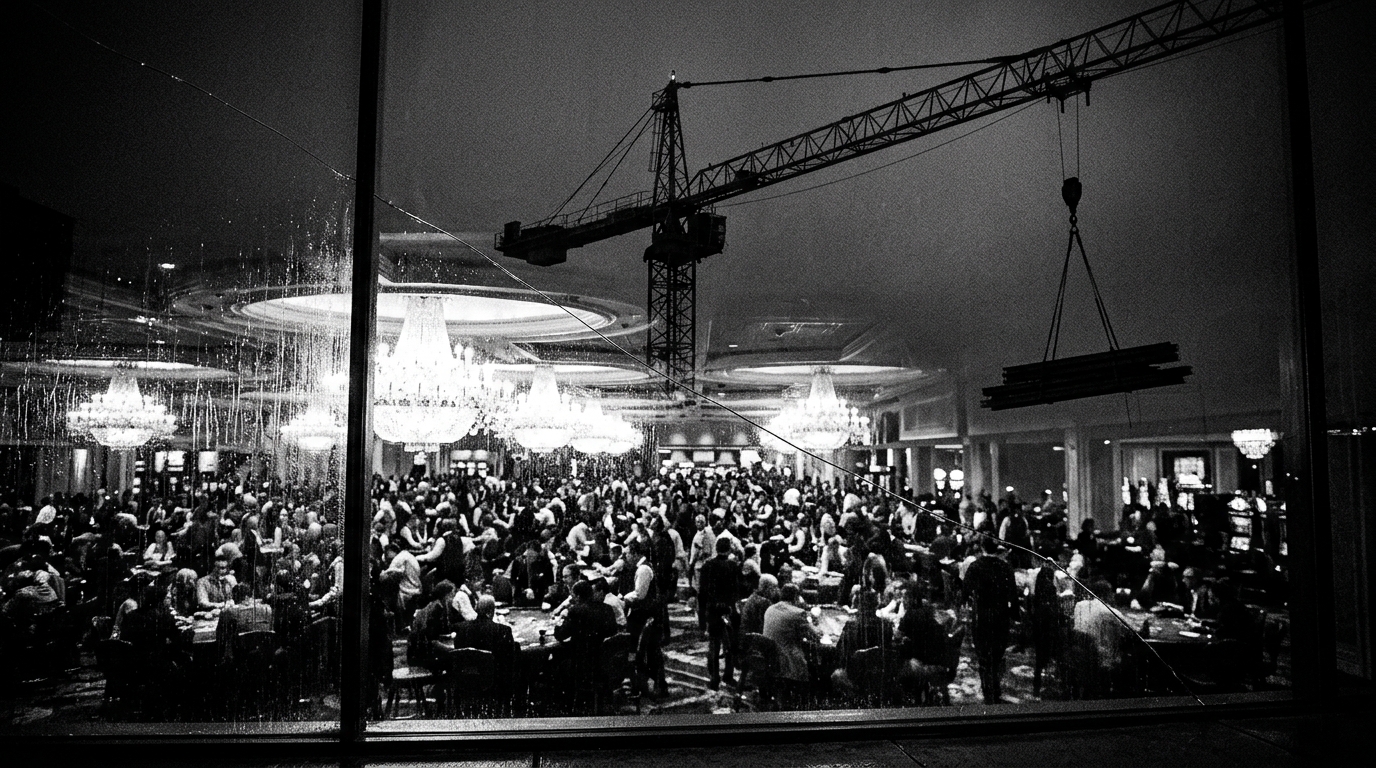
Gaming revenue on the Las Vegas Strip hit a record $8.82 billion in 2025. MGM Resorts derived 23.4% of total revenue from gaming operations. Caesars: 27.6%. Wynn: 24.1%. The rest (rooms, F&B, entertainment, retail, and yes, dayclubs) now accounts for roughly 75 cents of every dollar these companies collect.
That inversion has been building for 25 years. Non-gaming revenue surpassed gaming on the Strip in 1999. By 2015, it was 65.3% of total revenue. The trajectory hasn't reversed. What's changed is the composition of that non-gaming bucket. Encore Beach Club reportedly generates over $1 million in revenue on Saturdays. A single dayclub. One day of the week. Nevada collected $1.22 billion in combined gaming and live entertainment taxes in 2025, with the Live Entertainment Tax running 10% on admission, food, and merchandise at venues under 7,500 capacity. The state itself has restructured its fiscal apparatus around the entertainment economy.
Here's the number that should concern anyone underwriting a Las Vegas asset right now: overall tourism declined 7.5% in 2025 versus 2024. Hotel occupancy, ADR, and RevPAR all decreased. The lowest annual visitor total since 2021. Strip premium pricing is cited as a primary factor. Off-Strip casinos offering value-oriented experiences are growing. So you have a market that broke records on gaming revenue and simultaneously lost visitors. That's a concentration risk. The high-value customer is spending more. The volume customer is leaving. I've analyzed portfolios where this exact pattern preceded a sharp correction... not because the top line collapsed, but because the customer base narrowed until one macro shock exposed the fragility.
The "dayclub economy" framing is catchy, but decompose it. A dayclub generating $11 million annually at a resort collecting billions is a rounding error on the P&L. It's a high-margin rounding error (F&B margins on bottle service are extraordinary), but the strategic significance is in what it signals about customer acquisition, not what it contributes to NOI. The dayclub is the funnel. The room night at $500+ ADR is the revenue. The $400 dinner reservation is the revenue. The show ticket is the revenue. When you're modeling a Vegas asset, the dayclub isn't a line item. It's a marketing expense that happens to generate income.
The risk I'd flag for anyone holding or acquiring Strip-exposed assets: this model requires a specific consumer. Young, high-disposable-income, experience-motivated, price-insensitive. That consumer showed up in 2023 and 2024. In 2025, with visitor volume down 7.5% and the Culinary Union publicly attributing the decline to rising prices, the question is whether the pricing elasticity has been tested to its limit. Record gaming revenue masking a tourism decline is not a sign of strength. It's a warning that the base is narrowing. And narrow bases break.
Look... if you're an owner or asset manager with Strip-adjacent or Las Vegas exposure, the record gaming revenue headline is not your friend. Pull your trailing 12-month visitor mix data. What percentage of your occupied rooms are tied to the high-spend entertainment customer versus the traditional leisure tourist? If that ratio has shifted more than 10 points in two years, you're concentrating risk whether you realize it or not. Run a stress test at 15% visitor decline with current ADR. If your debt service coverage breaks below 1.25x in that scenario, you need to have a conversation with your lender before your lender has a conversation with you. The pool party economy works until it doesn't, and a 7.5% visitor drop in a record revenue year is the canary.