Today · May 23, 2026
The Hotel Minibar Died 15 Years Ago. Nobody Told the Luxury Brands.

The Hotel Minibar Died 15 Years Ago. Nobody Told the Luxury Brands.

Minibars now generate less than 1% of hotel F&B revenue, yet some luxury properties are still investing in sensor-equipped fridges that charge guests for picking up a bottle of water. The question isn't whether minibars are outdated... it's why anyone is still fighting this battle instead of solving it.

Available Analysis

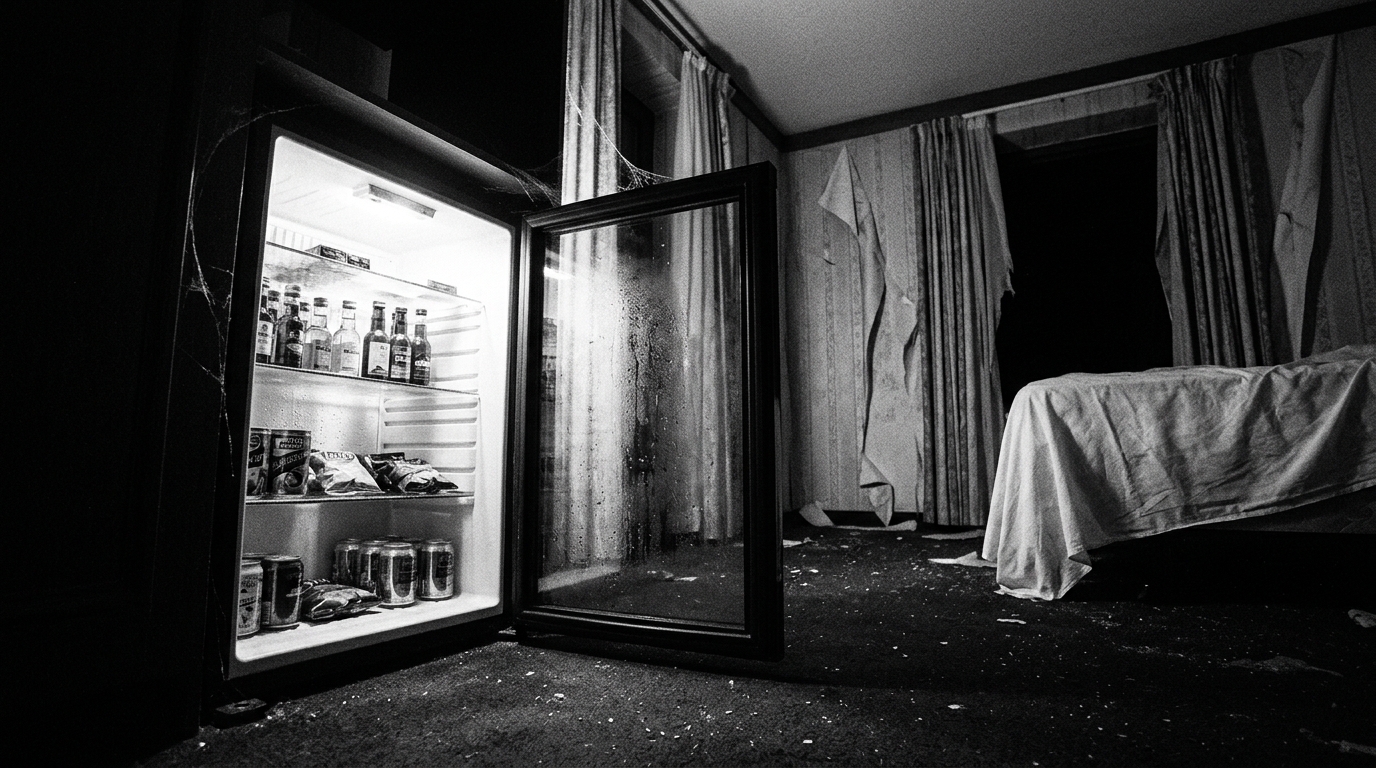
I watched a guest get into a 10-minute argument at the front desk once over a $9 Toblerone charge. She swore she picked it up, looked at the price, and put it back. The sensor said otherwise. The front desk agent... three weeks on the job, no authority to adjust anything over $5 without a manager's approval... stood there while the line backed up behind an increasingly furious woman holding a checkout folio like it was a subpoena. The GM comped it. Of course he comped it. Everyone comps it. And that's the whole minibar story right there. You've installed a revenue system that generates arguments, requires labor to resolve, and ends with you giving the money back anyway.

Here's the thing nobody in the minibar conversation wants to say out loud. The numbers killed this debate over a decade ago. Minibar revenue in U.S. hotels dropped 28% between 2007 and 2012. By 2017, CBRE was reporting that minibars accounted for less than 1% of total hotel F&B revenue. Less than one percent. You know what else generates less than 1% of your F&B revenue? The vending machine by the ice maker. And nobody's writing white papers about optimizing vending machine strategy. The minibar hung on this long not because it makes money, but because luxury hotels treat it like a brand signifier. "Of course we have a minibar... we're a four-star property." It's not a revenue stream. It's furniture that occasionally starts a fight.

Now the vendors will tell you smart minibars are the answer. Infrared sensors, real-time inventory, automated billing, one attendant servicing 400 rooms instead of 100. The equipment market is supposedly headed to $2.2 billion by 2033. And I get it... if you're going to have a minibar, make it efficient. But that's like saying if you're going to keep a fax machine, at least get a fast one. The fundamental question is whether the thing should exist at all. Guests ranked minibars dead last in a TripAdvisor survey on desired amenities... 21% found them important versus 89% who wanted free WiFi. Meanwhile, Hilton partnered with Grubhub, Marriott with Uber Eats, Wyndham with DoorDash. The industry has already voted with its partnerships. The food and beverage your guest wants is on their phone, not in a locked fridge with $7 sparkling water.

The "wellness fridge" trend is interesting but it's still solving the wrong problem at most properties. Stocking cold-pressed juices and functional snacks sounds great in a design meeting. Then you run the spoilage numbers. Then you realize your housekeeping team is already stretched to 18 minutes per room and now they're checking expiration dates on kombucha. The hotels doing this well are doing it at scale, at high ADR luxury properties where the per-occupied-room cost disappears into the rate. At your 180-key upper upscale in a secondary market? That wellness fridge is going to cost you more in labor and spoilage than it generates in revenue, and the guest who actually wants organic snacks already stopped at Whole Foods on the way from the airport.

What kills me is the Thompson San Antonio story from literally last week. Guests getting charged for bathroom amenities that were staged to look complimentary. That's the same disease. It's the same instinct that puts a weighted sensor under a $4 can of Coke... the belief that you can monetize every surface the guest touches. You can't. Or rather, you can, but the cost is trust, and trust is worth more than every minibar in your portfolio combined. The best operators I know figured this out years ago. Empty fridge. Let the guest use it. Put a QR code on top with your room service menu or a delivery partner link. Done. No sensors. No disputes. No labor. No spoilage. The revenue you "lose" was never real revenue to begin with... it was just a line item that created more problems than profit.

Operator's Take

If you're still running weighted sensor minibars, pull your minibar P&L for the last 12 months. Not just revenue... total cost. Stocking labor, spoilage, dispute resolution time at the front desk, credit card chargebacks, and the sensor maintenance contract. I'd bet serious money you're net negative. If your brand mandates a stocked minibar, check the actual standard language... most require a "refreshment center" which can be satisfied with an empty fridge and a curated menu card. If you're independent or soft-branded, pull the minibars out this quarter, put the fridges back empty, and redirect the labor hours to something that actually shows up on your guest satisfaction scores. This is what I call the Invisible P&L... the minibar looks like it makes money on the revenue line, but the costs that never appear on the P&L (front desk time resolving disputes, housekeeping minutes restocking, the review that mentions "getting charged for touching a water bottle") destroy more margin than the ones that do.

Read full analysis → ← Show less
Source: Google News: Resort Hotels
Disney Cut Five Resort Perks and Guests Are Still Paying $700 a Night. That's the Lesson.

Disney Cut Five Resort Perks and Guests Are Still Paying $700 a Night. That's the Lesson.

Disney World just stripped MagicBands, toiletries, room service, airport shuttles, and package delivery from its resort stays while posting $10 billion in parks operating income. If you think this is just a theme park story, you're not paying attention to what it teaches every hotel operator about the relationship between perceived value and pricing power.

I watched a hotel owner once spend $180,000 renovating a breakfast area... new buffet stations, better lighting, upgraded equipment, the works. Beautiful job. Then six months later he pulled the fresh-squeezed orange juice because it was costing him $0.47 per guest and replaced it with concentrate. Guest scores on F&B dropped four points in a single quarter. Not because of the juice. Because the juice was the thing guests noticed, and noticing a downgrade is a completely different psychological event than noticing an upgrade. He spent $180K making the room better and lost the narrative over forty-seven cents.

That's what I thought about when I read that Disney has now officially eliminated five perks that used to come standard with a resort stay... the MagicBands, the take-home toiletries (replaced with wall-mounted dispensers), package delivery to your room, room service, and the Magical Express airport shuttle. Gone. All of them. And here's the part that matters to us: Disney's parks division posted $10 billion in operating income last year. Revenue up 6%. Operating income up 13% in Q4 alone. They're in the middle of a $60 billion investment cycle in their Experiences division. Guests are still booking. The rates haven't softened. They ripped out five amenities that people used to associate with the "magic" of staying on property... and the machine didn't even hiccup.

Now look. Disney is Disney. They have pricing power that you and I will never have. They operate in a universe where the brand itself is the product and the hotel room is just the container. I get that. But the principle underneath this story is universal, and it's something most hotel operators get exactly backwards. We assume that adding amenities builds loyalty and removing them kills it. Disney just proved (again) that what matters isn't the list of what you offer... it's whether the guest feels the total experience was worth the price. They kept Early Theme Park Entry. They kept Extended Evening Hours for deluxe guests. They kept the earlier booking windows for Lightning Lane and dining. The stuff that actually affects the guest's day in the parks... that stayed. The stuff that was nice-to-have but didn't define the core experience... that's what got cut. And the $60 billion they're pouring into new attractions and lands is the reinvestment story that makes the cuts feel like reallocation, not reduction.

There's a real lesson here for anyone running a hotel that isn't a theme park. Most of us are carrying amenities and services on our P&L that we added five or ten years ago because someone at a brand conference said it would differentiate us, or because a competitor down the road was doing it, or because a vocal guest on TripAdvisor complained once and we overreacted. And we've never gone back and asked the hard question: does this specific thing actually drive rate, drive loyalty, or drive satisfaction... or is it just something we do now because we've always done it? Disney had the guts (and the data) to answer that question honestly. The MagicBands cost them real money to produce and distribute. The airport shuttle was a massive logistics operation. Room service in a resort that size requires dedicated staff, equipment, and food safety infrastructure. They looked at each one and asked: is the guest paying for this, or are we just subsidizing it? And when the answer was "subsidizing," they stopped.

The part that should keep you up tonight isn't what Disney cut. It's the methodology. They identified which perks were load-bearing (the ones that actually drove the decision to stay on-property versus off-property) and which ones were decorative (nice, expected, but not decision-drivers). Then they invested harder in the load-bearing stuff and eliminated the rest. Every operator I know has at least three line items on their P&L right now that are decorative. Things guests like but wouldn't miss enough to change their booking behavior. And every dollar you're spending on decorative amenities is a dollar you're not spending on the thing that actually makes someone choose your hotel over the one across the street. Disney figured that out at a $10 billion scale. You can figure it out at yours.

Operator's Take

Here's what I want you to do this week. Pull your guest satisfaction data for the last 12 months and sort comments by what guests actually praise versus what they just expect. There's a difference between "I loved the rooftop bar" and "the toiletries were nice." One drives rebooking. The other is furniture. Then pull the cost of every amenity and service you offer that isn't required by your brand standard. Map each one against whether it appears in positive reviews, drives rate premium, or influences booking decisions. If you can't tie it to revenue or loyalty with a straight face, put it on a list. You don't have to cut everything tomorrow... but you need to know which of your amenities are load-bearing and which ones are decorative. Because the next time you need to find $40K on your P&L (and that time is coming), you want to already know which walls you can take out without the building falling down.

Read full analysis → ← Show less
Source: Google News: Resort Hotels
South Africa's Hotels Keep Chasing One-Night Stands. The Real Money Wants to Move In.

South Africa's Hotels Keep Chasing One-Night Stands. The Real Money Wants to Move In.

South Africa's extended-stay hotel market is projected to nearly double to $1.68 billion by 2034, and the government just handed operators a digital nomad visa on a silver platter. Most hotels are still running the same short-stay playbook that leaves that money on the table for Airbnb to pick up.

Available Analysis

I worked with a GM years ago who ran a 140-key property near a major corporate park. Every Monday through Thursday he was full of business travelers. Fridays, the place was a ghost town. He spent two years chasing weekend leisure packages, loyalty promos, group blocks... anything to fill those empty Friday-through-Sunday rooms. One day his front desk manager (who'd been there longer than anyone) said, "Why don't we just let people stay the whole week for less? Half these guys are flying home Friday just to fly back Monday." He tried it. Gave a 25% weekly discount with a kitchenette conversion on one floor. Within six months that floor was running 89% occupancy seven days a week with half the housekeeping labor. The math was so obvious he was embarrassed he hadn't seen it first.

That's what's happening in South Africa right now... except at a national scale, and most of the industry is still chasing the Friday package instead of seeing what's standing right in front of them. The SA extended-stay market hit $920 million last year and is projected to reach $1.68 billion by 2034 at a 6.9% CAGR. The government rolled out a digital nomad visa in 2025 that lets remote workers stay up to three years, with projections of ZAR 70 billion flowing into local economies. ADR is up 13% to R2,784. Booking lead times have stretched from 41 to 51 days. One-night bookings dropped 3% while stays of three, four, and five-plus nights each grew. Every signal in this market is pointing the same direction, and most operators are still optimizing for the transient guest who checks in Tuesday and leaves Wednesday.

Here's what kills me. The economics aren't even close. Extended-stay guests spend 27% more on-site than short-stay travelers. Your housekeeping frequency drops from daily to every three or four days. Your check-in and check-out labor costs get cut in half per revenue dollar generated. Your occupancy becomes predictable instead of volatile. One hotel management system reported R48 million in ancillary revenue across its properties last year... a 27% jump... and the longer the stay, the more the guest uses your F&B, your wellness amenities, your everything. Meanwhile, 77% of SA hoteliers say they can't find or keep staff, and 58% report flat or declining profitability over the past five years. You're telling me you have a labor crisis AND a profitability crisis, and you're ignoring the segment that requires less labor per revenue dollar and delivers more predictable income? Come on.

The problem isn't demand. The problem is product. Long-stay guests need a proper workspace (not a wobbly desk pushed against the wall), reliable high-speed internet (not the lobby WiFi that drops every time someone streams a movie), and some kind of cooking facility. That means capital. That means convincing an owner to spend money converting rooms or floors for a guest profile that doesn't fit neatly into the existing PMS rate structure. Serviced apartments are already the fastest-growing accommodation segment in SA, expanding at 11.1% CAGR through 2031. That's not hotels growing... that's someone ELSE capturing the demand that hotels are leaving on the table. Every month you don't have a long-stay product, you're training the market to book an apartment instead of a hotel room. And once that habit forms, it doesn't come back.

This isn't a South Africa story. This is a global pattern. I've seen it play out everywhere from secondary U.S. markets to Southeast Asian resort towns. The operators who figured out extended stay early... who converted a floor, built a rate structure that rewarded length of stay, and designed a product that felt like living instead of visiting... those operators smoothed out their revenue curves, reduced their labor cost per occupied room, and built a guest base that doesn't evaporate when the conference calendar goes quiet. The ones who waited are now competing with purpose-built extended-stay brands that have a five-year head start and a product designed from the ground up. If you're running a hotel anywhere, not just SA, and you haven't seriously modeled what a long-stay conversion looks like on your weakest floor or your lowest-performing room type... you're leaving money on the table. And someone else is already picking it up.

Operator's Take

If you're running a property with occupancy gaps (weekend valleys, seasonal dips, chronically underperforming floors), pull your last 12 months of stay-pattern data this week. Identify your average length of stay by segment and calculate your housekeeping cost per occupied room-night for guests staying one night versus three-plus nights. The delta is your opportunity. You don't need to convert your whole property. Start with 10-15 rooms on one floor. Add a microwave, a mini-fridge with actual capacity, a desk that can handle a laptop and a monitor, and WiFi that doesn't drop during a Zoom call. Build a weekly rate that's 20-30% below your BAR times seven... you're still ahead because your cost-to-serve drops faster than your rate. This is what I call the Flow-Through Truth Test... that weekly rate looks like a discount on the top line, but if your housekeeping, check-in labor, and acquisition costs drop by 40% per stay, your flow-through to GOP actually improves. Run the model. Show your owner the numbers before someone else shows them a competing property that already figured this out.

Read full analysis → ← Show less
Source: Google News: Extended Stay Hotels
Canada Lost 30,000 Hotel Workers and They're Not Coming Back

Canada Lost 30,000 Hotel Workers and They're Not Coming Back

The Canadian hotel workforce is still 20% smaller than 2019, but revenue has blown past pre-pandemic levels. Somebody's doing more work for less money, and I'll give you one guess who.

Available Analysis

I worked with a GM in western Canada years ago who told me something I've never forgotten. He said, "Mike, I don't have a staffing problem. I have a math problem. The person I need costs $27 an hour. The job pays $18.50. That's not a shortage. That's a price." He was right then. He's more right now.

Here's the math that should keep every Canadian hotelier up at night. British Columbia's hotel room revenue hit $4.6 billion in 2023... up from $3.2 billion in 2019. That's a 44% revenue increase. Employment in the same sector? Down 25% from 2019 levels. Read that again. You're generating significantly more revenue with a quarter fewer people. If you're an owner or an asset manager, that sounds like a productivity miracle. If you're a housekeeper cleaning 18 rooms instead of 14, it sounds like what it actually is... you're just burning through people faster.

And here's the part that nobody in the C-suite wants to say out loud. These workers didn't disappear. They left. Deliberately. They went to warehouses, to retail, to healthcare support, to literally anywhere that paid more, offered more predictable schedules, and didn't require them to smile while getting yelled at about late checkout. The pandemic gave every hospitality worker in Canada three months to sit at home and realize they had options. A lot of them took those options. Now Ottawa is tightening the Temporary Foreign Worker Program... limiting the low-wage stream to 10% of your workforce, capping contracts at one year. So the pipeline that was keeping a lot of properties staffed just got pinched. The Association hôtellerie du Québec says 91% of their members are struggling to hire for summer. Ninety-one percent. That's not a labor shortage. That's an industry crisis.

I've seen this movie before, by the way. Different country, same script. When U.S. hotels came out of the 2008 recession, ownership groups discovered they could run leaner and pocket the margin. Housekeeping went from daily to on-request. Breakfast went from staffed to grab-and-go. And for about 18 months, it looked genius on the P&L. Then guest satisfaction scores started sliding. Then rates plateaued because you couldn't justify the ADR increase without the service to back it up. Then you were stuck... you'd trained your guests to expect less, trained your remaining staff to do more with less support, and trained your best potential hires to look somewhere else because word gets around. That's exactly where Canadian hospitality is headed if the response to "we can't find workers" continues to be "make the remaining workers do more."

The Hotel Association of Canada says the sector needs 500,000 workers by 2030. Let me be direct... they're not going to find them at $18.50 an hour with unpredictable schedules and no clear career path. Not when the average wage across all industries in BC is $27. Technology will help at the margins (and 49% of Canadian hoteliers are already experimenting with AI to boost productivity, which is smart). But a kiosk can't make a guest feel welcome at midnight when their flight was delayed and they just want someone to look them in the eye and say "we've got you." The brands that figure out how to pay more, schedule better, and treat hotel work like a career instead of a gig are the ones that will have staff in 2030. Everyone else is going to be explaining to their owners why the $200 ADR property has 3.2-star reviews.

Operator's Take

If you're running a hotel in Canada right now, stop treating this like a hiring problem and start treating it like a compensation problem. Pull your labor cost data for the last 12 months. Calculate your revenue per employee versus 2019. I guarantee you'll find you're generating 30-40% more revenue per worker... which means you have room to pay more and still protect your margin. Go to your ownership group with that number. Show them the math. Then raise your starting wage to within 15% of the market average across all industries in your province. That's the floor. Below that, you're not recruiting... you're just posting jobs nobody's going to take.

Read full analysis → ← Show less
Source: Google News: Hotel Industry
Your Hotel Is Bleeding Money Between the Lines. Here's Where to Look.

Your Hotel Is Bleeding Money Between the Lines. Here's Where to Look.

Full-year 2025 GOP margins improved 1.1 points thanks to labor discipline, but Q4 told a different story: margins dropped 3.3 points when demand softened and costs didn't flex fast enough. The gap between those two numbers is where operational friction lives, and most GMs aren't tracking it.

Let me be direct. The Q4 2025 profitability data from HotelData.com should scare you more than it comforts you. Yes, full-year GOP margin came in at 38.3%, up 1.1 points over 2024. That's the number your management company will put in the investor deck. But Q4 margins fell to 36%, down 3.3 points, because when demand softened and ADR dropped 0.9% quarter over quarter, costs didn't come down with it. RevPAR fell 9.6% in Q4 to $111.87. That's not a blip. That's a quarter where the business got smaller and the cost structure stayed the same size.

This is what operational friction actually looks like. It's not a concept from a consulting deck. It's the 14 rooms sitting out of order because your engineer is covering two buildings. It's the accounts receivable aging past 60 days because nobody's chasing the corporate billing. It's the night audit that should take 45 minutes taking two hours because the PMS workaround from 2023 never got fixed. It's a hundred small failures that don't show up on any single report but collectively eat 200 to 400 basis points of margin over a quarter. I've seen this movie before. Every time the cycle softens, we discover that the efficiency gains from the good years were partly an illusion created by revenue growth papering over sloppy operations.

Here's what nobody's telling you about the "labor discipline" that drove those full-year margins up. In a lot of properties, that discipline was just attrition nobody replaced. Positions that went unfilled. Cross-training that was really just dumping extra work on whoever stayed. That works when you're running 78% occupancy. It breaks when occupancy drops and the remaining staff burns out, turnover spikes, and suddenly you're paying overtime plus agency rates to cover the gaps. Payroll is running 53% of total expenses in the Americas right now. You can't cut your way to profitability on 53%. You have to manage it with surgical precision, and that means knowing exactly which positions generate revenue protection and which ones you can flex without breaking the guest experience.

The data from HotStats tells the story in one ugly number: Americas flow-through is sitting at 20%. That means for every incremental dollar of revenue, only 20 cents makes it to the bottom line. That is terrible. If you're a GM at a 150-key select-service property pulling $12 million in revenue, that flow-through means a $500,000 revenue swing only moves your GOP by $100,000. At that rate, you'd better be managing every line item like it's the last dollar in the building. Utility costs are up 4.8%. Insurance, if you're in a coastal or fire-prone market, probably up double digits. Your owners are going to ask why margins are compressing when you told them costs were under control. You need a better answer than "the market softened."

So what do you actually do? Start with your night audit. Not the financial close. The operational intelligence sitting in that report that nobody reads properly. How many rooms went out of order this week versus last month's average? What's your actual length of stay doing, not what you forecasted? How old is your AR? Then look at your maintenance backlog. Not the capital stuff you can't control. The $200 fixes that prevent $2,000 problems. A property I ran during the last recession had a director of engineering who kept a whiteboard of every deferred repair ranked by guest-impact probability. We spent $11,000 in one month clearing the list. Guest complaints dropped 30% in the following quarter and our TripAdvisor score moved from 4.1 to 4.3. That's not magic. That's just paying attention to where the friction is hiding. Stop waiting for the revenue recovery. Protect the margin you have right now, today, with the tools already sitting in your PMS and your maintenance log.

Operator's Take

If you're a GM at a branded select-service or full-service property, pull your Q4 flow-through number this week. If it's below 30%, you have a friction problem, not a revenue problem. Go line by line through your out-of-order rooms, your AR aging, and your maintenance backlog. Then sit down with your chief engineer and your front office manager and ask one question: "What's broken that we've stopped noticing?" Fix the $200 problems before they become $2,000 problems. Your owners don't need a PowerPoint about market conditions. They need to see you managing the controllables like every dollar matters. Because it does.

Read full analysis → ← Show less
Source: Google News: Hotel Industry
Caesars' Tech Rebuild Won't Save Your Guest Experience — But Here's What Will

Caesars' Tech Rebuild Won't Save Your Guest Experience — But Here's What Will

The casino giant is pouring money into technology infrastructure. Before you follow their playbook, understand why casino tech priorities are exactly backwards for hoteliers.

Caesars Entertainment is reportedly making a major push to modernize its tech stack — think property management systems, loyalty platforms, mobile integration, the whole nine yards. And I'm watching hotel operators look at this and think "we should be doing that too."

Here's the thing nobody's telling you: Casino operators and hotel operators have fundamentally different tech priorities, and copying their playbook will burn your capital budget for nothing.

Caesars makes 70-80% of its revenue from gaming. Their hotel rooms are loss leaders designed to keep you on property feeding slot machines. When they invest in tech, they're building systems to track player behavior, optimize comp algorithms, and keep high-rollers gambling longer. Their PMS integration priorities are about knowing which guest just dropped $50K at the tables so they can upgrade them instantly. That's not your business model.

If you're running a 200-key select-service property or even a 400-key full-service hotel, your tech priority isn't fancy integration — it's basic operational efficiency. I've seen too many GMs get sold on "enterprise-level platforms" that require three vendor integrations and a dedicated IT person you don't have on staff. Meanwhile, your front desk is still manually blocking rooms for maintenance and your housekeeping staff is using paper checklists.

The real lesson from Caesars isn't "spend more on tech." It's "spend on tech that directly supports your revenue model." For them, that's gaming analytics. For you, it's reservation conversion, labor scheduling, and revenue management. Different games entirely.

What actually moves the needle? A PMS that your team can operate without calling support. A booking engine that loads in under three seconds on mobile. A housekeeping app that tracks room status in real-time and integrates with your PMS on day one, not after six months of troubleshooting. Boring stuff. Stuff that works.

Operator's Take

Don't let brand case studies from casino operators — or anyone else with a different business model — dictate your tech roadmap. Ask one question about every system: "Will this directly increase revenue or cut labor hours within 90 days?" If the answer is no, you're buying someone else's solution to someone else's problem. Spend on operations, not on integration projects.

Read full analysis → ← Show less
Source: Google News: Caesars Entertainment
Airlines Squeeze Fleet Harder — Hotels Should Copy This Playbook

Airlines Squeeze Fleet Harder — Hotels Should Copy This Playbook

Flyadeal's CEO says they're maximizing aircraft utilization despite delivery delays and parts shortages. Smart hotel operators are already doing the same with their assets.

Here's the thing nobody's telling you: the airline industry just gave us the blueprint for surviving supply chain chaos and expansion delays. Flyadeal's approach — squeeze more productivity from existing assets instead of waiting for new capacity — is exactly what hotels need to do right now.

I've seen this movie before. When brands promise you renovated rooms by Q3 but contractors are six months behind, you don't just sit there bleeding revenue. You maximize what's working. If 180 of your 220 rooms are guest-ready, you push occupancy on those 180 to 95% instead of the usual 82%. You block-sell weekends at premium rates. You convert dead conference space into revenue-generating co-working areas.

The airline's focus on engine reliability and spare parts inventory translates directly to hotel operations. Your HVAC preventive maintenance schedule isn't optional anymore — it's revenue protection. That backup generator you've been putting off? Equipment downtime costs you more than the capex ever will. I'm telling GMs to audit their critical systems monthly, not quarterly.

But here's where most operators miss the point: maximizing existing assets isn't about working harder, it's about working smarter. Flyadeal isn't just flying their planes more hours — they're optimizing turnaround times, route efficiency, crew scheduling. Hotels need the same systematic approach to room turns, staffing patterns, and revenue optimization.

Operator's Take

If you're running any property over 100 keys, audit your asset utilization this month. Push your best room categories to 90%+ occupancy before you discount lower inventory. Fix your maintenance backlog now — equipment failures will cost you 10x more in lost revenue than preventive repairs cost today.

Read full analysis → ← Show less
Source: Skift
End of Stories