Today · Aug 1, 2026
Barry Diller Wants MGM at $48.30. The Market Already Said No.

Barry Diller Wants MGM at $48.30. The Market Already Said No.

People Inc.'s $18 billion bid for MGM Resorts prices the company at a 24% premium to its 30-day average, but shares immediately traded above the offer, and now a wave of shareholder investigations is asking the question the board should have anticipated from day one.

MGM shares closed at $50.69 the day after People Inc. dropped its $48.30-per-share bid. The market priced the offer as a floor, not a ceiling. That's a 5% gap between what Diller is offering and what public investors think the company is worth. When the market trades through your premium on day one, your "premium" isn't one.

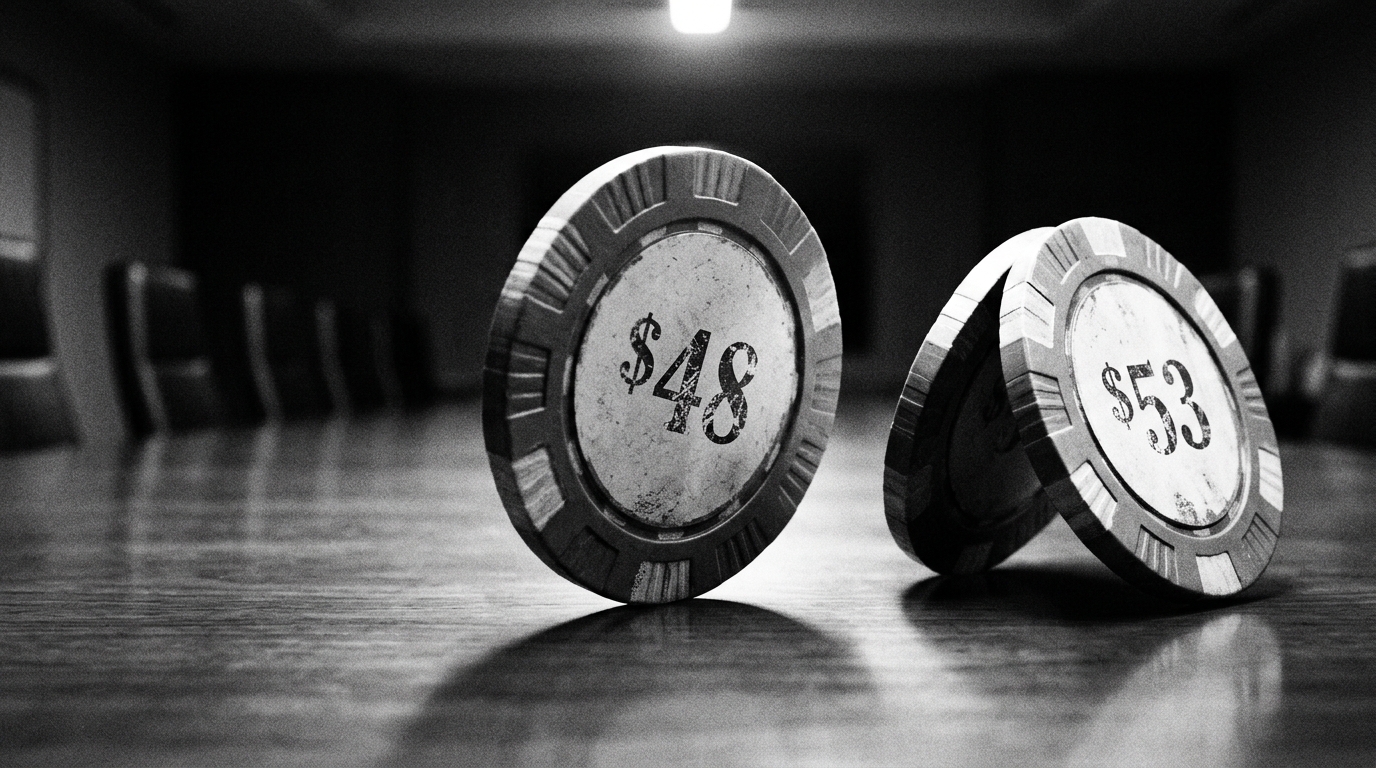
Let's decompose this. The $18 billion enterprise value implies a valuation on MGM's $42.2 billion asset base that looks modest before you even factor in BetMGM's digital growth trajectory or the Osaka integrated resort. JPMorgan moved its target to $53. Stifel downgraded to Hold not because they think the deal is bad, but because they think $48.30 undervalues the company and the uncertainty isn't worth the position. Two different conclusions, same underlying finding: the bid is light.

The legal investigations are procedurally predictable but structurally significant. Barry Diller sits on MGM's board. People Inc. owns 26.1% of MGM. The buyer's chairman is a director of the target. Under Delaware law, that conflict requires a level of process rigor that most boards find uncomfortable... independent committees, fairness opinions, and a standard of review that assumes the transaction is unfair until proven otherwise. Diller has said he'll recuse himself from board deliberations. Recusal is necessary. It is not sufficient. The shareholder plaintiffs' bar knows this, which is why multiple firms filed investigations within weeks.

The real question for anyone watching this from the investment side: what does Diller actually need to pay? MGM's trailing EBITDA, its development pipeline, and its digital optionality all argue for a number north of $53. An owner I spoke with last year during a different gaming deal put it simply: "When the acquirer is also on the board, the first offer is never the real offer. It's the opening bid dressed up as a final number." People Inc. has the balance sheet capacity to go higher. The question is whether the board has the independence to demand it.

For hotel-focused investors and asset managers tracking gaming-adjacent hospitality, this deal's outcome sets valuation benchmarks across the sector. If MGM trades at $48.30, that reprices every integrated resort asset in the market. If it trades at $55-plus, the Fertitta-Caesars deal at $17.6 billion starts looking like a different conversation. The per-key math on MGM's Strip portfolio alone suggests the current bid leaves substantial value on the table. The legal investigations aren't just shareholder theater. They're the mechanism that forces the real number into the open.

Operator's Take

Look... if you're in gaming-adjacent hospitality or you've got ownership groups that also hold gaming exposure, this one matters. The MGM bid sets the pricing floor for integrated resort assets across the Strip and beyond. If you're an asset manager benchmarking hotel valuations against gaming comps, don't use $48.30. The market has already told you that number is wrong. Use $53 as your starting point and stress-test from there. And if your ownership group holds any MGM shares directly, make sure they know about the shareholder investigations before they read about it in the Journal. Be the person who brings the context, not the one who gets asked about it later.


— Mike Storm, Founder & Editor
Read full analysis → ← Show less
Source: Google News: MGM Resorts
Portland Marriott Waterfront Sells for $30M. Someone Paid $82.7M in 2013.

Portland Marriott Waterfront Sells for $30M. Someone Paid $82.7M in 2013.

A 506-key downtown Portland Marriott just traded at $59 per key. That number tells you everything about what's happening in distressed urban hotel markets right now... and what the buyer is betting on.

$30 million for a 506-key full-service Marriott on the waterfront in Portland. That's $59,288 per key. The previous owner paid $82.7 million in 2013 and refinanced with a $71 million loan in 2018. They stopped making payments in February 2024. The loss here is total. Not partial. Total.

Let's decompose this. A $71 million loan on a property that just sold for $30 million means the lender ate roughly $41 million (before fees, carrying costs, receivership expenses). The equity from the 2013 acquisition... gone. Every dollar. The per-key price implies the buyer is underwriting this at something close to a 10-12% cap rate on current NOI, or (more likely) they're pricing off a recovery scenario where Portland's upper upscale segment climbs back toward pre-pandemic RevPAR. That segment is still down over 22% from 2019 levels. Occupancy has dropped 11 points. The buyer, linked to a New York-based opportunistic fund that has acquired 68 hotel properties, is not buying today's cash flow. They're buying optionality on a city that might recover in 3-5 years. "Might" is doing a lot of work in that sentence.

The Portland context makes this worse. Downtown office vacancy hit 34.6% in late 2025. Retail vacancy: 32%. The 20 largest office buildings in Portland collectively lost nearly 70% of their market value since 2019. Leisure and hospitality employment in the county is still 15% below pre-pandemic. This isn't a hotel problem. This is a city problem. A 506-key convention-oriented Marriott needs group business, corporate transient, and a functioning downtown to generate the NOI its capital structure requires. Portland is delivering none of those at pre-pandemic levels.

I audited a distressed hotel sale once where the new buyer's pro forma assumed a 40% NOI increase within 36 months. When I asked what operational changes justified that assumption, the answer was "market recovery." That's not underwriting. That's a prayer with a spreadsheet attached. The buyer here may have a more sophisticated thesis (their fund has done $24 billion in gross real estate acquisitions), but the fundamental question remains: what specifically changes in downtown Portland that turns a $30 million basis into a profitable hold? The Marriott management agreement is long-term, which means fees are fixed regardless of whether the asset earns its cost of capital. The new owner is paying Marriott either way.

The real number for anyone watching distressed hotel transactions: 63.8% value destruction in 13 years on a branded, full-service, waterfront asset in a top-40 market. That's the data point. If you're an asset manager holding upper upscale hotels in challenged urban cores (and you know which cities I'm talking about), this comp just reset your downside scenario. Check again.

Operator's Take

Here's what I'd tell you if we were talking. If you're an owner or asset manager sitting on a full-service hotel in a downtown market that hasn't recovered... Portland, San Francisco, a handful of others... stop using 2019 comps for your hold analysis. They're fiction now. Run your downside off current trailing NOI, not the recovery you're hoping for. And if your debt service coverage is getting tight, have the conversation with your lender NOW, not after you've missed a payment. The guy who owned this Portland asset waited. It cost him everything.

— Mike Storm, Founder & Editor
Read full analysis → ← Show less
Source: Google News: Marriott
Ashford Sold Two Embassy Suites for $90K Per Key. The Debt Was the Point.

Ashford Sold Two Embassy Suites for $90K Per Key. The Debt Was the Point.

Ashford's $27 million Texas disposition, a Miami supertall betting on the Delano name, and Marriott's 104-key Sydney play look like three unrelated headlines until you follow the capital structure underneath each one.

Available Analysis

$90,000 per key for two Embassy Suites in Texas. That's the number Ashford Hospitality Trust accepted to move two full-service assets off its books. Net of selling expenses on the Austin property alone, Ashford walked with roughly $13.2 million... and used $13 million of that to pay down a mortgage loan secured by 13 other hotels. The owner kept $200K. The lender kept the rest.

This is a liquidation posture dressed up as a "deleveraging strategy." Ashford's preferred dividend suspension in January, the CFO retiring at the end of this month, a Pomerantz securities fraud investigation announced in February... these aren't the markers of a company executing from strength. The stock is trading near its 52-week low. Analysts have it at a $4 price target with a "Hold" rating, which in practice means nobody wants to be the one who said "Buy." When you sell full-service Embassy Suites at $90K per key and the net proceeds functionally service existing debt on other assets, the question isn't whether the portfolio is undervalued. The question is whether there's enough runway to realize that value before the capital structure forces more sales at distressed pricing. I've audited REITs in this exact position. The math accelerates in one direction.

The Miami story is a different animal entirely. Property Markets Group is pairing with Ennismore's Delano brand on a 985-foot residential tower at 400 Biscayne... 421 units, studios starting at $800K, a $50 million penthouse, and an 850-foot observation deck. Groundbreaking isn't until 2027 after an 18-month sales cycle, with four years of construction after that. PMG has credibility here (90% of its Waldorf Astoria Miami units reportedly sold), but this is a branded residential play, not a hotel investment. The Delano name is doing the work that the Delano Miami Beach hotel, currently closed for restoration and not reopening until late April, can't do from an operating property. The brand is the product. The hotel is the marketing collateral.

Then Sydney. Marriott is bringing a 104-key AC Hotel into a 55-story mixed-use tower in the CBD, targeting late 2027. The scale is modest. The signal isn't. Sydney's hotel market has normalized occupancy, rising ADRs, high barriers to entry, and five-star per-key values reportedly exceeding $1 million. A 104-key select-service entry is low-risk brand planting in a market where the demand fundamentals justify it. No complaints from me on the underwriting logic.

Three transactions, three completely different risk profiles. Ashford is selling to survive. PMG is selling a lifestyle before the building exists. Marriott is buying into a market with structural tailwinds. The headline groups them together. The capital structure separates them entirely.

Operator's Take

Here's what I'd be doing if I owned assets in any REIT portfolio running this kind of debt reduction program. Pull your management agreement. Understand the sale provisions, the termination triggers, and what happens to your FF&E reserve if the property changes hands at a distressed price. If you're an asset manager watching a REIT sell full-service hotels at $90K per key, you need to model what that comp does to your own valuation... because your lender is going to see it too. For the GMs at these properties, the operational reality is simpler and harder: when ownership is in survival mode, CapEx stops, standards slip, and the people who can leave do. If that's your building right now, protect your team and document everything. The next owner will want to know what they're inheriting.

— Mike Storm, Founder & Editor
Read full analysis → ← Show less
Source: Google News: Marriott
European Hotel Values Grew 0.2% in 2025. That's Not Growth. That's a Rounding Error.

European Hotel Values Grew 0.2% in 2025. That's Not Growth. That's a Rounding Error.

The HVS 2026 European Hotel Valuation Index shows record overnights and a 30% jump in transaction volume, but hotel values barely moved. The gap between those numbers tells a story the headline doesn't.

Available Analysis

A 0.2% increase in European hotel values against 3 billion overnights and €22.6 billion in transaction volume. Let's decompose that, because those three numbers shouldn't coexist.

Record demand. Thirty percent more capital changing hands year-over-year. ECB rates dropping from 3% to 2% in the first half of 2025. Every input that should push asset values upward was present. Values moved 0.2%. The smallest gain since the pandemic. That's not resilience. That's a market where rising costs are eating the demand premium before it reaches the asset. Wage pressure easing to under 4% sounds encouraging until you remember that labor is 35-45% of a European hotel's operating cost base, and "easing" from 5% to 4% still means costs grew faster than a 0.2% value gain. The flow-through isn't flowing through.

The city-level data makes the real case. Copenhagen up 5.9%. Athens up 5.5%. Istanbul down 7.6%. Amsterdam down 5.9% after tax increases on hotel accommodation. London and Manchester both down 3.4%. This isn't a European hotel market. It's 31 separate markets wearing the same label. An investor underwriting a Paris acquisition (still the most expensive market in Europe) and an investor underwriting Athens are making fundamentally different bets with fundamentally different risk profiles... and the 0.2% continental average obscures both of them. The average is meaningless. The variance is the story.

Two data points worth flagging. First, single-asset transactions surged 68% to €15.6 billion, which tells me capital is moving toward specific conviction plays rather than portfolio bets. Buyers aren't buying "European hotels." They're buying individual assets where they see a value-add thesis (the report explicitly notes refurbishment and repositioning as opportunity drivers). That's a cycle-appropriate strategy, but it also means buyers are pricing in work... which means they're pricing in risk the current operator or owner couldn't solve. Second, European investors accounted for 76% of transaction volume. Cross-border capital from the U.S. and Asia is sitting out. When domestic capital dominates, it typically means international buyers see risk the locals are discounting (or local sellers need liquidity the internationals won't provide at the asking price).

The inflation warning in this report deserves more attention than it's getting. A Middle East conflict constraining oil supply could reverse the ECB's rate trajectory in 2026. That's not hypothetical... it's the specific scenario HVS flags. If the ECB moves rates back toward 3%, every cap rate assumption underpinning the €22.6 billion in 2025 transactions reprices. I audited a portfolio once where the entire disposition model was built on a 75-basis-point rate decline that never materialized. The hold period extended two years. The equity return went from 14% to 6%. The math worked on the day of closing. It stopped working 90 days later. That's the risk here... not that European hotels are bad assets, but that the cost of being wrong on rates has asymmetric consequences for anyone who bought in 2025 at compressed yields.

The development pipeline under 5% is the one genuinely positive signal. Limited new supply means existing assets have pricing power if demand holds. But "if demand holds" is doing a lot of work in that sentence when the report's own authors are telling you geopolitics and inflation are the two biggest risks to the outlook. A 0.2% value gain with record demand and falling rates is not a market poised for acceleration. It's a market absorbing shocks that haven't fully landed yet.

Operator's Take

That 0.2% number? That's not a headline. That's a warning. Here's the thing... if you own European hotel assets right now, the continental average tells you nothing. Pull your city. Pull your cost structure. Then run the scenario where ECB rates climb back to 3% and ask yourself if the deal still pencils. Because the operators I talk to who are sleeping fine right now are the ones who already did that math. The ones who aren't sleeping fine are the ones who underwrote on rate cuts that may not stick. Record overnights didn't save Amsterdam. Tax policy ate the demand story whole. So before you let someone pitch you "record European demand" as a reason to buy... ask them what their flow-through looks like when labor costs are still growing and rates reverse. That answer is the whole conversation.

— Mike Storm, Founder & Editor
Read full analysis → ← Show less
Source: Google News: Hotel Industry
Portland Marriott Waterfront Sold at $59,500 Per Key. Let That Number Sink In.

Portland Marriott Waterfront Sold at $59,500 Per Key. Let That Number Sink In.

A 506-room downtown Marriott just traded at a 63% discount to its 2013 purchase price, with occupancy barely clearing 23%. The per-key price tells a story about Portland, about convention hotels, and about what happens when debt and reality stop agreeing.

$30.1 million for a 506-room full-service Marriott on the waterfront. That's $59,500 per key. The previous owners paid $82.7 million in 2013 and refinanced with a $71 million loan in 2018. They stopped making payments in February 2024 with $68.1 million in principal outstanding and roughly $800,000 in unpaid interest. The property went into receivership. It just closed at 36 cents on the 2013 dollar.

Let's decompose this. At $59,500 per key, the buyers (a New York alternative asset manager and an LA real estate firm, operating through a joint acquisition entity) are pricing this asset at roughly replacement cost for a select-service hotel. This is a full-service, 40,000-square-foot-convention-space waterfront property. The implied cap rate on trailing NOI at 23.5% occupancy is almost meaningless to calculate... the property isn't generating stabilized income. This isn't a yield play. This is a basis play. The buyers are betting they can hold at a cost basis so low that virtually any recovery scenario produces an acceptable return. Meanwhile, the previous equity is gone. Completely. The lender took a haircut of roughly $38 million on a $68 million balance (and that's before carrying costs and receivership fees). Someone at that lending desk is having a very specific kind of quarter.

The receiver's report noted the hotel "exceeded budget expectations" by hitting 23.5% occupancy against a 22.4% projection. I want to be precise about what that means. Beating a catastrophic projection by 110 basis points is not a recovery story. It's a slightly less terrible version of terrible. Portland hotel revenue in 2023 was still down nearly 38% from 2018 levels. Downtown convention demand hasn't come back, and a 506-room box needs group business to function. At 23.5% occupancy, this hotel is running roughly 119 occupied rooms per night. The fixed cost structure on a property this size... engineering, security, minimum staffing, franchise fees, property taxes... doesn't care that 387 rooms are empty. Those costs show up every month regardless.

The deal structure is textbook distressed acquisition. Joint venture between an asset manager with scale and a regional operator with execution capability. Marriott stays on as operator under the existing management agreement (which tells you Marriott's fee stream, even at these occupancy levels, is worth preserving... or the management agreement is simply too expensive to buy out at this basis). The buyers inherit a clean capital stack. No legacy debt. No deferred maintenance obligations from a previous owner who stopped investing when they stopped paying. They can underwrite a renovation, reposition the convention offering, and wait for Portland's downtown to recover... or not recover, in which case $59,500 per key gives them a land-value floor that limits downside.

I've analyzed enough distressed hotel acquisitions to know the pattern. The first owner builds or buys at cycle peak. The lender underwrites peak assumptions. The market corrects. The debt becomes unserviceable. The second owner buys at the bottom with clean basis and patient capital. The question is always the same: does the market come back, and how long can you afford to wait? At $59,500 per key with no legacy debt, these buyers can afford to wait a long time. The previous owners, who paid $82.7 million and then layered on $71 million in debt, could not. Same asset. Two completely different stories depending on when you bought and what you owe.

Operator's Take

If you're an asset manager or owner holding a full-service downtown hotel with pre-pandemic debt levels and post-pandemic demand... this is your benchmark, and it's brutal. Portland just told you what the market will actually pay for a 500-key convention hotel doing 23% occupancy. Don't wait for the recovery to "almost be here" before you stress-test your capital stack. Run your numbers against a 30% RevPAR decline from today's levels and see if your debt service still works. If it doesn't, you need to be talking to your lender now, not when you're 90 days delinquent. I've seen this movie before. The owners who survive are the ones who restructure before the receivership paperwork starts.

— Mike Storm, Founder & Editor
Read full analysis → ← Show less
Source: Google News: Marriott
DiamondRock Just Told You Their Stock Is a Better Buy Than Your Hotel

DiamondRock Just Told You Their Stock Is a Better Buy Than Your Hotel

DiamondRock hits a 52-week high, posts record FFO, and basically announces they'd rather buy back their own shares than acquire another property. If you're an owner wondering what that says about where we are in the cycle... it says a lot.

Let me tell you what caught my eye this week. It wasn't that DiamondRock hit $10.34. Stock prices move. What caught my eye was the CEO essentially saying "we'd rather buy our own stock than buy your hotel." That's the tell. When a REIT with $297.6 million in adjusted EBITDA and a fully unencumbered portfolio (no debt maturities until 2029, by the way) looks at the acquisition market and says "nah, we're good"... that's not a stock story. That's a valuation story. And if you own a hotel, it's YOUR valuation story.

I've watched this exact moment play out twice before in my career. A public company gets its balance sheet clean, posts record numbers, and then... goes quiet on acquisitions. In 2015 it happened. In 2019 it happened. Both times, the message was the same: sellers want prices that buyers can't make work. DiamondRock bought back 4.8 million shares last year at an average of $7.72. Today the stock's north of $10.50. That's a 36% return on their own paper in roughly a year. Find me a hotel acquisition that pencils out that cleanly right now. I'll wait.

Now here's what the earnings beat actually tells you if you read past the headline. Their comparable RevPAR was basically flat... down three-tenths of a percent in Q4. The beat came from cost discipline and out-of-room spend. Food and beverage. Resort fees. Ancillary revenue. That's not top-line growth. That's squeezing more from what's already coming through the door. And look, I respect the execution. Jeff Donnelly's team is running a tight operation. But when your growth story depends on wringing margin out of a flat revenue line, you're playing defense. Smart defense. But defense.

The 2026 guidance tells you they know it too. RevPAR growth of 1% to 3%. EBITDA range of $287 to $302 million... which at the midpoint is actually below 2025's number. They're guiding to the possibility of flat-to-down earnings while the stock is at a 52-week high. That's confidence in the balance sheet, not confidence in the top line. There's a difference. And the market is rewarding it because in a world where everyone's worried about tariffs, labor costs climbing another 3%, and a government that can't decide if it's open or closed... a clean balance sheet with no maturities until 2029 is worth a premium. I get it. But if you're an owner out there thinking "the market's hot, maybe I should sell"... DiamondRock just told you they're not buying. Deutsche Bank raised their target to $12. Morgan Stanley's sitting at $9. The consensus is "hold." When the smartest money in the room can't agree on whether a stock is worth $9 or $12, that's not conviction. That's a coin flip with a spreadsheet attached.

Here's what I want you to take away from this. The luxury and resort segment is carrying this industry right now. DiamondRock's portfolio is 35 properties concentrated in leisure destinations and gateway markets, and that bet is paying off. But the K-shaped economy that's fueling resort spend is the same economy that's crushing select-service in secondary markets. If you're running a 150-key Hilton Garden Inn in a mid-tier city, DiamondRock's earnings call isn't your story. Your story is that labor costs are going up 3%, your RevPAR is flat, your brand is about to send you a PIP, and the REIT that might have bought your hotel two years ago would rather buy its own stock. That's not doom and gloom. That's reality. And reality is where the best operators do their best work.

Operator's Take

If you're an owner who's been quietly shopping your property, pay attention to what DiamondRock just said between the lines... institutional buyers are sitting on their hands because the math doesn't work at current seller expectations. That spread between buyer and seller isn't closing anytime soon. So either sharpen your pencil on price, or stop shopping and start operating like you're keeping this thing for another five years. If it's the latter, look hard at your ancillary revenue. DiamondRock's entire beat came from out-of-room spend and cost control, not rate growth. There's your playbook.

Read full analysis → ← Show less
Source: Google News: DiamondRock Hospitality
End of Stories