Today · Jul 15, 2026
Wynn's $5.1 Billion UAE Bet Just Hired Its Velvet Rope. The Clock Is Ticking.

Wynn's $5.1 Billion UAE Bet Just Hired Its Velvet Rope. The Clock Is Ticking.

Wynn Al Marjan Island just created a "VP of Private Access" role for its 1,530-key UAE mega-resort, and the title alone tells you more about the property's revenue strategy than the press release does.

I sat in a pre-opening meeting once for a luxury resort where the GM stood up and said, "We need to stop talking about the building. The building is almost done. We need to talk about who's going to walk through the door and what happens when they get here." Room went quiet. Because everyone had been so consumed by construction timelines and FF&E orders that nobody had a serious plan for cultivating the guests who would actually justify a $400+ ADR.

That's what I think about when I see Wynn creating a VP of Private Access position for their Al Marjan Island property in the UAE. The title sounds like something from a Bond movie, but it's actually the most operationally significant hire they've made so far... because it signals exactly where they think the money is. This isn't about the 1,530 rooms. It's about the 297 ultra-luxury "Enclave" suites... the hotel-within-a-hotel concept that's going to need its own ecosystem of relationships, service protocols, and guest acquisition strategies. You don't hire a VP-level executive from a major Asian gaming resort to manage a reservations channel. You hire her to build a network of high-net-worth individuals who will fly to Ras Al Khaimah and spend at a level that justifies a $5.1 billion development cost.

Let's sit with that number for a second. $5.1 billion. Up from $3.9 billion just three years ago. That's roughly $3.3 million per key if you run the full room count. Even if you back out the 225,000 square feet of gaming floor, the retail, the marina, and everything else... the per-key math on the hotel component alone is staggering. Wynn holds 40% of the joint venture, so their exposure is north of $2 billion on a property in a market that has never had legalized gaming and is opening (maybe) in spring 2027 after already experiencing what they're calling a "modest delay." Analysts are projecting $425 million in annual free cash flow once it's humming. That's the base case. The base case always looks beautiful.

Here's what I keep coming back to, though. This is the first licensed gaming-integrated resort in the UAE. First. There's no playbook for how high-net-worth Middle Eastern, South Asian, and European guests will respond to a gaming product in this specific cultural context. Gaming is prohibited for UAE citizens. The entire revenue model depends on tourists and expatriates. The regulatory framework... federal gaming authority established in September 2023, first operator license issued October 2024... is barely two years old. You're building a $5.1 billion property on regulatory infrastructure that hasn't survived its first economic cycle, its first political shift, or its first scandal. Wynn's CEO has called the UAE "the most exciting new market opening in decades." He might be right. But excitement and certainty are different things, and the distance between projected and actual is where fortunes get made or lost.

The Private Access hire tells me Wynn knows exactly what I just said. They know they can't fill 1,530 rooms at luxury rates by hoping people show up to the first casino in the Emirates. They need a relationship-driven pipeline of ultra-high-net-worth guests who are pre-committed before the doors open. That's smart. That's also the hardest thing in hospitality... building a guest base for a product that doesn't exist yet, in a market that's never had the product, with service staff who've never delivered it together. Pre-opening teams are the most fragile organisms in our industry. Everyone's excited, nobody's battle-tested together, and the gap between the rendering and reality shows up on night one.

Operator's Take

Look... most of you aren't opening $5.1 billion gaming resorts. But the principle here applies to every property-level operator. When you're launching something new (a renovation, a repositioning, a new F&B concept), the question isn't whether the physical product is ready. It's whether you've built the guest pipeline that justifies the investment before the doors open. If you're mid-renovation or approaching a relaunch, stop obsessing over the punch list for one hour this week and ask yourself: do I have a specific plan to put the RIGHT guests in front of this product on day one? Not "awareness." Not "marketing will handle it." An actual list of relationships, corporate accounts, and loyalty segments that are pre-sold. That's what this hire is really about, and it's what I call the Brand Reality Gap... Wynn is smart enough to know that the building is the easy part. The promise only becomes real when someone walks in and the experience matches the $3.3 million per key they spent building it.

Read full analysis → ← Show less
Source: Google News: Wynn Resorts
Prudential Just Bought 10.8% of Summit Hotel Properties. The Stock Has Already Dropped.

Prudential Just Bought 10.8% of Summit Hotel Properties. The Stock Has Already Dropped.

A $81 billion institutional investor adds nearly 12 million shares of a select-service hotel REIT at $7.01 per key, and the stock immediately trades down to $6.54. The gap between what Prudential sees in Summit's portfolio and what the market is pricing tells you everything about where we are in the cycle.

Prudential Financial, through Jennison Associates and PGIM Quantitative Solutions, accumulated 11,681,640 shares of Summit Hotel Properties as of June 30, representing a 10.8% passive stake at $7.01 per share. That's roughly $82 million deployed into a select-service lodging REIT with a $709 million market cap. Two weeks later, INN trades at $6.54. Prudential is underwater by approximately $5.5 million on paper.

The timing is worth decomposing. Summit just completed a $650 million refinancing of its senior unsecured credit facility (extending maturities to 2030/2031 with accordion capacity to $900 million). Its CFO stepped down June 12 for personal reasons, with the CEO absorbing principal financial officer duties. The broader hotel REIT sector rallied 35%+ from late March through June. Prudential bought into strength, with a freshly cleaned-up balance sheet, during a leadership gap in the finance function. That's not accidental. That's a thesis.

The thesis appears to be this: premium-branded select-service (Summit runs flags under Marriott, Hilton, Hyatt, and IHG) represents a durable cash flow profile at a discount to replacement cost. At $6.54 per share and roughly 107 million diluted shares, Summit's equity trades at approximately $700 million against a portfolio of 72 properties. Back-of-envelope, that's under $55K per key on the equity. Even layering in Summit's debt load, the implied enterprise value per key sits well below new-build costs for branded select-service, which in most markets now exceeds $150K. Prudential is betting the discount closes.

The risk is that it doesn't. A 10.8% passive stake from an institution managing $1.4 trillion in assets is a rounding error for Prudential but a significant overhang for Summit. Passive means no board seats, no activist pressure, no strategic demands. It also means Prudential can sell whenever the thesis breaks. I've seen institutional positions of this size in small-cap REITs before. They stabilize the shareholder register until they don't. When a holder this large decides to exit a stock with Summit's trading volume, the price impact is not gentle.

The CFO vacancy is the variable I can't model. A REIT in the middle of a refinancing cycle, with a freshly restructured credit facility and earnings due imminently, operating without a dedicated chief financial officer is running with one hand. Summit's CEO may be perfectly capable. But "the CEO is also the PFO" is a sentence that belongs in a startup, not a publicly traded REIT with $650 million in credit facilities. That's the line item that would make me check again.

Operator's Take

Here's what matters if you're running a Summit-flagged property or any select-service asset owned by a publicly traded REIT. When a $81 billion institution takes a 10%+ position, the pressure on portfolio performance intensifies... not because the investor is calling your hotel, but because the asset management team above you knows someone with that kind of capital is now watching every quarterly metric. Expect tighter scrutiny on flow-through. If your RevPAR is growing but your GOP margin is flat, that conversation is coming. This is a good time to get ahead of your numbers... bring your owner or asset manager your Q3 outlook before they ask for it. Show the math on where margin expansion is possible and where it isn't. The operator who walks in with answers before the questions get asked is the one who keeps running the hotel.

— Mike Storm, Founder & Editor
Read full analysis → ← Show less
Source: Google News: Summit Hotel Properties
Poland Just Made 65,000 Airbnb Hosts Get a License. Every European Hotel Market Is Watching.

Poland Just Made 65,000 Airbnb Hosts Get a License. Every European Hotel Market Is Watching.

Poland's new short-term rental registry forces every Airbnb-style operator to register, display an ID number, and meet fire and safety standards... or face fines up to €11,600. If you're an independent hotel operator who's been competing against unregulated apartments, the question is whether this actually levels the playing field or just adds paperwork to a problem that needed enforcement.

So here's what actually happened. Poland drafted legislation that reclassifies any rental under 30 days as a hotel service. That means roughly 65,000 short-term rental apartments... many of which have been operating with zero oversight, zero fire safety compliance, and zero tax accountability... now need to register with a national database called CWTON, get a unique ID number, and display that number on every listing. Platforms like Airbnb and Booking.com aren't just passive middlemen anymore. They're required to verify registration numbers and share monthly data with authorities. Fines for non-compliance hit up to PLN 50,000 (about €11,600). And here's the part that matters most for hotels: local municipalities can now designate zones where short-term rentals are restricted or banned entirely.

This isn't Poland inventing something new. It's Poland catching up to EU Regulation 2024/1028, which went into effect May 20, 2026. But Poland still hasn't finalized its national implementation legislation (the draft is called UC135, with a proposed transition deadline of October 1, 2026), which means right now there's a grey zone where nobody... operators, platforms, local authorities... knows exactly what's enforceable. The estimated grey market is 30-35% of the sector. That's roughly 20,000 apartments operating completely off the books. The question isn't whether regulation is coming. It's whether the enforcement infrastructure actually exists to make it mean something.

Look, I've been in technology evaluation meetings where someone presents a beautiful compliance dashboard and I ask "okay, but who's checking the data?" That's the fundamental issue with every STR registry I've seen proposed or implemented. The technology to build the database is trivial. I could build CWTON in a weekend (I'm not even exaggerating... it's a registration form, a unique ID generator, and an API for platforms to query). The hard part is enforcement. Who verifies that the apartment listed as "fire-safety compliant" actually has a working smoke detector? Who checks that the operator displaying registration number PL-47291 on their Airbnb listing is the same person who registered that number? Who follows up when a property gets three noise complaints and should be removed from the registry? If the answer is "local authorities," then you need to ask what local authorities' technology stack looks like and how many staff they have dedicated to this. In most European municipalities, that answer is "not enough."

The platform accountability piece is actually the most interesting part of this architecturally. Requiring Airbnb and Booking.com to verify registration numbers before allowing listings to go live... that's pushing compliance enforcement upstream to entities that actually have the technical infrastructure to do it. It's smart. But it only works if the platforms cooperate meaningfully, and their track record on that across Europe is mixed at best. Airbnb has historically preferred to negotiate city-by-city, delay implementation, and argue about data-sharing scope. Monthly data reporting to authorities is a significant operational change for platforms, and I'd want to see the actual API specification and data schema before I believed it was anything more than a PDF export someone runs manually.

For hotel operators competing against unregulated STRs... this is directionally good but operationally uncertain. The 30-35% grey market isn't going to disappear because a law passed. It'll shrink, maybe significantly, but enforcement determines the actual competitive impact. What I'd watch is whether municipalities actually use the zoning powers they're being given. That's the real lever. A registration requirement raises the cost of operating an STR. A zoning restriction removes supply from the market entirely. Those are very different outcomes for your comp set.

Operator's Take

Here's what I'd tell any operator running a hotel in a European market right now. Poland is one domino. The EU regulation applies to every member state, and each one is building its own version of this registry. If you're competing against STR supply in your market... and if you're in any urban European market, you are... start tracking what your local municipality is doing with zoning authority. That's the number that moves your RevPAR, not the registry itself. Build a simple tracker: how many active STR listings in your comp set radius today, and check it quarterly as enforcement kicks in. If supply actually shrinks, you've got rate power you didn't have before. Don't wait to see it in the data... have the conversation with your revenue manager now about what your pricing strategy looks like if 15-20% of nearby STR inventory goes dark. That's a real scenario. Plan for it.

— Mike Storm, Founder & Editor
Read full analysis → ← Show less
Source: Google News: Airbnb
Wynn Is Betting $5.1 Billion on a Country That Just Legalized Gambling. The Tech Stack Alone Should Terrify You.

Wynn Is Betting $5.1 Billion on a Country That Just Legalized Gambling. The Tech Stack Alone Should Terrify You.

Wynn's UAE mega-resort is a $5.1 billion bet on building an integrated resort from scratch in a country with zero gaming infrastructure, zero operational precedent, and a regulatory body run by a former MGM CEO. The technology question nobody's asking is whether the systems even exist to run this thing.

So here's something that's been bugging me about the Wynn Al Marjan Island coverage. Everyone's talking about geopolitics. Everyone's talking about the construction timeline, the "modest delay," the ceasefire, whether spring 2027 is realistic. Fine. Those are reasonable questions. But I keep reading these analyst reports and press releases and nobody... nobody... is asking the question that would keep me up at night if I were on this project: what does the technology architecture look like for a 1,530-key integrated resort with gaming, 22 F&B outlets, 130,000 square feet of retail, a marina, a theater, and a private hotel-within-a-hotel... in a jurisdiction that has never operated a legal casino before?

This isn't Las Vegas, where you can pull from a 50-year ecosystem of gaming technology vendors, integration specialists, and operators who've done this a hundred times. This isn't Macau, where Wynn already has relationships with every systems provider in the market. This is Ras Al Khaimah. The General Commercial Gaming Regulatory Authority was established in September 2023. Wynn got the first gaming license in October 2024. The regulatory framework is literally being written as the building goes up. So when I hear "spring 2027 opening," my first thought isn't about geopolitics or concrete... it's about whether the PMS, the gaming management system, the player tracking, the F&B POS across 22 outlets, the revenue management across multiple room categories including those 297-suite Enclave properties and 22 Villa Estates... whether all of that is going to actually talk to each other on day one. I've seen a single rate-push system fail on opening night at a 300-key property. This is five times that scale with ten times the complexity in a market with no operational precedent.

Look, the financials are staggering. $5.1 billion total project cost. Wynn's 40% equity stake means they've committed over a billion in cash already. The $2.4 billion construction facility is the largest hospitality financing deal in UAE history. Analysts are projecting $20 to $30 per share in added value for Wynn in a base case, with bullish scenarios north of $50. CBRE estimates the UAE gaming market could hit $8.5 billion in annual gross gaming revenue with three integrated resorts. Those are massive numbers. But every single one of those projections assumes the technology works. Assumes the systems integrate. Assumes the gaming floor runs clean from day one under a brand-new regulatory regime overseen by Jim Murren (a guy who knows gaming, absolutely, but who's building a regulatory tech infrastructure from zero). What happens when the player tracking system conflicts with UAE data sovereignty requirements? What happens when the PMS can't handle the revenue allocation between gaming comps, resort bookings, and residence stays in a jurisdiction with no precedent for any of it? These aren't hypotheticals. These are the exact problems that eat integrated resorts alive in markets that have been doing this for decades.

I talked to a consultant last month who'd been approached about technology advisory work for a Gulf state gaming project (not this one specifically, but adjacent). He told me the biggest challenge wasn't selecting vendors... it was that no major gaming technology provider has a regional support operation in the UAE. "You're asking for 24/7 uptime on systems that have never been deployed in this regulatory environment, supported by teams that are 8 to 12 hours away by flight." That's the Dale Test on steroids. When something fails at 2 AM in Ras Al Khaimah... and something will fail at 2 AM... who's fixing it? A support team in Las Vegas? A field engineer who flew in from Singapore? The night auditor with a notebook? At $5.1 billion, the answer better not be "we'll figure it out."

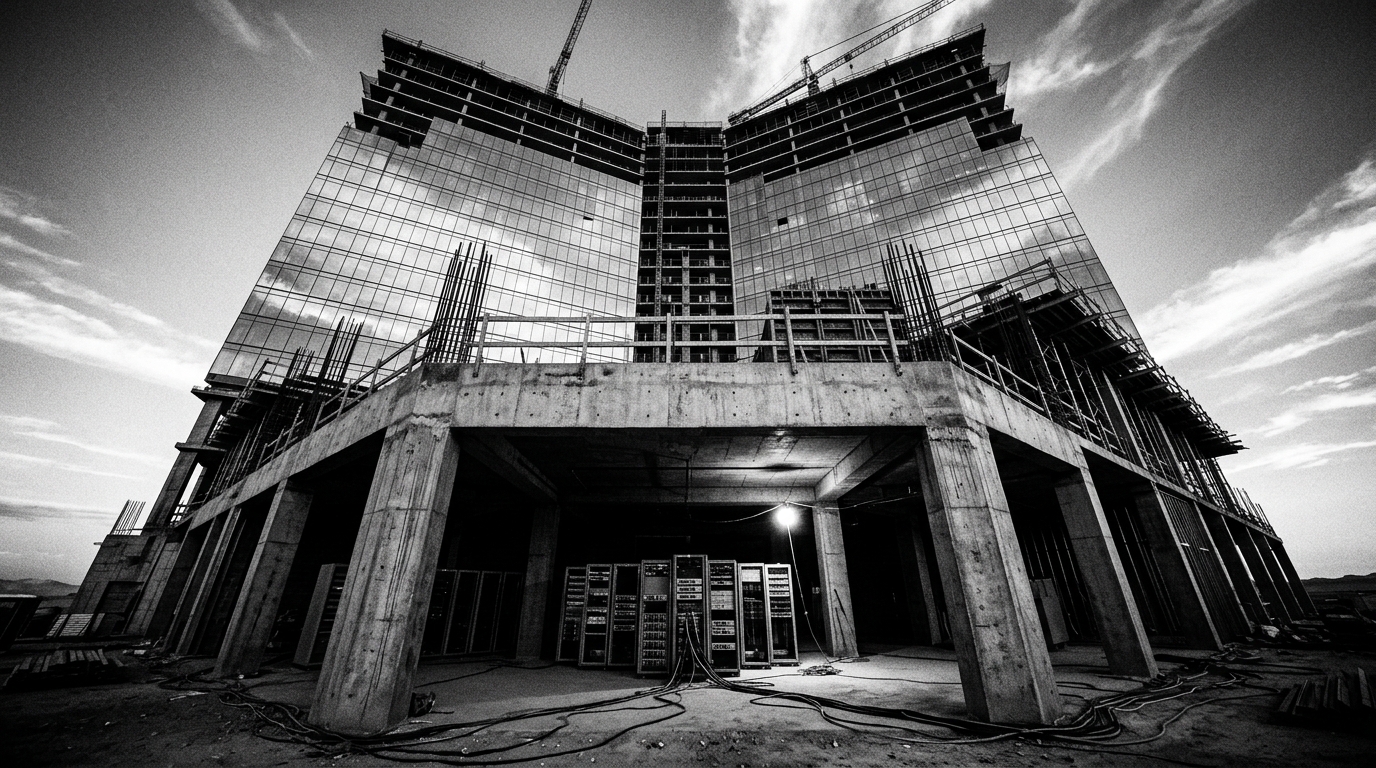
The construction is 83% done on the facade. The tower is topped off. The physical building is real. But I've been in this industry long enough to know that the building is the easy part. The hard part is what happens inside it... the invisible infrastructure that makes 1,530 keys, a gaming floor, 22 restaurants, and a private hotel function as a single integrated operation. Wynn knows how to run resorts. They're world-class at it. But they've never done it in a jurisdiction this new, with a regulatory framework this young, at this distance from their technology support ecosystem. The analysts pricing in $25 to $50 per share of value are pricing in perfect execution. I'd love to know what their model says about the first six months of system integration issues, because if history is any guide (and it always is), those six months are where the real story gets written.

Operator's Take

Let me be direct. Most of you aren't building $5.1 billion integrated resorts in the Middle East. But if you're a GM or an owner watching this story, here's what you should take from it: the technology integration challenge Wynn faces in the UAE is the same challenge you face at scale every time your brand mandates a new PMS rollout or your management company consolidates platforms. What I call the Vendor ROI Sentence applies whether you're a 90-key independent or a 1,530-key mega-resort... if the vendor can't tell you exactly how their system performs when it fails (not if, when), at the worst possible hour, with the least experienced person on shift, walk away. If you're evaluating any new system right now, ask your vendor one question: "What's your mean time to resolution for a critical failure at 2 AM in my time zone?" If they hesitate, you have your answer.

— Mike Storm, Founder & Editor
Read full analysis → ← Show less
Source: Google News: Wynn Resorts
San Francisco's RevPAR Jumped 80% in One Week. The WiFi Didn't Get Any Better.

San Francisco's RevPAR Jumped 80% in One Week. The WiFi Didn't Get Any Better.

The FIFA World Cup and back-to-back tech conferences pushed San Francisco hotel RevPAR up 80.5% in a single week, but the operators who actually captured that demand know the real stress test wasn't filling rooms... it was keeping the infrastructure from collapsing under 84.8% occupancy.

Available Analysis

So here's what actually happened in San Francisco the week ending June 20. Occupancy hit 84.8% (up 17.6% year-over-year). ADR spiked to $301.35 (up 53.5%). RevPAR landed at $255.45... an 80.5% year-over-year jump. The following week, RevPAR was still up 40.7%. Those are real numbers. CoStar confirmed them. The combination of FIFA World Cup matches at Levi's Stadium (43 miles south in Santa Clara, but close enough that San Francisco absorbed the hospitality demand) and the Databricks Data + AI Summit created a compression event that most markets would kill for.

But here's what I keep thinking about. I talked to a GM at a 250-key downtown property last month who told me his biggest fear during compression events isn't demand... it's bandwidth. "When we hit 85% occupancy and half the guests are tech conference attendees running video calls from their rooms, our network falls apart by 10 AM." That's not a hypothetical. That's a Tuesday during Dreamforce. Now stack a World Cup fan base on top of it... people streaming matches, uploading to social, FaceTiming family back home... and you've got a building designed for 2014 internet usage trying to handle 2026 demand patterns. The revenue looks incredible on the STR report. The one-star reviews about WiFi that drop two weeks later tell a different story.

Look, the macro numbers are genuinely encouraging. San Francisco Travel is projecting 24.2 million visitors and $9.9 billion in spending for 2026, which would beat the 2019 record. The Moscone Center has 38 events scheduled, generating an estimated 674,000 room nights. That's a real pipeline. But the city's occupancy is still roughly 10% below 2019 levels... the widest gap among major U.S. markets. So this isn't a recovery that's done. It's a recovery that's happening unevenly, and the compression weeks are masking how much ground still needs to be made up in the shoulder periods. A property that does $301 ADR during World Cup week and $180 the week after hasn't "recovered." It's riding spikes.

What actually interests me about this story is the technology stress test that nobody's writing about. When you push a hotel to 84.8% occupancy with a guest mix that's disproportionately tech-savvy (conference attendees plus international soccer fans), you're essentially load-testing every system in the building simultaneously. PMS check-in queues. Mobile key infrastructure. Payment processing throughput. Network capacity. HVAC demand. I've seen properties where the guest-facing app crashes at 70% occupancy because nobody stress-tested it above the average. Conference compression doesn't care about your average. It hits your ceiling. And if your ceiling is your 1990s-era electrical wiring creating interference on half the access points (sound familiar?), you're going to have a very expensive week where you capture the revenue and lose the reviews.

The real question for San Francisco operators isn't whether the demand is coming. It is. The convention pipeline plus the AI industry presence plus global events have created a demand floor that didn't exist three years ago. The question is whether the infrastructure... physical, technological, and staffing... can handle the peaks without breaking. Because a compression event that drives $255 RevPAR and generates 15 one-star reviews about WiFi, elevator wait times, or understaffed front desks is a net negative over the next 90 days. You made the money this week. You lost the direct bookings for the next quarter. That trade-off doesn't show up in the weekly STR report. But it shows up in your channel mix six months later.

Operator's Take

Pull your post-stay reviews from June 15-30 right now. Sort by one and two stars. Every WiFi complaint, every "couldn't connect," every "network was down"... that's your capital budget conversation. Not "we need to upgrade the WiFi." That gets you nowhere. You walk in with: "$14,000 in access point upgrades. Here's the 22 negative reviews from compression week. Here's what that costs us in direct booking conversion over the next two quarters." That's how you get a yes. Before the next event hits, stress-test your network at 85% occupancy with heavy-use guests. Actually simulate the load. Don't call your ISP and ask what your bandwidth is. That number means nothing at 10 AM when 200 tech conference attendees are on video calls simultaneously. Your revenue ceiling during compression isn't set by demand. It's set by the weakest system in your building. Find it now. Before the guests do.

— Mike Storm, Founder & Editor
Read full analysis → ← Show less
Source: Google News: CoStar Hotels
Five Aces Won $118K at Horseshoe. The Bigger Story Is the $808M Month Behind It.

Five Aces Won $118K at Horseshoe. The Bigger Story Is the $808M Month Behind It.

A Pai Gow progressive hit at Horseshoe Las Vegas makes a nice headline, but the real signal is what's happening underneath... Strip gaming revenue just posted its eighth-highest month ever, and the operators paying attention are asking very different questions than the ones celebrating jackpot photos.

A woman from LA sat down at a Pai Gow table at Horseshoe Las Vegas last Sunday night, drew five aces with a joker, and walked away $118,005 richer. Good for her. Genuinely. That's a life-changing Tuesday morning when the direct deposit clears.

But here's what caught my eye. She was in town for the World Series of Poker. Which means she's exactly the kind of guest that makes a casino-resort GM's week... a motivated traveler with discretionary income, booking a room during a major event, spending time on the gaming floor. She's not an anomaly. She's the prototype of what's driving the Strip right now. May 2026 gaming revenue on the Strip hit $807.9 million, up 13.2% year-over-year. That's the eighth-highest month ever recorded for that corridor. Baccarat alone surged 59%. The Caesars CFO went on record saying the Strip is in "great shape" after a sluggish 2025. Those aren't jackpot-winner press releases. Those are structural indicators.

I've seen this movie before. The jackpot story is the shiny object... the thing that gets shared on social media and makes people in Omaha think about booking a Vegas trip. And honestly, that's fine. That IS the marketing. Progressive jackpots exist precisely to generate these moments. A portion of every wager feeds the pool, the number grows, someone eventually hits, and the casino gets a press release that costs them nothing because the players funded the prize themselves. It's one of the most elegant marketing mechanisms in the business. But if you're an operator... if you're running rooms, F&B, entertainment, or anything adjacent to the gaming floor... the jackpot isn't your story. The $808 million month is your story. The 13.2% year-over-year growth is your story. The baccarat surge tells you something specific about WHO is coming and WHAT they're spending on.

And here's the context that makes this even more interesting. Caesars is in the middle of a $17.6 billion merger with Fertitta Entertainment that'll take them private. MGM just formed a special committee to evaluate an $18 billion buyout offer. The Cosmopolitan opened a remodeled high-limit room with $5 million linked slot progressives. These aren't isolated events. The smart money is looking at Strip performance data and making enormous bets (no pun intended) on the trajectory. When you see two of the largest gaming companies in the world simultaneously moving toward going private while revenue numbers are posting near-record months... that tells you the people with the deepest access to the data believe there's significant upside that public markets aren't pricing in. Or at least upside they'd rather capture without quarterly earnings calls.

For those of us who've operated in markets where gaming drives the room night, the lesson is always the same. Follow the floor. When table game revenue surges, high-end F&B follows. When slot volume climbs, mid-market rooms fill. When baccarat spikes 59%, your premium suite inventory should already be priced accordingly. The jackpot photo is for Instagram. The revenue trend is for your forecast.

Operator's Take

If you're running a property on or near the Strip, pull your May and June gaming-adjacent revenue and compare it to the same period in 2025. The Strip just posted 13.2% year-over-year gaming growth, and if your rooms revenue and F&B aren't moving with it, you've got a capture rate problem worth diagnosing this week. Look at your rate strategy around marquee gaming events like WSOP... these guests have higher ancillary spend than your typical convention attendee, and if you're pricing rooms without factoring gaming floor revenue contribution, you're leaving money on the table. For GMs at non-gaming properties in the Las Vegas market, the rising tide is real, but it lifts the boats closest to the action first. Know your comp set's rate moves and make sure you're not the last property to adjust.

Read full analysis → ← Show less
Source: Google News: Caesars Entertainment
Bakersfield Is About to Tax Every Airbnb in Town. Your City Is Probably Next.

Bakersfield Is About to Tax Every Airbnb in Town. Your City Is Probably Next.

Bakersfield's city council is moving to slap a 12% transient occupancy tax on every short-term rental operating in its borders, plus $500 in annual fees per host. For hotel operators who've been paying that tax for decades, the question isn't whether this levels the playing field... it's whether it actually changes anything on the ground.

I talked to an independent hotel owner last month who pulled up his city's Airbnb map on his phone and just started counting dots. Forty-seven listings within a two-mile radius of his 80-key property. "Every single one of these is operating tax-free," he said. "I'm paying six figures a year in transient occupancy tax. They're paying zero. And the city wonders why I can't compete on rate." That conversation has been happening in every secondary market in America for years. Bakersfield is finally doing something about it.

So here's what's actually happening. The Bakersfield City Council did a first reading on May 27 of an ordinance that would require every short-term rental in the city to register, get a permit, and pay the same 12% TOT that hotels already pay. Plus an annual permit fee of $250, a business license fee of $100, and a $150 fire safety inspection. That's $500 in fixed costs before a single guest books. For context, AirDNA data from June 2026 shows the average Bakersfield STR pulling about $16,500 in annual revenue at 55% occupancy. The TOT alone would add roughly $1,980 per year on that average. The total new cost burden is somewhere around $2,480... which is about 15% of gross revenue for the average host. That's not nothing. Some of those lower-performing listings are going to disappear. Not all of them. But the ones running at 35% occupancy and barely breaking even? They're done.

Look, the part of this that actually matters for hotel operators isn't the tax itself. It's what happens to supply. The interesting data point here is the wild variance in how many STRs are actually operating in Bakersfield... reports range from 302 to over 1,500 depending on the source and methodology. That spread tells you something important: nobody really knows how many units are in the market, which means nobody really knows how much demand they're absorbing. The regulation forces registration, which means for the first time, the city (and by extension, local hotel operators) will have an actual count. That data is more valuable than the tax revenue. You can't build a rate strategy against competition you can't measure.

The technology angle here is what I keep coming back to. The ordinance requires a 24-hour local contact for every STR. That's a compliance requirement that platforms like Airbnb could theoretically solve with automated tools... but haven't. Whether that's a product prioritization decision, a liability calculation, or just the usual gap between what platforms could build and what they've chosen to build, I don't know. What I do know is that the real question is enforcement. I've seen cities pass these ordinances and then have zero infrastructure to actually monitor compliance. No database integration with the platforms. No automated cross-referencing of listings against permits. No staff to investigate violations. The ordinance is a PDF. Enforcement is a system. And most cities don't have the system. If Bakersfield doesn't invest in actual compliance technology (and $250 per permit doesn't fund much), this becomes one of those regulations that punishes the hosts who follow the rules and ignores the ones who don't. Which is basically the current situation with extra paperwork.

The broader pattern is undeniable though. This is happening everywhere... World Cup host cities, Nevada, European markets, and now mid-sized California cities. The regulatory window for unregulated STR operation is closing, and it's closing faster in markets where hotel operators have organized and pushed back. If you're in a market where STRs are still operating without TOT parity, the Bakersfield ordinance is a template. The numbers ($250 permit, $100 business license, $150 fire inspection, 12% TOT) are reasonable enough that they're hard to argue against politically, and aggressive enough that they'll thin the herd of marginal operators. That's the whole point.

Operator's Take

Here's what I'd actually do with this. If you're an independent or a branded select-service in a market where STRs are still tax-free, pull the Bakersfield ordinance language and hand it to whoever on your local hotel association has a relationship with city council. This is a ready-made template... the fee structure, the safety requirements, the 24-hour contact mandate, all of it. Second thing: go to AirDNA or a similar platform and pull the STR count for your three-mile radius right now. Know the number. Know the average rate. Know the occupancy. When your market eventually passes its own version of this, you want to be the operator who already understands the competitive landscape, not the one scrambling to figure it out. The cities that move first on STR regulation are creating a playbook. Use it before your market catches up on its own... because it will.

— Mike Storm, Founder & Editor
Read full analysis → ← Show less
Source: Google News: Airbnb
Four Seasons Beijing Is Selling Gelato for $4 a Scoop. That's Not F&B Strategy. That's a Lifeline.

Four Seasons Beijing Is Selling Gelato for $4 a Scoop. That's Not F&B Strategy. That's a Lifeline.

When a luxury hotel known for Michelin-starred Cantonese cuisine starts pushing poke bowls and artisanal gelato at $4, it's not a summer menu refresh. It's a window into how the entire luxury F&B model in China is being rebuilt from the plate up.

I watched a hotel F&B director lose his job once over a brunch menu. Not because the food was bad. Because the food was extraordinary... and nobody was buying it. He'd built this beautiful Sunday brunch, everything sourced locally, hand-crafted, the works. Averaged about 30 covers a week in a restaurant that seated 120. His replacement cut the menu in half, added a build-your-own omelet station, dropped the price by 40%, and was running 90 covers within two months. The first guy was a better chef. The second guy was a better operator. And the owner only needed one of those.

That story keeps coming back to me as I look at what Four Seasons Beijing is doing this summer. On the surface, it reads like a standard luxury hotel seasonal promotion. Artisanal gelato at Opus Lounge, starting at CNY 28 (about $3.85 USD). Poke bowls. New Cantonese dishes at Cai Yi Xuan, their Michelin-starred restaurant. A "101 Days of Summer" theme that's rolling across Four Seasons properties throughout Asia Pacific from late May through early September. Very pretty. Very Instagrammable. Very Four Seasons.

But look at what's actually happening. They just converted their Italian fine dining restaurant, Mio, into a Tuscan grill built around sharing plates. That's a downshift. A deliberate move from "intricate fine dining" (their words) to "approachable." They're selling gelato for less than five dollars at a hotel where the rack rate would make your eyes water. Poke bowls in a property with a Michelin star. This is a luxury brand that is recalibrating what luxury F&B means in a market where the old playbook... banquet-heavy, high-ticket, prestige dining... is running into a consumer base that has gotten very, very selective about where they spend. China's "consumption downgrade" trend is real, and it's forcing even the top-tier operators to figure out how to keep seats full and revenue flowing without abandoning the brand positioning that justifies the rate. That's a tightrope walk, and it's one that every luxury and upper-upscale operator in Asia (and increasingly in the U.S.) is going to have to learn.

Here's the part that matters if you're running F&B in a full-service hotel anywhere. The old model said F&B exists to justify room rate. You take a bath on the restaurant because guests expect it and it supports your ADR. That model assumed the restaurant would at least cover variable costs and maybe break even on a good month. What Four Seasons is doing here is different. They're creating low-barrier entry points (a $4 gelato, a casual poke bowl) that drive traffic into the property without requiring the full commitment of a $150 prix fixe dinner. It's the same logic as a well-run lobby bar... you're not making your money on the drink, you're making it on the guest who comes for the drink and books the room next time, or the local who starts treating your lobby as their living room and becomes your best word-of-mouth marketing. The gelato isn't the revenue play. The gelato is the door.

The question is whether this works without diluting the brand. And honestly... I think Four Seasons is one of the few operators that can pull it off, because their service culture is strong enough to make a $4 scoop feel like a Four Seasons experience. Most hotels can't do that. If your team doesn't understand that the gelato guest gets the same eye contact, the same warmth, the same sense of being known as the guest spending $300 at dinner... then you've just opened a ice cream stand in a nice lobby. The product isn't the gelato. The product is how the gelato makes you feel. And that's a staff training question, not a menu question.

Operator's Take

If you're running F&B at a full-service or luxury property and you're still married to the idea that your restaurant has to be a destination dining experience to justify its existence... stop. Look at what your guests actually want at 2 PM on a Tuesday versus what your concept was designed to deliver on a Saturday night. Create at least one low-commitment entry point... a grab item, a bar snack program, something priced to invite trial rather than commitment. But here's the critical part: train your team to deliver the full service experience on that $8 interaction, not just the $80 one. The fastest way to destroy a brand repositioning like this is to let your staff treat the casual guest like a lesser guest. Every touchpoint is the brand. Every single one. If you're a GM looking at F&B losses and wondering where to start, start with traffic. Get people through the door. Revenue follows bodies. Not the other way around.

Read full analysis → ← Show less
Source: Google News: Four Seasons
Caesars Just Spent $270K Per Key Rebranding a Casino Hotel. The Tech Under the Hood Matters More Than the Lobby.

Caesars Just Spent $270K Per Key Rebranding a Casino Hotel. The Tech Under the Hood Matters More Than the Lobby.

Caesars Republic Lake Tahoe's $200M transformation is being pitched as a luxury lifestyle destination play, but the real question is whether the technology infrastructure behind 742 renovated rooms can actually deliver what the celebrity chef restaurants and design-forward lobby are promising.

So Caesars just finished a $200 million gut-renovation of the old Harveys Lake Tahoe... 742 rooms, new celebrity chef restaurants, redesigned casino floor, the whole deal. And look, the renderings are beautiful. The brand partnerships are impressive. Gordon Ramsay, Lisa Vanderpump, Clique Hospitality. That's a lot of star power pointed at a single property on the Nevada-California border.

But here's what actually interests me about this project, and it's not the lobby or the pool deck. It's the operational technology problem hiding behind all that $270K-per-key polish. You're taking a building that was originally Harveys... a property with decades of legacy infrastructure, legacy PMS configurations, legacy integrations... and you're asking it to function as a "design-forward luxury destination" that connects via indoor corridor to an adjacent Harrah's property with its own systems, its own loyalty stack, its own everything. That's roughly 1,250 combined rooms across two properties that need to talk to each other, share guest profiles, coordinate rewards redemption, and deliver a seamless (there's that word I hate) experience across what is functionally two different technology ecosystems bolted together by a hallway. I've consulted with a resort group that tried exactly this kind of dual-property integration. They spent 14 months getting the two PMS instances to sync guest profiles correctly, and even then the loyalty point redemption broke every time one property ran night audit before the other. Fourteen months. And these were newer systems.

The technology question nobody's asking is this: what does the guest experience actually look like when someone checks into the Republic side, walks through the corridor for dinner at Hell's Kitchen on the Harrah's side, charges it to their room, and expects their Caesars Rewards to track the whole thing? That workflow touches the PMS, the POS, the loyalty platform, the billing integration, and probably two separate property management teams. If any one of those handoffs fails... and at 2 AM with minimal staff, handoffs fail... you've got a guest standing at a restaurant host stand wondering why their room charge isn't working while a line cook is plating $65 beef Wellingtons. The guest doesn't care about your $200 million renovation at that moment. They care that the system is broken.

What's actually interesting strategically is the timing. Caesars is in the middle of being acquired by Fertitta Entertainment for roughly $17.6 billion, with Carl Icahn reportedly throwing a competing $33-per-share bid in right before the go-shop period ended on July 11. So this property is completing its transformation at exactly the moment when the company's future ownership is being decided. Whoever ends up running Caesars is inheriting a $200M capital deployment that needs to generate returns in a regional market facing structural headwinds from Northern California tribal properties. The technology infrastructure decisions being made right now... the integrations, the vendor selections, the systems architecture connecting these two properties... those are the decisions the next owner is going to be living with for 10 years. And those decisions are being made during an acquisition limbo where nobody knows who the boss will be in six months. That's not a great environment for long-term technology planning.

Look, I'm not saying the renovation is wrong. The Lake Tahoe market probably does need a higher-end casino resort option, and the celebrity F&B strategy generates press and drives trial. But the gap between "beautiful new lobby" and "operationally integrated dual-property technology platform that actually works" is enormous, and it's the gap where guest experience goes to die. Would this technology stack survive the Dale Test... could one person on the overnight shift troubleshoot a billing integration failure between two connected properties running different system configurations? That's the question. And nobody in the press release is answering it because nobody in the press release has ever worked a night audit at a dual-property casino resort where the corridor connection means your problems are literally someone else's problems too.

Operator's Take

If you're running a property that's gone through (or is about to go through) a major renovation and rebrand, here's the thing I want you drilling into right now: your technology integration timeline is not your construction timeline. I've seen this movie before. The rooms look gorgeous on day one. The systems work correctly by month six. That five-month gap is where you lose guests and reviews you'll spend a year trying to recover. Before you cut the ribbon, run a full end-to-end test of every guest-facing transaction across every system touchpoint... room charge, loyalty redemption, POS integration, mobile key, the works. Do it at 2 AM with your thinnest staffing level. Whatever breaks, that's your real punch list. The paint can wait. The technology can't.

— Mike Storm, Founder & Editor
Read full analysis → ← Show less
Source: Google News: Casino Resorts
Wynn's $5.1B UAE Bet Is 83% Built. The Real Question Is What Opens Inside It.

Wynn's $5.1B UAE Bet Is 83% Built. The Real Question Is What Opens Inside It.

Wynn Al Marjan Island is still targeting a 2027 opening with construction nearly complete, but a $1.2 billion cost overrun and a first-of-its-kind regulatory framework mean the technology stack powering this 1,530-key mega-resort will either set a new standard or become the most expensive integration failure in hospitality history.

So here's what nobody's really talking about with this project.

Everyone's focused on the timeline... will it open in 2027, will it slip again, how's construction going. And sure, the tower is topped off, the facade is 83% installed, interior fit-out is underway. That's all fine. But I keep coming back to a different question entirely: what does the technology infrastructure look like inside a 1,530-key integrated resort that's operating under a brand-new regulatory framework in a country that has literally never had legal commercial gaming before?

Think about what Wynn is actually building here. A 70-story tower with 1,217 hotel rooms, 297 suites, a 225,000-square-foot casino floor, 22 dining venues, a theater, a marina with 98 berths, retail, pools, a beach club... and all of it needs to talk to each other. The PMS needs to integrate with the gaming management system. The gaming management system needs to comply with GCGRA regulations that are being written in real time. The F&B POS across 22 outlets needs to feed into a unified revenue system. The loyalty platform needs to bridge Wynn's existing program with a guest profile that might include gaming activity in a market where the cultural norms around gaming are... let's say evolving. I've consulted with hotel groups trying to integrate a PMS with a spa booking engine and watched it take nine months. This is that problem multiplied by about fifty, in a jurisdiction with no operational precedent.

And the cost trajectory tells you something. This project started at $3.9 billion in April 2023. By September 2025 it was $5.1 billion. That's a 30.8% overrun before a single guest checks in. Wynn's already contributed over a billion dollars in cash to the joint venture, and they hold 40% equity, which means they're not even the majority stakeholder in their own flagship expansion. The $2.4 billion construction facility they secured is the largest hospitality financing deal in UAE history. When the numbers are this big, the pressure to get the technology right on opening night is enormous... because the cost of getting it wrong scales with the asset. A rate-push failure at a 150-key select-service costs you a few thousand dollars (I would know). A system failure at a 1,530-key integrated resort with a casino floor projected to generate between $1 billion and $1.66 billion in annual GGR? That's a different universe of consequences.

Look, the analyst says it's on track for 2027, and the construction progress supports that. But "on track" for opening and "ready to operate" are two very different things. I've seen properties where the building was done and the systems weren't close. Where the grand opening happened and the PMS was still running on a parallel legacy backup because nobody trusted the new platform under load. The CEO already acknowledged a "modest delay" due to regional logistics and shipping issues back in May. What I want to know is whether the technology integration timeline is getting the same honest assessment. Because the building is the easy part. The concrete doesn't crash at 2 AM. The software does.

Here's what makes this genuinely interesting from a technology perspective, though. If Wynn gets this right... if they build a technology stack from scratch for a property of this scale in a greenfield regulatory environment... that becomes the blueprint. No legacy systems to work around. No 1978 wiring creating interference (unlike a certain family hotel I could mention). No decades-old PMS they're afraid to migrate off of because the night auditor is the only person who knows how it works. A clean-sheet build at this scale, with gaming compliance baked in from day one rather than bolted on after the fact, could actually produce something the rest of the industry learns from. Could. The gap between "could" and "did" is where about $5.1 billion worth of execution risk lives.

Operator's Take

Let me be direct. Most of you aren't building $5.1 billion integrated resorts, and that's fine. But here's why you should care about this project anyway. Whatever vendor stack Wynn deploys at this scale... PMS, RMS, gaming integration, guest-facing tech... is going to become the reference architecture that those same vendors pitch to YOU in 18 months, scaled down and marked up. If you're a GM or a technology director at a gaming-adjacent property, or even a large full-service hotel evaluating a major PMS migration, start watching what Wynn selects and how it performs. Not the press releases... the operator chatter after month three. That's where you find out if the platform actually works under load or if it's another demo feature dressed up as production-ready. The vendor that survives a 1,530-key opening night without a catastrophic failure has earned your attention. The one that doesn't... well, you just saved yourself a year of evaluation.

— Mike Storm, Founder & Editor
Read full analysis → ← Show less
Source: Google News: Wynn Resorts
Oil Just Hit $86 a Barrel. Your Owners Are Already Doing the Math You Haven't Done Yet.

Oil Just Hit $86 a Barrel. Your Owners Are Already Doing the Math You Haven't Done Yet.

IHG and every major travel stock dropped when oil surged to a four-week high on renewed US-Iran tensions. The stock market reaction is one story, but the real pressure is building at property level, where energy costs, supply chain pricing, and guest travel budgets all move on the same barrel.

Available Analysis

I watched a brand VP present a gorgeous 2026 outlook in May... strong RevPAR, pipeline momentum, confident language about "no indication of a slowdown." IHG's Q1 numbers backed it up. Global RevPAR up 4.4%. Group business up 7%. Occupancy climbing. The presentation was flawless. And then I looked at the date on the slide deck and thought, "This was built before oil crossed $86 and the Strait of Hormuz became a chokepoint again." That's the thing about confidence built on trailing data. It ages fast when the geopolitical map shifts.

Here's what happened on Monday: renewed US military strikes on Iran and a blockade of Iranian shipping sent crude to a four-week high, and travel stocks led the selloff. IHG, IAG, Rolls-Royce... the market grouped them together the way it always does when fuel costs spike, which tells you something about how investors still think about our industry. They see "travel" and they see "oil exposure," and they're not entirely wrong, even for an asset-light company like IHG that doesn't own the buildings or buy the jet fuel. Because the owners who DO own those buildings? They buy the diesel for the laundry trucks. They pay the utility bills that track natural gas and electricity rates tied to crude. They absorb the food cost increases when transportation surcharges hit their suppliers. And they watch leisure demand soften when a family in Dallas looks at $3.80 gas and decides the road trip to San Antonio can wait (your economy and upper-midscale owners felt that sentence in their chest).

IHG's leadership said in May that business travel demand remained "strong" despite higher fuel costs. I believe them... for business travel. Corporate travelers don't cancel because gas went up $0.40. But leisure is a different animal, and IHG's Q1 data already showed the split: group revenue up 7%, business up 6%, leisure up just 1%. That 1% was BEFORE the latest surge. If you're a franchisee running an IHG property in a leisure-dependent market... a resort town, a drive-to destination, a family-travel corridor... that 1% leisure growth number should have been a yellow flag in May. At $86 oil with Strait of Hormuz disruptions, it's turning amber fast. The brand can point to portfolio-level RevPAR all day long. Your P&L doesn't live at portfolio level. It lives in your comp set, in your market, with your guest mix.

And here's the part that nobody in brand leadership wants to talk about during an oil spike: total cost of brand. IHG is spending $950 million on share buybacks this year (they'd already completed $240 million by Q1). That's capital being returned to shareholders while franchisees absorb rising operating costs on the ground. I'm not saying buybacks are wrong... they're a capital allocation decision and IHG's stock price is their board's concern, not mine. But when a brand is aggressively buying back shares in the same quarter that its franchisees are watching energy costs climb and leisure demand flatten, the optics create a tension that ownership groups notice. You're paying franchise fees, loyalty assessments, reservation system fees, and marketing contributions that can exceed 15% of revenue... and the parent company is using its cash to shrink its share count. Those are two very different definitions of "investing in the brand."

The analysts who study oil-and-hotels will tell you that $86 isn't panic territory. They're right. PKF's historical work suggests the real danger zone is north of $125, where you start seeing genuine demand destruction. But here's what the analysts miss (because they don't run hotels): it's not the price level that kills you, it's the uncertainty. When oil is volatile and geopolitical headlines change daily, consumers hesitate. They don't cancel... they delay. They book shorter. They trade down. And that hesitation shows up in your booking window before it shows up in your occupancy report. By the time your trailing data confirms the softening, you've already lost the rate positioning for the season. I grew up watching my dad navigate fuel spikes as a GM, and his instinct was always the same: "Don't wait for the data to tell you what you can already feel in the lobby." He could read a slowdown in the parking lot before it hit the PMS.

Operator's Take

Here's what I'd do this week if I were still running a property. Pull your utility costs for the last 90 days and trend them against the same period last year. If you're seeing 8-12% increases already, model what another 10% does to your GOP. Then look at your forward booking pace for leisure segments specifically... not total pace, LEISURE pace. If it's softening even slightly, now is the time to have that conversation with your revenue manager about protecting rate instead of chasing occupancy. This is what I call the Rate Recovery Trap... you panic, you cut rate to fill rooms, and you spend the next 18 months retraining the market to pay what you were getting before. Don't do it. Protect your ADR. If you're at a branded property, pull your total brand cost as a percentage of revenue and put it in front of your owner alongside what the brand is actually delivering in loyalty contribution. Not the projected number... the actual trailing-twelve-month number. Owners respect the GM who brings them the analysis before the oil price headline makes them nervous enough to call.

— Mike Storm, Founder & Editor
Read full analysis → ← Show less
Source: Google News: IHG
117 Keys on the Adriatic. 61 of Them Are Condos. That Tells You Everything.

117 Keys on the Adriatic. 61 of Them Are Condos. That Tells You Everything.

Nammos Hotels & Resorts just announced a "landmark lifestyle destination" in Montenegro with 117 total keys, but more than half are branded residences and villas designed to be sold, not operated. The real question isn't whether the brand promise is beautiful... it's who's actually holding the bag when the residence buyers expect five-star service and the hotel has 47 suites funding the operation.

Available Analysis

I've been to enough brand launches to recognize the choreography. The coastal rendering with the infinity pool that bleeds into the ocean. The words "curated," "signature," and "wellness" deployed in careful rotation. The champagne. The signing ceremony with local officials who say things like "transformative for the region." Nammos Hotels & Resorts just staged exactly this production in Montenegro, unveiling plans for a resort at Smokva Bay on the Budva Riviera, and honestly... the renderings are gorgeous. The location sounds extraordinary. And the math underneath it is the part that nobody in that signing ceremony wanted to talk about.

Here's what we're looking at: 117 total keys. Of those, 47 are hotel suites. The remaining 70... 61 branded residences and 9 branded villas... are real estate plays. That means 60% of this "resort" is product designed to be sold to individual buyers, not rooms managed for nightly revenue. This is not a hotel development with a residential component. This is a residential development wearing a hotel brand like an accessory. And there's nothing inherently wrong with that (branded residences are a proven model and the economics can work beautifully for developers), but let's stop calling it a "landmark lifestyle destination" and start calling it what it is: a real estate project where the brand's primary job is to make condos worth more per square meter. Nammos gets licensing fees and management revenue. The developer, Smokva Bay, gets premium pricing on 70 units because they carry the Nammos name. Everyone wins... right up until someone has to reconcile what the residence owners were promised with what 47 hotel suites can actually subsidize in terms of staffing, dining, spa operations, and the full "Nammos lifestyle" on a random Wednesday in November.

The year-round positioning is the part that should make anyone paying attention lean forward. Montenegro recorded nearly 2.73 million tourist arrivals in 2025 and has been climbing European satisfaction rankings (scored 9.22 out of 10 for visitor reputation in April 2026), but Budva Riviera is fundamentally a summer destination. Building a resort that promises four restaurants, a wellness club, a marina village, retail, pools, private dining, hiking, and mountain biking... and then staffing all of that to "year-round" standards on 47 hotel keys during an Adriatic winter? I've watched that exact movie play out on the Mediterranean. A brand VP once told me with absolute confidence that their resort would "redefine seasonality in the market." Six months later, three of their four F&B outlets were closed from October through April and the residence owners were livid because they'd bought into a lifestyle that apparently hibernated. The Nammos pop-up restaurant running this summer at Sveti Stefan is smart brand-building (get people tasting the experience before the resort opens in 2029), but a pop-up during peak season is easy. Delivering the Nammos experience when there are nine guests in house and a storm rolling in off the Adriatic... that's where the Deliverable Test gets interesting.

What makes this particularly worth watching is the backing. ADMO Lifestyle Holding, a joint venture between Abu Dhabi's Alpha Dhabi Holding and Monterock International, brings serious capital. Nammos is simultaneously opening or developing in Sardinia, London, Saudi Arabia, and expanding from its Mykonos base. That's an aggressive multi-market expansion for a brand that opened its first hotel in 2023. Three years from first hotel to five simultaneous global projects. The fastest way to kill a luxury brand is to scale before you've proven your operational DNA is transferable. Mykonos is one context. Montenegro is another. London is another planet entirely. The question isn't whether the Nammos aesthetic translates (it photographs beautifully everywhere). The question is whether the service culture, the operational standards, the thing that makes a guest feel something rather than just see something... whether THAT can be replicated across five markets simultaneously by a brand that's been operating hotels for roughly 36 months.

I genuinely hope this works. Montenegro deserves world-class hospitality development, and Petros Stathis (who reportedly brought Aman to Sveti Stefan back in 2008) clearly has vision for the market. But vision and delivery are two different documents. I've read enough FDDs and enough development pitch decks to know that the gap between the signing ceremony and opening night is where the beautiful renderings meet plumbing permits, staffing shortages, and residence buyers who want to know why the rooftop pool bar closes at 6 PM because you can't find a bartender. A 2029 opening gives them time. Whether they use that time to build something real or something that just looks real from the infinity pool... that's the story I'll be watching.

Operator's Take

Here's what this story is actually about, and it's not Montenegro. It's the branded residence model spreading into every luxury development on the planet and what that means for operators who end up running these things. If you're a GM or management company being approached to operate a resort where more than half the keys are sold residences, get the HOA-style governance structure in writing before you sign anything. Who controls service levels? Who pays when the residence owners demand amenities that 47 hotel keys can't fund? I've seen this movie three times now... developer sells the dream, operator inherits the operational gap between what was promised and what the revenue supports. Run your own staffing model on the hotel-only key count. If the F&B, spa, and amenity operations don't pencil on 47 keys at realistic occupancy (and in a seasonal market, realistic means 40-50% annual), then those costs are going to land somewhere. Make sure you know where before you're the one explaining it to angry villa owners in February.

— Mike Storm, Founder & Editor
Read full analysis → ← Show less
Source: Google News: Resort Hotels
700 Jackpots a Day. The Marketing Machine Behind Every Winner's Photo.

700 Jackpots a Day. The Marketing Machine Behind Every Winner's Photo.

Thunder Valley is averaging nearly 700 jackpots daily and turning every single one into a press release. The real story isn't the lucky hand... it's the technology infrastructure that decides which wins become headlines and which ones quietly reset the meter.

So here's what actually happened: someone hit five aces on Face Up Pai Gow at a tribal casino outside Sacramento and walked away with $120,123. Cool. Good for them. But this is the fifth six-figure table game payout Thunder Valley has publicized in the last 60 days... and that pattern is way more interesting than any individual hand.

Let's talk about what this actually does from a technology standpoint. Progressive jackpot systems are, at their core, networked contribution pools. Every side bet feeds a central accumulator. The system tracks contribution rates, threshold triggers, display values across the floor, and payout authorization... all in real time, across 3,500 slot machines and 89 table games. That's not trivial infrastructure. The progressive controller has to sync with the table game management system, the player tracking database, and the cage management system simultaneously. When that five-aces hand hits, the system has to validate the hand ranking against the paytable, confirm the side bet was placed, calculate the progressive amount to the penny, and trigger the payout authorization workflow. All before the dealer finishes setting the tiles. Most guests see confetti and a photo op. I see a chain of system integrations that, if any single link fails, means either a disputed payout or a payout that shouldn't have happened. I've consulted with a gaming property where a progressive controller desync'd from the table management system for 11 minutes during a busy Saturday night. Nobody noticed until a player hit what should have been a $94,000 jackpot and the display showed $31,000. That's an 11-minute window that cost someone $63,000 and the property about six months of regulatory headaches.

The marketing automation layer is where this story goes somewhere the surface coverage doesn't. Thunder Valley is clearly running a content pipeline that converts jackpot events into press coverage at scale. 700 jackpots a day means they need automated filtering... which wins get the photo, the press release, the social post? That's a rules engine making editorial decisions. Minimum threshold, game type, time of day, whether the winner consents to publicity. The fact that they're consistently placing stories in local media tells me someone (or more likely, something) is selecting and packaging these wins efficiently. This is actually a solid use case for automation... take a high-volume event stream, apply selection criteria, generate templated content, distribute to media contacts. It's not "AI-powered" (please), but it's a legitimate workflow automation that most hotel-casinos are still doing manually with a marketing coordinator and a DSLR camera.

The part that matters for operators outside gaming: this is a loyalty and retention play disguised as PR. Every jackpot story is a customer acquisition ad that the Sacramento Bee runs for free. The 251,000 jackpots in the past year number isn't a flex about generosity... it's a calculated disclosure designed to reduce perceived risk for potential visitors. "People win here frequently" is the message. The technology stack that enables this... progressive controllers, player tracking integration, automated marketing workflows, real-time reporting dashboards... represents probably $2-3M in system infrastructure that most guests never think about. And it has to work flawlessly at 2 AM on a Tuesday when the floor supervisor is the most senior person in the building.

Would this kind of automated event-to-content pipeline work at a non-gaming hotel? Actually... yes, with modification. Think about it: guest milestone recognition, loyalty tier achievements, review response triggers. The principle is identical... high-volume positive events happen at your property every day, and most of them disappear without being captured or amplified. The casino just figured out the automation first because the dollar amounts make the ROI obvious. A hotel celebrating its 10,000th mobile check-in or its 500th five-star review could run the same playbook. The technology exists. The question is whether anyone outside gaming is building the workflow.

Operator's Take

Here's what to take from this if you're running a hotel (gaming or not): look at your property's positive event stream and ask yourself how much of it you're capturing and converting into marketing. Every repeat guest booking, every loyalty milestone, every positive review... those are your jackpots, and most of you are letting them evaporate. You don't need a $3M progressive system. You need a simple trigger-and-template workflow that turns guest wins into shareable content. Talk to your PMS vendor about automated milestone alerts. If they can't do it, that tells you something about your PMS. And if you're at a gaming property, pressure-test your progressive controller sync... run a reconciliation between your table management system and your progressive displays at least weekly. The payout that goes wrong at 2 AM is the one that costs you six figures in regulatory time.

— Mike Storm, Founder & Editor
Read full analysis → ← Show less
Source: Google News: Casino Resorts
A Family Found a Painting of Themselves in an Airbnb. Hotels Can't Buy That Kind of Marketing.

A Family Found a Painting of Themselves in an Airbnb. Hotels Can't Buy That Kind of Marketing.

A viral story about a family discovering a painting resembling their kid in a Swedish B&B is charming internet fodder. It's also a masterclass in why Airbnb keeps winning the narrative war while hotels spend millions on campaigns nobody remembers.

So a family renting a rural B&B in Sweden found a painting on the wall that looked like their seven-year-old son. Turns out it was a Carl Larsson piece depicting a young girl... but the resemblance was uncanny enough that the mom posted it on X, the internet lost its mind, and now millions of people are talking about how magical and weird and wonderful it is to stay in someone else's space. "The simulation is glitching" became the tagline. The debate over whether it was real or staged became the engagement engine. And Airbnb didn't spend a single dollar making any of it happen.

That's the part that should bother every hotel operator reading this.

Look, I'm not here to analyze whether the painting thing was staged. Doesn't matter. What matters is the mechanism. Airbnb's entire brand architecture is built to generate these moments organically. Every listing is different. Every stay has the potential to produce something unexpected... a secret staircase, a weird painting, a host who leaves a handwritten note about the best bakery in town. Hotels, by design, optimize for consistency. Consistency is valuable. Consistency is what business travelers need and what brands promise. But consistency doesn't go viral. Nobody's posting "you won't BELIEVE how identical my Marriott room looked to the last Marriott room." The platform that produces surprises will always generate more free media than the platform that eliminates them.

Here's what this actually reveals about the technology gap. Airbnb doesn't need a content marketing team to produce these stories because the product IS the content. The platform architecture... millions of unique listings, each with its own personality, each managed by an individual host making individual decisions about what art to hang on the wall... is a content generation engine running 24/7 at zero marginal cost. I've consulted with hotel groups that spend $30,000-$50,000 a month on social media management trying to manufacture the kind of engagement this family generated for free by walking into a room and taking a photo. The ROI comparison isn't even close. It's not that hotels are bad at social media. It's that the underlying product doesn't produce shareable moments at the same rate, because it was designed not to.

The technology question I keep coming back to is this: can hotels build systems that create surprise without sacrificing reliability? Some are trying. Personalization engines that customize room settings based on guest profiles. Digital concierge tools that surface hyper-local recommendations. Dynamic art displays (yes, these exist... a few boutique groups are testing digital frames that rotate local artwork). But most of these implementations feel like what they are... technology trying to simulate what happens naturally in a space where a real person decided to hang their grandmother's painting above the couch. The Dale Test applies here in a weird way. Not "can the night auditor troubleshoot this system?" but "does this system produce something a guest would actually photograph and share?" If the answer is no, you've built infrastructure, not experience.

I talked to an independent hotel owner last month who told me she started buying original art from local painters for her 40-key property... spent about $6,000 total across all rooms. Her TripAdvisor reviews started mentioning the art within weeks. Not because the art was world-class. Because it was specific. It was THAT hotel. It couldn't be anywhere else. That's the insight buried inside this silly viral painting story. The technology that matters isn't always software. Sometimes it's the decision architecture that allows individual properties to be genuinely different from each other... and the platform infrastructure (or lack thereof) that either enables or prevents guests from discovering and sharing those differences.

Operator's Take

Here's what I'd do with this if I'm running a property. Stop trying to compete with Airbnb on viral moments. You'll lose that game every time because their product generates them structurally. Instead, invest in what I call the "photographable difference"... one thing per property that can't exist anywhere else. Local art. A signature lobby feature. A staff tradition that guests notice. Budget $2,000-$5,000 for it, not $50,000 on a social media agency. Then make sure your WiFi actually works well enough for guests to post about it (I know... I know). The properties winning the social media game aren't the ones with the best marketing teams. They're the ones where something real happens that a guest wants to talk about. You can't manufacture authentic. But you can create the conditions where it shows up on its own.

— Mike Storm, Founder & Editor
Read full analysis → ← Show less
Source: Google News: Airbnb
People Inc. Wants MGM at $48.30 a Share. The Market Already Thinks That's Low.

People Inc. Wants MGM at $48.30 a Share. The Market Already Thinks That's Low.

Barry Diller's $18 billion bid for MGM Resorts implies a cap rate and asset valuation that MGM's own board appears to reject. The real question is what a 26.1% blockholder can extract from a company he already controls in everything but name.

People Inc. offered $48.30 per share for the MGM Resorts shares it doesn't already own, valuing the entire enterprise at north of $18 billion including debt. The equity check for the remaining 73.9% is roughly $12.4 billion. That 10.6% premium to the pre-announcement close looks generous until you check the 90-day VWAP, where the premium stretches past 30%... which tells you MGM's stock had been languishing, not that $48.30 is a fair price.

Let's decompose this. MGM's portfolio includes some of the most valuable gaming real estate on the planet (the Bellagio lease alone is a case study in asset separation), a growing international footprint, and a digital betting business in BetMGM that the public market has struggled to value coherently. When Barry Diller says the market "materially undervalues" these assets, he's not wrong. He's also the 26.1% blockholder making the bid, which means he's simultaneously the person most motivated to say the stock is undervalued and the person best positioned to acquire it cheaply. That's not a conflict of interest... it's the entire interest.

MGM's board formed a special committee. Wells Fargo pinned their price target at $48.30, matching the offer exactly (which is either independent analysis or capitulation, depending on your view). Analysts I've seen quoted suggest fair value closer to $55-$60 per share. The spread between $48.30 and $55 on roughly 257 million outstanding shares not held by People Inc. is approximately $1.7 billion. That's not a rounding error. That's the gap between what Diller wants to pay and what a competitive process might yield. A competitive process that Diller has already stated he won't support if a rival bidder appears.

This is the structural problem. A 26.1% blockholder who sits on the board, who has stated he won't tender to a competing offer, and whose financing is already arranged through JPMorgan effectively creates a ceiling on what any other buyer would bid. You're not buying MGM at that point. You're buying a fight with Barry Diller. The fiduciary duty investigation by outside counsel makes sense in this context... not because fraud is obvious, but because the governance structure makes a truly independent valuation nearly impossible to execute.

Pair this with Fertitta's $17.6 billion takeout of Caesars announced weeks earlier, and you have two of the largest gaming-hospitality operators in the country moving toward private or closely held structures in the same quarter. When the biggest names leave the public market, institutional capital has fewer places to go, comp set analysis for remaining public REITs changes, and the transparency that public filings provide disappears behind private walls. For asset managers benchmarking against gaming-adjacent hospitality, the data environment just got worse.

Operator's Take

Look... if you're operating an MGM-branded property or managing assets in a market where MGM is a major player (Vegas, obviously, but also regional gaming markets), the takeaway isn't about the stock price. It's about what happens to capital allocation when ownership structure changes. I've seen this movie before. New private ownership comes in, the first 18 months are about "unlocking value," and at property level that usually means a hard look at every expense line, staffing model, and management contract. If you're a third-party operator running an MGM flag, get ahead of this. Pull your management agreement, know your termination provisions, and have a clear picture of your property's trailing NOI versus the fees you're generating. Because when new ownership starts asking questions, the operator who already has the answers is the one who keeps the contract.

— Mike Storm, Founder & Editor
Read full analysis → ← Show less
Source: Google News: MGM Resorts
Hilton Just Brought Curio to India. The Promise Is Beautiful. The Delivery Test Starts Now.

Hilton Just Brought Curio to India. The Promise Is Beautiful. The Delivery Test Starts Now.

Hilton's first Curio Collection in India is a 221-key lifestyle play in Bengaluru's tech corridor, and everything about the brand promise sounds gorgeous. The question is whether "Malnad coffee estate serenity" survives contact with a Wednesday night tech conference sellout and a front desk team of three.

Available Analysis

I grew up watching brand launches. I've been in the room when the renderings go up on the screen and everyone gets that little dopamine hit from the lobby shot... the one with the perfect lighting and the artfully placed coffee table book and exactly two attractive people having a conversation that looks both spontaneous and curated. I know what that room feels like. I used to BE the person putting the renderings on the screen. So when I say Slohh by Roach Bengaluru, Curio Collection by Hilton, looks stunning on paper... I mean it. The 221 keys in Whitefield, the views over Varthur Lake, the Malnad coffee estate design inspiration, the 5,000-square-foot pillarless ballroom, the hammam (a hammam!)... this is a genuinely thoughtful concept from a development partner, Roach Lifescapes, that clearly cares about sense of place. And introducing Curio Collection to India through Bengaluru's tech corridor is smart positioning. You want your lifestyle debut in a market where business travelers have money, taste, and options. Bengaluru checks all three.

But here's where I start pulling at the thread, because this is what I do. Curio Collection's entire value proposition is that each property is "one of a kind." That's the brand promise. Every hotel is supposed to feel like a discovery, a local story told through design and programming and food and the thousand small moments that make a guest feel like they're somewhere specific rather than somewhere generic. That promise is HARD to deliver. It requires staff who understand the narrative, training that goes way beyond "here's the check-in script," and operational bandwidth to maintain the details that make "locally inspired" feel real instead of like a lobby sign nobody reads. Hilton now has 13 properties in Bengaluru alone. They opened a Hilton Garden Inn in the same city this same month. They're launching Spark by Hilton in Bengaluru simultaneously. That's three different brand personalities in one market at the same time, and the lifestyle entry has to feel unmistakably different from the others while sharing the same loyalty infrastructure, the same Hilton Honors integration, the same corporate standards backbone. Can it be done? Absolutely. Will it require relentless attention from the ownership and management team to keep the "one of a kind" promise from dissolving into "Hilton with nicer furniture"? Every single day.

The India growth math is seductive, and I understand why Hilton is moving this aggressively. The Indian hotel market hit $32 billion in 2023 with projections north of $59 billion by 2030. Bengaluru's RevPAR grew 14-19% in May 2026. Hilton wants to double its India presence within five years and reach 400 trading hotels in the country. Those are real numbers and a real opportunity. But I've sat in enough franchise development meetings to know the difference between "the market is growing" and "this specific property will capture that growth at a return that justifies the owner's investment." The press materials don't disclose development costs or deal terms (they never do for these announcements, and that silence is always louder than the champagne toast). What I want to know... what any owner evaluating a Curio conversion should want to know... is what the total brand cost looks like as a percentage of revenue for a 221-key lifestyle hotel in a market where Hilton is simultaneously flooding supply with its own competing flags. Because loyalty contribution that gets split across 13 properties in one city is a very different proposition than loyalty contribution in a market where you're the only Hilton flag for 50 miles.

Here's the Deliverable Test, and it's the one that matters most. Slohh by Roach promises a "serene" experience inspired by coffee plantations and "slow living" (the name is literally a play on "slow"). Beautiful concept. Now picture a 600-person event in The Banyan ballroom, a tech conference block filling 180 of your 221 rooms, the Executive Club Lounge at capacity, and your spa trying to maintain "tranquility" while the pool deck hosts a corporate cocktail reception. Can the team deliver serenity and a sold-out conference simultaneously? That's not a hypothetical in Whitefield... that's a Tuesday in Q4. The brand promise has to work on the worst night, not just the best one. A brand VP once told me, very confidently, that "the guests will feel the design intent even at high occupancy." I asked him if he'd ever tried to feel design intent while waiting 20 minutes for an elevator during a conference break. He changed the subject.

What excites me (and I mean this genuinely) is the local partnership model. Roach Lifescapes isn't a generic development company plugging rooms into a brand template... they're a boutique firm with a clear design point of view, and that alignment between developer vision and brand promise is exactly what makes Curio Collection work when it works. The best Curio properties I've evaluated are the ones where the owner had a story to tell BEFORE the flag went up, not after. If that's what's happening here, this could be a model for how Hilton scales lifestyle in India. If it's just a flag of convenience on a nice building... well, I have a filing cabinet full of those stories, and they all end the same way. The rendering looked great. The TripAdvisor reviews told a different story 18 months later.

Operator's Take

If you're an owner being pitched a Curio Collection conversion anywhere in Asia Pacific right now, this opening is going to be the case study in every franchise sales deck for the next two years. Good. Use it. But use it correctly. Ask for the actual loyalty contribution data from Curio properties in markets where Hilton runs three or more flags simultaneously... not the portfolio average, the multi-flag market average. That's a different number and it's the one that matters to your P&L. Then run your total brand cost (fees, PIP, mandated vendors, loyalty assessment, all of it) against that realistic contribution number and see if the math holds at 70% occupancy, not 85%. This is what I call the Brand Reality Gap. Brands sell promises at scale. Properties deliver them shift by shift. The promise here is beautiful. Make sure your pro forma can survive the delivery.

— Mike Storm, Founder & Editor
Read full analysis → ← Show less
Source: Google News: Hilton
AI Search Sends Hotels 14.2% Conversion Rates. Most Properties Aren't Even in the Conversation.

AI Search Sends Hotels 14.2% Conversion Rates. Most Properties Aren't Even in the Conversation.

AI-referred visitors convert at 14.2% versus 2.8% for traditional search, and 40% of travelers now plan trips using AI tools. If your property's data isn't structured for the machines doing the recommending, you're not losing a marketing channel... you're becoming invisible.

Available Analysis

So here's what's actually happening. The way travelers find hotels is splitting into two completely different systems, and most properties are only optimized for the one that's shrinking.

Traditional SEO... the stuff you've been paying agencies to do for a decade... is built around getting clicks from a Google results page. That still matters. But Google AI Overviews now appear on over 25% of searches, up from about 13% in early 2025. When an AI overview answers the traveler's question directly, click-through rates to the top organic result drop by more than half. Forty percent of travelers are using AI tools for trip planning. Seventy percent of bookings now involve an AI-driven recommendation somewhere in the journey. And the conversion rate gap is staggering: visitors who arrive at your website through an AI recommendation convert at 14.2%, versus 2.8% for conventional organic search. That makes an AI-referred visitor roughly 4.4 times more valuable. Those aren't vendor projections. Those are measured outcomes.

The problem is that most hotel websites, especially independents and smaller branded properties, are structured for humans browsing, not for AI models parsing. What these AI systems need is structured data... clean, consistent, machine-readable information about your property, your rates, your amenities, your location context. If your Google Business Profile is half-filled-out, if your website content is generic marketing copy instead of specific factual detail, if your rate feeds are fragmented across three different systems that don't talk to each other... the AI just skips you. It doesn't penalize you. It doesn't even know you exist. You're not losing a ranking. You're absent from the conversation entirely.

Look, I've been in vendor meetings where someone pitches "AI-powered search optimization" and what they actually mean is "we updated your meta tags and added some schema markup." That's not nothing, but it's also not what we're talking about here. Real optimization for AI search means your property data has to be authoritative, structured, and consistent across every platform where an AI model might pull information. Your PMS data, your CRS, your Google Business Profile, your OTA listings, your website... they all need to tell the same story, with the same details, in formats that machines can parse without guessing. I consulted with a hotel group last year that had three different room-type naming conventions across their website, their OTA listings, and their PMS. Three different systems, three different versions of what the hotel actually offers. No human noticed. An AI model trying to synthesize that into a recommendation? It just moved on to the property down the street that had clean data.

The bigger structural issue here is one that should make independent operators especially uncomfortable. The major chains are already building conversational AI tools into their direct booking platforms. They're integrating with large language models. They have teams working on this. A 90-key independent doesn't have that. What a 90-key independent DOES have is the ability to move fast, control their own data, and make changes without waiting for a brand technology committee to approve a rollout in Q3 of next year. But only if they actually do it. The window where this is a competitive advantage and not just table stakes is probably 12-18 months. After that, it's the cost of being findable.

The vendors are going to flood this space. They already are. Before you sign anything, ask the question that actually matters: what specific, measurable change will this make to how AI platforms surface my property? If the answer involves the words "holistic," "ecosystem," or "comprehensive visibility platform"... you already know what I'm going to say.

Operator's Take

Here's what to do this week. Pull up your Google Business Profile and audit it like your bookings depend on it... because increasingly, they do. Every field filled. Every photo tagged. Every attribute accurate. Then check your website: can a machine extract your room types, rate ranges, amenities, and location context without interpreting marketing fluff? If your site says "experience elevated comfort in our thoughtfully appointed accommodations," that's invisible to an AI. If it says "king room, 340 square feet, 12th floor, city view, walk-in shower, 0.3 miles from convention center"... now you're in the conversation. This is what I call the Vendor ROI Sentence... if the agency or tool you're paying for search optimization can't tell you exactly how their work changes your visibility in AI-generated recommendations, you're paying for last decade's playbook. The operators who clean up their data now, while their comp set is still running generic SEO, are the ones who capture that 14.2% conversion rate. The ones who wait are going to wonder why their website traffic is fine but their bookings are falling.

— Mike Storm, Founder & Editor
Read full analysis → ← Show less
Source: Google News: Hotel AI Technology
Diller Bids $48.30 Per Share for MGM. The Board Thinks He's Lowballing.

Diller Bids $48.30 Per Share for MGM. The Board Thinks He's Lowballing.

Barry Diller's People Inc. is offering $12.4 billion for the 74% of MGM Resorts it doesn't already own, valuing the entire company at roughly $18 billion including debt. The per-share price looks generous until you decompose what MGM actually owns and what the buyer is really pricing in.

Available Analysis

$48.30 per share for a company that generated $16.2 billion in consolidated net revenue last year. That's Diller's number. Let's decompose it.

People Inc. already owns 26% of MGM's common stock. The $12.4 billion bid covers the remaining 74%, which puts the full equity value around $16.8 billion. Layer on roughly $6.4 billion in debt and you're looking at an enterprise value north of $18 billion. MGM reported $41.4 billion in total assets. The 10.6% premium over the pre-announcement close sounds meaningful until you note the stock had been trading at a discount to consensus NAV for most of the prior year. The 90-day VWAP premium exceeds 30%, which tells you less about Diller's generosity and more about how beaten down the stock was. A large premium over a depressed price is still a depressed price.

The conflict structure here is what matters. Diller sits on MGM's board. People Inc. is the largest single stockholder. A voting agreement from April 2026 caps his proportional voting power above 25.73%, which suggests the governance question was already live before the bid went public. He says he'll recuse himself from board deliberations. Fine. But the information asymmetry between a 26% owner with a board seat and the remaining shareholders is real, and BFA Law's investigation into potential conflicts is not frivolous. I've audited transactions with less obvious structural advantages for the acquirer. The special committee of independent directors has the right posture (retain advisors, evaluate properly), but posture isn't outcome.

The strategic thesis is that MGM's physical assets are "AI-proof" and its digital upside through BetMGM is undervalued by public markets. The first claim is probably correct (casino floors and hotel rooms don't get disintermediated by large language models). The second is a bet. BetMGM's growth trajectory is real, but online gaming margins are compressed by customer acquisition costs and regulatory fragmentation across states. Diller's original 2020 investment was premised on the same digital thesis at a $1 billion entry point. Six years later, he's attempting to take the whole company private at roughly 1.1x trailing revenue on an enterprise basis. That's not an aggressive multiple for a diversified gaming and hospitality company with a $10 billion development pipeline in Osaka. The board is right to push back.

Timing matters. Fertitta's $17.6 billion agreement to acquire Caesars dropped days before this bid resurfaced in advanced talks. Two take-private transactions in the gaming-hospitality sector within weeks of each other signals either coordinated thesis (physical assets are undervalued in public markets) or competitive pressure to move before comparable transaction multiples reset higher. Either way, the Caesars comp gives MGM's special committee a reference point. If Caesars trades at a higher multiple to EBITDA than Diller's implied bid for MGM, the board has quantitative ammunition to call this insufficient.

MGM reports Q2 earnings July 29. The board knows what those numbers look like. Diller knows what those numbers look like (he's on the board, recusal notwithstanding). The remaining shareholders do not. That asymmetry is the entire story. If Q2 beats, the $48.30 looks even thinner. If it misses, Diller's timing looks prescient. Either way, the owner of 26% who also holds a board seat is making a bid with more information than the people he's buying from. The math on the offer might work. The question is what "works" means for the shareholders being asked to sell.

Operator's Take

Let me be direct. If you're an operator at an MGM-managed property, nothing changes Monday morning. The beds still need to be made and the guests still need to be checked in. But if you're at a management company or ownership group that competes with MGM for deals, development sites, or management contracts... pay attention to what happens next. A private MGM with Diller's capital allocation philosophy could move faster on acquisitions, kill underperforming assets without quarterly earnings pressure, and redeploy capital without explaining it to analysts. That changes the competitive landscape in ways that a public MGM never could. If you're in asset management at a REIT with gaming-adjacent exposure, pull your comp set data now and figure out what a private MGM means for transaction multiples in your markets. Don't wait for the deal to close to start modeling the implications.

— Mike Storm, Founder & Editor
Read full analysis → ← Show less
Source: Google News: MGM Resorts
The UK Just Made Airbnb a Regulated Platform. Your Competitor's Costs Are About to Change.

The UK Just Made Airbnb a Regulated Platform. Your Competitor's Costs Are About to Change.

Britain's Online Safety Act now classifies Airbnb as a regulated user-to-user service, subject to the same content moderation and safety duties as social media giants. The compliance costs have to land somewhere... and that somewhere is either the host's margin or the guest's nightly rate.

So here's something that flew under the radar this week while everyone was arguing about AI chatbots and rate optimization. The UK's telecom regulator, Ofcom, is finalizing its categorization of platforms under the Online Safety Act... and Airbnb just landed on the list of services facing formal online safety duties. Content moderation. Age assurance. User protection protocols. Potential fines of up to £18 million or 10% of global turnover, whichever is higher. This isn't a suggestion. This is a regulatory framework with teeth, and the enforcement has already started... Ofcom fined one platform £630,000 just yesterday for non-compliance.

Let me explain why this matters if you run a hotel and not a tech company. Airbnb has operated for years in a regulatory gray zone... not quite a hotel, not quite a tech platform, conveniently whichever one faced less scrutiny at any given moment. That's changing. The Online Safety Act treats Airbnb the same way it treats social media because, technically, it IS a user-to-user content platform. Reviews, messages, listing photos, host-guest communications... all of that now falls under a duty of care framework that requires proactive risk assessment, content moderation systems, and (for certain categories) age verification infrastructure. Building those systems costs real money. Maintaining them costs more. And those costs either come out of Airbnb's margin, get passed to hosts through higher service fees, or get passed to guests through higher nightly rates. There is no fourth option.

Look, I'm not going to pretend this is some silver bullet for hotels. It's not. But it IS a structural shift in the cost basis of your primary alternative-accommodation competitor in one of the world's most important travel markets. I consulted with a UK-based hotel group last year that was losing 15-20% of their midweek corporate demand to Airbnb in central London. Their biggest frustration wasn't the product... it was the cost asymmetry. They had fire safety inspections, accessibility requirements, employment law compliance, data protection officers. Their Airbnb competitors had a ring light and a Dyson. When regulatory costs start to equalize even slightly, that gap narrows. Not disappears. Narrows.

This is part of a pattern that's been building for a while. The EU's Digital Services Act already requires Airbnb to verify business hosts. Australia is tightening short-term rental regulations in major cities. New York's Local Law 18 essentially killed traditional Airbnb operations in Manhattan. And now the UK is layering platform-level safety duties on top of whatever local hosting regulations already exist. Each one of these individually is manageable for a company Airbnb's size. Collectively, they represent a slow but real increase in operational complexity and cost that moves the platform incrementally closer to the regulatory reality that hotels have lived with forever. The question isn't whether this changes the competitive landscape overnight (it won't). The question is whether you're tracking the cumulative trajectory... because your revenue strategy in UK-exposed markets should reflect a competitor whose cost basis is trending in one direction.

What actually matters for the operator on the ground is this: none of these regulatory developments help you if your product doesn't compete. A guest choosing between your 180-key select-service and a well-run Airbnb in Edinburgh isn't making that decision based on which platform has better content moderation policies. They're making it based on experience, location, and value. But if Airbnb's cost structure in the UK starts creeping up... even 3-5% on the host side, which is plausible given the compliance infrastructure required... that creates pricing room you didn't have before. Not much. But in a market where you're competing for the same £140-per-night guest, a few pounds of daylight is a few pounds of daylight.

Operator's Take

If you're running properties in the UK or competing for UK-bound travelers, here's what I'd actually do. Pull your rate shop data for your top UK markets and look at Airbnb pricing trends over the next two quarters. You're looking for upward drift on the short-term rental side that isn't seasonal. If you see it, that's your signal to hold rate where you might have been tempted to discount. This is what I call the Vendor ROI Sentence applied to your competitive set... if the cost of doing business on the other side is going up, your job is to capture the value that creates, not ignore it. Second thing... if you're pitching UK inbound business to corporate accounts or tour operators, the regulatory compliance story is now part of your value proposition. You already have fire safety, accessibility, employment standards, and data protection baked into your cost structure. Your alternative-accommodation competitor is just starting to build that infrastructure. That's not a talking point from a press release. That's a fact you can put in front of a procurement officer.

— Mike Storm, Founder & Editor
Read full analysis → ← Show less
Source: Google News: Airbnb
Icahn's $33 Bid for Caesars Arrives on Deadline Day. The Board Already Picked Fertitta.

Icahn's $33 Bid for Caesars Arrives on Deadline Day. The Board Already Picked Fertitta.

Carl Icahn is reportedly offering $2 per share more than Fertitta's $31 deal for Caesars, but the financing structure reads like a distressed-debt play, not an acquisition. The spread between the two offers tells you less than the spread between their execution risk.

Available Analysis

Caesars' go-shop period expires today. Icahn's reported $33/share counter-offer values the equity at roughly $2 per share above Fertitta's agreed $31 deal, on a total enterprise value that already includes $11.9 billion in assumed debt. The headline premium is 6.5%. The real question is whether 6.5% compensates for a fundamentally different risk profile in the financing.

Let's decompose this. Fertitta's deal is all-cash equity at $17.6 billion enterprise value. Committed financing. The Nevada Gaming Control Board already gave unanimous suitability approvals to two Fertitta executives on July 8. That's a deal with regulatory momentum and a clear capital stack. Icahn's counter is reportedly structured as a "liability management exercise," which is Wall Street language for debt restructuring repackaged as an acquisition vehicle. Jefferies is currently gauging interest for $5 billion in new debt to support it. "Gauging interest" is not "committed financing." That distinction matters more than the $2 per share spread.

A company generating $11.5 billion in revenue, carrying a 7.5x debt-to-equity ratio, and posting a $502 million net loss in fiscal 2025 is not a clean balance sheet. It's a leverage story. Fertitta's approach takes that leverage private, where the debt service pressure becomes his problem to manage without quarterly earnings calls. Icahn's LME structure layers complexity onto an already complex capital stack. I've audited transactions structured this way. The economics for the acquirer often look better on paper than for the existing debt holders, who tend to get restructured into instruments they didn't originally sign up for. The $200 million termination fee Caesars would owe if they walk from Fertitta adds another layer... that's real cash against an offer that doesn't yet have committed capital behind it.

The market is telling you everything. Caesars traded around $30 on July 9, below both the $31 Fertitta price and the reported $33 Icahn price. When shares trade below the agreed deal price AND below the competing offer, the market is pricing execution risk, not upside optionality. The board resignation of a former Icahn Enterprises executive on July 6 (five days before the go-shop deadline) is worth noting. The company said it wasn't due to disagreement. The timing says something the statement doesn't.

Icahn's playbook is well-documented. He built a stake in Caesars in 2019, influenced the Eldorado merger in 2020, cashed out, then rebuilt a position in early 2025 and secured two board seats. The pattern isn't acquisition... it's price pressure. A $33 offer that forces Fertitta to $34 or $35 extracts value for Icahn's 1.2% stake without requiring him to actually close a $17 billion transaction. That's a $2.24-4.48 million gain on his current $74 million position per dollar of price increase. The bid doesn't need to win. It just needs to exist.

Operator's Take

Look... if you're running a Caesars-flagged property, nothing changes Monday morning regardless of which billionaire ends up signing the checks. But here's the thing to watch. Fertitta's portfolio is Golden Nugget casinos and a massive restaurant and entertainment group. If he closes this deal, you're looking at an owner who understands F&B, labor-intensive operations, and guest-facing hospitality at scale. That's a different conversation than a financial engineer using your property's cash flow to service acquisition debt. If you're in a Caesars property, get ahead of this with your leadership team now. Don't wait for the press release. Map your property's contribution to the loyalty program, your PIP timeline, and your management contract terms. Whoever wins, the first thing new ownership does is audit what they bought. Make sure your numbers are clean and your story is ready before someone asks for it.

— Mike Storm, Founder & Editor
Read full analysis → ← Show less
Source: Google News: Caesars Entertainment
End of Stories