
Today · Aug 22, 2026
A Casino Gave Away a $2.2M House. Every Hotel Marketer Should Be Taking Notes.

A Casino Gave Away a $2.2M House. Every Hotel Marketer Should Be Taking Notes.

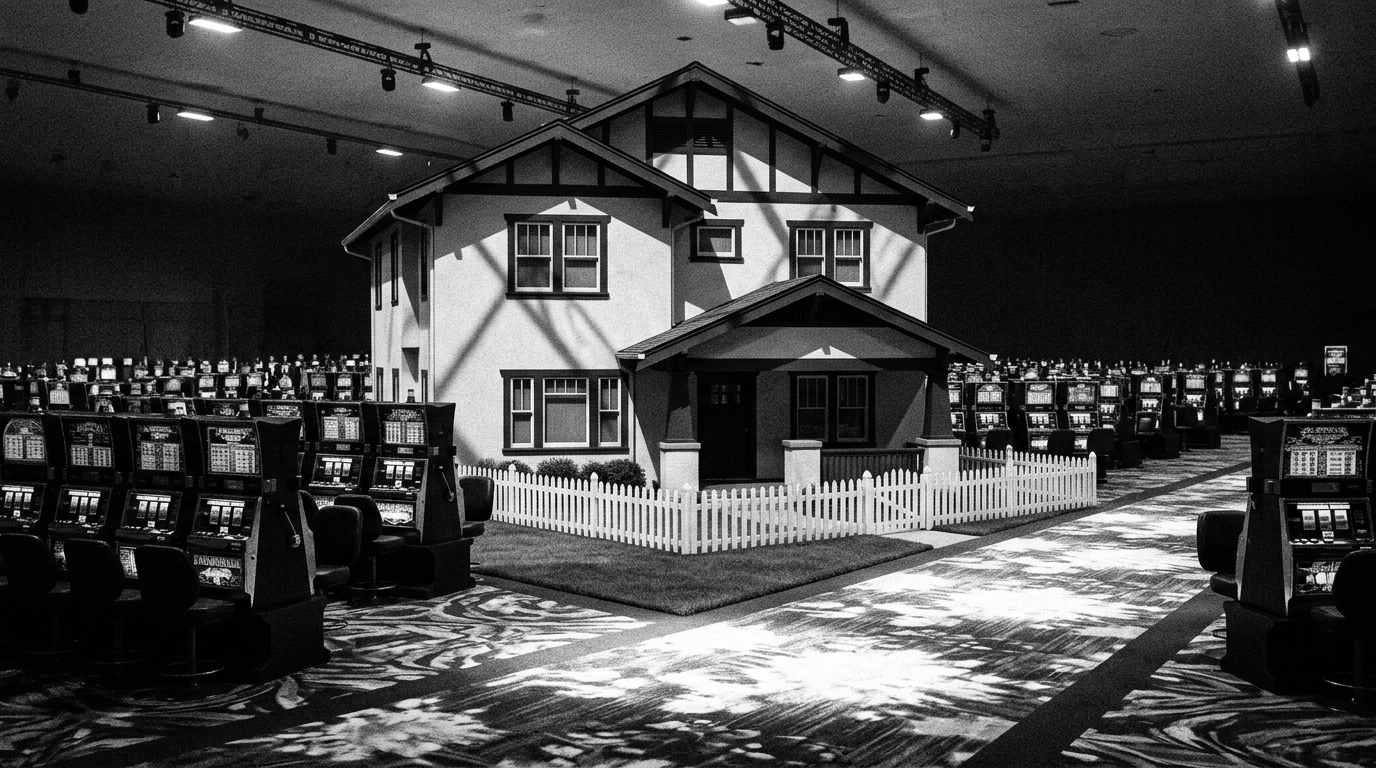
Pechanga Resort Casino handed a medical student the keys to a $2.2 million penthouse in Irvine as a promotional giveaway. The winner gets the house... and a tax bill that probably requires its own financial advisor, but the real lesson here is what this tells us about where casino resort marketing is headed while the rest of hospitality is still arguing about email open rates.

A medical student living in a converted garage in South Los Angeles just won a $2.2 million four-bedroom penthouse in Irvine, California. She won it playing slots at Pechanga Resort Casino. The promotion ran three months. She'd already won $10,000 at the same property earlier this year. The two runners-up each walked away with $50,000 cash. Ty Pennington hosted the reveal. And somewhere, a hotel marketing director with a $15,000 monthly digital ad budget is staring at this story wondering where their career went wrong.

I'm not being flippant. This is a masterclass in something most hotel operators never think hard enough about... the difference between marketing that costs money and marketing that makes money. Pechanga gave away a house. A real house. In Orange County. Where the median home price would make your eyes water. And the earned media from one medical student's life-changing moment is worth more than whatever they spent on the property. The emotional hook writes itself. A mom. Living in a garage. Going to medical school. Wins a penthouse. That's not a press release. That's a story people TELL each other. You can't buy that kind of amplification. You can only create the conditions for it.

Here's what most people will miss about this. The promotion wasn't a lottery. It was a loyalty program accelerant. Entries were tied to the Pechanga Rewards Card. You earned entries by playing. You had to activate them weekly. That's not a giveaway... that's a three-month engagement engine disguised as a giveaway. Every week for 13 weeks, players had a reason to come back, a reason to swipe the card, a reason to stay engaged with the property. The house is the headline. The weekly activation loop is the business model. And the data Pechanga collected over those three months on player behavior, visit frequency, and spend patterns is probably worth as much as the house itself.

I worked with a casino resort years ago that ran a car giveaway... nice car, six figures. The GM told me afterward that the promotion paid for itself three times over just in incremental slot revenue during the qualification period. The car was almost irrelevant to the ROI calculation. What mattered was the behavioral change... people driving past two other casinos to come play because they had entries accumulating. That's what Pechanga understands. The $2.2 million isn't a cost. It's a customer acquisition and retention investment with a measurable return, and they're running this promotion for the second time, which tells you the first one worked.

Now... can a 200-key select-service hotel give away a house? Obviously not. But the principle scales down beautifully. The question every operator should be asking isn't "how do I give away something expensive?" It's "what would make my guests actively choose to come back next week instead of next year?" Pechanga answered that question with a penthouse. You might answer it with something that costs a fraction of that. But you have to ask the question first. And most hotels don't. They run the same tired loyalty points program, send the same email blast, and wonder why their repeat guest percentage hasn't moved in three years.

Operator's Take

If you're running marketing at any full-service or resort property, pull your last 12 months of promotional spend and ask yourself one question... did any of it change guest behavior, or did it just remind people you exist? There's a massive difference. Pechanga didn't just advertise. They built a three-month engagement loop with weekly activation requirements tied directly to their loyalty program. You don't need a $2.2 million budget to steal that structure. Build a promotion that requires weekly engagement with your property (dining, spa, room nights, whatever drives your revenue mix) and make the reward aspirational enough that people talk about it. Then measure visit frequency during the promotion period against your baseline. That's your ROI... not impressions, not clicks. Behavioral change. If the number moves, you've found something. If it doesn't, at least you learned that before spending more on the same playbook that isn't working.
Read full analysis → ← Show less
Source: Google News: Casino Resorts
Four Jackpots Over $1M in 15 Months. Pechanga's Real Bet Is the $2.2M House.

Four Jackpots Over $1M in 15 Months. Pechanga's Real Bet Is the $2.2M House.

Pechanga has minted four slot millionaires since early 2025, but the $2.2 million home giveaway running through May tells you more about where regional casino resorts are actually spending to drive foot traffic and what that promotional math looks like per gaming position.

Four jackpots exceeding $1 million in roughly 15 months across 5,400 slot machines. That's the headline. The more interesting number is $2.2 million... the value of a fully furnished home in Irvine that Pechanga is giving away to close out a three-month promotion ending May 30.

The jackpots themselves aren't unusual for a floor that size. Aristocrat's Dragon Link progressive is designed to hit seven figures periodically... that's the product working as intended. What's worth decomposing is the promotional layer on top. A $2.2 million home giveaway plus the ~$100,000 charitable contribution to Habitat for Humanity puts the direct promotional outlay north of $2.3 million for a single campaign cycle. Spread across 5,400 gaming positions, that's roughly $426 per machine in incremental promotional cost for one quarter. The question is whether the foot traffic lift and incremental coin-in justify that spend... and research on jackpot-driven promotions suggests the ROI is a coin flip (profitable roughly 49% of the time, according to gaming behavior studies).

Pechanga's real strategy isn't about any single jackpot or any single giveaway. It's about building a perception of winning frequency that makes Southern California gamblers choose Temecula over a flight to Vegas. Four millionaires in 15 months is a narrative. Narratives drive consideration. Consideration drives visits. Visits drive coin-in across the other 5,396 machines that didn't hit a progressive. The $300 million expansion they completed, the 4.5-acre pool complex, the sports sponsorship portfolio across every major LA team... these are all layers of the same integrated resort thesis. Diversify the reasons to visit so the gaming floor benefits from traffic that came for something else.

The tension here is generational. Regional casinos are spending aggressively on non-gaming amenities and high-profile promotions because the data is clear: younger consumers are less interested in traditional gambling. Pechanga's president has talked publicly about a 10-year reinvestment master plan, including planned penthouse suites. That's a bet that the integrated resort model, which has worked in Las Vegas for two decades, translates to a tribal property 90 miles southeast. The per-key economics of that reinvestment matter enormously. With approximately 1,100 rooms, every dollar of resort-level capital improvement needs to generate returns across both the hotel P&L and the gaming floor... a dual-revenue justification that most hotel-only assets don't carry.

The global casino market is projected to grow from $163.6 billion to $224.1 billion by 2030. Pechanga is positioning itself to capture a share of that growth by becoming a destination rather than a casino with a hotel attached. Whether the promotional math on a $2.2 million house works out is almost beside the point. The real investment is in the narrative that this is a place where big things happen. Narratives are expensive. They're also the only thing that competes with Las Vegas from 90 miles away.

Operator's Take

Look... if you're running a resort property within 100 miles of a tribal casino doing this kind of promotional spend, you need to understand what you're competing against. These operations don't report public financials. They don't answer to public-market analysts. They can run promotional campaigns at a scale and a loss threshold that would get a publicly-traded operator fired. Your weekend leisure guest is seeing a $2.2 million home giveaway promoted across every LA sports broadcast. You're not going to outspend that. What you CAN do is know your guest. Pull your weekend booking data for the last 90 days. If you're seeing softness in the drive-to leisure segment, particularly from the Inland Empire and San Bernardino corridors, this is probably part of the reason. Compete on what they can't replicate... flexibility, personalized service, the stuff that doesn't require a 200,000-square-foot gaming floor to deliver.

— Mike Storm, Founder & Editor
Read full analysis → ← Show less
Source: Google News: Casino Resorts
End of Stories