Today · May 23, 2026
CAD $119 Easter Brunch Won't Save Your F&B. But the Strategy Behind It Might.

CAD $119 Easter Brunch Won't Save Your F&B. But the Strategy Behind It Might.

Four Seasons Whistler charged $119 per adult for an Easter brunch and wrapped it in egg hunts, maple taffy, and candle-making workshops. The interesting part isn't the holiday programming... it's the operational model that makes ancillary revenue feel effortless while most hotels can't staff a breakfast buffet past 9 AM.

I worked with a resort GM years ago who told me something I never forgot. He said, "Mike, anybody can put out a ham and call it Easter brunch. The ones who make money are the ones who turn a Sunday meal into a three-day stay." He wasn't talking about food. He was talking about programming as a revenue architecture. And he was running a 140-key mountain property with a skeleton crew that somehow made every holiday weekend feel like an event.

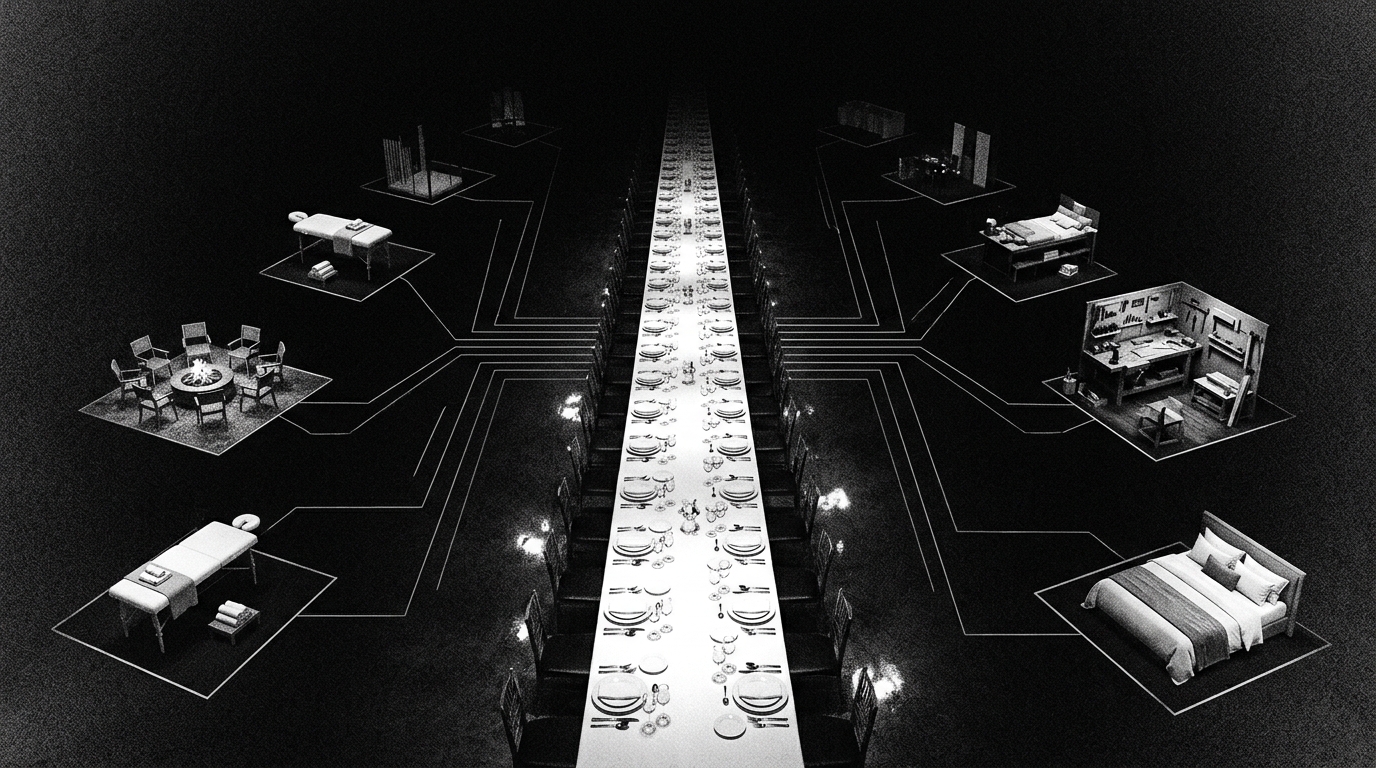
That's what I think about when I see Four Seasons Whistler rolling out their Easter package. CAD $119 per adult, $49 per kid for the brunch. Egg hunts. Maple taffy from 4 to 5. S'mores by a fire from 4 to 6. Spa scrub experience. Candle-making workshop. On paper, it's a luxury resort doing luxury resort things. Nothing revolutionary. But here's what most people miss... every single one of those touchpoints is designed to extend length of stay and increase per-guest spend across multiple revenue centers. The brunch gets them to the restaurant. The egg hunt keeps families on property through the afternoon instead of heading into the village. The spa experience and the candle-making workshop are Tuesday and Monday programming specifically designed to book the shoulder nights around the holiday. This isn't event planning. This is yield management disguised as hospitality.

And that's where the gap lives for 95% of hotels. Four Seasons has the brand equity, the staffing model, and the physical plant to execute this seamlessly. They just brought in a new GM two days before announcing this programming... Pierre Morillon, their new property leader... which tells you this stuff is systematized at the brand level, not dependent on one person's creativity. That's the difference. When your seasonal programming is a system, a new GM walks in and it runs. When it's one enthusiastic F&B director's side project, it walks out the door when they do. Most independent and select-service operators I know treat holiday programming as an afterthought. Something you throw together in March for Easter, in November for Thanksgiving. You print some flyers, maybe run a social post, and hope people show up. Then you wonder why the resort down the road is running 94% occupancy on Easter weekend while you're sitting at 71%.

Look... I'm not saying you need to be Four Seasons. You can't be, and trying to be is how you lose money. But the underlying principle is available to every property with a restaurant, a lobby, or an outdoor space. Map the guest's day hour by hour. Find the moments where they're deciding between staying on property and leaving. Put something in those moments. It doesn't have to be maple taffy (although if you're in a mountain market and you're NOT doing something with local flavor, what are you doing?). It has to be intentional. The s'mores station from 4 to 6 isn't random... that's the exact window when families with kids are deciding whether to go out for dinner or stay put. Keep them on property through that decision point and you just captured another $80-$150 in F&B revenue per family. Multiply that across your holiday weekend occupancy and you're looking at real money.

Four Seasons is also sitting on 60 additional projects in development globally and just launched a yacht product. They're playing a game most of us aren't playing. But the operational DNA underneath this Easter brunch... the idea that every guest touchpoint is either generating revenue or generating a reason to stay longer... that's available to a 120-key independent in Asheville just as much as it is to a luxury resort in Whistler. You just have to think about it like an operator instead of waiting for someone to hand you a programming playbook.

Operator's Take

If you run any property with F&B or event space, pull your calendar for Memorial Day weekend right now. Not next week. Now. Map your guest's day hour by hour and find the two or three windows where they're deciding to stay or leave. Build something... anything... for those windows. A tasting, a kids' activity, a fire pit with local beer. Price it to cover costs plus 30%. This is what I call the Price-to-Promise Moment... every stay has one moment where the guest decides the rate was worth it, and holiday weekends are where you either design that moment or let it happen accidentally. The property that programs the 3-to-6 PM window on a holiday Saturday captures $50-$150 more per occupied room than the one that doesn't. That's not a guess. I've watched it happen at every resort and full-service property I've ever touched. Don't wait until May to figure this out.

Read full analysis → ← Show less
Source: Google News: Four Seasons
Four Seasons Macao Is Running 96% Occupancy. So Why Are They Discounting the Experience?

Four Seasons Macao Is Running 96% Occupancy. So Why Are They Discounting the Experience?

When a luxury hotel running near-full occupancy starts layering on complimentary wellness rituals and curated dining experiences, the press release calls it "spring activation." The P&L tells a different story about where rate power actually went.

I spent a good chunk of my career in markets where 96% occupancy meant you could breathe. You could invest. You could raise rate without flinching because the demand was right there, walking through your lobby, asking for late checkout.

So when I see a Five-Star property in Macao running 96.2% occupancy... and simultaneously rolling out an eight-week seasonal menu program, complimentary moon yoga sessions, a sakura-themed cake activation, guest chef collaborations, wellness rituals, and a themed afternoon tea... I don't see a "spring awakening." I see a property that's full but can't move rate. And that's a very different conversation than the press release suggests.

Here's what the data actually shows. Five-star hotels in Macao averaged about $191 per night in early 2026. That's down 2.7% year-over-year. Occupancy is up a point. Rate is down. That's the classic compression pattern... you're winning on volume but losing pricing power. And when you're already at 96%, you don't have a volume lever left to pull. So what do you do? You add value. You layer on experiences that make the rate feel justified without actually raising it. Singing bowls at the full moon. Ancient head massages. A "Tale of Two Cities" chef collaboration. It's brilliant packaging. But let's call it what it is... it's defending rate in a market where rate is softening, dressed up in wellness language.

I knew a GM once who ran a luxury property at 94% occupancy for three straight quarters and still couldn't hit his ADR target. His ownership group kept asking why a full hotel wasn't printing money. His answer was honest and uncomfortable: "We're full of people who won't pay more. And every experience we add to keep them happy costs us margin." He wasn't wrong. When you're packaging value-adds at near-full occupancy, you're essentially admitting the market won't support a rate increase. The cost of those programs (the guest chefs, the spa additions, the specialty menus, the training) hits your P&L even if the nightly rate doesn't move. And at 96% occupancy, you can't offset it with more heads in beds. There are no more beds.

The broader Macao play is interesting, though, and worth understanding. The entire market is pivoting hard away from gaming dependency... $14.9 billion committed over a decade to non-gaming development. Luxury hospitality, dining, wellness, cultural programming. Four Seasons is positioning itself as the flagship of that pivot, and the Forbes Five-Star ratings (20 of them, four years running) are the credentials that make that positioning credible. This isn't random seasonal fluff. This is a property trying to become the anchor of a market-wide repositioning strategy. The question is whether the economics actually support it, or whether "experiential luxury" becomes the next buzzword that sounds great in the investor deck and quietly erodes margins at property level. Because right now, the math says rates are going down while the cost of delivering the experience is going up. That's a direction, not a strategy.

Operator's Take

If you're running a luxury or upper-upscale property above 90% occupancy and your ADR is flat or declining, stop adding programming and start asking the harder question... why can't you move rate? Every complimentary experience you layer on has a real cost. Map it. A guest chef dinner series, a specialty wellness program, a themed afternoon tea... those aren't free. Calculate the incremental cost per occupied room of every "activation" you've launched in the last 12 months. If that number is growing faster than your ADR, you're subsidizing occupancy with margin. This is what I call the Flow-Through Truth Test. Your top line looks healthy at 96% occupancy. But if you're spending $8-12 per occupied room on experience programming that isn't translating into rate growth, that's $3,000-$4,000 a day at a 350-key property that never shows up as a line item anyone questions. Before your next budget cycle, put that number on paper and bring it to your ownership group yourself. Don't wait for them to find it.

Read full analysis → ← Show less
Source: Google News: Four Seasons
Host Sold Two Four Seasons for $1.1B. The Per-Key Math Tells a Different Story.

Host Sold Two Four Seasons for $1.1B. The Per-Key Math Tells a Different Story.

Host Hotels sold 569 luxury keys for $1.93M each and called it capital recycling. The unlevered IRR looks clean at 11%... until you ask what replacement assets at that yield actually look like in 2026.

Available Analysis

$1.1 billion for 569 keys. That's $1.93M per key across two Four Seasons properties (Orlando and Jackson Hole). Host is calling this capital recycling. Let's decompose what they actually did.

The stated unlevered IRR is 11.0%. The EBITDA multiple on exit came in more than 4 turns above Host's own trading multiple. On paper, this is textbook execution: sell assets where the private market values them higher than the public market values your stock, then redeploy into buybacks or acquisitions where the implied cap rate is more favorable. Host returned nearly $860M to shareholders in 2025 through repurchases and dividends. They've sold $5.2B and acquired $4.9B since 2018 while increasing Adjusted EBITDAre per key. The portfolio is getting smaller and (theoretically) more profitable per unit.

Here's what the headline doesn't tell you. The $500M taxable gain means roughly half the sale price was appreciation above basis. That's a strong exit. But the reinvestment problem is real. Host now needs to deploy that capital into assets generating comparable risk-adjusted returns in a market where luxury cap rates are compressed and construction costs have pushed replacement cost per key past $700K in most primary markets. Buying back stock at $19-20 (against analyst fair value estimates near $20.17) isn't exactly a screaming discount. The 35.26% one-year total shareholder return looks great in the rearview mirror. The question is what the next billion of deployed capital earns.

I audited a REIT once that executed a similar strategy... sold trophy assets at peak multiples, returned capital to shareholders, then spent two years sitting on dry powder because nothing penciled at the yields they'd promised investors. The stock drifted. The narrative shifted from "disciplined recyclers" to "can't find deals." Host's management team is sharper than most, but the math problem is the same. An 11% unlevered IRR is the benchmark they just set for themselves. Every future acquisition gets measured against it.

The condo residual ($17M recognized, $20-25M remaining) deserves a closer look. It suggests the Jackson Hole asset carried a residential component that contributed meaningful exit value beyond the hotel operations. Investors modeling Host's go-forward portfolio should strip that out when comparing per-key economics. The hotel-only implied price per key on that 125-room property is almost certainly north of $2M.

Operator's Take

Here's what this actually means if you're an asset manager or owner evaluating your own hold/sell math right now. Host just demonstrated that the bid-ask spread between public and private luxury valuations is wide enough to drive a truck through. If you're sitting on a luxury or upper-upscale asset with significant appreciation above basis, get a current broker opinion of value this quarter. Not because you should sell... because you need to know what your capital is worth deployed elsewhere versus where it sits today. Run your own unlevered IRR from acquisition to a hypothetical disposition at today's private market pricing. If that number is north of 10% and your go-forward NOI growth assumption is sub-3%, you owe it to your investors to have the conversation. The window where private buyers pay these multiples isn't permanent. It never is.

— Mike Storm, Founder & Editor
Read full analysis → ← Show less
Source: Google News: Resort Hotels
Four Seasons Is Selling $35K Nights Inside a 1936 Beach House. And It's Not Even the Boldest Part.

Four Seasons Is Selling $35K Nights Inside a 1936 Beach House. And It's Not Even the Boldest Part.

Four Seasons just turned a 90-year-old oceanfront cottage at The Surf Club into a four-bedroom private villa with a butler, a chef, and a pool nobody else can touch. The real play isn't the villa... it's a residential strategy that now generates $2.1 billion a year and is quietly rewriting how luxury hotels make money.

Available Analysis

I worked with a luxury resort GM years ago who told me something I've never forgotten. He said the wealthiest guests don't want more amenities. They want fewer people. The pool doesn't need to be bigger. The restaurant doesn't need another Michelin star. They just want to feel like nobody else exists. That stuck with me because it runs completely counter to how most of us were trained. We were taught that service means anticipation, presence, visibility. But at the very top of the market... the real top... service means disappearing until you're summoned.

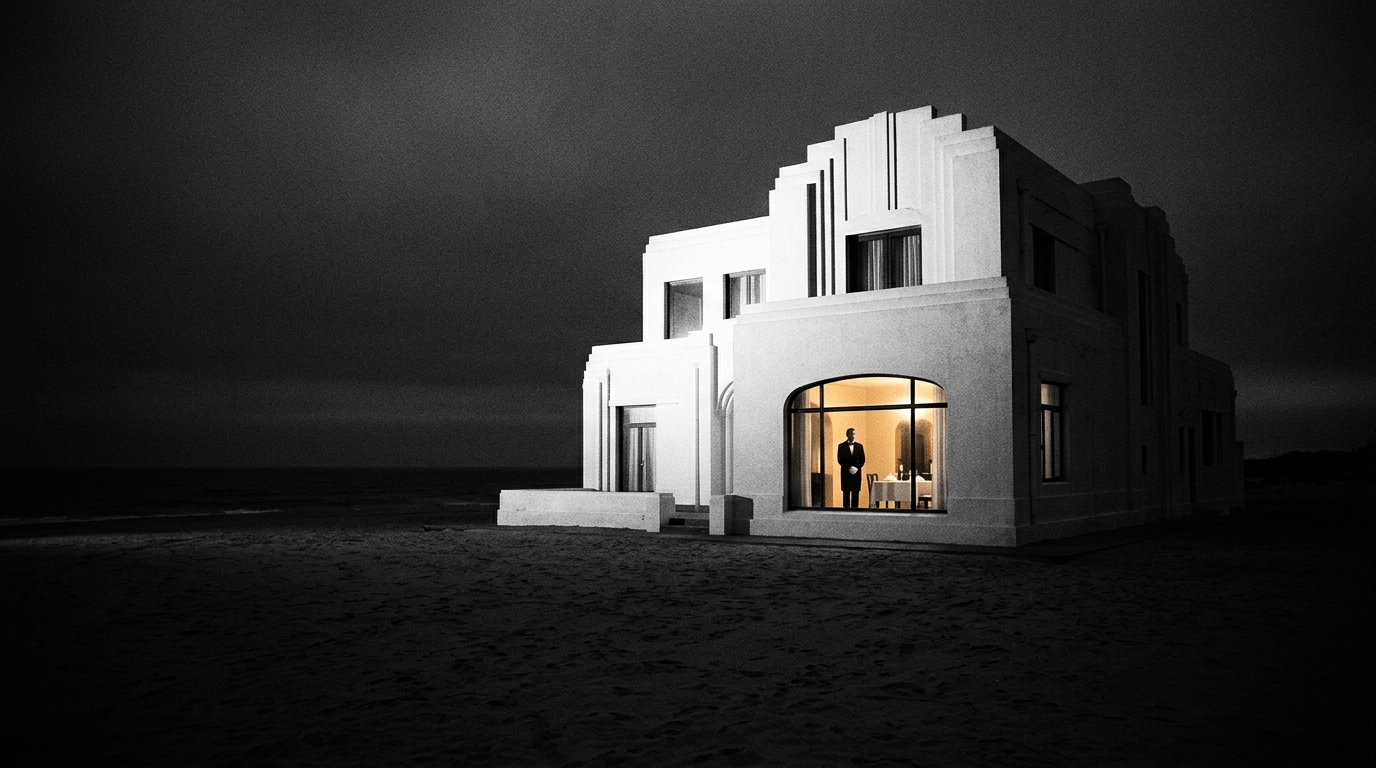
That's what Four Seasons just built in Surfside, Florida. A 5,200-square-foot, four-bedroom oceanfront villa inside a restored 1936 structure at The Surf Club. Private pool. Private beach entrance. Private chef. Butler. Underground parking so you never have to walk through a lobby. They've essentially created a $30-40K per night experience (based on comparable pricing at the property) where the whole point is that you never interact with the hotel at all... unless you want to. It's a hotel that doesn't feel like a hotel. And that's entirely by design.

Here's why this matters beyond the obvious "rich people gonna rich" reaction. Four Seasons reported $2.1 billion in gross residential sales in 2024. Sixty-five percent of their development pipeline now includes a residential component. They're projecting 90 standalone residential properties by 2030, up from 56 today. Those aren't hotel numbers. Those are real estate development numbers. And the margins on branded residential management are fundamentally different than the margins on room nights. You're not filling 365 nights a year. You're selling or renting a handful of ultra-premium units with service fees attached, and the owner of that villa is paying Four Seasons to manage it whether anyone's sleeping in it or not. The recurring revenue model is the play. The villa is just the packaging.

What makes The Surf Club villa interesting operationally is what it says about labor allocation at the top of the luxury segment. A four-bedroom private villa with a dedicated chef, butler, and housekeeping team isn't supplementing the hotel's existing staff... it's creating a parallel operation. You're running a private household inside a hotel campus. The staffing model, the training model, the quality control model... all different. I've seen luxury properties try to stretch their existing teams across these kinds of ultra-premium offerings and it always shows. The guest paying $35K a night can tell when their butler was pulling pool towels an hour ago. Four Seasons presumably understands this, but the operators who try to copy this playbook at a lower price point are going to learn that lesson the hard way.

The bigger strategic picture is this. Four Seasons is betting that the future of luxury hospitality isn't hospitality at all... it's branded lifestyle management. The yacht launched last week. The residential pipeline is exploding. This villa sits inside a development called Seaway at The Surf Club where apartments have sold for up to $44 million. They're not competing with Ritz-Carlton or Rosewood for room nights anymore. They're competing with private estate ownership and winning by offering the one thing a standalone mansion can't provide... a Four Seasons service infrastructure you don't have to build and manage yourself. That's a powerful value proposition for someone with $30 million to spend on a home. And it's a business model that most hotel companies can't replicate because they don't have the brand permission to charge what Four Seasons charges.

Operator's Take

Let me be direct. If you're running a luxury or upper-upscale property, the lesson here isn't "go build a private villa." You can't. The lesson is what's happening to the top of the market and how it trickles down to your comp set. Four Seasons is pulling their highest-value guests out of the traditional hotel inventory entirely... into private residences, villas, yachts. That means the ultra-luxury traveler who used to book your Presidential Suite three times a year might be booking a branded residence instead. If you're in a market where Four Seasons (or Aman, or Rosewood) is expanding residential, check your suite booking pace against two years ago. If it's soft, now you know why. The play for the rest of us is this: figure out what "private" and "exclusive" mean at YOUR price point. You don't need a $35K villa. But a 250-key property that carves out a club floor with dedicated staff, separate check-in, and a curated experience that feels walled off from the main hotel... that's the accessible version of what Four Seasons just built. The demand for privacy and separation isn't limited to billionaires. It just costs different at different levels.

Read full analysis → ← Show less
Source: Google News: Four Seasons
Four Seasons Bets Big on "Authentic Mexico" — Here's What That Actually Means

Four Seasons Bets Big on "Authentic Mexico" — Here's What That Actually Means

United and Four Seasons are pushing luxury travelers away from all-inclusive buffet lines toward regional experiences. If you're running resort product in Mexico, this shift is already eating your occupancy.

Here's the thing nobody's telling you: the all-inclusive model that printed money for two decades is facing its first real threat from luxury operators who figured out guests will pay 40% more for what they're calling "authentic local experiences." Four Seasons and a handful of other ultra-luxury brands are building — or repositioning — Mexican resort properties around chef-driven regional cuisine, local art partnerships, and experiences you can't get at the Cancún Hard Rock.

United Airlines is connecting the dots too. They're adding direct service to secondary Mexican markets specifically to feed these properties. That's not an accident. When an airline starts routing metal based on where luxury independents and high-end brands are planting flags, you're watching market segmentation happen in real time.

Let me be direct: if you're a GM running a 300-key all-inclusive in a primary market, you need to look at your guest mix right now. The couples who used to book your ocean-view suites three years ago? They're spending that same money at 120-room properties in Oaxaca or San Miguel de Allende where the chef sources from farms you can visit and the art on the walls isn't generic resort filler.

But here's what makes this interesting operationally. "Authentic" costs money to execute well. You can't fake it with a themed buffet night and mariachi bands. Four Seasons is staffing these properties with culinary teams that have real regional expertise. They're paying for legitimate local partnerships. They're training FOH staff who can actually talk about what guests are experiencing. That's a labor model that adds 8-12 points to your cost structure.

The contrarian take? This creates an opportunity for independent operators in secondary markets who've been doing authentic regional hospitality all along. You don't need Four Seasons money to compete here. You need a GM who understands the local culture, relationships with actual local artisans and producers, and the discipline to say no to becoming a watered-down version of what your guests can get anywhere. The operators who win in this shift are the ones who were never playing the all-inclusive commodity game to begin with.

Operator's Take

If you're running an independent in a secondary Mexican market, stop trying to copy all-inclusive features and start documenting every genuine local connection you have. Your chef's relationship with that third-generation mezcal producer? That's your competitive advantage against Four Seasons, not your pool size. But if you're operating a mid-market all-inclusive, you need to pick a lane fast — either move downmarket on price or invest real money in differentiation, because the middle is disappearing.

Read full analysis → ← Show less
Source: Google News: Four Seasons
End of Stories