Today · May 23, 2026
Disney's Parks Boss Just Became CEO. That Tells You Where the Money Lives.

Disney's Parks Boss Just Became CEO. That Tells You Where the Money Lives.

Disney promoted the guy who ran its $36 billion parks and experiences division to CEO of the entire company. If you're in the hotel business and you're not paying attention to what that signals about where premium hospitality is headed, you're already behind.

Available Analysis

I've been in this business long enough to know that when a company the size of Disney picks its next CEO, the choice tells you more about the future than any strategy deck ever will. They didn't pick someone from streaming. They didn't pick someone from content. They picked the person who ran the division that generated over 70% of the company's operating profit... the parks, the resorts, the cruise ships, the physical experiences where real people spend real money in real buildings.

Let that land for a second. The largest entertainment company on the planet just told the world that the future of Disney is hospitality. Physical experiences. Rooms, F&B, attractions, guest services. The streaming wars got all the headlines for five years, but the cash register was always in the parks. $10 billion in revenue in a single quarter. $3.3 billion in operating income. Domestic per capita guest spending up 4% while attendance only ticked up 1%. That's not a volume play... that's a yield play. They're making more money per guest, not just cramming more guests through the gates. And the guy who built that strategy is now running the whole show, with $60 billion earmarked for parks and experiences over the next decade.

Here's what nobody in our industry is talking about yet. The new chairman of the experiences division... Thomas Mazloum... comes from European luxury hospitality and ran a cruise line before this. He's not a theme park guy. He's a hospitality operator who understands premium pricing, service culture, and yield management. Disney is not just doubling down on experiences. They're explicitly moving upmarket. Higher prices, premium access passes, VIP tours, expanded cruise capacity. They're building what amounts to the world's largest luxury hospitality ecosystem, and they're doing it with people who speak our language. When a company spending $60 billion on physical hospitality assets puts a luxury hotel operator in charge of the whole portfolio, that's a signal. It means the playbook that's been working in their parks... charge more, deliver more, attract guests who value experience over discount... is about to get pushed even harder.

And that creates a ripple effect for every hotel operator within driving distance of a Disney property. Orlando, Anaheim, Paris, Tokyo... the comp set dynamics shift when Disney moves upmarket because they pull guest expectations with them. A family that just paid for Lightning Lane Premier and a VIP tour doesn't come back to your lobby and think "well, the carpet's a little worn but it's fine." Their baseline just moved. Disney's investment in premium experiences doesn't stay inside the berm. It leaks into every hotel in the market. I've watched this play out before in other markets when a dominant player raises the bar... the properties that match the rising expectation win, and the ones that don't start bleeding share. It's not fast. It's not dramatic. It's a slow erosion that shows up in your reviews six months before it shows up in your RevPAR.

Now think about what $60 billion in capital deployment does to construction costs and contractor availability in those markets. That's real money chasing real labor and real materials in markets that are already expensive. If you're planning a renovation in Orlando or Anaheim in the next three to five years, your timeline and your budget just got more complicated. The contractors you need are going to be busy. The materials you need are going to cost more. That's not speculation... that's supply and demand, and Disney just put a very large thumb on the demand side of the scale.

Operator's Take

If you're running a hotel within 30 miles of a Disney property... Orlando, Anaheim, or any market where they're expanding cruise port operations... this is a Monday morning conversation with your team. Disney's luxury pivot means guest expectations in your market are going up whether you invest or not. Pull your last 90 days of guest reviews and look specifically at comments about room condition, service speed, and "value for price." That's your early warning system. If you're seeing softness there, it's going to accelerate. And if you're an owner planning CapEx in those markets over the next three years, get bids now. Don't wait. $60 billion in Disney construction spend is going to tighten every trade in those corridors, and the guy who locked in his contractor in 2026 is going to look a lot smarter than the guy who waited until 2028.

Read full analysis → ← Show less
Source: Google News: Resort Hotels
Disney Cut Five Resort Perks and Guests Are Still Paying $700 a Night. That's the Lesson.

Disney Cut Five Resort Perks and Guests Are Still Paying $700 a Night. That's the Lesson.

Disney World just stripped MagicBands, toiletries, room service, airport shuttles, and package delivery from its resort stays while posting $10 billion in parks operating income. If you think this is just a theme park story, you're not paying attention to what it teaches every hotel operator about the relationship between perceived value and pricing power.

I watched a hotel owner once spend $180,000 renovating a breakfast area... new buffet stations, better lighting, upgraded equipment, the works. Beautiful job. Then six months later he pulled the fresh-squeezed orange juice because it was costing him $0.47 per guest and replaced it with concentrate. Guest scores on F&B dropped four points in a single quarter. Not because of the juice. Because the juice was the thing guests noticed, and noticing a downgrade is a completely different psychological event than noticing an upgrade. He spent $180K making the room better and lost the narrative over forty-seven cents.

That's what I thought about when I read that Disney has now officially eliminated five perks that used to come standard with a resort stay... the MagicBands, the take-home toiletries (replaced with wall-mounted dispensers), package delivery to your room, room service, and the Magical Express airport shuttle. Gone. All of them. And here's the part that matters to us: Disney's parks division posted $10 billion in operating income last year. Revenue up 6%. Operating income up 13% in Q4 alone. They're in the middle of a $60 billion investment cycle in their Experiences division. Guests are still booking. The rates haven't softened. They ripped out five amenities that people used to associate with the "magic" of staying on property... and the machine didn't even hiccup.

Now look. Disney is Disney. They have pricing power that you and I will never have. They operate in a universe where the brand itself is the product and the hotel room is just the container. I get that. But the principle underneath this story is universal, and it's something most hotel operators get exactly backwards. We assume that adding amenities builds loyalty and removing them kills it. Disney just proved (again) that what matters isn't the list of what you offer... it's whether the guest feels the total experience was worth the price. They kept Early Theme Park Entry. They kept Extended Evening Hours for deluxe guests. They kept the earlier booking windows for Lightning Lane and dining. The stuff that actually affects the guest's day in the parks... that stayed. The stuff that was nice-to-have but didn't define the core experience... that's what got cut. And the $60 billion they're pouring into new attractions and lands is the reinvestment story that makes the cuts feel like reallocation, not reduction.

There's a real lesson here for anyone running a hotel that isn't a theme park. Most of us are carrying amenities and services on our P&L that we added five or ten years ago because someone at a brand conference said it would differentiate us, or because a competitor down the road was doing it, or because a vocal guest on TripAdvisor complained once and we overreacted. And we've never gone back and asked the hard question: does this specific thing actually drive rate, drive loyalty, or drive satisfaction... or is it just something we do now because we've always done it? Disney had the guts (and the data) to answer that question honestly. The MagicBands cost them real money to produce and distribute. The airport shuttle was a massive logistics operation. Room service in a resort that size requires dedicated staff, equipment, and food safety infrastructure. They looked at each one and asked: is the guest paying for this, or are we just subsidizing it? And when the answer was "subsidizing," they stopped.

The part that should keep you up tonight isn't what Disney cut. It's the methodology. They identified which perks were load-bearing (the ones that actually drove the decision to stay on-property versus off-property) and which ones were decorative (nice, expected, but not decision-drivers). Then they invested harder in the load-bearing stuff and eliminated the rest. Every operator I know has at least three line items on their P&L right now that are decorative. Things guests like but wouldn't miss enough to change their booking behavior. And every dollar you're spending on decorative amenities is a dollar you're not spending on the thing that actually makes someone choose your hotel over the one across the street. Disney figured that out at a $10 billion scale. You can figure it out at yours.

Operator's Take

Here's what I want you to do this week. Pull your guest satisfaction data for the last 12 months and sort comments by what guests actually praise versus what they just expect. There's a difference between "I loved the rooftop bar" and "the toiletries were nice." One drives rebooking. The other is furniture. Then pull the cost of every amenity and service you offer that isn't required by your brand standard. Map each one against whether it appears in positive reviews, drives rate premium, or influences booking decisions. If you can't tie it to revenue or loyalty with a straight face, put it on a list. You don't have to cut everything tomorrow... but you need to know which of your amenities are load-bearing and which ones are decorative. Because the next time you need to find $40K on your P&L (and that time is coming), you want to already know which walls you can take out without the building falling down.

Read full analysis → ← Show less
Source: Google News: Resort Hotels
Disney's Dropping $60 Billion on Parks. Your Renovation Excuse Just Expired.

Disney's Dropping $60 Billion on Parks. Your Renovation Excuse Just Expired.

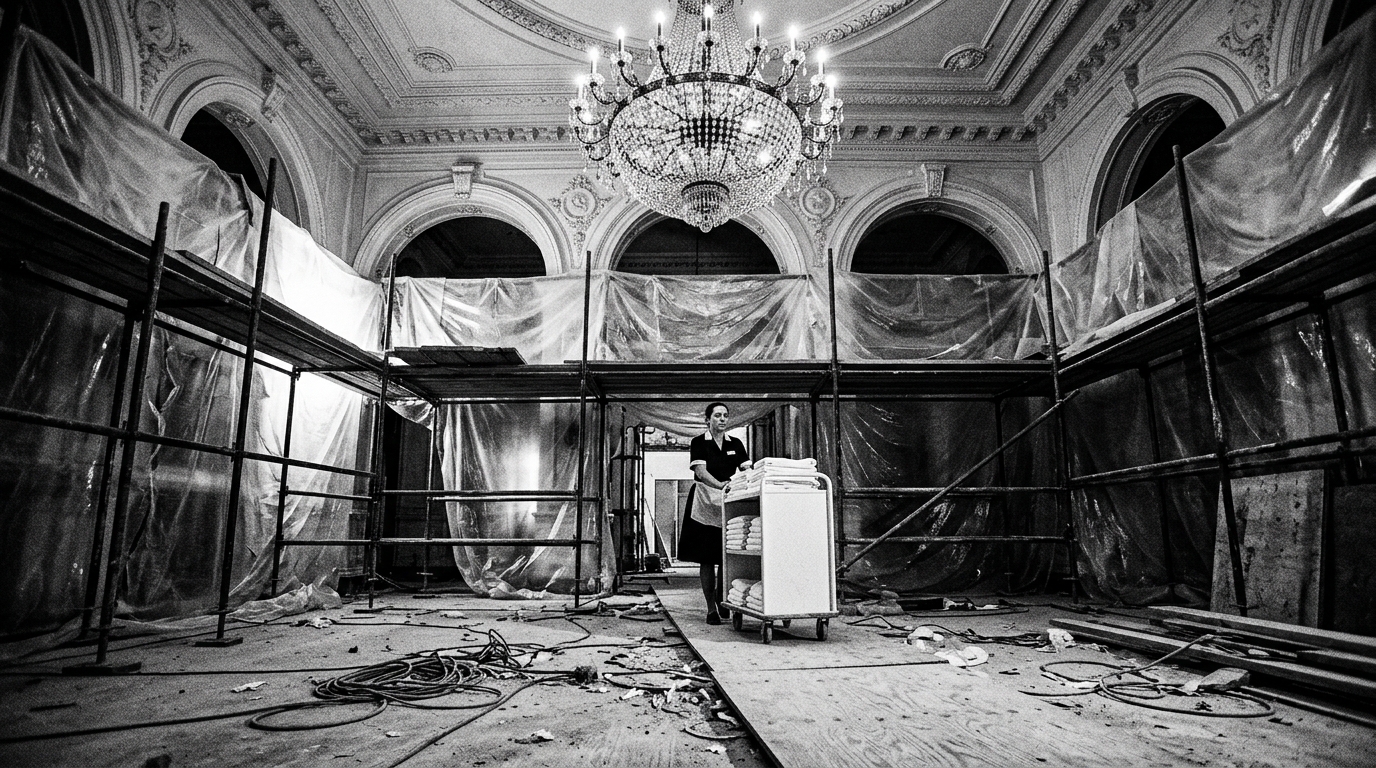
Disney is tearing apart multiple Magic Kingdom resorts simultaneously while keeping them open and charging premium rates. If a company managing 25,000+ rooms can renovate during peak season without apologizing for it, the rest of us need to rethink how we talk to guests about construction walls.

I watched a GM lose his mind once over a 30-room soft goods refresh. Thirty rooms. Out of 240. He wanted to shut down an entire floor, block it off for six weeks, and basically treat the project like a hazmat situation. His reasoning? "We can't have guests near construction." I asked him what he thought Disney did when they renovated. He didn't have an answer.

Now Disney is renovating the Grand Floridian's lobby, porte cochere, and convention center. Simultaneously. While also tearing up the Polynesian's front entrance and bus loop, closing boat docks at Wilderness Lodge, and continuing a two-year overhaul at Bay Lake Tower. All of this happening at properties where guests are paying $400-$800 a night. And those guests aren't getting discounts for the inconvenience. They're getting "we appreciate your patience" and a construction wall painted to look like part of the story.

Here's what Disney understands that most hotel operators don't... renovation is not a crisis to be managed. It's an investment to be communicated. The difference between a guest who's furious about construction noise and a guest who feels like they're witnessing the next chapter of something special is entirely about framing. Disney frames renovation as progress. Most hotels frame it as an apology. "We're sorry for any inconvenience during our improvements." That language tells the guest they're getting less than they paid for. Disney's language tells the guest they're seeing something before everyone else does.

The operational discipline here is worth studying even if you're running a 150-key select-service and not a theme park resort. Disney is phasing these projects across multiple properties so that no single resort loses all of its amenities at once. The Grand Floridian porte cochere goes through early 2027... that's a year-plus timeline on a hotel entrance, which means they've accepted the disruption cost and built the guest communication around it rather than rushing the job to minimize the window. That's a choice most owners won't make because they're terrified of one bad TripAdvisor review mentioning dust. Meanwhile, Disney's charging rack rate through the whole thing. This is what I call the Renovation Reality Multiplier... the actual disruption timeline is always longer than the promised one, and the operators who build their plans (and their guest messaging and their revenue strategy) around the real timeline instead of the fantasy timeline come out ahead every single time.

The $60 billion capital plan behind all of this is a different conversation entirely, but the signal it sends matters for everyone in hospitality. Disney is betting that physical experience investments generate better returns than almost anything else they could do with that capital. In a world where everyone's chasing digital, chasing AI, chasing the next platform... the largest entertainment company on earth is pouring money into bricks, mortar, and guest-facing physical spaces. That's not nostalgia. That's a company with extremely sophisticated return models telling you that the room, the lobby, the arrival experience... those things still win.

Operator's Take

If you've been deferring a renovation because you're afraid of the guest impact, stop. Pull up Disney's approach and study it. They're renovating a hotel entrance for over a year at a property charging $600 a night and they haven't flinched on rate. Your job this week: take whatever capital project you've been delaying and build a real communication plan around it. Not an apology... a narrative. "We're investing $X in making this property better for you" hits completely different than "we apologize for the inconvenience." If you're a GM at a branded property with a PIP looming, bring this to your owner proactively with a phasing plan that protects revenue while getting the work done. The owner who hears "here's how we execute this without killing ADR" is an owner who approves the spend. The owner who hears "this is going to be painful" is an owner who defers another year and watches the asset deteriorate.

Read full analysis → ← Show less
Source: Google News: Resort Hotels
Disney's Summer Discount Blitz Is a Gift to Their Hotels. It's a Problem for Yours.

Disney's Summer Discount Blitz Is a Gift to Their Hotels. It's a Problem for Yours.

Disney just rolled out 30-40% room discounts, free dining plans, and discounted afternoon tickets for summer 2026. If you're running a hotel within ten miles of the parks, the Mouse just changed your pricing ceiling whether you like it or not.

I've been watching Disney's promotional calendar for decades now, and every time they push this hard on value... free dining, 40% off rooms for passholders, discounted afternoon tickets starting at $116 a day... it tells me something about how they're reading demand. And right now, the read is clear: they're worried about summer softness. Maybe it's Epic Universe pulling first-time Orlando visitors to the other side of I-4. Maybe it's the broader travel slowdown everyone keeps whispering about. Maybe it's both. But when Disney starts giving away meals and cutting room rates 30-40% at their own resorts, they're not being generous. They're filling beds. And when Disney fills beds by dropping price, every non-Disney hotel in greater Orlando feels the compression.

Here's what the headlines won't tell you. Disney simultaneously raised base prices roughly 15% on 2026 vacation packages. So the "discounts" aren't discounts in the way your guests think about discounts. They're strategic rate fences. Full price went up. Then targeted segments (passholders, resort guests, people willing to show up after 2 PM) get pulled back down to something close to where the old price was. It's brilliant yield management dressed up as generosity. The guest feels like they got a deal. Disney protects rate integrity at the top while still filling rooms on soft nights. Meanwhile, you're sitting at a 180-key select-service on International Drive trying to figure out why your May pace just went sideways.

The competitive math is what matters here. Disney can afford to discount their hotel rooms because they make it back on park tickets, merchandise, food, character breakfasts, and the $7 bottle of water your kids are going to scream for at 2 PM. Their room rate is a loss leader for a $2,000 family trip. Your room rate IS the trip. When a family sees "save 30% at a Disney resort" and your property is listed on the OTA at $139... you're not competing on rate anymore. You're competing against an experience ecosystem that subsidizes its own lodging. That's a fight you cannot win by matching price. You win by being something Disney isn't: close, easy, affordable, and honest about what you are.

I knew a GM in a major theme park market who used to track Disney's promotional calendar more carefully than his own marketing plan. Every time they announced a free dining promotion, he'd shift his own strategy away from rate and toward value-adds... free parking, complimentary breakfast upgrades, late checkout guaranteed. He told me once, "I can't beat the Mouse on price. But I can beat them on friction. Nobody wants to take a bus to their hotel room at 11 PM with two sleeping kids." He was right. His occupancy held while properties around him panicked and dropped rate. Because he understood something fundamental: the family that books off-property in Orlando is already a different customer than the one booking on-property. Stop trying to convert the Disney guest. Start owning the guest who already chose you.

This is also about what's coming. Universal's new park changes the Orlando landscape permanently. Disney's aggressive promotional push for summer 2026 isn't just about this summer... it's about establishing booking patterns before families start splitting trips between two mega-resort complexes. The window where Orlando was essentially a one-ecosystem destination is closing. That's actually good news for independent and branded hotels in the corridor, because more demand drivers mean more total visitors. But it also means the promotional noise is going to be deafening. You need a strategy for operating in a market where the two biggest players are in an arms race for attention, and your property is the one without a Super Bowl commercial.

Operator's Take

If you're running a hotel in the Orlando corridor, do not react to Disney's summer discounts by dropping rate. That's a trap you won't climb out of by September. Instead, pull your comp set data right now and look at what happened the last time Disney ran a free dining promotion... your occupancy probably held closer than your ADR did, which means the damage was self-inflicted by properties that panicked. Build your May and June strategy around value-adds that cost you $8-12 per occupied room but feel like $50 to the guest: guaranteed late checkout, free parking, a shuttle schedule that actually works. This is what I call the Rate Recovery Trap... you cut rate to fill rooms today, and you spend the next eighteen months retraining the market to pay what you were worth before the cut. Own the off-property guest. They chose you for a reason. Remind them why.

Read full analysis → ← Show less
Source: Google News: Resort Hotels
Disney Just Told Every Hotel in Orlando What Their Rooms Are Really Worth

Disney Just Told Every Hotel in Orlando What Their Rooms Are Really Worth

Disney is giving away free dining plans to fill resort rooms this summer and fall. If you're competing for the same tourist dollar within 50 miles of Kissimmee, that's not a promotion... it's a price signal you can't afford to ignore.

Available Analysis

I've seen this movie before. Every few years, the biggest player in a market decides to bundle something expensive into the room rate and call it "free." The press release says "value." The revenue management team at every competing hotel within driving distance says something less printable.

Disney World is offering free dining plans with resort packages for chunks of summer and fall 2026... late June through early October, a stretch in late October, and a couple weeks in December. The dates tell you everything you need to know. These aren't peak periods. These are the weeks when even Disney has trouble filling 30,000+ resort rooms. And the structure is classic Disney financial engineering... you have to book a minimum four-night package with Park Hopper tickets at full price, no discounts. They're not giving anything away. They're shifting the perceived value from one pocket to another. The dining plan has a menu cost to Disney that's a fraction of what the guest perceives it to be worth. Meanwhile, the room rate stays intact on paper, the length of stay gets locked in at four nights minimum, and the per-capita spend inside the parks goes up because guests with dining plans eat on property instead of driving to the Olive Garden on I-Drive.

Here's where it gets interesting for the rest of the Orlando market. Universal's Epic Universe opened last year with 2,000 new hotel rooms. Orlando added 75.3 million visitors in 2024, up less than 2% year-over-year. The pie is barely growing, but the number of forks just multiplied. Disney's response isn't to cut room rates (they never cut room rates... they'd rather burn the hotel down). Instead, they bundle. They add perceived value without touching ADR. And every independent, every Marriott, every Hilton in the I-Drive corridor has to figure out how to compete with "free food" when their F&B operation is a lobby Grab-and-Go and a breakfast buffet that runs out of eggs by 9:15.

I worked in a market once where the dominant resort ran a similar bundling play during shoulder season. Every competing hotel in the comp set watched their midweek occupancy drop 4-6 points within 60 days. The instinct was to cut rate. A few did. Took them 18 months to claw it back. The ones who survived were the ones who found a different value proposition entirely... something the big player couldn't or wouldn't offer. Smaller properties, local experiences, flexibility the mega-resort couldn't match. The lesson wasn't "compete on bundles." The lesson was "don't fight their war."

The broader signal here matters more than the promotion itself. Disney is spending $60 billion on parks over the next decade. They're projecting 8-10% annual revenue growth in their parks segment. They are not in retreat. When a company with that kind of capital decides to get aggressive on filling rooms during soft periods, it reshapes the competitive landscape for every operator in the market. This isn't a coupon. It's a statement about what they think Orlando demand looks like in 2026... and it's not as strong as the visitor numbers suggest.

Operator's Take

If you're running a hotel in the greater Orlando market, especially anything leisure-oriented within an hour of the parks, don't panic and don't cut rate. This is what I call the Rate Recovery Trap... you drop rate to chase occupancy today and spend the next year trying to convince the market you're worth what you were charging before. Instead, look at your shoulder-season packaging right now. What can you bundle that Disney can't? Airport transfers, late checkout with no blackout, pet-friendly policies, kitchen suites for families who actually want to cook half their meals. Find the guest Disney doesn't want (the one who won't spend four nights and buy Park Hoppers) and own that segment. Run your June-through-October pace reports this week against last year. If you're already soft, get your package strategy locked before May. Don't wait for the booking curve to confirm what Disney just told you.

Read full analysis → ← Show less
Source: Google News: Resort Hotels
Disney's Been Renovating the Grand Floridian for Six Years. And They're Still Not Done.

Disney's Been Renovating the Grand Floridian for Six Years. And They're Still Not Done.

Disney's flagship resort has been under near-continuous construction since before COVID, with the latest closure hitting the Grand Floridian Cafe from July through October. If you think your renovation timeline is painful, imagine explaining perpetual construction noise to guests paying $800 a night.

I worked with a GM once who had a renovation that was supposed to last four months. It lasted eleven. By month six, the front desk had a laminated card with pre-written apologies for the noise, the dust, and the "temporary" walkway through the parking lot. He told me the card was the most-used item in the hotel... more than the key cards.

That's what I think about when I see Disney's Grand Floridian, which has essentially been under some form of renovation since before the pandemic. They've refreshed the guest rooms. Redone the lobby (added a bar called The Perch... because apparently what a Victorian-themed luxury resort needed was a trendy lobby bar). Overhauled multiple restaurants. Reopened a lounge that had been dark for six years. And now the cafe is closing mid-July through October for what they're calling a "refresh." The whole thing isn't scheduled to wrap until early 2027.

Let me be direct. Disney can get away with this because they're Disney. They have a captive audience, a pricing model that defies normal hospitality gravity, and an Experiences segment that just posted over $10 billion in quarterly revenue. When you're printing money like that, you can renovate in rolling phases for half a decade and guests will still book because the alternative is explaining to a seven-year-old why they can't stay at the princess hotel. That's not a comp set most of us compete in. But the APPROACH... the rolling renovation strategy... that's worth studying whether you're running 90 keys or 900.

Here's what Disney understands that a lot of operators don't: renovation is not an event. It's a condition. The Grand Floridian isn't being renovated. It's being maintained at the level its rate demands, continuously, because the moment a $800-a-night resort starts looking tired, the gap between price and promise becomes the story guests tell. They're not shutting down the whole hotel for 18 months and hoping for a grand reopening. They're closing one restaurant, relocating its popular brunch to another venue on-property, keeping everything else running, and managing the disruption in pieces. That's not accidental. That's a deliberate strategy to never let the asset fall below the line where guests start questioning the rate. I call this the Renovation Reality Multiplier... you plan for the real disruption timeline, not the one in the proposal. Disney is planning for a timeline measured in years because that's what a property of this caliber actually requires.

The part most operators miss is the revenue protection during construction. Disney's telling guests upfront that construction may be visible, that walking paths might change, that noise happens during the day. That transparency isn't generosity... it's liability management and expectation setting. They're relocating the brunch service instead of just killing it for four months. They're keeping every other outlet open. The revenue never stops. The experience gets managed around the disruption rather than interrupted by it. Most of us don't have Disney's budget or their ability to absorb construction periods. But the principle scales down. If you're facing any kind of renovation, the question isn't just "what does the finished product look like?" It's "what does every single day of the project look like for the guest who's paying full rate while the drywall dust is settling?"

Operator's Take

If you've got a renovation coming up (or one you've been putting off because you can't figure out the logistics), take a page from the Disney playbook. Phase it. Don't shut down your F&B outlet without relocating the service somewhere else on property... even if "somewhere else" is a banquet room with folding tables. Brief your front desk team with specific language about what guests will see, hear, and experience during construction... not vague apologies, but real information. And for the love of your TripAdvisor scores, get ahead of the online narrative. Update your OTA listings, your website, your booking confirmations. Every guest who shows up surprised by construction is a one-star review waiting to happen. The renovation itself builds long-term value. The way you manage the disruption protects the revenue you need to pay for it.

Read full analysis → ← Show less
Source: Google News: Resort Hotels
Disney Just Made 8 Million Annual Shuttle Riders Someone Else's Problem

Disney Just Made 8 Million Annual Shuttle Riders Someone Else's Problem

When a transit system serving 8 million riders a year collapses and the theme park shrugs, every hotel in the Anaheim market just inherited a guest transportation problem they didn't budget for. The question isn't whether Disney cares... it's what you're going to do about it by next weekend.

Available Analysis

I once worked with a GM at a resort-adjacent property who told me the single most important amenity he offered wasn't the pool, wasn't the breakfast, wasn't even the room. It was the shuttle. "Take away the shuttle," he said, "and my TripAdvisor score drops a full point inside 90 days. Guaranteed." He wasn't guessing. He'd lived through it when a previous shuttle provider went under. Took him six months to recover the review scores and a year to recover the rate position.

That's what just happened in Anaheim. The shuttle network that moved roughly 8 million riders a year... nearly 7 million of them on the route between the satellite parking area and the park gates... shut down March 31. Gone. The nonprofit running it couldn't make the math work anymore and voted to wind down operations. The city says everything will be fine. The county transit authority says existing bus routes cover most of it. And Disney says their own guest shuttle service continues. But here's what none of those statements address: the 90-key, the 150-key, the 200-key hotels in that market that relied on that system as a de facto amenity. Those properties just lost a selling point that was baked into their rate, their guest reviews, and their booking conversion... and they didn't get a vote.

Meanwhile, over in Orlando, Disney is tightening the screws on a different transportation pressure point. Buses from the shopping and dining complex to resort hotels now require proof you actually belong there... active room reservation, confirmed dining, or a booked activity. They're calling it temporary. I've seen temporary policies at theme parks before. Some of them are now old enough to vote. This comes four years after Disney killed the complimentary airport shuttle, which was one of the last genuine differentiators for staying on-property versus down the road. The pattern isn't subtle. Every transportation convenience that used to make the Disney resort ecosystem sticky is being peeled away, one service at a time, while the company simultaneously announces $60 billion in parks investment over the next decade. The money is going into attractions that drive ticket revenue, not into the connective tissue that drives hotel stays.

And that's where the real tension lives. If you're an owner with a Disney-adjacent hotel... Anaheim or Orlando... your entire value proposition has been built on proximity and access. "Stay with us, we'll get you there." When the "getting there" part degrades, your proximity premium erodes with it. You're still close to the park. You're just harder to get from. That's a different product at a different price point, and the market will figure that out faster than you'd like. Garden Grove is already launching its own shuttle for 10 hotels, funded by hotel assessments and rider fees. That's the future... fragmented, property-funded, and more expensive per room than the system it replaces.

Look... Disney is a $200 billion company making rational decisions about where to allocate capital. I don't blame them. But rational for Disney and rational for the hotel owner three miles from the gate are two completely different calculations. The shuttle network wasn't a charity. It was infrastructure that supported an entire hospitality ecosystem. Now that ecosystem has to self-fund its own circulatory system, and the properties that figure it out fastest will capture the rate premium that the slower ones lose. This is a competitive moment disguised as a logistics headline.

Operator's Take

If you're running a hotel in the Anaheim resort corridor, you need a transportation plan by Monday. Not next quarter. Monday. Call three shuttle vendors this week and get quotes for a dedicated park route... then talk to the two or three hotels nearest you about cost-sharing. The per-room math on a shared shuttle is $2-4 per occupied room depending on frequency and vehicle size. That's cheaper than the rate erosion you'll eat when "no shuttle" starts showing up in reviews. For Orlando operators near the resort complex, watch that bus verification policy closely. If it sticks (and I think it will), your "easy access to Disney dining and entertainment" marketing language just became half-true. Update your website and your OTA listings before a guest does it for you in a one-star review. This is what I call the Three-Mile Radius at work... your revenue ceiling just got redefined not by your room product, but by what happens in the three miles between your lobby and the front gate.

Read full analysis → ← Show less
Source: Google News: Resort Hotels
Disney Just Told Off-Site Guests to Find Their Own Ride. Every Resort Town Should Be Watching.

Disney Just Told Off-Site Guests to Find Their Own Ride. Every Resort Town Should Be Watching.

Disney's quiet shift from free transportation to a tiered access system isn't a theme park story. It's a masterclass in how a dominant property uses infrastructure to squeeze the independents around it... and the playbook is coming to a resort market near you.

Available Analysis

I managed a hotel once about two miles from a major attraction. Not Disney, but one of those destinations that pulled 10 million visitors a year and basically created the hotel market around it. For years, the attraction ran a free shuttle loop that picked up guests at a dozen nearby hotels. Owners loved it. It was basically free distribution... guests booked your hotel because the shuttle made it easy. Then one Tuesday morning, the attraction announced the shuttle was going away. No warning. No transition plan. Just... gone. Within six months, three of those hotels saw occupancy drop 8-12 points. Not because the attraction got less popular. Because the friction of getting there just shifted from zero to "figure it out yourself," and guests started booking on-site instead.

That's what's happening at Disney World right now, except at a scale that should make every hotel operator in a resort-dependent market pay attention. Disney killed its free airport shuttle (Magical Express) back in January 2022. The replacement options tell you everything about the strategy. Stay at a Deluxe resort? You can book a Minnie Van for $199 each way. Everyone else gets Mears Connect at $16 a head on a shared bus, or the public transit option at $2 per person (with the experience to match). And as of late March, Disney started enforcing "Resort Guests Only" policies on its internal bus system from Disney Springs during peak periods. You're an off-site guest who parked at Disney Springs and planned to hop a bus to the parks? Show your room key or your dining reservation, or find another way.

Look... Disney can do whatever it wants with its transportation infrastructure. It's their property, their roads (with $99.3 million in new road bonds approved by the oversight district), their buses. That's not the point. The point is the strategy underneath it. Every one of these moves increases the cost and friction of staying off-property while making on-property stays relatively more valuable. That's not an accident. That's a tiered access model being built in real time. And it's working... Disney's Experiences segment just posted $10 billion in quarterly revenue with per capita guest spending up 4%. They're not losing sleep over the off-site guests who are complaining on Reddit. They're monetizing the ones who upgrade to avoid the hassle.

Here's what nobody in the Orlando market is saying out loud: 66 vehicle crashes on Disney World roads in March alone. The Skyliner closes every time weather rolls in. Bus waits can hit an hour. The monorail breaks down. The transportation system that used to be a selling point ("you never need a car!") is now a friction point that Disney is selectively solving... for its highest-paying guests first, and everyone else whenever they get around to it. The ferry dock expansion, the road widening, the Polynesian bus area reconfiguration... all of that infrastructure money is flowing toward the on-property guest experience. If you're an independent or a branded select-service on International Drive counting on Disney's ecosystem to deliver your guests to the parks, you are relying on a system that is being deliberately redesigned to make your guests' lives harder.

This is the part that keeps me up at night for operators in any resort-dependent market (not just Orlando). When the anchor attraction controls the transportation infrastructure, they control the guest flow. And when they decide to monetize that control... to turn what was free into a tiered system where convenience costs extra... every hotel in the surrounding market feels it. The question isn't whether Disney's approach is fair. It's whether you've stress-tested your rate and your occupancy against a world where the path from your hotel to the attraction just got $400 more expensive for a family of four.

Operator's Take

If you're running a hotel within 20 miles of a major attraction that controls its own transportation... Disney, Universal, a major convention center with dedicated shuttle systems, any resort destination with an anchor property... sit down this week and map every way your guests currently get from your hotel to that attraction. Every single path. Then ask yourself what happens if the most convenient path gets more expensive or disappears. Because that's not hypothetical anymore. Disney just showed every major destination operator the playbook. Run the math on what a $200-400 round-trip transportation surcharge does to your rate competitiveness against on-site options. If the gap closes to where the guest says "might as well just stay there," you need a value proposition that goes beyond location. That means your shuttle program, your partnerships, your pre-arrival communication about transportation options... all of it needs to be airtight before someone else's infrastructure decision makes it irrelevant.

Read full analysis → ← Show less
Source: Google News: Resort Hotels
Disney Just Built a Velvet Rope Around Its Bus System. Every Resort Operator Should Be Watching.

Disney Just Built a Velvet Rope Around Its Bus System. Every Resort Operator Should Be Watching.

Disney World is now checking credentials before you can board a bus to its hotels, and they're calling it temporary. It's not temporary. It's the clearest signal yet that the biggest operator in hospitality is done pretending all guests are equal.

Available Analysis

I once worked with a resort GM who had a beautiful pool deck, a destination restaurant, and a lobby bar that was packed every night. Problem was, about a third of the people at that pool and half the people at that bar weren't staying at the hotel. They were guests from the budget property next door who figured out they could walk through the parking lot and enjoy $300-a-night amenities on a $129 budget. His paying guests noticed. His reviews started mentioning "crowded" and "hard to get a chair." He finally put up a wristband system. The budget hotel guests were furious. His actual guests? Their satisfaction scores jumped within a month.

That's what Disney just did, except with buses. Starting this past weekend, if you want to ride Disney transportation from Disney Springs to a resort hotel, you scan your MagicBand or your digital room key. No reservation? No ride. They'll check for dining reservations and activity bookings too, but the message is crystal clear... these buses are for people paying $600-plus a night, not for day-trippers who parked at Disney Springs for free and figured they'd hitch a ride to the Grand Floridian.

Disney is calling this a "temporary" measure for the Easter and Spring Break surge. They said the same thing when they tested it over Christmas. Here's what 40 years in this business has taught me about "temporary" operational changes at large hospitality companies... if it works, it's permanent. And this one works. When you're running a segment that just crossed $10 billion in quarterly revenue for the first time, and your resort bookings for the fiscal year are pacing up 5%, you don't go back to an open-door policy that dilutes the experience for the guests generating that revenue. The verification infrastructure is built. The cast members are trained. The data is being collected. This is a pilot program wearing a seasonal costume.

The bigger story isn't about buses. It's about the explicit tiering of the hospitality experience within a single ecosystem. Disney is spending $60 billion over ten years on its parks and resorts. They're adding complimentary parking for resort guests, 30-minute early theme park entry, free water park admission on check-in day. Every one of those moves widens the gap between on-property and off-property. Every one makes the on-property rate premium feel more justified. And now they're using transportation access... the most basic operational function... as a sorting mechanism. You're either in the system or you're outside it. That's not a crowd management tactic. That's a business model.

Look... I know what some of you are thinking. "Mike, this is Disney. They operate at a scale and with a captive audience that has nothing to do with my 200-key property." Fair. But the principle is universal. Every hotel operator in America is dealing with some version of this problem... non-guests using your amenities, your parking, your lobby, your WiFi, your restrooms. The question has always been whether the friction of enforcement is worth the improvement in guest experience. Disney just answered that question with $10 billion worth of confidence. They built a digital verification system, trained their front-line staff to enforce it, accepted the negative PR from day-trippers, and bet that paying guests would reward them for it. That's what I call the Price-to-Promise Moment... that instant where the guest paying a premium decides the rate was worth it. Disney just decided that moment happens when a resort guest boards a bus without waiting behind 40 people who aren't paying for the privilege. And they're probably right.

Operator's Take

If you're running a resort, a full-service property, or anything with amenities that attract non-guests, pay attention to what Disney is doing with verification infrastructure, not just policy. They built a system where a MagicBand scan instantly confirms guest status. You probably don't have that... but your PMS does generate digital keys, and your front desk does issue wristbands. Sit down this week and map every amenity touchpoint where non-guests dilute the experience for paying guests. Pool deck. Fitness center. Lobby bar during peak hours. Parking. Then calculate what a simple verification system would cost versus what your guest satisfaction scores say about "crowding" or "wait times." If you're charging $250-plus a night and your guests are competing with the public for a pool chair, you're giving away the very thing that justifies your rate. Your guests won't complain to your face. They'll complain on TripAdvisor. And they won't come back.

Read full analysis → ← Show less
Source: Google News: Resort Hotels
Disney and Airbnb Are Giving Away Hotel Nights. And the Entire Industry Should Be Taking Notes.

Disney and Airbnb Are Giving Away Hotel Nights. And the Entire Industry Should Be Taking Notes.

Disney just turned a $21 million Malibu beach house into a free Airbnb listing to promote a 20-year-old kids' show. The marketing genius isn't the giveaway... it's what it reveals about where "hospitality" is heading when entertainment companies start thinking like hoteliers.

A retired night auditor I used to work with had a saying whenever corporate would roll out some flashy new loyalty promotion. He'd look at the rate sheet, look at me, and say "So we're giving away the room and calling it strategy. Got it." He wasn't wrong then. But I'm starting to wonder if Disney and Airbnb might actually be onto something he and I never considered.

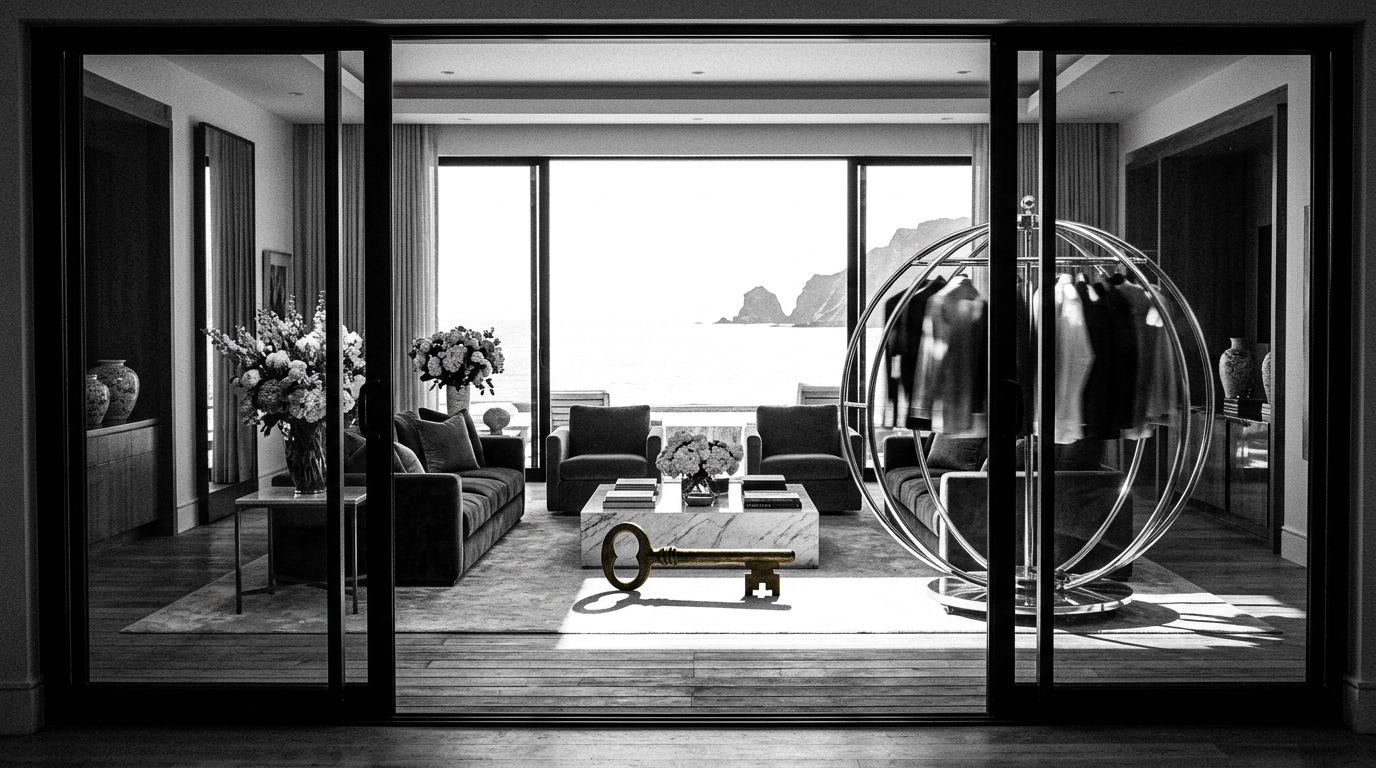
Here's what happened. Disney and Airbnb partnered to offer ten free one-night stays at the actual Malibu oceanfront home used in the exterior shots of "Hannah Montana." Four bedrooms, five bathrooms, $21 million property, normally renting for $60,000 to $80,000 a month. They recreated the fictional interior... including the rotating closet. The cost to the guest? Zero dollars. The cost to Disney? Whatever the lease and staging ran them. The return? A "Hannah Montana 20th Anniversary Special" that pulled 6.3 million views in three days on Disney+ and Hulu. Nearly a 1,000% spike in catalog streaming. Over half a billion hours of content consumed globally. Spotify streams of the show's songs up 600-700%. All from ten free nights in a house that isn't even a hotel.

Now here's where this gets uncomfortable for anyone running an actual hotel. Disney didn't need rooms revenue. They didn't need ADR. They didn't need flow-through. They needed attention, and they bought it at a fraction of what a traditional media campaign would cost. Ten nights at a property that rents for roughly $2,000 a night (prorated from the monthly)... call it $20,000 in opportunity cost, maybe $50,000-$75,000 all-in with staging and production. For that, they got global media coverage, billions of streaming minutes, and a cultural moment that reinforced Disney+ subscriptions more effectively than any ad buy could. The math on that is embarrassing for everyone who's ever spent six figures on a "brand awareness campaign" and gotten a PDF report full of impressions data that means nothing.

What worries me isn't the stunt itself. It's the trend it represents. Entertainment companies, lifestyle brands, and tech platforms are getting better at creating "hospitality experiences" that have nothing to do with operating hotels... and the press eats it up. Airbnb doesn't carry the linen cost. They don't manage the labor. They don't deal with the plumbing in a 1978 building. They curate the story, collect the booking, and let someone else handle the 2 AM problems. And increasingly, that model... the one where the experience is the product and the room is just the stage set... is what consumers are talking about, sharing on social media, and choosing over traditional hotel stays. Not always. Not yet for business travel. But for the leisure guest under 35 who grew up watching Hannah Montana? That's your future customer, and Disney just showed them that the most exciting "hotel stay" in America this month isn't at a hotel at all.

The silver lining, if you want one, is that Disney and Airbnb can't scale this. Ten rooms. Ten nights. It's a publicity stunt, not a business model. But the underlying principle... that the story around the stay matters as much as the stay itself... that's something every operator can learn from. The properties I've seen thrive over the last five years aren't the ones with the best rooms. They're the ones with the best narrative. The ones where guests feel like they're part of something, not just sleeping somewhere. You don't need a $21 million beach house and a Disney IP license to create that. You need a point of view. You need a reason to exist beyond "we have beds and we're near the highway." That part is free. And it's the part most hotels still haven't figured out.

Operator's Take

Look... this one isn't about changing your rate strategy or your tech stack. It's about paying attention to how the guest's definition of "worth staying at" is shifting underneath us. If you're running a select-service or a lifestyle property, take 30 minutes this week and ask yourself one question: what would a guest say about your hotel that they couldn't say about the one across the street? If the answer is nothing... that's your real competitive problem. Not OTA commissions, not labor costs, not your PIP. This is what I call the Price-to-Promise Moment. Every stay has one moment where the guest decides the rate was worth it. Disney manufactured that moment with a rotating closet and a nostalgia play. You need to find yours. Walk your property tonight. Find the thing that could be your story. Then tell it better than anyone else in your comp set.

Read full analysis → ← Show less
Source: Google News: Airbnb
Airbnb's $0 Hannah Montana Stay Is a Marketing Play Worth More Than Your RevPAR Strategy

Airbnb's $0 Hannah Montana Stay Is a Marketing Play Worth More Than Your RevPAR Strategy

Disney and Airbnb are giving away ten free nights in a $21 million Malibu beach house dressed up as Hannah Montana's bedroom. The per-night value they're forgoing tells you exactly how these companies think about customer acquisition cost... and why traditional hospitality keeps losing the narrative war.

A $21 million Malibu property, available for long-term rental at $60,000 to $80,000 per month, is being offered for ten complimentary one-night stays through Airbnb's "Icons" program. The occasion is the 20th anniversary of a Disney Channel show. The price per night: $0.

Let's decompose this. At $70,000/month midpoint, one night in this property carries an implied value of roughly $2,333. Ten nights is $23,333 in foregone rental income (assuming the property would otherwise be occupied, which at that price point is generous). Add the interior transformation costs... replica closets, sequined wardrobe, karaoke setup, branded staging... and the all-in investment is probably $150,000 to $250,000. That's the real budget. The media coverage, the social amplification, the waitlist data from everyone who tried to book on March 26... that's the return. Airbnb doesn't disclose "Icons" program economics, but the earned media value on previous activations (the Barbie DreamHouse, Shrek's Swamp) generated coverage worth multiples of the investment. This isn't hospitality. This is customer acquisition disguised as hospitality.

The structural question for hotel owners and asset managers isn't whether this is clever (it is). It's what it reveals about how Airbnb allocates capital versus how hotels allocate capital. Airbnb spends on narrative. They create moments that generate billions of impressions and cost less than a single property renovation. Hotels spend on physical product... FF&E refreshes, PIP compliance, lobby redesigns... and then struggle to make anyone care. I analyzed a portfolio last year where the ownership group spent $8.2 million on renovations across six properties and couldn't demonstrate a measurable lift in direct booking share. Airbnb spent effectively nothing on ten nights and dominated a news cycle.

This is also a data play. Every person who visited airbnb.com/hannahmontana and requested a booking provided intent data. Airbnb now knows exactly who responds to nostalgia-driven experiential marketing, what demographics they skew, and how to retarget them. Hotels give away data to OTAs. Airbnb creates events that generate data voluntarily. The asymmetry is worth sitting with.

None of this changes your comp set RevPAR tomorrow. But it should change how ownership groups think about marketing spend allocation. The gap between what hotels spend to acquire a guest and what Airbnb spends to acquire a narrative is widening. Ten free nights in a beach house just made that gap visible.

Operator's Take

Look... this story isn't about Hannah Montana. It's about the growing gap between how hotels spend marketing dollars and how platforms spend them. If you're an owner or asset manager reviewing your 2026 marketing budget, ask one question: what percentage of your spend generates earned media versus paid impressions? Most hotel marketing budgets are 90%+ paid channels. Airbnb just dominated a week of coverage for the cost of staging a single property. You don't need a $21 million beach house to learn from that. You need to stop treating marketing as a line item and start treating it as a story. If your property has a genuine local hook... a history, a character, a neighborhood connection... that's your version of this play. Use it. The brands won't do it for you. They're too busy selling consistency.

— Mike Storm, Founder & Editor
Read full analysis → ← Show less
Source: Google News: Airbnb
Disney Just Put a Hotel Guy in Charge of Everything. Pay Attention.

Disney Just Put a Hotel Guy in Charge of Everything. Pay Attention.

When the most profitable division in entertainment promotes its boss to run the whole company, it tells you something about where the money is. And when they backfill him with a guy who ran luxury hotels and cruise ships, it tells you even more.

I've been in this business long enough to know that you can learn everything you need to know about a company's strategy by watching who they promote. Not what the press release says. Who gets the keys.

Josh D'Amaro spent 28 years in Disney's parks and resorts operation. Not streaming. Not content. Not Marvel. Hotels, theme parks, cruise ships... the business of putting heads in beds and bodies through turnstiles. And next week, he becomes CEO of the entire Walt Disney Company. That's not a leadership change. That's a declaration. Disney is telling Wall Street, telling its board, telling every competitor in the market: the Experiences division isn't a division anymore. It's the company. $36 billion in revenue. Over 70% of Disney's total operating income. When your parks and hotels are generating that kind of number, the parks and hotels guy doesn't report to the CEO... he becomes the CEO.

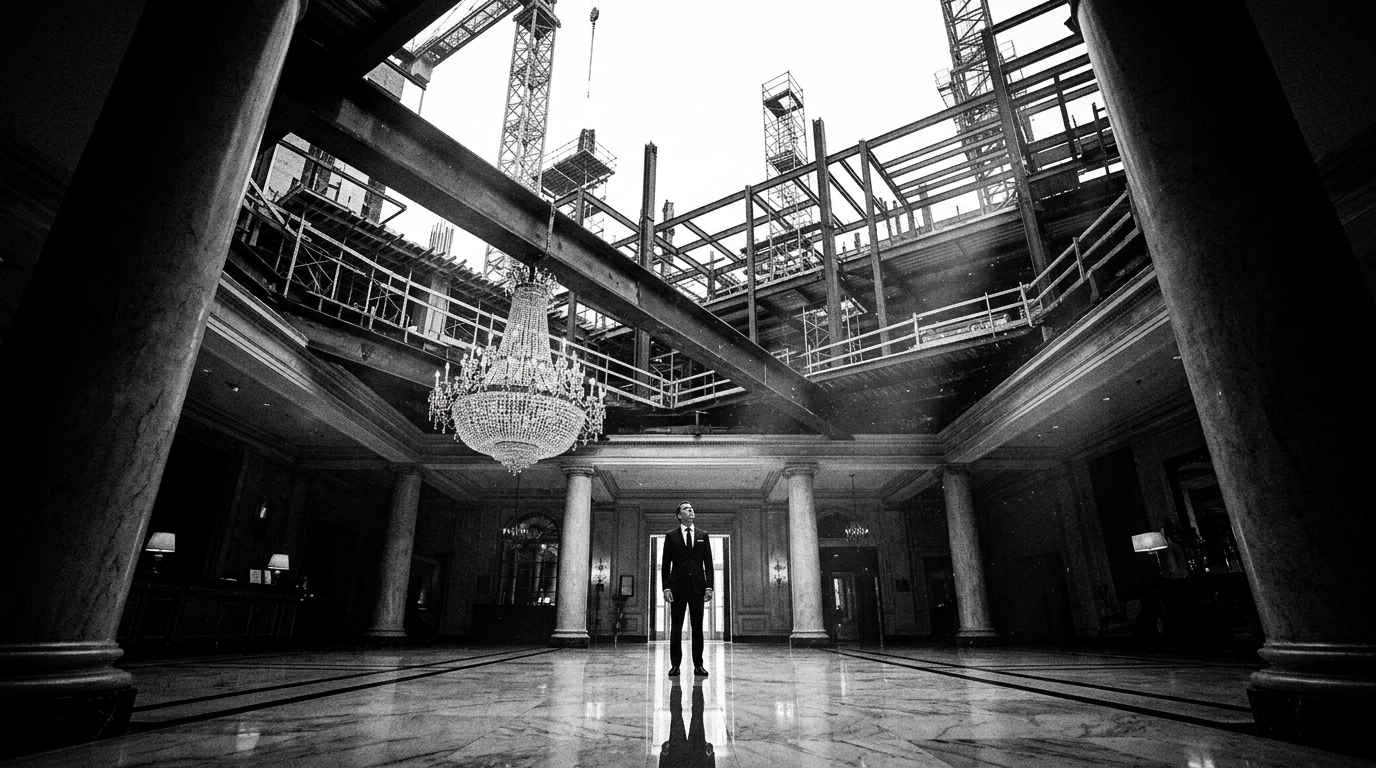
But here's what I want you to focus on. The guy replacing D'Amaro as chairman of Experiences is Thomas Mazloum. And his resume reads like someone I'd want running my hotel. European luxury hospitality background. COO of a cruise line. The guy who built Disney's long-term growth plan for their cruise operation. This isn't a finance person or a content person being dropped into an operational role (I've seen that movie... it ends badly). This is an operator being handed the keys to a $60 billion expansion. Five new cruise ships. Resort renovations across Walt Disney World that are so extensive they're calling 2026 the "Year of the Construction Wall." New themed lands opening through 2029. That's not a capital plan. That's a decade-long bet that physical experiences... rooms, restaurants, attractions, service... matter more than anything else Disney does.

Now here's what nobody's talking about. Disney is running an aggressive discounting strategy right now... two free room nights with vacation packages... specifically because they've got construction everywhere. They're buying market share with rate concessions during a period of disruption. I knew a GM once in a major resort market who watched a massive competitor open across the highway. His owner panicked, wanted to drop rate 30%. The GM said, "We drop rate now, we'll never get it back. Let's invest in the experience and hold our price." He was right. Two years later, the new competitor was chasing rate and he was running at a premium. Disney's doing the opposite right now... they're discounting INTO construction... and the question is whether they can push rate back up once the new capacity comes online in 2027-2029. Their CFO says the room booking pace is weighted toward the back half of 2026, which tells me guests are waiting to see what's on the other side of those construction walls before committing. Smart guests.

What does this mean for the rest of us? Two things. First, if you're operating anywhere in the Orlando market, the next 18 months are going to be chaotic. Disney discounting pulls rate down across the entire comp set. Universal opening Epic Universe adds supply pressure. Every hotel within a 30-mile radius of those parks needs to be war-gaming their pricing strategy right now... not next quarter, now. Second, and this is the bigger picture... Disney is making a $60 billion argument that physical hospitality experiences are the highest-return investment in entertainment. That's validation for every owner, every operator, every investor who believes that putting people in rooms and giving them something worth remembering is a business with a future. When the biggest entertainment company on the planet bets its entire leadership structure on the guy who ran the hotels and parks, that's not just their strategy. That's a signal about where the money is going across the entire industry.

Operator's Take

If you're running a hotel in Central Florida, stop what you're doing and look at your rate strategy for Q3 and Q4 2026. Disney is going to be discounting aggressively, and Universal's new park is going to pull demand. You need a plan for that... not a reactive one, a proactive one. Call your revenue management team this week and model a scenario where your comp set drops ADR 8-12%. Know your floor rate. Know your breakeven. And if you're outside the Orlando blast radius, take the broader lesson: the biggest company in entertainment just bet everything on physical experiences. That's your business. Invest in it like they are.

🗣️
From the Field
5 operator perspectives
Real perspectives from hotel operators and industry professionals who weighed in on this story.
Lou D'Angeli Marketing/Sales and Live Events Executive
The problem isn't the discount. It's getting the rate back once you've trained your market to expect it. Coming from entertainment and sports—specifically ticket revenue—I've seen this firsthand. Once buyers get used to a certain price, they expect it (or something close to it) going forward. Meanwhile, the seller is stuck because all the forecasts assume ticket revenue recovery, not sustained discounting. The idea that 'we'll discount now, expose new people to the product, and charge more next time' sounds good in theory. In reality? Not likely.
Jonathan C Baz, CFBE Executive Director Food & Beverage, Luxury Hospitality Operations
Promotions often reveal strategy more clearly than any press release. Disney elevating a leader from its Parks, Resorts, and Cruise division underscores where the company's real economic engine sits — experiential hospitality. With the Experiences segment driving the majority of operating income, the message is clear: physical destinations and immersive guest experiences are the future of the brand. The danger isn't the discount itself, it's training the market to expect lower rates and struggling to rebuild ADR later. The world's largest entertainment company is doubling down on leaders who know how to fill rooms, ships, and parks. That says a lot about where the long-term value in hospitality and entertainment is headed.
David Anthony Entertainment Executive
I was fortunate to work with Josh briefly when he was running Disneyland. While he's not reckless he's not totally risk averse. He reminds me quite a lot of Bob Iger. I can see why he got the job and I believe Disney will continue to thrive under his leadership.
David Anthony Entertainment Executive
I think Eisner set the tone when he said that the company should be led by the creative. Iger perfected that. Unfortunately I don't think Chapek fully understood that. I do believe that Josh is the natural progression from Bob. And that comes from some things I personally witnessed in my time there.
Mark D Hodgson Hospitality Floor Care Expert, National Coverage
I'm in the Orlando market, and it will be interesting to watch how properties respond over the next year. When ADR starts compressing, the instinct is often to compete with discounts. The smarter operators compete on experience quality. Cleanliness, condition, and maintenance quietly become competitive advantages during those periods. The properties that protect the guest experience under pressure usually win long term.
Join the conversation — follow Mike Storm on LinkedIn
Read full analysis → ← Show less
Source: Google News: Park Hotels & Resorts

Disney's Five-Year Poly Reno Shows Why Your Timeline's Probably Wrong Too

Disney just pushed the Polynesian Village Resort reopening to 2027 — that's five years for a refurb. If they can't estimate renovation timelines right, neither can you.

Here's what happened: Disney's Polynesian Village Resort, one of their Magic Kingdom flagship properties, has pushed its renovation completion date again. We're now looking at 2027 for full completion. Do the math — that's roughly five years from when this project kicked off in phases starting around 2022-2023.

Let me be direct: If Disney — with unlimited capital, in-house project management, and properties they can shift guests to — can't nail a renovation timeline, your 180-day soft goods refresh is going to blow past six months. And your eight-month full property reno? Budget twelve to fifteen.

I've seen this movie before. You start with selective room blocks. Then you discover the plumbing's worse than the scope showed. Your millwork vendor misses dates. The new PMS integration takes three times longer than IT promised. Your designer spec'd tile from Italy that's now backordered until next quarter. What looked like a clean Q1 completion suddenly bleeds into summer — exactly when you needed those rooms for high-season rate.

The Poly's running at limited capacity for years while Disney prints money on this thing. They're eating the displacement cost because they can. You can't. Every room out of inventory at an 80-key select-service is 1.25% of your total revenue base. At a 200-room full-service, you're looking at occupancy math that makes your owner panic and your lender nervous.

But here's what Disney's doing right that most operators miss: They're phasing intelligently and keeping parts of the property operational. They didn't close the whole resort. They're managing guest expectations with clear communication. And they're using the reno to justify a rate increase on the back end — because when you finally unveil fresh product after years of anticipation, you better be repricing it.

Operator's Take

If you're planning any renovation beyond fresh paint, take your contractor's timeline and multiply by 1.5. Then add 30 days for things you haven't thought of yet. Build that extended timeline into your budget, your owner expectations, and your staffing plan. And for God's sake, negotiate rate protection in your franchise agreement before you start — because your brand won't let you drop standards, but they'll hammer you on guest satisfaction scores while you're running a construction zone.

Read full analysis → ← Show less
Source: Google News: Resort Hotels
End of Stories