Today · Mar 31, 2026
Disney Just Built a Velvet Rope Around Its Bus System. Every Resort Operator Should Be Watching.

Disney Just Built a Velvet Rope Around Its Bus System. Every Resort Operator Should Be Watching.

Disney World is now checking credentials before you can board a bus to its hotels, and they're calling it temporary. It's not temporary. It's the clearest signal yet that the biggest operator in hospitality is done pretending all guests are equal.

Available Analysis

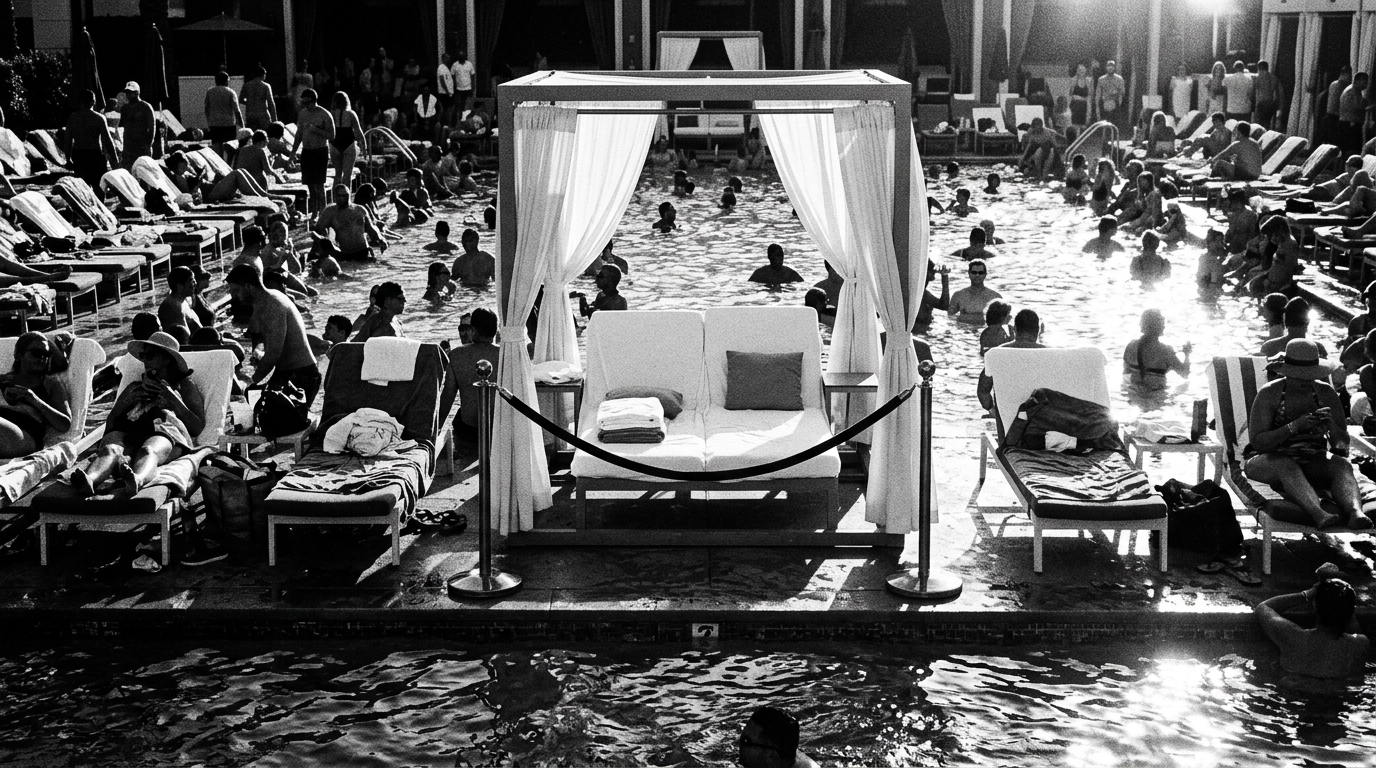
I once worked with a resort GM who had a beautiful pool deck, a destination restaurant, and a lobby bar that was packed every night. Problem was, about a third of the people at that pool and half the people at that bar weren't staying at the hotel. They were guests from the budget property next door who figured out they could walk through the parking lot and enjoy $300-a-night amenities on a $129 budget. His paying guests noticed. His reviews started mentioning "crowded" and "hard to get a chair." He finally put up a wristband system. The budget hotel guests were furious. His actual guests? Their satisfaction scores jumped within a month.

That's what Disney just did, except with buses. Starting this past weekend, if you want to ride Disney transportation from Disney Springs to a resort hotel, you scan your MagicBand or your digital room key. No reservation? No ride. They'll check for dining reservations and activity bookings too, but the message is crystal clear... these buses are for people paying $600-plus a night, not for day-trippers who parked at Disney Springs for free and figured they'd hitch a ride to the Grand Floridian.

Disney is calling this a "temporary" measure for the Easter and Spring Break surge. They said the same thing when they tested it over Christmas. Here's what 40 years in this business has taught me about "temporary" operational changes at large hospitality companies... if it works, it's permanent. And this one works. When you're running a segment that just crossed $10 billion in quarterly revenue for the first time, and your resort bookings for the fiscal year are pacing up 5%, you don't go back to an open-door policy that dilutes the experience for the guests generating that revenue. The verification infrastructure is built. The cast members are trained. The data is being collected. This is a pilot program wearing a seasonal costume.

The bigger story isn't about buses. It's about the explicit tiering of the hospitality experience within a single ecosystem. Disney is spending $60 billion over ten years on its parks and resorts. They're adding complimentary parking for resort guests, 30-minute early theme park entry, free water park admission on check-in day. Every one of those moves widens the gap between on-property and off-property. Every one makes the on-property rate premium feel more justified. And now they're using transportation access... the most basic operational function... as a sorting mechanism. You're either in the system or you're outside it. That's not a crowd management tactic. That's a business model.

Look... I know what some of you are thinking. "Mike, this is Disney. They operate at a scale and with a captive audience that has nothing to do with my 200-key property." Fair. But the principle is universal. Every hotel operator in America is dealing with some version of this problem... non-guests using your amenities, your parking, your lobby, your WiFi, your restrooms. The question has always been whether the friction of enforcement is worth the improvement in guest experience. Disney just answered that question with $10 billion worth of confidence. They built a digital verification system, trained their front-line staff to enforce it, accepted the negative PR from day-trippers, and bet that paying guests would reward them for it. That's what I call the Price-to-Promise Moment... that instant where the guest paying a premium decides the rate was worth it. Disney just decided that moment happens when a resort guest boards a bus without waiting behind 40 people who aren't paying for the privilege. And they're probably right.

Operator's Take

If you're running a resort, a full-service property, or anything with amenities that attract non-guests, pay attention to what Disney is doing with verification infrastructure, not just policy. They built a system where a MagicBand scan instantly confirms guest status. You probably don't have that... but your PMS does generate digital keys, and your front desk does issue wristbands. Sit down this week and map every amenity touchpoint where non-guests dilute the experience for paying guests. Pool deck. Fitness center. Lobby bar during peak hours. Parking. Then calculate what a simple verification system would cost versus what your guest satisfaction scores say about "crowding" or "wait times." If you're charging $250-plus a night and your guests are competing with the public for a pool chair, you're giving away the very thing that justifies your rate. Your guests won't complain to your face. They'll complain on TripAdvisor. And they won't come back.

Read full analysis → ← Show less
Source: Google News: Resort Hotels
The Breakers Just Did What Every Resort Market GM Wishes Their Owner Would Do

The Breakers Just Did What Every Resort Market GM Wishes Their Owner Would Do

A luxury resort owner is spending $9.1 million on land alone to build 155 apartments for its workforce. The question isn't whether it's smart. It's why almost nobody else is doing it.

Available Analysis

I've been in this business 40 years, and the single most consistent lie I've heard from ownership groups is this: "We'll figure out the staffing." No you won't. Not in a resort market. Not when your housekeepers are driving 45 minutes each way because they can't afford to live within 20 miles of the property they clean. You're not figuring anything out. You're just hoping people keep showing up.

The Breakers in Palm Beach just stopped hoping. Their ownership entity, Flagler System Management, assembled 2.5 acres about four miles from the resort for $9.1 million... $8.5 million to a private seller and $600,000 to the City of West Palm Beach for a parcel the city rezoned specifically for this project. They're building an eight-story, 155-unit apartment complex. Seventy-nine of those units (51%) designated workforce housing. Rents starting around $1,200 for a studio, topping out at $3,000 for a two-bedroom. Pool, fitness center, shuttle service to the property. This isn't a converted motel with bunk beds. This is purpose-built housing designed to keep 2,400 employees within a reasonable orbit of a resort where median rents on the island run $10,000-$11,000 a month. The local planning board approved it unanimously last summer. Read that again... unanimously. When's the last time a development board agreed on anything unanimously?

Here's what I want you to think about. Palm Beach County has a deficit of 42,500 rental units for people earning at or below 60% of area median income. Median home price is $500,000. The county itself said it needs 81,000 new affordable units over the next decade. If you're running a resort or upscale property in any coastal market from Palm Beach to Napa to Maui, swap out the numbers and the story is basically the same. Your staff can't live where they work. And every year the gap gets wider, and every year you lose more institutional knowledge when your best people finally say "I can't do this commute anymore" and leave for a hospital job or a warehouse 10 minutes from their apartment.

I managed a resort property once... beautiful place, great reviews, the kind of hotel people planned their anniversaries around. We lost our best room attendant of eight years because her landlord raised rent $400 in one shot. She moved two counties over. Tried to make the commute work for about six weeks. Couldn't. Gone. Do you know what it costs to replace an eight-year room attendant? It's not the $3,500 you'll spend on recruiting and training a replacement. It's the 200 guests she would have turned into repeat visitors over the next year who now get someone learning the job. That cost is invisible on your P&L, and it's enormous.

The Breakers is privately held... Kenan family, descendants of Henry Flagler, same ownership since 1896. That matters. They don't answer to quarterly earnings calls. They invest $30 million a year in capital improvements because they think in decades, not quarters. Not every owner has that luxury. But the principle scales down. If you're an owner or operator in a resort market spending $8,000-$12,000 per year per position on turnover costs (and you are... you're just not tracking it), at what point does subsidized housing become cheaper than the churn? I've run that math for owners before. The breakeven is a lot sooner than people think. The Breakers isn't being charitable here. They're being smart. The $9.1 million land cost looks like a lot until you calculate what 2,400 employees' worth of annual turnover costs in a market where nobody can afford to live. They've been subsidizing staff housing for over 30 years already. This is just the logical next step... they're tired of renting the solution and decided to own it. That's an operator's instinct, not a developer's.

Operator's Take

If you're running a property in a high-cost resort market, pull your turnover data for the last three years and calculate the actual fully-loaded cost per departure... recruiting, training, productivity loss, the whole thing. Then go talk to your ownership group about what housing assistance looks like at your scale. It doesn't have to be a $9.1 million apartment complex. It could be a master lease on a nearby property, a housing stipend, or a partnership with the county housing authority. But "we'll figure out the staffing" isn't a strategy anymore. Not in these markets. The Breakers just showed you the math. Your owners need to see yours.

Read full analysis → ← Show less
Source: Google News: Resort Hotels
A Pool Cleaner Won at CES. Your Maintenance Budget Doesn't Care.

A Pool Cleaner Won at CES. Your Maintenance Budget Doesn't Care.

Fairland Group's iGarden M1 Pro Max won a CES 2026 Innovation Award as the "world's first bionic dual-vision pool cleaner." Unless you're running a resort with significant pool infrastructure, this is noise — not news.

Here's the thing nobody's telling you: CES awards get thrown around like Halloween candy. Every January, hundreds of gadgets win "Innovation Awards" in categories so narrow they're practically manufactured for the product itself. This year it's a pool cleaner with dual cameras and AI that supposedly cleans better than existing robotics.

I've been through enough pool equipment cycles to know what matters. Does it reduce labor hours? Does it cut chemical costs? Does it prevent that 2pm guest complaint about debris when your maintenance guy is at the other property? Those are the questions. A press release correction about pricing doesn't answer any of them.

The real story here is how far pool automation has come in the past five years. If you're running a select-service property with a basic 20x40 pool, you're probably fine with your current $800-1,200 robotic cleaner that you replace every 3-4 years. But if you're operating a resort with multiple pools, splash pads, and lazy rivers — the kind where pool maintenance is a 2-3 FTE operation — then yes, better robotics matter. They matter at budget time, they matter during labor shortages, and they matter when TripAdvisor reviews mention "dirty pool" and your occupancy drops 4 points.

But a CES award? That tells me nothing about warranty claims, parts availability, or whether this thing actually works in a commercial environment with 200 guests a day putting sunscreen, drinks, and God knows what else in your water. I need to see 12-18 months of real-world deployment data before I'm telling any GM to budget for bleeding-edge pool tech.

Operator's Take

If you're already shopping for new pool equipment, put this on your list to evaluate — but wait for independent third-party testing, not awards and press releases. If your current robotics are working fine, spend that capital budget on something that actually impacts RevPAR. A clean pool matters. An award-winning pool cleaner? Prove it to me with lower labor costs first.

Read full analysis → ← Show less
Source: PR Newswire: Travel & Hospitality
Greek Islands Resort Rankings Show Why Luxury Positioning Still Matters

Greek Islands Resort Rankings Show Why Luxury Positioning Still Matters

A travel expert's ranking of 21 top Greek islands hotels reveals what separates the winners from the wannabes in luxury resort markets.

Here's what these Greek islands rankings actually tell us about luxury resort operations. The properties making these lists aren't getting there by accident — they're executing fundamentals that most resort operators miss.

I've seen this movie before in markets from Maui to Martha's Vineyard. The resorts that consistently show up in expert recommendations are running 15-20 points higher RevPAR than their competition, not because they got lucky with location, but because they nail three things: property maintenance that screams luxury, service delivery that feels effortless, and positioning that justifies their rates.

The Greek islands market is brutal for second-tier properties right now. You're either premium enough to command €400+ per night in season, or you're fighting for scraps with everyone else. The properties making expert lists understand this. They invest in constant facility upgrades, they staff at ratios that independent operators think are crazy, and they never, ever compromise on guest experience to save a few euros.

But here's the thing nobody's telling you about these rankings — half of these "top" properties will struggle to maintain their positioning over the next five years. Rising labor costs, infrastructure challenges on the islands, and increased competition from new luxury developments mean only the operators with the deepest pockets and strongest operational discipline will stay on top.

The lesson for resort operators anywhere? If you're not premium, get premium or get out. The middle is disappearing faster than you think.

Operator's Take

If you're running a resort property in any leisure market, stop chasing occupancy and start chasing rate. Study what these Greek properties do differently — invest in your physical plant, train your staff to deliver luxury service, and price like you mean it. Half-measures get you half-empty in today's market.

Read full analysis → ← Show less
Source: Google News: Resort Hotels
Turtle Bay's Secret New Hotel Shows Why Market Intelligence Matters

Turtle Bay's Secret New Hotel Shows Why Market Intelligence Matters

A major hotel development next to Hawaii's Turtle Bay Resort got approved without guests — or apparently competitors — knowing about it. That's a problem you can't afford to have in your market.

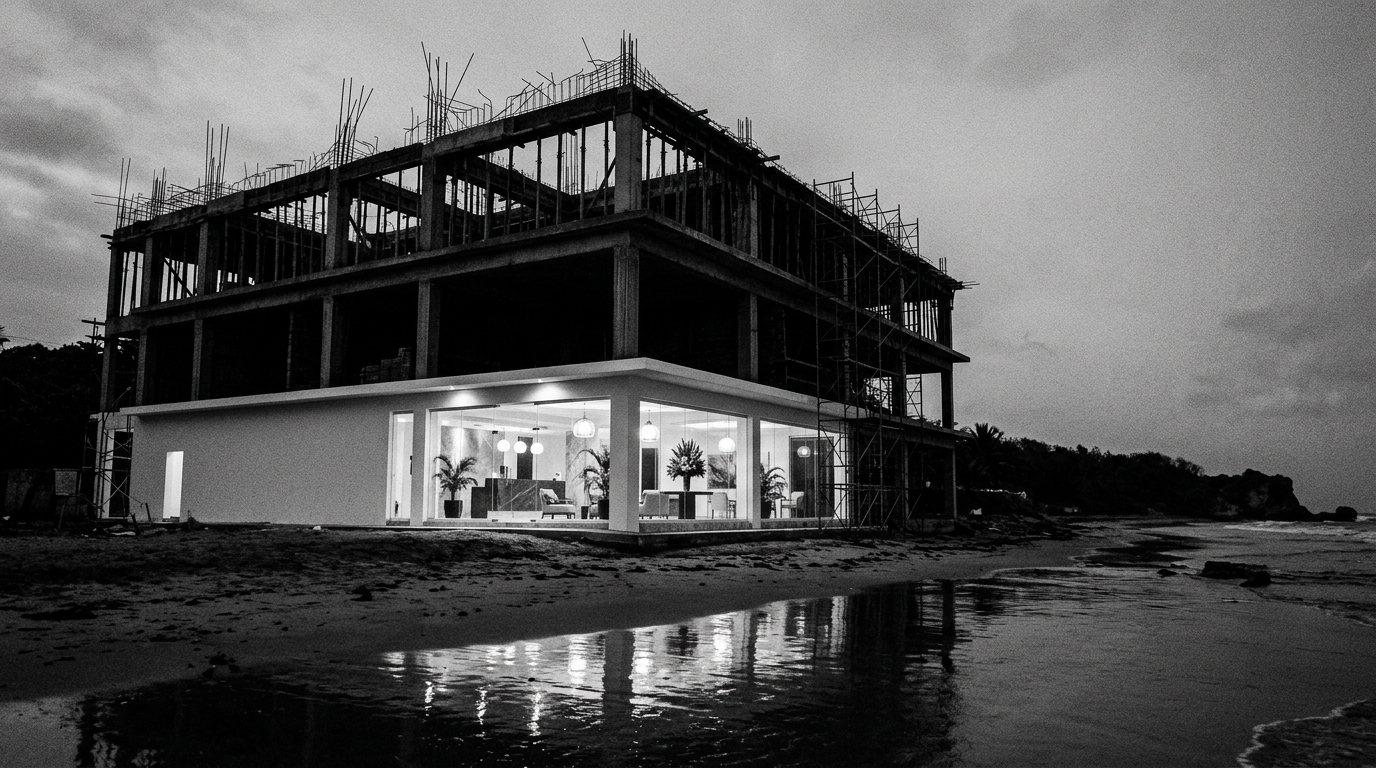
Here's what happened at Turtle Bay Resort on Oahu's North Shore: while guests were checking in and out of the existing property, a completely separate hotel development got the green light right next door. And nobody's talking about it. Not the resort. Not the local tourism boards. Guests have no clue what's coming.

I've seen this movie before. A resort thinks it can keep major competitive developments quiet until the last possible minute. Sometimes it's to avoid guest concerns about construction noise. Sometimes it's wishful thinking that the project will die in permitting hell. But here's the thing nobody's telling you — in today's information age, trying to keep a hotel development secret is like trying to hide a 747 in your backyard.

This isn't just about Turtle Bay. If you're running any resort property in a market where land is scarce and valuable, you need to know what's in the pipeline 18-24 months out. Not when the bulldozers show up. Hawaii hotel markets are especially brutal because there's limited land and unlimited demand from developers with deep pockets.

The real issue here is market intelligence failure. Either Turtle Bay's management knew about this and chose not to communicate it, or they didn't know — which is worse. Your RevPar projections for 2027-2028 should already factor in new supply coming online. Your marketing strategy should account for increased competition. Your capital expenditure planning should consider what amenities you'll need to stay competitive.

Resort markets like Hawaii are particularly vulnerable because guests book 6-12 months out. If I'm a guest who booked Turtle Bay for next Christmas expecting exclusive beachfront access, and I show up to construction crews and a new hotel next door, that's a service recovery nightmare that could have been managed with proper communication.

Operator's Take

If you're running a resort property, set up Google Alerts for your market plus terms like "hotel development," "planning commission," and "zoning approval." Check county permitting databases quarterly. Your local STR rep should be briefing you on pipeline supply every six months. Don't let competitive surprises blow up your occupancy forecasts.

Read full analysis → ← Show less
Source: Google News: Hotel Development
End of Stories