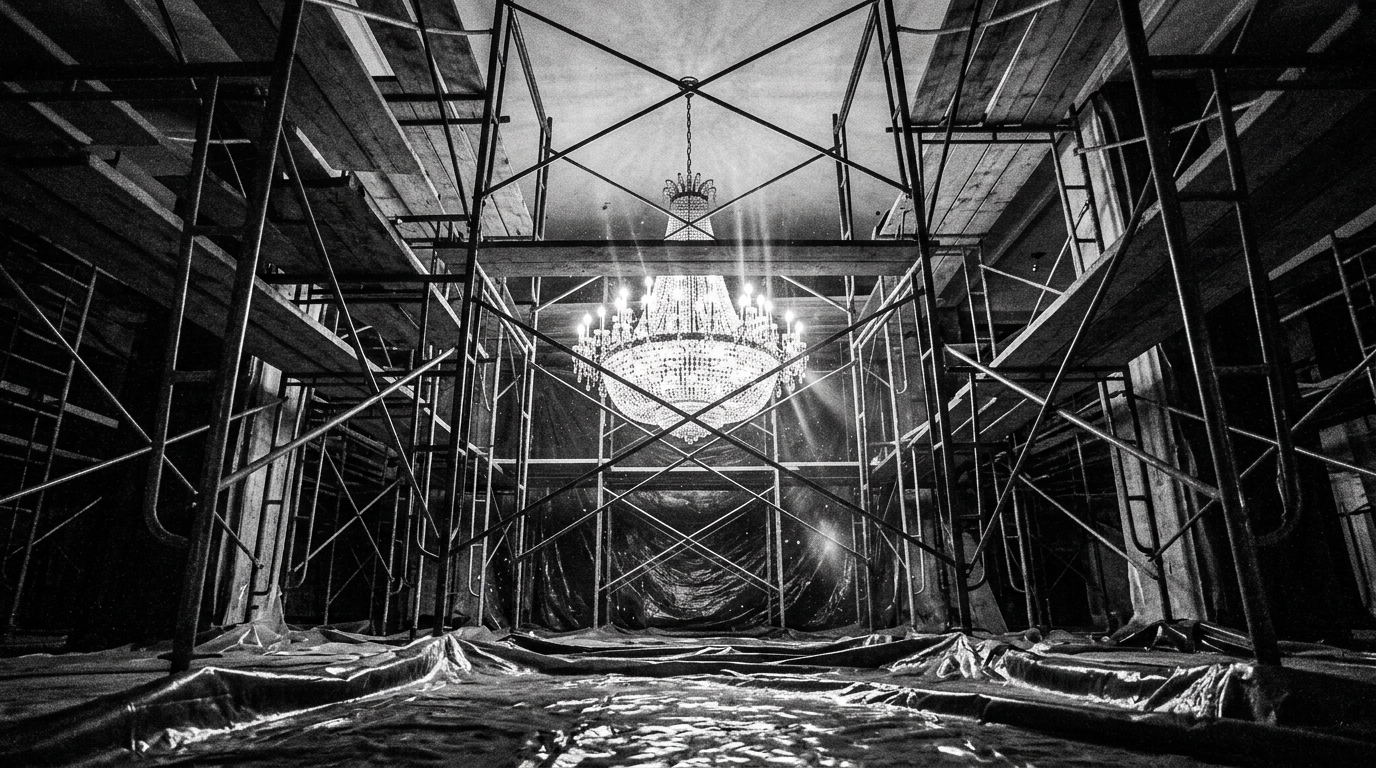
Disney's Dropping $60 Billion on Parks. Your Renovation Excuse Just Expired.
Disney is tearing apart multiple Magic Kingdom resorts simultaneously while keeping them open and charging premium rates. If a company managing 25,000+ rooms can renovate during peak season without apologizing for it, the rest of us need to rethink how we talk to guests about construction walls.
I watched a GM lose his mind once over a 30-room soft goods refresh. Thirty rooms. Out of 240. He wanted to shut down an entire floor, block it off for six weeks, and basically treat the project like a hazmat situation. His reasoning? "We can't have guests near construction." I asked him what he thought Disney did when they renovated. He didn't have an answer.
Now Disney is renovating the Grand Floridian's lobby, porte cochere, and convention center. Simultaneously. While also tearing up the Polynesian's front entrance and bus loop, closing boat docks at Wilderness Lodge, and continuing a two-year overhaul at Bay Lake Tower. All of this happening at properties where guests are paying $400-$800 a night. And those guests aren't getting discounts for the inconvenience. They're getting "we appreciate your patience" and a construction wall painted to look like part of the story.
Here's what Disney understands that most hotel operators don't... renovation is not a crisis to be managed. It's an investment to be communicated. The difference between a guest who's furious about construction noise and a guest who feels like they're witnessing the next chapter of something special is entirely about framing. Disney frames renovation as progress. Most hotels frame it as an apology. "We're sorry for any inconvenience during our improvements." That language tells the guest they're getting less than they paid for. Disney's language tells the guest they're seeing something before everyone else does.
The operational discipline here is worth studying even if you're running a 150-key select-service and not a theme park resort. Disney is phasing these projects across multiple properties so that no single resort loses all of its amenities at once. The Grand Floridian porte cochere goes through early 2027... that's a year-plus timeline on a hotel entrance, which means they've accepted the disruption cost and built the guest communication around it rather than rushing the job to minimize the window. That's a choice most owners won't make because they're terrified of one bad TripAdvisor review mentioning dust. Meanwhile, Disney's charging rack rate through the whole thing. This is what I call the Renovation Reality Multiplier... the actual disruption timeline is always longer than the promised one, and the operators who build their plans (and their guest messaging and their revenue strategy) around the real timeline instead of the fantasy timeline come out ahead every single time.
The $60 billion capital plan behind all of this is a different conversation entirely, but the signal it sends matters for everyone in hospitality. Disney is betting that physical experience investments generate better returns than almost anything else they could do with that capital. In a world where everyone's chasing digital, chasing AI, chasing the next platform... the largest entertainment company on earth is pouring money into bricks, mortar, and guest-facing physical spaces. That's not nostalgia. That's a company with extremely sophisticated return models telling you that the room, the lobby, the arrival experience... those things still win.
If you've been deferring a renovation because you're afraid of the guest impact, stop. Pull up Disney's approach and study it. They're renovating a hotel entrance for over a year at a property charging $600 a night and they haven't flinched on rate. Your job this week: take whatever capital project you've been delaying and build a real communication plan around it. Not an apology... a narrative. "We're investing $X in making this property better for you" hits completely different than "we apologize for the inconvenience." If you're a GM at a branded property with a PIP looming, bring this to your owner proactively with a phasing plan that protects revenue while getting the work done. The owner who hears "here's how we execute this without killing ADR" is an owner who approves the spend. The owner who hears "this is going to be painful" is an owner who defers another year and watches the asset deteriorate.