Today · Jun 15, 2026
Your Pool Is Empty Six Hours a Day. Someone Else Will Sell Tickets to It.

Your Pool Is Empty Six Hours a Day. Someone Else Will Sell Tickets to It.

Long Island hotels are charging $50 to $500 for day passes to pools and spas that sit half-empty most of the week. The real question isn't whether this works... it's what happens to your overnight guest experience when the pool deck belongs to someone who didn't check in.

Available Analysis

I watched a GM lose his mind over a pool towel inventory about fifteen years ago. Not the cost of the towels (though that was part of it). The issue was that his pool was packed on a Saturday afternoon, his housekeeping team was running towels back and forth like a bucket brigade, and half the people out there weren't even guests. They were locals who'd wandered in through a side gate. He had all the demand in the world and zero way to monetize it. He was giving away capacity for free and paying the labor cost to service it.

That memory is why this Long Island day pass story hit me differently than it'll hit most people. Newsday just profiled a handful of properties out there... Gurney's charging $150-$160 for spa day access, Hotel Indigo East End starting at $50 for pool time, Canoe Place selling daybeds at $500 with a $150 F&B minimum. Those numbers are real. And the platform driving most of this, ResortPass, now has over 2,000 hotel partners and just inked a multiyear deal with Marriott. This isn't a novelty. This is a revenue line that didn't exist five years ago for most properties, and it's growing fast enough that the big brands are building infrastructure around it.

Here's what I think people are missing, though. The upside is obvious... you're selling access to amenities during hours when they'd otherwise sit idle. The industry stat floating around is that day pass users spend two to three times more on property than overnighters. Think about that. Your pool bar, your spa retail, your restaurant covers... all incremental. A well-run day pass program at a resort-style property can generate north of $2M annually in ancillary revenue. That's real money. That changes your P&L. But the downside is the thing nobody wants to talk about in the press release. You are fundamentally changing who is on your property, when, and why. Your overnight guest paying $400 a night expects a certain experience at the pool. When that pool is now shared with 30 day pass holders who paid $50 each, you've got a math problem and a service problem happening simultaneously. The math works beautifully on a Tuesday in May. It gets dicey on a Saturday in July when your paying guests can't find a lounge chair.

The operational complexity here is where most properties stumble. Your PMS wasn't built to manage day guests. Your front desk team is checking in overnighters. Who handles the day pass arrival... the pool attendant you don't have? The hostess who's also running the restaurant? Towel distribution, F&B ordering, incident management, parking... every one of these is a workflow that needs to be designed, staffed, and managed. I've seen hotels try to bolt this onto existing operations without adding a single labor hour and wonder why their TripAdvisor scores dropped in the same quarter their ancillary revenue went up. You traded one problem for another. That's not strategy. That's whack-a-mole. The hotels doing this well... and some are doing it very well... treat day pass operations as a separate business unit with its own staffing model, its own P&L tracking, and clear physical boundaries between day guest spaces and overnight guest spaces. The ones doing it poorly are just selling pool access on an app and hoping it works out.

One more thing. The Marriott-ResortPass deal tells you where this is headed. The brands are going to start expecting this revenue line. If you're a franchisee at a full-service or resort property with pool and spa amenities, don't be surprised when day pass revenue shows up as a "recommended program" in your next brand review. And recommended today has a way of becoming required next year. If you're going to do this (and for many properties, you should), get ahead of it. Design it yourself. Control the guest experience on both sides of the equation. Because if you wait for the brand to hand you a turnkey program with a platform fee attached, you'll be paying someone else to sell access to your own pool.

Operator's Take

If you've got a pool, a spa, or any amenity that sits underutilized more than four hours a day, run the numbers this week. Not on the revenue (that part's easy and exciting). Run the numbers on the labor. How many additional staff hours do you need to service day guests without degrading the overnight experience? What's your towel cost increase? What's the incremental F&B labor for that pool bar during extended hours? If the margin still works after you've honestly accounted for those costs, build your own program before your brand builds one for you. Start with weekday-only access. Cap the daily count at 15-20% of your pool capacity. Track overnight guest satisfaction scores weekly from the moment you launch. If satisfaction dips, you've pushed too far. This is what I call the Flow-Through Truth Test... the revenue looks great on the top line, but if it doesn't flow through to GOP after you've staffed it, supplied it, and absorbed the wear on your facilities, you haven't created profit. You've created activity.

Read full analysis → ← Show less
Source: Google News: Resort Hotels
Marriott's Day-Pass Deal With ResortPass Sounds Like Free Money. It's Not.

Marriott's Day-Pass Deal With ResortPass Sounds Like Free Money. It's Not.

Marriott just signed a global agreement to let non-guests buy access to hotel pools, spas, and fitness centers through ResortPass. The brand gets a new revenue narrative for investors, but the owner holding the maintenance bill and the GM managing the pool deck are doing very different math.

Available Analysis

Let me tell you what I keep thinking about. A brand VP I used to work with had this phrase he loved in every development presentation: "incremental revenue at zero marginal cost." He'd say it with this big confident sweep of his hand, like the money just materialized from the atmosphere. And every single time, the GM in the back of the room would lean over to whoever was next to him and whisper something unprintable. Because there is no such thing as zero marginal cost when you're the one running the building. There just isn't. Somebody has to clean the pool chairs. Somebody has to check the guest in. Somebody has to deal with the family of six who bought a $25 day pass and is now monopolizing the cabana your overnight guest at $389 a night assumed would be available.

So Marriott has signed a global agreement with ResortPass... the platform that lets non-hotel-guests book day access to pools, spas, fitness centers, and other amenities. And look, I am not going to pretend this is a bad idea conceptually. It's not. The economics of an underutilized pool on a Tuesday in October are genuinely painful. You're paying for lifeguards, chemicals, towels, maintenance, and insurance whether twelve people use it or two hundred. Selling access to locals and day-trippers is a legitimate way to extract value from capital-intensive amenities that sit half-empty most of the year. ResortPass says they've facilitated roughly 3 million day passes and that one property generated over $100,000 in gross sales in a single month from a beach pass product that included an F&B credit. That's not nothing. That's a real revenue line.

But here's where the brand promise and the brand delivery diverge (and you knew I was going to say this, because I always say this, because it's always true). Marriott gets to announce a global partnership, talk about ancillary revenue diversification on the next earnings call, and position this as an innovation play that extends the Bonvoy ecosystem beyond overnight stays... which, by the way, is exactly what they've been building toward with 271 million loyalty members and a strategy that increasingly treats the hotel stay as one node in a broader lifestyle platform. Beautiful. That's the investor story. Now here's the property story. The property story is a resort GM who just found out that her pool deck... the one her $400-a-night guest considers part of the rate premium... is about to be shared with people who paid $25 through an app. The property story is the spa director who now has to manage a booking system layered on top of whatever reservation platform they're already using. The property story is the F&B team being told to expect incremental covers with no incremental staffing budget. The property story is always more complicated than the press release, and the press release never mentions the property story.

I've watched three different brands try this exact play over the years... opening amenities to non-guests under the banner of "monetizing underutilized assets." Two of them quietly scaled it back within eighteen months because the guest satisfaction scores from overnight guests dropped faster than the day-pass revenue grew. The third made it work, and you know why? Because they invested in the infrastructure to separate the experiences. Dedicated check-in for day guests. Separate pool sections. Additional staffing during peak periods. In other words, they treated it like what it actually is... a new business line that requires operational investment, not "free money from existing assets." The ones who failed treated it like the brand VP with the hand wave. Zero marginal cost. The Deliverable Test is simple here: can your property run a day-access program that generates meaningful revenue without degrading the experience your overnight guests are paying a premium for? If the answer requires a staffing model you can't afford or a physical layout you don't have, the answer is no, no matter how good the platform is.

And here's the part that keeps nagging at me. Marriott hasn't announced which brands or properties are participating, what the revenue split looks like, or how this integrates with property-level operations. That's a lot of blanks for a "global agreement." If you're an owner in a resort or urban market with amenities that genuinely sit underutilized, this could be a smart incremental play... IF you control the terms, IF you staff for it, and IF you protect the overnight guest experience that justifies your rate. But if this rolls out as a brand mandate with a platform fee, a revenue share that flows upward, and an operational burden that flows downward... well, I've seen that movie before too. It ends at the FDD. The question isn't whether day-access is a good idea. It is. The question is whether the owner gets to run it like a business or whether the brand gets to announce it like a strategy while the property absorbs the complexity. That's two very different outcomes wearing the same press release.

Operator's Take

Here's what I'd do if I'm running a resort or full-service property with pool, spa, or fitness amenities. Don't wait for the brand to tell you how this works... run your own numbers first. Calculate your true cost per amenity-user-day (staffing, consumables, insurance, wear-and-tear on FF&E) and figure out the minimum day-pass price that actually makes you money after the platform takes its cut. Then look at your peak occupancy days... any day you're running above 80%, day passes are probably diluting the experience your rate-paying guests expect. This is a shoulder-season and midweek play, not an everyday play, and if you let it become everyday, you're subsidizing a brand's revenue narrative with your guest satisfaction scores. If your brand comes to you with this, the first question is who keeps the revenue and the second question is who pays for the labor. Get both answers in writing before you opt in. This is what I call the Brand Reality Gap... the brand sells the promise at portfolio level and the property delivers it shift by shift. Make sure the economics work at YOUR property, not in aggregate across a system of 9,000 hotels.

— Mike Storm, Founder & Editor
Read full analysis → ← Show less
Source: Google News: Marriott
Hyatt Is Selling Podcast Seats to Tennis Fans. The Loyalty Math Is What Matters.

Hyatt Is Selling Podcast Seats to Tennis Fans. The Loyalty Math Is What Matters.

Hyatt's new "Player's Box" podcast tapings let World of Hyatt members buy seats at live events in Paris, London, and New York. With 66 million members and gross fees of $333 million last quarter, the question isn't whether this is clever marketing... it's whether experiential spending actually flows back to property-level RevPAR.

Hyatt is charging tennis fans for seats at live podcast tapings hosted by WTA players, bookable through its World of Hyatt platform at properties in three gateway cities. The program is free to join. The experiences are not. Hyatt's Q1 2026 gross fees hit $333 million. System-wide RevPAR grew 5.4%. The loyalty base expanded 18% year-over-year to 66 million members. Those are the numbers the press release wants you to see.

Let's decompose what this program actually is. Hyatt is converting hotel event space into ticketed entertainment venues, collecting revenue on the experience, and routing the transaction through its loyalty infrastructure so every purchase generates member data and (presumably) point accrual obligations. The member gets a live event. Hyatt gets engagement metrics, incremental ancillary revenue, and a data point connecting that member to a specific interest profile. The property hosting the event gets... what, exactly? A banquet space booking at whatever internal rate Hyatt negotiates with itself, plus potential F&B spillover. That's the question nobody in the press release is answering.

I've analyzed enough loyalty program economics to know the pattern. The platform captures the margin. The property captures the cost. When a hotel in Paris hosts a 200-seat podcast taping, someone is staffing it, cleaning it, managing the AV, and absorbing the operational disruption to normal banquet revenue. Hyatt's August 2025 partnership with Way to consolidate experiential offerings onto a single digital platform tells you where the economics are being centralized. The booking, the data, the ancillary margin... all flow through Hyatt's platform. The labor and logistics flow through the property's P&L. If the hosting property is managed by Hyatt, the misalignment is internal. If it's franchised, the owner should be asking for the split.

The strategic logic is sound at the corporate level. Premium leisure drove Hyatt's Q1 outperformance. Luxury all-inclusive net package RevPAR grew 7.4%. Tying experiential access to loyalty membership is a proven acquisition channel (66 million members didn't materialize by accident). Hyatt's investor day last week emphasized premium brand positioning and differentiation at scale. Selling podcast seats at tennis tournaments is differentiation. Whether it's differentiation that produces a measurable RevPAR premium at the hosting property or just a brand-level engagement metric... that's the decomposition that matters.

The per-property calculation is straightforward. Take the ancillary revenue generated by the event at your specific hotel. Subtract the fully loaded cost of hosting (labor, space opportunity cost, AV, incremental housekeeping). Compare the net to what you'd have earned renting that space to a corporate client or wedding. If the net is positive, it's a good program. If the net is negative but the loyalty acquisition value compensates over a 12-month window, it's defensible. If the net is negative and nobody can quantify the loyalty value at property level... you're subsidizing a brand marketing campaign with your banquet margin.

Operator's Take

Here's what to do if your property gets tapped to host one of these experiential events... and this applies to any brand, not just Hyatt. Before you say yes, run the real math. What does that event space generate on a normal Tuesday? What's the fully loaded labor cost to execute the event (not the estimate from the brand team... your actual cost with your actual staffing)? If the brand is routing ticket revenue through their platform, what's your share? Get that number in writing before the production crew shows up. I've seen this movie before with brand activations... the corporate deck shows "incremental exposure" and the property P&L shows incremental cost. Make the brand quantify the value at YOUR property, not at the portfolio level. Portfolio averages don't pay your invoices.

— Mike Storm, Founder & Editor
Read full analysis → ← Show less
Source: Google News: Hyatt
CAD $119 Easter Brunch Won't Save Your F&B. But the Strategy Behind It Might.

CAD $119 Easter Brunch Won't Save Your F&B. But the Strategy Behind It Might.

Four Seasons Whistler charged $119 per adult for an Easter brunch and wrapped it in egg hunts, maple taffy, and candle-making workshops. The interesting part isn't the holiday programming... it's the operational model that makes ancillary revenue feel effortless while most hotels can't staff a breakfast buffet past 9 AM.

I worked with a resort GM years ago who told me something I never forgot. He said, "Mike, anybody can put out a ham and call it Easter brunch. The ones who make money are the ones who turn a Sunday meal into a three-day stay." He wasn't talking about food. He was talking about programming as a revenue architecture. And he was running a 140-key mountain property with a skeleton crew that somehow made every holiday weekend feel like an event.

That's what I think about when I see Four Seasons Whistler rolling out their Easter package. CAD $119 per adult, $49 per kid for the brunch. Egg hunts. Maple taffy from 4 to 5. S'mores by a fire from 4 to 6. Spa scrub experience. Candle-making workshop. On paper, it's a luxury resort doing luxury resort things. Nothing revolutionary. But here's what most people miss... every single one of those touchpoints is designed to extend length of stay and increase per-guest spend across multiple revenue centers. The brunch gets them to the restaurant. The egg hunt keeps families on property through the afternoon instead of heading into the village. The spa experience and the candle-making workshop are Tuesday and Monday programming specifically designed to book the shoulder nights around the holiday. This isn't event planning. This is yield management disguised as hospitality.

And that's where the gap lives for 95% of hotels. Four Seasons has the brand equity, the staffing model, and the physical plant to execute this seamlessly. They just brought in a new GM two days before announcing this programming... Pierre Morillon, their new property leader... which tells you this stuff is systematized at the brand level, not dependent on one person's creativity. That's the difference. When your seasonal programming is a system, a new GM walks in and it runs. When it's one enthusiastic F&B director's side project, it walks out the door when they do. Most independent and select-service operators I know treat holiday programming as an afterthought. Something you throw together in March for Easter, in November for Thanksgiving. You print some flyers, maybe run a social post, and hope people show up. Then you wonder why the resort down the road is running 94% occupancy on Easter weekend while you're sitting at 71%.

Look... I'm not saying you need to be Four Seasons. You can't be, and trying to be is how you lose money. But the underlying principle is available to every property with a restaurant, a lobby, or an outdoor space. Map the guest's day hour by hour. Find the moments where they're deciding between staying on property and leaving. Put something in those moments. It doesn't have to be maple taffy (although if you're in a mountain market and you're NOT doing something with local flavor, what are you doing?). It has to be intentional. The s'mores station from 4 to 6 isn't random... that's the exact window when families with kids are deciding whether to go out for dinner or stay put. Keep them on property through that decision point and you just captured another $80-$150 in F&B revenue per family. Multiply that across your holiday weekend occupancy and you're looking at real money.

Four Seasons is also sitting on 60 additional projects in development globally and just launched a yacht product. They're playing a game most of us aren't playing. But the operational DNA underneath this Easter brunch... the idea that every guest touchpoint is either generating revenue or generating a reason to stay longer... that's available to a 120-key independent in Asheville just as much as it is to a luxury resort in Whistler. You just have to think about it like an operator instead of waiting for someone to hand you a programming playbook.

Operator's Take

If you run any property with F&B or event space, pull your calendar for Memorial Day weekend right now. Not next week. Now. Map your guest's day hour by hour and find the two or three windows where they're deciding to stay or leave. Build something... anything... for those windows. A tasting, a kids' activity, a fire pit with local beer. Price it to cover costs plus 30%. This is what I call the Price-to-Promise Moment... every stay has one moment where the guest decides the rate was worth it, and holiday weekends are where you either design that moment or let it happen accidentally. The property that programs the 3-to-6 PM window on a holiday Saturday captures $50-$150 more per occupied room than the one that doesn't. That's not a guess. I've watched it happen at every resort and full-service property I've ever touched. Don't wait until May to figure this out.

Read full analysis → ← Show less
Source: Google News: Four Seasons
A Wealth Manager in Kentucky Just Bought $1.4M in Airbnb Stock. Here's Why You Should Care.

A Wealth Manager in Kentucky Just Bought $1.4M in Airbnb Stock. Here's Why You Should Care.

A small wealth management firm's bet on Airbnb isn't the story. What Airbnb is building with that investor confidence... experiences, AI, and a capital-light model designed to eat your ancillary revenue... that's the story operators need to be reading.

Some wealth manager in Kentucky bought 10,324 shares of Airbnb stock worth about $1.4 million. That, by itself, is not news. Wealth managers buy stock. That's what they do. The MarketBeat headline exists because financial media needs content and 13F filings are easy to write about.

But here's what caught my eye, and it wasn't the stock purchase. It was the timing and what it signals about where the smart money thinks Airbnb is headed. While the hotel industry has spent the last five years telling itself that Airbnb is a leisure competitor that doesn't really threaten branded hotels... Airbnb has been quietly building something bigger. They're expanding into "Experiences and Services." They're targeting long-term stays of 30-plus days. They're rolling out AI-driven personalization. They've launched a "Reserve Now, Pay Later" feature. And every single one of these new business lines is designed to generate a billion dollars within three to five years. That's not a vacation rental company anymore. That's a platform play. And platforms don't compete with you on rooms. They compete with you on everything around the room.

I talked to an independent hotel owner last month who told me his biggest revenue threat wasn't the Marriott down the street. It was the fact that three of his former group clients now book Airbnb properties for their executive retreats because "the experience feels more personal." He said it like he still couldn't believe it. I believed it. I've been watching it happen for years. The thing most operators miss is that Airbnb doesn't need to be better than your hotel. They need to be different enough that a certain type of guest stops considering you at all. And with $17.3 billion in tourism taxes generated globally (a number Airbnb published last week specifically to signal legitimacy to regulators), they've crossed the line from "scrappy disruptor" to "permanent infrastructure." That's a different competitive dynamic entirely.

Meanwhile, the regulatory picture is more complicated than the "cities are cracking down" narrative suggests. Sacramento is considering rules that would require most hosts to live on-site for stays under 30 days... which sounds like it helps hotels until you realize it eliminates the amateur hosts and concentrates the market in professional operators who run Airbnb listings like hotels. Fewer listings, higher quality, better managed. That's not regulation hurting Airbnb. That's regulation making Airbnb's remaining inventory more competitive with yours. And Airbnb's own CFO just sold $491K worth of stock under a pre-planned trading arrangement... which tells you exactly nothing, because insiders sell on schedules for tax planning, not because they're panicking. The analyst consensus is a "Hold" with targets around $150. The stock's trading near $127. One firm thinks it's undervalued by nearly 50%. The institutional money is paying attention even if the hotel industry isn't.

Here's what should actually keep you up tonight. Airbnb runs capital-light. They don't own buildings. They don't staff front desks. They don't replace FF&E every seven years. They don't negotiate linen contracts or fight with the brand about PIP timelines. Their margins improve as they scale because their cost structure is fundamentally different from yours. You're in the real estate business with all the capital intensity that implies. They're in the marketplace business with all the margin advantage that implies. And now they're using that margin advantage to fund expansion into the parts of hospitality... experiences, dining, activities, long-stay... where hotels have traditionally captured ancillary revenue. A wealth manager in Kentucky putting $1.4 million into that thesis isn't the story. The thesis itself is the story. And it's a thesis that assumes your ancillary revenue is up for grabs.

Operator's Take

If you're running an independent or a soft-branded property, this is your wake-up call on ancillary revenue. Pull your F&B numbers, your experience packages, your anything-beyond-the-room revenue for the last 12 months. Now ask yourself honestly... is any of it distinctive enough that a guest would choose you over a well-managed Airbnb with a local experience baked in? If the answer makes you uncomfortable, good. Start there. The play for operators isn't to compete with Airbnb on price or on "authenticity" (you'll lose both). The play is to deliver something a distributed platform can't... consistency, professional service, and an experience that requires a trained team to execute. That's your moat. But only if you actually invest in it. If your "guest experience" is a QR code menu and a Keurig machine in the lobby, you don't have a moat. You have a target on your back.

Read full analysis → ← Show less
Source: Google News: Airbnb
A $75 Dining Credit Won't Save Your Spring Break Strategy. But the Model Behind It Might.

A $75 Dining Credit Won't Save Your Spring Break Strategy. But the Model Behind It Might.

The Hilton Anatole is packaging pool access, dining credits, and parking into a spring break bundle that looks like a standard seasonal promotion. What's actually happening is a 1,610-room convention hotel using a $20-25 million water park to solve a revenue problem most large urban properties still haven't figured out.

I worked with a GM once at a big-box convention hotel... 1,200 keys, massive meeting space, downtown location. Every March he'd watch his corporate transient dry up for two weeks while the leisure travelers drove right past his lobby to the beach resorts. One year he finally said to his team, "We have a pool, a restaurant, and 400 empty rooms. Why are we not in the spring break business?" His DOS looked at him like he'd suggested putting a Ferris wheel in the parking garage. Three years later that pool complex was generating more ancillary revenue per occupied room in March than the bar did in December. Sometimes the crazy idea is just the obvious idea nobody wanted to own.

That's what I think about when I see the Hilton Anatole rolling out its spring break package. On the surface, this looks like standard stuff... $75 dining credit per night, $20 arcade credit, free self-parking, guaranteed access to JadeWaters. Slap a resort fee of $32 plus tax on top and call it a promotion. But zoom out. This is a 1,610-room property in the middle of a $100 million renovation that needs to keep cash flowing while 899 atrium guestrooms wait for their turn under the construction dust. You don't survive a multi-year renovation by hoping convention business carries you. You build revenue channels that pull leisure demand into a property that was never originally designed for it. That 3-acre water park complex with 800-plus seats of capacity, two water slides, a lazy river, and a swim-up bar... that's not an amenity. That's a revenue engine. And the spring break package is just the packaging around what is fundamentally an ancillary spend strategy disguised as a family promotion.

Here's what the press release doesn't get into. The real play is on-property capture rate. You give a family a $75 dining credit, they don't spend $75 at your restaurant. They spend $130 because the credit gets them in the door and the kids order dessert and dad gets another round. The $20 arcade credit works the same way... it's a seed, not a gift. Guaranteed pool access removes the friction that keeps families from booking a convention hotel for leisure in the first place ("will it be too crowded? will we actually get in?"). And comping self-parking in a market like Dallas, where everyone drives, eliminates the last objection before someone hits "book." Every piece of this package is engineered to increase total guest spend, not discount the room. That's the difference between a promotion and a strategy.

The timing matters too. Hilton's own 2026 trends data says 84% of travelers want shared family activities and 78% of parents say their kids influence the booking decision. Meanwhile, Dallas-Fort Worth is leading the nation in hotel construction with nearly 200 projects and over 24,000 rooms in the pipeline. When that much new supply is coming, you can't just compete on room rate... you compete on reasons to stay. A water park is a reason to stay. A dining credit is a reason to eat on-property instead of driving to a restaurant. This is a property that figured out years ago (when they invested $20-25 million in JadeWaters back in 2014-2015) that the way to win in a market flooded with conventional hotel rooms is to stop being a conventional hotel.

The question I'd be asking if I were running a large urban property without this kind of amenity investment: what's YOUR version of JadeWaters? You don't need water slides. But you need something that converts an empty room in a soft week into an occupied room with $180 in ancillary spend. Because the properties that figured this out are eating the lunch of the ones still waiting for the convention calendar to save them.

Operator's Take

If you're running a 300-plus key property that depends on group and corporate transient, look at your March and April occupancy for the last three years. If you're consistently soft during school breaks, you have a leisure revenue gap and you're leaving money on the floor. You don't need a $25 million water park. You need a package that gives families a reason to choose you over the resort down the highway... and then captures their spend once they're inside your building. Build your spring break (or summer, or holiday week) package around ancillary revenue triggers, not room rate discounts. A $50 F&B credit that drives $120 in restaurant spend is a 140% return on a marketing cost you were going to eat anyway. Run the numbers on your own on-property capture rate during leisure periods. If it's below 40%, your problem isn't demand... it's that guests are leaving your building to spend money somewhere else. Fix that before you discount another room night.

Read full analysis → ← Show less
Source: Google News: Hilton
$20 Coffee Pods and $180 Cocktails: Hotels Have Forgotten What Business They're In

$20 Coffee Pods and $180 Cocktails: Hotels Have Forgotten What Business They're In

When your in-room coffee costs more than the guest's lunch and two drinks at a show require a payment plan, you haven't found a revenue strategy. You've found the fastest way to teach your best customers to spend their money somewhere else.

I knew a food and beverage director once who had a phrase he used every time ownership pushed him to bump menu prices. He'd say "there's a difference between charging what something's worth and charging what you think you can get away with." The first one builds a business. The second one works exactly once.

That's what I thought about when I saw what's happening at some of these properties right now. Twenty bucks for a Nespresso pod at a Grand Hyatt. A hundred and eighty dollars for two cocktails and two waters at a show venue inside an MGM property in Vegas... and that includes a $25 "admin fee," which is my new favorite euphemism for "because we can." Look, I understand ancillary revenue. I've managed the P&L. I know what F&B margins look like and I know how hard it is to move the needle when your labor costs are running 35% and your food costs are climbing. But there's a line between smart ancillary capture and treating your guest like an ATM with legs, and we blew past that line somewhere around the time someone decided a pod of coffee that costs $0.70 wholesale should retail for twenty dollars. The math on that markup would make a pharmaceutical company blush.

Here's what nobody in the corporate revenue optimization meeting wants to hear: this stuff doesn't exist in isolation. A guest doesn't experience the $20 coffee pod as an independent transaction. They experience it as a data point in a running calculation that goes something like this... "The room was $389. Parking was $55. The resort fee was $45. And now they want twenty bucks for coffee I make at home for thirty cents." That calculation has a tipping point, and when you hit it, you don't get a complaint. You get something worse. You get a guest who checks out, leaves a three-star review, and books the boutique independent down the street next time. You never see the damage because it doesn't show up on this month's revenue report. It shows up in next year's repeat booking rate. This is what I call the Price-to-Promise Moment... every stay has one moment where the guest decides the rate was worth it or it wasn't. A $20 coffee pod at 6 AM before a business meeting is not that moment. It's the anti-moment. It's the second the guest decides they got played.

What's telling is that MGM's own CEO admitted last fall that aggressive pricing (his words, not mine) had alienated customers. He specifically referenced $12 Starbucks coffee on property. Said they'd "lost control of the narrative." They did price corrections. And now we're seeing $180 for two drinks at a show venue. So either the corrections didn't reach every outlet, or the definition of "corrected" is more generous than I'd use. Meanwhile, Hyatt is pulling back loyalty benefits and moving to a five-tier award pricing system that's going to cost members more points for the same rooms. So the message to your best, most loyal guests is... we're going to charge you more for the room AND more for the coffee once you get there. That's a bold strategy. I've seen it before. It doesn't end well.

The real problem is structural. When you go asset-light (which Hyatt is aggressively doing... 80% of earnings from fees is the target), you're collecting management and franchise fees whether the guest comes back or not. The owner eats the repeat-booking decline. The brand collects the same percentage. So who exactly has the incentive to protect the guest relationship? The brand will tell you they do. But the brand isn't the one who decided to charge $20 for a coffee pod. That decision was made at property level, by someone trying to hit a margin number, probably one that was set by an asset manager or an owner who's trying to cover the franchise fees, the loyalty assessments, the reservation fees, and the PIP debt. Everyone in the chain is rational. And the guest still pays $20 for coffee. That's the machine working as designed. Which should terrify every owner reading this, because the machine is designed to extract, not to build loyalty.

Operator's Take

If you're a GM or a property-level F&B director, audit every single ancillary price point in your hotel this week. Not next month. This week. Calculate the markup on your top 20 highest-margin in-room and outlet items and ask yourself one question: if a guest posted this price on social media with a photo, would it make you proud or make you cringe? Because that's exactly what's happening... every overpriced coffee pod is one iPhone photo away from being your next TripAdvisor disaster. If you're an owner, understand that your brand partner's fee structure incentivizes them to push revenue up regardless of what it does to guest sentiment. That's your asset taking the long-term hit, not theirs. Set pricing guardrails in your management agreement if you haven't already. The $20 coffee pod isn't a revenue strategy. It's a reputation loan you're going to repay with interest.

Read full analysis → ← Show less
Source: Google News: Hyatt
Atour's Pillow-Selling Hotel Empire Is the Future Nobody in the U.S. Is Building

Atour's Pillow-Selling Hotel Empire Is the Future Nobody in the U.S. Is Building

A Chinese hotel chain is generating a third of its revenue from retail... not lobby gift shops, but a full-blown consumer brand built on sleep products. The model is growing at 17% CAGR while most Western operators are still arguing about minibar margins.

So here's something that should bother every hotel technology and product strategist in the U.S.: a mid-to-upscale Chinese chain called Atour just posted 50%+ revenue growth and 70%+ profit growth in 2024, and a full third of that revenue... RMB 2.2 billion... came from selling pillows and quilts. Not room nights. Pillows. And quilts. Through a retail brand called Atour Planet that cross-sells to hotel guests and then follows them home through Douyin and Xiaohongshu (China's equivalents of TikTok and Instagram, roughly). Sixty percent of retail revenue came from hotel members. Sixty-seven percent of active retail members also booked stays. That's not a side hustle. That's a flywheel.

Let's talk about what this actually does from a technology standpoint, because the business model only works if the data pipes are real. Atour's "manachised" model (franchised and managed, essentially) runs on a 6% monthly GTV fee split between brand and management. Standard enough. But the retail integration means their tech stack has to do something most hotel PMS platforms in the West can't even conceptualize: track a guest's in-room product interaction, convert it into a retail purchase pathway, and then maintain that customer relationship across a completely separate e-commerce channel. That's not a PMS bolt-on. That's a fundamentally different architecture. I talked to a CTO at a U.S. hotel group last year who was trying to connect their loyalty program to a basic merchandise shop. Six months in, they gave up because the PMS couldn't pass guest preference data to the e-commerce platform without manual CSV exports. Manual. CSV. Exports. In 2025. And Atour's doing real-time cross-channel member attribution at scale across nearly 2,000 properties.

Look, I get the instinct to dismiss this as "that's China, different market." It's not that simple. The underlying insight... that a hotel stay is a product trial for things people want to buy... is universal. Every hotel in America has guests who ask "where can I buy these sheets?" or "what brand is this mattress?" and the answer is usually a shrug or a card on the nightstand that links to a wholesale site with a 2003 interface. Atour built an entire revenue engine around that moment. Their deep-sleep pillow line alone is projected to hit RMB 4.1 billion in GMV by 2029. Their temp-control quilt line is growing at 31% CAGR. These aren't vanity products. They're margin machines that also happen to reinforce the brand promise every time someone sleeps on one at home.

The Dale Test question here is real though. What happens when this model hits operational friction? Atour's expansion target is roughly 2,000 hotels and 230,000 rooms by 2025. At that scale, the retail fulfillment, the content marketing engine, the member data synchronization... all of that has to work at 2 AM when nobody's monitoring it. The projections from Dolphin Research (RMB 19 billion total revenue by 2029, 22% net profit CAGR) assume the flywheel keeps spinning. But I've seen enough "platform" companies scale past their infrastructure to know that the gap between 1,948 properties and 3,000 is where systems either prove themselves or crack. And Atour's stock at $35.74 with a $5.14 billion market cap and analyst targets around $45... that's pricing in a lot of continued execution.

Here's what actually matters for U.S. operators: the ancillary revenue model is coming whether you build it or not. Journey just partnered with SiteMinder to let hotels retail spa and dining experiences alongside rooms. Highgate is working with Procure Impact on curated retail programs. These are early, clumsy versions of what Atour has already operationalized. If you're running a branded select-service or an independent boutique, start asking your PMS vendor one question: can your system identify what a guest interacted with during their stay and connect that data to a purchase opportunity after checkout? If the answer involves the words "custom integration" or "roadmap," you're two years behind a company that's already proving the model works at scale.

Operator's Take

Here's what nobody's telling you... the guest-to-retail pipeline isn't a gimmick. It's the next franchise fee justification brands are going to use, and if you're an independent, it's a revenue line you're leaving on the table every single night. If you're a GM at a 150-key independent or soft brand, call your PMS vendor this week and ask them point-blank: "Can you track guest product interactions and pass that data to an e-commerce platform?" Write down their answer. If it's anything other than "yes, here's how," you know where your tech stack stands. The hotels that figure out how to sell the experience AFTER checkout are going to have a fundamentally different P&L in three years. Don't wait for your brand to build it for you... they'll charge you 2% of GTV for the privilege.

— Mike Storm, Founder & Editor
Read full analysis → ← Show less
Source: Google News: Hotel RevPAR
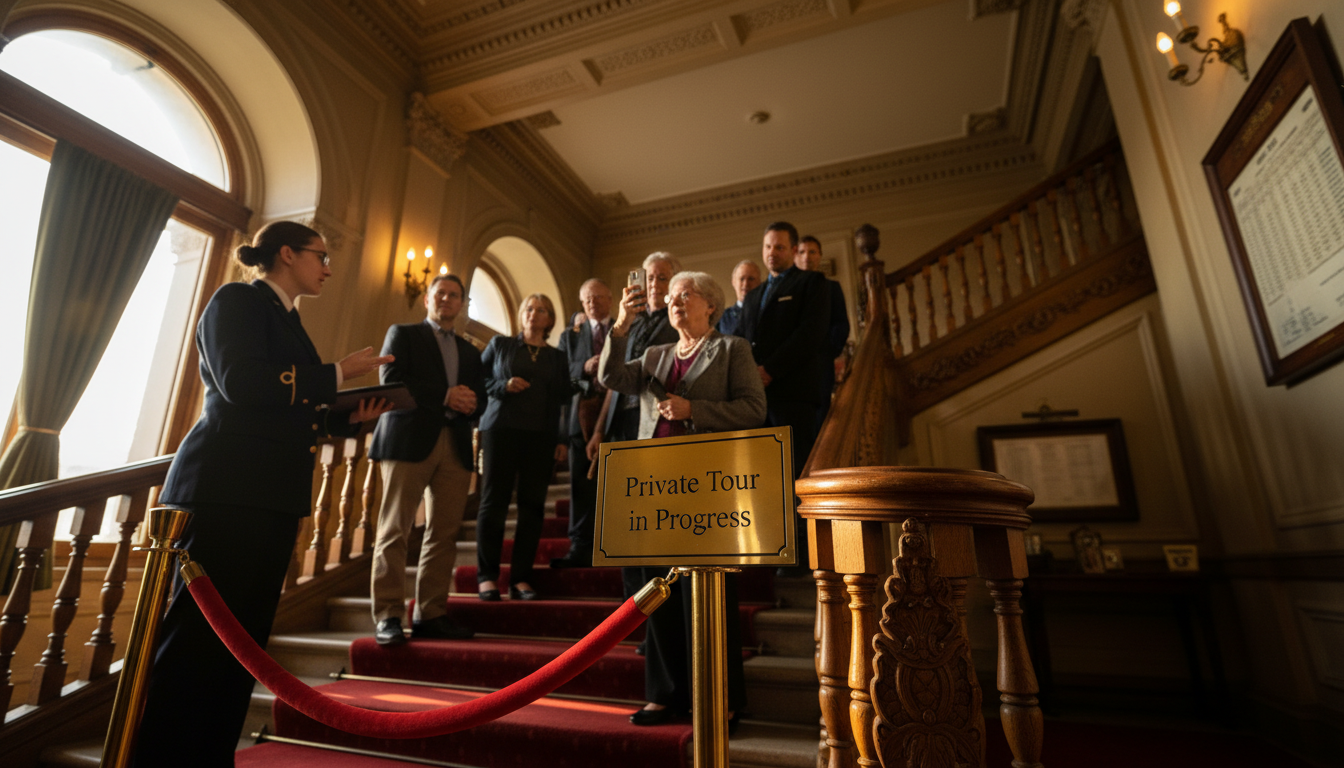
Historical Tours Are Revenue You're Leaving on the Table at Legacy Properties

Historical Tours Are Revenue You're Leaving on the Table at Legacy Properties

The Hotel Jerome in Aspen is partnering with the local historical society to run property tours. Before you dismiss this as boutique fluff, consider what you're missing if your property has any story worth telling.

Here's the thing nobody's telling you: if you're operating a property with 75+ years of history, you're sitting on untapped revenue and you don't even know it. The Hotel Jerome — a 140-year-old landmark in Aspen — just formalized tours with the Aspen Historical Society. Smart move. They're monetizing their story.

I've watched operators at historic properties treat their past like wallpaper. Nice to have, mentioned in marketing copy, maybe a few photos in the lobby. But they never ask the next question: who will pay to experience this? The answer is local historical societies, architecture groups, hospitality students, even competing properties doing comp shopping with context. The Jerome figured this out.

Let me be direct about the economics. A 60-minute tour priced at $25-35 per person with groups of 15-20 runs you maybe 90 minutes of staff time when you factor setup. That's $375-700 in revenue for labor cost under $50. Your marginal cost is almost nothing — you're already paying to light and climate-control those spaces. Run two tours a week and you're adding $40K-75K annually. Not transformational, but it's pure margin and it fills shoulder periods.

But the real value isn't the tour ticket. It's relationship-building with your community and creating another reason for locals to engage with your property who aren't staying overnight. Those historical society members? They have out-of-town guests. They plan events. They're retirement-age with disposable income. You're building your database and your local reputation while someone else (the historical society) does half the marketing.

The contrarian take: most "historic" hotel tours I've seen are terrible. Docent rambles about furniture for 45 minutes, skips the mechanical systems, never mentions the economics of restoration. If you're doing this, make it actually interesting. Talk about the renovation budget. Show the back-of-house. Explain why you kept the original windows or why you didn't. Give people the real story, not the sanitized brochure version.

Operator's Take

If you're running an independent with 50+ years of history in a drive-to or resort market, reach out to your local historical society this month. Propose a quarterly tour program where they handle registration and you provide the access. Price it at $30-40, split the revenue 70/30 in your favor, and make sure your F&B team has a post-tour package ready. This isn't just incremental revenue — it's community relations that actually pays.

Read full analysis → ← Show less
Source: Google News: Resort Hotels

Historic Resorts Are Killing It With Wellness — If You Know How To Price It

The Omni Homestead's 250-year-old warm springs operation proves heritage properties can own the wellness market. But most operators are leaving serious ADR on the table.

Here's what nobody's telling you about historic resort properties: the wellness crowd will pay 40-50% premiums over your rack rate if you package your unique assets right. The Omni Homestead in Hot Springs, Virginia — operating since 1766 — has figured this out with their historic warm springs bathhouses. Two original structures, gender-separated, fed by natural 98-degree mineral water. They're not trying to be a Four Seasons spa. They're leaning into what nobody else can replicate.

I've seen this movie before with heritage properties. Most GMs treat their historic features like museum pieces — something to mention in the welcome packet and forget. Wrong approach entirely. The Homestead charges separately for the springs experience on top of room rates, and guests are lining up. Why? Because you can get a massage anywhere. You cannot get a 250-year-old bathhouse experience anywhere else.

Let me be direct: if you're running a historic independent or a resort with any kind of natural feature — hot springs, mineral baths, even just killer mountain views — you need to rebuild your entire rate strategy around exclusivity. The wellness market is worth $1.8 trillion globally and growing at 9-10% annually. These guests don't comparison shop on OTAs. They book direct when you give them something unreplicable.

But here's where operators screw it up. They undercharge because they think "old" means "less valuable." The opposite is true. Historic properties should price 20-30% above comparable modern resorts in your market, minimum. Add experience packages that bundle your unique assets at premium pricing. The Homestead gets this — they're not competing on thread count. They're selling an experience literally nobody else can offer.

Operator's Take

If you're running a property with any historic or natural feature, audit your ancillary revenue today. Are you charging separately for unique experiences? Are you packaging them at premium rates? Stop giving away your differentiation as a free amenity. Build standalone revenue centers around anything your competition cannot copy, price them aggressively, and watch your RevPAR index climb 15-20 points.

Read full analysis → ← Show less
Source: Google News: Resort Hotels
End of Stories