Today · Jun 4, 2026
A $21 Million Event Center Bet. And the Entertainment Calendar to Fill It.

A $21 Million Event Center Bet. And the Entertainment Calendar to Fill It.

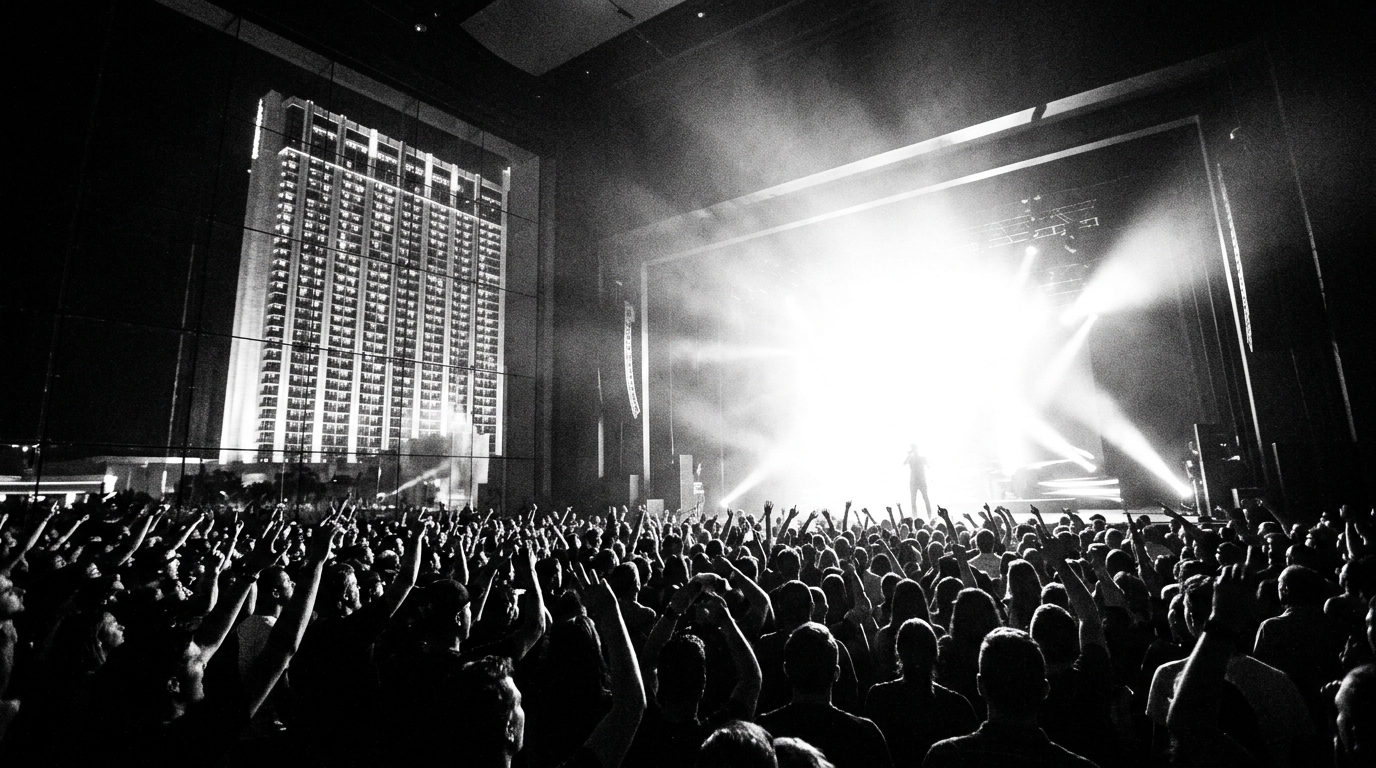
Black Bear Casino Resort just dropped $21 million expanding its event center and is booking acts like Jo Koy to fill 1,900 seats at up to $160 a ticket. The real question isn't whether the comedian sells out... it's whether the 408-room hotel captures enough of that crowd to justify the concrete.

I worked with a tribal gaming property years ago that built a beautiful 800-seat showroom. Gorgeous space. Great sound. They booked three big acts the first quarter, sold out two of them, and then the GM pulled me aside and said "Mike, we sold 2,400 tickets and booked 140 room nights. That's not a hotel strategy. That's a concert venue with a hotel attached." He wasn't wrong.

That's the question hanging over Black Bear Casino Resort right now. The Fond du Lac Band of Lake Superior Chippewa just finished a $21 million expansion of their event center... 20,000 square feet of new space, capacity for roughly 1,900 people. They're booking talent like Jo Koy, with tickets running $40 to $160. The property has 408 rooms. On paper, the math looks promising. A sold-out Jo Koy show on a Friday night in August in Carlton, Minnesota should move some room nights. But "should" and "does" are different words that live in different P&L columns.

Here's what I've seen play out at casino resorts over and over. Entertainment drives gaming floor traffic first, F&B second, and hotel rooms third. The show ends at 10 PM, half the crowd heads to the slots, a quarter hits the bar, and the rest drive home. The rooms get a bump, sure. But unless you're packaging the experience (show ticket plus room plus dining credit plus late checkout), you're leaving conversion on the table. The entertainment budget becomes a marketing expense for the casino floor, not a revenue driver for the hotel. And at $21 million in new construction, you need every revenue stream pulling its weight.

What caught my eye is Black Bear also recently partnered with Quick Custom Intelligence for data analytics on player behavior. That's smart. Because the real opportunity here isn't just putting butts in event center seats... it's connecting that entertainment spend to player data, to room bookings, to F&B capture, and building a picture of what a Jo Koy ticket buyer actually spends over a 24-hour visit versus a regular Saturday walk-in. If you can prove that entertainment guests spend $380 per visit versus $220 for your average gaming guest, now you have a business case for every booking decision. Without that data, you're just guessing which acts justify the guarantee.

The Duluth market is solid... 58.8% occupancy and $99.93 RevPAR, both well above Minnesota state averages. Black Bear has a real regional draw. But 408 rooms in Carlton, Minnesota means your ceiling is your ceiling. You're not competing with the Strip. You're competing with a Friday night at home. The entertainment calendar has to be the reason someone drives an hour and stays overnight instead of driving an hour and driving home. That's a packaging problem, a pricing problem, and a conversion problem. The $21 million built the stage. Now they have to build the system that turns a ticket into a room night.

Operator's Take

If you're running entertainment at a casino resort property... any size, any market... the metric that matters isn't ticket revenue or even gaming floor lift. It's entertainment-attributed room nights per event. Track it. If you don't have a system connecting your ticket purchases to room reservations, build one this quarter, even if it's manual. Package aggressively... show-plus-stay bundles with a dining credit and a late checkout that makes driving home feel like the worse option. And if you just spent real capital on event space like Black Bear did, get your data analytics team (or your new vendor partner) building the attribution model before the next big act hits the stage. You need to know what a ticket buyer is worth to the entire property, not just the box office. That's how you justify the next $21 million.
Read full analysis → ← Show less
Source: Google News: Casino Resorts
Casino Entertainment Isn't a Sideshow Anymore. It's the Whole Strategy.

Casino Entertainment Isn't a Sideshow Anymore. It's the Whole Strategy.

Regional casinos are stacking their entertainment calendars like they're competing with Live Nation, not each other. If you're a non-gaming hotel within three miles of one, your weekend demand pattern just got rewritten and nobody sent you the memo.

I worked with a casino resort years ago where the entertainment director had more budget authority than the rooms division VP. I thought it was backwards. Took me about six months to realize he was the single biggest demand driver in the building. Every show night, F&B revenue spiked 40%. Room nights attached to ticket purchases ran at ADRs 15-20% above the house average. The guy booking comedians and tribute bands was generating more profitable revenue than the loyalty program. And he knew it.

That's what's happening industry-wide right now, and this two-week entertainment blitz across regional casino properties is just the surface. The real shift underneath is strategic. Casinos figured out something that took the rest of hospitality too long to learn... people will drive 90 minutes and book a room for an experience they can't get at home. Not for a bed. Not for a pool. For a reason to go. Live music, comedy, residencies... these aren't amenities bolted onto a gaming floor anymore. They're the primary acquisition channel for a guest who might never touch a slot machine. The $329 billion annual economic footprint of U.S. casinos isn't built on gaming alone. It's built on giving people a reason to show up, stay overnight, eat three meals, and maybe (maybe) gamble.

Here's what nobody in the non-gaming hotel world is talking about enough. If you're operating within the demand radius of a casino property that's running 365 days of programmed entertainment, your comp set just changed whether you updated your STR report or not. That casino isn't just competing for your leisure traveler on Saturday night. It's creating demand patterns that reshape your entire market's booking curve. Show nights generate compression you didn't create and can't control. Dark nights create softness you didn't cause. Your revenue manager needs to be tracking that entertainment calendar the same way they track convention bookings and local events... because for a growing number of secondary and tertiary markets, the casino IS the convention center, the arena, and the downtown entertainment district rolled into one.

The casino operators investing in this aren't doing it because they love music. They're doing it because the math on entertainment-driven stays is better than the math on gaming-only visits. Length of stay goes up. Cross-property spend goes up. The guest profile skews younger and more diverse, which is exactly the demographic traditional gaming has been losing. One major operator publicly committed to daily live entertainment across their properties... 365 days, no dark nights. That's not a programming decision. That's a business model pivot. And the properties doing it well are running entertainment P&Ls that would make a standalone venue jealous, because the show doesn't have to profit on its own. It just has to fill rooms and restaurants.

For the casino GMs and ops directors reading this... you already know the operational complexity of show nights. The staffing surge for F&B. The security protocols. The housekeeping wave the next morning. The noise complaints from the guest in 412 who didn't know there was a concert. The challenge isn't booking the acts. It's executing the full guest experience around them without burning out your team or blowing your labor budget on overtime every weekend. The properties winning this game are the ones who've built show-night staffing into their base operating model, not the ones treating every event like a special occasion that requires a fire drill.

Operator's Take

If you're a GM at a non-gaming hotel within a 10-mile radius of a casino running aggressive entertainment programming, pull that casino's event calendar right now and map it against your booking pace for the next 90 days. You should be yielding show nights the way you yield around citywide conventions... rate fences up, minimum stays where the demand supports it. If you're a casino ops director, stop budgeting entertainment nights as exceptions. Build the staffing model around 4-5 show nights per week as your baseline, because that's where this is headed. Your labor cost goes up, but your RevPAR premium on those nights should more than cover it. If it doesn't, the entertainment isn't driving enough room demand and that's a programming problem, not a staffing problem. Track the attach rate... tickets to room nights. That number tells you everything about whether your entertainment spend is an investment or a vanity project.

Read full analysis → ← Show less
Source: Google News: Casino Resorts
Tribal Casinos Are Booking Arena-Level Acts. The Tech Behind It Is Still Stuck in 2015.

Tribal Casinos Are Booking Arena-Level Acts. The Tech Behind It Is Still Stuck in 2015.

Tribal gaming just crossed $43.9 billion in revenue and casinos are pouring hundreds of millions into concert venues and entertainment expansions. The question nobody's asking is whether the property-level technology can actually handle what happens when 3,000 people show up expecting a seamless experience.

So here's what's actually happening. Tribal casinos are spending serious money... $100 million concert venues, multi-year resort expansions with hotels and spas, entertainment lineups that would make a mid-market convention hotel jealous... and the strategy makes perfect sense. Gaming revenue is flattening, prediction markets are an emerging threat, and the path forward is turning casino properties into full-service entertainment destinations. I get it. I've consulted with gaming-adjacent hospitality groups that made exactly this pivot. The business case writes itself.

The part that doesn't write itself is the technology infrastructure required to actually deliver on that promise. When you bolt a 3,000-seat concert venue onto a casino resort, you're not just adding a building. You're adding simultaneous demand spikes on your PMS, your POS systems, your WiFi network, your mobile app, your loyalty platform, and your parking management... all at once, all peaking within the same 90-minute window. I talked to an IT director at a tribal property last year who told me they still run their hotel PMS and their casino management system on completely separate databases. No guest profile unification. No cross-platform loyalty tracking. A guest who drops $500 at the tables and then checks into the hotel is two different people in two different systems. That's not a technology strategy. That's two filing cabinets that don't talk to each other.

Look, the entertainment investment is the right call. Diversifying beyond gaming is smart. Attracting younger demographics who care more about experiences than slot machines is smart. But the gap between "we built an amazing venue" and "the guest experience is cohesive from ticket purchase to hotel checkout" is enormous, and it's a technology gap. Most tribal casinos I've evaluated are running infrastructure that was designed for gaming operations... high security, high compliance, low flexibility. Adding hospitality and entertainment layers on top of that architecture is like running a modern streaming service on dial-up wiring. The bandwidth is there in theory. The architecture says no.

The real test here is what I'd call the Tuesday-after-the-concert test. The big act plays Saturday night. Great. The venue is packed, the energy is incredible, the social media posts look amazing. But what happens Tuesday morning when a guest who attended the show tries to redeem loyalty points earned from their hotel stay, their dinner, and their concert ticket in a single transaction? If the answer involves three different systems and a front desk agent who has to call two departments... you haven't built a destination. You've built a collection of businesses that happen to share a parking lot.

The $43.9 billion in tribal gaming revenue is real. The expansion plans are real. The competitive pressure from prediction markets (which the IGA chairman is calling "unlawful gambling dressed up as finance") is real. But the technology integration challenge is the thing that will determine whether these entertainment investments generate the returns ownership is modeling, or whether they become expensive amenities that look great in the press release and leak revenue at every guest touchpoint. I've seen this exact pattern play out in non-gaming hospitality... beautiful physical product, mediocre technology backbone, guest experience that falls apart at the seams. The venue doesn't fix that. The systems do.

Operator's Take

Here's the play if you're running operations at a tribal casino property that's adding entertainment capacity. Before you open that venue, audit every system handoff point in the guest journey... ticket purchase to room reservation, F&B spend to loyalty credit, parking to check-in. Count the handoffs. If it's more than two systems that don't share a guest profile, you have a problem that no amount of entertainment programming will fix. Get your IT director and your GM in the same room this week and map the data flow from concert ticket to hotel checkout. Where does it break? That's your priority list. The venue will fill seats. The technology determines whether those seats turn into repeat guests or one-time visitors who had a great show and a frustrating hotel experience.

— Mike Storm, Founder & Editor
Read full analysis → ← Show less
Source: Google News: Casino Resorts
End of Stories