Today · May 23, 2026
MGM Fed 1,400 TSA Workers to Keep Vegas Running. That's Not Charity. That's the P&L Talking.

MGM Fed 1,400 TSA Workers to Keep Vegas Running. That's Not Charity. That's the P&L Talking.

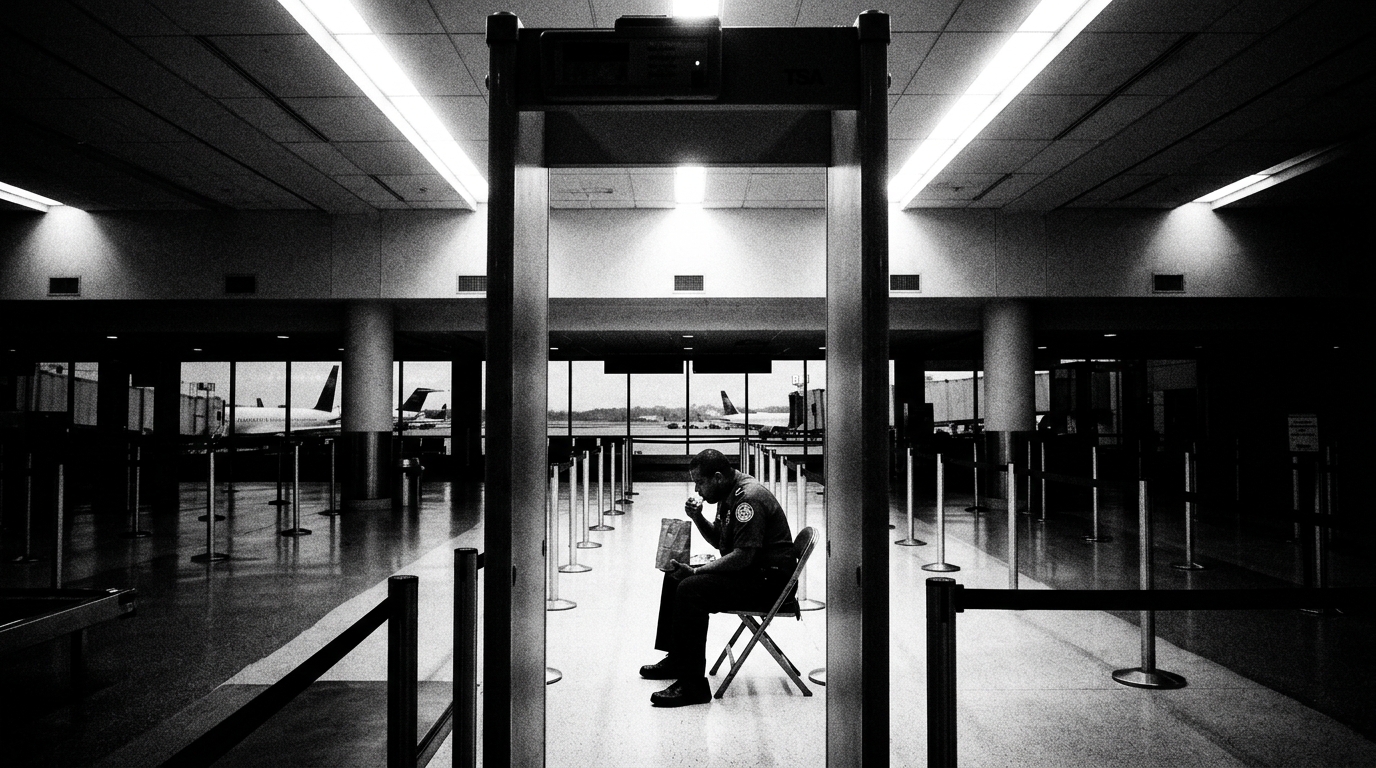
When the government shutdown left 1,000 TSA agents at Harry Reid Airport working without pay, MGM didn't send thoughts and prayers... they sent 1,400 lunches. The interesting part isn't the generosity. It's what it tells you about how exposed your revenue is to things completely outside your control.

I managed a casino resort once during a government shutdown back in the mid-2010s. Different shutdown, same movie. The moment TSA lines started creeping past 90 minutes at the airport, our reservation cancellations spiked within 48 hours. Not because guests couldn't get there. Because they saw the news coverage of people standing in line for two hours and decided it wasn't worth the hassle. Perception killed us faster than reality did.

So when I read that MGM delivered 1,400 lunches and 700 hygiene kits to unpaid TSA workers at Harry Reid International during this latest shutdown... I don't see a feel-good corporate responsibility story. I see a company doing the math. The American Hotel & Lodging Association pegs the industry cost of a government shutdown at roughly $31 million a day. The U.S. Travel Association says the broader travel economy bleeds about a billion a week. MGM's lunch bill was probably $15,000 to $20,000. Maybe less. That's not philanthropy. That's one of the cheapest risk mitigation strategies I've ever seen. Keep the TSA agents fed and showing up, keep the security lines under 30 minutes, keep the planes landing on time, keep 150,000 hotel rooms in Las Vegas occupied. The return on that investment is absurd.

And here's the part that should bother every operator who isn't in Las Vegas. While Harry Reid was running smooth because the resort industry stepped up, airports in other cities were a mess. Long lines. Delays. Frustrated travelers deciding to stay home. If you're running a hotel in a market where nobody thought to feed the TSA... you ate the cancellations while Vegas kept humming. That 45% of consumers who told AHLA they'd change travel plans because of shutdown disruptions? Those aren't hypothetical people. Those are the bookings that disappeared from your March pace report with no explanation other than "demand softened." Demand didn't soften. Demand got rerouted to markets that kept their airports functional.

This is one of those stories that reveals a vulnerability most of us don't spend enough time thinking about. Your revenue depends on an airport that depends on federal employees who can go weeks without a paycheck every time Congress can't get its act together. That's your supply chain. And unlike your linen vendor or your food distributor, you can't switch to a backup. You've got one airport. Maybe two if you're lucky. And every TSA agent who calls in sick because they can't afford gas to get to work is a longer security line, a missed connection, a cancelled trip, and a room that sits empty tonight.

MGM understood something that most hotel companies still haven't internalized: the infrastructure around your property IS your property. The airport, the roads, the transit system, the workforce that operates all of it. When any piece of that breaks, your P&L feels it before your brand's corporate office even notices. Vegas figured this out because Vegas has to... the entire city is a single-industry economy built on people getting on planes. But the principle applies everywhere. Your hotel doesn't exist in isolation. It exists inside a system. And the cheapest thing you can do is make sure the weakest link in that system doesn't snap.

Operator's Take

Look... if you're a GM in any market that depends on air travel (and that's most of you), here's what I'd do this week. Find out who your local TSA Federal Security Director is. Introduce yourself. Build the relationship now, before the next shutdown. Because there will be a next one. If your hotel has F&B, figure out what it costs you to provide meals to federal workers at your local airport during a disruption. Run the number against one night of lost occupancy. You'll find it's not even close. A few hundred dollars in food buys you goodwill, community visibility, and an airport that keeps functioning. And if you're part of a local hotel association, get this on the agenda now. MGM did this alone because MGM can. Most of us need to do it together. The properties that build these relationships before the crisis are the ones that don't lose three points of occupancy when Congress decides to play chicken with the budget again.

Read full analysis → ← Show less
Source: Google News: MGM Resorts
Houston Neighbors Just Sued an Airbnb Developer. And Won. Your Market Could Be Next.

Houston Neighbors Just Sued an Airbnb Developer. And Won. Your Market Could Be Next.

Third Ward residents used a deed restriction lawsuit to halt construction of a purpose-built short-term rental, and the playbook they used works in almost every neighborhood with covenants on the books. If you're an independent operator watching STR supply eat your comp set, this is the most important case you'll read about all year.

Available Analysis

A state district judge in Houston just stopped a developer mid-pour on a two-story structure going up behind an existing home in the Third Ward. The neighbors didn't call their councilmember. They didn't start a petition. They filed a lawsuit arguing the build violated their subdivision's deed restrictions... one house per lot, period... and a judge agreed. Construction halted. Trial set for May.

Here's why this matters to anyone running a hotel in a market where short-term rentals have been quietly eating your occupancy for the last five years. Houston is the largest city in America with no zoning laws. None. If deed restrictions can stop an STR build in Houston, they can stop them almost anywhere. The playbook is now public. The precedent is forming. And the developer in this case? Already had a permanent injunction against them from a different neighborhood for the exact same kind of violation. This isn't a one-off. This is a pattern... developers testing boundaries, neighbors pushing back, and courts siding with the covenants.

I've watched the STR conversation in this industry go through phases. First it was denial ("Airbnb is for couches, not competition"). Then it was panic ("they're going to destroy us"). Then it was resignation ("nothing we can do about it"). We skipped the phase where operators actually engage with the regulatory and legal tools that exist in their own markets. Houston now has about 8,500 to 15,000 short-term rentals operating across the city. They passed a registration ordinance that took effect January 1st... $275 annual fee, platforms required to delist non-compliant properties by January 2027. Only about 4,000 have registered so far. That means somewhere between 4,500 and 11,000 STRs are operating without registration in a single metro. Every one of those unregistered units is vulnerable to enforcement action that hasn't happened yet.

I knew a GM once in a mid-size Southern market who spent two years complaining about a cluster of STR houses pulling weekend leisure demand off his property. RevPAR was flat, and he couldn't figure out why rate resistance had gotten so stiff when his comp set hotels weren't discounting. Turned out eight purpose-built STRs had opened within a mile of his hotel in 18 months... none of them collecting the local hotel occupancy tax, none of them complying with fire code, none of them on anyone's radar except the guests booking them on their phones. He finally took the data to his city council. Two of those properties got shut down within 90 days for code violations. His weekend ADR recovered $11 in the next quarter. The tools were there the whole time. He just didn't think it was his fight.

It is your fight. Houston's 17% hotel occupancy tax applies to STRs. Most aren't collecting it. That's not a philosophical debate about the sharing economy... that's a competitive advantage your unlicensed competition is getting for free while you write the check every month. The Third Ward case just proved that neighborhoods can enforce their own rules when the city won't. For hotel operators, the lesson isn't to sit back and hope the neighbors file lawsuits. The lesson is that the legal and regulatory infrastructure to level this playing field already exists in most markets. Someone just has to use it.

Operator's Take

If you're a GM or owner in any market where STRs are pulling demand, here's what to do this week... not this quarter, this week. Pull up your local STR ordinance (most cities over 100,000 have one now). Check whether the short-term rentals in your comp radius are registered, collecting occupancy tax, and complying with fire and safety codes. Most aren't. Take that data to your local hotel association or directly to your city's code enforcement office. This is what I call the Three-Mile Radius... your revenue ceiling is set by what's happening within three miles of your property, and right now unregulated STRs are lowering that ceiling while you're focused on rate strategy against other hotels. The operators who treat this as an operations problem instead of a policy problem are leaving money on the table. The Houston case just handed you the blueprint. Use it.

Read full analysis → ← Show less
Source: Google News: Airbnb
Disney's Been Renovating the Grand Floridian for Six Years. And They're Still Not Done.

Disney's Been Renovating the Grand Floridian for Six Years. And They're Still Not Done.

Disney's flagship resort has been under near-continuous construction since before COVID, with the latest closure hitting the Grand Floridian Cafe from July through October. If you think your renovation timeline is painful, imagine explaining perpetual construction noise to guests paying $800 a night.

I worked with a GM once who had a renovation that was supposed to last four months. It lasted eleven. By month six, the front desk had a laminated card with pre-written apologies for the noise, the dust, and the "temporary" walkway through the parking lot. He told me the card was the most-used item in the hotel... more than the key cards.

That's what I think about when I see Disney's Grand Floridian, which has essentially been under some form of renovation since before the pandemic. They've refreshed the guest rooms. Redone the lobby (added a bar called The Perch... because apparently what a Victorian-themed luxury resort needed was a trendy lobby bar). Overhauled multiple restaurants. Reopened a lounge that had been dark for six years. And now the cafe is closing mid-July through October for what they're calling a "refresh." The whole thing isn't scheduled to wrap until early 2027.

Let me be direct. Disney can get away with this because they're Disney. They have a captive audience, a pricing model that defies normal hospitality gravity, and an Experiences segment that just posted over $10 billion in quarterly revenue. When you're printing money like that, you can renovate in rolling phases for half a decade and guests will still book because the alternative is explaining to a seven-year-old why they can't stay at the princess hotel. That's not a comp set most of us compete in. But the APPROACH... the rolling renovation strategy... that's worth studying whether you're running 90 keys or 900.

Here's what Disney understands that a lot of operators don't: renovation is not an event. It's a condition. The Grand Floridian isn't being renovated. It's being maintained at the level its rate demands, continuously, because the moment a $800-a-night resort starts looking tired, the gap between price and promise becomes the story guests tell. They're not shutting down the whole hotel for 18 months and hoping for a grand reopening. They're closing one restaurant, relocating its popular brunch to another venue on-property, keeping everything else running, and managing the disruption in pieces. That's not accidental. That's a deliberate strategy to never let the asset fall below the line where guests start questioning the rate. I call this the Renovation Reality Multiplier... you plan for the real disruption timeline, not the one in the proposal. Disney is planning for a timeline measured in years because that's what a property of this caliber actually requires.

The part most operators miss is the revenue protection during construction. Disney's telling guests upfront that construction may be visible, that walking paths might change, that noise happens during the day. That transparency isn't generosity... it's liability management and expectation setting. They're relocating the brunch service instead of just killing it for four months. They're keeping every other outlet open. The revenue never stops. The experience gets managed around the disruption rather than interrupted by it. Most of us don't have Disney's budget or their ability to absorb construction periods. But the principle scales down. If you're facing any kind of renovation, the question isn't just "what does the finished product look like?" It's "what does every single day of the project look like for the guest who's paying full rate while the drywall dust is settling?"

Operator's Take

If you've got a renovation coming up (or one you've been putting off because you can't figure out the logistics), take a page from the Disney playbook. Phase it. Don't shut down your F&B outlet without relocating the service somewhere else on property... even if "somewhere else" is a banquet room with folding tables. Brief your front desk team with specific language about what guests will see, hear, and experience during construction... not vague apologies, but real information. And for the love of your TripAdvisor scores, get ahead of the online narrative. Update your OTA listings, your website, your booking confirmations. Every guest who shows up surprised by construction is a one-star review waiting to happen. The renovation itself builds long-term value. The way you manage the disruption protects the revenue you need to pay for it.

Read full analysis → ← Show less
Source: Google News: Resort Hotels
End of Stories