An Airline Just Redesigned Its Cabin Like a Hotel Room. Hotel Tech Should Be Embarrassed.
Air New Zealand is spending serious capital to retrofit seven 777s with lie-flat suites, privacy doors, and Bluetooth-enabled entertainment... solving UX problems at 35,000 feet that most hotel PMS vendors still can't figure out on the ground.
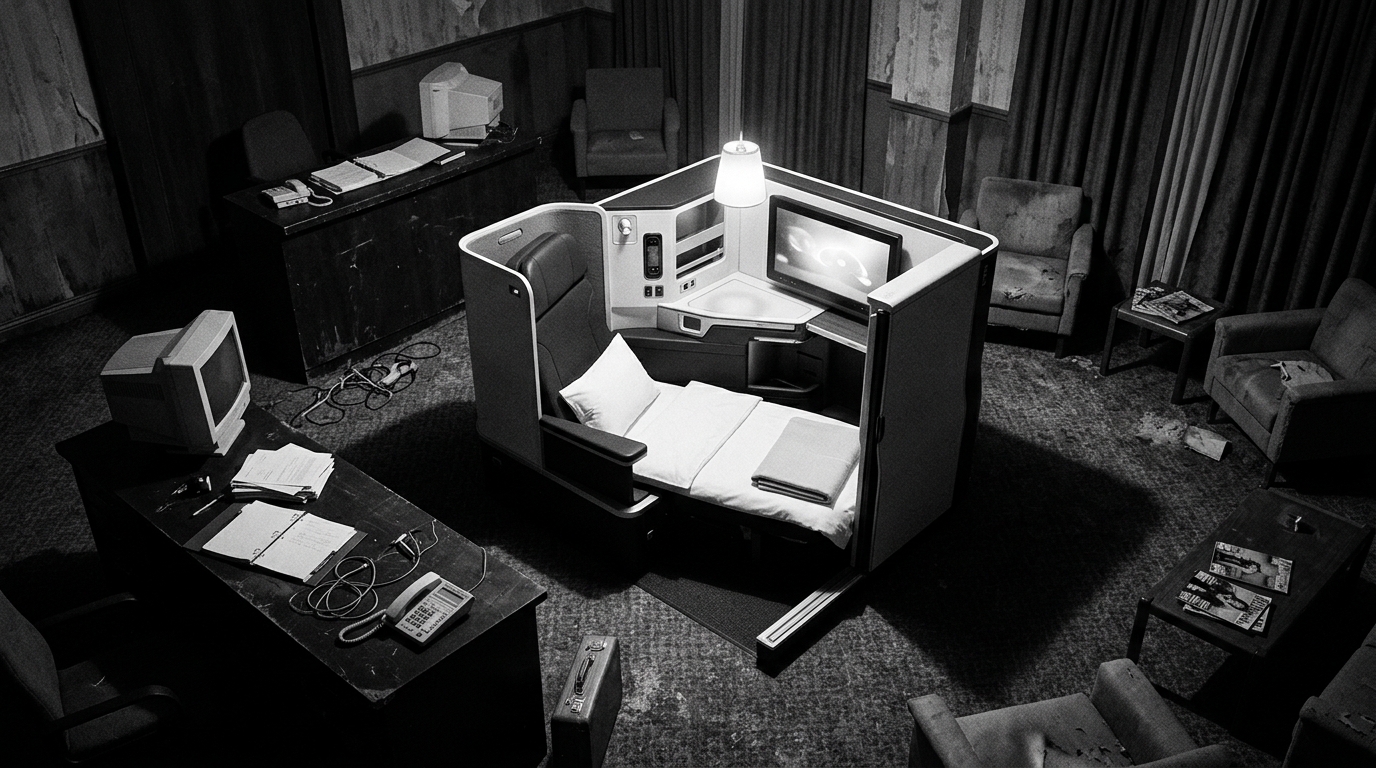
So here's something that should bother every hotel technology vendor on the planet. Air New Zealand just announced it's gutting and rebuilding the cabins on its entire fleet of seven Boeing 777-300ERs, starting March 2027, with every aircraft done by December. Nine months. Seven aircraft. New business class suites with privacy doors, lie-flat beds, 18-inch screens with Bluetooth audio, USB-C charging at every seat. New economy seats with 13-inch personal screens and Bluetooth. A completely redesigned passenger experience from nose to tail.
They're doing this because their 777 business class product is over 20 years old and they know it. Their chief customer officer basically said the quiet part out loud... for an airline stuck at the bottom of the Pacific with no geographic advantage and limited scale, innovation isn't optional. It's existential. So they're spending the money (they won't say exactly how much, but their 787 retrofit program ran $35 million, and this is a bigger fleet with bigger planes). And here's the part that kills me... they chose a Collins Aerospace "off-the-shelf" seat for the 777s, a different product than what's on their 787s, because the aircraft width demanded it. They didn't try to force one solution across every platform. They picked the right tool for the specific environment. When was the last time a hotel technology vendor did that?
Look, I know this isn't a hotel story. Air New Zealand isn't competing with your 200-key select-service. But the THINKING behind this move is exactly what's missing in hotel tech. They mapped the entire passenger journey. They identified where the experience leaked (their business class was outdated, economy screens were too small, no Bluetooth anywhere, charging was inadequate). They picked best-in-class components for each segment instead of forcing a single "unified platform" across aircraft with different physical constraints. And they're executing the rollout in nine months across seven aircraft while those aircraft continue flying revenue routes. That's operational discipline applied to experience design.
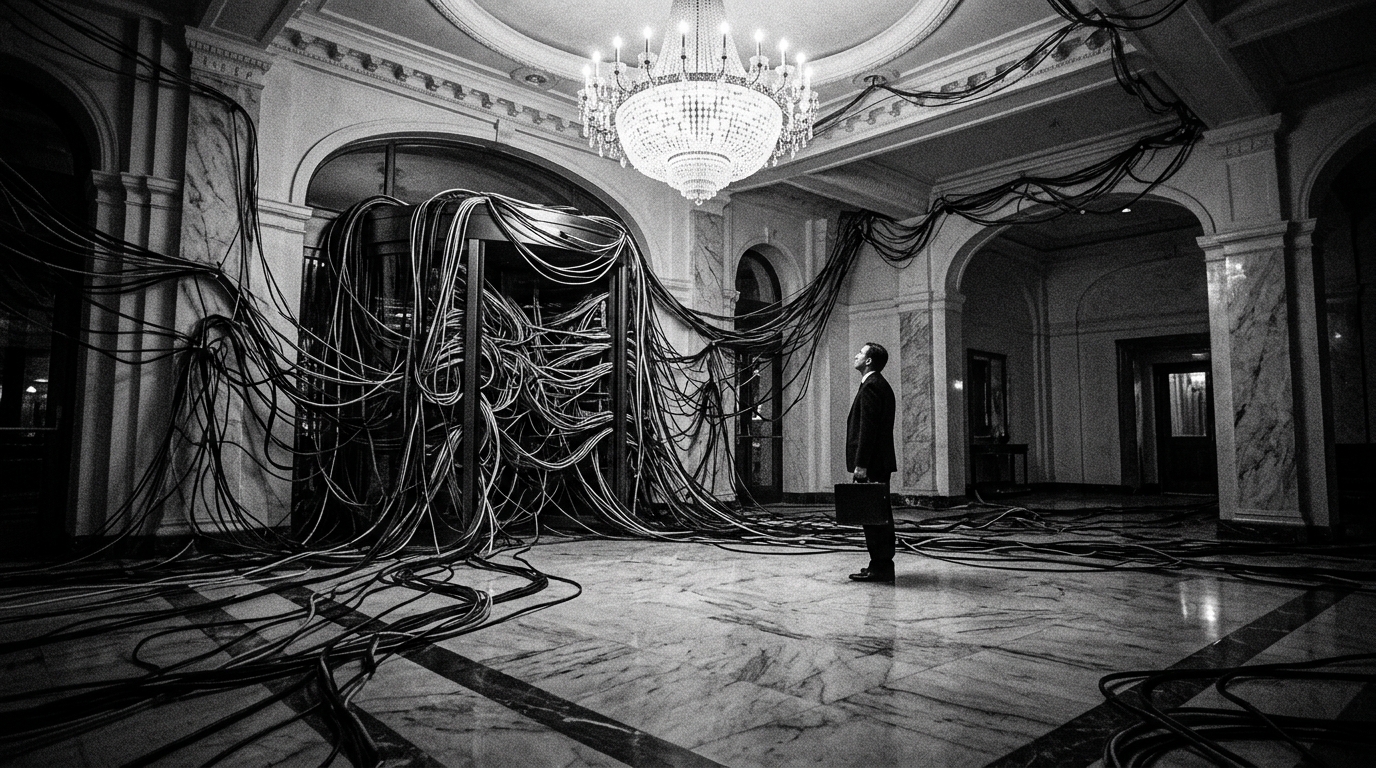
Meanwhile, I consulted with a hotel group last quarter that spent 14 months migrating four properties to a new PMS. Fourteen months. Four hotels. And the vendor still calls it "seamless integration" on their website. The airline industry is retrofitting entire aircraft... ripping out every seat, every screen, every wire... and returning them to service in weeks. Hotels can't swap a property management system without a year of pain. The gap isn't about complexity. It's about whether the people building the technology have ever had to live with it at 2 AM when something breaks. Air New Zealand's team clearly asked "what does this feel like for the person in seat 4A at hour nine of a 12-hour flight?" That's a Dale Test question (what happens when the least technical person encounters this system in the worst conditions?). Most hotel tech vendors ask "what does this look like in the demo?" Those are fundamentally different design philosophies, and the results are exactly what you'd expect.
The competitive pressure angle matters too. Air New Zealand is doing this because Qantas is launching Project Sunrise (ultra-long-haul with premium cabins). They can't match Qantas on network size. So they're going to out-execute on product. That's the playbook every independent hotel operator already knows... you can't outspend the brands, so you out-experience them. The difference is that Air New Zealand is actually investing the capital to make it real. Too many hotels talk about "elevated guest experience" and then hand their front desk team a PMS built in 2011 with a training manual that's a PDF nobody reads. If an airline can redesign an entire aircraft cabin in nine months, your vendor can build a check-in workflow that doesn't require six clicks to assign a room.
Here's what I'd actually take from this if I'm running a hotel. Next time your technology vendor tells you a migration will take 8-12 months, ask them why an airline can rip out and rebuild an entire aircraft interior in less time than it takes to swap your PMS. That's not a rhetorical question... it's a negotiating position. Push your vendors on implementation timelines the way you push your contractors on renovation timelines. And steal the one thing Air New Zealand got right that most hotel tech projects get wrong... they picked different solutions for different aircraft based on physical constraints instead of forcing one product everywhere. If your PMS vendor is selling you the same configuration for a 90-key independent and a 400-key convention hotel, they're not solving your problem. They're solving theirs. The best technology decisions I've seen start with one question: what does this feel like for the person using it at the worst possible moment? Start there. Work backward.