Development Stories
$217M in Judgments. The Hotel Still Can't Fully Open. That's the Story.

$217M in Judgments. The Hotel Still Can't Fully Open. That's the Story.

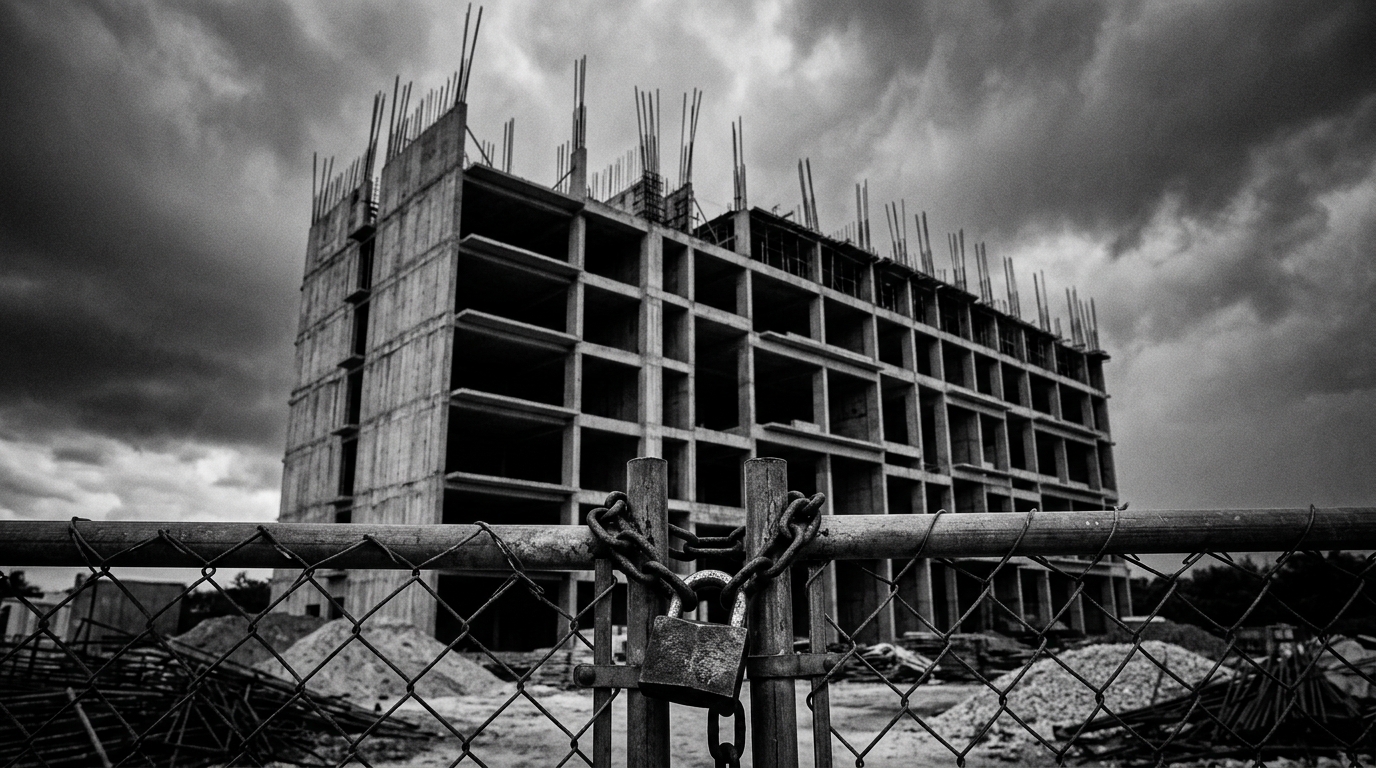
A Philadelphia contractor now owes $217 million in combined court judgments for a 755-room W and Element project that opened three years late and still has inoperable windows five years after opening. For anyone financing a ground-up hotel development, the per-key math on what went wrong here is instructive.

Available Analysis

$217 million in combined judgments against a single general contractor on a single hotel project. Let's decompose that.

The W and Element Philadelphia is a 51-story, 755-key dual-branded complex with an original contract value of roughly $239 million. The general contractor, Tutor Perini, has now been ordered to pay $174.7 million to the developer (Chestlen Development LP) for 2,797 days of construction delays, plus $42.4 million to a subcontractor (Ventana DBS) for unpaid balances, labor inefficiency, and change orders the court found were deliberately ignored. Total judgments: 91% of the original contract value. The contractor's obligation to the courts now nearly equals the cost of building the hotel in the first place.

The delay math is brutal on its own. The original completion target was August 2018. The Element opened May 2021. The W opened August 2021. That's 2,797 days of liquidated damages at $35,000 per day, which accounts for $97.9 million of the developer's award. But the damages go deeper than the calendar. The court found that the contractor concealed knowledge of structural concrete defects across floors nine through fifty, failed to coordinate subcontractors, and acted in bad faith by denying problems it was simultaneously trying to fix by grinding concrete slabs. The subcontractor responsible for the building's exterior and window systems was hired for $14 million and ended up absorbing costs that ballooned into the $42.4 million judgment. That's a 3x cost overrun imposed on a sub by the GC's failures... a scenario I've seen in audit exactly once before at this scale, and it ended the same way.

Here's the number that should concern anyone in hotel development right now. Five years after the W opened, the hotel still cannot be fully occupied because some window vents remain inoperable due to the original construction defects. That's not a punch list item. That's permanent revenue impairment on a luxury asset. At a Category 6 Marriott Bonvoy property in Center City Philadelphia, those rooms carry ADRs north of $300. Every night a room sits dark because a vent doesn't work is real money, and that cost doesn't appear in the $217 million judgment total. It's on top of it.

The developer's legal counsel said something worth quoting in full context: "Contracts are not guidelines, they're contracts." That's the sentence every owner negotiating a GMP (guaranteed maximum price) agreement should tape to their monitor. Tutor Perini has stated it intends to appeal both judgments, and the company reported returning to profitability in 2025. But there's a third trial underway right now for the concrete subcontractor's damages, which means the total exposure is still growing. For the development community, this isn't a cautionary tale about one bad project. It's a case study in how contractor selection, GMP enforcement, and construction oversight failures compound... delay costs beget subcontractor disputes beget defect litigation beget revenue impairment that outlasts the litigation itself. The $239 million hotel may end up costing north of $450 million when you total the contract, the judgments, and the lost revenue from rooms that still don't function. That's $596,026 per key all-in on a select-service/lifestyle dual brand. Check that against your own development pro forma and ask whether your GC risk is priced correctly.

Operator's Take

Let me be direct. If you're an owner with a ground-up project in the pipeline, this case should change how you structure your next GC contract. A GMP means nothing if your enforcement mechanism is a seven-year lawsuit. Three things to do this month: get your construction attorney to review your liquidated damages clause against what Chestlen actually recovered ($35K/day held up in court... that's your benchmark). Second, require monthly independent concrete testing on any project over ten stories. The Philadelphia court found the GC knew about defects and hid them. Third-party verification removes that variable. Third, if your GC is pushing back on subcontractor coordination language in the contract, that's your signal. The sub who got buried here was hired for $14 million and ate $42.4 million in damages caused by someone else's concrete. Your contract should make clear who absorbs that risk, because if it's ambiguous, it's yours. This is what I call the Renovation Reality Multiplier... except this isn't a renovation, it's a ground-up build where the "real disruption timeline" turned out to be three years of delay, five years of defects, and a judgment that nearly doubles the project cost. Build your pro forma around what actually happens, not what the construction schedule promises.

— Mike Storm, Founder & Editor
Read full analysis → ← Show less
Source: Google News: Hotel Development
Steel Tariffs Just Added $375K to Your Renovation. The PIP Deadline Didn't Move.

Steel Tariffs Just Added $375K to Your Renovation. The PIP Deadline Didn't Move.

Canadian steel duties at 50% and a 100% tariff threat on European goods are hitting hotel renovation budgets from both sides simultaneously. The owners doing the math right now are the ones who'll survive the PIP cycle with their equity intact.

Available Analysis

A $10M hotel renovation that penciled at 15% ROI six months ago now pencils at single digits, and the inputs haven't stopped moving. Canadian steel duties sit at 50%. The producer price index for steel mill products rose 13.3% year-over-year through April. A 100% tariff on European goods (threatened June 28, targeting countries with digital services taxes) would hit the FF&E supply chain for every upper-upscale and luxury renovation sourcing lighting, case goods, or textiles from Italy, Germany, or Scandinavia. Steel at 15-25% of hard construction costs, hard costs at 55-66% of total project cost, FF&E running high-single to mid-teens as a share of total... run those ranges against your own budget and you'll see why the $375,000-$625,000 increase on a $10M project isn't hypothetical. It's arithmetic.

The timing is the problem. The industry is executing an estimated $12-15 billion in deferred PIPs this year. Renovation costs are already 30%+ above pre-COVID levels. Interest rates haven't cooperated. And brands haven't extended a single PIP deadline I'm aware of in response to input cost inflation. The owner absorbs the delta. That's not a market observation. That's a risk allocation fact. I've audited enough management company financials to know exactly where tariff cost increases land: on the owner's capital account, not on the brand's fee structure.

The European tariff threat deserves separate attention. A 100% duty on goods from countries imposing digital services taxes (France, Spain, and Italy currently levy 3%) would functionally double the landed cost of European FF&E overnight. For a luxury renovation sourcing $800,000 in Italian furniture and German lighting, that's $800,000 in additional cost with no corresponding increase in the asset's revenue capacity. The guest doesn't pay more because your sconces are from Munich. The owner just paid twice for them.

What makes this structurally different from prior tariff cycles is the simultaneity. Steel, FF&E, and labor are all inflating at once. In prior cycles, you could substitute... domestic steel when imports got expensive, Asian FF&E when European got costly. This time, domestic steel prices have risen in parallel (reduced import competition does that), and the 50% duty now applies to full customs value, not just metal content. The substitution math doesn't work the way it used to.

The owners who move this week have an edge. Accelerating procurement on steel and European FF&E ahead of implementation locks in current pricing. Every week of delay is a week closer to the tariff effective date with no offsetting revenue benefit. For owners mid-PIP, the conversation with your GC isn't optional... it's the highest-ROI meeting on your calendar. For owners pre-PIP, the conversation with your brand rep about timeline flexibility is worth having now, while the cost data is fresh and the request is rational rather than reactive.

Operator's Take

Here's what to do this week. If you're an owner or asset manager with a renovation in the pipeline, get your GC on the phone Monday and ask one question: which material categories on my project are tariff-exposed, and what's my window to lock pricing? If the answer is "we're fine," ask to see the procurement schedule mapped against tariff effective dates. If you're sourcing European FF&E for an upper-upscale or luxury project, accelerate those purchase orders now... a 100% duty isn't a negotiating tactic you want to bet against. And if you're staring at a brand-mandated PIP that no longer pencils at these input costs, put the revised numbers in front of your brand rep before they come to you with a deadline. This is what I call the Renovation Reality Multiplier... the real cost of that project isn't the number on the original bid, it's the number after steel, FF&E, and labor all moved against you simultaneously. Build your plan around today's numbers, not last quarter's proposal.

— Mike Storm, Founder & Editor
Read full analysis → ← Show less
Source: Wdrb
₹350 Crore for 220 Keys in Jaipur. Let's Talk About What That Per-Key Number Actually Buys You.

₹350 Crore for 220 Keys in Jaipur. Let's Talk About What That Per-Key Number Actually Buys You.

Manglam Group is betting $42 million on a Sheraton in Jaipur, and the per-key cost looks reasonable until you start thinking about what a management contract with Marriott actually costs an Indian owner over 20 years.

So Manglam Group just committed ₹350 crore (roughly $42 million) to build a 220-key Sheraton on the Jaipur-Ajmer Highway. That works out to about ₹1.59 crore per key... which, for context, is actually cheaper than their previous Westin project in the same city, which ran ₹2.22 crore per key for 135 rooms. The scale economics are showing. More keys, highway-adjacent land (not city center), Sheraton instead of Westin positioning. The development math, on paper, makes sense.

But here's what I keep coming back to. This is Manglam's third collaboration with Marriott, and it's structured as a management contract, not a franchise. That distinction matters enormously. Under a management contract, Marriott operates the hotel. They hire the staff. They control the PMS, the revenue management system, the loyalty integration, the tech stack... all of it. Manglam builds the building, puts up the capital, and then hands the keys (literally) to Marriott to run. For an owner whose core competency is real estate development (125 completed projects, 62 million square feet of built space), this might be the right call. You don't suddenly become a hotel operator because you poured concrete in the right shape. But the technology implications of a management contract versus a franchise are completely different, and nobody in the press coverage is talking about that.

Here's what I mean. When Marriott manages your property, you're running their systems. Period. Their PMS. Their RMS. Their loyalty platform. Their distribution stack. You don't get to shop vendors. You don't get to negotiate integration costs. You don't get to say "actually, we found a better revenue management solution for our market." The tech decisions are made in Bethesda, not in Jaipur. I talked to a hotel owner last year who was three years into a management contract with a major international brand and told me, "I own the building, but I don't own a single data point about what happens inside it." That's not a technology complaint. That's a structural power imbalance baked into the contract.

Now, Jaipur's market fundamentals are genuinely strong. Demand CAGR around 10% versus supply growth of 8%. ADR jumped 20-25% year-over-year as recently as mid-2025. UNESCO World Heritage status, the Golden Triangle tourist circuit, destination weddings, proximity to the Mahindra World City SEZ generating corporate demand... the demand drivers are real and diversified. And Marriott's India pipeline is massive... 200 hotels planned, Series by Marriott already at 75 signed with 50 operational. They're not dabbling in this market. They're flooding it. Which raises the question every owner building into a Marriott-heavy market should be asking: what happens to my ADR when three other Marriott-branded properties open within my comp set in the next five years? The brand that's filling your hotel today is also potentially diluting your rate tomorrow. That's not a conspiracy. That's just how pipeline math works.

The location choice is interesting from a technology infrastructure perspective. Highway corridor development in India means you're building on land that may not have the telecom and power infrastructure of a city-center site. I've consulted with hotel groups building in similar corridors and the WiFi and connectivity buildout alone can add 3-5% to your project cost if the local infrastructure isn't there. And for a brand like Sheraton, where Marriott Bonvoy integration, mobile check-in, and digital key are baseline expectations... your connectivity isn't optional. It's the operating system. If the building's electrical and telecom infrastructure isn't spec'd for what Marriott's tech stack demands on day one, you're retrofitting within 18 months. And retrofitting under a management contract means Marriott tells you what to fix and you write the check. Ask anyone who's been through a Marriott technology standards update mid-contract. The PIP equivalent for tech compliance is a conversation nobody has before signing and everybody has after.

Operator's Take

If you're an owner in India evaluating a management contract with any international brand... not just Marriott... get the technology requirements spec in writing before you sign. Not the brand standards document. The actual technology infrastructure spec: bandwidth minimums, electrical load requirements for the server room, redundancy expectations, and most importantly, the escalation path for tech compliance upgrades during the contract term. I've seen this movie before. The building gets built to today's spec, and three years in the brand rolls out a new platform that requires infrastructure the property doesn't have. Under a franchise, you negotiate. Under a management contract, you comply. Know which contract you're signing and what that means for your capital planning in years 3 through 10. The ₹350 crore is the number everyone's talking about. The number that will determine whether this deal actually works for Manglam is the one nobody's calculated yet... the total technology and brand compliance cost over the life of the agreement.

— Mike Storm, Founder & Editor
Read full analysis → ← Show less
Source: Google News: Marriott
Marriott Just Doubled Its Vietnam Portfolio in Four Years. Here's What That Pipeline Actually Demands.

Marriott Just Doubled Its Vietnam Portfolio in Four Years. Here's What That Pipeline Actually Demands.

Marriott's new Market VP for Vietnam inherits 32 hotels, 9,900 keys, and a pipeline of 50-plus projects in a market where RevPAR jumped 19.2% last quarter. The question isn't whether the growth story is real... it's whether the technology and operations infrastructure can scale without breaking.

So Marriott just put a new executive in charge of Vietnam, and honestly, the appointment itself isn't the story. Sander Looijen has 25 years in hospitality, ran 22 properties in Bali, opened eight hotels there. Fine. Solid resume. What's actually interesting is what he's walking into... and what that tells you about the operational and technology stress that comes with doubling a portfolio in four years.

Let's talk about what "50-plus projects in the pipeline" actually means at property level. That's not just construction timelines and ribbon cuttings. That's 50-plus PMS implementations. 50-plus integrations with Marriott's central reservation system. 50-plus properties that need to plug into Bonvoy's loyalty infrastructure, which... let me be clear... is not a trivial technical lift, especially in a market where 96% of travelers participate in loyalty programs (highest in APEC, apparently). Every single one of those properties needs a tech stack that talks to Marriott's global systems, handles rate distribution across channels, and does it reliably at 2 AM when the night shift has one person on the desk. I've consulted with hotel groups going through brand conversions at a fraction of this scale, and the integration failures aren't the dramatic ones. They're the quiet ones... the rate-push that doesn't fire, the loyalty points that don't post, the reservation that drops between the CRS and the PMS. Multiply that across 50 properties coming online in a developing market with inconsistent internet infrastructure and you start to see the actual challenge.

The Vietnam numbers are genuinely impressive. 73.7% occupancy in Q1, ADR up 17.5%, RevPAR up 19.2% year-over-year. Those are real numbers in a real growth market. But here's my question... and it's the same question my dad would ask any vendor or brand executive making promises... what happens when those 50-plus properties start opening? Because the demand data looks great right now. Vietnam hit 17.5 million international visitors in 2024, targeting 22-23 million in 2026. But supply is about to surge. Marriott alone is adding over 50 properties. Their partners... Sun Group (roughly 4,500 rooms), Masterise Group (around 1,900 keys), Vinpearl (2,200 rooms across eight hotels)... those are just the ones we know about. Every major chain is looking at the same growth data. The technology question isn't whether these properties can be built. It's whether the systems can handle the complexity of managing rate, distribution, and loyalty across this many properties, this many brands (11 currently), in a market where the digital infrastructure varies wildly between Ho Chi Minh City and a resort island in Phu Quoc.

Look, I get the excitement. Vietnam is one of those markets where the trajectory genuinely justifies aggressive expansion. But I've watched this movie before... in other fast-growth Asian markets where brands opened properties faster than they could operationally support them. The PMS goes in, the brand standards checklist gets completed, the flag goes up. And then reality hits. The WiFi can't handle 300 rooms streaming simultaneously (because the building's electrical infrastructure wasn't designed for it). The loyalty integration breaks during peak check-in because the API call times out on local bandwidth. The revenue management system recommends rates based on comp set data that doesn't exist yet because the comp set is still under construction. These aren't hypothetical problems. I've debugged variations of every one of them.

The real test for Looijen isn't going to be the openings. Openings are the easy part... everyone shows up, the champagne flows, the lobby looks perfect. The test is month four, when the technology stack at property number 38 crashes during Golden Week and there's one IT support person covering three provinces. That's when you find out if the infrastructure was built for scale or built for the press release.

Operator's Take

Here's the thing for operators watching international brand expansion from the U.S.... the playbook Marriott is running in Vietnam is the same one they'll run (or are already running) in your backyard. Fifty-plus openings means the brand's attention and resources get stretched. If you're a GM at an existing Marriott property in a market where new supply is coming online, get ahead of the conversation with your ownership group now. Pull your loyalty contribution numbers, know your actual Bonvoy mix, and have a realistic view of what happens to your occupancy when three new flags open within your comp set. Don't wait for the impact to show up in your STR report. The brands are building. The pipeline is real. Your job is to make sure your property is operationally sharp enough to hold rate when that new supply starts absorbing demand.

— Mike Storm, Founder & Editor
Read full analysis → ← Show less
Source: Google News: Resort Hotels
Huntsville Is Adding 154 More Keys. The Occupancy Dip Already Started.

Huntsville Is Adding 154 More Keys. The Occupancy Dip Already Started.

A New York developer just broke ground on a 154-key AC Hotel in Huntsville's Research Park corridor, betting $32M that defense spending and aerospace jobs will fill the rooms. The market's occupancy already dropped 5% last year from new supply alone... and six more hotels are under construction.

Available Analysis

I watched a developer present to an ownership group once about a secondary market that was "unlike anything else in the Sun Belt." Defense jobs. Government contracts. A research park with 100,000 employees. Population growth that wouldn't quit. The slides were gorgeous. The demand narrative was bulletproof. And the comp set analysis conveniently stopped right before the three other hotels under construction showed up in the numbers.

That's what I think about when I read that Spandrel Development Partners, a New York-based firm with zero hospitality track record, just broke ground on a 154-key AC Hotel in Huntsville, Alabama. Peachtree Group is backing it with $32.36 million in construction financing. The location is Bridge Street Town Centre, right next to Cummings Research Park... home to 300-plus companies and the kind of demand generators that make franchise sales teams salivate. Redstone Arsenal. NASA's Marshall Space Flight Center. The incoming U.S. Space Command headquarters. And now Eli Lilly's planned $6 billion manufacturing campus. On paper, this is a layup.

But here's what the press release doesn't mention. Huntsville's hotel market saw a 5% occupancy decline last year, driven entirely by a 5% increase in room supply. ADR is still climbing (it usually does in the early stages of oversupply... rate is the last thing to crack), but the absorption math is already showing strain. And there are six hotels currently under construction adding 743 rooms to the market. This AC Hotel won't open until 2028. By then, every one of those 743 rooms will be online and competing. Plus whatever else gets announced between now and then... including a 120-room Moxy that Huntsville already approved for downtown. So the question isn't whether Huntsville's demand fundamentals are real. They are. Defense spending isn't cyclical the way leisure or convention business is. The question is whether the supply pipeline respects the demand curve or overshoots it. And in my experience, when a market gets hot enough that developers from New York start flying in to break ground on their first-ever hotel project, the answer is almost always overshoot.

The AC Hotel brand itself is a smart pick for this submarket. The Research Park corridor is heavy on extended-stay and select-service product. There's a genuine gap at the upper-upscale, design-forward end of the spectrum for the corporate traveler who's in town for a week working on a defense contract and doesn't want to eat dinner at a breakfast buffet counter. That positioning makes sense. But positioning doesn't fill rooms when there are 900-plus new keys hitting the market in your backyard over the next 24 months. Peachtree's head of credit originations reportedly cited the "ongoing war in Iran" as a demand amplifier for Huntsville. I understand the logic... defense activity drives hotel demand in military markets. But building a hotel pro forma around geopolitical conflict staying at exactly the right temperature for exactly the right duration is not underwriting. That's speculation with a construction loan attached.

What concerns me most is the timeline. Breaking ground in mid-2026 for a 2028 opening means this hotel enters the market right when all the current construction delivers, right when the occupancy pressure is most acute, and right when Spandrel (a firm with no hospitality operating history) will be learning the hotel business in real time. First-time hotel developers in oversupplied markets with two-year construction timelines... I've seen this movie before. Sometimes it works out. But the ones who survive are the ones who underwrote for the downside scenario, not the upside narrative.

Operator's Take

If you're running an existing hotel in the Huntsville Research Park corridor right now, stop admiring your ADR trend line and start stress-testing your budget against 10-15% more competitive rooms by 2028. Pull your STR data and look at where your demand is actually coming from... transient corporate, government per diem, extended stay. Know which segments are growing and which ones the new supply is going to cannibalize first (hint: it's always the transient corporate traveler who has the most choices). If you're a select-service operator in this market, your play is locking in your corporate accounts NOW, before the AC and the Moxy start courting them with shiny lobbies and Marriott Bonvoy points. This is what I call the Three-Mile Radius... your revenue ceiling isn't set by Huntsville's macro story. It's set by what's happening within three miles of your front door. And within three miles of your front door, the math is about to change.

Read full analysis → ← Show less
Source: Google News: Hotel Development
New 10% Tariffs Hit Your FF&E Supply Chain. The PIP You Budgeted Last Quarter Just Got Repriced.

New 10% Tariffs Hit Your FF&E Supply Chain. The PIP You Budgeted Last Quarter Just Got Repriced.

Proposed 10%–12.5% tariffs on imports from 60 economies, including Canada, the EU, and Mexico, land directly on the materials hotels use for renovations, linens, and amenities. The comment period closes July 6, and the owners who aren't modeling the cost impact right now are the ones who'll absorb it later.

Available Analysis

A 10% tariff on Canadian imports, stacked on top of a 6.8% year-over-year increase in nonresidential construction costs through Q1 2026, is not a trade policy story. It's a per-key renovation cost story. And the per-key number just moved.

Let's decompose this. The USTR's proposed Section 301 tariffs cover 60 economies at either 10% or 12.5%. Canada, Mexico, the EU, the UK, and Taiwan fall in the 10% tier. China, India, Vietnam, Japan, South Korea, and 40 others get 12.5%. The stated rationale is forced labor enforcement failures, but the mechanism is simple: imported goods cost more. For hotels, "imported goods" means Canadian lumber and millwork in your case goods, European textiles in your linens and bath amenities, Mexican-manufactured furniture, and Vietnamese soft goods. That's not a corner of your procurement. That's the center of it.

There's a CUSMA exemption for goods compliant with the U.S.-Canada-Mexico trade agreement, which matters. But compliance is product-specific and documentation-heavy. An FF&E vendor sourcing partially from Mexico doesn't automatically qualify. The exemption requires proof of origin at the line-item level, and most hotel procurement contracts don't specify origin with that precision. If your vendor can't certify CUSMA compliance by item, you're paying the tariff. The burden of proof isn't on customs. It's on the importer... which, depending on your contract structure, might be you.

Here's the timing problem. The comment period closes July 6. The public hearing is July 7. AHLA has stated that easing tariffs on hotel construction and renovation materials is a 2026 priority, and they're right to push it. But "priority" and "outcome" are different words. If these tariffs finalize as proposed, any PIP or renovation budgeted before June 2026 is working from a stale cost basis. I've seen portfolios where a 10% FF&E cost increase on a $4M renovation pushes the payback period from 7 years to 9. On a 10-year franchise agreement, that's the difference between a project that builds equity and one that barely breaks even (and that's before you account for the disruption cost that never makes it into the pro forma).

AHLA reported in Q1 2026 that GOPPAR is still running at roughly 90% of 2019 levels, with rising operating expenses as the primary drag. These tariffs don't help. They stack. Earlier Section 232 duties already inflated steel, aluminum, and copper pricing. This round adds another layer on a different set of inputs. For owners carrying renovation debt or approaching a PIP deadline, the math is getting harder in a specific, quantifiable way. The question isn't whether costs go up. It's whether the revenue premium from the renovation still justifies the capital at the new cost basis. For some properties, it won't.

Operator's Take

Here's what I'd do this week if I had a renovation or PIP anywhere in my pipeline for the next 18 months. First... call your FF&E vendor and ask two questions: what percentage of your materials originate from the 60 named economies, and can you certify CUSMA compliance at the line-item level? If they can't answer both clearly, you don't have a locked cost... you have an estimate that's about to move. Second... rerun your renovation pro forma with a 10% increase on imported FF&E components and see what it does to your payback period. If the project was already marginal, this is the moment to have that conversation with your owner... not after the tariffs finalize. Third... the comment period closes July 6. That's not decoration. AHLA and AAHOA are filing comments, and if your property has significant import exposure on a current project, adding your voice to the record is 30 minutes of work that might matter. Operators who bring this to their owners first, with the updated math already done, are the ones who look like they're running the business. The ones who wait get surprised.

— Mike Storm, Founder & Editor
Read full analysis → ← Show less
Source: Whitecase
Wynn's $5.1 Billion RAK Resort Just Hit a Wall. And It's Not Construction.

Wynn's $5.1 Billion RAK Resort Just Hit a Wall. And It's Not Construction.

Wynn's mega-resort in Ras Al Khaimah went from $3.9 billion to $5.1 billion before a single guest checked in, and now geopolitical conflict is pushing the opening past its 2027 target. The "modest delay" language on the earnings call is doing a lot of heavy lifting for what's really happening on that island.

Available Analysis

I've been around long enough to know what "modest delay" means when a CEO says it on an earnings call. It means the delay isn't modest. It means the lawyers approved "modest" and rejected whatever word the construction team actually used in the internal briefing. Craig Billings is a sharp operator. He's also a guy staring at a project that's ballooned from $3.9 billion to $5.1 billion... a 31% cost overrun... with drone debris literally falling near the construction site and shipping routes compromised by regional conflict. "Modest" is doing a lot of work in that sentence.

Here's what caught my attention. Twenty-two thousand workers on site. 1,542 rooms, 22 villas, 313 suites, a 225,000 square foot casino. This is one of the most ambitious integrated resort projects on the planet, and it's being built on an island in a region where MGM's CEO just told investors that occupancy in some Middle Eastern markets has dropped to around 15%. Fifteen percent. Fitch put the entire emirate of Ras Al Khaimah on a Rating Watch Negative last month, citing geopolitical and security risks. And Wynn still has somewhere between $350 million and $450 million left to contribute in equity. That's not a small check to write when the neighborhood is on fire.

Look... I get the long play. First licensed casino in the UAE. Wynn positions itself so that over 55% of revenue comes from non-US dollar markets. It's a diversification bet, and on paper, it's a brilliant one. But I've watched billion-dollar projects before. I managed through a resort renovation once where the original 14-month timeline turned into 26 months because of supply chain issues that were a fraction of what "rerouting shipments around an active conflict zone" implies. Every month of delay on a project this size isn't just construction cost... it's interest carry, it's deferred revenue, it's a training pipeline for 7,500 employees that has to be resequenced, it's pre-opening marketing spend that loses its window. The invisible costs of delay are always bigger than the visible ones.

The part that should make every operator think is the supply chain piece. DP World rolling out war risk insurance for cargo moving through the Middle East on the same news cycle isn't a coincidence. It's an indicator. When logistics companies start packaging insurance products around conflict zones, they're telling you the disruption isn't temporary. They're pricing it as a feature of doing business in the region. That's the signal underneath the headline. Wynn's "re-routing shipments and sourcing alternative materials" is corporate-speak for paying more for everything and getting it slower. Those costs flow somewhere. On a $5.1 billion project where Wynn holds 40% equity, every percentage point of additional cost overrun is real money... and they're not done yet.

What I keep coming back to is this: Wynn is betting that the UAE gaming market will be worth everything they're enduring to get there first. Maybe they're right. Being first with the only licensed casino in a country of 10 million people (and a tourism magnet for the region) is a once-in-a-generation positioning opportunity. But the distance between "once-in-a-generation opportunity" and "once-in-a-generation money pit" is measured in timing, and timing is the one thing they just admitted they can't control.

Operator's Take

This one's not about your property directly. But if you're an owner or asset manager with any exposure to international development, watch the supply chain insurance signals closely. When DP World starts selling war risk coverage as a standard product, that's the market telling you disruption is structural, not episodic. If you're evaluating any project... renovation, new build, conversion... that depends on imported materials or overseas manufacturing, get updated lead times and landed costs this week. Not last quarter's numbers. This week's. The world changed while the spreadsheet was sleeping. And if you're a Wynn investor or have capital tied to Middle East hospitality plays, do your own stress test on a 12-month delay scenario, not the "modest" one they're selling. Because $5.1 billion was yesterday's number, and nobody on that earnings call promised it was the last one.

Read full analysis → ← Show less
Source: Google News: Wynn Resorts
Wynn Just Committed $950M to Macau While Its $5.1B UAE Bet Sits in Shipping Limbo

Wynn Just Committed $950M to Macau While Its $5.1B UAE Bet Sits in Shipping Limbo

Wynn posted a strong Q1 with $1.86 billion in revenue and beat earnings estimates, then buried the lead: the UAE mega-resort is delayed by geopolitical chaos, and they're doubling down on Macau with a $950M expansion that won't open until 2029.

Available Analysis

I've been watching mega-resort development cycles for decades now, and there's a tell that never changes. When a company reports a great quarter and uses the earnings call to announce both a delay on one project and a brand-new commitment somewhere else... that's not confidence. That's portfolio management under pressure. Wynn posted $1.86 billion in Q1 revenue, up 9.2% year-over-year. Net income jumped to $120.5 million from $72.7 million a year ago... a 66% increase. Adjusted EPS of $1.25 beat the street by seven cents. Those are genuinely strong numbers. And yet the stock dropped 4% the next day. Because Wall Street heard exactly what I heard... "modest delay" on a $5.1 billion project in a region where shipping routes are getting rerouted around active conflict zones.

Let me be direct about the UAE situation. Wynn has now poured over a billion dollars in equity into Al Marjan Island with another $350-450 million still to go. They've got 22,000 workers on site. The original early-2027 opening is now... sometime later than that (they're being deliberately vague about the new date, which tells you something). CEO Craig Billings says they underwrote the project with geopolitical risk in mind. I believe him. Smart operators always model downside scenarios. But there's a difference between modeling a risk and living through one where Strait of Hormuz disruptions are forcing construction material reroutes around an active conflict zone. Every rerouted shipment costs more. Every delay compounds. And the carrying cost on a billion-dollar equity commitment isn't theoretical... it's real cash that isn't generating return. Fitch put Ras Al Khaimah on Rating Watch Negative in April. MGM's CEO noted weakened Middle East tourism on their earnings call a week before Wynn's. The signals are all pointing the same direction.

Now here's where it gets interesting. In the same breath, Wynn announces "The Enclave at Wynn Palace" in Macau... 432 all-suite keys, $900-950 million price tag, opening around 2029. That's roughly $2.1 million per key for ultra-luxury suites in a market where Wynn Palace is already running near 100% occupancy. This is the part of the call that deserved more attention than it got. The Macau expansion isn't a hedge against the UAE delay (the timeline doesn't work that way). It's a signal about where Wynn sees its most reliable demand... and it's not the Middle East right now. It's the Chinese luxury traveler who keeps filling their Cotai property. A 25% increase in room count and 50% increase in suite inventory at a property that's already sold out? That math actually makes sense. That's the Wynn I recognize.

What I keep coming back to is the contrast. Two massive capital commitments, two completely different risk profiles. In Macau, you have proven demand, existing infrastructure, established operations, and a regulatory environment Wynn knows intimately. In the UAE, you have a first-of-its-kind gaming license in a region with no track record, construction logistics being disrupted by armed conflict, and the kind of sovereign risk that doesn't show up in a pro forma. I've seen this playbook before... a company with multiple mega-projects at different stages, using the strong performer to give the market patience on the troubled one. The strong Q1 numbers are doing real work here. They're buying Wynn the credibility to say "trust us on the UAE" while everyone watches the carrying costs climb.

The 2029 Macau opening is also worth sitting with for a minute. That's three years of construction spending starting with early piling work this year. Three years is a long time in this industry. A lot can change in Macau's regulatory environment, in Chinese consumer behavior, in the broader luxury travel market. But if you're going to make a billion-dollar bet, making it in a market where you're already sold out every night is about as rational as it gets in the casino resort business. The UAE? That's the swing. It might be brilliant. It might be the most expensive lesson in geopolitical risk management any gaming company has ever received. Right now, nobody knows... including Wynn. And the "modest delay" language tells me they know that you know they don't know.

Operator's Take

Look... this story is about a $6 billion gaming company making bets most of us will never make. But the principle underneath it is universal. I've watched operators at every scale commit capital to projects where the assumptions shifted after the check was signed. If you're in any stage of a renovation, expansion, or new build right now, the construction supply chain disruptions Wynn is dealing with in the UAE are a compressed version of what's hitting projects domestically with tariff uncertainty. Call your GC this week. Get an updated materials timeline and cost estimate in writing. Not a verbal "we're on track." In writing. Because if Wynn can't get materials delivered on time to a $5.1 billion project with 22,000 workers, your $3 million lobby renovation isn't immune. What I call the Renovation Reality Multiplier is in full effect right now... the gap between the promised timeline and the actual timeline is wider than it's been in years, and every week of delay has a cost that compounds. Know your real number before someone else tells you what it is.

Read full analysis → ← Show less
Source: Google News: Wynn Resorts
Adelaide Just Added 2,161 Hotel Rooms to Its Pipeline. The Buildings Open. The Demand Is a Bet.

Adelaide Just Added 2,161 Hotel Rooms to Its Pipeline. The Buildings Open. The Demand Is a Bet.

Hilton's new 251-room Adelaide East End won't open until 2031, but the city already has 15 hotels in development and a RevPAR growth forecast of just 1.7% through decade's end. The math on this pipeline is a case study in what happens when government momentum and developer optimism outrun absorption.

So here's the situation. Adelaide... a city that has had one Hilton for 44 years and is about to lose it... is also about to get a replacement Hilton, plus 14 other hotels, collectively dropping 2,161 new rooms into a market where the independent forecaster (Horwath HTL) is projecting 1.7% RevPAR growth out to December 2030. Meanwhile the government is out there calling it "undeniable economic momentum." Those two data points don't live on the same planet.

Let me be clear about what I'm not saying. I'm not saying Adelaide doesn't deserve new hotels. Occupancy hit 95% during major events in Q3 2025. International visitor spend climbed 14% year-over-year to $47 million. Hotel room revenue jumped 15% from Q3 2024 to Q3 2025. Those are real numbers. But event-peak occupancy is not baseline demand. I talked to a hotel tech client in a mid-size Australian market last year who showed me their booking curve... event weekends at 96%, midweek shoulder periods at 53%. The RevPAR looked great in the quarterly report. The Tuesday-night reality was a different story entirely. That gap between peak-night headlines and average-night operations is where supply gluts actually live.

The Hilton Adelaide East End is a 251-key, 27-story new-build inside a $350 million mixed-use project called Arcadia, developed by Auriga Investments and operated by Trilogy Hotels under a franchise agreement. It doesn't open until 2031. By then, most of the other 14 pipeline hotels will already be absorbing demand... a 285-room Marriott that opened in August 2024, a 206-room Crystalbrook luxury property, a 248-room Treehouse, a Little National with 214 keys. That's north of 950 rooms from just four projects, all arriving years before the Hilton cuts its ribbon. The question isn't whether Adelaide can fill rooms during MotoGP weekend. The question is what happens on the 300 other nights when the events aren't running and 2,161 new rooms are competing for the same midweek corporate traveler.

Look, I get why developers are piling in. The South Australian government has a stated goal of growing the visitor economy to $12.8 billion by 2030. The premier is personally cheerleading investment. CBRE's national outlook talks about "sustained undersupply" with forecast supply 41% below historic delivery levels. But CBRE is talking nationally. Horwath HTL is talking specifically about Adelaide, and they're flagging "supply challenges" that are "resulting in a longer-than-expected return to pre-Covid occupancy levels." Those two analyst views aren't slightly different... they're contradictory. The national narrative says build. The local data says slow down. Every developer in that pipeline is betting the national story is the right one. Some of them are going to find out it wasn't.

The technology angle here matters more than people think. When you flood a market with this much new supply, rate integrity becomes everything. And rate integrity is a systems problem. I've seen markets go through supply surges where the first hotel to blink on rate drags the entire comp set down within 90 days. The RMS doesn't care about your $350 million mixed-use vision... it sees the comp set dropping rate and it follows. If Adelaide's new hotels don't have disciplined revenue management systems (and the humans who know how to override them when the algorithm panics), you're looking at a market-wide race to the bottom that the 1.7% RevPAR forecast is already pricing in. The buildings are the easy part. The demand generation infrastructure... the tech stack, the distribution strategy, the rate discipline... that's what determines whether 2,161 new rooms create a thriving market or a rate war.

Operator's Take

If you're operating in any market with a supply pipeline this aggressive (and there are plenty of them globally right now), here's what to do before that new inventory opens, not after. Pull your STR data and map every confirmed opening within your comp set radius for the next 36 months. Then stress-test your budget against a 10-15% occupancy compression in non-event periods... because that's where the new supply hits first. This is what I call the Three-Mile Radius... your revenue ceiling is set by what's happening around your property, not your room count. Midweek is where you'll feel it. Talk to your revenue manager now about rate floors and length-of-stay strategies before the panic discounting starts. The hotels that survive supply surges are the ones that decided their floor before the first new competitor opened. Not after.

— Mike Storm, Founder & Editor
Read full analysis → ← Show less
Source: Google News: Hilton
Office Defaults Hit a 10-Year High. Hotel Developers Should Be on the Phone With Receivers Right Now.

Office Defaults Hit a 10-Year High. Hotel Developers Should Be on the Phone With Receivers Right Now.

CMBS office delinquency hit 12.34% in January 2026 and distressed sales surged to $4.3 billion last year. The conversion math at 40-60% below replacement cost looks compelling on paper, but the gap between "viable candidate" and "operating hotel" is where the real risk lives.

Available Analysis

The U.S. office CMBS delinquency rate hit 12.34% in January 2026, up from 1.60% in mid-2022. Distressed office sales reached $4.3 billion in 2025 across 168 properties, a 31.3% jump from the prior year. That's $4.3 billion in assets where someone's basis just got destroyed. For hotel developers and capital allocators, this is a sourcing moment... not a spectator sport.

Let's decompose what "40-60% below replacement cost" actually means for a conversion buyer. A select-service hotel running $250K per key in ground-up construction cost becomes a $100-150K per-key acquisition plus conversion spend. Conversion costs vary wildly (floor plate depth, window-to-wall ratio, mechanical rework, elevator core repositioning), but credible estimates for office-to-hotel conversions land between $80K and $150K per key depending on the building. So your all-in basis might be $180-300K per key versus $250K+ for ground-up... in a market where new construction financing barely exists at today's rates. The spread is real. The question is whether the building cooperates. A 30,000 square-foot floor plate designed for open-plan office use doesn't become 25-foot-deep guestrooms without significant structural intervention. I've seen conversion pro formas that assume $90K per key in hard costs and deliver $140K. The building always has opinions the spreadsheet didn't anticipate.

The market concentration matters. Chicago, Houston, and Denver all carry office vacancy rates north of 16% and showed hotel demand resilience through specific event periods in late 2025. These are the markets where the supply of candidates is deepest and the hotel operating fundamentals are least damaged. Washington D.C. is a different story (and every source that lumps it with the others is being lazy). D.C. saw a 20% year-to-date drop in government per-diem transient room nights through April 2025 and a nearly 6% decline in average nightly rates. Converting office to hotel in a market where both office AND hotel demand are deteriorating is not opportunistic... it's doubling down on the same structural problem. Market selection is the first filter, not an afterthought.

The irony embedded in this cycle deserves attention. High interest rates are simultaneously killing office refinancing (creating the distressed supply) and suppressing ground-up hotel construction (removing the competing new-build pipeline). That's a temporary condition. When rates normalize, ground-up construction restarts and your conversion competes with purpose-built product. The conversion buyer is essentially arbitraging a rate environment that won't last forever, which means the basis has to be low enough to survive a normalization scenario. If your deal only works because ground-up is frozen, your deal has an expiration date. Stress-test accordingly.

One more number. Hotels led all adaptive reuse project types in 2024, representing 37% of conversions (9,100 units). This is not a niche play. It's becoming a pipeline category. For existing hotel owners in urban cores, that means your future competitive supply isn't just what's in the construction pipeline reports... it's what's sitting empty three blocks away with a "For Sale" sign and a special servicer's phone number. If you're not tracking distressed office inventory within your trade area, you're missing incoming supply that won't show up in traditional development tracking until it's already under conversion.

Operator's Take

Here's what I'd do this week if I'm running an urban hotel in any of the high-vacancy office markets. Pull every office building within a mile of your property that's showing vacancy above 40%. Those are your conversion candidates. Your revenue manager needs to be treating potential office-to-hotel conversions the same way they treat a new-build in the pipeline... because a 200-key conversion three blocks away will compress your ADR just as effectively as a ground-up Marriott. For owners with capital looking to play offense, the call isn't to a broker... it's to the special servicers handling the CMBS defaults. That's where the off-market deals are. But run your conversion feasibility with a 20% hard-cost contingency on top of whatever the architect tells you. I've seen this movie before. The building always costs more than the pro forma promises.

— Mike Storm, Founder & Editor
Read full analysis → ← Show less
Source: Bloomberg
Nashville Yards Wants 800 More Hotel Rooms. The City Already Has 16,740 in the Pipeline.

Nashville Yards Wants 800 More Hotel Rooms. The City Already Has 16,740 in the Pipeline.

Southwest Value Partners is in talks with Hilton to build an 800-plus room Signia convention hotel at Nashville Yards, adding to a development that already has 716 hotel rooms on site. The supply math in this market is about to get very interesting for every operator within three miles.

So here's what's happening in Nashville. A developer who already has a 591-room Grand Hyatt and a 125-room Autograph Collection property sitting inside a 19-acre mixed-use project wants to add an 800-plus room Signia by Hilton convention hotel to the mix. That's 1,500+ hotel rooms in a single development. And this is happening in a market that already has 120 hotel projects totaling 16,740 rooms in its construction pipeline as of Q1 2026.

Let's talk about what this actually does to the competitive landscape. Nashville recorded 16.8 million visitors in 2023 and generated roughly $10.5 billion in spending. Those are big, impressive, very real numbers. But here's the thing... demand numbers are backward-looking. Supply numbers are forward-looking. And the supply number in Nashville right now is staggering. Forty-six projects (6,583 rooms) are scheduled to break ground in the next 12 months alone. The Nashville EDITION just broke ground with $400 million in financing for 261 rooms. When you layer an 800-key convention property on top of all of that, you're not just adding rooms. You're fundamentally changing the absorption math for every hotel operator in the downtown corridor.

Look, I get why Nashville Yards wants this. A 4,500-capacity music venue (The Pinnacle), 3 million square feet of Class A office, 2,000 residential units, 365,000 square feet of retail and entertainment... that's a self-contained ecosystem that generates its own demand. An 800-room convention hotel feeds off the meeting space they've already built (80,000 square feet of group and convention facilities) and theoretically captures demand that would otherwise leak to properties outside the development. The architecture of the deal makes sense on paper. Southwest Value Partners isn't stupid. They're building a campus where every component drives traffic to every other component.

But here's the question nobody in the press release is asking: what happens to the 591-room Grand Hyatt sitting 200 yards away when an 800-room Signia opens next door? Same developer, same master plan, potentially cannibalized demand. Convention hotels and full-service hotels in the same complex aren't automatically complementary... they're competing for the same group block, the same F&B dollar, the same Tuesday night. I talked to a revenue manager last year who was running two branded properties within the same mixed-use development in a different market. She told me she spent more time managing internal rate competition than she did competing with hotels across the street. "My biggest comp set threat shares my parking garage," she said. That's Nashville Yards in 2028 if they're not extremely disciplined about demand segmentation.

The technology angle here matters more than people think. An 800-room convention hotel in 2026-2028 is going to be built from the ground up with integrated tech... room-level IoT, digital meeting space management, probably some form of automated check-in at scale. That's fine for a new-build. But the systems integration challenge is real when you're trying to create a "connected campus" experience across three hotels running three different PMS platforms from three different brands (Hilton, Hyatt, Marriott). Has anyone actually built a guest experience layer that works across competing loyalty ecosystems in a single development? Not that I've seen. Not well, anyway. The guest doesn't care that your hotels run different systems. They care that they can't use their Hilton points at the restaurant that's technically in the Hyatt. That's a technology problem dressed up as a brand strategy problem, and it's going to surface fast.

Operator's Take

If you're running a hotel in downtown Nashville right now... especially anything within that three-mile radius of Nashville Yards... this is the week to update your demand projections. Not next quarter. Now. Pull your forward-looking comp set data and stress-test against 16,740 rooms of incoming supply. The convention segment is particularly exposed here because an 800-key Signia with built-in meeting space and an entertainment venue is going to absorb group business that currently disperses across the market. Run your group pace against a scenario where 15-20% of that block migrates to a single campus. If you're a branded select-service in the $149-$179 range, your rate ceiling just got lower because the full-service overflow that used to compress into your hotel now has more full-service options. Bring this analysis to your owner before the groundbreaking announcement hits. The operator who shows up with the math already done is the one who looks like they're running the business.

— Mike Storm, Founder & Editor
Read full analysis → ← Show less
Source: Google News: Hotel Development
Your 2026 PIP Budget Is Already Wrong. Tariffs Added 10-15% and Nobody Updated the Spreadsheet.

Your 2026 PIP Budget Is Already Wrong. Tariffs Added 10-15% and Nobody Updated the Spreadsheet.

The effective U.S. tariff rate just hit levels not seen since the 1940s, and the majority of hotel FF&E is manufactured in the countries getting hit hardest. If you're an owner with a renovation bid older than six months, the number on that proposal no longer reflects reality.

Available Analysis

A 10-15% increase in FF&E costs on a $4M PIP is $400K-$600K of unbudgeted capital. That's the finding. Everything else is context.

The effective U.S. tariff rate is somewhere between 11.8% and 15.8% depending on whose estimate you trust (J.P. Morgan says 15.8% as of mid-April; the source article says 11.8%; the Tax Foundation had 7.7% in 2025). The precise number matters less than the direction. It was 2.3% at the end of 2024. Section 232 tariffs now apply to the full customs value of imported goods containing steel, aluminum, and copper... not just the metal content. For casegoods, lighting, plumbing fixtures, bathroom vanities, that's a structural repricing. A 25% tariff on upholstered furniture hit in October 2025. Vanities and cabinets face planned increases to 50%, postponed to 2027 but already priced into vendor hedging. Vietnam, which absorbed a significant share of FF&E production as sourcing shifted away from China, now sits at a 20% tariff rate under the July 2025 trade deal (up from 3.3%). The diversification play that owners thought protected them... didn't.

I've seen this structure before in my audit years. An owner underwrites a renovation at one cost basis, signs a franchise agreement with a PIP timeline attached, and by the time procurement starts the assumptions are stale. The franchise agreement doesn't care that tariffs moved. The PIP deadline doesn't adjust for macroeconomic shifts. The owner absorbs the variance. RW Baird's analyst pegged the increase at 5-10% on total hard costs, noting that internationally sourced materials represent 15-20% of a typical project budget. Layer tariff contingency language that contractors are now embedding into new bids, and the owner who signed a fixed-price agreement six months ago is about to get a change order that turns a viable renovation into a marginal one. Select-service developers operating on tight per-key budgets feel this first. A project underwritten at $85K per key that now costs $93K per key is a different deal. The return profile shifted. The debt coverage shifted. The equity check got bigger.

The counterargument is supply constraint. If tariffs suppress new development by making construction more expensive, existing owners in supply-limited markets see less competitive pressure over 24-36 months. That's real. But it's a portfolio-level observation, not a property-level solution. The owner staring at a $4.6M renovation that was budgeted at $4M doesn't care about theoretical supply reduction in 2028. That owner needs $600K right now or needs to cut scope... and cutting scope on a brand-mandated PIP means negotiating with a franchisor who has limited incentive to compromise (the franchise fee doesn't decline when the renovation gets cheaper).

The owners who come out of this intact will be the ones who repriced their projects this month, not next quarter. Every FF&E procurement contract signed before Q4 2025 should be stress-tested against current tariff schedules. Every PIP timeline should be evaluated for acceleration (buying materials now at today's cost) or deferral (if the franchise agreement permits it). The math on "buy now versus wait" depends on whether you believe tariffs are going higher or stabilizing. Given that USTR just initiated Section 301 investigations into 16 additional economies including every major FF&E source country... I'd price in further escalation. Check again.

Operator's Take

Here's what to do this week. If you have a PIP due in 2026 or 2027, pull your most recent procurement bid and compare it against current landed costs for your top five FF&E line items... casegoods, soft goods, lighting, plumbing, decorative. If that bid is more than 90 days old, it's stale. Get a refreshed quote and run the variance against your approved CapEx budget. If the gap is more than 5%, you need to be in front of your ownership group with three options: accelerate procurement to lock current pricing, negotiate PIP scope with your brand (get it in writing), or resize the equity commitment. Don't wait for the brand to bring this up. Don't wait for your asset manager to ask. The operator who shows up with the problem AND three solutions is the one who keeps the trust. This is what I call the Renovation Reality Multiplier... the real cost of a renovation is never the number on the original bid. It's the number after reality gets involved. And reality just got 10-15% more expensive.

— Mike Storm, Founder & Editor
Read full analysis → ← Show less
Source: InnBrief Analysis — National News
Hilton's Betting 15 Hotels on Morocco's 2030 World Cup. Here's the Cap Rate Math Nobody's Running.

Hilton's Betting 15 Hotels on Morocco's 2030 World Cup. Here's the Cap Rate Math Nobody's Running.

Hilton plans to more than double its Morocco portfolio to 25 properties across 10 brands, anchored by a 55-key Waldorf Astoria in Africa's tallest tower. The per-key economics on a luxury play this small deserve a harder look than the press release is getting.

A 55-key Waldorf Astoria generates roughly $20M-$25M in development cost (conservatively $360K-$450K per key for ultra-luxury in an emerging market). Hilton doesn't own it. They collect fees. That's the first number to internalize: Hilton's real exposure here is brand reputation, not capital.

The pipeline tells a more interesting story than the flagship. Fifteen properties across 10 brands... Tapestry, Curio, DoubleTree, Hilton Garden Inn, LXR. Average project size ranges from 55 to 162 keys. These are small assets. A 90-key Tapestry in Chefchaouen and a 62-key Curio in Marrakech are boutique-scale deals wearing chain flags. The development partners are local entities, not institutional capital. Morocco's hospitality market generated roughly $2.5B in 2024 revenue with projections to $4.0B by 2032 (6.0% CAGR). Hilton is pricing in that trajectory. The owners holding the construction debt are the ones who need it to be right.

The catalyst math is straightforward. Morocco targets 20 million tourists in 2026 and 26 million by 2030, with the FIFA World Cup co-hosting driving over $3B in government infrastructure spend. Chain hotels already capture 52.7% of room revenue nationally. Luxury occupancy sits at 62%. These are real numbers in a real growth market. But 15 hotels across 10 brands in a single country means Hilton is spreading thin across segments... which either reflects disciplined multi-tier positioning or a franchise sales team writing every deal that clears minimum thresholds. I've audited enough management company pipelines to know the difference usually shows up in year three, when the properties that shouldn't have been flagged start dragging the brand's comp set data.

The structural tension here sits between Hilton and its local development partners. Hilton collects franchise and management fees regardless of whether the 2030 tourist projections materialize at 26 million or land at 19 million. The local owner who took on PIP debt for a 97-key Hilton Garden Inn in Tetouan... that owner's return depends entirely on demand showing up. Government projections attached to a World Cup bid are optimistic by design. Morocco's airport expansion (€270M from the African Development Bank) and the Cap Hospitality modernization program signal real commitment, but I've seen enough emerging-market pipelines to know that infrastructure spending and tourist arrivals don't always move in lockstep.

The 55-key Waldorf Astoria is a brand statement, not a revenue engine. At that scale, the property needs north of $800 ADR with 65%+ occupancy to generate meaningful NOI after operating a Ducasse restaurant, a spa, and 1,300 square meters of event space. The real portfolio bet is the mid-scale and upper-upscale pipeline... the DoubleTree and Hilton Garden Inn deals where per-key development costs are manageable and demand assumptions need to be right by a smaller margin. If Morocco hits its targets, these owners do well. If the World Cup delivers a spike followed by normalization (as it does in most host markets), the owners holding the smallest assets with the thinnest margins feel it first. Hilton, collecting fees on 25 properties instead of 12, feels it last.

Operator's Take

Here's what I'd say if you're a development partner or independent owner being pitched a flag in an emerging market right now. Run the downside, not the base case. Morocco's growth story is real... the government spending, the World Cup catalyst, the tourism numbers all check out. But the franchise sales projection is not your business plan. Ask for actual loyalty contribution data from comparable markets at comparable scale. A 90-key Tapestry in a secondary Moroccan city is not the same demand profile as a 300-key Hilton in Marrakech. If the brand can't give you actuals from properties that look like yours, the projection is a guess wearing a suit. Get your own demand study. Pay for it yourself. It's the cheapest insurance in the business.

— Mike Storm, Founder & Editor
Read full analysis → ← Show less
Source: Google News: Hilton
Minor Hotels Just Picked Miami for Anantara's U.S. Debut. The Building Opens in 2030.

Minor Hotels Just Picked Miami for Anantara's U.S. Debut. The Building Opens in 2030.

A Thai luxury brand is betting its entire American future on 50 hotel suites inside a 50-story Miami condo tower that won't open for four years. The math on branded residences is seductive right now... but the operator math tells a very different story.

Available Analysis

I want you to hold two numbers in your head. Fifty hotel suites. One hundred twenty "resort residences" where owners can opt their units into a hotel rental pool. That's Anantara's grand entrance into the United States... a luxury brand with over 640 properties worldwide, choosing to plant its American flag in a Miami condo tower where the real revenue engine isn't hospitality. It's real estate sales. One Sotheby's International Realty is handling the residential side. Let that tell you who this project is really built for.

Look... I'm not going to pretend I don't understand the play. Branded residences are the hottest capital structure in luxury development right now because the developer monetizes most of the building through condo sales and the hotel component gets carried along for the ride. The brand gets a splashy address. The developer gets to slap "Anantara" on a sales brochure and charge a premium. The condo buyers get a luxury hotel lobby and pool to walk through on their way to the elevator. Everybody wins on paper. But here's what 40 years of watching these deals taught me... the person running the hotel operation is the one holding the bag when the condo owners start complaining about noise from the restaurant, or the rental pool units sit empty in September, or the 50 actual hotel suites can't generate enough revenue to support the service level the brand demands. I've watched this exact tension play out at three different mixed-use towers. The residential side and the hospitality side always start as partners and end as adversaries. Always.

The "White Lotus" angle is real and it's worth acknowledging. Minor Hotels reportedly saw a 41% jump in direct online bookings after the show featured their Thai properties. That's genuine cultural capital, and it's the kind of thing that money can't buy. Smart to ride that wave. But TV buzz in 2025 and a building that opens in 2030 are separated by a lifetime in this industry. Five years is two economic cycles, at least one interest rate environment change, and enough time for the Miami luxury market (which is currently running hot with a projected 4.6% demand increase in 2026, partly on FIFA World Cup tailwinds) to cool, overheat, or reinvent itself entirely. You're betting that American consumers will still associate Anantara with aspirational luxury half a decade from now. Maybe they will. But I've seen too many brands mistake a cultural moment for a permanent market position.

Here's the part that the announcement carefully avoids. What does the operating model actually look like for 50 hotel suites in a 50-story building where 220 of the 270 keys are privately owned? Who controls rate integrity when condo owners in the rental pool start undercutting on Airbnb (and some of them will... they always do)? What's the staffing model for a luxury experience with a tiny room count that still needs a full F&B operation, a "vitality center" with Thai-inspired wellness programming, and the kind of service standard that Anantara is known for internationally? I knew an operator once who ran a branded-residence hotel with 60 keys in the rental pool. He told me his biggest headache wasn't the guests... it was the owners' association meetings. "I spend more time managing unit owners' expectations than I do managing the hotel," he said. "And the brand doesn't want to hear about it because the brand already got paid when the sign went up." That's the invisible operating reality of these projects, and it's the conversation nobody has before the renderings go out.

Minor Hotels has real global scale (640-plus properties, targeting 1,000 by 2030) and a genuine luxury product in Asian and Middle Eastern markets. I respect the ambition. Miami is a legitimate gateway city for international luxury brands trying to establish U.S. credibility. But launching your American presence with 50 hotel suites inside a condo tower is not the same as launching a hotel. It's launching a brand marketing exercise attached to a real estate play. The question isn't whether the building will be beautiful (it will... Patricia Urquiola is doing the interiors, KPF is doing the architecture). The question is whether 50 suites can sustain the operational infrastructure that makes Anantara mean something. Because a luxury brand that can't deliver luxury service isn't a luxury brand. It's just an expensive sign on a nice building.

Operator's Take

This isn't a story that changes your Monday morning unless you're operating a luxury or upper-upscale property in South Florida. But here's why you should pay attention anyway. The branded-residence-with-hotel-component model is spreading fast, and some of you are going to get pitched on management contracts for these hybrid projects. Before you say yes, demand clarity on three things: who controls rate strategy for units in the rental pool, what's the minimum key count that stays in the hotel inventory year-round (not seasonally... year-round), and who funds the operating shortfall when 50 keys can't cover the cost of delivering a luxury service standard. This is what I call the Brand Reality Gap... the brand sells a promise at the development stage and the operator delivers it shift by shift with a fraction of the keys. If you're an owner or operator being courted for one of these deals, run your pro forma at 40% rental pool participation, not 80%. That's the number that shows up in year three. The renderings won't tell you that. Your P&L will.

Read full analysis → ← Show less
Source: Google News: Resort Hotels
Africa's Hotel Pipeline Hit 123,846 Rooms. 80% Belongs to Five Chains.

Africa's Hotel Pipeline Hit 123,846 Rooms. 80% Belongs to Five Chains.

Egypt alone accounts for a third of Africa's record hotel development pipeline, with 45,984 rooms across 185 properties. The concentration tells you more about risk than it does about opportunity.

123,846 rooms across 675 properties. That's Africa's 2026 hotel development pipeline per W Hospitality Group, an 18.6% year-over-year increase. Egypt leads with 45,984 rooms (37% of the total), more than four times second-placed Morocco at 10,606. The top ten countries hold 79% of all pipeline rooms. Marriott, Hilton, Accor, IHG, and Radisson account for roughly 80% of the inventory.

Let's decompose this. Egypt's government is targeting 500,000 total hotel rooms, up from approximately 228,000 at the end of 2024. That's a 119% increase in room supply. They welcomed nearly 19 million international tourists in 2025 and are projecting $17.8 billion in tourism revenue for 2026 (a 4.2% bump). The government is backing this with EGP 116 billion in tourism investment for fiscal 2025/2026 and offering concessional financing through a EGP 50 billion lending initiative for hotel construction. The Egyptian pound's roughly 40% devaluation in 2023 made the country cheaper for inbound travelers and cheaper for international developers pricing construction in local currency. On paper, the math is aggressive but internally consistent.

The concentration risk is where it gets interesting. Egypt and Morocco together represent over 45% of the entire continental pipeline. Five global chains control 80% of all rooms. This isn't a broad-based African hospitality expansion. It's a handful of operators making large bets in two or three markets with favorable government incentives. If you're an investor evaluating "Africa exposure," you're really evaluating North Africa exposure with Egyptian sovereign risk characteristics (currency volatility, political stability assumptions, regulatory continuity). That's a very different risk profile than the headline suggests. East Africa (Ethiopia, Kenya, Tanzania) actually shows stronger execution momentum... nearly 80% of pipeline rooms there are under construction versus a lower actualization rate in North Africa. Pipeline rooms and rooms under construction are not the same asset.

Trevor Ward of W Hospitality Group flagged the execution gap directly. Over 65,000 rooms are forecast to open in 2026 and 2027, but historical actualization rates in Africa consistently fall short. Financing delays, construction bottlenecks, regulatory friction. I've seen this pattern in emerging-market pipelines before... ambitious signing activity inflates the headline number, but the conversion rate from signed deal to operating hotel tells the real story. Letters of intent aren't contracts. Signed management agreements with unfinanced projects aren't hotels. Every analyst covering this space should be tracking actualization rates by country, not pipeline totals.

The 80% operator concentration is the number I keep coming back to. When five chains control that much of a continental pipeline, the competitive dynamics shift. Local and regional operators get squeezed on brand distribution, loyalty economics, and procurement leverage. For the Big Five, Africa represents a low-base-rate growth story they can sell to investors... hundreds of signings, impressive percentages, new flags in new markets. For the owners actually capitalizing these projects with Egyptian pound-denominated debt and dollar-denominated fee structures, the math is more complicated. It always is.

Operator's Take

Look... if you're a U.S. or European operator or investor being pitched "Africa hotel investment" right now, here's what I need you to do. Ask for the actualization rate by country for the last five years. Not the pipeline number. The completion number. Then ask what percentage of those signed deals have confirmed, closed financing. You'll watch the room count shrink fast. If you're an owner already committed to a project in Egypt, the concessional financing programs are real and worth pursuing, but stress-test your pro forma against a scenario where the pound moves another 15-20% and your dollar-denominated management fees don't adjust. That's the scenario nobody models. That's the one that matters.

— Mike Storm, Founder & Editor
Read full analysis → ← Show less
Source: Google News: Hotel Industry
$70M for 1,100 Rooms Sounds Like a Commitment. The Real Question Is Who's Holding the Bag.

$70M for 1,100 Rooms Sounds Like a Commitment. The Real Question Is Who's Holding the Bag.

The Hyatt Regency Denver just wrapped a $70 million renovation on a convention center hotel owned by a quasi-governmental nonprofit, and the per-key math tells a very different story than the press release about "natural wood and stone materials."

Available Analysis

Let me tell you what caught my eye about this one, and it wasn't the illuminated bathroom mirrors.

The Hyatt Regency Denver just finished a $70 million top-to-bottom renovation of all 1,100 guestrooms, hallways, elevator landings, plus a new 891-square-foot meeting room called Summit Five (because when you already have 60,000 square feet of event space, what's another 891 between friends). Fourteen months of construction, completed while the hotel stayed fully operational, floor by floor, timed to coincide with the property's 20th anniversary. That part is impressive... genuinely. Running a 1,100-key convention hotel through a gut renovation without closing is an operational marathon, and whoever managed the logistics deserves a drink. But here's where my brand brain starts doing the thing it does.

$70 million across 1,100 keys is roughly $63,600 per key. For context, that's a significant renovation... not a soft goods refresh, not a lipstick job. The earlier breakdown from January 2025 estimated $40 million in construction and $26 million in FF&E, which tells you the bones got touched, not just the surfaces. And the owner here isn't a private equity group or a REIT calculating IRR on a whiteboard. It's the Denver Convention Center Hotel Authority, a quasi-governmental nonprofit, with Plant Holdings NA leasing to Hyatt. So the question I always ask... "what does this cost the owner?"... has a very different flavor when the "owner" is a public authority whose mission is anchoring a convention district, not maximizing distributions to LPs. The risk tolerance is different. The return expectations are different. And the person who ultimately absorbs the cost if this doesn't generate the projected RevPAR lift? That's the taxpayer-adjacent entity, not the flag on the building. Hyatt operates. Hyatt collects fees. Hyatt gets a freshly renovated asset to sell against. The authority holds the debt.

And let's talk about the Denver market for a second, because timing matters. Denver saw occupancy declines running from roughly September 2024 through August 2025, softened further by a federal government shutdown in October 2025 that kneecapped group business. The market is expected to stabilize in 2026 with modest occupancy improvement and rate growth resuming by late spring... which means this renovation is landing right at the inflection point. Best case, the renovated product rides the recovery wave and the $63,600 per key looks prescient. Worst case, the recovery is slower than projected and you've got a beautiful new hotel competing for the same convention business that hasn't fully bounced back. I've watched three different convention center hotels renovate into a soft market, and two of them spent the first 18 months post-renovation running promotions to fill the house instead of commanding the premium the new product deserved. The third one worked... but it had a convention center expansion happening simultaneously that created new demand. Denver does have a convention center expansion in the pipeline, which is promising. But "in the pipeline" and "generating room nights" are not the same sentence.

Here's the thing I keep coming back to. This is the Hyatt asset-light model in its purest form. Hyatt's record pipeline of 129,000 rooms as of Q1 2024 is built on exactly this arrangement... partners fund the capital, Hyatt operates and collects management fees, the brand gets to showcase a gleaming renovation in its marketing materials. And for a quasi-governmental authority whose mandate is keeping a convention district vibrant, that arrangement might genuinely make sense... the ROI calculation includes economic impact, tax revenue, convention bookings that benefit the whole district, not just the hotel P&L. But for any private owner watching this headline and thinking "maybe I should do a similar renovation at my convention-adjacent hotel"... please run the numbers through your lens, not theirs. A public authority can absorb a longer payback period because the externalities justify the spend. You probably can't. USB-C charging ports and illuminated mirrors are lovely. They are not, by themselves, a revenue strategy.

The sustainability angle is worth noting... they claim 90% of old furniture was repurposed and recycled materials went into the new shower pans. That's specific enough to be credible, and honestly, it's the kind of detail that matters increasingly to convention planners making venue decisions for Fortune 500 clients. If it helps win two or three major group bookings a year, it pays for itself. If it's just a line in the press release, it's decoration. (I'd love to see the actual diversion data. I always would.)

Operator's Take

Here's what I want you to think about if you're running a large full-service or convention hotel that's staring down a PIP or a major renovation cycle. $63,600 per key is real money, and in this case it's being spent by a public authority with different return requirements than you have. Before you use this as a benchmark in your own CapEx conversation, understand the ownership structure behind it. If you're a private owner or a management company presenting renovation options to your ownership group, bring the comp but explain the context... this is a quasi-governmental entity anchoring a convention district, not a traditional hotel investment thesis. Run your own payback model against your actual trailing RevPAR, your actual market recovery trajectory, and your actual debt terms. And if your brand is pointing to renovations like this one as evidence that "other owners are investing," push back with one question: what's the projected RevPAR index gain, and what happens if it takes 24 months instead of 12 to materialize? The renovation that wins is the one with a realistic ramp timeline, not the one with the best renderings.

— Mike Storm, Founder & Editor
Read full analysis → ← Show less
Source: Google News: Hyatt
Award Shows Don't Build Hotels. The Philippines Expansion They're Celebrating Might.

Award Shows Don't Build Hotels. The Philippines Expansion They're Celebrating Might.

The Philippines just added eight new property award categories to recognize development beyond Metro Manila. What's actually interesting isn't the trophies... it's what the category list tells you about where Southeast Asian hotel capital is flowing next.

I've never put an award on a P&L. Not once in 40 years. You can't deposit a plaque. Your lender doesn't care that you won "Best Lifestyle Hospitality Development" at a gala dinner in Bangkok. And yet... every couple of years, I see a development market where the award shows start multiplying, the categories start getting weirdly specific, and the real estate press starts treating the ceremony like a leading indicator. That's what's happening in the Philippines right now. And the awards themselves aren't the story. The story is what they're accidentally telling you about where money is moving.

PropertyGuru just launched 139 open categories for their 14th Philippines awards cycle, and they added eight new ones. Some of them are exactly what you'd expect ("Best Condo Developer"... groundbreaking stuff). But a few caught my eye. "Best Marina Development." "Best Golf Course View Housing Development." "Best Landmark Development." These aren't categories you create for a mature, consolidated market. These are categories you create when developers are building into new territory so fast that the old taxonomy can't keep up. When the award organizers have to invent new boxes because the projects don't fit the existing ones, that's a signal. Not about who wins the award. About what's getting built and where.

The "where" matters more than the "what." The Philippines property sector is pushing hard beyond Metro Manila into secondary and tertiary cities... Cebu, Davao, Iloilo, Bacolod, and several markets across Luzon that most American operators couldn't find on a map. New airports. Bus rapid transit systems. Railways. The infrastructure play is real, and it's pulling hospitality development behind it the way it always does. I watched this same pattern in parts of the Middle East 15 years ago, and in secondary Indian markets about a decade back. Infrastructure first, then residential, then commercial, then hospitality follows when the demand generators are in place. The question is always timing... are you building into demand that exists, or demand you hope shows up?

Here's what the award show won't tell you: mixed-use development in emerging Philippine markets carries a specific risk profile that pure hospitality people tend to underestimate. When a developer is building a residential tower, a hotel component, a marina, and a golf course in a market that didn't have a branded hotel five years ago, the hotel is usually the component subsidizing the residential sales pitch. "Buy a condo in our resort community with a five-star hotel on site." The hotel becomes an amenity for the real estate play. Which means the hotel's operating economics are secondary to the developer's exit on the condos. I've seen this movie in at least four different countries. Sometimes the hotel thrives because the community genuinely generates demand. Sometimes the hotel gets built to a standard the market can't support because the developer needed the renderings to sell units, and three years after the condos close, you've got a 200-key hotel doing 48% occupancy in a market that needed 80 keys at a lower price point.

None of this means the Philippine expansion is wrong. The economic fundamentals are legitimate... one of the fastest-growing economies in Southeast Asia, a young population, rising middle class, significant tourism potential. Robinsons Hotels and Resorts won "Best Hospitality Developer (Asia)" at the regional grand final last December, and they didn't get that by accident. Real operators are building real hotels for real demand. But if you're an investor or operator being pitched a hospitality component inside a mixed-use Philippine development outside Manila, you need to separate the award-show optimism from the operating reality. What's the demand generator? What's the comp set? What does this hotel look like in year three when the construction cranes are gone and the developer has moved on to the next project?

Operator's Take

This one's not for most of you running hotels in North America, but if you're with a management company or investment group that's been getting pitched Southeast Asian deals... particularly Philippine mixed-use projects outside Metro Manila... here's your filter. Ask for the hotel proforma stripped from the residential component. If the hotel economics only work when cross-subsidized by condo sales or HOA fees, that's a real estate deal with a hotel attached, not a hotel deal. Know which one you're buying. And if someone puts an industry award in the pitch deck as evidence of project quality, smile politely and ask for the trailing 12-month operating data instead. Trophies look great on a shelf. They look terrible on a loan covenant.

Read full analysis → ← Show less
Source: Google News: Hotel Industry
A Town Needs 80 Hotel Rooms. The Council Wants to Build Attractions First. That's Backwards.

A Town Needs 80 Hotel Rooms. The Council Wants to Build Attractions First. That's Backwards.

A regional Australian council says it needs to grow tourism demand before building a hotel, while business leaders watch visitors drive to the next city with their wallets open. This is the chicken-and-egg debate that has killed more hotel projects than bad economics ever did.

I sat in a council meeting once... different country, different decade, same conversation. A local government official stood up and said, with complete sincerity, "We need to prove demand before we invest in supply." A restaurant owner in the back row raised his hand and said, "I've got 40-seat tour buses parking in my lot three times a week. Half of them leave by 4 PM because there's nowhere to sleep. How much more proof do you need?"

That's Redlands right now. This is a region outside Brisbane pulling 1.2 million visitors a year who inject $234 million into the local economy. Tourism represents 3.3% of gross regional product with a stated goal of reaching 4% by 2041. An independent study the council itself commissioned says they need 40 to 80 more rooms by 2030. And the council's response is... let's build more attractions first, then see if a hotel makes sense.

Here's what that strategy actually produces: nothing. I've watched this exact scenario play out in at least half a dozen markets over my career. The council studies. The council plans. The council creates a "destination management framework." Meanwhile, the town 30 minutes away (in this case, Ipswich) goes out and lands a $53 million Hilton Garden Inn by actively brokering the deal between developers and the brand. That's not theory. That happened. Ipswich's mayor spent two years facilitating negotiations. Redlands is preparing another study. By the time Redlands finishes its 2026 "Hotel Accommodation Investment Plan," Ipswich will be taking reservations.

The structural tension here is real and it's instructive for anyone who operates in a market where local government controls the pace of development. On one side, you have the council's general manager saying his team has been "chasing hotels for many, many years" while simultaneously arguing that demand must precede construction. On the other side, you have business owners (a water sports operator, for example) who can't host bigger groups because there's literally nowhere to put them overnight. These aren't hypothetical visitors. They're real people with real credit cards who are currently spending those dollars in Brisbane because Redlands doesn't have the beds. The demand isn't theoretical. It's driving past you on the highway.

This is what I call the Brand Reality Gap, except it's not a brand doing it... it's a municipality. The promise is "we're a tourism destination." The reality is "we don't have enough rooms for the tourists who already want to come." You can't market your way out of a supply problem. You can't build a zip line and hope a Hilton follows. With the Brisbane 2032 Olympics on the horizon, the window for getting 80 rooms built, staffed, and stabilized is already tight. A hotel that breaks ground in 2028 opens in 2030 at the earliest, and that assumes no construction delays (which... come on). If the council doesn't shift from studying demand to enabling supply in the next 12 months, Redlands won't just miss the Olympics opportunity. They'll watch it check in somewhere else.

Operator's Take

If you're an independent hotel developer or owner looking at underserved regional markets... and this applies in Australia, the US, or anywhere else... pay attention to the gap between commissioned studies and actual government action. A council that commissions a demand study and then responds with another planning document is telling you they're not ready to partner. Look for the markets where local government is actively facilitating deals, not studying them. The Ipswich model is the template: municipal leadership that brokers introductions, streamlines approvals, and treats hotel development as economic infrastructure, not a speculative gamble. If you're already operating in a market like Redlands where demand exists but supply doesn't, document your overflow. Track the groups you can't accommodate, the midweek corporate bookings going to the next city, the wedding blocks you can't fill. That data is your leverage when the conversation finally shifts from "should we?" to "how do we?"

Read full analysis → ← Show less
Source: Google News: Hotel Industry
A Council Spent £294K Prepping a Hotel Site. The Developer Just Walked Away.

A Council Spent £294K Prepping a Hotel Site. The Developer Just Walked Away.

A UK developer backed out of a 42-room seafront hotel six years after signing heads of terms, leaving a council holding the bag on site remediation costs and no building to show for it. If you've ever wondered what happens when public money bets on private timelines, this is the case study.

I once watched a city council spend two years courting a developer for a downtown hotel project. Meetings, renderings, press conferences, the whole show. The developer kept saying the right things... "We're committed, we're excited, we just need a few more months." Then construction costs moved 18% in one direction and the developer's interest moved 100% in the other. The city was left with a cleared lot, a pile of invoices, and a press release they wished they could un-send.

That's basically what just happened in Redcar, on England's northeast coast. A hotel group signed a heads of terms agreement back in 2020 for a 42-bedroom hotel and restaurant on the Coatham seafront. Roughly £6 million in planned investment. The local authority spent £294,000 of public money (from a regional development fund) remediating the land... cleaning it up, getting it ready for construction. Planning permission was granted. As recently as March 2024, officials were publicly saying groundwork was about to begin. And now? The developer is "exploring alternative options." Which is corporate for "we're not building your hotel."

Here's what makes this story universal, not just a UK coastal town problem. The developer in question just secured £125 million in expansion financing in October 2025. They're actively growing... targeting 40-plus locations by 2030. They have money. They have appetite. They just don't have appetite for THIS project anymore. And that tells you everything about where the risk sits in public-private hotel development. The developer's calculus changed (UK construction costs hit their sharpest spike in nearly 30 years in March 2026... costs are forecast to rise another 3.6% this year alone). A project penciled in 2020 at £6 million probably pencils at something meaningfully north of that now. So they pivoted to acquisitions, where the math is more predictable and the timeline is shorter. Rational decision for them. Devastating for the community that spent public funds preparing for a promise.

This is the part that should bother every operator and every municipal official who's been in one of these conversations. The council spent real money... £294,000 isn't nothing... on site prep with no contractual guarantee that the developer would actually build. A heads of terms agreement isn't a binding commitment. It's a handshake with letterhead. And now the council says they're "searching for a new developer" and the site has "attracted interest from multiple investors." Maybe. But a remediated seafront lot with no committed project is a very different sales pitch than a remediated seafront lot with a signed development agreement. The leverage shifted the moment that developer walked.

The broader pattern here is one I've seen play out dozens of times in the US and it clearly works the same way across the pond. Construction cost inflation kills more hotel projects than lack of demand ever does. A project that made sense at 2020 pricing doesn't automatically make sense at 2026 pricing, and the entity holding the bag is almost always the one that can't pivot as fast. A developer can redirect capital to acquisitions overnight. A local government that already spent remediation dollars and staked political capital on a masterplan? They're stuck. That's the structural asymmetry in every one of these deals, and it's the reason municipalities need to think like owners, not like partners, when they put public money on the table for private development.

Operator's Take

If you're an owner or developer being courted by a municipality with site prep incentives, tax abatements, or infrastructure investment... understand that those carrots come with invisible strings. The community will expect delivery, and "market conditions changed" is not an answer that plays well in local media or at the next council meeting. Before you sign a heads of terms or accept public funds for a new-build project, stress-test the construction budget at 15-20% above current estimates. If the deal doesn't work at that number, you're making a commitment you might not keep. And if you're on the municipal side of one of these conversations right now, get binding commitments tied to milestones... not letters of intent with escape hatches. A heads of terms agreement without a performance bond or clawback provision is a press release, not a contract. Protect your taxpayers the way an owner would protect their equity.

Read full analysis → ← Show less
Source: Google News: Hotel Development
$70M to Renovate 791 Rooms. The Renovation Isn't the Story. What Happens Next Is.

$70M to Renovate 791 Rooms. The Renovation Isn't the Story. What Happens Next Is.

Kyo-ya just spent $88,500 per key refreshing Waikiki's most iconic hotel after an 11-year gap. The real question is whether the luxury bet pays off in a Hawaii market that's splitting in two... and what that split means for every operator watching from the mainland.

Available Analysis

A guy I used to work with managed a historic property on the coast... not Hawaii, but the same DNA. Big-name flag, irreplaceable location, ownership group that let the soft goods slide for about a decade because the views kept selling rooms. He told me once, "The ocean is the best revenue manager I've ever had. It covers up a lot of sins." Then one year, reviews started slipping. Not catastrophically. Just enough. The comp set renovated. OTA photos started looking dated. And suddenly the ocean wasn't enough.

That's the backdrop for what Kyo-ya just did at the Moana Surfrider. Seventy million dollars across all 791 keys, the lobby, and a new 200-person oceanfront event space. First significant renovation in 11 years. Do the math... that's roughly $88,500 per key, which for a luxury beachfront Westin in Waikiki is actually reasonable. Not cheap. But reasonable. Especially when you consider what they were protecting. This property opened in 1901. It's not just a hotel. It's the hotel that made Waikiki a destination. You don't let that slide into irrelevance because the renovation committee couldn't agree on a timeline.

Here's what I find more interesting than the renovation itself. Hawaii's luxury segment is running hot... December 2025 saw luxury RevPAR at $795 statewide, with ADR north of $1,200. But the mid-tier market is softening. That's a K-shaped recovery, and it means the gap between properties that invest and properties that don't is widening fast. Kyo-ya owns four major Waikiki hotels and has reportedly poured over $300 million into renovations across the portfolio. They're not guessing about which side of the K they want to be on. They're buying their way onto the top line with conviction. Meanwhile, Marriott is stacking luxury conversions across the islands... a St. Regis on Maui, a Ritz-Carlton at Turtle Bay. The brand is making a clear bet that Hawaii's future is high-ADR, high-loyalty-contribution, premium positioning. If you're a mid-market operator in Honolulu wondering why your occupancy feels soft while the luxury properties celebrate, this is your answer. The market isn't shrinking. It's bifurcating. And capital is flowing uphill.

The phased approach here is worth studying. They kept the hotel open through the entire project, rolling wing by wing from winter 2024 through early 2026. That's the right call for a 791-key property that can't afford to go dark (and an owner that can't afford 18 months of zero revenue on a Waikiki beachfront asset). But anyone who's managed through a rolling renovation knows the reality behind the press release. Guests in the finished Tower Wing listening to construction noise from the Diamond Wing. Housekeeping working around contractor staging areas. Front desk teams fielding complaints about something they have zero control over while trying to protect the review scores that justify the post-renovation rate increase. The finished product looks gorgeous. The 18 months it took to get there? That's where the real operational story lives.

What Kyo-ya understands (and what a lot of owners miss) is that $88,500 per key isn't a cost. It's a down payment on rate integrity for the next decade. This is what I call the Renovation Reality Multiplier... you don't just budget for the construction. You budget for the disruption during, the ramp-up after, and the rate repositioning that either justifies the spend or turns it into the most expensive coat of paint you ever bought. At $350 a night starting rate post-renovation (or 58,000 Bonvoy points), they're clearly planning to push rate. Whether Waikiki's demand curve holds at that level while international competitors like Mexico and Fiji pull leisure travelers... that's the $70 million question. My bet is it holds. Location wins in the long run. But it only wins if the product matches the price tag, and after 11 years of deferred investment, they were running out of runway.

Operator's Take

If you're sitting on a property that hasn't seen a significant renovation in eight-plus years, the Moana Surfrider story isn't about Hawaii. It's about you. Markets are bifurcating everywhere, not just Waikiki. Capital is flowing to properties that invest, and demand is softening for properties that don't. Run your own numbers... what's your per-key renovation cost to stay competitive with your comp set, and what rate increase do you need post-renovation to justify it? If the payback stretches past your franchise agreement or your hold period, you've got a harder conversation ahead. But if you're the one who brings that analysis to your ownership group before they read about someone else's $70 million renovation and start asking questions... you're the operator running the business, not reacting to it. Don't wait for the reviews to slip. The ocean doesn't cover as many sins as it used to.

Read full analysis → ← Show less
Source: Google News: Resort Hotels
End of Stories