Today · May 23, 2026
A Collapsed Hotel Group's Leftovers Just Became Someone's Turnaround Play. 56 Keys in Cornwall.

A Collapsed Hotel Group's Leftovers Just Became Someone's Turnaround Play. 56 Keys in Cornwall.

BH Group picked up a shuttered Cornish hotel from the wreckage of a pandemic-era collapse and is betting multi-millions on a spa-led restoration in a market running 83% occupancy. The interesting part isn't the renovation... it's what the acquisition math tells you about distressed hospitality assets six years after COVID killed the original owner.

I worked with a GM years ago who had a phrase for properties like this one. He called them "orphan hotels." Buildings that were perfectly fine... decent bones, good location, loyal local following... that ended up abandoned because the company above them imploded. The hotel didn't fail. The ownership structure failed. And now someone with fresh capital and a longer time horizon picks it up for a fraction of replacement cost and everyone acts like they discovered something.

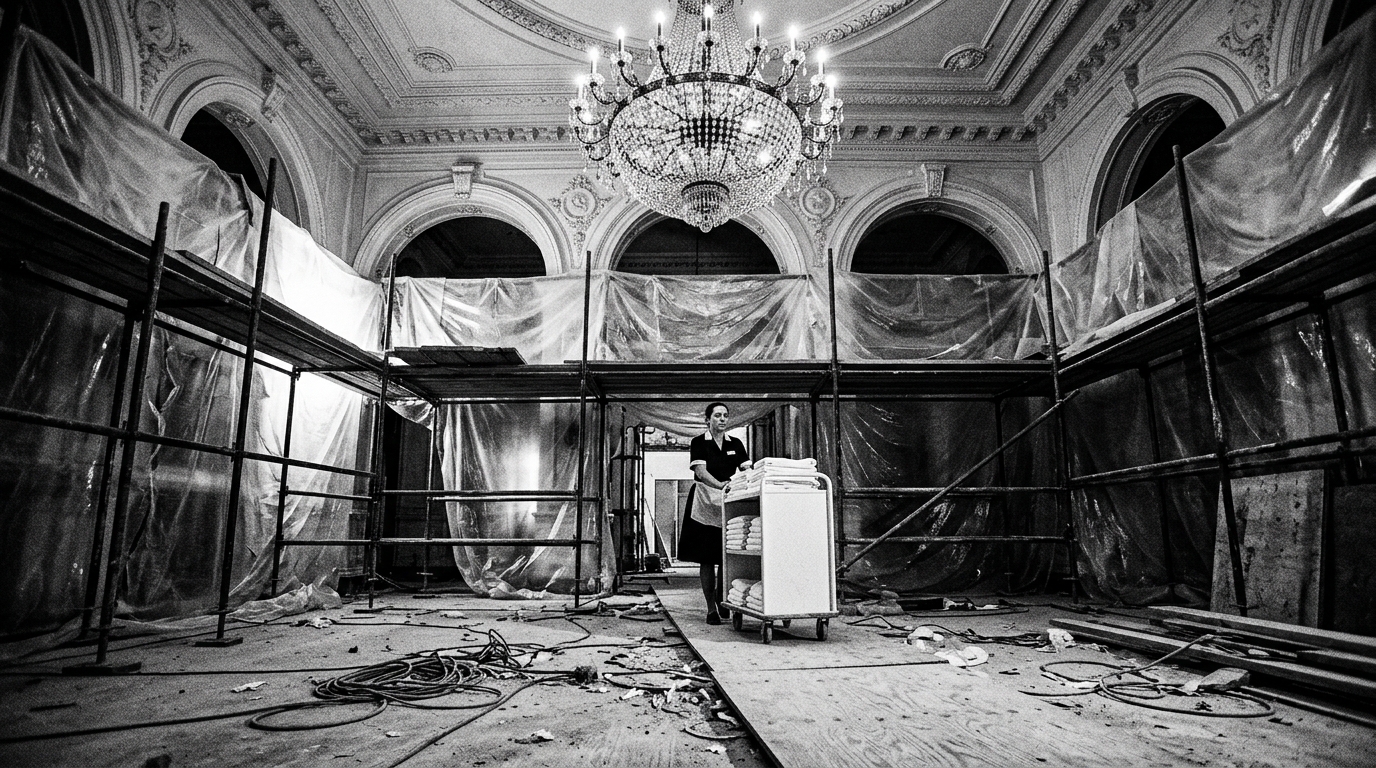
That's what's happening in St Mawes, Cornwall. BH Group acquired the Ship and Castle Hotel as part of a five-property deal last year. The previous parent company, a leisure group, collapsed in May 2020 when COVID pulled the floor out from under the UK tour operator model. The hotel sat. For years. Now BH Group is pouring multi-millions into a full restoration... 56 rooms, new spa with hydrotherapy pool, restaurant, bar, the works. First phase opens this summer. Full reveal by autumn. They're projecting 75 permanent jobs in a village that probably doesn't have 75 people looking for work.

Here's what caught my eye. Cornwall ran 83% occupancy with ADR north of £120 last summer. That's a market that wants product. And BH Group isn't new to this game... they dropped £7.5 million on a resort renovation in Falmouth about eight years ago and reportedly £8 million on another property in the Lake District. So they have a playbook. They buy distressed or underloved assets in strong leisure markets, invest heavily in the physical product (particularly spa and F&B), and bet on the UK staycation trend that's been building since well before the pandemic. It's not complicated. But "not complicated" and "easy to execute" are very different things, and the renovation timeline they're advertising... acquired in 2025, phased reopening by summer 2026... is ambitious for a property that's been sitting dormant.

This is what I call the Renovation Reality Multiplier. The press release says summer 2026. The building says 1978 wiring, years of deferred maintenance from an ownership group that was circling the drain long before it actually went under, and a construction market where skilled trades in tourist-heavy coastal towns aren't exactly sitting around waiting for the phone to ring. Every renovation I've ever been involved with had a timeline. Every renovation I've ever been involved with also had a REAL timeline. The gap between those two numbers is where operator pain lives. If they open the first phase on schedule with the product dialed in, I'll be the first to tip my cap. But I've been doing this too long to take a press release timeline at face value.

The bigger story here is one that applies well beyond Cornwall. The pandemic created a generation of orphan hotels. Properties attached to overleveraged operators, tour companies, or ownership groups that couldn't survive 18 months of zero revenue. Those properties are still working their way through the system... being picked up by better-capitalized groups who see the asset underneath the distress. If you're an owner or investor looking at similar opportunities, the acquisition price is only the beginning. The real question is what five years of neglect did to the MEP systems, the roof, the guest bathrooms, and the local reputation. Because you're not just renovating a building. You're resurrecting a brand that the community watched die. That takes more than a spa and a new lobby. It takes operational excellence from day one, and it takes longer than you think.

Operator's Take

If you're looking at distressed acquisitions in strong leisure markets... UK, US coastal, mountain resort... here's the checklist nobody puts in the pitch deck. First, get an independent building condition survey before you model CapEx. Not the seller's report. Yours. Properties that sat dormant for two or more years have mechanical system degradation that doesn't show up in a walkthrough. Second, budget 30% above your renovation estimate for contingency on any building with pre-1990 infrastructure. I've never seen a coastal property come in on budget. Salt air alone does things to HVAC systems that will make your contractor weep. Third, and this is the one people miss... your staffing plan needs to account for the reality that you're hiring in a small market where the last hotel operator burned the talent pool. Those 75 jobs BH Group is creating? Those people have to come from somewhere, and if the previous operator left a bad taste, your recruiting just got harder and more expensive. Start that process now, not when the paint is drying.
Read full analysis → ← Show less
Source: Google News: Hotel Acquisition
Disney's Dropping $60 Billion on Parks. Your Renovation Excuse Just Expired.

Disney's Dropping $60 Billion on Parks. Your Renovation Excuse Just Expired.

Disney is tearing apart multiple Magic Kingdom resorts simultaneously while keeping them open and charging premium rates. If a company managing 25,000+ rooms can renovate during peak season without apologizing for it, the rest of us need to rethink how we talk to guests about construction walls.

I watched a GM lose his mind once over a 30-room soft goods refresh. Thirty rooms. Out of 240. He wanted to shut down an entire floor, block it off for six weeks, and basically treat the project like a hazmat situation. His reasoning? "We can't have guests near construction." I asked him what he thought Disney did when they renovated. He didn't have an answer.

Now Disney is renovating the Grand Floridian's lobby, porte cochere, and convention center. Simultaneously. While also tearing up the Polynesian's front entrance and bus loop, closing boat docks at Wilderness Lodge, and continuing a two-year overhaul at Bay Lake Tower. All of this happening at properties where guests are paying $400-$800 a night. And those guests aren't getting discounts for the inconvenience. They're getting "we appreciate your patience" and a construction wall painted to look like part of the story.

Here's what Disney understands that most hotel operators don't... renovation is not a crisis to be managed. It's an investment to be communicated. The difference between a guest who's furious about construction noise and a guest who feels like they're witnessing the next chapter of something special is entirely about framing. Disney frames renovation as progress. Most hotels frame it as an apology. "We're sorry for any inconvenience during our improvements." That language tells the guest they're getting less than they paid for. Disney's language tells the guest they're seeing something before everyone else does.

The operational discipline here is worth studying even if you're running a 150-key select-service and not a theme park resort. Disney is phasing these projects across multiple properties so that no single resort loses all of its amenities at once. The Grand Floridian porte cochere goes through early 2027... that's a year-plus timeline on a hotel entrance, which means they've accepted the disruption cost and built the guest communication around it rather than rushing the job to minimize the window. That's a choice most owners won't make because they're terrified of one bad TripAdvisor review mentioning dust. Meanwhile, Disney's charging rack rate through the whole thing. This is what I call the Renovation Reality Multiplier... the actual disruption timeline is always longer than the promised one, and the operators who build their plans (and their guest messaging and their revenue strategy) around the real timeline instead of the fantasy timeline come out ahead every single time.

The $60 billion capital plan behind all of this is a different conversation entirely, but the signal it sends matters for everyone in hospitality. Disney is betting that physical experience investments generate better returns than almost anything else they could do with that capital. In a world where everyone's chasing digital, chasing AI, chasing the next platform... the largest entertainment company on earth is pouring money into bricks, mortar, and guest-facing physical spaces. That's not nostalgia. That's a company with extremely sophisticated return models telling you that the room, the lobby, the arrival experience... those things still win.

Operator's Take

If you've been deferring a renovation because you're afraid of the guest impact, stop. Pull up Disney's approach and study it. They're renovating a hotel entrance for over a year at a property charging $600 a night and they haven't flinched on rate. Your job this week: take whatever capital project you've been delaying and build a real communication plan around it. Not an apology... a narrative. "We're investing $X in making this property better for you" hits completely different than "we apologize for the inconvenience." If you're a GM at a branded property with a PIP looming, bring this to your owner proactively with a phasing plan that protects revenue while getting the work done. The owner who hears "here's how we execute this without killing ADR" is an owner who approves the spend. The owner who hears "this is going to be painful" is an owner who defers another year and watches the asset deteriorate.

Read full analysis → ← Show less
Source: Google News: Resort Hotels
Disney's Been Renovating the Grand Floridian for Six Years. And They're Still Not Done.

Disney's Been Renovating the Grand Floridian for Six Years. And They're Still Not Done.

Disney's flagship resort has been under near-continuous construction since before COVID, with the latest closure hitting the Grand Floridian Cafe from July through October. If you think your renovation timeline is painful, imagine explaining perpetual construction noise to guests paying $800 a night.

I worked with a GM once who had a renovation that was supposed to last four months. It lasted eleven. By month six, the front desk had a laminated card with pre-written apologies for the noise, the dust, and the "temporary" walkway through the parking lot. He told me the card was the most-used item in the hotel... more than the key cards.

That's what I think about when I see Disney's Grand Floridian, which has essentially been under some form of renovation since before the pandemic. They've refreshed the guest rooms. Redone the lobby (added a bar called The Perch... because apparently what a Victorian-themed luxury resort needed was a trendy lobby bar). Overhauled multiple restaurants. Reopened a lounge that had been dark for six years. And now the cafe is closing mid-July through October for what they're calling a "refresh." The whole thing isn't scheduled to wrap until early 2027.

Let me be direct. Disney can get away with this because they're Disney. They have a captive audience, a pricing model that defies normal hospitality gravity, and an Experiences segment that just posted over $10 billion in quarterly revenue. When you're printing money like that, you can renovate in rolling phases for half a decade and guests will still book because the alternative is explaining to a seven-year-old why they can't stay at the princess hotel. That's not a comp set most of us compete in. But the APPROACH... the rolling renovation strategy... that's worth studying whether you're running 90 keys or 900.

Here's what Disney understands that a lot of operators don't: renovation is not an event. It's a condition. The Grand Floridian isn't being renovated. It's being maintained at the level its rate demands, continuously, because the moment a $800-a-night resort starts looking tired, the gap between price and promise becomes the story guests tell. They're not shutting down the whole hotel for 18 months and hoping for a grand reopening. They're closing one restaurant, relocating its popular brunch to another venue on-property, keeping everything else running, and managing the disruption in pieces. That's not accidental. That's a deliberate strategy to never let the asset fall below the line where guests start questioning the rate. I call this the Renovation Reality Multiplier... you plan for the real disruption timeline, not the one in the proposal. Disney is planning for a timeline measured in years because that's what a property of this caliber actually requires.

The part most operators miss is the revenue protection during construction. Disney's telling guests upfront that construction may be visible, that walking paths might change, that noise happens during the day. That transparency isn't generosity... it's liability management and expectation setting. They're relocating the brunch service instead of just killing it for four months. They're keeping every other outlet open. The revenue never stops. The experience gets managed around the disruption rather than interrupted by it. Most of us don't have Disney's budget or their ability to absorb construction periods. But the principle scales down. If you're facing any kind of renovation, the question isn't just "what does the finished product look like?" It's "what does every single day of the project look like for the guest who's paying full rate while the drywall dust is settling?"

Operator's Take

If you've got a renovation coming up (or one you've been putting off because you can't figure out the logistics), take a page from the Disney playbook. Phase it. Don't shut down your F&B outlet without relocating the service somewhere else on property... even if "somewhere else" is a banquet room with folding tables. Brief your front desk team with specific language about what guests will see, hear, and experience during construction... not vague apologies, but real information. And for the love of your TripAdvisor scores, get ahead of the online narrative. Update your OTA listings, your website, your booking confirmations. Every guest who shows up surprised by construction is a one-star review waiting to happen. The renovation itself builds long-term value. The way you manage the disruption protects the revenue you need to pay for it.

Read full analysis → ← Show less
Source: Google News: Resort Hotels
Sandals Isn't Just Fixing Hurricane Damage. They're Betting $200M They Can Reinvent Themselves.

Sandals Isn't Just Fixing Hurricane Damage. They're Betting $200M They Can Reinvent Themselves.

Three Jamaican resorts closed since Hurricane Melissa could have reopened in May. Instead, Sandals pushed the timeline to December and tripled the spend. That tells you everything about where their head is... and it's a play more operators should understand.

Available Analysis

Here's the thing about hurricanes. They're terrible. They're destructive. They're also... if you're honest about it... sometimes the best renovation excuse you'll ever get.

Sandals had three properties in Jamaica shut down since Hurricane Melissa hit last October. Sandals Montego Bay, Sandals Royal Caribbean, Sandals South Coast. The original plan was a May 30th reopening. Patch the damage, get the rooms back online, start selling again. That's what most operators would do. That's what the insurance timeline pushes you toward. Every day those rooms are dark is revenue you're never getting back.

But Adam Stewart looked at three empty buildings and saw something different. A blank canvas, he called it. And instead of the fastest path back to occupancy, he went the other direction... $200 million across three properties, new room categories, redesigned pools, new F&B concepts, new public spaces. Phased reopenings starting November 18th for South Coast, December 18th for the other two. That's six to seven additional months of zero revenue from those properties beyond the original target. On purpose.

I've seen this decision made exactly twice in my career. Once by an owner who had a catastrophic pipe burst flood an entire wing of a 280-key full-service. Insurance was going to cover the repair. He used it as the catalyst to do the full renovation he'd been deferring for four years. Came back with a repositioned product and pushed rate 22% within the first year. The other time, the owner did the same math, got scared by the carrying costs during the extended closure, patched it fast, and reopened into a market that had moved on without them. Took three years to claw back share.

The math on Sandals' play is aggressive but not crazy. $200 million across three luxury all-inclusive resorts... call it roughly $65-70 million per property depending on how you allocate. For resorts at this tier, that's a meaningful reinvention, not just soft goods and a coat of paint. And Sandals is privately held (no quarterly earnings call breathing down their neck), they've got five other Jamaica properties still running, and the all-inclusive model means when those rooms DO come back online, they come back at a full rate with bundled revenue from day one. No ramp-up discount period. No "grand reopening rate" that takes 18 months to walk back. That matters. The all-inclusive structure actually makes extended closures less painful on the recovery side than a traditional hotel model because you're not retraining a market on rate... you're reopening a destination.

What I respect about this is the discipline to say no to seven months of revenue because the long play is worth more. That's ownership thinking. Real ownership thinking, not the kind you read about in a management company's mission statement. Most operators (and most management companies, and most asset managers) would have pushed for the fastest reopening possible because that's what the trailing twelve months demands. Stewart's betting that the trailing twelve months after a $200 million reinvention will look a lot better than the trailing twelve months after a quick patch. He's probably right. But it takes a certain kind of nerve to stare at dark rooms for an extra half-year when you don't have to.

Operator's Take

This is what I call the Renovation Reality Multiplier. The promised timeline was May. The real timeline is December. But here's the part that matters for you... Sandals didn't just accept the delay, they CHOSE it, because they understood that the disruption was going to happen anyway and a half-measure wastes the opportunity. If you're sitting on deferred CapEx right now and something forces a closure (pipe burst, fire, code violation, whatever), don't just fix what broke. Run the numbers on what a full renovation looks like while the building is already empty. Every day of closure hurts, but the gap between "fix it fast" and "fix it right" is usually smaller than you think when the rooms are already offline. Call your contractor this week and get a real number for both scenarios. You might surprise yourself.

Read full analysis → ← Show less
Source: Google News: Resort Hotels
Sandals Turned a Hurricane Into a $200 Million Do-Over. Smart Move.

Sandals Turned a Hurricane Into a $200 Million Do-Over. Smart Move.

When a Category 4 hurricane shut down three of your flagship resorts, you've got two options: fix what broke, or rip the whole thing down to the studs and build the hotel you always wished you had. Sandals chose door number two.

Available Analysis

I've seen this movie exactly once before where it worked. A resort I was involved with took a direct hit from a tropical storm back in the mid-2000s. Insurance was going to cover the rebuild to bring it back to where it was. The owner looked at the adjuster's estimate, looked at the property's trailing RevPAR, and said "why would I spend $8 million to rebuild a $6 million hotel?" He put in his own capital on top of the insurance payout, repositioned the entire product, and came back 14 months later at a rate $85 higher than where he'd been. It was the smartest renovation play I ever witnessed... and it only happened because a storm forced his hand.

That's what Sandals is doing with this $200 million across Montego Bay, Royal Caribbean, and South Coast. Hurricane Melissa shut all three properties down last October. They were originally supposed to reopen in May 2026. Instead, Adam Stewart looked at the situation and essentially said: we're already closed, staff is already displaced, rooms are already offline... why patch it when we can transform it? The reopening is now November and December 2026. That's a full year of zero revenue from three flagship properties. That's not a casual decision. That's a bet.

Here's why the bet is probably right. In this business, the single hardest thing about a major renovation is the disruption. You lose revenue. You lose guests to noise complaints. You lose staff who get frustrated working in a construction zone. Your TripAdvisor scores tank because someone on the fourth floor can hear hammering at 7 AM. I've managed renovations where we tried to keep the hotel open and the guest satisfaction hit was worse than just closing. This is what I call the Renovation Reality Multiplier... the real disruption timeline and cost is always worse than the promised one. Sandals doesn't have that problem. The hurricane already took the hit for them. The buildings are already empty. The disruption already happened. Now you're just converting forced downtime into strategic uptime. That's genuinely smart capital deployment.

What I'm watching is the execution side. $200 million split three ways is roughly $66 million per property. Depending on key count and scope, that's a meaningful per-room spend... new room categories, redesigned pools, expanded F&B, refreshed public areas. The question is whether they come back as the same Sandals at a higher price point or as something genuinely repositioned. Because "reimagined" is a word that gets thrown around a lot in this business and usually means "we replaced the soft goods and added a rooftop bar." If Stewart is serious about this "2.0" vision (and based on the Dunn's River relaunch and the six-property pipeline through 2031, he appears to be), this could reset the competitive bar for luxury all-inclusives in Jamaica. But the Caribbean is littered with $50 million renovations that came back looking great and couldn't justify the rate increase because the market didn't move with them.

The other piece worth noting... and I don't hear enough people talking about this... Stewart publicly committed to maintaining salaries and benefits for all Jamaican staff during the closures. For a year-plus shutdown, that's a massive payroll commitment on zero revenue. That's not just good PR. That's an operator who understands that when you reopen a 300-key resort, you need trained staff on day one, not a Help Wanted sign. The cost of maintaining that payroll is real. The cost of rebuilding a team from scratch in a Caribbean labor market? Way more real. Sometimes the most expensive line item on the P&L is the smartest one.

Operator's Take

If you're sitting on a property that just took damage from weather, flooding, or any force majeure event... before you sign the repair contract, stop. Pull your trailing 12 NOI, pull your comp set performance, and ask yourself whether you're rebuilding the hotel you had or the hotel you need. Insurance-plus-capital repositioning after forced closure is one of the rare moments where the renovation math actually works in the owner's favor, because the disruption cost is already sunk. Call your insurance adjuster and your architect in the same week. And if you're keeping staff on payroll during the closure, do the math on retention versus rehiring. Keeping a trained team through a shutdown is almost always cheaper than recruiting and training new bodies for reopening. Almost always.

Read full analysis → ← Show less
Source: Google News: Resort Hotels
End of Stories