Today · Jul 15, 2026
A $35 Million Renovation Won Three Awards. The Question Is Whether It Won Back the Money.

A $35 Million Renovation Won Three Awards. The Question Is Whether It Won Back the Money.

JW Marriott Gold Coast just swept Queensland's top hotel awards after a $35 million rebrand from Marriott to JW. That's $157K per key in renovation spend on a 223-room property... and the trophies look great on the shelf, but trophies don't service debt.

I worked with a GM once who had a wall of awards in his office. Beautiful frames. Industry recognition, regional best-of plaques, guest satisfaction trophies. Real impressive. His owner walked in one morning, looked at the wall, looked at the P&L, and said "Can we sell any of those?" The GM laughed. The owner didn't.

That story keeps coming back to me every time I see a press release about awards. And this week it's the JW Marriott Gold Coast Resort and Spa, which just swept three categories at the Queensland Hotels Association Awards for Excellence... Overall Hotel of the Year in the accommodation division, Best Resort/Lifestyle Accommodation, and Best Marketed Hotel. On top of that, they've held an Australian Good Food Guide Chef Hat at their signature restaurant four years running, won Best Hotel Pool in Australia twice, and picked up Sustainable Tourism Certification. By any measure of industry recognition, this property is operating at an elite level. The team there, led by their GM and what sounds like a genuinely dialed-in staff, is clearly executing. That matters. I don't dismiss it.

But here's what I keep circling back to. This property spent $35 million converting from a Marriott-branded resort to a JW Marriott. That was 2020 money, which means the construction timeline ran smack into COVID. Two hundred twenty-three keys. That's roughly $157,000 per key in renovation capital before you even get to the incremental franchise costs that come with moving up to JW. The JW Marriott flag carries higher brand fees, higher PIP standards, higher F&B expectations (you don't get a Chef Hat without serious kitchen investment), and a guest expectation profile that demands consistency at a level most properties struggle to maintain seven days a week. The question nobody in that awards room was asking... and I get it, it's a celebration, not a finance meeting... is whether the rate premium and occupancy lift from the JW conversion is actually covering that $35 million investment at a return that makes the owner whole. Because at $157K per key, you need meaningful incremental NOI just to get to a reasonable payback period. And "meaningful" in the luxury space on the Gold Coast means you're competing for a relatively thin slice of true luxury demand in a market that also has plenty of high-end supply.

Look, I'm not cynical about awards. A property that wins Hotel of the Year and Best Marketed Hotel in the same year is doing something right operationally AND strategically. That's rare. The marketing award in particular tells me they're not just delivering a good product... they're communicating it effectively, which is half the battle in luxury hospitality. And the sustainability certification (first Marriott property in Queensland to achieve it) signals that this team is thinking about where the market is heading, not just where it is. That's forward-thinking operations. I respect it.

But I've seen this movie before. A property invests heavily, executes beautifully, wins recognition, and becomes the showpiece the brand trots out at every owner conference. Meanwhile, the actual financial performance... the part that determines whether the owner's family keeps the asset or sells it... gets buried under a pile of crystal trophies and magazine features. The brand loves a success story. The brand needs success stories to sell the next franchise agreement. And if you're an owner being pitched a JW conversion right now, I guarantee someone at Marriott is pointing at the Gold Coast property and saying "look what's possible." What they're not showing you is the capital stack, the debt service, and the actual unlevered yield on that $35 million. Awards validate execution. They don't validate investment returns. And those are two very different conversations that happen in two very different rooms.

Operator's Take

If you're an owner or asset manager being pitched a luxury conversion right now... JW, Waldorf, Ritz-Carlton, any of them... take the Gold Coast story for exactly what it is: proof that excellent execution is possible AND a reminder that excellent execution and excellent returns are not the same thing. Before you sign anything, run the real math. What's the total conversion cost per key? What rate premium does the new flag need to deliver over your current positioning to cover that investment at a 7-year payback? What's the incremental loyalty contribution you're actually going to see (not the projection... the actual delivery at comparable properties in comparable markets)? And if you're a GM at a property that just won something, congratulations... sincerely. Now take that award and use it as ammunition in your next owner meeting. Not for a pat on the back. For the capital request you've been sitting on. Recognition is temporary. The investment it justifies is what lasts.

Read full analysis → ← Show less
Source: Google News: Resort Hotels
Wynn Palace Is Running 99% Occupancy. So They're Spending $900 Million on Rooms, Not Tables.

Wynn Palace Is Running 99% Occupancy. So They're Spending $900 Million on Rooms, Not Tables.

Wynn Macau just posted a billion-dollar quarter with one property doing all the heavy lifting and the other one flatlined. The $900 million bet they're making next tells you everything about where casino-resort economics are actually heading.

Available Analysis

I worked with a casino resort GM years ago who kept two whiteboards in his office. One tracked gaming revenue. The other tracked non-gaming spend per guest night. When the owner visited, the owner always looked at the first board. The GM always pointed to the second one. "That board," he told me once, "is the one that tells me whether we have a business or a slot parlor." He was right then. He's even more right now.

Wynn Macau Ltd just closed Q1 2026 with $989 million in operating revenue... up 14.2% year over year. Sounds like a clean win. But the headline number is doing what headline numbers always do... it's hiding two completely different stories under one roof. Wynn Palace, over on the Cotai Strip, drove $659 million of that total, a 23% jump. Casino revenue at the Palace alone climbed 27%. Meanwhile, the original Wynn Macau property on the peninsula? Flat. $330 million, essentially identical to last year's Q1. And its adjusted EBITDAR dropped 16% because win percentages fell off a cliff... VIP tables went from 1.09% to 0.39%. That's not a bad quarter. That's a structural shift in where the money goes. Two properties, same company, same market, two entirely different trajectories.

Here's what caught my attention. Wynn Palace is running 99.1% occupancy. Not during a holiday week. Not during a special event. Every night. And the company's response isn't to add more gaming floor. It's to spend $900 to $950 million on a 432-suite hotel tower called "The Enclave"... zero new gaming positions. Think about that for a second. A casino company is betting nearly a billion dollars that rooms, not tables, are where the growth is. They're not chasing gaming capacity. They're chasing the premium guest who already wants to be there and can't get a room. That's a fundamentally different bet than the one Macau operators were making five years ago, and it tells you where the smartest money in this space thinks the margin is going.

Look at the debt picture too. Wynn Macau Ltd is carrying just over $5.85 billion in long-term debt. Adding another billion in development spend on top of that is a statement of conviction... or a leap of faith, depending on how you model the next cycle. They've got $608 million in short-term investments and about $96 million in restricted cash. The math works right now because the premium mass segment is printing money. But I've been through enough cycles to know that "right now" is the most dangerous phrase in this business. You stress-test that debt stack against a 25-30% revenue decline (which Macau has experienced more than once in the last decade), and the conversation gets very different very fast.

What's actually interesting here isn't Wynn's earnings. It's the signal. The largest, most sophisticated operators in the casino-resort world are shifting capital from gaming floor to guest room. They're betting that the next dollar of margin comes from a premium suite, not a baccarat table. That's a thesis about the future of hospitality-driven gaming that every resort operator... not just in Macau, but in Vegas, in the UAE (where Wynn is building right now, with delays), in any integrated resort market... should be paying attention to. The era of build-more-tables-and-they-will-come is over. The era of build-better-rooms-and-charge-more is here. I've seen this movie before in non-gaming hotels. The operators who figured it out early captured a decade of margin advantage. The ones who didn't spent years catching up.

Operator's Take

If you're running any kind of resort property... gaming or not... this is a signal worth reading carefully. When a company with Wynn's resources looks at 99% occupancy and decides the answer is premium rooms rather than more gaming capacity, they're telling you where they think the margin lives. Ask yourself the same question about your own property: where is your next dollar of profit actually coming from? For most of you, it's not another revenue stream. It's extracting more value from the guests you already have. Run your current occupancy against your ADR ceiling. If you're consistently above 85% and your rate hasn't moved meaningfully in 18 months, you're leaving money on the table every single night. That's the operational lesson here. Don't build more. Charge what you're worth. And if you can't charge more because your product doesn't justify it... that tells you where your capital should go.

Read full analysis → ← Show less
Source: Google News: Wynn Resorts
Wynn Just Committed $950M to Macau While Its $5.1B UAE Bet Sits in Shipping Limbo

Wynn Just Committed $950M to Macau While Its $5.1B UAE Bet Sits in Shipping Limbo

Wynn posted a strong Q1 with $1.86 billion in revenue and beat earnings estimates, then buried the lead: the UAE mega-resort is delayed by geopolitical chaos, and they're doubling down on Macau with a $950M expansion that won't open until 2029.

Available Analysis

I've been watching mega-resort development cycles for decades now, and there's a tell that never changes. When a company reports a great quarter and uses the earnings call to announce both a delay on one project and a brand-new commitment somewhere else... that's not confidence. That's portfolio management under pressure. Wynn posted $1.86 billion in Q1 revenue, up 9.2% year-over-year. Net income jumped to $120.5 million from $72.7 million a year ago... a 66% increase. Adjusted EPS of $1.25 beat the street by seven cents. Those are genuinely strong numbers. And yet the stock dropped 4% the next day. Because Wall Street heard exactly what I heard... "modest delay" on a $5.1 billion project in a region where shipping routes are getting rerouted around active conflict zones.

Let me be direct about the UAE situation. Wynn has now poured over a billion dollars in equity into Al Marjan Island with another $350-450 million still to go. They've got 22,000 workers on site. The original early-2027 opening is now... sometime later than that (they're being deliberately vague about the new date, which tells you something). CEO Craig Billings says they underwrote the project with geopolitical risk in mind. I believe him. Smart operators always model downside scenarios. But there's a difference between modeling a risk and living through one where Strait of Hormuz disruptions are forcing construction material reroutes around an active conflict zone. Every rerouted shipment costs more. Every delay compounds. And the carrying cost on a billion-dollar equity commitment isn't theoretical... it's real cash that isn't generating return. Fitch put Ras Al Khaimah on Rating Watch Negative in April. MGM's CEO noted weakened Middle East tourism on their earnings call a week before Wynn's. The signals are all pointing the same direction.

Now here's where it gets interesting. In the same breath, Wynn announces "The Enclave at Wynn Palace" in Macau... 432 all-suite keys, $900-950 million price tag, opening around 2029. That's roughly $2.1 million per key for ultra-luxury suites in a market where Wynn Palace is already running near 100% occupancy. This is the part of the call that deserved more attention than it got. The Macau expansion isn't a hedge against the UAE delay (the timeline doesn't work that way). It's a signal about where Wynn sees its most reliable demand... and it's not the Middle East right now. It's the Chinese luxury traveler who keeps filling their Cotai property. A 25% increase in room count and 50% increase in suite inventory at a property that's already sold out? That math actually makes sense. That's the Wynn I recognize.

What I keep coming back to is the contrast. Two massive capital commitments, two completely different risk profiles. In Macau, you have proven demand, existing infrastructure, established operations, and a regulatory environment Wynn knows intimately. In the UAE, you have a first-of-its-kind gaming license in a region with no track record, construction logistics being disrupted by armed conflict, and the kind of sovereign risk that doesn't show up in a pro forma. I've seen this playbook before... a company with multiple mega-projects at different stages, using the strong performer to give the market patience on the troubled one. The strong Q1 numbers are doing real work here. They're buying Wynn the credibility to say "trust us on the UAE" while everyone watches the carrying costs climb.

The 2029 Macau opening is also worth sitting with for a minute. That's three years of construction spending starting with early piling work this year. Three years is a long time in this industry. A lot can change in Macau's regulatory environment, in Chinese consumer behavior, in the broader luxury travel market. But if you're going to make a billion-dollar bet, making it in a market where you're already sold out every night is about as rational as it gets in the casino resort business. The UAE? That's the swing. It might be brilliant. It might be the most expensive lesson in geopolitical risk management any gaming company has ever received. Right now, nobody knows... including Wynn. And the "modest delay" language tells me they know that you know they don't know.

Operator's Take

Look... this story is about a $6 billion gaming company making bets most of us will never make. But the principle underneath it is universal. I've watched operators at every scale commit capital to projects where the assumptions shifted after the check was signed. If you're in any stage of a renovation, expansion, or new build right now, the construction supply chain disruptions Wynn is dealing with in the UAE are a compressed version of what's hitting projects domestically with tariff uncertainty. Call your GC this week. Get an updated materials timeline and cost estimate in writing. Not a verbal "we're on track." In writing. Because if Wynn can't get materials delivered on time to a $5.1 billion project with 22,000 workers, your $3 million lobby renovation isn't immune. What I call the Renovation Reality Multiplier is in full effect right now... the gap between the promised timeline and the actual timeline is wider than it's been in years, and every week of delay has a cost that compounds. Know your real number before someone else tells you what it is.

Read full analysis → ← Show less
Source: Google News: Wynn Resorts
Marina Bay Sands Just Posted the Greatest Quarter in Casino Hotel History. Here's Why That Should Worry You.

Marina Bay Sands Just Posted the Greatest Quarter in Casino Hotel History. Here's Why That Should Worry You.

Las Vegas Sands beat estimates with $3.59 billion in Q1 revenue and $788 million in EBITDA from a single property in Singapore. When one building generates that kind of number, the competitive implications ripple into every luxury and upper-upscale market on the planet.

I worked with a casino hotel GM once who kept a chart on his office wall... not his own numbers, but the numbers from the two properties he considered his real competition. Every quarter he'd update it by hand with a Sharpie. His theory was simple: "I don't need to know how I'm doing. I need to know how fast they're getting better." He was right. And if you're running a luxury or upper-upscale property anywhere in the Asia-Pacific corridor right now, you need a Sharpie and a wall.

Las Vegas Sands just posted $788 million in adjusted property EBITDA from Marina Bay Sands alone. One building. One quarter. A 30% jump from last year on a 53% margin. Their CEO called it "the greatest quarter in the history of casino hotels." I've been around long enough to be skeptical of superlatives, but when one integrated resort generates nearly $1.5 billion in net revenue in 90 days... I don't have a counterargument. The Macau side did $633 million in property EBITDA, up 18%, with mass-market revenue share hitting its highest point in two years. Total company revenue: $3.59 billion, up 25%. Net income: $641 million, up 57%. The EPS beat was $0.85 against a consensus of $0.76. These aren't incremental gains. This is a company pulling away from the field.

But here's what I want you to focus on. LVS isn't just harvesting cash. They're deploying it at a pace that should make every competitor nervous. They've bought back $5.24 billion of their own stock since late 2023 (14.3% of shares outstanding). They're renovating The Venetian Macao with refreshed rooms coming online this year and full completion by early 2028. And then there's the big one... an $8 billion expansion at Marina Bay Sands. A fourth tower. 570 luxury suites. A 15,000-seat arena. A new SkyPark. Completion in 2030, opening 2031. They're targeting north of 20% return on invested capital. That's not a renovation. That's a bet that the demand curve for premium hospitality in Asia is going to keep climbing for the next decade. And they're willing to accept lower margins now to own the top of that curve later.

The strategic shift that matters most happened four years ago when they sold the Las Vegas properties and went all-in on Asia. At the time, people questioned whether a company named Las Vegas Sands should leave Las Vegas. Now the answer is obvious. Singapore and Macau are throwing off cash at rates the Strip can't match, and LVS has a monopoly-like position in Singapore that no amount of capital can replicate easily. Management openly said they'll trade near-term margin for long-term dominance. That's an owner's mentality, not a quarter-to-quarter management company mindset. Whether you agree with the strategy or not, you have to respect the conviction.

Here's what nobody's talking about though. When $8 billion flows into a single market for premium hospitality development, it doesn't just affect that market. It resets expectations globally. The fit-and-finish of that expansion, the service levels, the F&B... all of that becomes the new benchmark that wealthy travelers carry in their heads when they walk into your lobby in Dubai, or Miami, or London. Every luxury and upper-upscale operator should be watching this not as a casino story, but as a hospitality story. Because when the bar moves this aggressively at the top, the pressure rolls downhill. It always does.

Operator's Take

Look... if you're running a luxury or upper-upscale property that competes for the international premium traveler, this isn't background noise. LVS is spending $8 billion to redefine what a world-class hospitality product looks like in Asia, and those guests are your guests too. They fly. They compare. Pull your guest satisfaction data for international arrivals specifically and benchmark your physical product against what's being built. If you're mid-PIP or about to enter a renovation cycle, use Marina Bay Sands as a reference point in your ownership conversations... not because you're competing with a casino, but because your guests are experiencing one before they check into your hotel. This is what I call the Price-to-Promise Moment... when the traveler's expectation of what premium means gets recalibrated by someone else's property, and your $450 rate suddenly needs to justify itself against a memory you didn't create. Get ahead of that conversation now, not after reviews start telling you.

Read full analysis → ← Show less
Source: Google News: Las Vegas Sands
LVS Just Beat Estimates by 19%. The Interesting Part Is What They're Spending It On.

LVS Just Beat Estimates by 19%. The Interesting Part Is What They're Spending It On.

Las Vegas Sands crushed Q1 expectations with $3.59 billion in revenue and $1.42 billion in property EBITDA, then immediately plowed $740 million into buybacks while pouring capital into Singapore and Macau upgrades. For hotel tech vendors watching the integrated resort space, the question isn't whether LVS is winning... it's whether their infrastructure investments are building something the rest of the industry should be studying or something nobody else can replicate.

So here's what actually happened. LVS posted Q1 2026 numbers that beat analyst expectations on basically every line... $3.59 billion in revenue (up 25% year-over-year), $0.91 EPS against estimates of $0.76 to $0.78, and consolidated adjusted property EBITDA of $1.42 billion. Mizuho bumped their price target to $67, Stifel went to $74, Barclays nudged to $65. And then Jefferies downgraded them to Hold. Same earnings call, same numbers, opposite conclusions. That divergence is actually the most interesting thing here.

Let's talk about what this actually does at the property level. Marina Bay Sands in Singapore posted $788 million in adjusted EBITDA for the quarter... up 30% year-over-year. That's one property. One. And LVS is building IR2 there, adding luxury suites and amenities, which tells you they think Singapore hasn't peaked yet. Macau hit $633 million in EBITDA (up 18%), and management specifically called out decreased promotional intensity alongside a 100-basis-point market share gain. Translation: they spent less on incentives and still grew share. That's the kind of operational efficiency that makes you sit up in your chair, because in my experience, most operators can do one or the other... cut promos or grow share. Doing both simultaneously means something structural is working.

Here's where my brain goes. LVS is sitting on $3.33 billion in unrestricted cash against $15.57 billion in total debt, and they just burned $740 million on share repurchases in a single quarter. At the same time, they're investing heavily in property upgrades... the Venetian Macao refresh targeted for completion by end of 2027, the IR2 expansion in Singapore. Management actually warned that improving service offerings in Macau will "naturally increase expenses" and "negatively impact margins" in the near term. That's refreshingly honest, and it's also a technology story if you look at it right. When a company this size says "we're going to spend more to deliver better service," the question I immediately ask is: what systems are enabling that service improvement, and are they building proprietary infrastructure or buying off the shelf?

Look, I get that LVS operates at a scale most hotel operators will never touch. But the pattern matters. They're investing in physical plant AND operational capability simultaneously, accepting margin compression now for revenue growth later. I consulted with a resort group last year that tried the opposite approach... they wanted technology to reduce labor costs during a property refresh, essentially asking the tech stack to compensate for construction disruption. It was a mess. The systems weren't designed to absorb that kind of operational stress, and guest satisfaction cratered during the transition. LVS appears to be doing something smarter: spending into strength rather than cutting into weakness. The Jefferies downgrade (from Buy to Hold, target dropped from $72 to $63) probably reflects concern about exactly that margin compression. But here's the thing... if you're generating $1.42 billion in quarterly EBITDA, you've earned the right to invest aggressively. The question is execution.

The technology angle nobody's discussing: LVS's integrated resort model generates an absurd amount of guest data across gaming, hospitality, F&B, entertainment, and retail. Their ability to decrease promotional intensity while growing market share in Macau suggests their guest analytics and yield management systems are genuinely sophisticated (not "AI-powered" marketing fluff... actually sophisticated). For the rest of the industry watching from the outside, the lesson isn't "be like Sands." It's that the properties investing in real data infrastructure... not dashboards, not vendor platforms that look pretty in demos, but actual systems that connect guest behavior across touchpoints... are the ones pulling away from the pack. Would that work at a 90-key independent? Obviously not at this scale. But the principle scales down. Know your guest. Use the data you already have. Stop paying for platforms you use 30% of and start building intelligence from the systems already running your operation.

Operator's Take

Here's what I want you to take from this, especially if you're running a property that competes for any slice of the premium leisure market. LVS just demonstrated that you can grow revenue, grow market share, AND reduce promotional spending simultaneously... if your operational systems are actually working. Most of us aren't running integrated resorts with $788 million quarters. But every one of us has guest data we're not using, vendor platforms we're overpaying for, and promotional spend we haven't stress-tested in months. This week, pull your loyalty contribution numbers and your promotional costs for Q1. Put them side by side. If you spent more on incentives and your share didn't move, that's not a marketing problem... that's a systems problem. And if your tech vendors can't tell you which promotions actually drove incremental revenue versus which ones just subsidized guests who were coming anyway, you're flying blind with someone else's instruments. Fix that before you spend another dollar on promos.

— Mike Storm, Founder & Editor
Read full analysis → ← Show less
Source: Google News: Las Vegas Sands
Sands China Profits Up 45%. The Stock Dropped. That's the Story.

Sands China Profits Up 45%. The Stock Dropped. That's the Story.

Sands China posted $294 million in net income on a 24% revenue surge, and the market shrugged. When Wall Street punishes a quarter like that, they're telling you something about what comes next that the earnings call won't.

I worked with a casino resort GM years ago who had the best quarter in his property's history. Crushed every number. His owner flew in for a celebratory dinner. And somewhere between the appetizer and the entree, the owner said, "So what's going to go wrong next quarter?" The GM thought he was being paranoid. The owner was being an owner. He'd been through enough cycles to know that peak performance is when you start asking the hardest questions.

That's exactly what's happening with Sands China right now. Net income up 45.5% to $294 million. Revenue up 23.6% to $2.1 billion. Adjusted property EBITDA climbed to $633 million from $535 million a year ago. Mass gaming revenue share hit 25.7%... their best quarterly performance in two years. Parent company Las Vegas Sands posted consolidated net revenue of $3.59 billion, diluted EPS up 73.5%, and returned $740 million to shareholders through buybacks. By any standard metric, this is a monster quarter.

And the stock dropped 2%.

Here's why that matters more than the earnings. The market is looking past the quarter and asking about the $700 million quarterly EBITDA target management has set for Macao. That's a $67 million gap from where they just landed. Closing it means continuing to grow premium mass revenue... which Jefferies is already flagging as a margin compression risk. More premium mass penetration means higher revenue but thinner margins per dollar. You're working harder for less on every incremental dollar. Meanwhile, Sands China has committed to spending $3.75 billion through 2032 on capital and operating projects in Macao, with $3.5 billion of that earmarked for non-gaming. They're refreshing hotel rooms at The Venetian Macao through end of 2027 and adding luxury suite inventory starting later this year. That's an enormous capital program running concurrent with a market where analyst consensus is only 5-6% GGR growth for the full year. The growth is real. But the reinvestment burden is massive, and every dollar going into suites and convention space is a dollar that has to earn its way back through rooms revenue and F&B... not gaming drop.

This is the tension that casino resort operators everywhere should be paying attention to. The non-gaming diversification mandate in Macao isn't optional... it's baked into the 10-year concession terms. And it mirrors what's happening at integrated resorts across the globe. Governments and regulators want less dependence on gaming revenue. Owners and operators have to figure out how to make the hotel, the convention center, the restaurant portfolio, and the entertainment venues carry a bigger share of the economics. That's a hospitality challenge, not a gaming challenge. And it requires hospitality-grade execution... the kind of execution where your rooms division, your F&B team, and your events staff have to deliver at a level that justifies premium pricing without the gaming subsidy propping everything up.

The lesson from this quarter isn't that Sands China is struggling. They're not. The lesson is that even when you crush it, the market wants to know what your next act looks like. And the next act for every integrated resort operator is proving that non-gaming revenue can grow profitably enough to absorb billions in reinvestment capital. That's a question that lives and dies at the property level... in housekeeping time per suite, in F&B cost ratios, in convention services staffing, in every single guest touchpoint that has nothing to do with a gaming floor.

Operator's Take

If you're running rooms, F&B, or convention operations at an integrated resort... or any large-scale property where ownership is pouring capital into non-gaming amenities... this is your signal to get ahead of the conversation. Pull your flow-through numbers on the revenue streams tied to recent capital projects. New suites, renovated rooms, expanded meeting space... what's the incremental revenue per invested dollar, and what's actually flowing to GOP? This is what I call the Flow-Through Truth Test. Revenue growth on a $3.5 billion non-gaming spend only matters if enough of it actually reaches the bottom line, and the people who can prove that (or flag where it's leaking) are the operators closest to the execution. Don't wait for your asset manager or ownership group to ask. Build the story yourself, with real numbers from your operation, and bring it to them first. That's how you look like you're running the business instead of just reporting on it.

Read full analysis → ← Show less
Source: Google News: Las Vegas Sands
Disney's Dropping $60 Billion on Parks. Your Renovation Excuse Just Expired.

Disney's Dropping $60 Billion on Parks. Your Renovation Excuse Just Expired.

Disney is tearing apart multiple Magic Kingdom resorts simultaneously while keeping them open and charging premium rates. If a company managing 25,000+ rooms can renovate during peak season without apologizing for it, the rest of us need to rethink how we talk to guests about construction walls.

I watched a GM lose his mind once over a 30-room soft goods refresh. Thirty rooms. Out of 240. He wanted to shut down an entire floor, block it off for six weeks, and basically treat the project like a hazmat situation. His reasoning? "We can't have guests near construction." I asked him what he thought Disney did when they renovated. He didn't have an answer.

Now Disney is renovating the Grand Floridian's lobby, porte cochere, and convention center. Simultaneously. While also tearing up the Polynesian's front entrance and bus loop, closing boat docks at Wilderness Lodge, and continuing a two-year overhaul at Bay Lake Tower. All of this happening at properties where guests are paying $400-$800 a night. And those guests aren't getting discounts for the inconvenience. They're getting "we appreciate your patience" and a construction wall painted to look like part of the story.

Here's what Disney understands that most hotel operators don't... renovation is not a crisis to be managed. It's an investment to be communicated. The difference between a guest who's furious about construction noise and a guest who feels like they're witnessing the next chapter of something special is entirely about framing. Disney frames renovation as progress. Most hotels frame it as an apology. "We're sorry for any inconvenience during our improvements." That language tells the guest they're getting less than they paid for. Disney's language tells the guest they're seeing something before everyone else does.

The operational discipline here is worth studying even if you're running a 150-key select-service and not a theme park resort. Disney is phasing these projects across multiple properties so that no single resort loses all of its amenities at once. The Grand Floridian porte cochere goes through early 2027... that's a year-plus timeline on a hotel entrance, which means they've accepted the disruption cost and built the guest communication around it rather than rushing the job to minimize the window. That's a choice most owners won't make because they're terrified of one bad TripAdvisor review mentioning dust. Meanwhile, Disney's charging rack rate through the whole thing. This is what I call the Renovation Reality Multiplier... the actual disruption timeline is always longer than the promised one, and the operators who build their plans (and their guest messaging and their revenue strategy) around the real timeline instead of the fantasy timeline come out ahead every single time.

The $60 billion capital plan behind all of this is a different conversation entirely, but the signal it sends matters for everyone in hospitality. Disney is betting that physical experience investments generate better returns than almost anything else they could do with that capital. In a world where everyone's chasing digital, chasing AI, chasing the next platform... the largest entertainment company on earth is pouring money into bricks, mortar, and guest-facing physical spaces. That's not nostalgia. That's a company with extremely sophisticated return models telling you that the room, the lobby, the arrival experience... those things still win.

Operator's Take

If you've been deferring a renovation because you're afraid of the guest impact, stop. Pull up Disney's approach and study it. They're renovating a hotel entrance for over a year at a property charging $600 a night and they haven't flinched on rate. Your job this week: take whatever capital project you've been delaying and build a real communication plan around it. Not an apology... a narrative. "We're investing $X in making this property better for you" hits completely different than "we apologize for the inconvenience." If you're a GM at a branded property with a PIP looming, bring this to your owner proactively with a phasing plan that protects revenue while getting the work done. The owner who hears "here's how we execute this without killing ADR" is an owner who approves the spend. The owner who hears "this is going to be painful" is an owner who defers another year and watches the asset deteriorate.

Read full analysis → ← Show less
Source: Google News: Resort Hotels
£12.5 Million Renovation. 241 Keys. And London's Luxury Market Just Got Harder.

£12.5 Million Renovation. 241 Keys. And London's Luxury Market Just Got Harder.

KKR and Baupost paid roughly $1.16 billion for 33 Marriott UK hotels including the freshly renovated County Hall, just as London's luxury ADR dropped more than 7% and 757 new five-star rooms flooded the market. The timing raises a question nobody in the press release wants to answer.

I've seen this movie before. A gorgeous historic property gets a multimillion-dollar renovation, the PR team sends out beauty shots, a lifestyle magazine writes a glowing review... and somewhere in an office, a new ownership group is staring at a spreadsheet wondering if the numbers are going to cooperate with the narrative.

The London Marriott County Hall just finished a £12.5 million renovation that added 35 river-view rooms and suites, pushing the property from 206 to 241 keys. The work is legitimately impressive... converting unused fifth and sixth floor space in a Grade II listed building into premium inventory with views of Parliament and the Thames. New gym. Upgraded club lounge. The kind of capital investment that changes a property's competitive position. And KKR and Baupost closed on a portfolio of 33 Marriott-branded UK hotels (County Hall included) for a reported £900 million from the Abu Dhabi Investment Authority in late 2024. Marriott continues to manage under 30-year contracts that started in 2006. So you've got new owners, fresh capital improvements, and a long-term management agreement with the world's largest hotel company. Sounds like a clean story.

Here's where it gets interesting. London's luxury segment absorbed roughly 757 new five-star rooms in 2025... the biggest supply wave since 2014. And it's showing. ADR in London luxury hotels fell more than 7% year-over-year in Q2 2025, even as occupancy returned to pre-pandemic levels around 82%. That's not a demand problem. That's a supply problem. Occupancy holding steady while rate erodes means there are enough luxury travelers... they just have more places to stay and less reason to pay top dollar at any single one. County Hall's 35 new keys are beautiful, but they're entering a market where the pricing power that justified the renovation is already under pressure.

The ownership math tells an even more layered story. This portfolio has changed hands three times since 2007. Quinlan's group bought 47 Marriott UK hotels for £1.1 billion. Those ended up with ADIA after the financial crisis for £640 million. Now KKR and Baupost picked up 33 of them for £900 million. Every transaction repriced the risk. And those 30-year Marriott management contracts that started in 2006? They've got roughly 10 years left. Which means the next ownership conversation about these properties happens against the backdrop of contract renewal leverage, and both sides know it. Marriott's incentive is to invest in making these properties shine (hence supporting renovations like County Hall's). The owners' incentive is to make sure the rate environment justifies the capital they just deployed. Right now, London's luxury market is making the second part harder than anyone projected 18 months ago.

I knew a GM once who managed through a similar situation... beautiful property, fresh renovation, new ownership, and a market that decided to add 400 competitive rooms in the same 18-month window. He told me the hardest part wasn't the competition. It was the conversation with ownership where he had to explain that the RevPAR projections from the renovation pro forma weren't going to hit in year one because the market had changed underneath them while the paint was still drying. "The building's never looked better," he said. "The rate environment doesn't care." That's County Hall's challenge in a sentence. The product is exceptional. The question is whether London's luxury market, circa 2026, will pay what the product deserves.

Operator's Take

If you're managing a luxury property in any gateway city where new supply is landing, County Hall is your case study. Beautiful renovation, prestigious location, institutional ownership... and still facing a 7%-plus ADR headwind from supply. Run your own comp set analysis right now. Not your brand's comp set. YOUR comp set, including every new luxury property that opened or is opening within your competitive radius in the last 18 months. If your renovation or repositioning pro forma was built on 2023 rate assumptions, stress-test it against current market ADR. Then bring that updated analysis to your owner before they see a headline about softening luxury rates and call you first. This is what I call the Renovation Reality Multiplier... the physical work on County Hall took about a year, but the market shifted underneath the investment timeline. The disruption isn't just construction. It's the gap between the rate environment you planned for and the one you opened into. Know that gap. Own that conversation.

Read full analysis → ← Show less
Source: Google News: Marriott
Sandals Isn't Just Fixing Hurricane Damage. They're Betting $200M They Can Reinvent Themselves.

Sandals Isn't Just Fixing Hurricane Damage. They're Betting $200M They Can Reinvent Themselves.

Three Jamaican resorts closed since Hurricane Melissa could have reopened in May. Instead, Sandals pushed the timeline to December and tripled the spend. That tells you everything about where their head is... and it's a play more operators should understand.

Available Analysis

Here's the thing about hurricanes. They're terrible. They're destructive. They're also... if you're honest about it... sometimes the best renovation excuse you'll ever get.

Sandals had three properties in Jamaica shut down since Hurricane Melissa hit last October. Sandals Montego Bay, Sandals Royal Caribbean, Sandals South Coast. The original plan was a May 30th reopening. Patch the damage, get the rooms back online, start selling again. That's what most operators would do. That's what the insurance timeline pushes you toward. Every day those rooms are dark is revenue you're never getting back.

But Adam Stewart looked at three empty buildings and saw something different. A blank canvas, he called it. And instead of the fastest path back to occupancy, he went the other direction... $200 million across three properties, new room categories, redesigned pools, new F&B concepts, new public spaces. Phased reopenings starting November 18th for South Coast, December 18th for the other two. That's six to seven additional months of zero revenue from those properties beyond the original target. On purpose.

I've seen this decision made exactly twice in my career. Once by an owner who had a catastrophic pipe burst flood an entire wing of a 280-key full-service. Insurance was going to cover the repair. He used it as the catalyst to do the full renovation he'd been deferring for four years. Came back with a repositioned product and pushed rate 22% within the first year. The other time, the owner did the same math, got scared by the carrying costs during the extended closure, patched it fast, and reopened into a market that had moved on without them. Took three years to claw back share.

The math on Sandals' play is aggressive but not crazy. $200 million across three luxury all-inclusive resorts... call it roughly $65-70 million per property depending on how you allocate. For resorts at this tier, that's a meaningful reinvention, not just soft goods and a coat of paint. And Sandals is privately held (no quarterly earnings call breathing down their neck), they've got five other Jamaica properties still running, and the all-inclusive model means when those rooms DO come back online, they come back at a full rate with bundled revenue from day one. No ramp-up discount period. No "grand reopening rate" that takes 18 months to walk back. That matters. The all-inclusive structure actually makes extended closures less painful on the recovery side than a traditional hotel model because you're not retraining a market on rate... you're reopening a destination.

What I respect about this is the discipline to say no to seven months of revenue because the long play is worth more. That's ownership thinking. Real ownership thinking, not the kind you read about in a management company's mission statement. Most operators (and most management companies, and most asset managers) would have pushed for the fastest reopening possible because that's what the trailing twelve months demands. Stewart's betting that the trailing twelve months after a $200 million reinvention will look a lot better than the trailing twelve months after a quick patch. He's probably right. But it takes a certain kind of nerve to stare at dark rooms for an extra half-year when you don't have to.

Operator's Take

This is what I call the Renovation Reality Multiplier. The promised timeline was May. The real timeline is December. But here's the part that matters for you... Sandals didn't just accept the delay, they CHOSE it, because they understood that the disruption was going to happen anyway and a half-measure wastes the opportunity. If you're sitting on deferred CapEx right now and something forces a closure (pipe burst, fire, code violation, whatever), don't just fix what broke. Run the numbers on what a full renovation looks like while the building is already empty. Every day of closure hurts, but the gap between "fix it fast" and "fix it right" is usually smaller than you think when the rooms are already offline. Call your contractor this week and get a real number for both scenarios. You might surprise yourself.

Read full analysis → ← Show less
Source: Google News: Resort Hotels
Caesars' Tech Rebuild Won't Save Your Guest Experience — But Here's What Will

Caesars' Tech Rebuild Won't Save Your Guest Experience — But Here's What Will

The casino giant is pouring money into technology infrastructure. Before you follow their playbook, understand why casino tech priorities are exactly backwards for hoteliers.

Caesars Entertainment is reportedly making a major push to modernize its tech stack — think property management systems, loyalty platforms, mobile integration, the whole nine yards. And I'm watching hotel operators look at this and think "we should be doing that too."

Here's the thing nobody's telling you: Casino operators and hotel operators have fundamentally different tech priorities, and copying their playbook will burn your capital budget for nothing.

Caesars makes 70-80% of its revenue from gaming. Their hotel rooms are loss leaders designed to keep you on property feeding slot machines. When they invest in tech, they're building systems to track player behavior, optimize comp algorithms, and keep high-rollers gambling longer. Their PMS integration priorities are about knowing which guest just dropped $50K at the tables so they can upgrade them instantly. That's not your business model.

If you're running a 200-key select-service property or even a 400-key full-service hotel, your tech priority isn't fancy integration — it's basic operational efficiency. I've seen too many GMs get sold on "enterprise-level platforms" that require three vendor integrations and a dedicated IT person you don't have on staff. Meanwhile, your front desk is still manually blocking rooms for maintenance and your housekeeping staff is using paper checklists.

The real lesson from Caesars isn't "spend more on tech." It's "spend on tech that directly supports your revenue model." For them, that's gaming analytics. For you, it's reservation conversion, labor scheduling, and revenue management. Different games entirely.

What actually moves the needle? A PMS that your team can operate without calling support. A booking engine that loads in under three seconds on mobile. A housekeeping app that tracks room status in real-time and integrates with your PMS on day one, not after six months of troubleshooting. Boring stuff. Stuff that works.

Operator's Take

Don't let brand case studies from casino operators — or anyone else with a different business model — dictate your tech roadmap. Ask one question about every system: "Will this directly increase revenue or cut labor hours within 90 days?" If the answer is no, you're buying someone else's solution to someone else's problem. Spend on operations, not on integration projects.

Read full analysis → ← Show less
Source: Google News: Caesars Entertainment
Radisson's Cape Canaveral Expansion Shows What Environmental Compliance Really Costs Now

Radisson's Cape Canaveral Expansion Shows What Environmental Compliance Really Costs Now

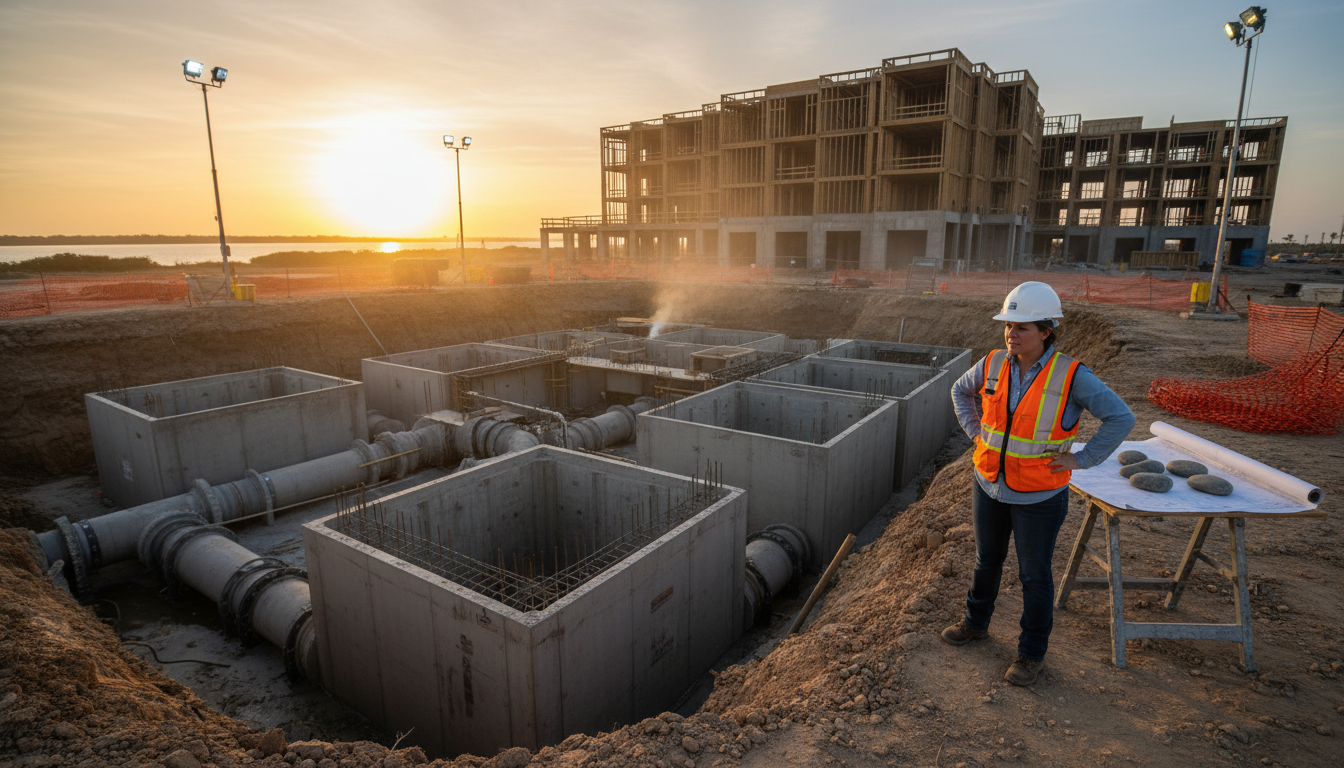
A beachfront Radisson is spending serious money on stormwater infrastructure just to add rooms. If you're planning any coastal expansion, your environmental compliance budget just tripled.

The Radisson at the Port in Cape Canaveral is expanding — but the headline isn't the new rooms. It's the major stormwater management overhaul they're installing to protect the Banana River as part of the deal. This is the new reality for any operator thinking about adding inventory near water in Florida or anywhere coastal.

Here's what nobody's telling you: environmental compliance isn't a line item anymore. It's becoming the project. I've seen this movie before with renovations, but expansion projects near sensitive waterways are hitting a different level entirely. Between state agencies, environmental reviews, and infrastructure requirements, you're looking at 18-24 months of approval processes and costs that can run 25-30% of your total project budget before you pour a single foundation.

For the Radisson, this means engineered stormwater systems, retention capacity, filtration — all the hardware required to keep runoff out of the Banana River. Smart move by ownership, honestly. Because the alternative is getting halfway through construction and having a regulatory agency shut you down. I've watched that happen to a 200-key independent in the Carolinas. Turned a $12 million project into a $19 million disaster.

But here's the contrarian take: if you can afford it and navigate it, this is actually your competitive advantage. Environmental requirements are pricing out the small operators and the speculators. The independents with shallow pockets can't play this game anymore. If you're a branded select-service or full-service with access to capital and you can absorb these compliance costs, you're going to see less competition for coastal expansion sites over the next 36 months.

The Radisson is in Cape Canaveral — cruise market, space tourism, convention overflow from Orlando. That's a smart place to add keys if you can handle the infrastructure investment. Space launches are ramping up, cruise traffic is recovering strong, and room demand in that corridor runs 15-20 points higher than pre-pandemic during peak months. Worth the environmental investment? Absolutely. But only if you budget for reality, not what your pro forma said in 2019.

Operator's Take

If you're planning any expansion within a mile of coastline or protected waterways, triple your environmental compliance budget right now. Hire the engineers before you talk to architects. And if you're running an independent with limited capital access, be honest — coastal expansion might not be your play anymore. Look inland where the regulatory burden is manageable.

Read full analysis → ← Show less
Source: Google News: Resort Hotels

Disney's Five-Year Poly Reno Shows Why Your Timeline's Probably Wrong Too

Disney just pushed the Polynesian Village Resort reopening to 2027 — that's five years for a refurb. If they can't estimate renovation timelines right, neither can you.

Here's what happened: Disney's Polynesian Village Resort, one of their Magic Kingdom flagship properties, has pushed its renovation completion date again. We're now looking at 2027 for full completion. Do the math — that's roughly five years from when this project kicked off in phases starting around 2022-2023.

Let me be direct: If Disney — with unlimited capital, in-house project management, and properties they can shift guests to — can't nail a renovation timeline, your 180-day soft goods refresh is going to blow past six months. And your eight-month full property reno? Budget twelve to fifteen.

I've seen this movie before. You start with selective room blocks. Then you discover the plumbing's worse than the scope showed. Your millwork vendor misses dates. The new PMS integration takes three times longer than IT promised. Your designer spec'd tile from Italy that's now backordered until next quarter. What looked like a clean Q1 completion suddenly bleeds into summer — exactly when you needed those rooms for high-season rate.

The Poly's running at limited capacity for years while Disney prints money on this thing. They're eating the displacement cost because they can. You can't. Every room out of inventory at an 80-key select-service is 1.25% of your total revenue base. At a 200-room full-service, you're looking at occupancy math that makes your owner panic and your lender nervous.

But here's what Disney's doing right that most operators miss: They're phasing intelligently and keeping parts of the property operational. They didn't close the whole resort. They're managing guest expectations with clear communication. And they're using the reno to justify a rate increase on the back end — because when you finally unveil fresh product after years of anticipation, you better be repricing it.

Operator's Take

If you're planning any renovation beyond fresh paint, take your contractor's timeline and multiply by 1.5. Then add 30 days for things you haven't thought of yet. Build that extended timeline into your budget, your owner expectations, and your staffing plan. And for God's sake, negotiate rate protection in your franchise agreement before you start — because your brand won't let you drop standards, but they'll hammer you on guest satisfaction scores while you're running a construction zone.

Read full analysis → ← Show less
Source: Google News: Resort Hotels
End of Stories