Operations Stories
Disney and Airbnb Are Giving Away Hotel Nights. And the Entire Industry Should Be Taking Notes.

Disney and Airbnb Are Giving Away Hotel Nights. And the Entire Industry Should Be Taking Notes.

Disney just turned a $21 million Malibu beach house into a free Airbnb listing to promote a 20-year-old kids' show. The marketing genius isn't the giveaway... it's what it reveals about where "hospitality" is heading when entertainment companies start thinking like hoteliers.

A retired night auditor I used to work with had a saying whenever corporate would roll out some flashy new loyalty promotion. He'd look at the rate sheet, look at me, and say "So we're giving away the room and calling it strategy. Got it." He wasn't wrong then. But I'm starting to wonder if Disney and Airbnb might actually be onto something he and I never considered.

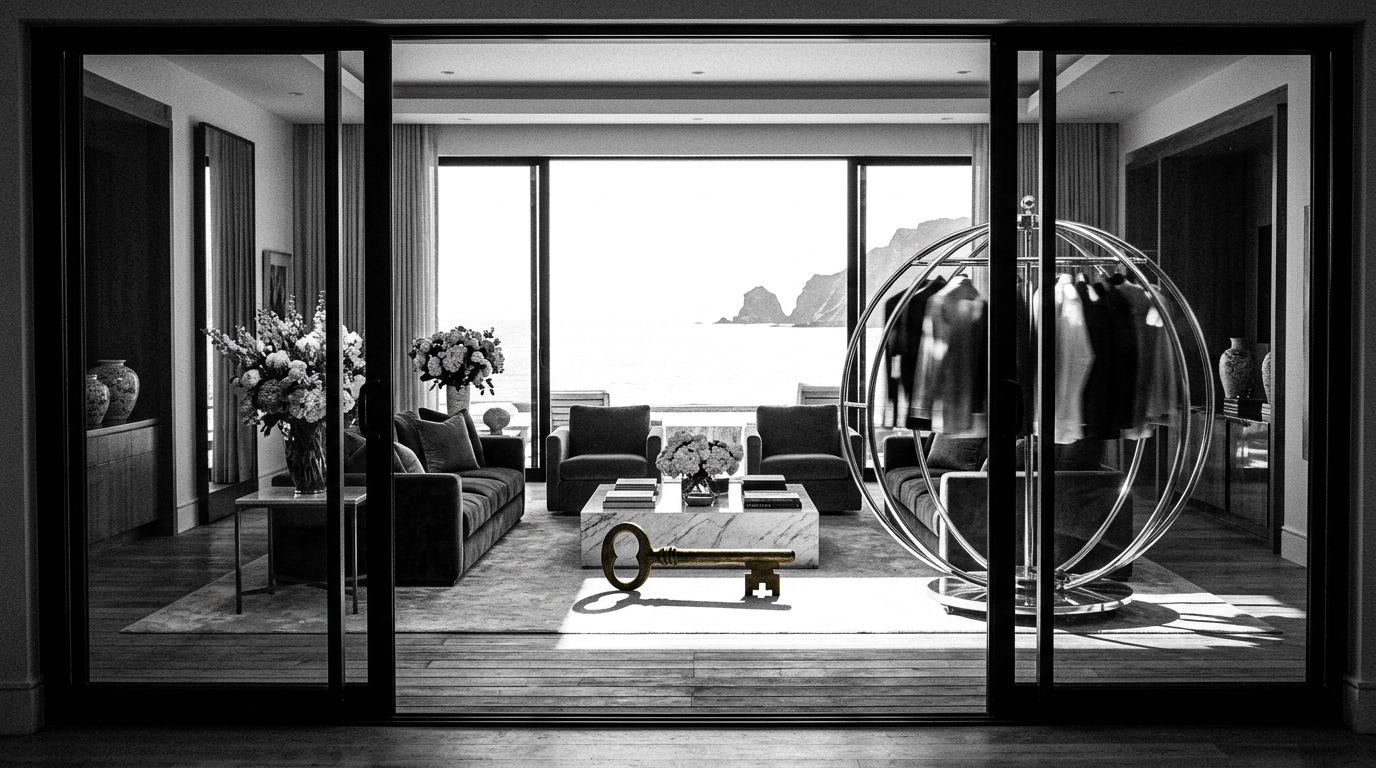
Here's what happened. Disney and Airbnb partnered to offer ten free one-night stays at the actual Malibu oceanfront home used in the exterior shots of "Hannah Montana." Four bedrooms, five bathrooms, $21 million property, normally renting for $60,000 to $80,000 a month. They recreated the fictional interior... including the rotating closet. The cost to the guest? Zero dollars. The cost to Disney? Whatever the lease and staging ran them. The return? A "Hannah Montana 20th Anniversary Special" that pulled 6.3 million views in three days on Disney+ and Hulu. Nearly a 1,000% spike in catalog streaming. Over half a billion hours of content consumed globally. Spotify streams of the show's songs up 600-700%. All from ten free nights in a house that isn't even a hotel.

Now here's where this gets uncomfortable for anyone running an actual hotel. Disney didn't need rooms revenue. They didn't need ADR. They didn't need flow-through. They needed attention, and they bought it at a fraction of what a traditional media campaign would cost. Ten nights at a property that rents for roughly $2,000 a night (prorated from the monthly)... call it $20,000 in opportunity cost, maybe $50,000-$75,000 all-in with staging and production. For that, they got global media coverage, billions of streaming minutes, and a cultural moment that reinforced Disney+ subscriptions more effectively than any ad buy could. The math on that is embarrassing for everyone who's ever spent six figures on a "brand awareness campaign" and gotten a PDF report full of impressions data that means nothing.

What worries me isn't the stunt itself. It's the trend it represents. Entertainment companies, lifestyle brands, and tech platforms are getting better at creating "hospitality experiences" that have nothing to do with operating hotels... and the press eats it up. Airbnb doesn't carry the linen cost. They don't manage the labor. They don't deal with the plumbing in a 1978 building. They curate the story, collect the booking, and let someone else handle the 2 AM problems. And increasingly, that model... the one where the experience is the product and the room is just the stage set... is what consumers are talking about, sharing on social media, and choosing over traditional hotel stays. Not always. Not yet for business travel. But for the leisure guest under 35 who grew up watching Hannah Montana? That's your future customer, and Disney just showed them that the most exciting "hotel stay" in America this month isn't at a hotel at all.

The silver lining, if you want one, is that Disney and Airbnb can't scale this. Ten rooms. Ten nights. It's a publicity stunt, not a business model. But the underlying principle... that the story around the stay matters as much as the stay itself... that's something every operator can learn from. The properties I've seen thrive over the last five years aren't the ones with the best rooms. They're the ones with the best narrative. The ones where guests feel like they're part of something, not just sleeping somewhere. You don't need a $21 million beach house and a Disney IP license to create that. You need a point of view. You need a reason to exist beyond "we have beds and we're near the highway." That part is free. And it's the part most hotels still haven't figured out.

Operator's Take

Look... this one isn't about changing your rate strategy or your tech stack. It's about paying attention to how the guest's definition of "worth staying at" is shifting underneath us. If you're running a select-service or a lifestyle property, take 30 minutes this week and ask yourself one question: what would a guest say about your hotel that they couldn't say about the one across the street? If the answer is nothing... that's your real competitive problem. Not OTA commissions, not labor costs, not your PIP. This is what I call the Price-to-Promise Moment. Every stay has one moment where the guest decides the rate was worth it. Disney manufactured that moment with a rotating closet and a nostalgia play. You need to find yours. Walk your property tonight. Find the thing that could be your story. Then tell it better than anyone else in your comp set.

Read full analysis → ← Show less
Source: Google News: Airbnb
Iran Just Named Specific Hotels as Military Targets. This Changes the Security Conversation.

Iran Just Named Specific Hotels as Military Targets. This Changes the Security Conversation.

When a state actor publicly names five-star hotels as "legitimate targets" and backs it up with strikes that have already damaged properties in the Gulf, every GM running a hotel in an internationally sensitive market needs to rethink what "security" actually means in their operation.

Available Analysis

A regular at my blues club in Chicago back in the day, managed a hotel during the first Gulf War. Not in the Middle East... stateside, in a market with a large military installation nearby. I remember the week the threat level went up and he told me he got a call from local law enforcement suggesting he "review his properties security posture." That's government-speak for "we don't know what's coming and neither do you." He had a 280-key full-service hotel, a security team of three, and a corporate office that sent a PDF about "situational awareness." That PDF didn't help him figure out what to tell his front desk team when a guest asked if the hotel was safe.

That was a vague, indirect, maybe-something-happens situation. What's happening right now in the Middle East is different by orders of magnitude. Iran's state media, directly linked to the Revolutionary Guard, published specific hotel names... including a Four Seasons and a Sheraton... and called them legitimate military targets. Their claim is that US personnel are sheltering in civilian hotels. Whether that's true, partially true, or propaganda doesn't matter to the GM running a property in the Gulf right now. What matters is that a sovereign nation just told the world it considers your building a valid thing to shoot at. And this isn't hypothetical posturing. A property in Dubai has already taken damage. Dubai's airport was hit by a drone strike two weeks ago. Eleven people have reportedly died from strikes on hotels, airports, and residential buildings in Gulf states since this conflict started February 28th.

Let me be direct about what this means beyond the Middle East. The ripple effects are already massive... 80,000 hotel bookings cancelled across the Gulf, over 20,000 flights cancelled globally, and an estimated $600 million per day in lost visitor spending across Gulf tourism markets. Per day. That number is almost incomprehensible, but it's real, and it's hitting ownership groups, management companies, and individual properties in ways that will take years to fully unwind. If you're running a hotel in Dubai, Doha, Bahrain, or anywhere in that corridor, your business didn't slow down. It stopped. And the insurance implications alone... when a government explicitly names hotels as targets, every policy in the region is about to get repriced or cancelled.

But here's what I keep thinking about, and it's the part that connects to operators who aren't anywhere near the Persian Gulf. The security conversation in our industry has been about cybersecurity, active shooters, and maybe the occasional hurricane preparedness plan for the last decade. We haven't had to think about hotels as geopolitical targets since Mumbai in 2008. That attack changed security protocols globally for about 18 months, and then most properties quietly drifted back to baseline because the threat felt distant. This conflict is going to force that conversation open again... not just for international properties, but for any hotel in a market with symbolic value, government facilities, military presence, or high-profile international guests. Your security plan, whatever it says, was probably written for a world where hotels were soft targets of opportunity. We just entered a world where a state actor is publicly declaring them hard targets of intention. That's a fundamentally different risk profile, and most of our industry isn't remotely prepared for it.

The 10-day pause on US strikes against Iranian energy infrastructure buys a little time. Maybe talks go somewhere. Maybe they don't. But the precedent is set. A government said hotels are fair game and then acted on it. That bell doesn't un-ring. Every owner with international exposure, every management company with Middle Eastern or North African properties, and every brand with flags in sensitive markets needs to be having a very different conversation this week than they were having last month. And if you're stateside thinking this doesn't touch you... the State Department issued a worldwide caution for Americans abroad on March 22nd. Your international group business, your inbound tourism from markets that now have to route around a war zone, your insurance renewals... this touches you. You just might not feel it until next quarter.

Operator's Take

This is what I call the Shockwave Response... you need to know your floor and your exposure before the next escalation hits, because panic is not a strategy. If you operate in the Gulf, the Middle East, or North Africa, get on the phone with your insurance broker today, not next week. Understand exactly what your policy covers and doesn't cover when a state actor has publicly designated hotels as military targets. If you're stateside or in Europe, pull your forward booking pace for any group business originating from or traveling through affected regions and stress-test your Q2 revenue against a 15-25% decline in that segment. Review your security protocols... not the binder on the shelf, the actual practices your team follows on a Tuesday night shift. And if you're a GM who hasn't had a real conversation with local law enforcement about your property's threat profile in the last 12 months, that conversation happens this week. Not because the sky is falling where you are. Because the operators who survive shocks are the ones who planned before the shock arrived.

Read full analysis → ← Show less
Source: Google News: Resort Hotels
Airbnb's $0 Hannah Montana Stay Is a Marketing Play Worth More Than Your RevPAR Strategy

Airbnb's $0 Hannah Montana Stay Is a Marketing Play Worth More Than Your RevPAR Strategy

Disney and Airbnb are giving away ten free nights in a $21 million Malibu beach house dressed up as Hannah Montana's bedroom. The per-night value they're forgoing tells you exactly how these companies think about customer acquisition cost... and why traditional hospitality keeps losing the narrative war.

A $21 million Malibu property, available for long-term rental at $60,000 to $80,000 per month, is being offered for ten complimentary one-night stays through Airbnb's "Icons" program. The occasion is the 20th anniversary of a Disney Channel show. The price per night: $0.

Let's decompose this. At $70,000/month midpoint, one night in this property carries an implied value of roughly $2,333. Ten nights is $23,333 in foregone rental income (assuming the property would otherwise be occupied, which at that price point is generous). Add the interior transformation costs... replica closets, sequined wardrobe, karaoke setup, branded staging... and the all-in investment is probably $150,000 to $250,000. That's the real budget. The media coverage, the social amplification, the waitlist data from everyone who tried to book on March 26... that's the return. Airbnb doesn't disclose "Icons" program economics, but the earned media value on previous activations (the Barbie DreamHouse, Shrek's Swamp) generated coverage worth multiples of the investment. This isn't hospitality. This is customer acquisition disguised as hospitality.

The structural question for hotel owners and asset managers isn't whether this is clever (it is). It's what it reveals about how Airbnb allocates capital versus how hotels allocate capital. Airbnb spends on narrative. They create moments that generate billions of impressions and cost less than a single property renovation. Hotels spend on physical product... FF&E refreshes, PIP compliance, lobby redesigns... and then struggle to make anyone care. I analyzed a portfolio last year where the ownership group spent $8.2 million on renovations across six properties and couldn't demonstrate a measurable lift in direct booking share. Airbnb spent effectively nothing on ten nights and dominated a news cycle.

This is also a data play. Every person who visited airbnb.com/hannahmontana and requested a booking provided intent data. Airbnb now knows exactly who responds to nostalgia-driven experiential marketing, what demographics they skew, and how to retarget them. Hotels give away data to OTAs. Airbnb creates events that generate data voluntarily. The asymmetry is worth sitting with.

None of this changes your comp set RevPAR tomorrow. But it should change how ownership groups think about marketing spend allocation. The gap between what hotels spend to acquire a guest and what Airbnb spends to acquire a narrative is widening. Ten free nights in a beach house just made that gap visible.

Operator's Take

Look... this story isn't about Hannah Montana. It's about the growing gap between how hotels spend marketing dollars and how platforms spend them. If you're an owner or asset manager reviewing your 2026 marketing budget, ask one question: what percentage of your spend generates earned media versus paid impressions? Most hotel marketing budgets are 90%+ paid channels. Airbnb just dominated a week of coverage for the cost of staging a single property. You don't need a $21 million beach house to learn from that. You need to stop treating marketing as a line item and start treating it as a story. If your property has a genuine local hook... a history, a character, a neighborhood connection... that's your version of this play. Use it. The brands won't do it for you. They're too busy selling consistency.

— Mike Storm, Founder & Editor
Read full analysis → ← Show less
Source: Google News: Airbnb
An Airbnb Booked for 7 Drew 800. Your Neighbor's Rental Is Your Security Problem.

An Airbnb Booked for 7 Drew 800. Your Neighbor's Rental Is Your Security Problem.

A luxury Airbnb in Texas was rented for seven guests. Up to 800 showed up, police fielded shots-fired calls, and the $7.6M property was trashed. Airbnb's "permanent party ban" and anti-party technology didn't stop any of it... which should tell hotel operators something important about the platform's enforcement gap.

Available Analysis

So let me get this straight. Airbnb has a permanent global party ban. They have anti-party reservation prevention technology. They have a 24-hour safety line, a Neighborhood Support Line, mandatory identity verification for 100% of guests, and a partnership with Vrbo to share repeat offender data. And a booking for seven people at a luxury property in Celina, Texas turned into somewhere between 500 and 800 teens and young adults, 911 calls about shots fired, ten armed men at the front gate threatening to kill someone, and a multi-million dollar home left full of broken granite, shattered glass, and garbage.

Let's talk about what this actually tells us.

Airbnb reported a 44% drop in party incidents between 2020 and 2021, and they've been pointing to that stat ever since as proof the system works. But here's the thing about platform-level enforcement in short-term rentals... it's a detection problem, and the detection is fundamentally broken. The anti-party tools are screening for patterns (large group bookings, one-night stays near holidays, guests under a certain age). What they can't screen for is someone booking for seven people and then advertising the address on social media to hundreds of strangers. No algorithm catches that. No identity verification catches that. The property owner, Kishore Karlapudi, says the guests lied about the purpose and size of the booking. Of course they did. Lying to a platform is trivially easy when the platform's enforcement model is built on trusting what guests enter into a form field.

Look, I'm a technology guy. I've built systems that were supposed to prevent exactly this kind of thing... not parties specifically, but the general category of "bad actor circumvents rules because the system trusts declared inputs instead of verifying actual behavior." Every system I've ever seen that relies on self-reported data as its primary control fails the moment someone decides to lie. It's not a technology limitation you can patch. It's an architectural flaw. Airbnb's anti-party measures are sophisticated marketing wrapped around a fundamentally weak enforcement mechanism. They work against careless violators. They do nothing against intentional ones.

For hotel operators, the angle here isn't schadenfreude (though I understand the temptation). It's this: short-term rental platforms are going to keep having these incidents because their enforcement architecture can't prevent them. And every time it happens, two things follow. First, local regulators get louder about short-term rental restrictions... and in markets where those restrictions actually get teeth, hotel pricing power improves measurably. Second, the safety and security gap between hotels and STRs gets wider in the public consciousness. You have a front desk. You have security protocols. You have cameras in public areas (yes, Airbnb banned indoor cameras entirely as of April 2024... hosts can't even monitor their own property's interior). You have staff on-site 24/7. That's not just a service advantage. It's a safety advantage. And incidents like Celina make that advantage impossible to ignore.

The property owner here is dealing with tens of thousands in damage, a listing pulled offline for repairs, and a police report that reads like a small riot. The platform collected its service fee and sent a press statement about its party ban policies. That risk distribution... host absorbs 100% of the downside, platform absorbs 0%... is the structural reality of short-term rentals that doesn't change no matter how many safety features get announced at earnings calls.

Operator's Take

Here's what I'd actually do with this. If you're running a hotel in a market where STR competition is real (and that's most of you), print this story and put it in your next ownership meeting packet. Not to gloat... to make the case for your group sales pitch to event planners, wedding blocks, and corporate accounts. Your property has on-site security, liability coverage, and staff who can intervene before a situation escalates to shots fired. That's a selling point. Say it out loud. If you're in a market with active STR regulation debates, get involved. Show up at the city council meeting. Bring the data. Every incident like Celina is an argument for the level playing field you've been asking for. And if you have STR properties operating in your comp set without the same fire code, occupancy limits, and security requirements your hotel meets... that's not competition. That's a regulatory gap someone should be closing.

— Mike Storm, Founder & Editor
Read full analysis → ← Show less
Source: Google News: Airbnb
Accor Is Posting Double-Digit RevPAR in the Middle East. The Supply Pipeline Should Scare You.

Accor Is Posting Double-Digit RevPAR in the Middle East. The Supply Pipeline Should Scare You.

Accor's Q4 numbers across the Middle East look phenomenal on paper, with double-digit RevPAR gains driven almost entirely by rate. But there are 710 hotel projects and 176,000 rooms in the construction pipeline, and what goes up on pricing alone has a very specific way of coming back down.

Available Analysis

I worked with a guy years ago who ran a resort in a market that was absolutely on fire. Tourism board money pouring in, new attractions opening, flights added every quarter. RevPAR was climbing double digits. He couldn't miss. So ownership greenlighted a $6M renovation and repositioned upscale. Eighteen months later, three new competitors opened within two miles, the tourism board shifted its marketing budget to the next shiny destination, and he was sitting in a beautiful hotel trying to figure out how to fill 40% of his rooms on a Tuesday in September. The renovation was gorgeous. The timing was brutal.

I think about that story when I see Accor celebrating double-digit RevPAR growth across the Middle East in Q4 2025. And look... the numbers are real. The MEA region posted RevPAR up over 10% excluding China. Full-year systemwide RevPAR hit €76, up 4.2%. EBITDA grew 13.3% to €1.2 billion. Dubai ran 81% occupancy with ADR up 8.7%. Abu Dhabi posted 80% occupancy and a 22% RevPAR gain. These aren't soft numbers. This is a market that is genuinely performing.

But here's what the celebration doesn't spend enough time on. The Middle East hotel construction pipeline hit a record 710 projects... 176,402 rooms... at the end of Q4 2025. That's a 15% year-over-year increase in projects. Saudi Arabia alone has 394 projects representing over 106,000 rooms. Riyadh has 107 projects. Accor itself is planning to double its 45 operating Saudi hotels over the next five years. And the Q4 RevPAR growth? It was driven by pricing, not occupancy. The MEA APAC region actually saw a slight occupancy decline. When your growth is all rate and the supply pipeline is running at record levels, you're building a very specific kind of pressure cooker. Rate-driven RevPAR gains are the first thing to evaporate when new supply starts absorbing demand, because the guy down the street with 300 empty rooms and a debt service payment isn't going to hold rate. He's going to cut. And then everyone cuts.

None of this means the Middle East is a bad market. Vision 2030 is real money. The tourism infrastructure investment in Saudi Arabia and the UAE is generational. The demand diversification (leisure, bleisure, MICE from Western Europe, GCC, CIS, South Asia) is genuine and broad-based. But generational investment also means generational supply additions, and the history of every boom market I've ever operated in or watched closely follows the same pattern. The demand story is real until the day the supply story catches up, and by then you've already committed the capital. Dubai's inventory passed 158,000 rooms in 2025. Where does it go in 2028?

And nobody's really talking about this part: Accor is simultaneously dealing with a short seller accusing the company of exploitation and child trafficking, serious enough that they hired an outside firm to investigate. CEO Bazin was in the UAE in late March reinforcing commitment to the region. You don't make that kind of trip because things are going well. You make it because someone needs reassurance. The financial performance is strong. The corporate narrative has some cracks that haven't fully surfaced yet. If you're an owner partnered with Accor in the Middle East, you're reading two very different stories right now, and the RevPAR headline is the easier one.

Operator's Take

If you're an owner or asset manager with Middle East exposure (or evaluating it), the RevPAR numbers are real but the supply math demands a stress test. Run your proforma against a 15-20% rate compression scenario over the next 36 months as that 176,000-room pipeline starts delivering keys. What does your debt service coverage look like? What's your breakeven occupancy if ADR retreats to 2023 levels? This is what I call the Rate Recovery Trap... it's easy to ride rate up in a hot market, but when supply forces you to cut, retraining the market to pay your old rate takes years, not quarters. Don't wait for the correction to do the math. Do it now while the numbers are still working in your favor, because that's when you have options. Once the supply wave hits, your options narrow fast.

Read full analysis → ← Show less
Source: Google News: Hotel RevPAR
InterGroup's San Francisco Hotel Hit 92% Occupancy. Now Comes the Hard Part.

InterGroup's San Francisco Hotel Hit 92% Occupancy. Now Comes the Hard Part.

InterGroup swung from a $2.7 million loss to a $1.5 million profit on the back of a 27% hotel revenue jump and a conveniently timed asset sale. The question is whether a single hotel riding a convention calendar and a renovation bump can sustain the kind of numbers that make a micro-cap look like a turnaround story.

I knew an owner once who ran a single full-service property in a major urban market. Good hotel, good team, tough city. Every year around this time he'd pull together his quarterly numbers, and if occupancy was north of 85%, he'd pour himself a bourbon and call it a strategy. Problem was, the city kept changing underneath him... convention business shifted, remote work gutted midweek corporate, and the leisure guests who replaced them booked shorter stays at lower rates. His bourbon nights got less frequent.

That's what I think about when I look at InterGroup's fiscal Q2 numbers. On the surface, this is a hell of a quarter. RevPAR jumped from $168 to $215. Occupancy went from 88% to 92%. ADR climbed from $190 to $234. Hotel revenue up 27% year-over-year. Operating income from the hotel segment more than doubled, from $900K to $2.2 million. And the company swung from a $2.7 million net loss to a $1.5 million net gain. If you stopped reading right there, you'd think the turnaround was complete.

But peel it back. A chunk of that net income comes from a $3.5 million GAAP gain on selling a 12-unit apartment building in LA for $4.9 million. Strip that gain out and the operating picture looks a lot more modest. The real estate segment was essentially flat ($4.6M vs $4.5M revenue, with income actually dipping slightly). Mortgage interest expense dropped from $2.8M to $2.4M, which helps, but that's not operational improvement... that's balance sheet math from the debt they retired with the sale proceeds. And they returned 14 renovated rooms to inventory in September, which juiced the denominator on every room-level metric. Renovated rooms in a constrained market should be pulling higher ADR and filling faster. That's not a surprise. That's math.

Here's what's really going on. InterGroup is essentially a single-hotel company running the Hilton San Francisco Financial District. Their CEO acknowledged the headwinds... slower business travel recovery, remote work, what he diplomatically called "municipal challenges" (which anyone who's walked through downtown SF in the last three years can translate for themselves). The revenue mix has shifted toward leisure. And the 2026 calendar looks good on paper... Super Bowl already happened, FIFA World Cup matches coming... but event-driven demand is episodic. It spikes, it fills rooms, and then it leaves. You can't build a sustainable RevPAR strategy on a calendar. Meanwhile, analysts are all over the map. Zacks upgraded them to Neutral (from Underperform, which is like going from an F to a D-minus and calling it progress). Weiss still has them at "Sell." Short interest just surged 390%. The market is telling you something. When your short interest jumps nearly 400% in a single reporting period, somebody with money on the line thinks the good news is already priced in... or that it isn't as good as it looks.

The San Francisco hotel market IS recovering. That's real. Occupancy across the Bay Area hit 68.7% with a $225 ADR through November 2025, up dramatically from pandemic lows. Properties are trading at 50-80% discounts from pre-pandemic levels, which means there are deals to be made if you have the stomach and the balance sheet. InterGroup's 92% occupancy says they're outperforming their market significantly. That's either excellent management, the renovation effect, or both. But outperforming a recovering market is not the same as thriving. Cash on hand is $15 million. That's not a war chest... that's a rainy-day fund for a single full-service hotel in one of the most expensive operating environments in the country. One bad quarter, one major capital need, one extended demand dip, and that cushion gets thin fast.

Operator's Take

If you're running a single-asset hotel (or you're an owner whose portfolio is concentrated in one or two properties), this is your case study in what I call the False Profit Filter. InterGroup's headline numbers look like a turnaround. But peel out the one-time asset sale gain, normalize for the renovated room inventory, and ask yourself... is the core operation generating enough to fund the next renovation cycle, service the remaining debt, AND build reserves? That's the test. Don't get drunk on a good quarter when it took a property sale and a convention calendar to produce it. Run your own numbers without any one-time items. If your NOI can't cover debt service, FF&E reserve, and a 15% revenue decline scenario on its own two legs, you're not turned around... you're propped up. Have that conversation with yourself before someone else has it for you.

Read full analysis → ← Show less
Source: Google News: RLJ Lodging Trust
Awards Don't Fix Your Guest Experience. Your Team Does.

Awards Don't Fix Your Guest Experience. Your Team Does.

Hilton Kota Kinabalu just swept three regional travel awards, and the press release credits "passion, dedication, and hospitality excellence." The part worth paying attention to is what made that possible... and why most properties can't replicate it no matter how many brand standards they follow.

I worked with a GM once who had a wall of awards in his office. Plaques, trophies, framed certificates from every travel publication and industry group you can name. Beautiful wall. Impressive collection. His TripAdvisor scores were a 3.8. I asked him about the gap and he said, without a hint of irony, "Guests don't understand what we're doing here." That was the problem in one sentence. He was performing excellence for the judges and forgetting the people actually sleeping in the beds.

So when I see a property like Hilton Kota Kinabalu pick up a bronze from Sabah's tourism awards, a Luxury Lifestyle Award, and TTG's Best Hotel Sabah recognition... my first question isn't "how impressive is this?" It's "does the guest data back it up?" In this case, it actually does. A 4.5-star average across more than 1,200 TripAdvisor reviews tells you something the awards committee can't... that the consistency is real, not performative. That's a 304-key property delivering at a high level shift after shift. You don't maintain 4.5 stars at that volume by accident. You maintain it because somebody built a culture where the housekeeper on the third floor cares as much about the experience as the GM does.

Here's what I think the real story is, and it has nothing to do with Kota Kinabalu specifically. Hilton is pushing hard into luxury and lifestyle across Southeast Asia... nearly 4,000 new rooms announced, a stated goal of growing that segment by 50%. They just signed a Conrad in Mongolia. LXR debuted in Australia. Analysts are lifting price targets. The pipeline is aggressive. But pipelines are blueprints. What actually determines whether those 4,000 rooms become award-winning properties or mediocre ones wearing a luxury badge is what happens at property level. It's the GM who hires the right people and then gets out of their way. It's the ownership group (in this case, Pekah Hotels) that invests in the physical product AND the team operating it. The building was renovated in 2016... that's a decade-old refresh now. Which means the experience holding those scores up isn't new furniture. It's people.

That's the part that doesn't scale the way a brand wants it to scale. You can standardize a lobby design. You can mandate a check-in script. You can roll out a global training platform. But you cannot manufacture the thing that separates a 4.5-star property from a 3.8-star property... which is a team that gives a damn, led by someone who gives a damn first. I've seen 500-key flagged properties with every brand resource available underperform 90-key independents run by an owner who walks the floors every morning. The difference is never the brand. The difference is always the people in the building.

Hilton's growth story in Asia Pacific is compelling. The macro trends support it... rising affluence, growing demand for experiential travel, investor appetite for hospitality assets. But if you're an owner looking at a Hilton luxury flag for a new development in the region, don't get seduced by the pipeline numbers and the award headlines. Ask who's going to run this thing. Ask what the labor market looks like in your specific city. Ask what happens when the GM they promised you for pre-opening gets reassigned to a higher-priority project. Because the awards Kota Kinabalu won aren't a Hilton story. They're a people story. And people don't come standard with the franchise agreement.

Operator's Take

If you're a GM at a branded property and your guest scores aren't where they need to be, stop waiting for the next brand initiative to fix it. Walk your property tonight. Talk to the person working the desk. Ask your housekeeping supervisor what they need that they're not getting. The properties winning awards consistently aren't the ones with the biggest renovation budgets... they're the ones where leadership is visible, the team feels supported, and someone is paying attention to the details every single shift. This is what I call the Brand Reality Gap. Brands sell promises at scale. Properties deliver them shift by shift. Your brand can hand you standards manuals and training modules all day long. What they can't hand you is a culture where your team takes ownership of the guest experience. That's on you. Build it or lose to the property down the street that already has.

Read full analysis → ← Show less
Source: Google News: Hilton
148 Keys in Bengaluru. A New GM. And the Bigger Story Nobody's Covering.

148 Keys in Bengaluru. A New GM. And the Bigger Story Nobody's Covering.

Marriott just installed a 17-year company veteran as GM at one of its most symbolically important properties in Asia. The interesting part isn't the appointment... it's what it tells you about how the world's biggest hotel company is building its bench for a market it's betting everything on.

A guy gets promoted to general manager at a 148-room Fairfield in India. That's not news. That happens every week at every brand on the planet. Someone moves up, someone moves on, corporate sends out a press release with a headshot and three paragraphs about "passion for hospitality" and "commitment to excellence." Nobody reads it. Nobody should.

But this one caught my eye. Not because of who got the job. Because of where the job is and what Marriott is doing around it.

This particular Fairfield... Bengaluru Rajajinagar... was the first Fairfield by Marriott to open anywhere in Asia. October 2013. That's not a random dot on a map. That's a flag in the ground. Marriott chose this property, this brand, this market to announce that they were serious about the moderate tier in India. The guy they just put in the chair has been inside the Marriott system since 2009. Seventeen years. Came up through operations, ran another Fairfield property before this one. This isn't a lateral move... it's Marriott putting a known operator into a symbolically important seat while they try to scale to 500 hotels and 50,000 rooms in India by 2030. That's not a pipeline. That's a land grab. And the people they're installing at property level tell you more about their strategy than any investor presentation ever will.

Here's what I think about when I see moves like this. Bengaluru's hotel market is running hot... RevPAR growth north of 29% year-over-year in early 2025, demand projected to outpace supply growth by nearly 3 points annually through 2030. That's the kind of market where you don't need a superstar GM. You need a dependable one. Someone who knows the system, knows the brand standards, won't improvise when things get busy, and can train the next three people behind him. Marriott isn't looking for cowboys in India right now. They're looking for replicable operators who can stamp out consistent execution across dozens of properties as they scale. I've watched this play out before... different brand, different decade, different continent, same playbook. When a company is in growth mode, the GM appointments tell you whether they're building a bench or filling chairs. There's a massive difference.

The owner here is Samhi Hotels, one of the most aggressive hotel investors in India, focused almost entirely on internationally branded properties. They're the ones writing the checks. And when you're an owner with a 148-key select-service running at $61 a night in a market with this kind of demand tailwind, what you want more than anything is operational consistency and cost discipline. You don't want a GM who's going to reinvent the breakfast buffet. You want someone who's going to hit flow-through targets, keep Bonvoy contribution where the brand says it should be, and not surprise you on the capital call. That alignment between what the brand needs (replicable operators for scale) and what the owner needs (predictable execution) is the real story here. When those two things line up, everybody wins. When they don't... well, I've seen that movie too, and nobody enjoys the ending.

What this means for the rest of us watching from the other side of the world is simple. Marriott is building an operating army in India the same way they built one in North America 20 years ago... promote from within, move people between properties in the same brand tier, create a pipeline of GMs who speak the same operational language. If you're competing with Marriott in secondary or tertiary markets anywhere in Asia (or if you're an owner considering a flag), pay attention to the bench, not the brand deck. The people running these hotels will determine whether the brand promise holds or leaks. And right now, Marriott is being very deliberate about who sits in those chairs.

Operator's Take

If you're an owner or asset manager with branded properties in high-growth international markets, stop skimming past GM appointments. The bench is the strategy. A brand that promotes from within and rotates operators across the same tier is building consistency. A brand that's pulling GMs from outside the system or cross-pollinating from unrelated tiers is scrambling. Ask your management company one question this week: "What's our GM succession plan for the next 24 months?" If they can't answer it clearly, that's not a staffing issue. That's a strategic gap. And you're the one who pays for it when the chair goes empty for three months and your scores crater.

Read full analysis → ← Show less
Source: Google News: Marriott
Another Government Shutdown. Another Week of Your Lobby Getting Quieter.

Another Government Shutdown. Another Week of Your Lobby Getting Quieter.

The hospitality industry lost $31 million a day in hotel business during the last shutdown, and we're back at it again. The trade associations are writing letters, but the GM staring at a half-empty house on a Tuesday night needs something more useful than a press release.

Available Analysis

I worked with a GM once during a previous shutdown... mid-market property, heavy government contractor mix, about 40% of his midweek base tied to federal travel. When the shutdown hit, he didn't lose 40% of his business overnight. He lost 40% of his CERTAIN business overnight. The difference matters. Because the leisure guests didn't show up to replace it, and the corporate travelers who were still moving started negotiating harder because they knew every hotel in the comp set had the same holes in the book. His occupancy dropped 11 points in three weeks. His ADR dropped another $8 because he panicked on rate. It took him four months after the government reopened to claw back what he lost in one.

Here's what's happening right now. We're in the middle of another partial government shutdown... the third funding disruption since October 2025, if you're keeping score. The first one lasted 43 days and cost the travel economy $6.1 billion. Hotels alone hemorrhaged an estimated $1.18 billion over that stretch. The industry got a brief reprieve in February with a four-day shutdown that ended before most properties felt the full impact. Now we're back, and this time the stakes are compounding. TSA can't train new workers without DHS funding. The FIFA World Cup is coming this summer. And 45% of consumers surveyed by AHLA in early March said they're likely to modify upcoming travel plans because of the disruption. Not "might consider changing plans." Modify. That word means cancellations are already in the pipeline.

The trade associations are doing what trade associations do... writing letters, making statements, urging Congress. And look, I'm glad AHLA and AAHOA are pushing hard on this. Somebody needs to be loud in Washington. But if you're a GM or an owner reading those press releases, you already know the uncomfortable truth: nobody in Congress is losing sleep over your Tuesday night occupancy. These shutdowns have become a recurring negotiation tactic, not a crisis. Which means the industry needs to stop treating each one like a surprise and start treating it like weather. You don't get mad at a hurricane. You board up the windows.

What kills me is the compounding effect that nobody talks about. The October shutdown lasted 43 days. Analysts at CoStar and Tourism Economics downgraded their 2025 AND 2026 growth projections for U.S. hotel performance. Then February. Now March. Each one chips away at consumer confidence a little more. Each one teaches corporate travel managers to build "shutdown contingency" into their booking patterns, which means softer commitments, later booking windows, and more cancellation flexibility baked into negotiated rates. That's not a temporary disruption. That's a structural shift in how your best customers plan their travel. And every time the government reopens and everyone says "crisis averted," the scar tissue stays.

The FIFA World Cup angle is the one that should have every operator in a host city paying attention right now. If DHS funding doesn't get resolved, TSA can't onboard and train the staff needed to handle the surge. That means longer security lines, potential flight delays and cancellations, and an international event where America's first impression on millions of global visitors is a three-hour wait at passport control. If you're running a hotel in any of the host cities and you think this doesn't affect you because "the games will still happen"... the games might happen, but the ancillary travel around them, the people who were going to extend trips, visit other cities, book extra nights... that demand is elastic. Make the travel experience miserable enough and the discretionary spending evaporates.

Operator's Take

Here's what I'd do this week if I were still running a property. First, pull your pace report and identify every segment with federal or government-adjacent exposure. Know your number. Not a guess... the actual percentage of your revenue base that's vulnerable to shutdown-related softening. Second, do NOT chase rate down to fill the gap. This is what I call the Rate Recovery Trap... you cut rate to fill rooms during a shutdown, and you spend the next quarter retraining your market to pay what you were getting before. Hold your rate integrity and get creative on value-adds instead. Third, if you're in or near a FIFA World Cup host city, start scenario planning NOW for what happens if TSA staffing isn't resolved by June. Your group sales team should be having honest conversations with event organizers about contingency plans. And fourth, bring this to your owner before they bring it to you. Walk in with the exposure analysis, the rate strategy, and the contingency plan already built. That's what separates operators who manage from operators who lead.

Read full analysis → ← Show less
Source: Google News: Hotel Industry
Mid-March Occupancy Hit 67.7%. Your Hotel Probably Didn't Feel It.

Mid-March Occupancy Hit 67.7%. Your Hotel Probably Didn't Feel It.

National RevPAR jumped nearly 5% in mid-March, fueled by March Madness, spring break, and a physics conference in Denver. The question is whether your property rode the wave or watched it pass from the beach.

Available Analysis

I worked with a GM years ago who kept a chart on his office wall... national occupancy on one side, his property's occupancy on the other. Every week he'd update both lines with a Sharpie. Most weeks they moved in the same direction. But every March, without fail, the national line would spike and his line would sit there flat as a pancake. "That's me watching the parade go by," he'd say. He ran a 180-key select-service off the interstate in a market with no convention center and no college basketball tournament. March Madness was something he watched on the lobby TV, not something that showed up in his PMS.

That's what I think about when I see a headline screaming about mid-March demand surges. And look... the numbers are legitimately strong. U.S. hotels hit 67.7% occupancy the week ending March 21, up 2.7% year-over-year, with RevPAR climbing to $114.44 (a 4.9% gain). ADR ticked up 2.2% to $169.02. Here's the kicker... we didn't reach that occupancy level until mid-June last year and late May the year before. That's a meaningful acceleration. Seven consecutive weeks of demand growth. Over 70% of markets posting gains. All chain scales positive, including economy and midscale. On paper, this is a great story.

But zoom in and it's an event-driven story, not a structural one. San Francisco posted a 64.4% RevPAR jump on the back of the Game Developers Conference. Miami surged nearly 29% thanks to the World Baseball Classic. Denver spiked 30.7% because of a global physics summit. St. Louis rode March Madness to a 29.6% RevPAR gain. Strip out the top performers getting juiced by one-time events and you're looking at a much more modest picture for the other 80% of the country. This is what I call the National Number Trap... the aggregate looks like a rising tide, but if you're not in one of those event markets, your tide might be a puddle. The transient leisure and business travel bump is real and broad-based, but let's not pretend that what happened in San Francisco tells you anything about what happened in Omaha.

The trend line underneath the events is what actually matters. Stronger transient demand is offsetting softer group bookings for luxury and upper-upscale properties. That's a structural shift worth paying attention to, not a headline worth celebrating. If you're a luxury or upper-upscale operator watching your group pace decline and thinking the transient pickup will cover it forever, you're betting on leisure travelers maintaining pandemic-era spending habits in an economy where tariff pressure and consumer confidence are real variables. The music is still playing. But I've been doing this long enough to know that transient demand evaporates first when sentiment shifts. Group contracts are signed months out. The transient guest decides next Tuesday whether to book next weekend. That's your exposure.

Here's what actually encourages me in this data. Economy and midscale saw RevPAR growth and rooms sold growth simultaneously for only the second time this year. That means the broad middle of the industry... the hotels most of you reading this actually run... is participating in the recovery, not just watching luxury properties pull the average up. That's healthier than what we saw for most of 2024 and 2025. But healthy doesn't mean safe. It means the foundation is there to build on if you're running your property right and pricing with discipline instead of chasing rate cuts to fill a few extra rooms during shoulder periods.

Operator's Take

If you're a GM at a select-service or midscale property and your March is tracking with or ahead of these national numbers, that's great... document it, because your owner and asset manager need to see that your property isn't just riding a national wave but actually capturing its fair share. If you're trailing the national comps, that's a more important conversation. Pull your STR data this week, not next week. Look at your comp set specifically, not the national averages. The question isn't whether the industry had a good mid-March... it's whether YOUR three-mile radius had a good mid-March and whether you captured what was available. For those of you in non-event markets who did see a bump, resist the temptation to read that as permanent demand growth and start discounting to hold it. That's the Rate Recovery Trap... you cut rate to protect occupancy during the soft weeks, and then you spend the rest of the year trying to retrain the market to pay what you were worth before the cut. Hold your rate. Let the occupancy normalize. The math on rate integrity always wins over time.

Read full analysis → ← Show less
Source: Google News: CoStar Hotels
UK Hotels Are Watching Their Margins Disappear. Four Costs at Once Will Do That.

UK Hotels Are Watching Their Margins Disappear. Four Costs at Once Will Do That.

UK hotel operators face simultaneous hits from wages, energy, business rates, and National Insurance that could push average hotel rate bills up 115% by 2028. The question isn't whether margins shrink... it's which properties survive the squeeze.

Available Analysis

I worked with a GM in Europe years ago who kept a whiteboard in his back office. Four columns: labor, energy, rates, insurance. Every month he'd update the numbers and draw a line at the bottom showing what was left. He called it "the truth board" because the P&L could be massaged, but that whiteboard couldn't. One morning I walked in and the bottom line was red. He looked at me and said, "I can survive one of these going up. Two, I can manage. Three, I'm cutting corners. All four?" He just tapped the board and walked out of the room.

That's the UK hotel industry right now. All four columns are moving at once.

The National Living Wage is jumping again in April 2026... projections put it between £12.55 and £12.86 per hour, on top of last year's bump from £11.44 to £12.21. Employer National Insurance contributions went up in the 2025 budget and the salary threshold dropped from £9,100 to £5,000. The math on that is brutal for a labor-intensive business. Payroll costs climbed 4% to 4.3% since April 2025, and total hotel labor cost per occupied room is up roughly 15% compared to pre-COVID. Meanwhile, the 40% business rates relief that kept a lot of operators breathing is being phased out starting April 2026. UKHospitality estimates the average hotel's rates bill could increase by £205,200 by 2028/29... a 115% rise. Energy prices remain punishing (some properties saw 400% increases), and now the Transmission Network Use of System charge is projected to nearly double from £3.84 billion to £7.52 billion in 2026/27. All of that is landing on top of GOPPAR that was already down 4.2% year-to-date in 2025, with profit margins falling to 34.5%.

Here's what I keep coming back to. UK luxury hotels pushed rates up 6% last year and GOPPAR was still flat or falling. Think about that. You raised prices and your profit didn't move. That tells you everything about the cost side of the equation... it's eating rate increases for breakfast. And the scary part is that consumer confidence is soft. Discretionary spending is under pressure from the broader cost-of-living squeeze. There's a ceiling on how much more you can charge, and the floor on what you have to spend is rising fast. Those two lines are converging, and when they meet, properties close. The sector saw 382 net closures in the last quarter of 2025... four per day. UKHospitality is projecting six per day in 2026 without additional government support.

This is what I call the Flow-Through Truth Test. Revenue growth doesn't matter if it never reaches GOP and NOI. UK hotels are generating more top-line revenue than they were two years ago and keeping less of it. The properties that survive this aren't going to be the ones that hope for rate increases to outrun costs. They're going to be the ones that go line by line through every expense category and find the 2-3% they're leaving on the table in vendor contracts, scheduling efficiency, energy management, and procurement. Not glamorous work. Survival work. And the ones that don't do it... well, there are going to be a lot of keys coming back on the market in the next 18 months.

Now, I know a lot of my readers are US-based operators. And you might be reading this thinking, "UK problem, not my problem." I'd push back on that. The mechanics are identical... wages, energy, insurance, regulation... the only difference is timing and severity. What's happening in the UK right now is a preview. The National Living Wage conversation over there is the minimum wage and tip credit conversation over here. The business rates revaluation is our property tax reassessment cycle. The energy cost spike is one bad winter or one policy change away in any US market. If you're watching UK operators get squeezed from four directions at once and thinking it can't happen here, you haven't been paying attention.

Operator's Take

If you're running a property anywhere... UK or US... pull your top four cost lines right now: labor as a percentage of revenue, energy per available room, property tax or rates per key, and employer-side benefit costs. Stack those numbers against where they were 24 months ago. If the combined increase exceeds your ADR growth over the same period, you're losing ground and you need to know it before your owner figures it out on their own. For UK operators specifically, April 2026 is a wall... business rates relief phasing out, wages going up again, energy charges increasing. Sit down this week and model what your GOP looks like when all three hit simultaneously. Not one at a time. All at once. Because that's how they're arriving. Then bring that model to your owner with three specific cost-reduction actions you can execute in Q2. The operator who shows up with the problem AND the plan is the one who keeps running the building.

Read full analysis → ← Show less
Source: Google News: CoStar Hotels
Meta Just Cut 15,000 Jobs. Your Sales Director Has About 90 Days Before That Lands on Your Books.

Meta Just Cut 15,000 Jobs. Your Sales Director Has About 90 Days Before That Lands on Your Books.

When a tech giant announces mass layoffs, hotel group and corporate transient revenue follows on a predictable 60-120 day fuse. Most revenue managers won't see it until Q3 pace reports tell them what they already should have known.

I worked with a sales director years ago who kept a whiteboard in her office with the logos of her top 20 corporate accounts. Not the revenue numbers... just the logos. Every morning she'd glance at it like a pilot scanning instruments. One Monday she walked in, erased two of them, and said "they're doing layoffs. We have maybe 10 weeks before someone in procurement calls to renegotiate our rate." She didn't wait for the call. She picked up the phone that morning, got ahead of it, and saved about $180K in group business that quarter by restructuring the contract before the client had a chance to cancel it outright.

That's the window we're in right now. Meta announced layoffs on March 25th... not a trim, not a "restructuring" press release with vague language. We're talking about senior executives directed to plan workforce reductions of roughly 20%, which translates to around 15,000 positions from a company of about 79,000. And Meta isn't alone. Microsoft has cut approximately 15,000 jobs over the past year. Salesforce eliminated over 1,000 in early 2025 and publicly stated that AI replaced 4,000 customer support roles. Google's been trimming steadily since January 2024. This isn't a blip. This is a sector rebalancing around AI investment, and the companies doing the cutting aren't struggling... they're redirecting capital. Which means the travel budgets attached to those headcounts aren't coming back when things "get better." They're gone because the heads are gone.

Here's what makes this particularly dangerous for hotel operators right now. Airlines just reported strong Q1 leisure earnings. Your blended occupancy number might look fine. It might even look good. And that's exactly the problem... because the aggregate number is hiding segment-level erosion that's already started. Corporate transient from tech accounts doesn't disappear overnight. It thins out. One fewer trip per quarter per account. A team offsite that was 40 rooms becomes 25. A sales kickoff that was three days becomes two, then becomes a Zoom call. By the time it shows up clearly in your pace report, you've already lost 60-90 days of runway to do anything about it. If you're in San Francisco, San Jose, Seattle, Austin, Denver, Raleigh, or Boston, you're in the direct path. But if you've got meaningful tech-sector group or corporate transient anywhere in your mix, you're exposed. Period.

The timeline is predictable because I've seen this movie before... 2001, 2008, and the post-pandemic tech correction all followed the same script. First 30 days: travel policy reviews tighten internally at the company. Days 30-60: negotiated corporate rates come up for "discussion," which is corporate-speak for "we want to pay less or we're pulling volume." Days 60-120: group contracts for Q3 and Q4... the offsites, the kickoffs, the training programs... get cancelled, downsized, or pushed to next year (which usually means never). The surviving employees at these companies aren't booking celebratory retreats. They're keeping their heads down and taking fewer trips. And here's the thing nobody wants to say out loud: business travel from the tech sector was already running below 2019 levels before this latest round of cuts. We're not losing ground we'd recovered. We're losing ground we never got back.

There's one structural shift worth watching, and it's not all bad news. Some percentage of those laid-off workers will land as independent consultants, fractional executives, freelancers. They still travel. But they book differently... direct, price-sensitive, shorter booking windows, different channels entirely. If your revenue strategy is built around negotiated corporate rates from big tech employers, that demand doesn't just shrink. It changes shape. The hotels that figure out how to capture the independent business traveler (who is basically a leisure booker with a business purpose) will find revenue the hotels still waiting for the corporate RFP cycle won't.

Operator's Take

If you're a sales director at any property running more than 10% of your group or corporate transient from tech-sector accounts, stop reading this and pull your account list. Today. Identify your top 10-15 tech accounts, flag every contract up for renewal in the next 90 days, and get on the phone before their procurement team gets on the phone with you. The person who initiates the conversation controls the conversation. If you're a revenue manager, stress-test your Q2 and Q3 corporate transient pace right now against a scenario where tech-sector pickup runs 15-20% below prior year... because that's not a worst case, that's a realistic case. This is what I call the Shockwave Response... know your floor and your breakeven before the shock hits, because panic is not a strategy. And for every GM watching blended occupancy hold and thinking you're fine... break it by segment this week. The leisure number is masking something. Find it before your P&L finds it for you.

Read full analysis → ← Show less
Source: InnBrief Analysis — National News
A $75 Dining Credit Won't Save Your Spring Break Strategy. But the Model Behind It Might.

A $75 Dining Credit Won't Save Your Spring Break Strategy. But the Model Behind It Might.

The Hilton Anatole is packaging pool access, dining credits, and parking into a spring break bundle that looks like a standard seasonal promotion. What's actually happening is a 1,610-room convention hotel using a $20-25 million water park to solve a revenue problem most large urban properties still haven't figured out.

I worked with a GM once at a big-box convention hotel... 1,200 keys, massive meeting space, downtown location. Every March he'd watch his corporate transient dry up for two weeks while the leisure travelers drove right past his lobby to the beach resorts. One year he finally said to his team, "We have a pool, a restaurant, and 400 empty rooms. Why are we not in the spring break business?" His DOS looked at him like he'd suggested putting a Ferris wheel in the parking garage. Three years later that pool complex was generating more ancillary revenue per occupied room in March than the bar did in December. Sometimes the crazy idea is just the obvious idea nobody wanted to own.

That's what I think about when I see the Hilton Anatole rolling out its spring break package. On the surface, this looks like standard stuff... $75 dining credit per night, $20 arcade credit, free self-parking, guaranteed access to JadeWaters. Slap a resort fee of $32 plus tax on top and call it a promotion. But zoom out. This is a 1,610-room property in the middle of a $100 million renovation that needs to keep cash flowing while 899 atrium guestrooms wait for their turn under the construction dust. You don't survive a multi-year renovation by hoping convention business carries you. You build revenue channels that pull leisure demand into a property that was never originally designed for it. That 3-acre water park complex with 800-plus seats of capacity, two water slides, a lazy river, and a swim-up bar... that's not an amenity. That's a revenue engine. And the spring break package is just the packaging around what is fundamentally an ancillary spend strategy disguised as a family promotion.

Here's what the press release doesn't get into. The real play is on-property capture rate. You give a family a $75 dining credit, they don't spend $75 at your restaurant. They spend $130 because the credit gets them in the door and the kids order dessert and dad gets another round. The $20 arcade credit works the same way... it's a seed, not a gift. Guaranteed pool access removes the friction that keeps families from booking a convention hotel for leisure in the first place ("will it be too crowded? will we actually get in?"). And comping self-parking in a market like Dallas, where everyone drives, eliminates the last objection before someone hits "book." Every piece of this package is engineered to increase total guest spend, not discount the room. That's the difference between a promotion and a strategy.

The timing matters too. Hilton's own 2026 trends data says 84% of travelers want shared family activities and 78% of parents say their kids influence the booking decision. Meanwhile, Dallas-Fort Worth is leading the nation in hotel construction with nearly 200 projects and over 24,000 rooms in the pipeline. When that much new supply is coming, you can't just compete on room rate... you compete on reasons to stay. A water park is a reason to stay. A dining credit is a reason to eat on-property instead of driving to a restaurant. This is a property that figured out years ago (when they invested $20-25 million in JadeWaters back in 2014-2015) that the way to win in a market flooded with conventional hotel rooms is to stop being a conventional hotel.

The question I'd be asking if I were running a large urban property without this kind of amenity investment: what's YOUR version of JadeWaters? You don't need water slides. But you need something that converts an empty room in a soft week into an occupied room with $180 in ancillary spend. Because the properties that figured this out are eating the lunch of the ones still waiting for the convention calendar to save them.

Operator's Take

If you're running a 300-plus key property that depends on group and corporate transient, look at your March and April occupancy for the last three years. If you're consistently soft during school breaks, you have a leisure revenue gap and you're leaving money on the floor. You don't need a $25 million water park. You need a package that gives families a reason to choose you over the resort down the highway... and then captures their spend once they're inside your building. Build your spring break (or summer, or holiday week) package around ancillary revenue triggers, not room rate discounts. A $50 F&B credit that drives $120 in restaurant spend is a 140% return on a marketing cost you were going to eat anyway. Run the numbers on your own on-property capture rate during leisure periods. If it's below 40%, your problem isn't demand... it's that guests are leaving your building to spend money somewhere else. Fix that before you discount another room night.

Read full analysis → ← Show less
Source: Google News: Hilton
The Northeast Is About to Have Its Moment. Most of You Aren't Ready for What Comes After.

The Northeast Is About to Have Its Moment. Most of You Aren't Ready for What Comes After.

CoStar just flagged Philadelphia, Boston, and New York as the Northeast hotel markets to watch in 2026, and the FIFA World Cup is the headline reason. But the operators who've survived event-driven demand spikes before know the real question isn't how high it goes... it's what your market looks like when the circus leaves town.

Available Analysis

I worked with a GM once who managed a property near a Super Bowl host city. Months before kickoff, the ownership group was giddy. Rate projections through the roof. Every room sold. The GM told me he spent more time in those months worrying than celebrating. Not about the event itself... he could handle a sellout. He was worried about what his team would look like on the other side. Because he'd been through it before, at a different property in a different city for a different event, and he knew the pattern. You burn out your best people during the surge, you train your revenue team to chase peak rates, and then the event ends and you're staring at a booking pace that looks like someone pulled the plug.

That's where my head goes when I read CoStar's piece about Northeast markets to watch in 2026. They're right about the surface story. Philadelphia, Boston, and New York are going to benefit from the World Cup. Investment is accelerating in the Northeast while the Midwest is pulling back. New York alone has 8,100 rooms in the construction pipeline set to open by 2028. If you're operating in one of these markets, the next 12-18 months could be very, very good.

But let me ask you something. If you're running a 250-key full-service in one of these markets, what's your plan for Q4 2026? After the World Cup demand evaporates, after the rate premiums disappear, after those 8,100 new rooms start absorbing the demand that used to be yours? Because here's what the "regions to watch" framing always misses... the event creates a demand spike, the spike attracts capital, the capital builds supply, and the supply doesn't go away when the event does. I've seen this movie before. Multiple times. The operators who win aren't the ones who ride the wave. They're the ones who use the wave to build something that survives normal seas.

And there's another layer here that CoStar touches on but deserves more attention. Even within New York, Manhattan is thriving while the outer boroughs are struggling. That's not a market story. That's a comp set story. If you're a select-service operator in Queens or Brooklyn reading a headline about New York being a "market to watch," that headline might as well be about a different city. Your reality is completely different from the full-service property on Sixth Avenue. National and even metro-level data can be dangerous when it convinces you that the tide is lifting all boats. Some boats are sitting on dry ground.

Look... I'm not telling you to be pessimistic. If you're in Philly or Boston and you haven't already started thinking about your World Cup pricing strategy, your group sales approach for the shoulder periods, and your staffing plan for peak demand, you're behind. The opportunity is real. But the operators I respect most are the ones who take a good year and use it to build a war chest, invest in the team, lock in rate integrity with corporate accounts... not the ones who spend it celebrating a RevPAR number that was always going to be temporary.

Operator's Take

If you're in a World Cup market, here's what I'd do this week. First, pull your forward booking pace for July through December and compare it to the same window in 2024 and 2025. Know exactly where your post-event demand stands before the noise starts. Second, identify the three to five corporate and group accounts that matter most to your base business and start those 2027 conversations now... while you have leverage and occupancy numbers that make you look like a hero. Third, if you're in New York specifically, know your submarket. Manhattan operators and outer borough operators are living in different universes right now, and your strategy needs to reflect YOUR three-mile radius, not the metro average. This is what I call the Three-Mile Radius... your revenue ceiling is set by what's happening within three miles of your front door, not by a CoStar headline about the Northeast. Use the good months to build the foundation. Don't mistake a temporary demand spike for a permanent market shift.

Read full analysis → ← Show less
Source: Google News: CoStar Hotels
£1.3 Billion to Reinvent Olympia London. 204 Hotel Rooms to Pay for It.

£1.3 Billion to Reinvent Olympia London. 204 Hotel Rooms to Pay for It.

West London's Olympia is getting a 14-acre, £1.3 billion transformation with a Hyatt Regency, concert venues, and a convention center. The question every operator should be asking is whether 204 rooms can carry the weight of an entire district's hospitality promise.

I once watched a developer walk an ownership group through a rendering of a mixed-use project... hotel, restaurants, entertainment, retail, the works. Beautiful stuff. The kind of presentation where everyone in the room starts nodding because the pictures are so good you forget to ask hard questions. One of the owners, a guy who'd been running hotels since before the developer was born, leaned back in his chair and said, "Who's the anchor tenant when the concert lets out and 4,000 people need a drink at the same time?" Nobody had an answer. They had a rendering.

That's what came to mind when I read about the Olympia London redevelopment. Let me be clear... this is an ambitious, genuinely interesting project. A £1.3 billion transformation of a 14-acre historic exhibition center into a year-round destination with a 4,000-capacity music venue, a 1,575-seat theater (the largest purpose-built theater London has seen in nearly 50 years), a new international convention center, 550,000 square feet of premium office space, over 30 restaurants and bars, and... 204 hotel rooms. A Hyatt Regency at £299 per night opening, plus a 146-room citizenM. That's 350 total keys to serve a complex projecting 10 to 15 million annual visitors. The math on that ratio is... interesting. They're projecting 75,000 visitors per day during peak events. Even if only a fraction of those need a room, you're looking at a property that will be either chronically undersized or deliberately positioned as a premium scarcity play. Neither is simple to operate.

Here's what nobody's talking about yet. When you build a 204-key hotel inside a live entertainment and convention campus, you're not running a hotel. You're running a hotel that has to function simultaneously as event overflow accommodation, business travel lodging, and leisure destination... with demand patterns that swing wildly depending on whether there's a sold-out concert, a three-day conference, or a quiet Tuesday. Revenue management for a property like this isn't just complicated. It's a completely different discipline. Your demand curves don't look like a normal urban hotel. They look like a theme park. I've managed properties adjacent to major event venues, and the staffing model alone will keep someone up at night. You need the capacity to handle 4,000 people leaving a concert and flooding your lobby bar, your restaurant, your corridors... and then handle 40% occupancy on an off night. That's two completely different hotels sharing the same building.

The financial architecture here deserves attention. Yoo Capital and Deutsche Finance International acquired the site in 2017 for £296 million. They've now secured a £1.25 billion refinancing from Deutsche Bank, replacing an £875 million Goldman Sachs development facility. That's significant debt for a project whose revenue streams are spread across hotel rooms, office leases, entertainment tickets, F&B, and convention bookings. The hotel piece is almost certainly not the primary revenue driver... it's the amenity that makes everything else work. Which means the Hyatt Regency's success or failure will be measured differently than a standalone hotel. It doesn't just need to generate its own NOI. It needs to support the value proposition of the entire campus. That's a different kind of pressure on a GM.

For Hyatt, this is part of a bigger UK expansion... over 1,000 rooms being added by 2026, with the UK as their third-largest EAME market. The MICE angle is real. Hyatt reported a 5% increase in European MICE inquiries in late 2024, and a purpose-built convention center with an attached Hyatt Regency is exactly the kind of product that books corporate events. But here's where I get cautious. Convention centers and hotels have a complicated relationship. The convention center drives demand, but the convention center's operator controls the calendar. The hotel's revenue is at the mercy of someone else's booking decisions. If you've never operated inside that dynamic, it looks like a gift. If you have, you know it's a negotiation that never ends.

Operator's Take

If you're running a hotel anywhere near a major mixed-use development or entertainment district... pay attention to how Olympia plays out over the next 18 months. This is what I call the Brand Reality Gap... the distance between the promise in the rendering and what happens shift by shift when the venue empties and your lobby fills up. The operational model for a hotel embedded in a live campus is fundamentally different from a standalone property. Your staffing has to flex harder, your F&B has to serve two completely different guest profiles (the conference attendee and the concertgoer are not the same customer), and your revenue management has to account for demand swings that make normal seasonality look gentle. If you're an owner being pitched a hotel inside a mixed-use development, ask one question before anything else: who controls the event calendar, and what's your contractual relationship with that calendar? Because your RevPAR lives and dies by someone else's programming decisions. Get that in writing before you sign anything.

Read full analysis → ← Show less
Source: Google News: Hyatt
Airlines See Booking Curves Weeks Before You Do. Act Like It.

Airlines See Booking Curves Weeks Before You Do. Act Like It.

Every major U.S. carrier just raised Q1 revenue guidance on the back of leisure demand that hasn't slowed down. If your summer rates are still where they were in January, you're not being conservative... you're volunteering margin.

I worked with a revenue manager years ago who kept a whiteboard in her office with two columns. One said "What People Say They'll Do" and the other said "What They Actually Do." Every time a consumer confidence report came out and everyone panicked, she'd walk over to that board, tap the second column, and go back to pricing based on actual booking pace. She was the best RM I ever worked with. Not because she ignored the macro data... because she knew which macro data actually predicted behavior.

That's the conversation the airline earnings just handed us. Delta raised Q1 revenue guidance to 7-9% year-over-year growth. American Airlines is projecting its highest quarterly revenue growth on record... more than 10% up. Both carriers are absorbing roughly $400 million each in additional fuel costs and still raising guidance because the demand is that strong. Meanwhile, consumer sentiment indices are sliding... University of Michigan down to 55.5 in March, global confidence dropping for the first time in eleven months. So which is it? Are consumers pulling back or are they spending more than ever on travel?

The answer is both, and that's the whole point. Confidence surveys measure anxiety. Airline booking curves measure wallets. And right now, wallets are winning. People are cutting back on durable goods and telling pollsters they're worried about the economy... and then booking flights to beach destinations at record pace. This isn't contradictory. It's the new normal. Consumers have decided that experiences are non-negotiable even when everything else gets scrutinized. If you're running a leisure-oriented property and you're pricing based on the sentiment headlines instead of the booking data in front of you, you're solving the wrong problem.

Here's where it gets uncomfortable for the other half of the industry. Both Delta and American mentioned strong demand "across segments" in their press releases, but read between the lines. Business travel "remains a focus"... which is airline-speak for "it's not where leisure is." Oracle just announced plans to cut 20,000 to 30,000 jobs. Block cut 4,000. Pinterest, Atlassian, Dell... all trimming headcount in Q1. Every one of those layoffs is a corporate travel budget that just got smaller. If you're running a convention hotel or an urban select-service that depends on midweek corporate, the leisure party is happening in someone else's ballroom. Your job right now is to understand exactly how exposed your mix is to sectors in restructuring mode, and to have that conversation with your sales team before the Q2 numbers make it obvious.

The bifurcation between leisure and business demand isn't new. But the airline data this quarter sharpens it into something you can act on. Drive-to leisure markets... mountains, beaches, anything within a tank of gas of a major metro... should be testing rate ceilings this week. Not next month. This week. Airlines are pricing dynamically off booking curves they see 60 to 90 days out. Your RMS is probably looking at a 14-day window if you're lucky. That gap between what the airlines know and what your system is telling you is real money. For mixed-use properties trying to serve both segments, the tension is rate integrity versus occupancy. Leaning hard into discounted corporate rate to fill midweek while pushing leisure rate on weekends sounds logical until you realize the corporate accounts are watching your BAR and using it as a negotiating benchmark. Every decision has a downstream effect. The properties that win this summer will be the ones that made the right call this week about which demand stream to prioritize... and which one to stop subsidizing.

Operator's Take

If you're running a leisure or resort property, pull your summer rate grid tomorrow morning and compare it to where you were priced in January. If nothing's moved, you have a problem... not a strategy. Airlines are seeing record forward bookings and pricing accordingly. Your guests already committed to the trip when they bought the flight. Your rate is the last thing they price, not the first. Test your ceiling. Push BAR up $10-15 on your highest-demand weekends and measure resistance before you assume it's there. This is what I call the Rate Recovery Trap in reverse... you're not cutting rate and retraining the market down, you're failing to push rate and training the market that your current price is your real price. For urban and corporate-dependent properties, different playbook entirely. Run your segment mix report and identify what percentage of your midweek business comes from tech, fintech, or any sector that's been cutting headcount. If it's north of 25%, start building a contingency plan for Q3 now. Not when the pace report turns red. Now.

Read full analysis → ← Show less
Source: InnBrief Analysis — National News
63% of Your Bookings Now Belong to the OTAs. And It's Getting Worse.

63% of Your Bookings Now Belong to the OTAs. And It's Getting Worse.

Cloudbeds just analyzed 90 million bookings and the picture for independents isn't tightening margins... it's a slow-motion surrender of your business to platforms that charge you 15-25% for guests who used to find you on their own. The question is whether you're going to do something about it or just keep writing the commission checks.

Available Analysis

I worked with a GM years ago who ran a 72-key independent in a beach market. Good operator. Clean rooms, solid reviews, loyal repeat guests. One day he sat down and actually tracked where every single reservation came from for 30 days. Not what the PMS said. What actually happened. He called me afterward and said, "Mike, I thought I was running a hotel. Turns out I'm running a storefront for Booking.com." He wasn't wrong. And that was in 2019, when OTAs had a smaller piece of the pie than they do right now.

Cloudbeds just dropped their annual State of Independent Hotels report, and the numbers should make every independent owner in America stop what they're doing and pay attention. OTAs now control 63.4% of independent hotel bookings globally... up from 61.3% a year ago. In some markets it's approaching 80%. Meanwhile, global RevPAR for independents dropped 5.4% last year. ADR fell 5.8%. And here's the number that should keep you up tonight... the cost of acquisition for independent hotels has risen 25% since 2019, while RevPAR only climbed 19% over that same period. You're paying more to get each guest than you were before the pandemic, and you're making less per room when they show up. The math is going the wrong direction, and it's accelerating.

Let me be direct about what's happening here. Every percentage point of OTA share growth is margin you're handing over voluntarily. An OTA booking at a 20% commission with a 21.8% cancellation rate is a fundamentally different economic animal than a direct booking at zero commission with a 10.6% cancellation rate. Those aren't my numbers... they're straight from the report. That cancellation gap alone is destroying your ability to forecast, manage staffing, and optimize revenue. You're building your business plan on reservations that have a one-in-five chance of vaporizing. And you're paying for the privilege.

The regional picture tells you who's fighting back and who's not. EMEA saw ADR rise 6% and RevPAR gain nearly 4%... those operators are doing something right. Asia Pacific got hammered with a 17.5% RevPAR decline. North America was mixed... Canada posted 6% RevPAR growth while the U.S. dropped 4.4%. The extended stay segment is a bright spot, with bookings for 7-13 night stays surging 25% year over year. There's demand out there. It's just shifting, and the independents who are still running the same distribution strategy they ran in 2022 are getting left behind by the ones who adapted. The K-shaped recovery is real... luxury is fine, upper-upscale is fine, and everyone from midscale down is fighting for scraps while the OTAs take their cut off the top.

Here's what nobody's telling you. This isn't just about distribution strategy. This is about whether independent hotels can survive as independent businesses or whether they become de facto OTA franchisees... paying fees that rival brand franchise costs but without the loyalty engine, the corporate sales channel, or the infrastructure to fight back. If you're paying 18-22% of your revenue to OTAs in commission and marketing, and a brand flag would cost you 12-15% all-in with better demand generation... at what point does the math force a conversation about flagging that nobody wanted to have? I'm not saying that's the right answer. I'm saying the numbers are starting to ask the question whether you like it or not.

Operator's Take

If you're running an independent property, pull your channel mix report this week. Not the summary... the detail. Calculate your true cost of acquisition by channel, including the cancellation rate differential (OTA cancellations running 2x your direct rate means you're paying commission on rooms that never materialize as revenue). Then calculate what that OTA commission spend would buy you in direct marketing. For most 80-150 key independents, 63% OTA share means you're sending somewhere between $150K and $400K a year in commissions out the door. Even shifting 5 points of that to direct bookings changes your bottom line by $15K to $30K. This is what I call the Flow-Through Truth Test... your top line can look acceptable while your actual profit is getting eaten alive by acquisition costs that never show up the way they should on your P&L. The fix isn't one thing. It's your website, your booking engine, your email list, your Google presence, and your front desk team asking every OTA walk-in to book direct next time. Start today. Not next quarter. Today.

Read full analysis → ← Show less
Source: Google News: Hotel Industry
Los Angeles Wants to Tax Hotels at 20%. And Repeal the Business Tax. At the Same Time.

Los Angeles Wants to Tax Hotels at 20%. And Repeal the Business Tax. At the Same Time.

LA is simultaneously trying to push hotel taxes past 20% for the Olympics while businesses collect signatures to kill the gross receipts tax entirely. If you operate in Southern California, the math on both sides of this fight is about to reshape your P&L in ways nobody at City Hall seems to have thought through.

I once sat in a city council meeting where a local politician looked a room full of hotel operators in the eye and said, "Tourism is our number one industry and we need to invest in it." Then he voted to raise the hotel tax. Same meeting. Same guy. Same straight face. I remember thinking... this is what it looks like when a city loves your revenue but doesn't actually like your business.

That's Los Angeles right now, except cranked to eleven.

Here's what's happening. The LA City Council voted 13-2 in February to put a hotel tax increase on the June 2026 ballot. The current transient occupancy tax sits at 14%. They want to push it to 16% through the 2028 Olympics, then "settle" it permanently at 15%. But that's not the whole picture. There's a temporary 2% supplementary charge proposed for January 2027 through December 2028 that would push the rate to 18%. And if you're running a hotel with 50 or more rooms, stack on the LA Tourism Marketing District assessment and you're looking at an effective rate north of 20%. Twenty percent. On every room night. In a market where RevPAR declined 0.8% last year and full-service convention hotels are already struggling. Meanwhile... and this is the part that makes your head hurt... a coalition of business leaders just submitted over 79,300 signatures to put the repeal of the city's Business Gross Receipts Tax on the November ballot. That tax generates roughly $742 million a year for the city's general fund. So the city wants to add $44 million in annual hotel tax revenue (potentially $89 million during the Olympic window) while businesses are trying to eliminate $742 million in revenue from the other pocket. The math here isn't complicated. It's contradictory.

Let me be direct about what's really going on. LA has a billion-dollar budget shortfall. The city approved a $30/hour minimum wage for hotel and airport workers that phases in by 2028. The AHLA has warned that mandate alone could eliminate 15,000 hotel jobs and cost $169 million in state and local tax revenue. And now they want to stack a tax increase on top of it... timed to the Olympics, sold as a temporary measure (it's never temporary... I've seen this movie before), and structured so the heaviest burden falls on the larger properties that are already getting squeezed hardest by the wage mandate. The city is treating hotels like an ATM. Punch in the code, pull out the cash, walk away.

The gross receipts tax repeal fight is actually the more interesting story for operators outside LA, because it exposes a dynamic playing out in cities everywhere. Businesses are being asked to fund expanding municipal budgets through layered taxes and mandates while simultaneously being told they're essential to the local economy. At some point the math breaks. For some LA hotels, it's already broken. There are properties facing foreclosure right now. The city's international visitor recovery is lagging behind comparable markets. And the competitive reality is brutal... Burbank is sitting at a 10% hotel tax. Glendale and Pasadena are at 12%. Long Beach is at 13%. You think a meeting planner pricing out a 500-room citywide doesn't notice that spread? You think a family deciding between an LA hotel at 20% and a Pasadena hotel at 12% doesn't do that math on their phone in about four seconds?

The Olympics are being used as the justification for the increase, but the Olympics are a 17-day event. The tax structure being proposed is permanent (with the "temporary" surcharge conveniently running through the games). What happens on day 18? You've got a permanently higher tax rate, a $30 minimum wage, properties that deferred maintenance through the pandemic and never caught up, and an international visitor market that still hasn't fully recovered. That's not a growth story. That's a squeeze. And the people who feel it first won't be the politicians who voted for it. It'll be the housekeeper whose hours get cut because the owner can't absorb another margin hit. It'll be the GM who has to explain to ownership why NOI is down despite a once-in-a-generation demand event happening in their backyard.

Operator's Take

If you're operating in LA or anywhere in the Southern California competitive set, you need to model this now. Not after the June vote. Now. Take your current effective tax rate, run it at 18% and 20%, and see what happens to your flow-through. For most full-service properties, that's going to move your break-even occupancy by 3-5 points. If you're a GM, bring this analysis to your owner before they read the headline... walk in with the numbers already built and a rate strategy that accounts for the increased cost pass-through. This is what I call the Invisible P&L... the taxes and mandates that don't show up as "operating expenses" but eat your margin just the same. And if you're in Burbank, Pasadena, or Long Beach? Your sales team should already be on the phone. That tax differential is a competitive weapon. Use it. Today.

Read full analysis → ← Show less
Source: Google News: AHLA
A Hotel in Insolvency Just Hired a Sous Chef. That Tells You Everything.

A Hotel in Insolvency Just Hired a Sous Chef. That Tells You Everything.

JW Marriott Bengaluru is staring down ₹660 crore in debt, 40 companies circling for acquisition, and an active bankruptcy proceeding. So naturally, they just made a culinary hire and issued a press release about it.

I once watched a GM spend three hours picking new lobby furniture while his owner was 90 days from losing the asset. Not because he was delusional. Because that was the part of the job he could still control. The bank calls, the lawyers circle, the asset managers send emails with "URGENT" in the subject line... and you go pick fabric swatches because the hotel still has to run tomorrow morning.

That's what I see when I read about JW Marriott Bengaluru bringing on a new sous chef for their Indian specialty restaurant. On its face, it's nothing. Hotels hire cooks. Press releases get written. Move along. But zoom out for two seconds and the picture gets a lot more interesting. This is a 281-key luxury property that's currently in corporate insolvency proceedings. The largest secured creditor is trying to recover over ₹660 crore. Roughly 40 companies (including some of the biggest names in Indian hospitality) have submitted expressions of interest to acquire it. The ownership group is in bankruptcy court. And someone... somewhere in the chain... decided this was a good week to announce a culinary hire and talk about "reviving traditional Indian recipes."

Here's the thing nobody in the press release is saying out loud: the management company still has to run the hotel. Marriott is collecting its fees. Guests are still checking in. The restaurants still need to serve dinner tonight. And the staff... the people actually working those kitchens and those front desks... are doing their jobs while reading the same headlines everyone else is about the building potentially changing hands. That sous chef with 14 years of experience? He took a job at a property in insolvency. Either he doesn't know (unlikely), doesn't care (possible), or he looked at it and decided the opportunity was worth the uncertainty (most likely). That's a bet I've seen people make before. Sometimes it pays off. Sometimes they're job hunting again in six months when new ownership brings in their own team.

This is the part that doesn't make the trade press. When a property is in play... insolvency, acquisition, disposition, whatever you want to call it... operational decisions don't stop. They just get weird. You're hiring for positions because you have to, but you can't promise anyone anything about what the place looks like in a year. You're maintaining brand standards because the management agreement says you will, but the owner who signed that agreement is in bankruptcy court. The F&B director is building menus and training staff while 40 potential buyers are touring the property and doing their own math on whether that restaurant even stays open post-acquisition. I've been in buildings where the uncertainty lasted 18 months. It does things to a team that no press release can paper over.

The real story here isn't one chef at one restaurant. It's what happens to 281 rooms worth of staff when the ground underneath them is shifting and nobody can tell them when it stops. Marriott keeps managing. The insolvency keeps grinding. And somewhere in that kitchen, a guy with 14 years of experience is prepping dinner service tonight like everything is normal. Because for the people who actually work in hotels, it has to be.

Operator's Take

If you've ever operated a property during a sale process or ownership transition, you know exactly what's happening inside that building right now. The press releases say one thing. The hallways say another. For any GM running a hotel where ownership is uncertain... whether it's insolvency, a REIT disposition, or a management contract that's about to flip... your single most important job is keeping your people informed to the extent you legally can, and keeping them focused on the guest when you can't. The talent you lose during uncertainty is always the talent you can least afford to lose. They're the ones with options. Have honest conversations with your best people now, not after they've already taken the call from a recruiter. You can't control the outcome. You can control whether your team trusts you enough to stay through it.

Read full analysis → ← Show less
Source: Google News: Marriott
What a GM Hire in Monte Carlo Can Teach You About Running Your 200-Key Select-Service

What a GM Hire in Monte Carlo Can Teach You About Running Your 200-Key Select-Service

SBM just poached a Four Seasons hotel manager to run its iconic Hermitage in Monte Carlo, and the move reveals a leadership development playbook that works at every level of this business. The question most operators should be asking isn't about Monaco... it's about who's ready to step up at their own property.

I watched a guy get promoted once who had no business getting the job. Good person. Decent manager. But he got the GM title because the person above him left suddenly and ownership didn't want to pay a recruiter. Six months later the property was bleeding. Not because he was incompetent... because nobody had spent the previous three years preparing him for the seat. He'd been managing the same department, the same way, running the same plays. Then one day he's supposed to run the whole building and he doesn't have the reps.

That's what makes this Monte Carlo story worth your time, even if you'll never set foot in a property like the Hermitage.

Here's what actually happened. Société des Bains de Mer... the company that runs Monaco's most iconic hotels and casinos, backed by the Principality itself and with Bernard Arnault holding a stake... just installed Guillaume Ranvier as GM of the Hôtel Hermitage Monte-Carlo. He came from Four Seasons George V in Paris. Before that, a decade-plus with Hyatt across multiple properties and multiple disciplines. Food and beverage director. Rooms director. Director of operations. Hotel manager. Pre-opening team for a Park Hyatt in the Middle East. Then a full GM role where he posted record revenue. The man didn't just climb a ladder. He built the ladder, rung by rung, across every operational discipline a hotel has.

And the move only happened because the previous Hermitage GM, Louis Starck, got pulled up to run the flagship Hôtel de Paris. That's the part that matters most. SBM didn't panic-hire. They had Starck ready for the bigger chair because he'd spent seven years reshaping the Hermitage. And they had the confidence to go outside and bring in someone with Ranvier's cross-functional depth because they knew exactly what the role demanded. That's succession planning that actually works. Not the kind you put in a binder and present at a brand conference. The kind where, when the moment comes, the next person is genuinely ready and the search for their replacement has a clear spec because you know what good looks like.

SBM is posting record numbers right now... €768 million in revenue last fiscal year, up 9%, with the hotel division running 14% ahead in the current year's first quarter. They're renovating the Hermitage with new suites and a lobby bar opening this summer. They're expanding internationally with a Courchevel project. This isn't a company in crisis mode scrambling to fill a vacancy. This is a company that treats GM development as a strategic investment, not a HR checkbox. And that's the lesson, whether you're running a palace in Monaco or a 150-key franchise in Memphis.

The uncomfortable truth is that most hotel companies... and most individual properties... don't develop GMs this way. They promote the person who's been there longest, or the person who interviews well, or the person the regional VP likes. They don't intentionally rotate leaders through food and beverage, then rooms, then operations, then pre-opening, then a full P&L. They don't build the kind of cross-functional muscle that means your next GM actually understands how a kitchen affects GOP and how housekeeping affects guest satisfaction scores and how both of those connect to the rate you can hold. They just hope it works out. Sometimes it does. Often it doesn't. And when it doesn't, nobody connects the outcome to the development gap that caused it.

Operator's Take

Look at your bench right now. Not your org chart... your actual bench. If you got pulled to another property tomorrow, who's ready? And I don't mean who's been there the longest or who wants the job the most. I mean who has run enough different parts of the operation to understand how they connect. If you're a GM, your single highest-value activity that doesn't show up on any report is developing the person behind you. Give your best department head a cross-functional project this quarter. Put your rooms director in charge of an F&B initiative. Make your AGM own the capital planning process, not just review it. The properties that build leaders intentionally don't scramble when the phone rings with an opportunity or a crisis. They're ready. And the ones that aren't ready... I've seen that movie too many times to count.

Read full analysis → ← Show less
Source: Google News: Hyatt
End of Stories