Today · Jul 30, 2026
A Guest Got Filmed Having Sex in an Airbnb. Hotels Should Be Talking About This.

A Guest Got Filmed Having Sex in an Airbnb. Hotels Should Be Talking About This.

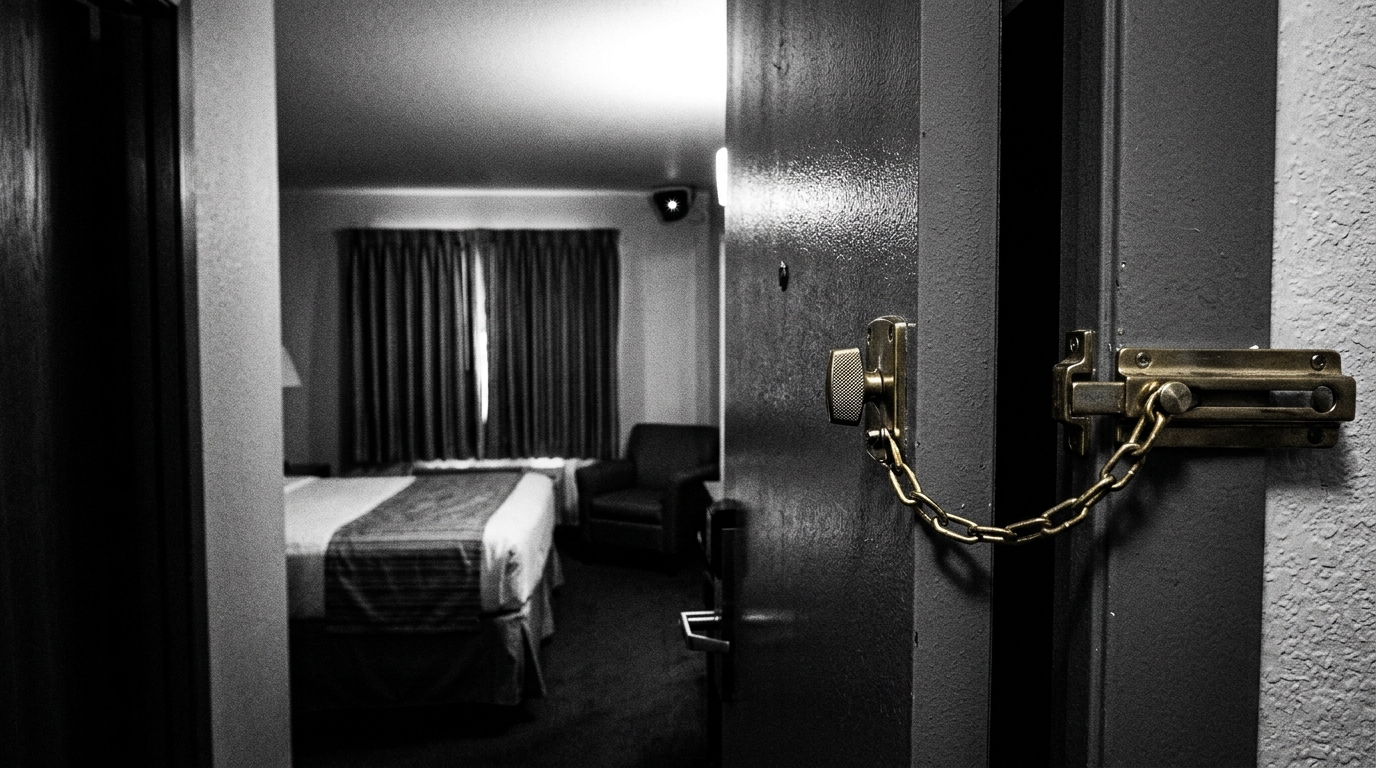
A man in Northern Ireland just got four months in jail for secretly recording a couple in a short-term rental and posting the footage online. If you're competing against Airbnb in your market, the privacy gap between your property and theirs just became a selling point you're probably not using.

So a 22-year-old in Northern Ireland secretly filmed two people having sex in an Airbnb, then posted it on social media. He got four months. The judge called it "malicious and wicked." The footage was out there before anyone even knew it existed.

Let's talk about what this actually means for our side of the business.

Airbnb banned all indoor cameras in April 2024. Every single one, regardless of disclosure or location. And look... that was the right call. But here's the thing about policy versus architecture: Airbnb can write whatever rules it wants. There is no physical infrastructure to enforce them. No security team walking the halls. No front desk agent noticing something off. No housekeeping staff entering the unit between guests who might spot a device that shouldn't be there. The enforcement mechanism for Airbnb's camera ban is basically the honor system. The enforcement mechanism for guest privacy at a hotel is a locked door, controlled key access, professional staff, and (in most cases) actual security cameras in public areas pointed at hallways... not bedrooms. That's not a talking point. That's architecture. And architecture beats policy every single time.

The research on this is actually pretty striking. Properties that get safety-related reviews on Airbnb see occupancy drops of 1.5% to 2.4% and nightly rate declines around 1.5%. Guests who personally experience a safety issue are 60% less likely to rebook on the platform. That's not sentiment... that's booking behavior. And incidents like this one don't stay local. They go viral (this one literally did, because the perpetrator made sure of it). Every time a story like this breaks, there's a window where travelers are actively reconsidering their default choice between "hotel" and "rental." Most hotels do nothing during that window. They should.

I talked to a GM last month who competes against 40+ Airbnb listings within a two-mile radius of his 110-key select-service. He'd never once mentioned privacy or security in his marketing. Not on the website. Not in the booking confirmation. Not at check-in. "We just assume people know hotels are safer," he told me. They don't. Travelers default to whatever is cheapest or most convenient unless you give them a reason to think differently. Privacy is a reason. Professional staffing is a reason. Controlled access is a reason. But you have to actually say it. Not in a fear-mongering way (that backfires). In a "here's what you get when you stay with us" way. The Dale Test question here is straightforward: if something goes wrong at 3 AM in an Airbnb, who do you call? If something goes wrong at 3 AM in your hotel, someone is already there.

Northern Ireland is now consulting on new regulations for short-term rentals, including potential new statutory categories and certification requirements. That regulatory momentum is building in markets everywhere... from New York to Barcelona to Tokyo. And every time it builds, the operational cost gap between running a legal short-term rental and running a hotel narrows. Which means the price advantage that drove Airbnb's growth gets thinner. Which means service, safety, and privacy become bigger differentiators. Hotels have always had these advantages. They've just been terrible at articulating them. This is the kind of story that gives you a reason to start.

Operator's Take

Here's what I'd do this week if I'm a GM competing against short-term rentals in my comp set. Pull up your website and your booking confirmation email. Search for the words "privacy," "security," "staffing," or "24-hour." If none of them appear, you're leaving your strongest competitive advantage unspoken. Add a single line to your confirmation: "Our property is staffed around the clock with professional team members and secure key-card access to all guest floors." That's not marketing fluff... that's a fact, and right now it's a fact that matters more than usual. Don't attack Airbnb by name. You don't need to. Just state what you provide. Let the guest connect the dots. They will.

— Mike Storm, Founder & Editor
Read full analysis → ← Show less
Source: Google News: Airbnb
Another Airbnb Shooting. And Hotels Still Can't Figure Out How to Use This.

Another Airbnb Shooting. And Hotels Still Can't Figure Out How to Use This.

Dozens of rounds fired at an Airbnb house party near a university campus, and the short-term rental platform's anti-party tech blocked 20,000 bookings over July 4th alone. If you're a hotel operator who thinks the safety argument sells itself, you're wrong... and you're leaving money on the table.

So here's what actually happened. Dozens of shots fired at a house party in a short-term rental near a university campus. One person hurt. Chaos. Police responding to a scene that looks like something out of a cable news segment, not a neighborhood with a rental listing on a travel platform.

And this isn't an isolated thing. January 2026, two teenagers killed at an Airbnb party in Tennessee. November 2025, nine people injured at a birthday party in Ohio... in a town that had already banned Airbnb rentals. June 2025, one killed, three injured in South Carolina, with roughly 30 shell casings found inside the home. Inside. The home. These aren't edge cases anymore. This is a pattern that repeats every few months, and every time it repeats, the same cycle plays out: outrage, Airbnb issues a statement about their party ban and their "anti-party technology," local communities push back, and then everyone moves on until the next one.

Look, I'll give Airbnb credit where it's earned. Their anti-party algorithm blocked or redirected over 20,000 bookings over the July 4th weekend in 2025. They reported a 44% drop in reported parties between August 2020 and August 2021 after implementing the ban. They've banned over 6,500 users. Those numbers aren't nothing. But here's the Dale Test question: what happens when the algorithm doesn't catch it? What happens when someone books a three-bedroom house for "a quiet family weekend" and 40 people show up at 11 PM? The algorithm is a filter, not a lock. And the failure mode isn't a bad review... it's gunfire. No amount of machine learning changes the fundamental architecture problem: these are unsupervised residential properties in neighborhoods that never signed up for this. There is no front desk. There is no security. There is no night auditor walking the floor. There is nobody. That's not a technology gap. That's a structural one. And no API call fixes it.

What frustrates me is that the hotel industry keeps treating these incidents like they're self-evidently good for hotels. "See? Hotels are safer!" Great. You're right. Hotels ARE safer. You have cameras, you have staff, you have access control, you have noise policies with actual enforcement. But being right and being effective are two different things. Research from late 2025 showed that safety-related negative reviews on Airbnb listings caused a 1.5% to 2.4% drop in occupancy and roughly 1.5% drop in average nightly pricing for those specific properties. That's real. But is that demand flowing to hotels? Or is it flowing to a different Airbnb listing three blocks away with better reviews? If you're a hotel operator near a university campus or in a market with heavy short-term rental activity, the question isn't "are we safer than Airbnb?" The question is "are we making our safety an actual selling point in the channels where that demand is searching?" Because I talk to GMs who have never once mentioned security, 24/7 staffing, or on-site personnel in their OTA listings, their Google Business profiles, or their direct booking messaging. The competitive advantage exists. The marketing of that advantage mostly doesn't.

The technology angle here matters too. Airbnb is spending real engineering resources on party prevention... noise monitoring partnerships, booking pattern algorithms, identity verification. That's defensive technology. They're building systems to prevent their platform from being used for something it wasn't designed for. Meanwhile, most hotels I consult with are still running guest-facing tech from 2018 and arguing about whether to upgrade their WiFi. Airbnb's safety problem is structural and probably unsolvable at scale without fundamentally changing what the product is. Hotels' advantage is also structural... and it's just sitting there, undermarketed and underinvested in. That's the part that gets me.

Operator's Take

Here's what I'd actually do if I were running a hotel in a market with heavy short-term rental activity... especially near a university or in a residential neighborhood that's been dealing with party houses. First, audit your OTA listings and your direct booking page this week. If the words "24/7 front desk," "on-site security," or "safe, professionally managed property" don't appear somewhere a guest can see them, fix that before Friday. Second, if you're in a market where Airbnb party incidents have made local news, that's a gift. Talk to your sales team about how you're positioning group bookings, event blocks, and family reunions against the alternative. You don't have to trash-talk the competition. Just make the contrast obvious. "Professionally staffed. Noise-controlled. Safe for your family." That's not a slogan. That's the truth. Use it.

— Mike Storm, Founder & Editor
Read full analysis → ← Show less
Source: Google News: Airbnb
A Father Was Killed in His Hotel Room at 5 AM. His Baby Was Right There.

A Father Was Killed in His Hotel Room at 5 AM. His Baby Was Right There.

A 30-year-old father was shot and killed in his second-floor room at an Extended Stay America in Springdale, Ohio, while his one-year-old child and the child's mother were feet away. If you run an extended-stay property, the question you need to sit with isn't whether this could happen at your hotel... it's what you'd do in the 47 minutes between the gunshot and the first news truck.

Available Analysis

I managed a property once where a guest pulled a knife on another guest in the parking lot at 3 AM. Nobody got hurt. The police came, took a report, and left. The next morning I had 14 staff members who'd heard about it, a front desk agent who didn't want to work nights anymore, and zero guidance from anyone about what to say to the guests who saw police lights from their windows. That was a knife in a parking lot. Nobody died.

A 30-year-old man was shot and killed inside his room at an Extended Stay America in Springdale, Ohio, at 5:17 in the morning on June 30th. His one-year-old baby was in the room. The child's mother was in the room. The suspect... a 20-year-old staying in the room next door... fired shots through the wall. Court documents say the shooter didn't know the victim. Didn't know the mother. Just fired into the room and later told police he was "trying to scare his child's mother." A $30 million bond was set. The father is dead. The baby is alive and will never remember this, which might be the only mercy in the entire story.

Here's what I want to talk about, because nobody else is going to. That property is a 70-room extended-stay built in 1988. It sold late last year to a private investor. Which means right now, somewhere, there's an owner who bought this hotel maybe seven months ago and is staring at a news cycle that has their property's name attached to a murder. There's a GM (or maybe just a manager on duty, because a 70-key extended-stay at 5 AM might not have a GM anywhere near the building) who walked into the worst shift of their career. There's a front desk agent or night auditor who heard gunshots, called 911, and then had to keep functioning. That person probably makes $14 an hour. Maybe $15. And there's a housekeeper who's going to have to service that room eventually, or the room next to it, or the hallway. Nobody's talking about any of these people.

Extended-stay properties carry a specific operational reality that transient hotels don't. Your guests are residents. They're there for weeks, sometimes months. You don't have the natural turnover that flushes problems out every 48 hours. The person in 204 knows the person in 206 in ways that don't happen at a Courtyard. Conflicts build. Tensions simmer. And your staffing model... lean by design, skeleton crew overnight... means that when something goes wrong at 5 AM, you might have one person in the entire building who works there. One. This isn't a criticism. It's the math of operating a 70-key extended-stay. But it's a math that assumes nothing catastrophic happens on the overnight shift. And sometimes it does.

The property had another incident in 2024... a man found dead from a gunshot in the lobby of a nearby hotel on the same street. This is a corridor with a history now. If you're the new owner, you're doing a calculation right now that has nothing to do with RevPAR or occupancy. You're calculating whether the cost of additional overnight security ($18-22/hour in that market, call it $50K-$60K annually) is worth it against what just happened. And you're realizing that the answer is unknowable... because you can't put a dollar value on a prevented tragedy. You can only put a dollar value on the one that already occurred. Insurance. Legal exposure. Reputation. Online reviews that will reference this for years. The invisible costs that never show up on a P&L but absolutely show up in the value of your asset. I've seen properties carry the weight of a single violent incident for a decade. It doesn't wash off with a rebrand or a renovation. It lives in the Google results. It lives in the staff who were there that night and never quite come back to normal.

Operator's Take

If you run an extended-stay property... any size, any flag, any market... do three things this week. First, audit your overnight staffing and ask yourself honestly: if a violent incident occurred at 4 AM, who responds, what's the protocol, and has anyone actually been trained on it? If the answer is "the night auditor calls 911," that's a start but it's not a plan. Second, review your guest screening process for extended-stay residents. I'm not talking about turning your hotel into a fortress. I'm talking about knowing who's in your building. Third, and this is the one nobody wants to hear... call your insurance broker and ask specifically about liability exposure for violent criminal acts by one guest against another. Don't wait for the claim. Know what you're carrying before you need to. That family in Ohio had a one-year-old baby in the room. Your staff could be one shift away from being the person who has to deal with something like that. Make sure they're not doing it alone and untrained.

Read full analysis → ← Show less
Source: Google News: Extended Stay Hotels
A Mother and Two Children Died in One of Your Rooms. Now What.

A Mother and Two Children Died in One of Your Rooms. Now What.

A housekeeper or maintenance tech at a Houston Residence Inn discovered a mother and her two children dead this week, and somewhere tonight a GM is rewriting their critical incident plan because they just realized they don't have one that covers this.

I got a call once from a GM at a property I was consulting with. Not about rates. Not about a PIP. A guest had died in a room overnight and the morning housekeeper found the body. The GM's voice was steady but hollow. The first thing he said wasn't about the police report or the legal exposure or the PR. He said, "Mike, my housekeeper won't stop shaking. She's been here nine years. What do I do for her?"

That's where this story starts. Not with the headline. Not with the police investigation. With the maintenance workers at a Residence Inn near NRG Stadium in Houston who went to check on a room that had been occupied since Wednesday and found a 40-year-old woman and her two children... a nine-year-old boy and a six-year-old girl... dead. Apparent murder-suicide. Room locked from the inside.

Let me be direct. There is no playbook that prepares you for this. I don't care how many crisis management seminars you've attended or how thick your brand standards manual is. When a member of your team opens a door and finds something like this, the next 72 hours will define you as a leader more than any revenue strategy or renovation timeline ever will. Your staff is watching. Your remaining guests are watching. And if you reach for the corporate communications template before you reach for the human being who just had their life changed by what they saw... you've already failed the only test that matters.

Here's what nobody talks about in our industry. Hotels are not just buildings where people sleep. They are, for some guests, the last place they go. People check in during the worst moments of their lives. Domestic violence situations. Mental health crises. Family breakdowns that have reached the point of no return. This woman checked in on a Wednesday and was found on a Friday. Two days. Two days where she was in your building, possibly in crisis, and the system... our system... wasn't designed to notice. I'm not saying it should have been. I'm not assigning blame. I'm saying we need to stop pretending that "hospitality" is just a business model and start acknowledging that the word means something, and sometimes what it means is ugly and heartbreaking and way above our pay grade.

Houston's violent crime rate runs more than double the national average. Over 26,000 violent crimes reported in 2024. If you're operating in that market, or any market with similar numbers, and you don't have a critical incident response plan that goes beyond "call 911 and corporate"... you're not ready. And "not ready" doesn't just mean liability exposure, though that's real. It means when your maintenance tech or your housekeeper or your night auditor walks into something no training video could prepare them for, they're alone. That's not acceptable.

The rooms around that suite at the Residence Inn were occupied. The hotel stayed open. Operations continued. Because that's what we do. The machine keeps running. But somewhere in that building, a team member who came to work expecting to fix a leaky faucet or restock a supply closet walked into something that will follow them for the rest of their life. That person matters more than the ADR, more than the brand reputation, more than the incident report. If your crisis plan doesn't start with that person... rewrite it.

Operator's Take

If you're a GM at any property... branded, independent, 90 keys or 900... pull your critical incident plan this week. Not next month. This week. If it doesn't include three things, it's incomplete: first, an immediate trauma response protocol for the staff member who discovers the scene (who stays with them, who relieves them, who gets them professional support within 24 hours, not through an EAP number on a poster in the breakroom but an actual human being). Second, a communication plan for remaining guests on the floor and adjacent rooms that balances transparency with sensitivity. Third, a relationship with a local crisis counseling provider established BEFORE you need it, because you will not be shopping for one at 3 PM on a Friday with police tape in your hallway. The brand's 800 number is not a plan. Your team is your plan. Take care of them first and the rest follows.

Read full analysis → ← Show less
Source: Google News: Marriott
A Pound of Cocaine in a Portland Airbnb. And Nobody Checked Who Was Staying There.

A Pound of Cocaine in a Portland Airbnb. And Nobody Checked Who Was Staying There.

A New York man turned a Portland short-term rental into a drug distribution hub, and the platform's "safety systems" didn't catch a thing. If you're a hotel operator competing against Airbnb on price, maybe it's time to start competing on what you actually provide... accountability.

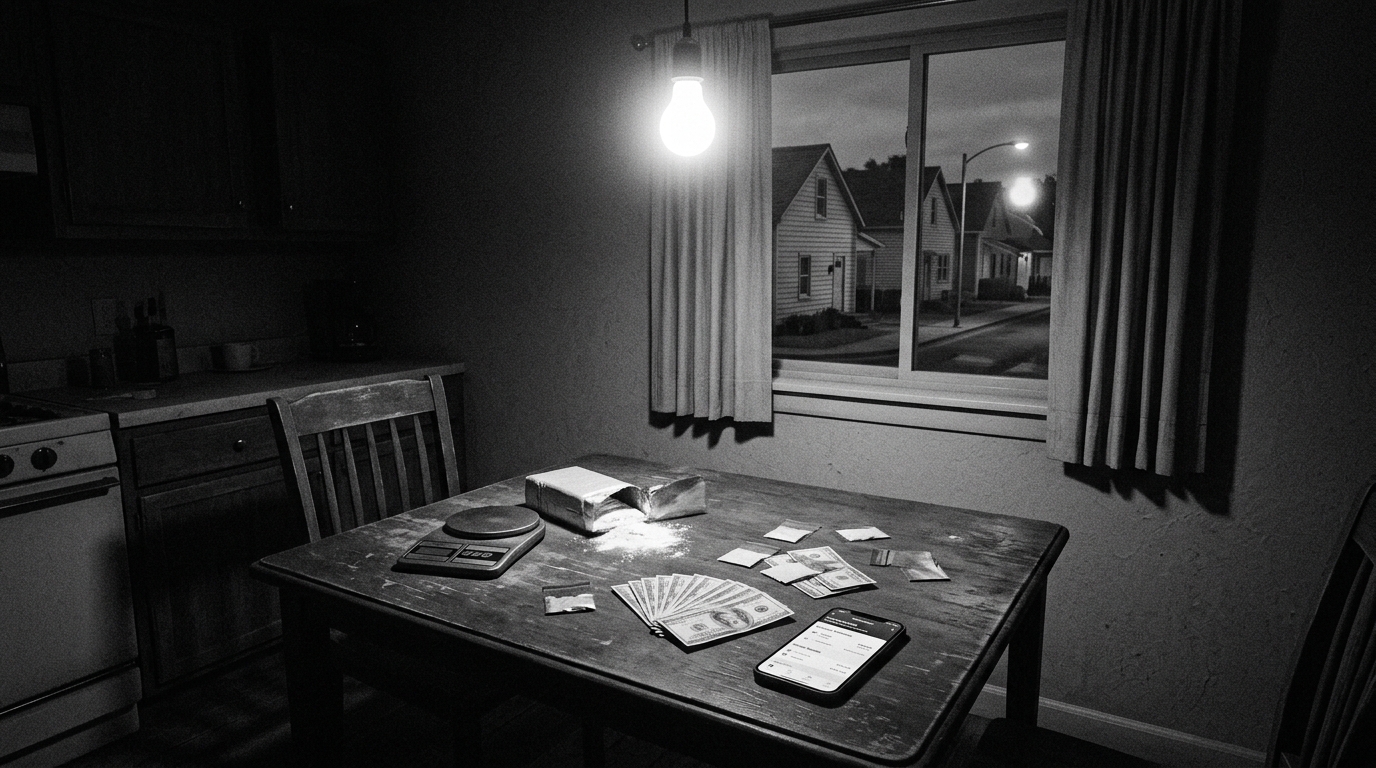
So let me get this straight. A guy from the Bronx books an Airbnb in Portland, Maine, sets up shop with over a pound of cocaine, 13 grams of crack, and $38,000 in cash... and the platform's vaunted trust-and-safety infrastructure catches exactly none of it. Maine drug agents had to do the actual work. The "global Law Enforcement Operations team" Airbnb loves to mention in press statements? Nowhere in this story.

Look, I'm not here to pile on Airbnb for the sake of it. I use the platform. I've recommended it to friends traveling with families who need kitchen space. But this is a technology and accountability story, and it's one the hotel industry should be paying very close attention to. Airbnb's entire safety model is reactive. Their policy says they "take appropriate action when they become aware" of illegal activity. When they become aware. That's the whole game right there. There is no proactive monitoring. There's no night auditor walking the halls. There's no front desk agent noticing that the guest in 204 has had 15 visitors in two hours. There's an algorithm that processes reviews after checkout and a support team that responds to complaints. That's not a safety system. That's a suggestion box.

Hotels have something short-term rentals structurally cannot replicate... humans on-site, 24/7, with eyes on the building. I talked to an independent operator last month who told me his night auditor flagged a noise complaint that turned out to be an illegal poker operation in a suite. Caught it at 1 AM. Called the cops by 1:15. Property was clear by 2. That's not technology. That's a person doing their job in a building with actual oversight. No app does that. No "AI-powered trust system" does that. A person does that.

Here's the technology angle nobody's discussing. Airbnb has the data infrastructure to do more. They have booking pattern analysis. They have payment velocity data. They have the ability to flag anomalous behavior... single-night bookings from out-of-state guests in residential neighborhoods, repeated short stays at the same property, payment patterns that don't match leisure travel. The technology exists. They choose not to deploy it aggressively because aggressive screening creates friction, and friction reduces bookings, and reduced bookings reduce revenue. That's a business decision disguised as a technology limitation. I've built booking systems. I know what you can detect if you actually want to.

The real question for our industry isn't "how do we use this to bash Airbnb?" It's "how do we use this to articulate the value proposition we already have?" Every hotel in America already provides what that Portland Airbnb didn't... accountability, on-site staff, security infrastructure, and a legal entity that answers the phone when something goes wrong. We've been so busy trying to compete with short-term rentals on flexibility and price that we forgot to sell what we actually do better. This story is a reminder. Not every competitive advantage shows up on a rate comparison.

Operator's Take

Here's what I'd do if I were running an independent or select-service property in any market where Airbnb has meaningful share. Take this story and use it... not as a cheap shot, but as a conversation with your local convention bureau, your tourism board, your city council. The argument for short-term rental regulation just got a lot easier to make. If you're in a market where STR regulation is being debated, print this article and bring it to the next public comment session. And for your own property... train your front desk and night audit teams on what suspicious activity looks like. Document your security protocols. Make them visible. When a guest sees a staffed lobby and a security walk at midnight, they're seeing something no Airbnb can offer. That's worth selling. Put it on your website. Put it in your booking confirmation emails. "Staffed 24/7 for your safety" isn't just a line. After a story like this, it's a differentiator.

— Mike Storm, Founder & Editor
Read full analysis → ← Show less
Source: Google News: Airbnb
An Airbnb Booked for 7 Drew 800. Your Neighbor's Rental Is Your Security Problem.

An Airbnb Booked for 7 Drew 800. Your Neighbor's Rental Is Your Security Problem.

A luxury Airbnb in Texas was rented for seven guests. Up to 800 showed up, police fielded shots-fired calls, and the $7.6M property was trashed. Airbnb's "permanent party ban" and anti-party technology didn't stop any of it... which should tell hotel operators something important about the platform's enforcement gap.

Available Analysis

So let me get this straight. Airbnb has a permanent global party ban. They have anti-party reservation prevention technology. They have a 24-hour safety line, a Neighborhood Support Line, mandatory identity verification for 100% of guests, and a partnership with Vrbo to share repeat offender data. And a booking for seven people at a luxury property in Celina, Texas turned into somewhere between 500 and 800 teens and young adults, 911 calls about shots fired, ten armed men at the front gate threatening to kill someone, and a multi-million dollar home left full of broken granite, shattered glass, and garbage.

Let's talk about what this actually tells us.

Airbnb reported a 44% drop in party incidents between 2020 and 2021, and they've been pointing to that stat ever since as proof the system works. But here's the thing about platform-level enforcement in short-term rentals... it's a detection problem, and the detection is fundamentally broken. The anti-party tools are screening for patterns (large group bookings, one-night stays near holidays, guests under a certain age). What they can't screen for is someone booking for seven people and then advertising the address on social media to hundreds of strangers. No algorithm catches that. No identity verification catches that. The property owner, Kishore Karlapudi, says the guests lied about the purpose and size of the booking. Of course they did. Lying to a platform is trivially easy when the platform's enforcement model is built on trusting what guests enter into a form field.

Look, I'm a technology guy. I've built systems that were supposed to prevent exactly this kind of thing... not parties specifically, but the general category of "bad actor circumvents rules because the system trusts declared inputs instead of verifying actual behavior." Every system I've ever seen that relies on self-reported data as its primary control fails the moment someone decides to lie. It's not a technology limitation you can patch. It's an architectural flaw. Airbnb's anti-party measures are sophisticated marketing wrapped around a fundamentally weak enforcement mechanism. They work against careless violators. They do nothing against intentional ones.

For hotel operators, the angle here isn't schadenfreude (though I understand the temptation). It's this: short-term rental platforms are going to keep having these incidents because their enforcement architecture can't prevent them. And every time it happens, two things follow. First, local regulators get louder about short-term rental restrictions... and in markets where those restrictions actually get teeth, hotel pricing power improves measurably. Second, the safety and security gap between hotels and STRs gets wider in the public consciousness. You have a front desk. You have security protocols. You have cameras in public areas (yes, Airbnb banned indoor cameras entirely as of April 2024... hosts can't even monitor their own property's interior). You have staff on-site 24/7. That's not just a service advantage. It's a safety advantage. And incidents like Celina make that advantage impossible to ignore.

The property owner here is dealing with tens of thousands in damage, a listing pulled offline for repairs, and a police report that reads like a small riot. The platform collected its service fee and sent a press statement about its party ban policies. That risk distribution... host absorbs 100% of the downside, platform absorbs 0%... is the structural reality of short-term rentals that doesn't change no matter how many safety features get announced at earnings calls.

Operator's Take

Here's what I'd actually do with this. If you're running a hotel in a market where STR competition is real (and that's most of you), print this story and put it in your next ownership meeting packet. Not to gloat... to make the case for your group sales pitch to event planners, wedding blocks, and corporate accounts. Your property has on-site security, liability coverage, and staff who can intervene before a situation escalates to shots fired. That's a selling point. Say it out loud. If you're in a market with active STR regulation debates, get involved. Show up at the city council meeting. Bring the data. Every incident like Celina is an argument for the level playing field you've been asking for. And if you have STR properties operating in your comp set without the same fire code, occupancy limits, and security requirements your hotel meets... that's not competition. That's a regulatory gap someone should be closing.

— Mike Storm, Founder & Editor
Read full analysis → ← Show less
Source: Google News: Airbnb
End of Stories