Today · Jun 10, 2026
Primm Valley Paid the Price for Standing Still Between Two Markets That Moved

Primm Valley Paid the Price for Standing Still Between Two Markets That Moved

Three casino resorts that once pulled 2,600 rooms of California traffic off I-15 are going dark by July 4th. The closure is a textbook case of what happens when your competitive moat evaporates and nobody builds a new one.

Available Analysis

I worked with a guy years ago who managed a property right off a major interstate exit. Location was everything. Travelers had to stop... there was literally nowhere else to go for 40 miles in either direction. He used to say "we don't need to be great, we just need to be here." And for a long time, that was true. Then a competitor opened 20 miles south. Then another one 15 miles north. Within three years his occupancy dropped 30 points and his ADR followed it down. He kept saying "but we're the original." Nobody cared. The travelers had options now, and his "we just need to be here" strategy turned out to be no strategy at all.

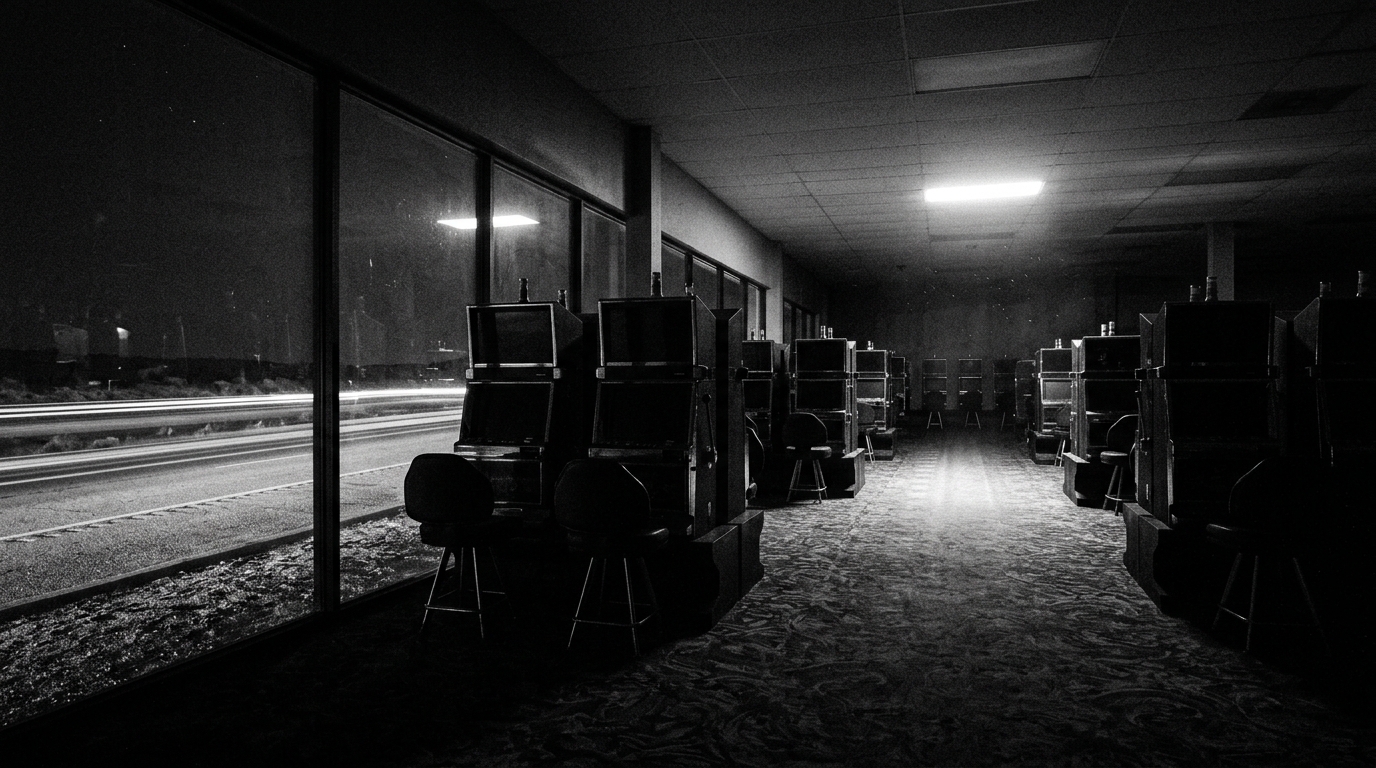
That's Primm. For decades, those three properties... 2,642 rooms, 137,000 square feet of casino floor, nearly 3,000 slot machines... existed because geography gave them a monopoly. You're driving from LA to Vegas, you need gas, you want to pull a slot handle, maybe stay overnight. Primm was the only game on that stretch of I-15. Then California's tribal casinos started expanding (Proposition 1A in 2000 gave them slot machines, and the build-out has been relentless ever since). Why drive to the Nevada border when you can gamble 45 minutes from home? The customer base didn't shrink gradually. It evaporated. And now the last property standing, Primm Valley Resort, closes July 4th. Three hundred and forty-four people lose their jobs. The ones living in company housing have two days after closing to be out.

Here's the part that should sting for anyone in operations. Affinity Gaming didn't ignore the problem. They tried to right-size. Closed Whiskey Pete's in December 2024. Moved Buffalo Bill's to events-only in mid-2025. Renovated. Adjusted. The CEO told the Nevada Gaming Control Board the property has been losing money for years despite investment. They did everything the playbook says to do... except the one thing that might have mattered, which is fundamentally reimagining what Primm was FOR. You can't right-size your way out of an existential problem. Trimming a business model that no longer works just means you're losing money more slowly.

Think about the timeline here. Herbst Gaming bought these three properties from MGM Mirage in 2007 for $400 million. That's roughly $151,000 per key across the portfolio. Today, nobody's buying at any price. There's a potential buyer sniffing around (a travel center operator interested in maybe reopening Whiskey Pete's), but the Primm family who owns the land says no deal is close. The distance between $400 million and "maybe someone will take one of these off our hands" is the entire story of what happens when your competitive advantage was never really yours... it was just geography, and geography stopped being enough.

This isn't just a casino story. Every hotel operator sitting on a location-dependent asset should be paying attention. If the only answer to "why do guests choose us?" is "because we're here," you're one competitor, one bypass road, one shift in travel patterns away from being Primm. The properties that survive market shifts are the ones that give people a reason to come, not just a reason to stop. That old night auditor's notebook, the $40K guest satisfaction platform, the revenue management system... none of it matters if the fundamental question of why you exist doesn't have an answer anymore.

Operator's Take

If you're running a property where location is your primary demand generator... an interstate exit, a remote stretch of highway, the only game near an airport or military base... take an honest hour this week and write down every competitive threat that could change that equation in the next five years. New supply. A road project that reroutes traffic. A tribal gaming expansion. A competitor's renovation that makes your product look tired. Then ask yourself: if that demand generator disappears, what's your second reason to exist? If you don't have one, start building it now. Primm had 25 years of warning that the California tribal casinos were coming for their customer base. Twenty-five years. And the answer was still "we're the stop on I-15." Don't be the operator who learns this lesson from someone else's closure when you could be learning it from your own honest assessment today.

Read full analysis → ← Show less
Source: Google News: Casino Resorts
Disney Just Opened Its Booking Engine to a Hyatt. Every Off-Site Hotel in Orlando Should Be Paying Attention.

Disney Just Opened Its Booking Engine to a Hyatt. Every Off-Site Hotel in Orlando Should Be Paying Attention.

The Hyatt Regency Grand Cypress can now be booked as part of a Walt Disney World vacation package directly through Disney's website. That sounds like a nice press release... until you think about what it means for the 400-plus other hotels within shuttle distance of the Magic Kingdom that just lost a competitive edge they didn't know they had.

Available Analysis

I've seen this movie before. Not with Disney specifically, but with the pattern underneath it. A dominant demand generator in a market... a convention center, a casino, a theme park... decides to extend its booking ecosystem to include a select few third-party properties. And everyone focuses on the property that got picked. The real story is what happens to the properties that didn't.

Xenia Hotels & Resorts owns the Hyatt Regency Grand Cypress. They paid $205.5 million for it back in 2017. That's roughly $252K per key for an 815-room resort sitting on 1,500 acres with a Jack Nicklaus golf course and a Michelin-recommended restaurant. It was already one of the strongest off-site plays in the Orlando market. Now Disney is letting guests book it directly through disneyworld.com as part of a bundled vacation package... theme park tickets, hotel, shuttle transportation, one checkout. That's not a marketing partnership. That's distribution infrastructure. Disney just handed this property a booking channel that reaches tens of millions of vacation planners who never leave the Disney ecosystem to shop. Think about that. A family planning a Disney trip goes to Disney's website, and instead of only seeing Disney-owned resorts at $400-600 a night, they now see a Hyatt option that probably comes in lower with arguably better amenities. Complimentary shuttles to the Transportation and Ticket Center, EPCOT, and Disney Springs included.

Here's what nobody in the press releases is talking about. Disney doesn't do this out of generosity. They do this because their own resort inventory has constraints... pricing, availability, capacity during peak periods... and every family that gets sticker shock and books off-site entirely is a family that might not buy the ticket bundle, might not book through Disney's channel, might not spend as much in-park. By pulling a high-quality off-site property INTO the Disney booking funnel, they keep the guest inside their commercial ecosystem even when the guest sleeps somewhere else. That's brilliant, frankly. And it should terrify every other off-site hotel operator in the Orlando market who's been competing on proximity and shuttle service as their differentiator. Because proximity and shuttle service just became table stakes for the property Disney chose... and irrelevant advantages for the ones they didn't.

I worked in a market once where the convention center started a "preferred hotel" program. Five properties got listed on the convention center's website with direct booking links. Those five saw a measurable lift in group business within 90 days. The other 30 hotels in the comp set? Their sales teams suddenly had to work twice as hard to get the same leads they used to get organically. Nobody's hotel got worse. The distribution landscape just shifted underneath them overnight. That's what's happening in Orlando right now, except the demand generator isn't a convention center with 200,000 attendees a year. It's Walt Disney World with 58 million.

The financial terms between Disney and Hyatt/Xenia haven't been disclosed, and they won't be. But make no mistake... there's a cost baked in somewhere. Commission structure, rate parity requirements, brand standards for the shuttle experience, something. Disney doesn't give away shelf space on their booking platform for free. The question for Xenia's asset management team is whether the incremental demand justifies whatever that cost turns out to be. For an 815-key resort property, even a 3-4 point occupancy lift from Disney channel bookings could move the NOI needle significantly. And for every other off-site hotel operator in Orlando who just watched a competitor get handed the most powerful leisure booking channel in the country... the question is what you're going to do about it before your next budget cycle.

Operator's Take

If you're running an off-site hotel in the Orlando market, this changes your competitive position whether you acknowledge it or not. The Hyatt Regency Grand Cypress just got access to a demand channel you can't buy your way into. Your move is to audit your own value proposition honestly this week. What are you offering Disney-bound guests that they can't get at the Grand Cypress with a Disney shuttle included? If the answer is "lower rate," that's a race to the bottom. If you have something real... location, a specific amenity, a family experience, a loyalty play... double down on it in your OTA descriptions, your Google profile, your direct booking messaging. And watch your comp set data like a hawk over the next two quarters. The shift won't show up in one month's STR report. It'll show up in your booking pace for Q4 and holiday season. See it coming before it arrives.

Read full analysis → ← Show less
Source: Google News: Hyatt
Foxwoods Is Gutting Itself to Stay Alive. The Playbook Should Look Familiar.

Foxwoods Is Gutting Itself to Stay Alive. The Playbook Should Look Familiar.

Foxwoods is closing retail, killing nightlife venues, and replacing them with Martha Stewart and celebrity chef concepts while a $300M water park rises next door. It's the same casino-to-destination-resort pivot everyone's tried, and the question isn't whether the new restaurants are good... it's whether the math works when your slot revenue is trending down and two mega-casinos are about to open near New York.

Available Analysis

I watched a casino resort die slowly once. Not the kind of death where they padlock the doors and everyone goes home. The other kind. The kind where they keep replacing things... swap out the steakhouse for a celebrity concept, renovate the tower, rebrand the nightclub, announce a "new era." Every six months there's a press release about the future. Every quarter the gaming numbers slip a little more. The staff starts reading the announcements the way you read horoscopes... mildly interesting, mostly fiction.

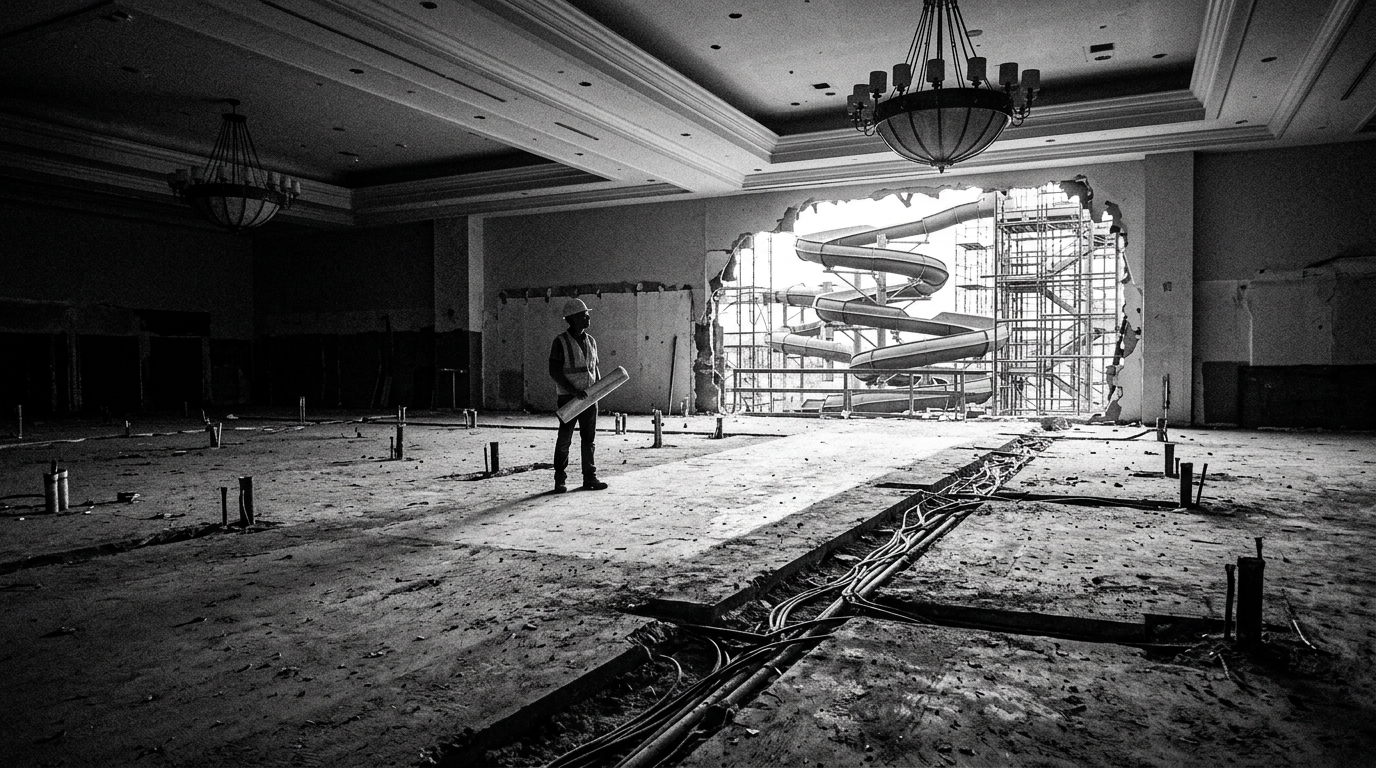
Foxwoods is in the middle of exactly that cycle right now. They've shuttered retail (some of it due to national bankruptcies, some of it just the market talking), permanently closed a nightclub that ran for nearly 20 years, and they're backfilling with Martha Stewart, Sally's Apizza, a Japanese nightlife concept, and a renovated tower. Meanwhile, a $300M Great Wolf Lodge water park is going up on 13 acres next door. The stated strategy is the one every aging casino resort reaches for eventually... "we're becoming a destination resort." I've heard that phrase so many times in 40 years that it should come with its own drinking game. The problem isn't the vision. The vision is usually right. The problem is the math underneath it.

Here's what the math looks like. Slot revenue in January 2026 was $28.6M. That's down from $30.7M last June. Q3 2025 total revenue dropped 2.3% year-over-year while operating expenses climbed 1.9%... payroll expansion, inflation, and the cost of all those new non-gaming amenities. Revenue declining and expenses rising is the definition of margin compression. And that's before two multi-billion-dollar casinos open near New York City, which is where a huge chunk of Foxwoods' drive-in market lives. Foxwoods' post-pandemic revenue is reportedly still running about 15% below 2019 levels. You don't diversify your way out of a structural demand problem... you have to actually replace the revenue you're losing, not just redecorate around the hole.

The celebrity chef strategy is interesting but it's not free. Gordon Ramsay, Martha Stewart, Masaharu Morimoto... these aren't licensing deals where you slap a name on the door and move on. These are complex operating agreements with real costs, real staffing requirements, and real brand standards. A Martha Stewart restaurant in a casino resort tower needs to deliver on the Martha Stewart promise. That means product quality, service levels, and consistency that a typical casino F&B operation isn't built for. I've seen properties bring in name-brand restaurant concepts and underestimate the operational lift by 40-50%. The concept opens beautifully. Six months later you're fighting to staff it at the level the brand requires and the food cost is eating you alive because the celebrity partner's menu wasn't designed with your market's price sensitivity in mind. The question isn't whether The Bedford is a good restaurant. The question is whether it generates enough incremental visitation and spend to justify what it costs to operate at the level Martha Stewart demands... in southeastern Connecticut, not Manhattan.

The Great Wolf Lodge partnership is the most interesting piece of this, and it's the one that could actually change the demand profile. A 91,000-square-foot indoor water park with a family entertainment center is the kind of amenity that creates NEW trips rather than just reshuffling existing ones. Families with kids aren't the traditional casino demographic, and that's exactly the point... you're adding a revenue stream that doesn't cannibalize gaming. But a $300M development on adjacent tribal land is a massive bet, and the integration between a water park resort and a casino resort is harder than it looks on the site plan. These are fundamentally different guests with fundamentally different expectations. The family checking in with three kids for the water park and the couple there for a weekend of table games and celebrity dining... those are two different hotels sharing a parking lot. Making that work operationally, from wayfinding to security to noise management to F&B routing... that's a challenge I've watched properties underestimate every single time.

Operator's Take

If you're running a large resort or casino property and your leadership team is pitching the "destination resort" pivot, here's what I'd do before anyone signs a celebrity chef deal or breaks ground on anything. Pull your revenue by segment for the last 36 months and identify which segments are actually growing versus which ones you're just cycling through. Then stress-test every new amenity against a 15% decline in your core gaming revenue... because that's what happens when new regional competition opens. If the celebrity F&B concept doesn't pencil without the gaming spend propping up covers, you're subsidizing a brand partnership with your existing margin. Build your operating pro forma on what your market actually supports, not what the concept looks like in the rendering. And if you're adding a family-oriented amenity to a gaming property, budget 25-30% more than you think you need for the operational integration... separate check-in flows, dedicated staffing, programming that keeps two fundamentally different guest types happy in the same complex. I've seen this movie before. The resorts that survive the pivot are the ones that did the math before the ribbon cutting, not after.

Read full analysis → ← Show less
Source: Google News: Casino Resorts
Disney's Spending $60 Billion on Parks. Your 200-Key Down the Road Feels Every Dollar.

Disney's Spending $60 Billion on Parks. Your 200-Key Down the Road Feels Every Dollar.

Disney is gutting and renaming Pop Century Resort as part of a $60 billion parks investment blitz. If you're an independent or branded select-service within 30 miles of Orlando, the competitive pressure just changed shape... and not in the direction you were hoping.

I watched a GM in the Orlando market lose 11 points of occupancy over 18 months once. Not because he did anything wrong. Not because his product deteriorated. Because the 800-pound gorilla three exits up on I-4 decided to renovate, reprice, and reposition... and every family that used to book his 160-key property as a "close enough to Disney" value play suddenly had a shinier option at a price point that made his rate look like a compromise instead of a deal.

That's the story nobody's writing about Disney sanding down the paint on Pop Century's sign and handing it a new name. The headline is cute... iconic resort gets a facelift, maybe a rebrand, the nostalgia crowd weighs in on social media. Fine. But here's what I see when I read it: Disney is methodically refreshing its entire value and moderate tier at the same time. Pop Century. Contemporary. Animal Kingdom Villas. Polynesian. BoardWalk Inn. Wilderness Lodge. Fort Wilderness. That's not maintenance. That's a portfolio-wide repositioning, and it's happening against the backdrop of a company that has publicly committed $60 billion to Parks and Experiences over the next decade, with $17 billion earmarked specifically for Walt Disney World expansion. New theme park potential. New water parks. More hotel rooms. More commercial space. When Disney decides to get serious about capturing a larger share of the Orlando lodging wallet, they don't send a memo. They send a wrecking ball.

And here's the part that should make every non-Disney hotel operator in Central Florida sit up. Disney has been pushing pricing hard enough that analysts are publicly questioning whether they've gone too far... attendance softened, occupied room nights dipped. So what does Disney do? They don't cut rate (they never cut rate). They renovate the product to re-justify the rate. Fresh rooms, new lobbies, updated theming, possibly entirely new brand identities for properties like Pop Century. That's the playbook. You raise the price, some guests push back, so you raise the product to meet the price. Meanwhile, the independent down the road is still competing on "we're cheaper and closer to the parks." Except now "cheaper" means "dated" in the guest's mind because they just saw what a renovated Disney value resort looks like, and "closer" doesn't matter as much when Disney's transportation infrastructure makes their bubble self-contained.

The timing matters too. Universal's Epic Universe is about to open, and the Orlando market is already seeing promotional activity ramp up. Disney Springs hotels are running spring deals. There's a land grab happening for the Orlando leisure traveler, and it's being fought with capital, not just rate. Disney alone is prepared to deploy billions. Universal is spending billions of its own. If you're a 150-key property on International Drive running 3-star product with a 2019 soft goods package, you are not in the same fight as these people. You're in a different sport entirely. The question isn't whether you can compete with Disney. You can't. The question is whether you understand that the competitive set you've been measuring yourself against just became irrelevant because the entire market is being reshaped above you.

This is what I call the Three-Mile Radius... your revenue ceiling is set by the three miles around your property, not your room count. And when the properties within that radius (or the ones that dominate your demand generators) invest at this scale, your ceiling moves. It doesn't move up. It moves in a direction that compresses your rate power and forces you to re-answer a fundamental question: why does a guest choose you instead of the option that just got $200 million in renovations? If you don't have a crisp, honest answer to that question, you're about to have a very uncomfortable budget season.

Operator's Take

If you're running a non-Disney hotel anywhere in the Orlando-Kissimmee corridor, pull your STR data from the last two quarters and look at your rate premium (or discount) versus the Disney value tier. That gap is about to shift. Disney is renovating its cheapest product to look like what its moderate tier looked like five years ago. Your comp set analysis needs to reflect that reality, not last year's positioning. Talk to your revenue manager this week about what happens to your rate strategy when a freshly renovated Disney resort at $189 is competing with your $139 room that hasn't been touched since 2020. If you're an owner with an Orlando asset and you haven't budgeted a meaningful rooms refresh in the next 18 months, you're not saving money... you're watching your asset depreciate in real time against competitors spending billions. Get a realistic PIP or renovation scope on paper now, before you're negotiating from weakness.

Read full analysis → ← Show less
Source: Google News: Resort Hotels
An Airbnb Guest Destroyed a Rental on Mushrooms. Hotels Should Be Paying Attention to What Happens Next.

An Airbnb Guest Destroyed a Rental on Mushrooms. Hotels Should Be Paying Attention to What Happens Next.

A drug-fueled meltdown at a Minnesota Airbnb ended in arrest, property damage, and assault charges. The real story for hotel operators isn't the incident itself... it's the regulatory wave building underneath it that could reshape your comp set overnight.

So here's what happened. An 18-year-old guest at an Airbnb in Otter Tail County, Minnesota, consumed mushrooms, went completely off the rails... throwing furniture, breaking mirrors, assaulting his girlfriend, biting through a spit hood at the hospital. Deputies found him unclothed and screaming on the upper level. The property got trashed. Charges filed. Local news picked it up. And now the county board is actively drafting new short-term rental ordinances driven by exactly this kind of incident.

Look, the incident itself isn't the story. People do dumb things in hotel rooms too (I've heard enough 2 AM front desk calls to know). The story is what's happening at the regulatory level. Otter Tail County is a vacation destination with hundreds of short-term rentals, and the complaints have been piling up... noise, parties, gatherings that overwhelm residential neighborhoods. This arrest just gave local officials the ammunition they've been waiting for. And this isn't isolated to rural Minnesota. Municipalities everywhere are tightening STR rules, and every incident like this accelerates the timeline. Federal agents busted an alleged Airbnb drug network in Minnesota just last month... 1.6 pounds of meth, $26,000 seized, rentals being used as stash houses. That's the pattern local governments are responding to.

Here's what actually matters for hotel operators, especially independents and select-service properties in leisure and vacation markets. Every new STR ordinance... every occupancy cap, every registration requirement, every noise violation fine... adds friction to the short-term rental supply in your comp set. Friction reduces supply or raises operating costs for hosts, which narrows the rate gap between an Airbnb and your property. I talked to an independent operator in a lake market last year who told me his weekday occupancy jumped 4 points after the county started enforcing STR permit requirements. Four points. Not because he did anything different. Because 15% of his Airbnb competition didn't bother getting permits and quietly disappeared from the platform.

But here's the part most operators miss. This regulatory wave doesn't help you automatically. It helps you if you're positioned to capture the demand that gets displaced. That means your booking channels need to be visible where STR guests are searching (and that's not just your brand.com... it's Google Maps, it's metasearch, it's the OTA filters that vacation travelers actually use). It also means your product needs to compete on the things STR guests value... kitchen access, space, flexibility, pet policies. If displaced STR demand shows up at your front desk and the experience feels rigid and institutional compared to what they're used to, you've won the booking and lost the repeat guest.

The technology angle here is real too. Airbnb has invested heavily in trust and safety tools... guest verification, neighborhood support lines, listing removal for violations. They removed thousands of listings that failed quality standards in Q1 2024 alone. The platform is self-regulating because the alternative is government regulation that's much worse for their model. Hotels have had this infrastructure forever... it's called a front desk, a security team, and a GM who answers the phone at midnight. That's actually your competitive advantage, and it's worth more in markets where STR incidents are making headlines. The question is whether your tech stack lets you tell that story to the guest before they book. Most hotel websites don't. Most booking engines don't. The "safe, professionally managed, someone's-actually-here-if-something-goes-wrong" message is sitting right there and almost nobody in our industry is using it.

Operator's Take

If you're running a hotel in a leisure or vacation market with significant Airbnb competition, this is your window. Start tracking your local municipality's STR regulatory activity... city council agendas, county board minutes, planning commission hearings. That's free intelligence about your future comp set. If new ordinances are coming, get ahead of the displaced demand by auditing your OTA listings and Google Business profile for the search terms vacation renters actually use. And here's the actionable piece most people skip... look at your house rules. Pet policies, extended stay flexibility, kitchen or kitchenette availability. The demand moving from STRs to hotels brings different expectations. If your cancellation policy is stricter than Airbnb's and your check-in feels like a TSA checkpoint, you're going to lose that guest to the next property that figured this out. This is what I call the Three-Mile Radius. Your revenue ceiling isn't set by your room count... it's set by what's happening in the three miles around your property. And right now, what's happening is STR regulation. Pay attention to it before your competitor does.

— Mike Storm, Founder & Editor
Read full analysis → ← Show less
Source: Google News: Airbnb

The Niche All-Inclusive Is Eating Your Leisure Market Share

Cancun's seeing a surge in ultra-targeted all-inclusive properties — adults-only, wellness-focused, activity-specific resorts that are pulling guests away from traditional full-service hotels. This isn't just a Mexico problem.

Here's what's happening on the ground in Cancun, and why you need to pay attention even if you're nowhere near the Yucatan: The all-inclusive segment is fragmenting hard. We're not talking about the mega-resorts with 800 rooms and 12 restaurants anymore. The growth is coming from 150-200 room properties built around a single hook — yoga and wellness, adults-only romance, adventure sports, culinary immersion.

I've seen this movie before. Twenty years ago, all-inclusives were the enemy because they were undifferentiated cattle operations. Now they're out-segmenting us. A couple planning an anniversary trip to Cabo or Jamaica isn't comparing your 300-room full-service resort to the Hyatt Ziva anymore. They're comparing you to a 180-room adults-only property with a dedicated spa, curated excursions, and zero kids screaming at the pool. And that property is winning on TripAdvisor because it delivers exactly what that guest wants.

The operational model is smarter than you think. These operators are running 70-75% occupancy year-round because their marketing is laser-focused. They're not trying to be everything to everyone. A wellness-focused all-inclusive in Tulum isn't competing for the spring break crowd — they don't want that guest. They're filling 160 rooms with guests who all want the same experience, which means simpler F&B operations, more efficient staffing, and higher guest satisfaction scores.

The pricing is aggressive too. These niche properties are commanding $400-600 per night all-in during high season, and guests feel like they're getting value because every amenity aligns with why they booked. Meanwhile, your traditional resort is nickel-and-diming with resort fees, spa upcharges, and premium restaurant reservations, and the guest feels squeezed.

Let me be direct: If you're operating a leisure-focused full-service property in a warm-weather destination, you need a clearer identity. The broad-appeal resort is losing ground to operators who know exactly who they're serving. You don't have to go all-inclusive, but you better have a sharp answer to "why should I book you instead of that adults-only property down the beach?"

Operator's Take

If you're running a 200+ room leisure property without a clear positioning, start surveying your actual guest mix today. Find out who's really booking you — families, couples, groups — and build your amenities and marketing around your dominant segment. Stop trying to capture every traveler and start dominating one niche. The middle is dying.

Read full analysis → ← Show less
Source: Google News: Resort Hotels
End of Stories