Iran Just Named Specific Hotels as Military Targets. This Changes the Security Conversation.
When a state actor publicly names five-star hotels as "legitimate targets" and backs it up with strikes that have already damaged properties in the Gulf, every GM running a hotel in an internationally sensitive market needs to rethink what "security" actually means in their operation.
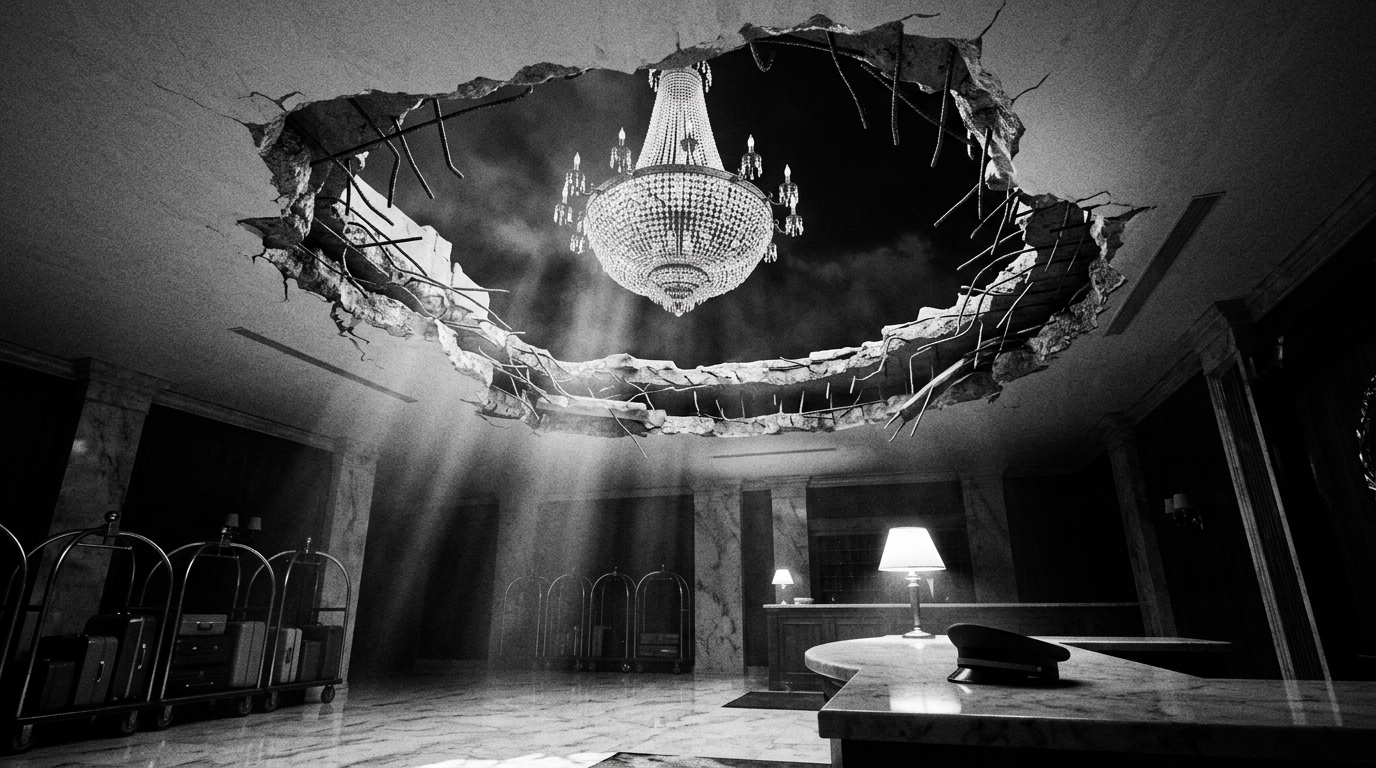
A regular at my blues club in Chicago back in the day, managed a hotel during the first Gulf War. Not in the Middle East... stateside, in a market with a large military installation nearby. I remember the week the threat level went up and he told me he got a call from local law enforcement suggesting he "review his properties security posture." That's government-speak for "we don't know what's coming and neither do you." He had a 280-key full-service hotel, a security team of three, and a corporate office that sent a PDF about "situational awareness." That PDF didn't help him figure out what to tell his front desk team when a guest asked if the hotel was safe.
That was a vague, indirect, maybe-something-happens situation. What's happening right now in the Middle East is different by orders of magnitude. Iran's state media, directly linked to the Revolutionary Guard, published specific hotel names... including a Four Seasons and a Sheraton... and called them legitimate military targets. Their claim is that US personnel are sheltering in civilian hotels. Whether that's true, partially true, or propaganda doesn't matter to the GM running a property in the Gulf right now. What matters is that a sovereign nation just told the world it considers your building a valid thing to shoot at. And this isn't hypothetical posturing. A property in Dubai has already taken damage. Dubai's airport was hit by a drone strike two weeks ago. Eleven people have reportedly died from strikes on hotels, airports, and residential buildings in Gulf states since this conflict started February 28th.
Let me be direct about what this means beyond the Middle East. The ripple effects are already massive... 80,000 hotel bookings cancelled across the Gulf, over 20,000 flights cancelled globally, and an estimated $600 million per day in lost visitor spending across Gulf tourism markets. Per day. That number is almost incomprehensible, but it's real, and it's hitting ownership groups, management companies, and individual properties in ways that will take years to fully unwind. If you're running a hotel in Dubai, Doha, Bahrain, or anywhere in that corridor, your business didn't slow down. It stopped. And the insurance implications alone... when a government explicitly names hotels as targets, every policy in the region is about to get repriced or cancelled.
But here's what I keep thinking about, and it's the part that connects to operators who aren't anywhere near the Persian Gulf. The security conversation in our industry has been about cybersecurity, active shooters, and maybe the occasional hurricane preparedness plan for the last decade. We haven't had to think about hotels as geopolitical targets since Mumbai in 2008. That attack changed security protocols globally for about 18 months, and then most properties quietly drifted back to baseline because the threat felt distant. This conflict is going to force that conversation open again... not just for international properties, but for any hotel in a market with symbolic value, government facilities, military presence, or high-profile international guests. Your security plan, whatever it says, was probably written for a world where hotels were soft targets of opportunity. We just entered a world where a state actor is publicly declaring them hard targets of intention. That's a fundamentally different risk profile, and most of our industry isn't remotely prepared for it.
The 10-day pause on US strikes against Iranian energy infrastructure buys a little time. Maybe talks go somewhere. Maybe they don't. But the precedent is set. A government said hotels are fair game and then acted on it. That bell doesn't un-ring. Every owner with international exposure, every management company with Middle Eastern or North African properties, and every brand with flags in sensitive markets needs to be having a very different conversation this week than they were having last month. And if you're stateside thinking this doesn't touch you... the State Department issued a worldwide caution for Americans abroad on March 22nd. Your international group business, your inbound tourism from markets that now have to route around a war zone, your insurance renewals... this touches you. You just might not feel it until next quarter.
This is what I call the Shockwave Response... you need to know your floor and your exposure before the next escalation hits, because panic is not a strategy. If you operate in the Gulf, the Middle East, or North Africa, get on the phone with your insurance broker today, not next week. Understand exactly what your policy covers and doesn't cover when a state actor has publicly designated hotels as military targets. If you're stateside or in Europe, pull your forward booking pace for any group business originating from or traveling through affected regions and stress-test your Q2 revenue against a 15-25% decline in that segment. Review your security protocols... not the binder on the shelf, the actual practices your team follows on a Tuesday night shift. And if you're a GM who hasn't had a real conversation with local law enforcement about your property's threat profile in the last 12 months, that conversation happens this week. Not because the sky is falling where you are. Because the operators who survive shocks are the ones who planned before the shock arrived.