Today · Jul 30, 2026
114 People Died Because an Engineer Didn't Recheck the Math. That Was 45 Years Ago Today.

114 People Died Because an Engineer Didn't Recheck the Math. That Was 45 Years Ago Today.

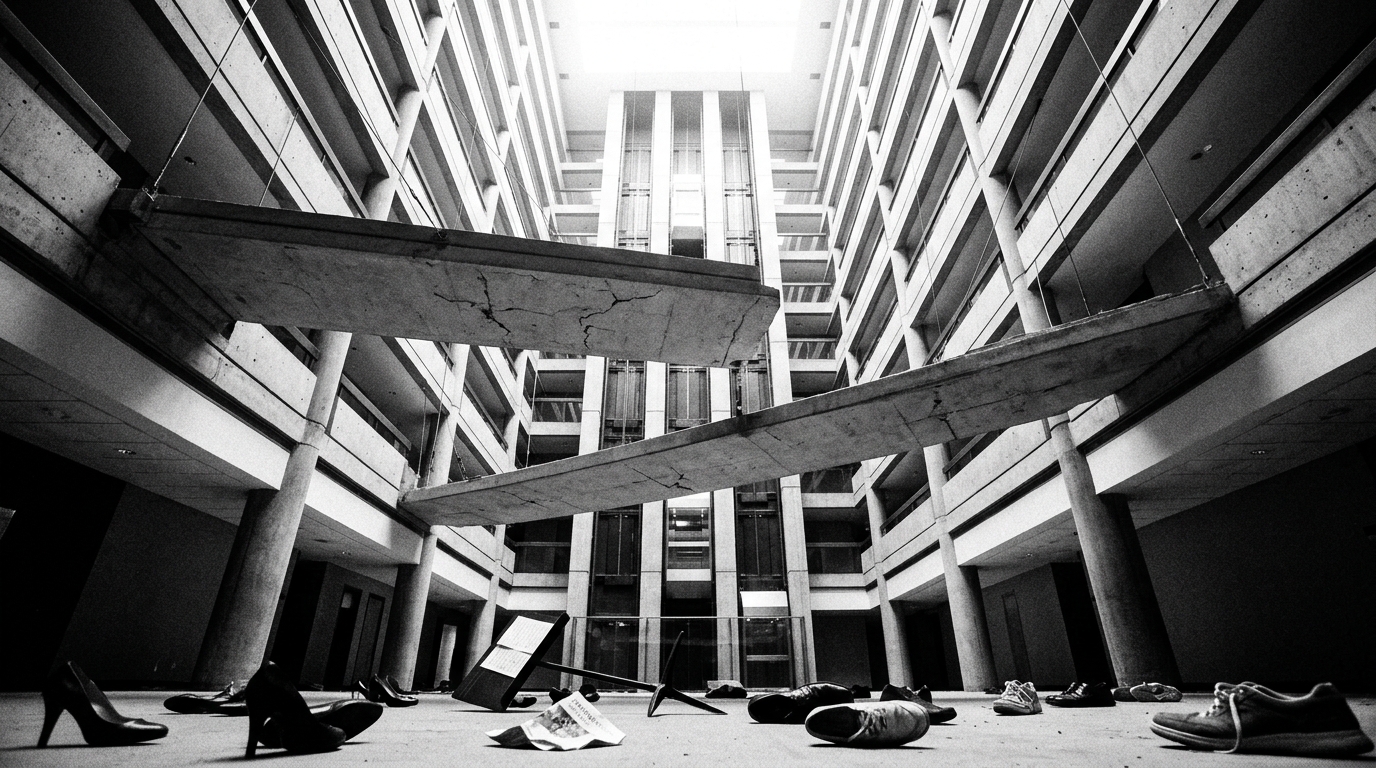
The Hyatt Regency skywalk collapse killed 114 people at a tea dance in Kansas City on July 17, 1981, and it happened because a steel fabricator changed a connection detail and the structural engineer approved it without recalculating the load. Forty-five years later, the question every hotel owner should be asking isn't whether their building is safe... it's whether anyone in their chain of command is actually checking.

Available Analysis

I grew up in hotels. My dad managed them. I lived in them. And one of the first stories he ever told me about the industry wasn't about guest satisfaction scores or revenue management or which brand had the best loyalty program. It was about Kansas City. About a Friday night tea dance in an atrium lobby where people were laughing and dancing and the skywalks above them were holding weight they were never designed to hold. He told me about the sound. He'd heard it described by someone who was there. He said you never forget a story like that, and he was right, because I never have.

Forty-five years ago today, two suspended walkways inside the Hyatt Regency Kansas City collapsed into the lobby below. One hundred and fourteen people died. Two hundred and sixteen were injured. The hotel had been open for one year. One year. A $50 million showpiece, brand new, the kind of property that's supposed to represent the best of what this industry builds... and it killed people because of a change that happened on paper, between an engineering firm and a steel fabricator, that nobody bothered to recheck. The original design called for continuous hanger rods supporting both walkways. The fabricator proposed splitting them into two separate rods to simplify assembly. The engineer approved shop drawings reflecting that change without recalculating what it meant for the load on the fourth-floor connections. That single approval, that single failure to recheck, doubled the stress on connections that were already designed to handle only 60% of the minimum code requirement. The walkways were hanging by a thread from the day they were installed. It just took a crowded Friday night to prove it.

Here's what haunts me about this story, even now, even after all these years of reading FDDs and evaluating brand standards and arguing about franchise fee structures. The system that failed wasn't some rogue actor or freak accident. It was a chain of professionals doing their jobs... almost. The fabricator proposed a change (reasonable... fabricators do this). The engineer approved it (routine... engineers review shop drawings constantly). But nobody stopped to ask the one question that would have saved 114 lives: does this change alter the math? The answer was yes. Catastrophically yes. And nobody checked. Not the engineering firm. Not the construction team. Not the city inspector. The original engineer of record later had his license revoked for gross negligence. His firm lost its ASCE membership. Victims' families were awarded approximately $140 million. The hotel reopened in October 1981, roughly two and a half months after the collapse, after a significant reconstruction, was eventually reflagged, and today operates under a completely different name. You can stay there tonight. Most guests have no idea what happened in that lobby.

I think about this story every time I watch our industry skip a step. Every time a brand pushes a PIP timeline that doesn't allow for proper inspection. Every time an owner defers a structural assessment because the capital reserve is thin. Every time a management company inherits a property and nobody orders a fresh engineering report because the last one was "only" eight years old. We are an industry that obsesses over the guest experience (and we should)... but the foundation of the guest experience, the literal foundation, is that the building doesn't hurt anyone. That sounds obvious. It was obvious in Kansas City too. The connections that failed were visible. They were above the lobby. People walked under them every day. And still, nobody checked. The engineer of record later accepted full responsibility, but responsibility after the fact is a funeral speech, not a safety protocol.

This anniversary isn't about blame. The people who failed have been named, judged, and in some cases destroyed by what happened. It's about the question underneath the blame, the one that applies to every owner, every operator, every brand executive reading this right now: who in your chain of command is actually checking? Not assuming. Not approving shop drawings without recalculating. Not signing off because the timeline is tight and the budget is set and someone above them needs this project done by Q3. Actually checking. Because Kansas City taught us something that 45 years hasn't dulled: the cost of not checking isn't a budget overrun or a delayed opening. It's a lobby full of people who trusted you to get it right.

Operator's Take

Let me be direct. This isn't a story about 1981. It's a story about right now. If you're an owner or a GM and you can't tell me the date of your last structural engineering assessment... not the last cosmetic renovation, not the last FF&E refresh, the last time a licensed structural engineer walked your property and signed off on load-bearing systems... you have a problem you don't know about yet. Pull your capital reserve plan this week. Look for the line item that says "building envelope" or "structural assessment." If it's not there, put it there. If you're mid-PIP or mid-renovation and a contractor proposes a design change that affects any structural element, do not approve it without an independent engineering review. I don't care what it costs. I don't care what it does to your timeline. The Hyatt Regency was a brand-new building that killed 114 people because one change was approved without one recalculation. That's not ancient history. That's a standing lesson. Honor it.

— Mike Storm, Founder & Editor
Read full analysis → ← Show less
Source: Google News: Hyatt
Tripadvisor's AI Summaries Called a Hotel "Spotless." 102 Guests Reported Food Poisoning.

Tripadvisor's AI Summaries Called a Hotel "Spotless." 102 Guests Reported Food Poisoning.

A UK consumer investigation found Tripadvisor's AI review summaries are burying reports of food poisoning, sexual harassment, and deaths behind words like "friendly" and "spotless." If you're an operator who actually fixed the problem, the AI might not notice.

Available Analysis

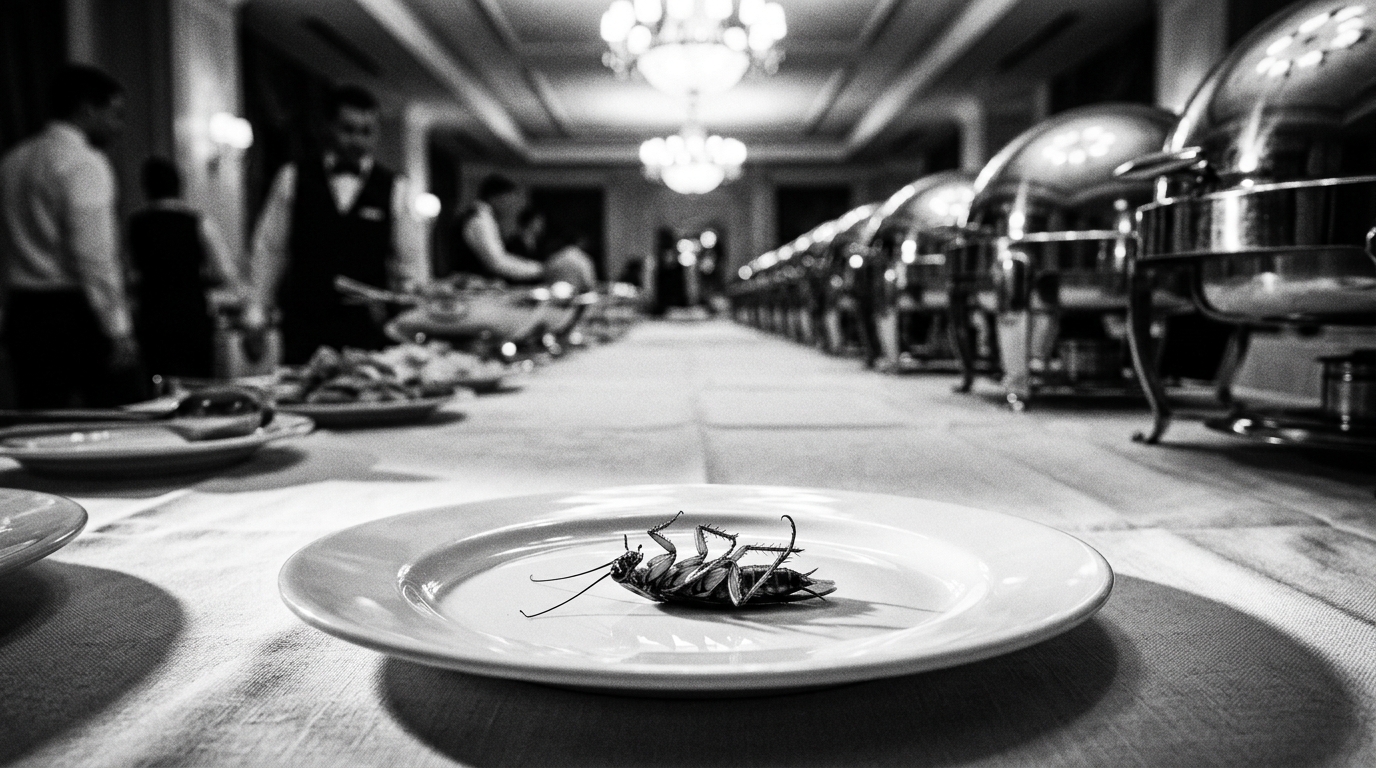
So here's what actually happened. A consumer group in the UK called Which? dug into Tripadvisor's AI-generated review summaries... the ones that sit at the top of a hotel's page and give you the "quick take" so you don't have to read 200 individual reviews. They found a resort where 102 guests mentioned food poisoning. Thirty-two one- and two-star reviews between December 2025 and April 2026, fourteen of which described serious illness. Seven deaths reported among guests since 2023. Over 400 people are part of a group legal action. The AI summary? "Spotless."

Let that land for a second. Not "mixed reviews about food safety." Not "some guests reported illness." Spotless.

And it gets worse. Another property had multiple reviews mentioning sexual harassment by staff. The AI summary described the service as "friendly." This isn't a quirky bug. This is a fundamental architectural problem with how large language models handle sentiment. A professor at University College London nailed it... AI trained on massive text datasets tends to "sanitise and rub off the edges" of negative content. The model averages everything. It rounds toward pleasant. Which is fine if you're summarizing restaurant reviews about slow service. It is genuinely dangerous when the negative reviews describe people getting sick and dying. Tripadvisor says their systems "automatically suppress summaries for serious safety incidents." Clearly, 102 mentions of food poisoning and seven deaths didn't meet that threshold. That should tell you everything about how well those systems actually work.

Here's the part that matters for operators. This cuts both ways, and neither direction is good. If your property has a real problem... a mold issue, a pest problem, a safety concern you're working to fix... the AI might be papering over it in ways that bring more guests into a situation you haven't resolved yet. That's liability you didn't ask for. But the other side is just as bad. If you're a property that FIXED a problem... spent real money, retrained staff, replaced equipment... the AI summary is still averaging in those old one-star reviews. The 150-word summary at the top of your page doesn't know you replaced the kitchen hood six months ago. It doesn't know you fired the sous chef. It's still averaging the sentiment from reviews written before the fix. Your $80,000 renovation just got erased by an algorithm that treats a review from 2024 the same as one from last week.

Look, I've been watching AI get bolted onto hospitality platforms for years now, and the pattern is always the same. The vendor builds the tool to optimize engagement (Tripadvisor has said users interacting with their AI tools generate 2-3x more revenue), ships it fast because the competitive pressure is real (Google's AI Overviews are eating Tripadvisor's organic traffic and they know it), and the edge cases... the ones where the AI does something actively harmful... get discovered by someone outside the company, not inside it. Tripadvisor didn't catch this. A consumer advocacy group caught it. That's not a technology failure. That's a priorities failure. And by the way, AI-generated reviews on Tripadvisor increased 137% from 2019 to 2024, making up 10.7% of all reviews. So now you've got AI writing the reviews AND AI summarizing them. At what point does any of this still qualify as "user-generated content"?

The question nobody's asking is whether we should be using generative AI to summarize safety-critical information at all. Not whether the AI can be "improved" or "fine-tuned"... whether this is an appropriate use case. I wouldn't build a system that averages sentiment across reviews containing reports of death and illness. Not because I can't. Because the failure mode is someone booking a hotel room that gets them sick. Or worse. The Dale Test question here is simple: when this system fails, what's the consequence? If the answer is "someone might die," maybe don't ship it until you've solved that.

Operator's Take

Here's what I want you to do this week. Go to your Tripadvisor page right now and read the AI summary at the top. Read it carefully. Does it accurately represent what guests are actually saying? If you had a problem six months ago that you fixed... a housekeeping issue, a noise complaint pattern, an F&B quality dip... check whether that old sentiment is still dragging your summary. If it is, you're being misrepresented by a machine, and guests are making booking decisions based on it. Document the discrepancy. Screenshot it. Then file a formal request with Tripadvisor to update or suppress the summary. Will it work? Maybe not. But the documentation protects you if a guest books based on a misleading AI summary and has a bad experience. For those of you running properties with genuine unresolved issues... stop reading this and go fix the issue. The AI might be hiding it from guests today. It won't hide it forever. And when the summary catches up to reality, the lawsuit will be worse because the platform was effectively concealing the problem.

— Mike Storm, Founder & Editor
Read full analysis → ← Show less
Source: Google News: Hotel AI Technology
Hotel Insurance Premiums Were Already Up 50%. June's $5B in Storm Losses Just Reset the Clock.

Hotel Insurance Premiums Were Already Up 50%. June's $5B in Storm Losses Just Reset the Clock.

Reinsurers just absorbed mid-single-digit billions from June's severe storms across six of the most hotel-dense markets in the country. The premium increase you budgeted for Q4 renewal is probably wrong now, and the math hits whether your property took damage or not.

Available Analysis

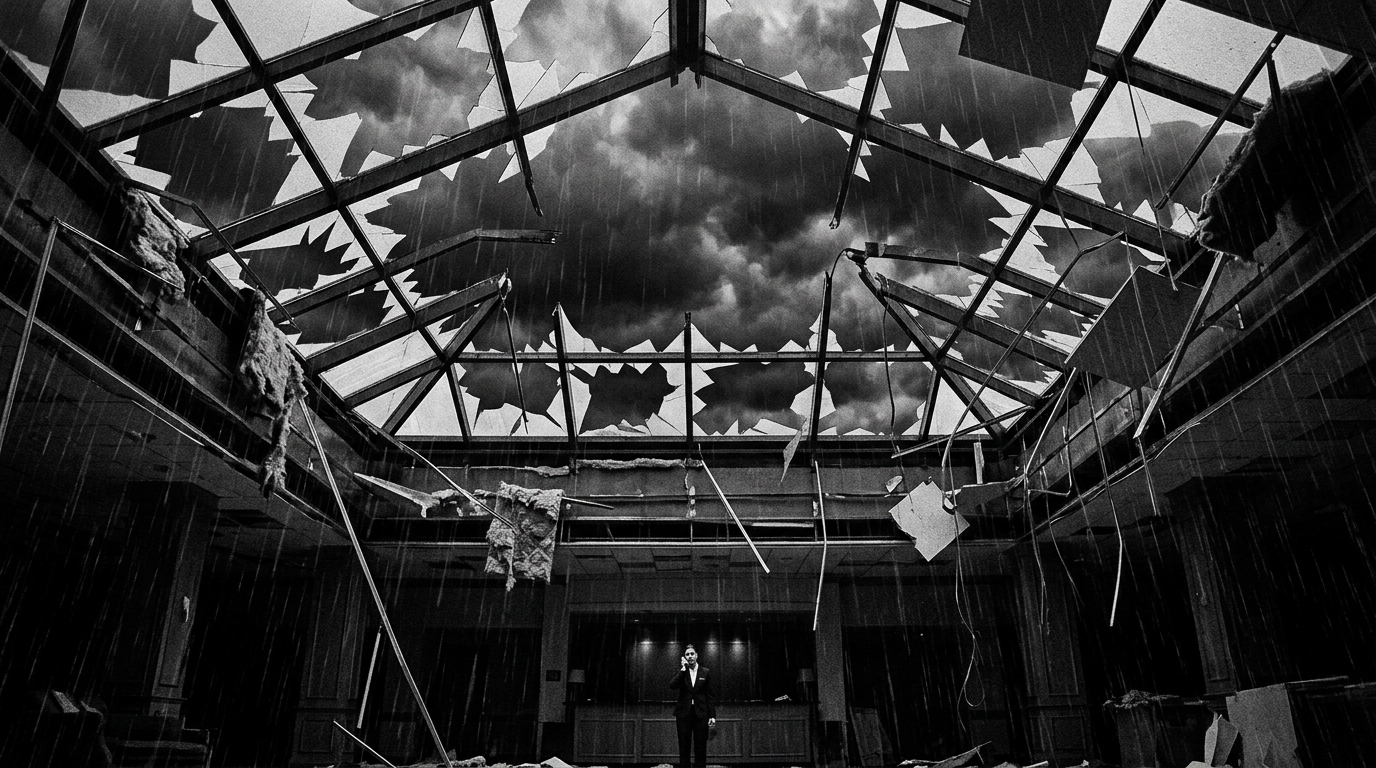
$22 billion in U.S. severe convective storm losses through June 18, 2026. Eleventh consecutive year above $20 billion. The June outbreak alone sits in the mid-single-digit billions, concentrated across Chicago, Denver, Dallas-Fort Worth, Milwaukee, D.C., and New York. Those aren't secondary markets. That's a significant share of the country's branded hotel inventory sitting inside geographic risk pools that just generated catastrophic reinsurer losses.

Here's what the headline doesn't tell you. The broader reinsurance market was actually softening in early 2026. Property-catastrophe reinsurance rates dropped 14.7% at January renewals and another 15-25% at June 1 renewals. Record reinsurer capital. Benign 2025 catastrophe season. Owners with Q1 renewals may have caught a brief window of relief. That window is closing. When reinsurers reprice, they reprice by geography, not by individual claim history. Your hotel in the Chicago metro didn't lose a shingle. Doesn't matter. You're in the same risk pool as the properties that lost roofs. CBRE pegged hotel insurance cost increases at 19.5% in 2023 versus 2022. Some owners have reported costs doubling or tripling since 2020. This event doesn't create a new trend. It accelerates the existing one in the six markets that can least afford it.

There's a secondary P&L angle that's getting less attention. Storm damage to residential properties historically drives extended-stay demand. Displaced homeowners, insurance adjusters, remediation crews... they all need rooms, often for weeks. Economy and select-service properties near heavily damaged residential corridors in Chicago, Denver, and Dallas are sitting on a demand pocket right now. The operators who move first (contacting insurance adjusters, corporate relocation firms, FEMA liaisons) capture that revenue. The ones who wait get the overflow after the extended-stay brands fill up.

Two forces hitting the same P&L from opposite directions. Insurance expense rising on one line. Potential demand rising on another. The net effect depends entirely on how fast you move on both. Owners modeling 2027 NOI without adjusting their insurance assumptions for this event are building on a number that's already wrong. And operators in affected markets who aren't making calls to relocation firms this week are leaving revenue on the table that has a very short shelf life.

Operator's Take

Here's what I'd be doing this week if I had properties in any of those six markets. Pull your insurance renewal date. If it falls in Q3 or Q4 2026, call your broker Monday (not next month... Monday) and get an early quote. You need to know the number before it shows up on a renewal notice you can't negotiate. Ask specifically about higher deductible structures and parametric products... parametric pays on a trigger (wind speed, hail size) rather than assessed damage, which means faster payout and sometimes lower premium. It's not right for every property, but your broker should be modeling it. On the demand side, if you're within 15 miles of a heavily damaged residential area, get your sales team calling insurance adjusters and corporate relocation firms now. That extended-stay displacement demand evaporates in 60-90 days. First mover wins. And for every owner running a 2027 budget... add 20-30% to your insurance line in affected markets. If you're pleasantly surprised at renewal, great. But don't build a budget on a number that was wrong before the storms and is definitely wrong now.

— Mike Storm, Founder & Editor
Read full analysis → ← Show less
Source: Reinsurancenews
$16,000 in Room Damage. One Guest. And Your Damage Policy Probably Wouldn't Cover It Either.

$16,000 in Room Damage. One Guest. And Your Damage Policy Probably Wouldn't Cover It Either.

A country music artist allegedly destroyed a hotel room at a New Mexico resort and walked out without paying for any of it. The real question isn't about celebrity behavior... it's about whether your property's damage recovery process could actually recoup $16K before the guest hits the parking lot.

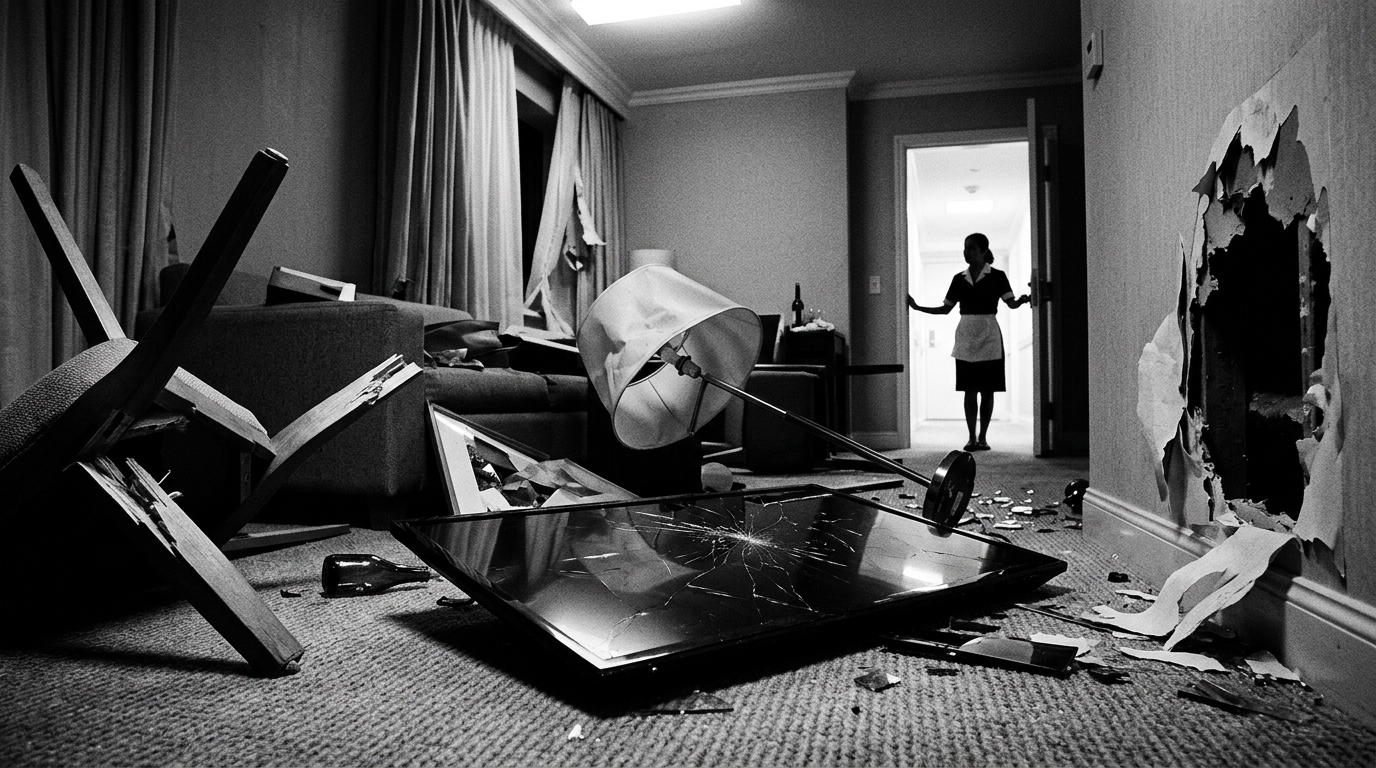
So here's what actually happened. A 26-year-old country artist shows up to perform at a resort casino in New Mexico, allegedly gets so intoxicated during soundcheck that he's stumbling, throwing microphones, knocking over a drum kit. Cancels the show. Goes back to his room. Staff eventually has to call law enforcement to escort him off property. And when housekeeping opens that door the next morning... TV destroyed, phone smashed, coffee table wrecked, two chairs broken (two more missing entirely), hole in the wall, additional wall damage, carpet stains. $16,000. Plus $400 in alcohol charged to the room and never settled.

Let me ask you something. What would have happened at YOUR property?

I consulted with a hotel group last year that had a similar situation... not a celebrity, just a wedding guest who did about $8,000 in damage to a suite. They had a credit card authorization for incidentals capped at $250. The guest disputed the damage charge. The card company sided with the guest pending investigation. The hotel spent four months in back-and-forth and recovered about 60% of the actual cost. The GM told me "we basically have no real protection against someone who decides to destroy a room." And he's not wrong. Most properties authorize $50-$150 for incidentals. Your damage deposit (if you even collect one) is maybe $250-$500. That covers a stained duvet cover, not a demolished suite.

Look, the celebrity angle makes this a headline. But the operational reality underneath it applies to every hotel running today. Your PMS probably has a damage workflow buried somewhere in a dropdown menu nobody's ever clicked. Your front desk team has never been trained on what to do when damage exceeds the authorization on file. Your night auditor (if you still have one) has zero protocol for documenting destruction in real-time before evidence gets compromised. And your insurance deductible on a property damage claim is probably $5,000-$10,000, which means anything under that threshold is just... your problem. The industry data suggests guest-caused property damage accounts for roughly 15% of hotel liability claims, and a typical hotel absorbs over $250,000 annually in damage-related costs. That's not a line item most operators are actively managing. It's a cost they're passively accepting.

The technology piece here is actually interesting (and by interesting I mean it barely exists). There are IoT-based room monitoring solutions that can detect anomalous noise levels, door activity patterns, unauthorized occupancy... systems that could theoretically alert security when someone is actively destroying a room at 1 AM instead of discovering it at 10 AM when housekeeping walks in. But most of these products are designed for party detection and unauthorized guest monitoring, not active damage prevention. And the ones that DO exist fail my basic evaluation test... what happens when the system alerts at 2 AM and there's one person on shift who's also covering the front desk? The alert is only as useful as the response protocol behind it, and most properties don't have one. The sensor tells you the room is being destroyed. It doesn't stop the destruction. It doesn't document it for your insurance claim. It doesn't authorize a higher hold on the guest's card. It just... beeps. At someone who can't do anything about it.

The warrant in this case wasn't signed until three weeks after the incident. Three weeks. The artist posted on social media that he "wasn't feeling well" and moved on. The hotel had to pursue criminal charges through tribal police jurisdiction. For most hotels without a casino's security infrastructure and law enforcement resources, the recovery path is even harder. You're filing a police report with local PD, submitting an insurance claim that might not clear your deductible, and disputing a credit card chargeback with a processor that defaults to the cardholder. The system is not built to protect the property owner in this scenario. It's built to make recovery so painful that most operators just eat the loss and move on.

Operator's Take

Here's what to do this week. Pull up your incidental authorization policy and ask yourself what happens if a guest does $10,000 in damage tonight. If the answer involves the phrase "we'd figure it out," that's not a policy... that's a prayer. Talk to your front office manager about tiered authorization holds for suites and premium rooms. Document your damage assessment protocol in writing... who photographs, who catalogs, who contacts the guest, who files with insurance. If you're hosting entertainment or event talent, negotiate a separate damage deposit or bond through the promoter's contract before the artist ever gets a key card. And if you're running a property with 100+ rooms and you don't have a clear, trained, written protocol for damage exceeding $5,000... you're leaving money on the floor. This is what I call the Invisible P&L. The costs that never show up on your financial statements... the unrecovered damages, the rooms out of service, the staff hours spent chasing reimbursement... those are destroying more margin than the line items you're actually managing.

— Mike Storm, Founder & Editor
Read full analysis → ← Show less
Source: Google News: Resort Hotels
A 600-Room Resort Burns Down in Hours. The Thatched Roof Is the Part You Need to Think About.

A 600-Room Resort Burns Down in Hours. The Thatched Roof Is the Part You Need to Think About.

A fire at the Viva Dominicus Beach by Wyndham killed one guest, displaced 1,700 tourists, and almost completely destroyed a 600-room resort in the Dominican Republic. The fire spread through palm thatch roofing so fast that the building was essentially gone before anyone could stop it... and if you're operating in a tropical market, this is the conversation you need to have with your risk team this week.

Available Analysis

I worked with a GM years ago who ran a 400-key resort in the Caribbean. Beautiful property. Open-air lobby, palapa roofs over the pool bars, thatch accents on every building. Guests loved it. It looked like paradise. One afternoon he walked me through the property and pointed up at the roof over the main restaurant and said, "That's the most beautiful fire hazard I've ever been responsible for." He wasn't joking. He'd been asking ownership to invest in fire-retardant treatments and suppression upgrades for two years. The answer was always the same... it's too expensive, the insurance covers it, we've never had a problem. He told me, "The day we have a problem, there won't be a building left to have a problem with."

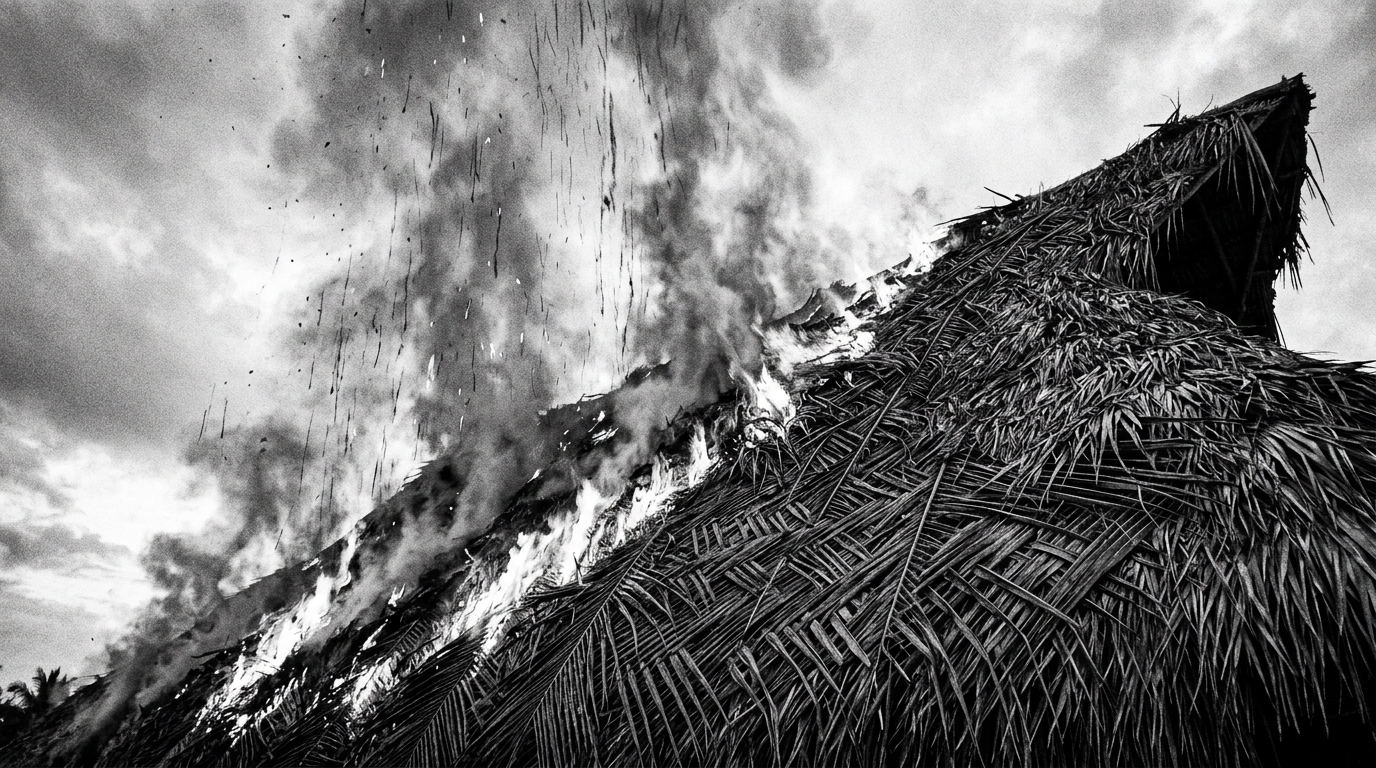
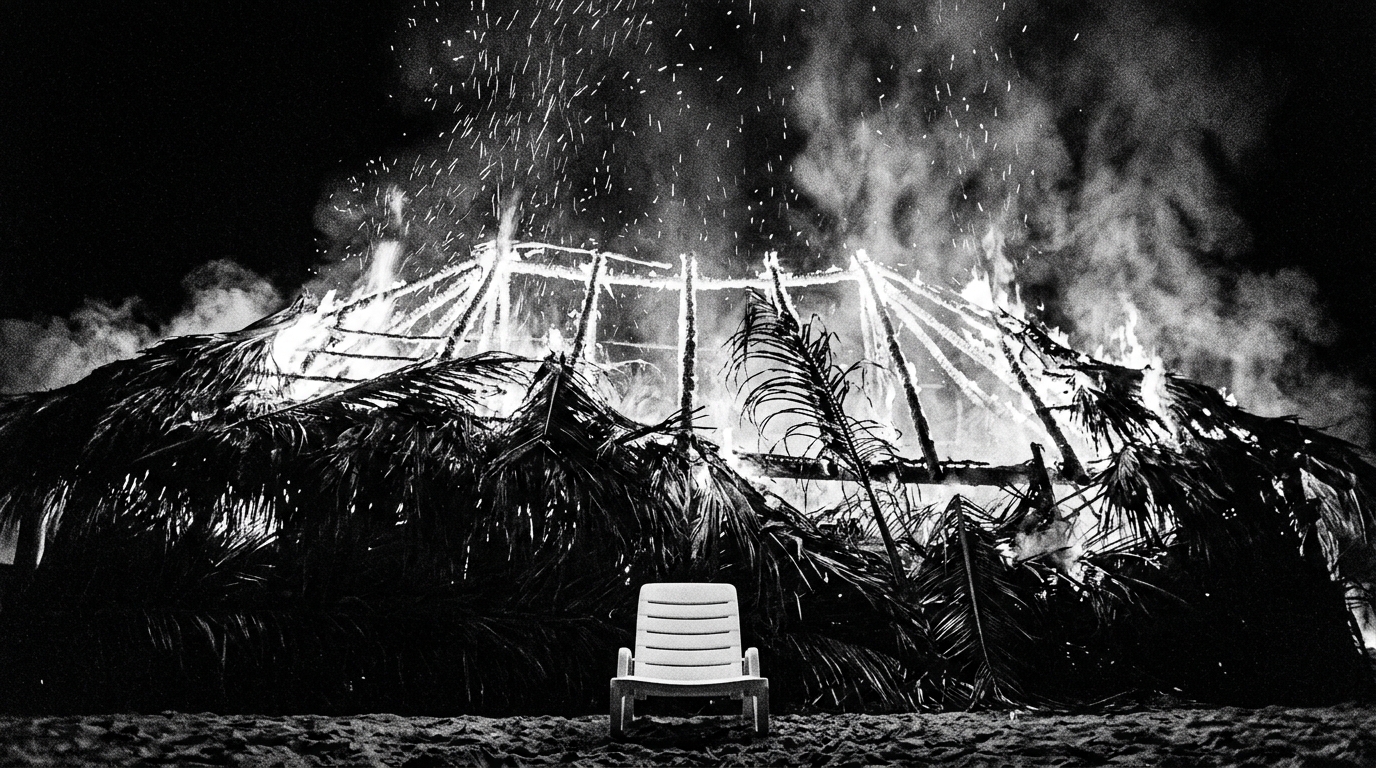
That's what happened Friday night in Bayahibe, Dominican Republic. The Viva Dominicus Beach by Wyndham... over 600 rooms, running at 84% occupancy... caught fire and was almost completely destroyed. One guest, a 46-year-old Italian tourist, died. Three more were hospitalized. Six others were treated on scene. Roughly 1,700 guests had to be evacuated and relocated to other hotels and nearby housing. Dominican authorities say the fire spread through palm thatch roof structures, pushed by strong winds. The cause is under investigation, but the mechanism isn't a mystery. Thatch burns. Wind spreads fire. And when your building materials are essentially kindling with a view, the margin between "small kitchen fire" and "total loss" is measured in minutes, not hours.

Let me be direct about something that the press coverage is going to dance around. Thatched roofs and palm-frond construction are an aesthetic choice that guests associate with the tropical resort experience. They're also a known fire risk that has destroyed properties across the Caribbean, Mexico, and Southeast Asia for decades. This isn't new information. Every operator running a property with significant thatch elements knows this. Every insurer knows this. The question is always whether the cost of mitigation (fire-retardant treatments, enhanced suppression systems, compartmentalization, emergency egress upgrades) is treated as a real line item or something that gets pushed to "next year's budget" until there is no next year.

Here's what I know from 40 years of this. The insurance will eventually pay out (probably... and the claim process on a total loss of this magnitude with a fatality will be brutal and slow). The sister property next door is still operating. Dominican authorities are saying tourism continues as normal. All of that is true and all of it is beside the point for the operator. What matters is this: a guest is dead. A building that was a going concern at dinner time was rubble by morning. And somewhere in the chain of ownership and management, there were people who knew... or should have known... that the speed at which this type of structure can be lost is fundamentally different from conventional construction. Every resort operator with thatch, wood-frame, or similar construction needs to look at three things this week: your fire suppression coverage (not what the certificate says... what actually works), your evacuation plan for full occupancy at 2 AM (not the binder in the office... the drill your staff can execute in the dark), and your building materials assessment relative to your insurance requirements. If there's a gap between what your insurer assumes about your construction and what's actually on the roof, close it now.

The Dominican Republic attracted 5.6 million visitors in the first five months of this year. This is a massive tourism economy, and this fire isn't going to stop that. But for the individual operators in Bayahibe and across the Caribbean, the lesson is simple and it's one I've seen ignored at a dozen properties in my career: the thing that makes your resort look like paradise is sometimes the same thing that can take it away in an hour. You either spend the money on mitigation or you bet that it won't happen to you. That family in Bayahibe just found out what happens when the bet doesn't pay off.

Operator's Take

If you're running a resort property with thatched roofs, palapa structures, or any significant combustible architectural elements, stop reading and go pull your fire safety file. Not Monday. Today. Three things: First, verify your fire suppression systems cover every structure, not just the main building... pool bars, beach pavilions, restaurant palapas, all of it. Second, run a tabletop evacuation exercise for full-occupancy, middle-of-the-night scenarios with your department heads within the next two weeks. Your plan is only as good as your newest employee's ability to execute it under pressure. Third, call your insurance broker and confirm that your policy reflects your actual construction materials and current replacement cost. If your last assessment was pre-COVID, it's wrong... construction costs are up 30-40% in most Caribbean markets. Bring this to your ownership group yourself, with the cost of mitigation AND the cost of what just happened in the DR. This is what I call the Invisible P&L... the costs that never appear on your financial statements until they show up as a total loss. The $50K you spend on fire-retardant treatment and suppression upgrades is the cheapest insurance you'll ever buy.

Read full analysis → ← Show less
Source: Google News: Resort Hotels
A Guest Died in a Resort Fire. The Thatched Roof Was the Accelerant Everyone Already Knew About.

A Guest Died in a Resort Fire. The Thatched Roof Was the Accelerant Everyone Already Knew About.

A fire tore through Viva Wyndham Dominicus Beach on Friday, killing an Italian tourist and evacuating 1,690 guests. The cause is under investigation, but the construction material that let it spread isn't a mystery... it's the same palm thatch that's burned at Caribbean resorts three times in two years.

Available Analysis

I watched a resort burn once. Not this one. Different island, different decade. But the same sick feeling in my stomach as I stood in a parking lot watching flames eat through a roof structure that everyone knew was a fire risk and nobody had done anything about because it looked beautiful in the brochure photos. That's the thing about thatched roofs in the Caribbean. They're gorgeous. Guests love them. They photograph like a dream. And when they catch fire on a windy day, they burn like they were designed to.

Friday morning in Bayahibe, a fire ripped through the Viva Wyndham Dominicus Beach resort and killed Francesca Valentino, a 46-year-old Italian tourist who was on vacation. Nine more people were injured. Nearly 1,700 guests were evacuated and relocated to other properties. The Dominican Republic's Emergency Operations Center says the fire spread rapidly due to strong winds and the resort's palm-thatch roof construction. The cause is still under investigation, but the mechanism isn't a mystery to anyone who's been paying attention. This is the third significant resort fire involving thatched construction in the Dominican Republic in less than two years. Cap Cana lost 11 villas in July 2025. Club Med Punta Cana took significant damage in September 2024. Same materials. Same story. Same preventable acceleration.

Here's what bothers me most. The Dominican Republic welcomed 5.6 million tourists in the first five months of this year. It's the Caribbean's top destination. And yet... general travel advisories from multiple governments flag "uneven regulation" in the tourism industry, potential gaps in safety inspections, and staff training that may not meet international standards. That's diplomatic language for something operators understand plainly: the regulatory framework hasn't kept pace with the development boom. When you're building and operating resorts at scale in a market with that kind of demand, the temptation is to move fast and let the aesthetics drive the design. Thatched roofs are the look. They signal "tropical paradise." They also signal "I will burn extremely fast under conditions that occur regularly in a tropical climate." Those two things coexist in the same structure, and someone has to reconcile them before another family gets a phone call they shouldn't have to receive.

The brand response here matters, and right now there isn't much of one. Wyndham Hotels & Resorts hasn't commented publicly. The adjacent Viva Wyndham Dominicus Palace (same chain, not damaged) continues to operate normally. The stock barely moved. And the local authorities are already reassuring everyone that "tourist activities in Bayahibe remain unaffected." I understand why they're saying that. Tourism is the economy. But "unaffected" is a word that rings hollow when a woman is dead and 1,700 people just had the worst day of their vacation. The operational question isn't whether Bayahibe is safe for tourists. It's whether every resort in the Caribbean using combustible roofing materials has a fire suppression plan, an evacuation plan, and construction standards that account for the fact that wind and thatch and fire are a combination that kills people. Because we keep learning this lesson and we keep not learning it.

If you operate or own resort properties anywhere... Caribbean, Mexico, Southeast Asia, anywhere that uses natural roofing materials for the aesthetic... this is your wake-up call, and it's the third one in two years. Don't wait for the fourth. The investigation in Bayahibe will eventually produce a cause. But the acceleration mechanism is already known. The question is what you're going to do about the structure you're operating right now, today, before the wind picks up.

Operator's Take

If you manage or own a property with thatched, palm, or any natural-material roof structures, pull your fire suppression documentation this week. Not next month. This week. Verify your sprinkler coverage specifically under those structures. Check when your last fire marshal inspection occurred and whether it addressed combustible roofing. Review your evacuation plan... can you move your entire guest count to alternate shelter within 30 minutes? The Dominicus Beach team relocated 1,690 people, which is an operational achievement under horrific circumstances, but that evacuation plan existed because someone thought about it before Friday. If yours doesn't exist or hasn't been drilled in the last 12 months, fix that before you do anything else. And if you're an owner looking at a development or renovation that includes natural roofing materials for "the look," price fire-retardant treatment, enhanced suppression systems, and compartmentalized roof sections into the budget right now. The aesthetic isn't worth the liability. I promise you it isn't.

Read full analysis → ← Show less
Source: Google News: Resort Hotels
A Guest Died in a Resort Fire. Your Emergency Plan Hasn't Been Tested Since the Binder Was Printed.

A Guest Died in a Resort Fire. Your Emergency Plan Hasn't Been Tested Since the Binder Was Printed.

A fire swept through a 1,700-guest Wyndham resort in the Dominican Republic, killing an Italian tourist and exposing what happens when thatched roofs, strong winds, and an untested emergency plan collide. If your property still has the same evacuation binder from your last brand inspection, this is the story that should keep you up tonight.

Available Analysis

I worked with a GM years ago who ran fire drills quarterly. Not the kind where you pull the alarm, everyone rolls their eyes, and the front desk supervisor marks it complete on a checklist. Real drills. Middle of the night. Full evacuation. Guests and all. His ownership group told him he was crazy... said he was going to generate complaints. He told them he'd rather have a one-star review from a guest who got woken up at 3 AM than a wrongful death lawsuit from a family who never got woken up at all. He kept his job. And when a kitchen fire broke out on a Saturday night two years later, his team moved 340 guests to the parking lot in under nine minutes. Nobody got hurt. Nobody panicked. Because they'd done it before.

Friday morning at the Viva Wyndham Dominicus Beach in the Dominican Republic, a fire ripped through the resort around 11 AM. The property's thatched palm roofing... the kind that looks gorgeous in the brochure photos... caught and spread in high winds. An Italian tourist named Francesca Valentino, 46 years old, died. Nine others were injured. Roughly 1,700 guests and staff were evacuated. Reports say the resort was "almost completely destroyed." The cause is still under investigation, but preliminary findings point to exactly what you'd expect... highly flammable traditional roofing materials and wind conditions that turned a fire into an inferno before anyone could contain it.

Let me be direct. This is not a story about one resort in the Caribbean. This is a story about every property in your portfolio that has a life safety plan sitting in a three-ring binder behind the front desk that nobody has opened since the last brand QA visit. Every property where the fire panel is in the engineering office and the overnight guy doesn't know how to read it. Every property where the emergency contact list has phone numbers for people who left two years ago. Every property where the thatched palapa by the pool, or the decorative wood paneling in the lobby, or the aging electrical in the east wing hasn't been assessed for fire risk since the last renovation... if it was assessed then. I've seen this movie before. The fire itself is the headline. The real story is what happens in the 90 seconds between when the alarm sounds and when your team either executes or freezes.

Here's what bothers me about this one specifically. This property had renovations in 2020. They updated rooms, added pools, refreshed the lobby. And the thatched roofing... the most obvious fire risk on the entire campus... stayed. Because it's part of the aesthetic. It's what sells the resort experience. It's in the marketing photography. And somebody, somewhere in that chain of decisions, chose the look over the risk. I'm not saying that's what killed this woman. The investigation will determine causation. But I am saying that in 40 years of operations, I have watched ownership groups and management companies defer life safety investments because the ROI doesn't show up on a spreadsheet. Fire suppression doesn't generate revenue. Sprinkler upgrades don't improve your TripAdvisor score. New roof materials don't get mentioned in the brand newsletter. They just keep people alive. And that math only becomes obvious after someone dies.

The Dominican Republic welcomed 5.6 million visitors in the first five months of this year alone. Local authorities were quick to say tourism in the surrounding area continues normally. And it will. Markets recover from incidents. Properties get rebuilt. But Francesca Valentino doesn't come back. And every operator reading this right now should be asking themselves one question... not "could this happen at my property?" Because you already know the answer. The question is: "If it happened tonight, at 2 AM, with my skeleton crew... what happens in the first 90 seconds?"

Operator's Take

If you're a GM at any property... full-service, select-service, resort, independent, branded, doesn't matter... do three things this week. First, pull your emergency action plan and read it. Not skim it. Read it. Check every phone number, every role assignment, every evacuation route. If the person listed as "fire safety coordinator" quit eight months ago and you never updated it, that's your Monday morning. Second, walk your property with your chief engineer and your insurance contact and identify every combustible material, every gap in suppression coverage, every panel that hasn't been serviced this year. Third, schedule a drill. A real one. With your actual overnight staff, not your A-team. Because fires don't wait for your best shift. The cost of a drill is a few hours of disruption. The cost of not doing one is something you can't put on a P&L.

Read full analysis → ← Show less
Source: Google News: Resort Hotels
Your Next Celebrity Wedding Is a Revenue Event. Treat It Like One.

Your Next Celebrity Wedding Is a Revenue Event. Treat It Like One.

Zendaya and Tom Holland's wedding just reminded every hotel operator in America that celebrity events generate more operational chaos per square foot than any brand mandate ever will. The question isn't whether it happens at your property... it's whether your team knows what to do when it does.

I once managed a property where a B-list cable TV actor booked a rehearsal dinner. Not the wedding. The rehearsal dinner. Within 48 hours we had paparazzi in the parking garage, a local news van blocking the loading dock, two guests who checked out early because of the "circus," and a front desk team fielding calls from entertainment reporters pretending to be guests trying to confirm reservations. Total incremental revenue from the event: about $11,000. Total cost in comps, staff overtime, displaced regular guests, and one broken planter from a photographer who climbed it: closer to $8,000. We netted maybe three grand and my team was wrecked for a week.

The Zendaya-Tom Holland wedding news is entertainment gossip. I get that. But here's why I'm bringing it up... because somewhere right now, a sales director at a resort or a full-service property is fielding an inquiry from a celebrity's wedding planner, or an event coordinator, or a publicist, and that inquiry is going to feel like winning the lottery. Big spend. Great PR. Instagram exposure that money can't buy. And if you don't have a playbook for what actually happens when that event hits your building, you're going to learn the hard way that fame is an operational multiplier. It multiplies everything... revenue, yes, but also security needs, staff stress, liability exposure, noise complaints, and the very real chance that your 200 other paying guests get a worse experience because every resource in the building is pointed at one ballroom.

The properties that handle this well (and I've seen a few do it brilliantly) treat celebrity and high-profile events the way they'd treat a hazmat situation... with a plan that exists before the event shows up. Dedicated security protocols. Media management that's assigned to a specific person, not whoever happens to be at the front desk. Contractual language around photography, social media, and property access that protects the hotel, not just the client. A realistic cost model that accounts for the invisible expenses... the displaced revenue from guests who won't book during the event, the overtime, the wear and tear on staff who are operating at 150% for 72 hours straight. You price all of that into the contract or you eat it.

What I see too often is the opposite. The sales team books the event based on the food and beverage minimum and the room block. The GM finds out the details two weeks before arrival. Security is an afterthought. The operations team scrambles. And afterward, everyone tells the owner it was "great exposure" because nobody wants to run the actual P&L on the event and admit it was a break-even at best. I've seen this movie before. The sequel is always the same... the GM swears "never again" and then the sales team books another one six months later because the top-line number looks irresistible.

Look... I'm not saying don't take these events. High-profile bookings can be genuinely profitable and they can build a reputation that attracts more high-value business for years. But only if you run it like a business decision, not a fan moment. The celebrity doesn't care about your P&L. Their planner doesn't care about your other guests. Your job is to care about all of it, simultaneously, while making it look effortless. That's the gig. And it starts with having the plan before the phone rings.

Operator's Take

If you're a GM or director of sales at any property that handles events north of $50K, build a high-profile event playbook this quarter. Not after you need it. Before. Include a realistic cost model that goes beyond F&B minimums... factor in security ($2,500-$5,000 for a single event isn't unusual), staff overtime, potential displaced revenue, and a media management protocol with one named point person. Put contractual language in your event agreements that covers photography restrictions, property access limitations, and liability for third-party disruptions. And when the next big-name inquiry comes in, run the real numbers before you say yes. Revenue is only revenue if it actually flows to the bottom line.

Read full analysis → ← Show less
Source: Google News: Four Seasons
Your Generator Won't Run the AC. That's a Problem at 105 Degrees.

Your Generator Won't Run the AC. That's a Problem at 105 Degrees.

Southern grid operators are issuing emergency alerts this week as heat demand pushes past capacity, and most hotel generators are sized for life-safety systems, not guest comfort. The gap between what your backup power covers and what your guests expect is about to become very visible.

Available Analysis

I worked with a chief engineer once... quiet guy, 20-something years in the business... who kept a laminated card taped to the inside of the generator room door. It listed exactly what ran on backup power and exactly what didn't. He made every new GM read it on day one. "Because when the lights go out," he told me, "nobody remembers what the generator covers until they're standing in a 95-degree lobby full of guests asking why the air conditioning just died." Most of them were shocked at how short that list was.

That card is what I keep thinking about this week. Duke Energy just got a federal emergency order allowing them to run power plants past their emissions limits to keep up with demand. ERCOT in Texas is forecasting peak demand above 92 gigawatts... a record. Heat index values across a corridor from Texas to the Carolinas are pushing 106 degrees. This is not a forecast problem. This is a right-now problem. And the thing that should keep every GM in the Southern half of the country up tonight is this: your generator almost certainly cannot run your HVAC. It runs your emergency lighting, your fire suppression, your elevators, maybe your PMS server. It does not run the system that accounts for 50-60% of your total electrical load. So when that rolling blackout hits at 3 PM during your check-in rush... you have a building full of people, a lobby that's climbing past 90 degrees, electronic door locks that may or may not have recovered cleanly, and a front desk team that has never drilled for this scenario. That's not an inconvenience. That's a safety liability and a reputation event rolled into one afternoon.

Here's what makes this different from the generic "be prepared for summer" advice you've heard a hundred times. The grid is structurally more fragile than it was five years ago. Population growth, data centers, crypto mining facilities... they've all piled onto infrastructure that was already aging. The 2003 Northeast blackout data is instructive and terrifying: 98% of affected hotels lost air conditioning, 89% lost computers and cooking systems, 88% lost elevators. Eighty-five percent of hotels with generators maintained power to their critical systems. But "critical systems" and "guest comfort systems" are two very different lists, and nobody in that lobby cares about the distinction. They care that it's 100 degrees in their room and the ice machine is dead.

The financial angle here is real and it's hiding in plain sight. Hotels spend an average of $2,196 per available room per year on energy. HVAC is more than half of that. Demand response programs... where your utility pays you to reduce load during peak events... can cut 10-15% off your summer energy costs. Marriott ran a program across 264 properties with projected savings of $9.9 million over five years. Some utilities offer $50 per kilowatt of demand reduction. That's not pocket change for a 200-key property. But enrollment requires advance setup, and if you haven't signed up yet, you're leaving real money on the table while also carrying the full risk of a grid event you have no buffer against.

And then there's the labor piece that nobody wants to talk about until somebody gets hurt. Your valet staff, your pool attendants, your maintenance crew working the loading dock or the roof... OSHA heat illness standards require water, rest, and shade, and enforcement is tightening. One heat-related incident involving a hotel employee this summer in Texas or Florida or Georgia, and you're looking at a workers' comp claim, an OSHA investigation, and a local news story that will do more damage to your employer brand than anything your competitors could cook up. The cost of shade structures and hydration stations and adjusted break schedules is trivial compared to the cost of getting this wrong. This is one of those things where the Invisible P&L is working against you... the expense of prevention never shows up as a line item, but the cost of failure will eat you alive in ways that don't hit the P&L until it's too late to do anything about them.

Operator's Take

If you're running a property anywhere from Texas to the Carolinas, here's what you do this week... not next month, this week. First, pull your generator load sheet and know exactly what it covers. If you don't have a laminated list on the generator room door, make one today and make sure your MOD, your front desk leads, and your chief engineer can recite it from memory. Second, call your utility company Monday morning and ask about demand response enrollment. Even if you can't get into a program this week, you need to know what's available for the rest of the summer. Third, run a power failure drill with your front desk team. Not a tabletop exercise... an actual walkthrough of what happens when the PMS goes down, the key system reboots, and you've got 40 arrivals standing in a lobby with no air conditioning. Who does what, in what order, with what tools. Fourth, audit your outdoor staff exposure right now. Water stations, shade, mandatory break schedules, a thermometer someone actually checks. An OSHA heat citation starts at $16,131 per violation. A hospitalization makes that look cheap.

Read full analysis → ← Show less
Source: CNN
The Washington Hilton Just Got Shot Up Again. Hotels Still Can't Solve This Problem.

The Washington Hilton Just Got Shot Up Again. Hotels Still Can't Solve This Problem.

A gunman charged a Secret Service checkpoint at the Washington Hilton during the White House Correspondents' Dinner, and the 1981 Reagan shooter is now giving security advice on social media. The real question for hotel operators isn't whether your property is a target... it's whether your security plan survives first contact with an actual threat.

So the same hotel where a president got shot in 1981 just had another gunman show up with a shotgun, a handgun, and multiple knives during the biggest political dinner of the year. And John Hinckley Jr.... the guy who shot Reagan at that exact property 45 years ago... is now publicly calling the hotel "not secure" and saying they should stop hosting major events. We live in strange times.

Look, I'm a technology guy. My instinct is to evaluate this through the lens of systems, access control, surveillance architecture, threat detection. And there IS a technology story here. But the more I thought about it, the more I realized the technology angle is almost a distraction. The Washington Hilton had the Secret Service running security. Metal detectors. Checkpoints. Credential verification. The most sophisticated physical security apparatus available in the United States. And a 31-year-old guy still got close enough to hit an agent in the vest before being stopped. The system worked (nobody died), but it worked at the last possible moment... the human equivalent of a system catching an error in production instead of in testing. That's not a success story. That's a near-miss report.

Here's what actually matters for hotel operators. The suspect was a registered guest. He had a room. He brought weapons into the building the way any guest brings luggage... through the front door. Every access control system, every surveillance camera, every AI-powered threat detection platform I've evaluated in the last three years has the same fundamental vulnerability: a credentialed person inside the perimeter is trusted by default. Hotels aren't airports. You don't X-ray luggage at check-in. You don't wand guests walking through the lobby. The entire hospitality model is built on the assumption that the person with a room key belongs there. That assumption is the attack surface, and no amount of technology patches a philosophical vulnerability. I talked to a security consultant last year who put it bluntly: "The hotel's product IS access. You can't sell access and restrict access at the same time. That's the whole problem."

The technology that exists today... gunshot detection sensors, AI-driven behavioral analytics, weapons detection portals that look like regular doorframes... works in controlled environments. Convention centers. Stadiums. Places where everyone enters through the same chokepoint and nobody expects to feel at home. Hotels are the opposite. Multiple entrances. Service corridors. Parking garages. Guest room floors accessible by elevator. You'd have to fundamentally redesign the building to create the kind of security envelope that a high-profile event demands, and most properties (including the Washington Hilton, which was built in 1965) weren't designed for that. The suggestion floating around that venues should "buy out the entire hotel" for events like this is the only honest answer I've heard... and it's economically insane for anything short of a presidential appearance.

What's actually going to change? Insurance requirements will tighten for properties hosting large-scale events. Event contracts will include more specific security obligation language. Some hotel groups will invest in weapons detection systems for ballroom-level events (expect $150K-$400K per installation depending on throughput requirements, plus ongoing maintenance). But the fundamental tension... hospitality means openness, security means restriction... doesn't get resolved by technology. It gets managed by people making judgment calls at 2 AM with incomplete information. Which, honestly, is the same problem every hotel technology is supposedly solving and none of them fully do.

Operator's Take

Let me be direct. If your property hosts events north of 500 attendees, pull your event security protocols this week and read them like you've never seen them before. Most of what's in there was written for liability coverage, not for an actual armed threat scenario. Two things to do right now: First, walk your building with your chief engineer and identify every unsecured entry point... service doors, loading docks, stairwell access from parking structures. You'll be surprised what you find propped open with a doorstop at 6 AM. Second, call your insurance broker and ask specifically what your event liability coverage looks like if a weapon enters through a guest room, not through the event entrance. That's the scenario nobody's underwriting correctly. This isn't about buying a $300K detection system. This is about knowing your building better than anyone who walks into it with bad intentions.

— Mike Storm, Founder & Editor
Read full analysis → ← Show less
Source: Google News: Hilton
A Guest Booked a Room Three Weeks Early. Then He Opened Fire at the Washington Hilton.

A Guest Booked a Room Three Weeks Early. Then He Opened Fire at the Washington Hilton.

The DOJ's case against the White House Correspondents' Dinner shooter reveals a security gap every hotel operator needs to understand: a registered guest used his room key to bypass the outer perimeter entirely. The technology implications go deeper than any press release will tell you.

So here's what actually happened. A guy books a room at a major hotel three weeks before one of the highest-profile events in the country. He travels cross-country by train with a shotgun, a pistol, and three knives. He checks in, goes through normal guest entry, and because he's a registered guest... he's already inside the security perimeter when he decides to charge a Secret Service checkpoint with a loaded 12-gauge.

Let me say that again. His room reservation was his access credential.

Look, I think about hotel technology through the lens of what happens at 2 AM when one person is running the building. But this is a different version of the same question: what happens when your property management system, your key card infrastructure, and your access control are all treating "registered guest" as a single trust level... and one of those guests is carrying weapons into a building that's simultaneously hosting the President of the United States? The PMS checked him in. The key system gave him access. The elevator took him to his floor. Every system worked exactly as designed. That's the problem.

The technology gap here isn't exotic. It's structural. Most hotel access systems operate on a binary: guest or not-guest. You have a reservation, you get a key, the key opens doors. There's no middle layer that says "this guest is in the building during a Secret Service-protected event, flag for secondary screening." There's no integration between the PMS and event security protocols that would trigger when a guest checks in the day before a high-profile function. The building's own systems treated him identically to a tourist visiting the Smithsonian. I've consulted with hotel groups on access control and the conversation almost always stops at "does the guest have a valid key?" Nobody asks what else that key might enable.

Here's where this gets real for operators beyond the Washington Hilton. If your property hosts events... conferences, political fundraisers, corporate retreats with executive protection... your current tech stack has this exact blind spot. Your PMS doesn't talk to your event security vendor. Your key card system doesn't have conditional access logic based on building status. Your front desk team has no protocol trigger that connects "high-security event on the second floor" with "guest checking into room 417." These are separate systems built by separate vendors who have never sat in a room together and asked "what happens when a registered guest is the threat?" I talked to a security integrator last year who told me flat out that hotel access control is 15 years behind commercial office buildings. Office towers have had tiered credentialing... different access levels for tenants versus visitors versus delivery... for over a decade. Hotels are still running on "valid key equals full access." That's a 1990s architecture being asked to handle 2026 threat profiles.

The policy response is already predictable. The Secret Service will review protocols. There'll be talk of enhanced screening for registered guests during protected events. Maybe a mandate from the major brands about event security coordination. But the actual fix is a technology problem. It requires PMS systems that can flag event-coincident check-ins, access control that supports conditional credentialing, and integration layers that let security teams see the guest roster in real time against the event calendar. None of that exists as a standard product today. And until someone builds it (or a brand mandates it, which means someone builds it fast and badly), every hotel hosting a high-profile event has the same vulnerability that a guy from California exploited with nothing more sophisticated than a three-week-old reservation.

Operator's Take

If your property hosts any event requiring executive protection or law enforcement coordination... political, corporate, whatever... you need to have a conversation this week with your security vendor and your PMS provider about event-triggered guest screening protocols. Not next quarter. This week. Because the liability question just changed. Ask your PMS rep one question: "Can your system flag check-ins that coincide with a protected event in the building?" If the answer is no (and it will be), document that you asked. Document the date. If you're running a property that regularly hosts high-profile events, get your insurance broker on the phone and ask whether your current GL policy accounts for a scenario where a registered guest is the security threat. The answer matters. And if you're an independent without a brand security team behind you... start building a relationship with local law enforcement now, before you need it. The guy who brings this to his owner with a plan is the guy who looks like he's running the building.

— Mike Storm, Founder & Editor
Read full analysis → ← Show less
Source: Google News: Hilton
Disney's Contemporary Resort Deaths Aren't a Disney Problem. They're Your Problem Too.

Disney's Contemporary Resort Deaths Aren't a Disney Problem. They're Your Problem Too.

Multiple deaths at a Disney World hotel have triggered infrastructure changes and uncomfortable questions about guest safety protocols. If you think this only applies to 1,000-key theme park resorts, you haven't been paying attention to what's happening in your own stairwells and parking garages.

I managed a property once where a guest died in the room on a Tuesday afternoon. Natural causes. The man had a heart condition his family knew about. Nothing we could have done. And for the next six weeks, every single person on my staff walked past that room differently. Housekeeping didn't want to go in alone. The front desk started quietly steering guests away from that floor when they could. Nobody told them to. They just did it.

That's what nobody talks about when guest deaths make the news. Not the liability. Not the PR crisis. The humans who work in that building every day and carry it with them.

Disney's Contemporary Resort has had multiple deaths over the past several months... some from medical emergencies, some from suicide. The company is now running refurbishment projects on the Main Tower exterior and Bay Lake Tower elevators, scheduled through late May. Disney hasn't drawn a straight line between the deaths and the construction, and they probably never will publicly. But the timing tells you what you need to know. When a $10 billion operating income segment (that's their Parks, Experiences and Products division in fiscal 2025) starts moving infrastructure projects up the priority list, someone in a conference room decided the risk profile changed.

Here's what the headline-chasing coverage misses entirely. Disney has had daily room safety checks since 2017... the "Do Not Disturb" signs became "Room Occupied" signs, and staff enter every room every day. That policy came after Las Vegas. They have a Chief Safety Officer. They have protocols most of us would kill for. And people still died in their hotel. If it can happen at a property with that level of staffing, that level of investment, and that level of operational discipline, it can absolutely happen at your 180-key limited-service on the interstate. The difference is Disney has a corporate communications team and a legal department that deploys in hours. You have... you.

The uncomfortable truth is that building design matters more than most operators want to admit. Open atriums, exterior corridors, accessible rooftops, parking structures... these are features that show up in architectural renderings looking beautiful and show up in risk assessments looking like liability. I've been in enough buildings to know that the conversation about balcony height, corridor sight lines, and roof access usually happens after something terrible, not before. Disney's Contemporary Resort is a modernist tower with an open atrium design that was revolutionary in 1971. In 2026, that same design creates exposure points that a pod hotel or an interior-corridor select-service simply doesn't have. Your building has its own version of this. Every building does. The question is whether you've walked it with fresh eyes lately... not as a GM looking at carpet wear, but as someone asking "where are the vulnerable spots in this structure?"

What I keep coming back to is the staff piece. Florida's reporting threshold requires disclosure only when a guest is hospitalized for 24 hours or more. Disney reported just two incidents in Q1 2026 under that standard. That's a testament to their safety operation. But the deaths that made headlines... suicides, medical emergencies... those don't always trigger that reporting mechanism. Which means your staff is dealing with trauma that never shows up in any report. No incident form captures the housekeeper who found the guest. No metric tracks the front desk agent who had to call 911. If you're not actively checking on your people after a critical incident... and I mean really checking, not just filing the HR paperwork... you're failing the humans who make your hotel run.

Operator's Take

This one's for every GM, regardless of property type. Three things. First, walk your building this week with one question in mind: where could someone hurt themselves or someone else? Roof access, stairwells, exterior corridors, parking structures, balconies. If you find unlocked access points, fix them Monday morning. Second, ask yourself honestly... do you have a critical incident protocol that includes staff support? Not the liability piece. The human piece. The housekeeper. The night auditor who was alone when it happened. If your plan stops at "call 911, call corporate, file the report," it's incomplete. Third, check your daily room-check policy. Disney implemented theirs in 2017. If you're still honoring "Do Not Disturb" for 48 hours without a welfare check, you're running a risk that a $10 billion operation decided wasn't worth taking nine years ago. You don't need Disney's budget to steal their best practice.

Read full analysis → ← Show less
Source: Google News: Resort Hotels
What Xenia's Stock Movements Actually Tell You About Where Hotel Risk Is Headed

What Xenia's Stock Movements Actually Tell You About Where Hotel Risk Is Headed

Wall Street quants are using Xenia Hotels' stock as a risk barometer for the entire upper-upscale hotel sector. If you own or operate in that space, here's why you should care about what their models are seeing.

I sat across from an asset manager about three years ago who told me, completely straight-faced, that he made more decisions based on REIT stock movements than on his own hotels' monthly P&Ls. I thought he was kidding. He wasn't. "The stock tells me what 500 analysts think is coming," he said. "My P&L tells me what already happened." I still think he was about 60% wrong on that. But the other 40%? That's worth paying attention to.

So here's what's happening with Xenia Hotels & Resorts. Quantitative trading models... the algorithmic stuff that drives a massive chunk of daily volume... are using XHR's price movements as a risk allocation signal for the luxury and upper-upscale hotel segment. Not just as one stock to trade, but as a proxy for where institutional money thinks this tier of hospitality is going. And the signals are mixed in a way that should make operators uncomfortable. The near-term and mid-term sentiment reads weak. The long-term outlook reads positive. Translation: the smart money thinks the next 12-18 months are going to be bumpy, but the asset class is sound if you survive the turbulence. I've seen this movie before. It was called 2019.

Now here's the thing... Xenia's actual numbers are solid. Q4 2025 came in with same-property RevPAR at $176.45, up 4.5% year over year. Occupancy climbed 130 basis points to 66.1%. ADR hit $266.88. Adjusted FFO per share was up 15.4% to $0.45 for the quarter. Full year 2025 net income jumped to $63.1 million from $16.14 million in 2024. They bought back $120.4 million in stock. They're sitting on $640 million in liquidity. The 2026 guidance projects RevPAR growth of 1.5% to 4.5% and nearly 7% FFO growth at the midpoint. These are not distressed numbers. These are the numbers of a company that's executing.

But here's what the press release doesn't mention... and what the quant models are picking up on. Analysts are projecting roughly 30% average annual earnings decline over the next three years. Thirty percent. That's not a typo. Labor costs are climbing. Leisure demand is softening in some of Xenia's key markets. Their weighted-average interest rate is 5.51% on $1.4 billion in debt, which means every rate move by the Fed matters. And institutional investors are split... 136 increased their positions last quarter, but 137 decreased. That's a coin flip, not a consensus. Wellington Management dumped 3.3 million shares while Citadel added a million. When the big money can't agree, the little money should be paying very close attention.

Look... if you're operating in the upper-upscale or luxury space, this matters to you even if you never look at a stock chart. Because what happens to Xenia's cost of capital happens to yours eventually. When REIT stocks get hammered, cap rates move, valuations change, and suddenly your ownership group's refinancing conversation gets a lot less friendly. I knew an owner once who told me he didn't care about the stock market because he ran hotels, not a hedge fund. Six months later his lender was using REIT comps to revalue his property for the loan renewal. He cared after that. The risk models aren't abstract. They're a leading indicator of what your capital stack is going to look like 18 months from now. The operators who survive turbulence are the ones who see it coming and tighten before they have to... not the ones who wait for the P&L to tell them something the market already knew.

Operator's Take

If you're a GM or operator at a luxury or upper-upscale property, stop waiting for your monthly financials to tell you the story. Pull up Xenia's stock chart and the lodging REIT index once a week. It takes five minutes. When institutional sentiment turns bearish on the segment, your ownership group is going to come looking for margin... and you want to already have the plan, not be scrambling to build one. Start stress-testing your 2026 budget against a 10-15% revenue decline scenario right now. Not because it's definitely coming. Because the people who control the capital think it might be, and their opinion is the one that sets your borrowing terms.

Read full analysis → ← Show less
Source: Google News: Xenia Hotels
A Scorpion Stung a Guest in His Hotel Room. The Lawsuit Isn't the Expensive Part.

A Scorpion Stung a Guest in His Hotel Room. The Lawsuit Isn't the Expensive Part.

A Las Vegas visitor got stung by an Arizona bark scorpion in his hotel room and is now eyeing litigation. The sting will heal. The operational failure that let it happen is the kind of thing that quietly eats a property alive from the inside out.

Let me tell you what this story is really about. It's not about a scorpion. It's not even about a lawsuit. It's about the thousand small decisions that determine whether a guest finds a venomous arachnid in their bed or doesn't.

A visitor from Los Angeles checked into an off-Strip casino hotel last May and got stung on the arm by an Arizona bark scorpion... the most venomous species in the country. His roommate caught it on video before killing it. The guest says he never got an apology. Now, almost a year later, he's talking to a lawyer. The same attorney, by the way, who represented a guest stung multiple times at a major Strip resort back in 2023. That guest claimed PTSD and filed a lawsuit alleging the hotel was dismissive and unapologetic. See the pattern? It's not just the sting. It's the response after the sting. That's where properties turn a bad night into a six-figure problem.

Here's what nobody's telling you about pest control in desert markets. Every hotel in southern Nevada knows scorpions exist. Every single one. The Mojave Desert didn't sneak up on anybody. Which means the question isn't "could this happen?" The question is "what's your program, how often do you inspect, and what does your team do in the first 90 seconds after a guest reports it?" I worked with a GM years ago in a desert market who had pest control on a biweekly rotation and still found a scorpion in an electrical panel during a routine walk. His response? He sealed every ground-floor penetration point in the building within a week, added monthly inspections for the lower floors, and trained his front desk team on exactly what to say and do if a guest ever reported a critter. Cost him maybe $8,000 total. He never had an incident reach a lawyer. Not once in seven years.

The bed bug litigation wave that's hit Vegas properties since 2022 should have been the wake-up call. Multiple Strip and off-Strip hotels have faced complaints and lawsuits over pest issues in the last few years. The legal theory is premises liability... the hotel has a duty to provide a safe, habitable environment, and in a region where scorpions are endemic, "we didn't know" isn't a defense. Nevada courts expect you to take reasonable precautions against known dangers. If your pest management vendor comes quarterly and you're in a market where bark scorpions are part of the ecosystem, a plaintiff's attorney is going to have a very good day explaining to a jury why quarterly wasn't enough.

But here's the thing that will cost you more than the settlement. The video. The guest's roommate recorded the scorpion in the room. That footage lives forever. It gets shared. It gets embedded in news stories (it already has). One guest with a phone and a legitimate grievance can do more damage to your online reputation than a year of five-star reviews can repair. And when potential guests Google your property and find scorpion footage... they don't read the part where you upgraded your pest control program afterward. They just book somewhere else.

Operator's Take

If you're running a property anywhere in the Sun Belt... Vegas, Phoenix, Texas, Southern California... pull your pest control contract this week and read it line by line. How often are they treating? Are they inspecting interior spaces or just perimeter spraying? Do they specifically address scorpions, or is it a generic program? Then walk your ground-floor rooms and look at every exterior wall penetration... pipes, conduit, HVAC lines. Bark scorpions enter through gaps smaller than a credit card. Seal them. Total cost for caulking and expanding foam on a 200-key property is under $2,000 in materials. Now train your front desk on the response protocol: immediate room move, genuine apology, manager on scene within minutes, incident documented with photos, and a follow-up call the next day. The pest is a facilities problem. The lawsuit is almost always a service recovery failure. Fix both.

Read full analysis → ← Show less
Source: Google News: Casino Resorts
80% of Hotels Said Yes to Booking Trafficked Children. Your Front Desk Is the Last Line of Defense.

80% of Hotels Said Yes to Booking Trafficked Children. Your Front Desk Is the Last Line of Defense.

A short seller sent fake booking requests for underage girls from war-torn Ukraine to 249 Accor-branded hotels, and 45 out of 56 that responded agreed to take the reservation. The technology question nobody's asking is whether any hotel PMS on the market today could have flagged those emails before a human said yes.

So here's what actually happened. A US-based short seller called Grizzly Research sent emails to 249 Accor-branded hotels across more than 20 countries. The emails described a booking for girls aged 14-17, described as orphans from Russian-occupied Ukraine, accompanied by an unrelated adult. Of the 56 hotels that responded, 45 said yes. That's an 80.4% acceptance rate. Some of the emails used language that was, let's be direct here, strongly suggestive of child sexual exploitation. And hotels sent back formal booking confirmations.

Let me say that again. Hotels received booking requests that should have triggered every alarm in the building... and the system produced a confirmation number.

Look, I'm not here to litigate whether Grizzly Research has clean hands. They hold a short position in Accor. They profited when the stock dropped 9.8% on March 19th. Their motivations are their motivations. But motivation doesn't invalidate methodology. They sent emails with screaming red flags to hotel front offices, and the overwhelming majority of responses were "sure, here's your reservation." That's not a short seller problem. That's an operational problem. And it's a technology problem. Because somewhere between the inbox and the PMS, a human being read a request involving unaccompanied minors from a war zone with an unrelated adult... and nobody's workflow caught it.

This is where I get genuinely frustrated with our industry's approach to technology. We spend millions on revenue management systems that can detect a $3 rate discrepancy at 2 AM. We deploy AI-powered chatbots that can upsell a room upgrade before the guest finishes typing. We have fraud detection on credit card transactions that flags a $200 anomaly in milliseconds. But a booking request that contains the words "orphan," "14 years old," "unrelated guardian," and a conflict zone origin... that sails through to a confirmation? What does that tell you about what we've decided matters enough to build systems around?

The technology exists to flag this. Natural language processing that could scan inbound reservation emails for trafficking indicators is not science fiction... it's a straightforward classification model. The US Department of Homeland Security has published specific red flag indicators for hotels. The American Hotel & Lodging Association has training materials. The indicators are KNOWN. They're documented. But almost nobody has built them into the booking workflow as automated gates. Instead, we rely on training that happens once during onboarding (if it happens at all), delivered to staff that turns over at 73% annually, at properties where the person reading that email might be alone at the front desk at 11 PM handling six things at once. I consulted with a hotel group last year that had a beautiful human trafficking awareness poster in the break room and zero... literally zero... system-level safeguards in their reservation flow. The poster had been there for three years. Nobody could tell me the last time someone referenced it.

This isn't an Accor problem. This is an industry architecture problem. Accor is the one getting hit because they're the ones a short seller targeted, and because they kept operating 50-plus properties in Russia after the invasion (which is its own conversation). But if Grizzly had sent those same emails to 249 Marriott properties, or 249 Hilton properties, or 249 independents... does anyone actually believe the acceptance rate would be dramatically different? The Dale Test question here is brutal and simple: when the person working the overnight shift receives a suspicious booking request, does your system help them identify it as suspicious? Or does your system treat it like any other email that needs a confirmation number? If it's the second one... and for the vast majority of hotels, it IS the second one... then you don't have a safeguard. You have a hope. Hope is not a system.

Operator's Take

Pull five reservation requests from your inbox right now and read them the way a cop reads a tip, not the way a reservationist reads a booking. Something feel off? A minor traveling with an unrelated adult? Vague answers about purpose of stay? That's your gut telling you something your system isn't. Listen to it. Here's the practical problem: most of you don't have a system that helps. Your PMS doesn't flag suspicious language in reservation notes. Your email workflow doesn't route anything for a second look. You're relying on whoever happens to be at the desk, on whatever shift, having remembered a training they probably sat through once during onboarding. That's not a process. That's a prayer. So fix the process. This week, not next quarter. Call your PMS vendor and ask specifically whether they support keyword flagging on inbound reservation requests or notes fields. Most will say no. Ask anyway, because the conversation matters and because vendors build what operators ask for. Download the AHLA's trafficking recognition guidelines and run a 15-minute refresher at your next team meeting. Not a poster in the break room. An actual conversation with your actual staff about what a red-flag booking looks like and what they're supposed to do when they see one. Then do it again in 90 days, because the person who needs to catch this might be someone you haven't hired yet. If you're an independent without a brand compliance team pushing this down to you, you're more exposed, not less. Nobody's going to mandate this for you. Which means you either build it yourself or you find out the hard way that hope wasn't enough.

— Mike Storm, Founder & Editor
Read full analysis → ← Show less
Source: Google News: Accor Hotels
14,000 Cladding Fixes on a Brand-New Hotel. That's Not a Punch List. That's a Warning.

14,000 Cladding Fixes on a Brand-New Hotel. That's Not a Punch List. That's a Warning.

A 189-key Hilton in the UK needs 14,000 exterior panel fixes barely a year after opening, and the contractor is eating the cost. If you think this is just a British construction story, you haven't looked at your own building envelope lately.

A 23-story, 189-key Hilton opened in late 2024 as the crown jewel of a £540 million mixed-use development in Woking, England. Panels started falling off the building in 2021... three years before the hotel even opened. Let that sit for a second. The cladding was failing during construction, and they opened anyway. A temporary fix last spring addressed about 2,000 of the roughly 4,000 exterior panels. Now the permanent solution requires installing over 14,000 revised fixings across the entire facade. Six months of work. Road closures. And the main contractor, Sir Robert McAlpine, is footing the bill under their design-and-build contract.

Here's where this gets interesting for anyone who operates or owns a hotel built in the last decade. The UK has been dealing with building envelope failures since the Grenfell Tower tragedy in 2017, and the regulatory response has been massive... combustible cladding bans on buildings over 18 meters, extended specifically to hotels in December 2022. Remediation costs across the UK run £1,318 to £2,656 per square meter. The government has committed £5.1 billion, but the estimated total bill is £16.6 billion. Those numbers tell you the scope of the problem. And while this specific failure isn't about combustibility (it's about panels physically detaching from the building), the underlying lesson is the same: building envelope failures on newer properties are not theoretical risks. They're happening. Regularly.

I've seen this pattern play out stateside more times than I'd like. A property opens with fanfare, the punch list supposedly gets cleared, and eighteen months later you've got water intrusion behind the curtain wall or facade panels that weren't rated for the actual wind load at elevation. The contractor points at the architect. The architect points at the specs. The owner's lawyer points at everyone. Meanwhile, the GM is dealing with road closures, scaffolding that makes the entrance look like a construction site, and guests asking if the building is safe. The revenue impact of six months of scaffolding on a 189-key property isn't theoretical... it's real money walking across the street to a competitor that doesn't look like it's under renovation.

What makes the Woking situation instructive is the ownership structure. The local borough council owns the hotel through a holding company. Hilton operates it under a management agreement and collects a fee. The council doesn't receive hotel income directly... it flows through the holding entity, which pays Hilton. So when the cladding fails, the management company keeps collecting its fee (their contract doesn't care about your facade), the contractor absorbs the remediation cost (for now... these things have a way of ending up in court), and the owner... the council, backed by taxpayers... holds the risk on any revenue disruption during six months of construction. That's the alignment gap in three sentences. The entity absorbing the pain isn't the entity that built the building or the entity operating it.

If you own or manage a property built in the last 15 years, especially anything above four stories with a modern rainscreen or curtain wall system, this is your wake-up call. Not to panic. To inspect. Building envelope warranties have specific timelines and specific exclusion language. If you haven't had an independent facade inspection (not from the original contractor... independent), you're trusting the people who built it to tell you whether they built it right. I've been around long enough to know how that usually works out.

Operator's Take

If you're a GM or asset manager at a property built after 2010 with any kind of panel facade system, pull your original construction warranty this week. Check what's covered, what's excluded, and when it expires. Then schedule an independent building envelope inspection... not through your contractor, through a third-party facade consultant. The cost is negligible compared to the alternative. If you're at a managed property, bring this to your owner proactively with the inspection scope and cost already figured out. This is what I call the CapEx Cliff... deferred envelope maintenance doesn't announce itself gradually. It announces itself when panels start hitting the sidewalk. The owner who gets ahead of this looks like they're running the building. The one who waits for the phone call from risk management looks like they weren't paying attention.

Read full analysis → ← Show less
Source: Google News: Hilton
UK Building Safety Law Just Made Every Mixed-Use Hotel Owner's Phone Ring

UK Building Safety Law Just Made Every Mixed-Use Hotel Owner's Phone Ring

The post-Grenfell building safety regime was supposed to be about residential towers. Turns out, if your hotel shares a wall with apartments, has serviced units, or houses staff on upper floors... you're in the crosshairs too. And 74% of high-rises assessed so far are failing.

I sat in on a development meeting once... maybe ten years ago... where the ownership group was looking at a mixed-use project. Hotel tower, residential condos above, shared podium, shared systems. The architect kept talking about "synergies." The contractor kept talking about "efficiencies." Nobody talked about what happens when two different regulatory frameworks apply to the same building and the rules change after you've already poured the foundation. That conversation is happening right now across the UK, except the stakes are a lot higher than anyone in the room expected.

Here's what's actually going on. The Building Safety Act 2022, born directly from the Grenfell Tower tragedy that killed 72 people, has been rolling out in phases. The hotel industry largely assumed it was a residential problem. Pure-play hotels... standalone buildings, 24/7 staffing, multiple egress routes, commercial fire systems... were carved out of the "Higher-Risk Building" designation. And that's technically true. But "technically true" is the most dangerous phrase in regulatory compliance. Because the moment your hotel sits inside a mixed-use development with residential units above or beside it, the moment you're running serviced apartments or aparthotels (classified as residential), the moment you've got staff accommodation on upper floors that meets the height threshold... you're in. Fully. And the compliance requirements are not trivial. We're talking 43-week average approval timelines from the Building Safety Regulator just for pre-construction gateway clearance. We're talking a 15-year claims window for work done after June 2022 and a 30-year window for work done before. We're talking insurance premiums that one industry advisor described as going "through the roof" (which is an unfortunate choice of words given the context, but accurate).

The number that should keep you up at night: 74% of UK high-rise residential buildings assessed so far have failed to get their Building Assessment Certificate. Seventy-four percent. Now, the explanation from regulators is that most of these are "technical fails"... documentation gaps, missing audit trails, not necessarily structural deficiencies. But I've been through enough code compliance cycles to know that "technical fail" is a distinction that matters to regulators and lawyers, not to lenders and insurers. Your building either has the certificate or it doesn't. And if it doesn't, your insurance costs reflect that reality. One advisor is telling hoteliers to budget 2-5% of turnover specifically for building safety compliance. On a £10M revenue hotel, that's £200K to £500K a year that wasn't in anyone's pro forma two years ago.

The combustible cladding ban tells you everything about where this is heading. Initially it applied to new residential buildings over 18 meters. Then it was extended to new hotels, hostels, and boarding houses at the same height... effective December 2022. Then to existing hotels undergoing external wall refurbishment. The regulatory ratchet only turns one direction. If you're developing, acquiring, or refinancing a hotel in the UK that has any mixed-use component, any serviced apartment inventory, or any building system shared with residential units, your due diligence just got significantly more complex and your capital planning needs to reflect it. Premier Inn has already been voluntarily stripping combustible cladding from properties over 18 meters. They're not doing that because they're generous. They're doing it because they see where the regulatory trajectory ends and they'd rather control the timing and the narrative than have it controlled for them.

Look... this is a UK story today. But if you think the regulatory logic stops at the English Channel, you haven't been paying attention. Every major market eventually follows the same pattern after a tragedy: inquiry, report, legislation, expansion of scope. The Grenfell inquiry recommendations are still being implemented. The government just released a Construction Products Reform white paper in February. The circle is widening, not shrinking. And for anyone operating mixed-use hotel assets in any developed market, the question isn't whether building safety regulation will affect your P&L. It's when, and whether you'll have budgeted for it before the letter arrives.

Operator's Take

If you're managing or owning a hotel in the UK that shares any structure with residential units... mixed-use podium, serviced apartments in the key count, staff housing on upper floors... get a Building Safety Act compliance audit done this quarter. Not next quarter. This one. The 74% fail rate on assessments is telling you that assumptions about exemption are wrong more often than they're right. Budget 2-5% of turnover for compliance costs and bake it into your next ownership report before your lender or insurer does the math for you. And if you're developing new mixed-use in any market, add 43 weeks of regulatory timeline to your pro forma and price the cladding requirements from day one. The cheapest time to comply is before someone tells you to.

Read full analysis → ← Show less
Source: Google News: CoStar Hotels
A Guest Nearly Drowned at a Disney-Area Hotel. Here's What Every GM Should Be Asking Right Now.

A Guest Nearly Drowned at a Disney-Area Hotel. Here's What Every GM Should Be Asking Right Now.

A near-drowning at the Signia by Hilton Orlando... a "Good Neighbor" Disney property... is the latest in a string of water incidents near the resort. If you run a hotel with a pool and no lifeguard, your risk exposure just got a lot more visible.

Available Analysis

Let me tell you what happened on March 9th and then let me tell you what it actually means.

A guest at the Signia by Hilton Orlando... that's the big Hilton-branded property on Bonnet Creek, an "Official Walt Disney World Hotel"... had a near-drowning incident at approximately 2:30 in the afternoon. Medical helicopter responded. Patient transported to a hospital. Orange County Sheriff on scene. And then... silence. No statement from the hotel. No statement from Disney. No patient condition update. That's standard protocol when there's no fatality, but the silence doesn't make the liability disappear. It just makes it quieter.

Here's what should bother you. This isn't isolated. In December 2024, a six-year-old drowned at the Crowne Plaza in Lake Buena Vista... another Disney "Good Neighbor" property. That family filed a lawsuit in November 2025 alleging no lifeguard, hazardous pool design, and signage that didn't match reality. In June 2025, a five-year-old autistic boy drowned in a pond at the Westgate Town Center Resort nearby. And Disney's own properties have had a string of guest deaths in the fall of 2025, though those were different circumstances. The pattern isn't "Disney is unsafe." The pattern is that water features at resort-area hotels are killing and nearly killing guests at a rate that should make every operator with a pool take a hard look at what they're actually doing versus what they think they're doing.

I managed a property once where the pool gate latch had been broken for three weeks. Three weeks. Maintenance knew. The GM knew. It was on a list. Nobody fixed it because nobody had drowned yet, and there were 40 other things on the list that felt more urgent. That's how it always works. Pool safety is a "when we get to it" item until the helicopter lands in your parking lot, and then it's the only thing that exists. The Signia is a 1,000-plus key convention hotel with a major brand flag and Disney affiliation. If it can happen there, in the middle of the afternoon, it can happen at your 150-key property at 7 PM on a Tuesday when the front desk agent is the only person in the building.

And here's the part that keeps me up at night as an operator. The "Good Neighbor" designation creates a perception gap that is absolutely going to show up in litigation. The guest books a "Walt Disney World Hotel." They see Disney branding in the marketing. They assume Disney-level safety protocols. But Disney doesn't own it. Disney doesn't operate it. Disney doesn't staff the pool deck. Hilton has brand standards, sure, but the actual safety execution... lifeguards or no lifeguards, pool inspections, emergency response training for front-line staff... that's on the owner and the management company. The guest doesn't know that. The jury won't care. If you're operating a branded property where the brand name implies a level of oversight that doesn't actually exist at the operational level, you're carrying risk that isn't priced into your insurance and isn't reflected in your safety budget.

So what do you do? You do the boring stuff that doesn't make the renovation presentation but keeps you out of a courtroom. You walk your pool deck tomorrow. Not next week. Tomorrow. Check the gates, the latches, the depth markers, the drain covers, the sight lines from wherever your staff is supposed to be monitoring. Check whether your "No Lifeguard On Duty" signage actually complies with your state and local code (in Florida, that's Chapter 514). Check when your last documented safety drill was for a water emergency. If the answer is "I don't know" or "we don't do those"... you just found your Monday morning priority. And document everything. The difference between a defensible position and a catastrophic judgment is almost always paper. Did you train? Can you prove it? Did you inspect? Is it logged? I've seen this play out in depositions. The hotel that has the binder wins. The hotel that says "we take safety seriously" without the binder loses.

Operator's Take

If you're a GM at any property with a pool, pull your aquatic safety file first thing Monday morning. If that file doesn't exist, you just identified the problem. Verify your "No Lifeguard" signage meets current code, confirm your staff has had documented water emergency response training in the last 90 days, and physically walk the pool deck checking gates, latches, drain covers, and sight lines. Then send a summary email to your management company or owner documenting what you found and what you fixed. That email is your insurance policy... not the one you pay premiums on, the one that actually protects you.

Read full analysis → ← Show less
Source: Google News: Hilton
A Hotel Fire Got Put Out in 48 Minutes. The Real Question Is What Happens Before the Fire.

A Hotel Fire Got Put Out in 48 Minutes. The Real Question Is What Happens Before the Fire.

A 357-room Hampton by Hilton at Stansted Airport evacuated every guest and killed a third-floor fire in under an hour with zero injuries. That's the headline. The story underneath it is about the 99% of hotels that haven't pressure-tested their fire response since the last brand audit.

Available Analysis

Let me tell you what went right first, because it matters. Monday morning, 10:27 AM, third floor of a 357-room airport hotel catches fire. By 11:15 AM... 48 minutes later... the fire is out, every guest is accounted for, every staff member is safe, and the airport next door never stopped running flights. That's an extraordinary outcome. That's the result of someone (probably several someones) doing their job exactly the way they were trained to do it, under conditions where most people forget everything they've ever been told.

Now here's what keeps me up at night. That hotel is an eight-story, 357-key property managed by Interstate Europe, owned by Legal & General, flagged as Hampton by Hilton. Three layers of institutional oversight. Brand standards. Management company protocols. Institutional owner with asset management resources. And it STILL caught fire. That's not a failure... fires happen. Electrical systems age. Equipment malfunctions. The building is less than a decade old and something still went wrong on the third floor badly enough to require a full evacuation and high-pressure ventilation fans to clear the smoke afterward. The cause is still under investigation. But here's the thing about fire... it doesn't check whether you're a 357-key institutional asset or a 90-key independent running thin. It just burns.

I ran a property once where the chief engineer walked me through every floor and showed me the fire suppression system like he was showing me his firstborn. Sprinkler heads, pull stations, extinguisher locations, smoke detector maintenance logs... the man had a binder. A BINDER. And he made every new hire walk the route within their first week. Not watch a video. Walk it. When I asked him why he was so intense about it, he told me about a hotel he'd worked at 15 years earlier where a laundry room fire sent smoke through the HVAC and they lost 40 minutes figuring out where it was coming from because nobody had checked the duct sensors in six months. Nobody got hurt, but he said the sound of guests banging on doors they couldn't see through was something he never got over. That binder wasn't corporate compliance. That was a man who'd been scared once and decided nobody was going to get scared on his watch again.

The UK hospitality sector logged nearly 600 fires in 2023 alone. Six hundred. Electrical faults, kitchen equipment, HVAC issues. And that's just the ones that got reported. The reality for most hotel operators... especially those of you running older buildings, properties with deferred maintenance budgets, buildings where the electrical was last updated during a Clinton administration renovation... is that your fire risk profile is higher than you think. Your brand's fire safety standards are a minimum, not a maximum. Your insurance company's inspection is annual. Your actual risk is daily. When was the last time your team did a live evacuation drill that wasn't announced in advance? When was the last time someone checked every pull station on every floor? When was the last time your night auditor... the one person in the building at 3 AM... actually walked through what they'd do if they smelled smoke?

The Stansted team earned their outcome on Monday. Forty-eight minutes, zero injuries, operations restored. That didn't happen by accident. It happened because someone, somewhere, took fire preparedness seriously enough to make it muscle memory. The question for the rest of us is whether we're relying on the same level of preparation or whether we're relying on luck. Luck works right up until the moment it doesn't.

Operator's Take

If you're a GM at any property... branded, independent, 100 keys or 500... pull your fire safety logs this week. Not the binder that sits in the engineering office collecting dust. The actual logs. When was the last unannounced evacuation drill? When were smoke detectors last individually tested? Does your overnight staff know where every fire panel, suppression shutoff, and emergency exit is without looking it up? If you can't answer all three in under 30 seconds, you have a Monday morning project. The Stansted team got a good outcome because they were ready. Get ready.

Read full analysis → ← Show less
Source: Google News: Hilton
That £8K Jewelry Theft at Gatwick? It's a Security Audit You Didn't Ask For

That £8K Jewelry Theft at Gatwick? It's a Security Audit You Didn't Ask For

A guest loses eight thousand pounds worth of jewelry from a hotel room near Gatwick, and the real story isn't the theft... it's how many properties are still running security protocols from 2005 while pretending it's fine.

Someone walked into a hotel room near Gatwick Airport, took £8,000 in jewelry, and walked out. That's the headline. Here's what the headline doesn't tell you... this happens constantly, and most of the time nobody writes a BBC story about it. You just get the incident report, the insurance claim, and a guest who will never come back.

I managed an airport-adjacent property years ago. 300-plus keys, international mix of guests, people coming and going at all hours with luggage carts full of everything they own because they're between flights and their entire life is in that room for 12 hours. We had a rash of thefts over one summer... nothing dramatic, nothing that made the news, but enough that I started losing sleep over it. Turned out a contract cleaning crew member had figured out the master key system. Not hacked it. Not bypassed it. Just figured out the pattern because we hadn't changed the authorization codes in seven months. Seven months. That was on me. And the fix cost us about £200 in new key cards and an hour of front desk time. The damage to our reputation with the corporate accounts who heard about it? That cost us a lot more than £200.

Here's what most GMs don't want to think about. The Hotel Proprietors Act of 1956 (yes, 1956... the law is literally older than most of the buildings it covers) caps your strict liability at £50 per item and £100 total per guest. That sounds like a shield until a solicitor proves negligence, and then that cap disappears entirely. Negligence isn't hard to prove when your key audit trail has gaps, your CCTV coverage has blind spots on guest floors, or your master key protocol hasn't been reviewed since the last brand standard inspection. And the Gatwick corridor is a target-rich environment... high-value transient guests, short stays, minimal relationship with staff, and a "I'll never be back anyway" anonymity that makes it attractive to anyone looking to work hotel floors.

What bothers me about stories like this isn't the theft itself. Theft happens. Bad people exist. What bothers me is that the operational controls to prevent most of these incidents are neither expensive nor complicated... they're just boring. Key audit logs reviewed weekly. CCTV on every guest floor (not just the lobby and the parking lot). Master key check-in/check-out logs that actually get checked. In-room safes that work and that front desk actively mentions at check-in. Staff trained to challenge unfamiliar faces on guest floors. None of this is revolutionary. All of it gets deprioritized because it doesn't generate revenue and nobody at the brand level is measuring it until something goes wrong.

The UK has seen a pattern recently... organized crews hitting hotel corridors in London, the Scottish Borders, airport properties, coastal resort towns. This isn't random. These are people who understand hotel operations well enough to exploit the gaps. City of London Police arrested four people in January working hotels in the Square Mile. Two burglars hit 11 rooms at a Devon property last spring. If you're running a property in the UK right now (especially near a major transport hub), this is not a "could happen to us" conversation. It's a "when" conversation. And the answer to "when" is determined almost entirely by how seriously you take the boring, unsexy, revenue-neutral work of physical security.

Operator's Take

If you're a GM at an airport hotel or any high-turnover transient property, pull your master key log right now. Today. If you can't tell me exactly who had a master key and when they returned it for every shift this week, you have a problem. Review your CCTV coverage on guest floors... not the lobby, the floors. And start mentioning in-room safes at check-in as standard practice, not as an afterthought. The £200 you spend tightening key protocols this week is a lot cheaper than the £8,000 claim and the TripAdvisor review that follows.

Read full analysis → ← Show less
Source: Google News: Hilton
End of Stories