Today · Aug 5, 2026
Four Fires at Disney World in Three Weeks. That's Not Bad Luck. That's a Pattern.

Four Fires at Disney World in Three Weeks. That's Not Bad Luck. That's a Pattern.

A fire on the roofline of Disney's Yacht Club Resort marks the fourth fire-related incident across Walt Disney World properties since late June. When the world's most operationally controlled resort campus starts stacking incidents, the question every hotel operator should be asking isn't about Disney... it's about their own property.

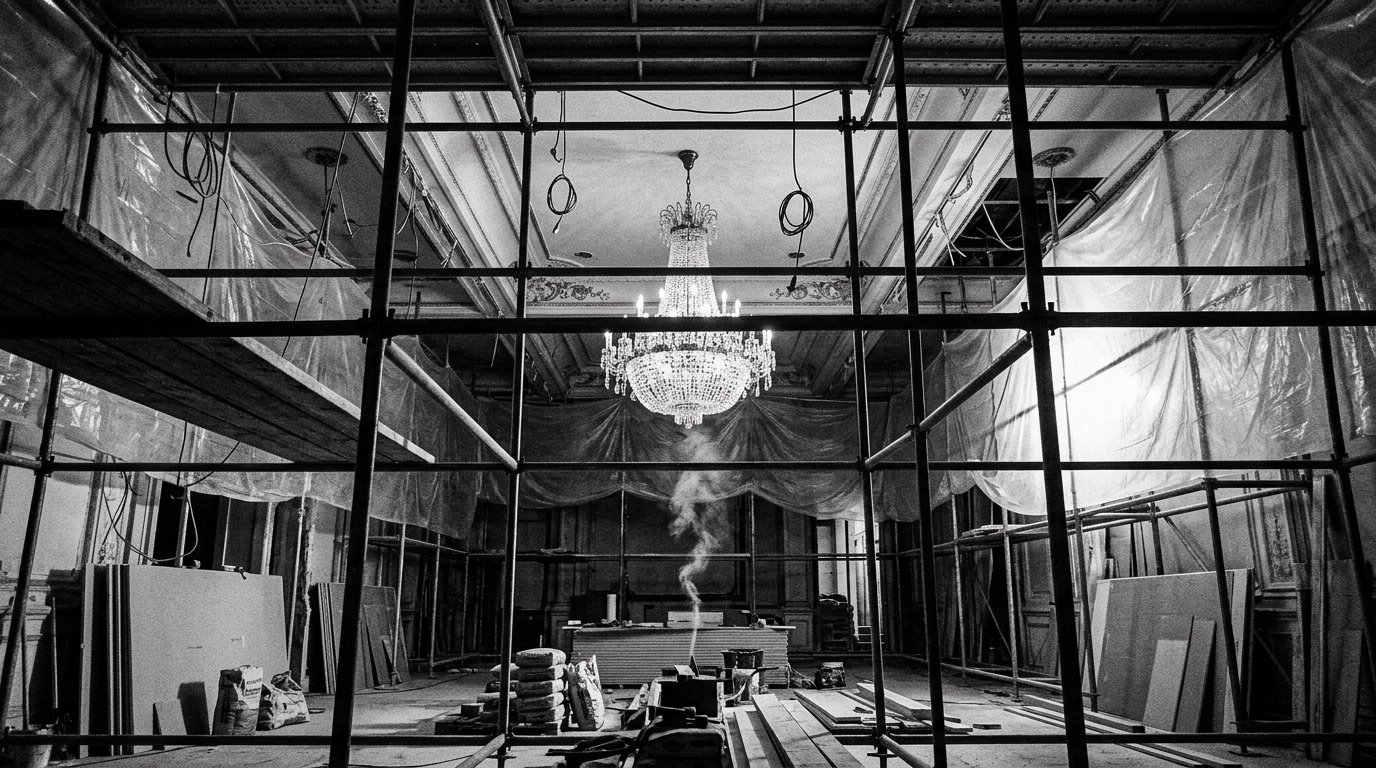
So here's what caught my attention. Not the fire itself... roofline fires happen, smoke dissipated in under two minutes, no injuries reported, no evacuation. That's a contained incident. What caught my attention is the timeline. June 25, a kitchen fire at the Dolphin Hotel's restaurant forces a lobby evacuation. July 1, a guest's portable charger ignites on a ride at Magic Kingdom. July 8, another fire alert in the Magic Kingdom area. July 11, a fire at Port Orleans Resort prompts a 911 call. And now, July 15, the Yacht Club roofline. Four property-level fire incidents in 20 days across one resort campus. The Yacht Club is also mid-refurbishment right now... scaffolding, construction materials, the whole situation. Nobody's confirmed a connection between the construction and the fire, but if you've ever managed a property during a renovation, your gut is already telling you something.

Look, I'm not here to armchair-diagnose Disney's fire safety program. They have more resources, more protocols, and more redundancy than 99% of the hotels reading this. That's actually the point. If a campus with Disney-level operational control, Disney-level budgets, and Disney-level staffing density is stacking fire incidents during an active construction period... what does that tell you about YOUR property's risk profile during your next renovation? Because I've consulted with hotel groups mid-renovation, and the answer is almost always the same: the fire watch protocols exist on paper, and nobody's checking whether they're being followed at 2 AM when the contractor's crew left oily rags next to a heat source. I talked to a chief engineer last year who told me his biggest fear wasn't the renovation itself... it was the six weeks of overlap where construction materials and guest occupancy shared the same building systems. "The fire panel doesn't know the difference between drywall dust and smoke," he said. He wasn't wrong.

Here's the technology angle, because this is actually where I live. Modern fire detection and suppression systems are good. Really good. Addressable panels, zone isolation, integration with BMS platforms... the technology exists to catch problems early and respond fast. But here's what vendors won't tell you: most of these systems degrade during construction. Detectors get covered or temporarily disabled to prevent false alarms from dust and debris. Sprinkler zones get partially shut down for tie-ins. The fire alarm monitoring company gets a standing "construction impairment" notice and basically tunes out alerts from those zones. I've seen properties where the impairment notice was supposed to last two weeks and was still active four months later because nobody followed up. The system doesn't fail. The PROCESS around the system fails. And no amount of smart building technology fixes a process problem.

The portable charger fire on July 1 is a completely different animal, but it's worth flagging because it's a growing problem the industry isn't taking seriously enough. Lithium-ion battery incidents are increasing across every commercial property type. Hotels, theme parks, airports, convention centers. Guests are carrying more battery-powered devices than ever... phones, tablets, portable chargers, vape pens, electric toothbrushes. A single defective lithium cell can reach thermal runaway in seconds. Has anyone at your property actually trained the front desk on what to do when a guest's device starts smoking? Not the fire drill protocol. The actual "a battery is on fire in room 312 right now" protocol. Because it's different from a standard fire response (water makes lithium fires worse), and most hotel teams have never discussed it, let alone drilled it.

Disney hasn't commented publicly on the Yacht Club fire yet, which is standard for a breaking incident at that scale. But the clustering matters. Not because Disney has a systemic safety problem (they almost certainly don't... they have the budget and the institutional discipline to address this fast). It matters because it's a visible reminder that fire risk compounds during renovation periods, that construction oversight requires active daily verification (not just a safety plan in a binder), and that the technology designed to protect your building is only as reliable as the humans managing its status during disruption.

Operator's Take

Here's what I want you to do this week. If you have any active renovation or construction project at your property... any... pull your fire alarm impairment log and check it against reality. Are the zones that are supposed to be back online actually back online? Is your monitoring company still carrying a blanket impairment notice from three months ago? Walk the construction area yourself after the crew leaves for the day. Look for propane tanks, solvent containers, extension cords daisy-chained across wet floors. This isn't about Disney. This is about the fact that renovation season and fire season overlap perfectly, and the gap between your fire safety plan on paper and your fire safety reality at 2 AM is probably wider than you think. If you're carrying a lithium-ion battery response protocol... great, you're ahead of 90% of the industry. If you're not, fix that by Friday. It takes 15 minutes to brief your team. It could save a building.
— Mike Storm, Founder & Editor
Read full analysis → ← Show less
Source: Google News: Resort Hotels
A Family Died in a Motel Fire at 1:30 AM. They Lived There.

A Family Died in a Motel Fire at 1:30 AM. They Lived There.

A Gujarati family of three died trapped in their room at an Ohio Econo Lodge where they lived and worked. Before we talk about fire codes and brand standards, we need to talk about the people who sleep where they work... and what this industry owes them.

Available Analysis

I need to say something before we get into any of this. Three people are dead. A husband, a wife, and their 20-year-old daughter. They weren't guests. They lived in that motel. Worked there. Built a life inside 90 keys of economy lodging in Wooster, Ohio. The fire broke out around 1:30 in the morning on July 2nd. They called the front desk for help. The front desk employee dialed 911. Seventy firefighters from 15 departments responded. It wasn't enough. The family died of suspected suffocation, trapped in the room where they slept every night.

I've been in this business 40 years. I've known families like the Suthars my entire career. Not this family specifically... but families exactly like them. The husband working the property. The wife working the hotel next door. The daughter working a fast food job while helping out wherever needed. They don't just run these motels. They ARE these motels. They live on-site because the economics demand it and because that's how independent and economy-tier hospitality has operated in this country for decades. Ownership groups, family pools, four or five families scraping together everything they have to buy a flag and a building and a chance. The person at the front desk at 2 AM isn't an employee clocking in. It's someone's mother, someone's father, someone's kid doing homework between check-ins. When we talk about "the hospitality industry," these families are the foundation nobody in the conference ballrooms talks about.

So let me ask the question that matters right now. What was the fire safety condition of that building? This was a detached rear section of a one-story motel. Were there working sprinklers? Were there functioning smoke detection systems in the corridors? Ohio fire code requires automatic smoke detection in interior corridors of unsprinklered Group R-1 properties. Did this building have them? Were they maintained? When was the last inspection, and what did it find? The investigation is ongoing... the State Fire Marshal's Office, the Wayne County Sheriff, and local fire officials are all involved, and they haven't ruled out foul play. I'm not going to speculate on cause. But I will say this: roughly 3,900 hotel and motel fires occur in the U.S. every year. Fires originating in bedrooms account for 72% of civilian deaths in those incidents. Those aren't abstractions. Those are people in rooms. People who trusted the building they were sleeping in.

This is a Choice Hotels franchise. An Econo Lodge flag. And I want to be careful here because franchise structures matter. Choice doesn't own or operate this property. A franchisee does. Choice provides the brand, the reservation system, the standards manual. But the physical building... the wiring, the fire suppression, the detection systems, the maintenance... that's on the owner-operator. That's always been the arrangement. And it's an arrangement that works fine when the owner-operator has the capital and the knowledge to maintain life-safety systems to code. It falls apart when they don't. Or when inspections are infrequent. Or when a building from the late '70s or early '80s has been patched and deferred and patched again because the margin on a $59 room doesn't leave a lot of room for a sprinkler retrofit.

I've managed properties where the fire panel was older than half my staff. I've walked buildings at 2 AM and checked extinguisher tags and tested emergency lighting because nobody else was going to do it. I once took over a property where the previous operator had let the fire suppression maintenance contract lapse for eight months to save $200 a month. Eight months. $1,600 in savings against the risk of everything. That's what economy-tier ownership looks like sometimes when the money gets tight... you start making choices that feel rational on the P&L and are catastrophic in reality. This is what I call the CapEx Cliff... deferred maintenance crosses from savings to asset destruction before the owner sees it. Except in this case, it didn't destroy an asset. It may have killed a family. And the distance between "deferred maintenance" and "someone dies" is shorter than anyone in a boardroom wants to admit.

Operator's Take

I don't care what tier you operate. Economy, select-service, full-service... walk your building tonight. Not next week. Tonight. Check your fire panel. Check your extinguisher tags. Check your emergency egress lighting. Pull your last fire suppression inspection report and confirm every item was cleared. If you have staff or ownership family members living on-site (and in economy-tier properties, many of you do), verify that their rooms have working smoke detectors, a clear egress path, and a documented emergency protocol that doesn't rely on someone calling the front desk and hoping for the best. If your fire suppression maintenance contract has lapsed or been "deferred" to save money, reinstate it Monday morning. The cost of a sprinkler inspection is not a line item to negotiate. It's the cost of keeping people alive. Three people died in Ohio this week. Make sure your building isn't next.

Read full analysis → ← Show less
Source: Google News: Hotel Industry
A 600-Room Resort Burns Down in Hours. The Thatched Roof Is the Part You Need to Think About.

A 600-Room Resort Burns Down in Hours. The Thatched Roof Is the Part You Need to Think About.

A fire at the Viva Dominicus Beach by Wyndham killed one guest, displaced 1,700 tourists, and almost completely destroyed a 600-room resort in the Dominican Republic. The fire spread through palm thatch roofing so fast that the building was essentially gone before anyone could stop it... and if you're operating in a tropical market, this is the conversation you need to have with your risk team this week.

Available Analysis

I worked with a GM years ago who ran a 400-key resort in the Caribbean. Beautiful property. Open-air lobby, palapa roofs over the pool bars, thatch accents on every building. Guests loved it. It looked like paradise. One afternoon he walked me through the property and pointed up at the roof over the main restaurant and said, "That's the most beautiful fire hazard I've ever been responsible for." He wasn't joking. He'd been asking ownership to invest in fire-retardant treatments and suppression upgrades for two years. The answer was always the same... it's too expensive, the insurance covers it, we've never had a problem. He told me, "The day we have a problem, there won't be a building left to have a problem with."

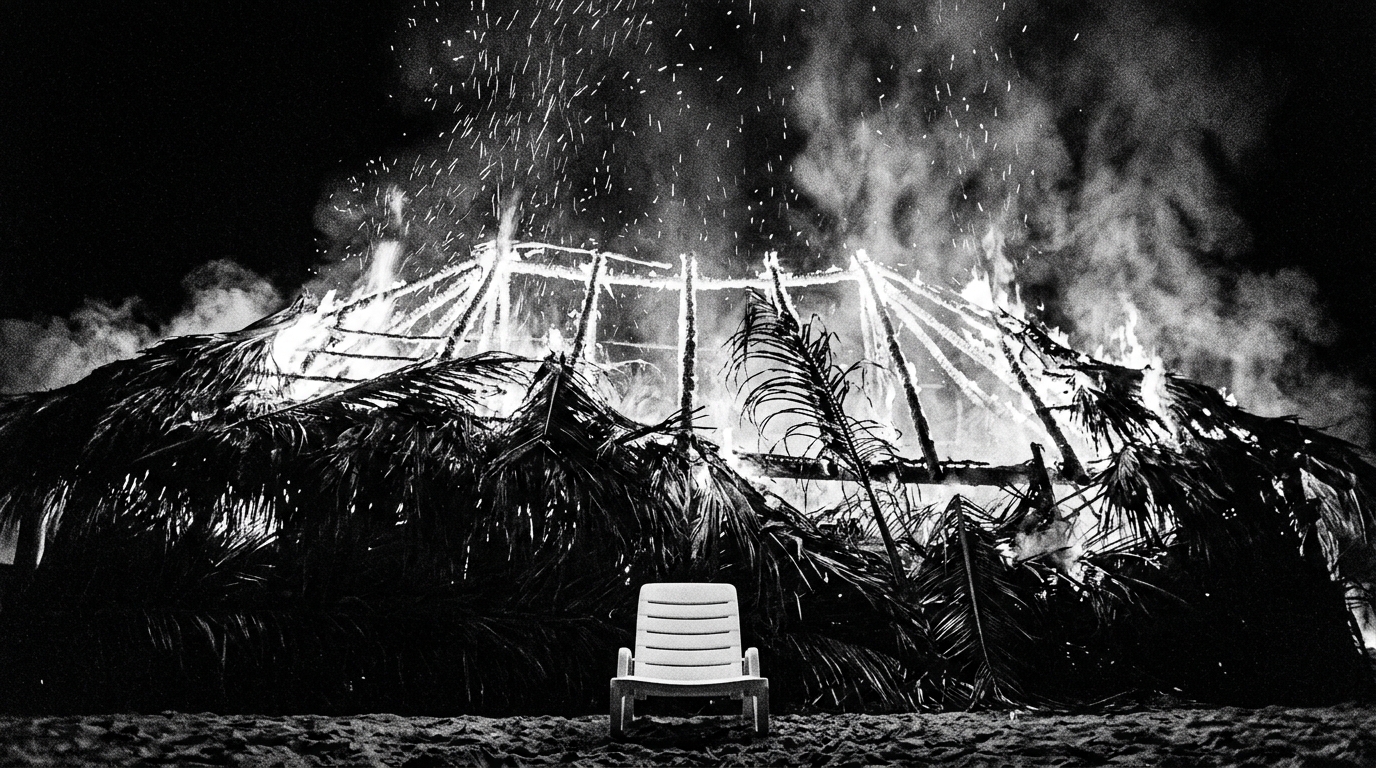
That's what happened Friday night in Bayahibe, Dominican Republic. The Viva Dominicus Beach by Wyndham... over 600 rooms, running at 84% occupancy... caught fire and was almost completely destroyed. One guest, a 46-year-old Italian tourist, died. Three more were hospitalized. Six others were treated on scene. Roughly 1,700 guests had to be evacuated and relocated to other hotels and nearby housing. Dominican authorities say the fire spread through palm thatch roof structures, pushed by strong winds. The cause is under investigation, but the mechanism isn't a mystery. Thatch burns. Wind spreads fire. And when your building materials are essentially kindling with a view, the margin between "small kitchen fire" and "total loss" is measured in minutes, not hours.

Let me be direct about something that the press coverage is going to dance around. Thatched roofs and palm-frond construction are an aesthetic choice that guests associate with the tropical resort experience. They're also a known fire risk that has destroyed properties across the Caribbean, Mexico, and Southeast Asia for decades. This isn't new information. Every operator running a property with significant thatch elements knows this. Every insurer knows this. The question is always whether the cost of mitigation (fire-retardant treatments, enhanced suppression systems, compartmentalization, emergency egress upgrades) is treated as a real line item or something that gets pushed to "next year's budget" until there is no next year.

Here's what I know from 40 years of this. The insurance will eventually pay out (probably... and the claim process on a total loss of this magnitude with a fatality will be brutal and slow). The sister property next door is still operating. Dominican authorities are saying tourism continues as normal. All of that is true and all of it is beside the point for the operator. What matters is this: a guest is dead. A building that was a going concern at dinner time was rubble by morning. And somewhere in the chain of ownership and management, there were people who knew... or should have known... that the speed at which this type of structure can be lost is fundamentally different from conventional construction. Every resort operator with thatch, wood-frame, or similar construction needs to look at three things this week: your fire suppression coverage (not what the certificate says... what actually works), your evacuation plan for full occupancy at 2 AM (not the binder in the office... the drill your staff can execute in the dark), and your building materials assessment relative to your insurance requirements. If there's a gap between what your insurer assumes about your construction and what's actually on the roof, close it now.

The Dominican Republic attracted 5.6 million visitors in the first five months of this year. This is a massive tourism economy, and this fire isn't going to stop that. But for the individual operators in Bayahibe and across the Caribbean, the lesson is simple and it's one I've seen ignored at a dozen properties in my career: the thing that makes your resort look like paradise is sometimes the same thing that can take it away in an hour. You either spend the money on mitigation or you bet that it won't happen to you. That family in Bayahibe just found out what happens when the bet doesn't pay off.

Operator's Take

If you're running a resort property with thatched roofs, palapa structures, or any significant combustible architectural elements, stop reading and go pull your fire safety file. Not Monday. Today. Three things: First, verify your fire suppression systems cover every structure, not just the main building... pool bars, beach pavilions, restaurant palapas, all of it. Second, run a tabletop evacuation exercise for full-occupancy, middle-of-the-night scenarios with your department heads within the next two weeks. Your plan is only as good as your newest employee's ability to execute it under pressure. Third, call your insurance broker and confirm that your policy reflects your actual construction materials and current replacement cost. If your last assessment was pre-COVID, it's wrong... construction costs are up 30-40% in most Caribbean markets. Bring this to your ownership group yourself, with the cost of mitigation AND the cost of what just happened in the DR. This is what I call the Invisible P&L... the costs that never appear on your financial statements until they show up as a total loss. The $50K you spend on fire-retardant treatment and suppression upgrades is the cheapest insurance you'll ever buy.

Read full analysis → ← Show less
Source: Google News: Resort Hotels
A Guest Died in That Dominican Resort Fire. Let's Talk About What Kills People in Hotels.

A Guest Died in That Dominican Resort Fire. Let's Talk About What Kills People in Hotels.

A fire tore through a 1,690-guest Wyndham resort in the Dominican Republic, killing one tourist and injuring nine others. The detail that should keep every operator up tonight isn't in the headline... it's in the roof.

Available Analysis

I worked with an engineer once who walked the roof of a Caribbean property I was involved with and said something I never forgot. "You see thatch, the guests see paradise, and I see accelerant." He wasn't being dramatic. He was being accurate.

Friday morning, a fire ripped through the Viva Dominicus Beach by Wyndham in Bayahibe, Dominican Republic. 84% occupancy. Roughly 1,690 guests on property, including more than 200 kids. One woman... an Italian tourist, 46 years old... didn't make it out. Nine others were injured. Reports indicate the fire spread with terrifying speed, fueled by wind and sections of thatched or cane roofing material that are standard construction in tropical resort markets. The adjacent Viva Dominicus Palace wasn't touched. Same ownership group, same beachfront, completely different outcome. That tells you this wasn't some act of God that no one could have predicted. It was a building-specific failure with building-specific causes.

Here's the detail from the New York Post headline that should sit with every operator reading this: guests reportedly charged back into the burning building to retrieve their belongings. Passports. Phones. Wallets. Everything they needed to prove who they were and get home. I want you to think about that for a second. Your guests' most critical possessions are in a room they can't reach, and the only people standing between them and a fire are your staff... whoever happens to be on shift at 11 AM on a Friday. That's the moment where your emergency plan either works or it's just a binder collecting dust behind the front desk. And I'll tell you something... I've been in this business 40 years, and I've seen plenty of binders. I've seen far fewer teams that have actually drilled on what to do when the building is on fire and a panicked guest is trying to run past them back inside.

The broader context matters here. Wyndham has been expanding aggressively in Latin America and the Caribbean... roughly 75 new hotels planned over the next five years in the region, with the Dominican Republic as a primary growth market. All-inclusive already represents nearly 30% of their rooms there. This fire doesn't just affect one property. It puts a spotlight on construction standards, fire safety protocols, and emergency response capability across an entire development pipeline. When you're growing that fast in markets where building codes and enforcement may not match what operators are used to in the US, the question isn't whether something like this will happen. It's whether you're ready when it does.

Let me be direct about something the post-incident PR will never say. Evacuation of 1,690 people with one fatality and nine injuries is, statistically, a result that could have been catastrophically worse. But "could have been worse" is not a standard. A woman is dead. Her family flew to the Dominican Republic for a vacation and one of them isn't coming home. That's the number that matters... not the occupancy percentage, not the room count, not the brand's expansion plans. One. And the question every operator should be asking right now isn't "could that happen here?" It's "what am I doing this week to make sure it doesn't?"

Operator's Take

If you haven't done a live fire drill with your actual on-shift staff (not the managers who show up for the scheduled ones... the real team working a real shift), do one this month. Not a tabletop. A walk-through with roles assigned. Who calls 911. Who prevents re-entry. Who accounts for guests. Who handles the guest whose passport is in a burning room. Pull your emergency binder out right now and check the date on it. If it's older than 12 months, it's fiction. If you're at a property with any combustible structural or decorative elements... thatched bars, wooden pergolas, bamboo facades... get your fire marshal in for an inspection before someone else makes that call for you. And if you're an owner with properties in tropical resort markets, ask your management company one question this week: "Walk me through exactly what happens in the first five minutes of a structure fire at our property." If they can't answer that in detail without checking a document, you have your answer.

Read full analysis → ← Show less
Source: Google News: Resort Hotels
A Guest Died in a Resort Fire. The Thatched Roof Was the Accelerant Everyone Already Knew About.

A Guest Died in a Resort Fire. The Thatched Roof Was the Accelerant Everyone Already Knew About.

A fire tore through Viva Wyndham Dominicus Beach on Friday, killing an Italian tourist and evacuating 1,690 guests. The cause is under investigation, but the construction material that let it spread isn't a mystery... it's the same palm thatch that's burned at Caribbean resorts three times in two years.

Available Analysis

I watched a resort burn once. Not this one. Different island, different decade. But the same sick feeling in my stomach as I stood in a parking lot watching flames eat through a roof structure that everyone knew was a fire risk and nobody had done anything about because it looked beautiful in the brochure photos. That's the thing about thatched roofs in the Caribbean. They're gorgeous. Guests love them. They photograph like a dream. And when they catch fire on a windy day, they burn like they were designed to.

Friday morning in Bayahibe, a fire ripped through the Viva Wyndham Dominicus Beach resort and killed Francesca Valentino, a 46-year-old Italian tourist who was on vacation. Nine more people were injured. Nearly 1,700 guests were evacuated and relocated to other properties. The Dominican Republic's Emergency Operations Center says the fire spread rapidly due to strong winds and the resort's palm-thatch roof construction. The cause is still under investigation, but the mechanism isn't a mystery to anyone who's been paying attention. This is the third significant resort fire involving thatched construction in the Dominican Republic in less than two years. Cap Cana lost 11 villas in July 2025. Club Med Punta Cana took significant damage in September 2024. Same materials. Same story. Same preventable acceleration.

Here's what bothers me most. The Dominican Republic welcomed 5.6 million tourists in the first five months of this year. It's the Caribbean's top destination. And yet... general travel advisories from multiple governments flag "uneven regulation" in the tourism industry, potential gaps in safety inspections, and staff training that may not meet international standards. That's diplomatic language for something operators understand plainly: the regulatory framework hasn't kept pace with the development boom. When you're building and operating resorts at scale in a market with that kind of demand, the temptation is to move fast and let the aesthetics drive the design. Thatched roofs are the look. They signal "tropical paradise." They also signal "I will burn extremely fast under conditions that occur regularly in a tropical climate." Those two things coexist in the same structure, and someone has to reconcile them before another family gets a phone call they shouldn't have to receive.

The brand response here matters, and right now there isn't much of one. Wyndham Hotels & Resorts hasn't commented publicly. The adjacent Viva Wyndham Dominicus Palace (same chain, not damaged) continues to operate normally. The stock barely moved. And the local authorities are already reassuring everyone that "tourist activities in Bayahibe remain unaffected." I understand why they're saying that. Tourism is the economy. But "unaffected" is a word that rings hollow when a woman is dead and 1,700 people just had the worst day of their vacation. The operational question isn't whether Bayahibe is safe for tourists. It's whether every resort in the Caribbean using combustible roofing materials has a fire suppression plan, an evacuation plan, and construction standards that account for the fact that wind and thatch and fire are a combination that kills people. Because we keep learning this lesson and we keep not learning it.

If you operate or own resort properties anywhere... Caribbean, Mexico, Southeast Asia, anywhere that uses natural roofing materials for the aesthetic... this is your wake-up call, and it's the third one in two years. Don't wait for the fourth. The investigation in Bayahibe will eventually produce a cause. But the acceleration mechanism is already known. The question is what you're going to do about the structure you're operating right now, today, before the wind picks up.

Operator's Take

If you manage or own a property with thatched, palm, or any natural-material roof structures, pull your fire suppression documentation this week. Not next month. This week. Verify your sprinkler coverage specifically under those structures. Check when your last fire marshal inspection occurred and whether it addressed combustible roofing. Review your evacuation plan... can you move your entire guest count to alternate shelter within 30 minutes? The Dominicus Beach team relocated 1,690 people, which is an operational achievement under horrific circumstances, but that evacuation plan existed because someone thought about it before Friday. If yours doesn't exist or hasn't been drilled in the last 12 months, fix that before you do anything else. And if you're an owner looking at a development or renovation that includes natural roofing materials for "the look," price fire-retardant treatment, enhanced suppression systems, and compartmentalized roof sections into the budget right now. The aesthetic isn't worth the liability. I promise you it isn't.

Read full analysis → ← Show less
Source: Google News: Resort Hotels
A Guest Died in a Resort Fire. Your Emergency Plan Hasn't Been Tested Since the Binder Was Printed.

A Guest Died in a Resort Fire. Your Emergency Plan Hasn't Been Tested Since the Binder Was Printed.

A fire swept through a 1,700-guest Wyndham resort in the Dominican Republic, killing an Italian tourist and exposing what happens when thatched roofs, strong winds, and an untested emergency plan collide. If your property still has the same evacuation binder from your last brand inspection, this is the story that should keep you up tonight.

Available Analysis

I worked with a GM years ago who ran fire drills quarterly. Not the kind where you pull the alarm, everyone rolls their eyes, and the front desk supervisor marks it complete on a checklist. Real drills. Middle of the night. Full evacuation. Guests and all. His ownership group told him he was crazy... said he was going to generate complaints. He told them he'd rather have a one-star review from a guest who got woken up at 3 AM than a wrongful death lawsuit from a family who never got woken up at all. He kept his job. And when a kitchen fire broke out on a Saturday night two years later, his team moved 340 guests to the parking lot in under nine minutes. Nobody got hurt. Nobody panicked. Because they'd done it before.

Friday morning at the Viva Wyndham Dominicus Beach in the Dominican Republic, a fire ripped through the resort around 11 AM. The property's thatched palm roofing... the kind that looks gorgeous in the brochure photos... caught and spread in high winds. An Italian tourist named Francesca Valentino, 46 years old, died. Nine others were injured. Roughly 1,700 guests and staff were evacuated. Reports say the resort was "almost completely destroyed." The cause is still under investigation, but preliminary findings point to exactly what you'd expect... highly flammable traditional roofing materials and wind conditions that turned a fire into an inferno before anyone could contain it.

Let me be direct. This is not a story about one resort in the Caribbean. This is a story about every property in your portfolio that has a life safety plan sitting in a three-ring binder behind the front desk that nobody has opened since the last brand QA visit. Every property where the fire panel is in the engineering office and the overnight guy doesn't know how to read it. Every property where the emergency contact list has phone numbers for people who left two years ago. Every property where the thatched palapa by the pool, or the decorative wood paneling in the lobby, or the aging electrical in the east wing hasn't been assessed for fire risk since the last renovation... if it was assessed then. I've seen this movie before. The fire itself is the headline. The real story is what happens in the 90 seconds between when the alarm sounds and when your team either executes or freezes.

Here's what bothers me about this one specifically. This property had renovations in 2020. They updated rooms, added pools, refreshed the lobby. And the thatched roofing... the most obvious fire risk on the entire campus... stayed. Because it's part of the aesthetic. It's what sells the resort experience. It's in the marketing photography. And somebody, somewhere in that chain of decisions, chose the look over the risk. I'm not saying that's what killed this woman. The investigation will determine causation. But I am saying that in 40 years of operations, I have watched ownership groups and management companies defer life safety investments because the ROI doesn't show up on a spreadsheet. Fire suppression doesn't generate revenue. Sprinkler upgrades don't improve your TripAdvisor score. New roof materials don't get mentioned in the brand newsletter. They just keep people alive. And that math only becomes obvious after someone dies.

The Dominican Republic welcomed 5.6 million visitors in the first five months of this year alone. Local authorities were quick to say tourism in the surrounding area continues normally. And it will. Markets recover from incidents. Properties get rebuilt. But Francesca Valentino doesn't come back. And every operator reading this right now should be asking themselves one question... not "could this happen at my property?" Because you already know the answer. The question is: "If it happened tonight, at 2 AM, with my skeleton crew... what happens in the first 90 seconds?"

Operator's Take

If you're a GM at any property... full-service, select-service, resort, independent, branded, doesn't matter... do three things this week. First, pull your emergency action plan and read it. Not skim it. Read it. Check every phone number, every role assignment, every evacuation route. If the person listed as "fire safety coordinator" quit eight months ago and you never updated it, that's your Monday morning. Second, walk your property with your chief engineer and your insurance contact and identify every combustible material, every gap in suppression coverage, every panel that hasn't been serviced this year. Third, schedule a drill. A real one. With your actual overnight staff, not your A-team. Because fires don't wait for your best shift. The cost of a drill is a few hours of disruption. The cost of not doing one is something you can't put on a P&L.

Read full analysis → ← Show less
Source: Google News: Resort Hotels
A Hotel Fire Got Put Out in 48 Minutes. The Real Question Is What Happens Before the Fire.

A Hotel Fire Got Put Out in 48 Minutes. The Real Question Is What Happens Before the Fire.

A 357-room Hampton by Hilton at Stansted Airport evacuated every guest and killed a third-floor fire in under an hour with zero injuries. That's the headline. The story underneath it is about the 99% of hotels that haven't pressure-tested their fire response since the last brand audit.

Available Analysis

Let me tell you what went right first, because it matters. Monday morning, 10:27 AM, third floor of a 357-room airport hotel catches fire. By 11:15 AM... 48 minutes later... the fire is out, every guest is accounted for, every staff member is safe, and the airport next door never stopped running flights. That's an extraordinary outcome. That's the result of someone (probably several someones) doing their job exactly the way they were trained to do it, under conditions where most people forget everything they've ever been told.

Now here's what keeps me up at night. That hotel is an eight-story, 357-key property managed by Interstate Europe, owned by Legal & General, flagged as Hampton by Hilton. Three layers of institutional oversight. Brand standards. Management company protocols. Institutional owner with asset management resources. And it STILL caught fire. That's not a failure... fires happen. Electrical systems age. Equipment malfunctions. The building is less than a decade old and something still went wrong on the third floor badly enough to require a full evacuation and high-pressure ventilation fans to clear the smoke afterward. The cause is still under investigation. But here's the thing about fire... it doesn't check whether you're a 357-key institutional asset or a 90-key independent running thin. It just burns.

I ran a property once where the chief engineer walked me through every floor and showed me the fire suppression system like he was showing me his firstborn. Sprinkler heads, pull stations, extinguisher locations, smoke detector maintenance logs... the man had a binder. A BINDER. And he made every new hire walk the route within their first week. Not watch a video. Walk it. When I asked him why he was so intense about it, he told me about a hotel he'd worked at 15 years earlier where a laundry room fire sent smoke through the HVAC and they lost 40 minutes figuring out where it was coming from because nobody had checked the duct sensors in six months. Nobody got hurt, but he said the sound of guests banging on doors they couldn't see through was something he never got over. That binder wasn't corporate compliance. That was a man who'd been scared once and decided nobody was going to get scared on his watch again.

The UK hospitality sector logged nearly 600 fires in 2023 alone. Six hundred. Electrical faults, kitchen equipment, HVAC issues. And that's just the ones that got reported. The reality for most hotel operators... especially those of you running older buildings, properties with deferred maintenance budgets, buildings where the electrical was last updated during a Clinton administration renovation... is that your fire risk profile is higher than you think. Your brand's fire safety standards are a minimum, not a maximum. Your insurance company's inspection is annual. Your actual risk is daily. When was the last time your team did a live evacuation drill that wasn't announced in advance? When was the last time someone checked every pull station on every floor? When was the last time your night auditor... the one person in the building at 3 AM... actually walked through what they'd do if they smelled smoke?

The Stansted team earned their outcome on Monday. Forty-eight minutes, zero injuries, operations restored. That didn't happen by accident. It happened because someone, somewhere, took fire preparedness seriously enough to make it muscle memory. The question for the rest of us is whether we're relying on the same level of preparation or whether we're relying on luck. Luck works right up until the moment it doesn't.

Operator's Take

If you're a GM at any property... branded, independent, 100 keys or 500... pull your fire safety logs this week. Not the binder that sits in the engineering office collecting dust. The actual logs. When was the last unannounced evacuation drill? When were smoke detectors last individually tested? Does your overnight staff know where every fire panel, suppression shutoff, and emergency exit is without looking it up? If you can't answer all three in under 30 seconds, you have a Monday morning project. The Stansted team got a good outcome because they were ready. Get ready.

Read full analysis → ← Show less
Source: Google News: Hilton
End of Stories