114 People Died Because an Engineer Didn't Recheck the Math. That Was 45 Years Ago Today.
The Hyatt Regency skywalk collapse killed 114 people at a tea dance in Kansas City on July 17, 1981, and it happened because a steel fabricator changed a connection detail and the structural engineer approved it without recalculating the load. Forty-five years later, the question every hotel owner should be asking isn't whether their building is safe... it's whether anyone in their chain of command is actually checking.
I grew up in hotels. My dad managed them. I lived in them. And one of the first stories he ever told me about the industry wasn't about guest satisfaction scores or revenue management or which brand had the best loyalty program. It was about Kansas City. About a Friday night tea dance in an atrium lobby where people were laughing and dancing and the skywalks above them were holding weight they were never designed to hold. He told me about the sound. He'd heard it described by someone who was there. He said you never forget a story like that, and he was right, because I never have.
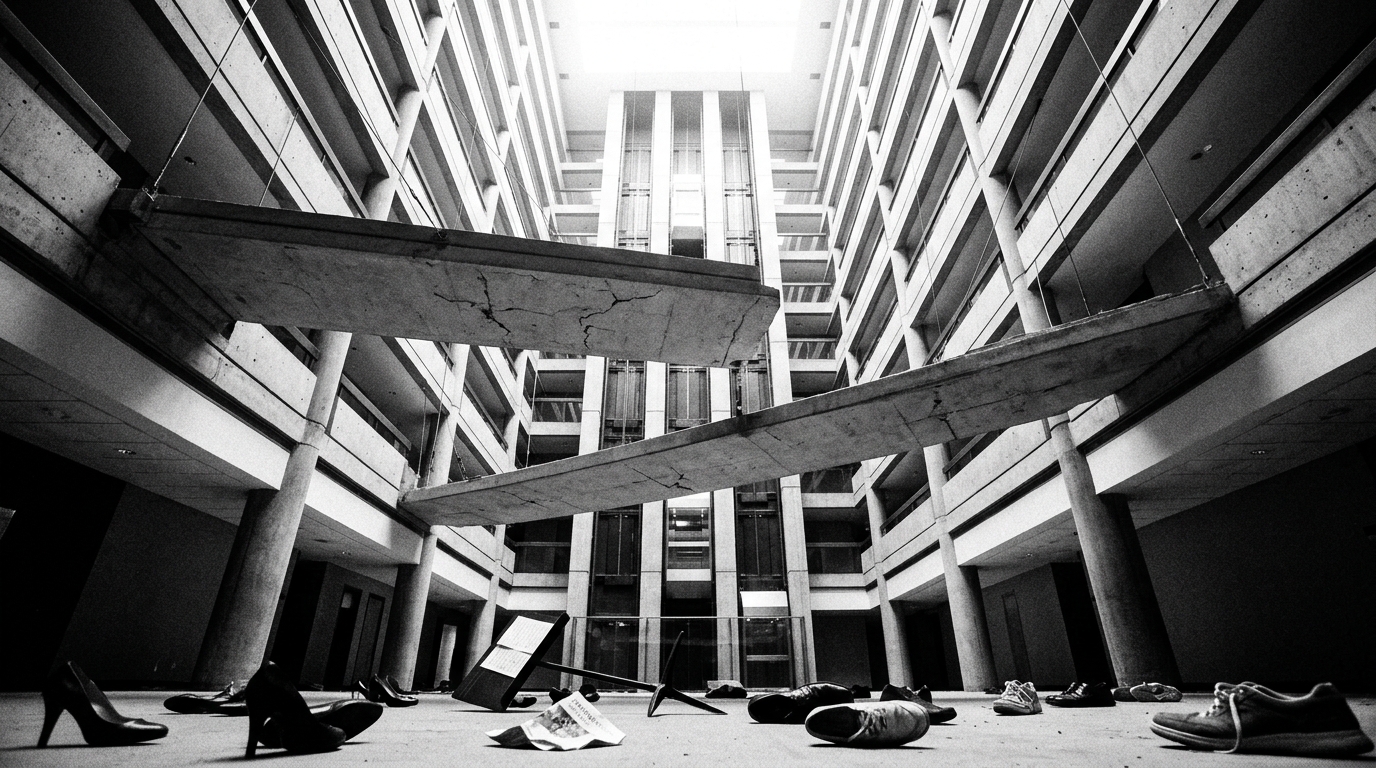
Forty-five years ago today, two suspended walkways inside the Hyatt Regency Kansas City collapsed into the lobby below. One hundred and fourteen people died. Two hundred and sixteen were injured. The hotel had been open for one year. One year. A $50 million showpiece, brand new, the kind of property that's supposed to represent the best of what this industry builds... and it killed people because of a change that happened on paper, between an engineering firm and a steel fabricator, that nobody bothered to recheck. The original design called for continuous hanger rods supporting both walkways. The fabricator proposed splitting them into two separate rods to simplify assembly. The engineer approved shop drawings reflecting that change without recalculating what it meant for the load on the fourth-floor connections. That single approval, that single failure to recheck, doubled the stress on connections that were already designed to handle only 60% of the minimum code requirement. The walkways were hanging by a thread from the day they were installed. It just took a crowded Friday night to prove it.
Here's what haunts me about this story, even now, even after all these years of reading FDDs and evaluating brand standards and arguing about franchise fee structures. The system that failed wasn't some rogue actor or freak accident. It was a chain of professionals doing their jobs... almost. The fabricator proposed a change (reasonable... fabricators do this). The engineer approved it (routine... engineers review shop drawings constantly). But nobody stopped to ask the one question that would have saved 114 lives: does this change alter the math? The answer was yes. Catastrophically yes. And nobody checked. Not the engineering firm. Not the construction team. Not the city inspector. The original engineer of record later had his license revoked for gross negligence. His firm lost its ASCE membership. Victims' families were awarded approximately $140 million. The hotel reopened in October 1981, roughly two and a half months after the collapse, after a significant reconstruction, was eventually reflagged, and today operates under a completely different name. You can stay there tonight. Most guests have no idea what happened in that lobby.
I think about this story every time I watch our industry skip a step. Every time a brand pushes a PIP timeline that doesn't allow for proper inspection. Every time an owner defers a structural assessment because the capital reserve is thin. Every time a management company inherits a property and nobody orders a fresh engineering report because the last one was "only" eight years old. We are an industry that obsesses over the guest experience (and we should)... but the foundation of the guest experience, the literal foundation, is that the building doesn't hurt anyone. That sounds obvious. It was obvious in Kansas City too. The connections that failed were visible. They were above the lobby. People walked under them every day. And still, nobody checked. The engineer of record later accepted full responsibility, but responsibility after the fact is a funeral speech, not a safety protocol.
This anniversary isn't about blame. The people who failed have been named, judged, and in some cases destroyed by what happened. It's about the question underneath the blame, the one that applies to every owner, every operator, every brand executive reading this right now: who in your chain of command is actually checking? Not assuming. Not approving shop drawings without recalculating. Not signing off because the timeline is tight and the budget is set and someone above them needs this project done by Q3. Actually checking. Because Kansas City taught us something that 45 years hasn't dulled: the cost of not checking isn't a budget overrun or a delayed opening. It's a lobby full of people who trusted you to get it right.
Let me be direct. This isn't a story about 1981. It's a story about right now. If you're an owner or a GM and you can't tell me the date of your last structural engineering assessment... not the last cosmetic renovation, not the last FF&E refresh, the last time a licensed structural engineer walked your property and signed off on load-bearing systems... you have a problem you don't know about yet. Pull your capital reserve plan this week. Look for the line item that says "building envelope" or "structural assessment." If it's not there, put it there. If you're mid-PIP or mid-renovation and a contractor proposes a design change that affects any structural element, do not approve it without an independent engineering review. I don't care what it costs. I don't care what it does to your timeline. The Hyatt Regency was a brand-new building that killed 114 people because one change was approved without one recalculation. That's not ancient history. That's a standing lesson. Honor it.