A Guest Died in a Resort Fire. Your Emergency Plan Hasn't Been Tested Since the Binder Was Printed.
A fire swept through a 1,700-guest Wyndham resort in the Dominican Republic, killing an Italian tourist and exposing what happens when thatched roofs, strong winds, and an untested emergency plan collide. If your property still has the same evacuation binder from your last brand inspection, this is the story that should keep you up tonight.
I worked with a GM years ago who ran fire drills quarterly. Not the kind where you pull the alarm, everyone rolls their eyes, and the front desk supervisor marks it complete on a checklist. Real drills. Middle of the night. Full evacuation. Guests and all. His ownership group told him he was crazy... said he was going to generate complaints. He told them he'd rather have a one-star review from a guest who got woken up at 3 AM than a wrongful death lawsuit from a family who never got woken up at all. He kept his job. And when a kitchen fire broke out on a Saturday night two years later, his team moved 340 guests to the parking lot in under nine minutes. Nobody got hurt. Nobody panicked. Because they'd done it before.
Friday morning at the Viva Wyndham Dominicus Beach in the Dominican Republic, a fire ripped through the resort around 11 AM. The property's thatched palm roofing... the kind that looks gorgeous in the brochure photos... caught and spread in high winds. An Italian tourist named Francesca Valentino, 46 years old, died. Nine others were injured. Roughly 1,700 guests and staff were evacuated. Reports say the resort was "almost completely destroyed." The cause is still under investigation, but preliminary findings point to exactly what you'd expect... highly flammable traditional roofing materials and wind conditions that turned a fire into an inferno before anyone could contain it.
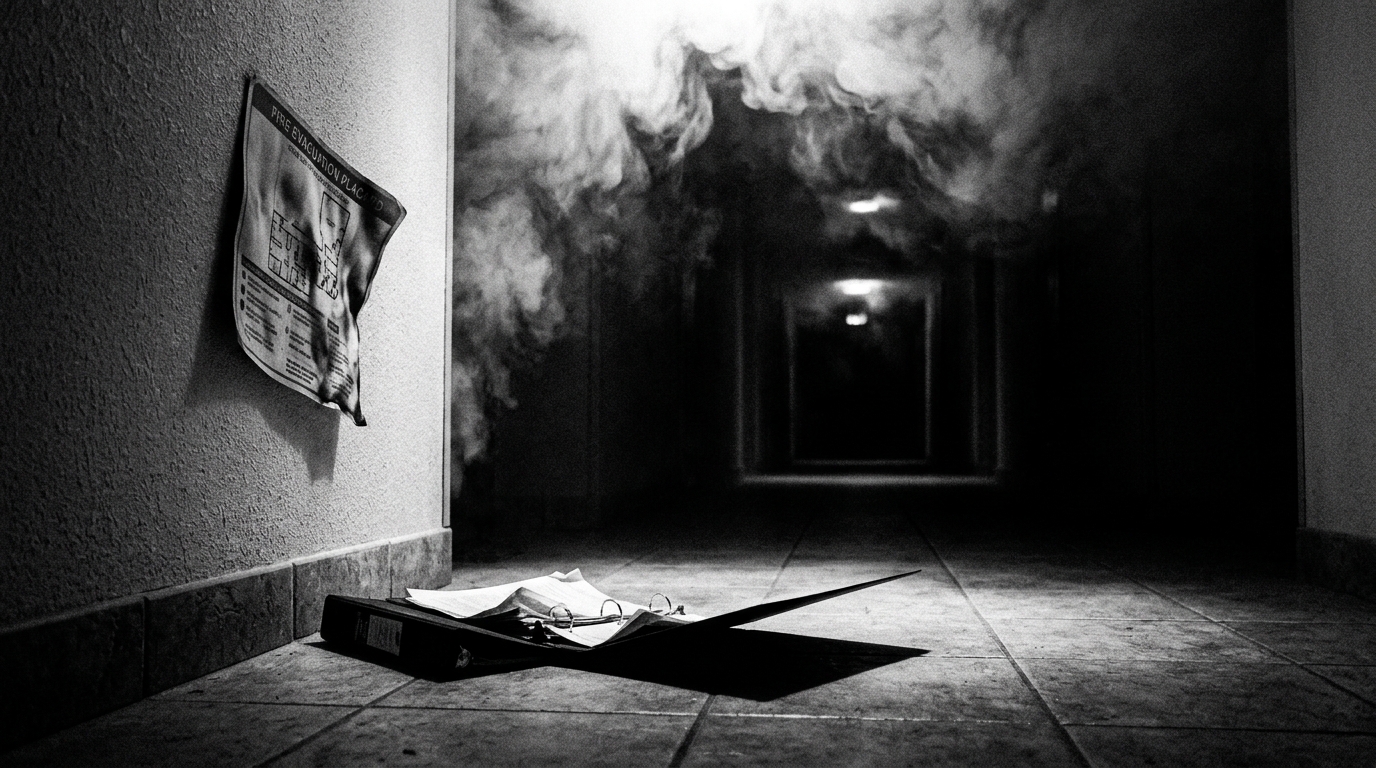
Let me be direct. This is not a story about one resort in the Caribbean. This is a story about every property in your portfolio that has a life safety plan sitting in a three-ring binder behind the front desk that nobody has opened since the last brand QA visit. Every property where the fire panel is in the engineering office and the overnight guy doesn't know how to read it. Every property where the emergency contact list has phone numbers for people who left two years ago. Every property where the thatched palapa by the pool, or the decorative wood paneling in the lobby, or the aging electrical in the east wing hasn't been assessed for fire risk since the last renovation... if it was assessed then. I've seen this movie before. The fire itself is the headline. The real story is what happens in the 90 seconds between when the alarm sounds and when your team either executes or freezes.
Here's what bothers me about this one specifically. This property had renovations in 2020. They updated rooms, added pools, refreshed the lobby. And the thatched roofing... the most obvious fire risk on the entire campus... stayed. Because it's part of the aesthetic. It's what sells the resort experience. It's in the marketing photography. And somebody, somewhere in that chain of decisions, chose the look over the risk. I'm not saying that's what killed this woman. The investigation will determine causation. But I am saying that in 40 years of operations, I have watched ownership groups and management companies defer life safety investments because the ROI doesn't show up on a spreadsheet. Fire suppression doesn't generate revenue. Sprinkler upgrades don't improve your TripAdvisor score. New roof materials don't get mentioned in the brand newsletter. They just keep people alive. And that math only becomes obvious after someone dies.
The Dominican Republic welcomed 5.6 million visitors in the first five months of this year alone. Local authorities were quick to say tourism in the surrounding area continues normally. And it will. Markets recover from incidents. Properties get rebuilt. But Francesca Valentino doesn't come back. And every operator reading this right now should be asking themselves one question... not "could this happen at my property?" Because you already know the answer. The question is: "If it happened tonight, at 2 AM, with my skeleton crew... what happens in the first 90 seconds?"
If you're a GM at any property... full-service, select-service, resort, independent, branded, doesn't matter... do three things this week. First, pull your emergency action plan and read it. Not skim it. Read it. Check every phone number, every role assignment, every evacuation route. If the person listed as "fire safety coordinator" quit eight months ago and you never updated it, that's your Monday morning. Second, walk your property with your chief engineer and your insurance contact and identify every combustible material, every gap in suppression coverage, every panel that hasn't been serviced this year. Third, schedule a drill. A real one. With your actual overnight staff, not your A-team. Because fires don't wait for your best shift. The cost of a drill is a few hours of disruption. The cost of not doing one is something you can't put on a P&L.