A 600-Room Resort Burns Down in Hours. The Thatched Roof Is the Part You Need to Think About.
A fire at the Viva Dominicus Beach by Wyndham killed one guest, displaced 1,700 tourists, and almost completely destroyed a 600-room resort in the Dominican Republic. The fire spread through palm thatch roofing so fast that the building was essentially gone before anyone could stop it... and if you're operating in a tropical market, this is the conversation you need to have with your risk team this week.
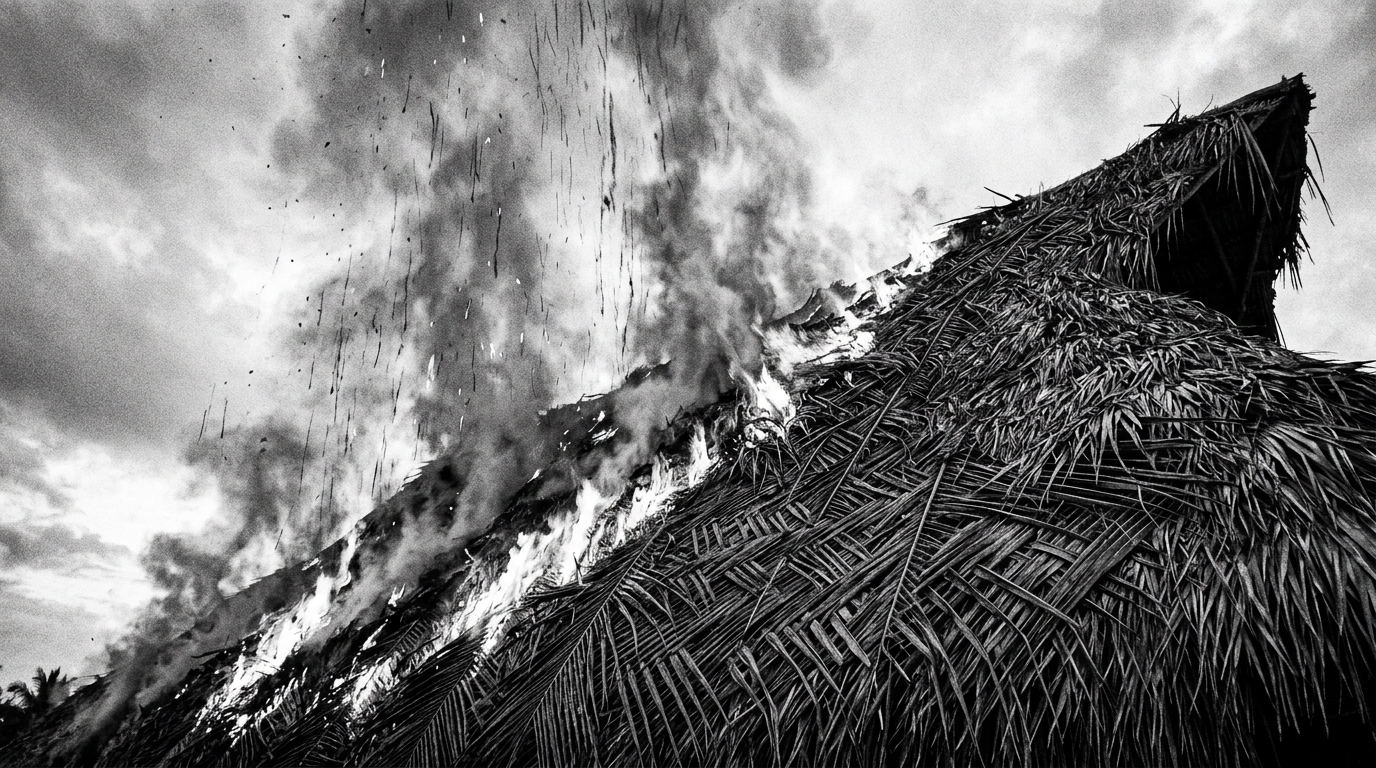
I worked with a GM years ago who ran a 400-key resort in the Caribbean. Beautiful property. Open-air lobby, palapa roofs over the pool bars, thatch accents on every building. Guests loved it. It looked like paradise. One afternoon he walked me through the property and pointed up at the roof over the main restaurant and said, "That's the most beautiful fire hazard I've ever been responsible for." He wasn't joking. He'd been asking ownership to invest in fire-retardant treatments and suppression upgrades for two years. The answer was always the same... it's too expensive, the insurance covers it, we've never had a problem. He told me, "The day we have a problem, there won't be a building left to have a problem with."
That's what happened Friday night in Bayahibe, Dominican Republic. The Viva Dominicus Beach by Wyndham... over 600 rooms, running at 84% occupancy... caught fire and was almost completely destroyed. One guest, a 46-year-old Italian tourist, died. Three more were hospitalized. Six others were treated on scene. Roughly 1,700 guests had to be evacuated and relocated to other hotels and nearby housing. Dominican authorities say the fire spread through palm thatch roof structures, pushed by strong winds. The cause is under investigation, but the mechanism isn't a mystery. Thatch burns. Wind spreads fire. And when your building materials are essentially kindling with a view, the margin between "small kitchen fire" and "total loss" is measured in minutes, not hours.
Let me be direct about something that the press coverage is going to dance around. Thatched roofs and palm-frond construction are an aesthetic choice that guests associate with the tropical resort experience. They're also a known fire risk that has destroyed properties across the Caribbean, Mexico, and Southeast Asia for decades. This isn't new information. Every operator running a property with significant thatch elements knows this. Every insurer knows this. The question is always whether the cost of mitigation (fire-retardant treatments, enhanced suppression systems, compartmentalization, emergency egress upgrades) is treated as a real line item or something that gets pushed to "next year's budget" until there is no next year.
Here's what I know from 40 years of this. The insurance will eventually pay out (probably... and the claim process on a total loss of this magnitude with a fatality will be brutal and slow). The sister property next door is still operating. Dominican authorities are saying tourism continues as normal. All of that is true and all of it is beside the point for the operator. What matters is this: a guest is dead. A building that was a going concern at dinner time was rubble by morning. And somewhere in the chain of ownership and management, there were people who knew... or should have known... that the speed at which this type of structure can be lost is fundamentally different from conventional construction. Every resort operator with thatch, wood-frame, or similar construction needs to look at three things this week: your fire suppression coverage (not what the certificate says... what actually works), your evacuation plan for full occupancy at 2 AM (not the binder in the office... the drill your staff can execute in the dark), and your building materials assessment relative to your insurance requirements. If there's a gap between what your insurer assumes about your construction and what's actually on the roof, close it now.
The Dominican Republic attracted 5.6 million visitors in the first five months of this year. This is a massive tourism economy, and this fire isn't going to stop that. But for the individual operators in Bayahibe and across the Caribbean, the lesson is simple and it's one I've seen ignored at a dozen properties in my career: the thing that makes your resort look like paradise is sometimes the same thing that can take it away in an hour. You either spend the money on mitigation or you bet that it won't happen to you. That family in Bayahibe just found out what happens when the bet doesn't pay off.
If you're running a resort property with thatched roofs, palapa structures, or any significant combustible architectural elements, stop reading and go pull your fire safety file. Not Monday. Today. Three things: First, verify your fire suppression systems cover every structure, not just the main building... pool bars, beach pavilions, restaurant palapas, all of it. Second, run a tabletop evacuation exercise for full-occupancy, middle-of-the-night scenarios with your department heads within the next two weeks. Your plan is only as good as your newest employee's ability to execute it under pressure. Third, call your insurance broker and confirm that your policy reflects your actual construction materials and current replacement cost. If your last assessment was pre-COVID, it's wrong... construction costs are up 30-40% in most Caribbean markets. Bring this to your ownership group yourself, with the cost of mitigation AND the cost of what just happened in the DR. This is what I call the Invisible P&L... the costs that never appear on your financial statements until they show up as a total loss. The $50K you spend on fire-retardant treatment and suppression upgrades is the cheapest insurance you'll ever buy.