Today · Aug 7, 2026
A 600-Room Resort Burns Down in Hours. The Thatched Roof Is the Part You Need to Think About.

A 600-Room Resort Burns Down in Hours. The Thatched Roof Is the Part You Need to Think About.

A fire at the Viva Dominicus Beach by Wyndham killed one guest, displaced 1,700 tourists, and almost completely destroyed a 600-room resort in the Dominican Republic. The fire spread through palm thatch roofing so fast that the building was essentially gone before anyone could stop it... and if you're operating in a tropical market, this is the conversation you need to have with your risk team this week.

Available Analysis

I worked with a GM years ago who ran a 400-key resort in the Caribbean. Beautiful property. Open-air lobby, palapa roofs over the pool bars, thatch accents on every building. Guests loved it. It looked like paradise. One afternoon he walked me through the property and pointed up at the roof over the main restaurant and said, "That's the most beautiful fire hazard I've ever been responsible for." He wasn't joking. He'd been asking ownership to invest in fire-retardant treatments and suppression upgrades for two years. The answer was always the same... it's too expensive, the insurance covers it, we've never had a problem. He told me, "The day we have a problem, there won't be a building left to have a problem with."

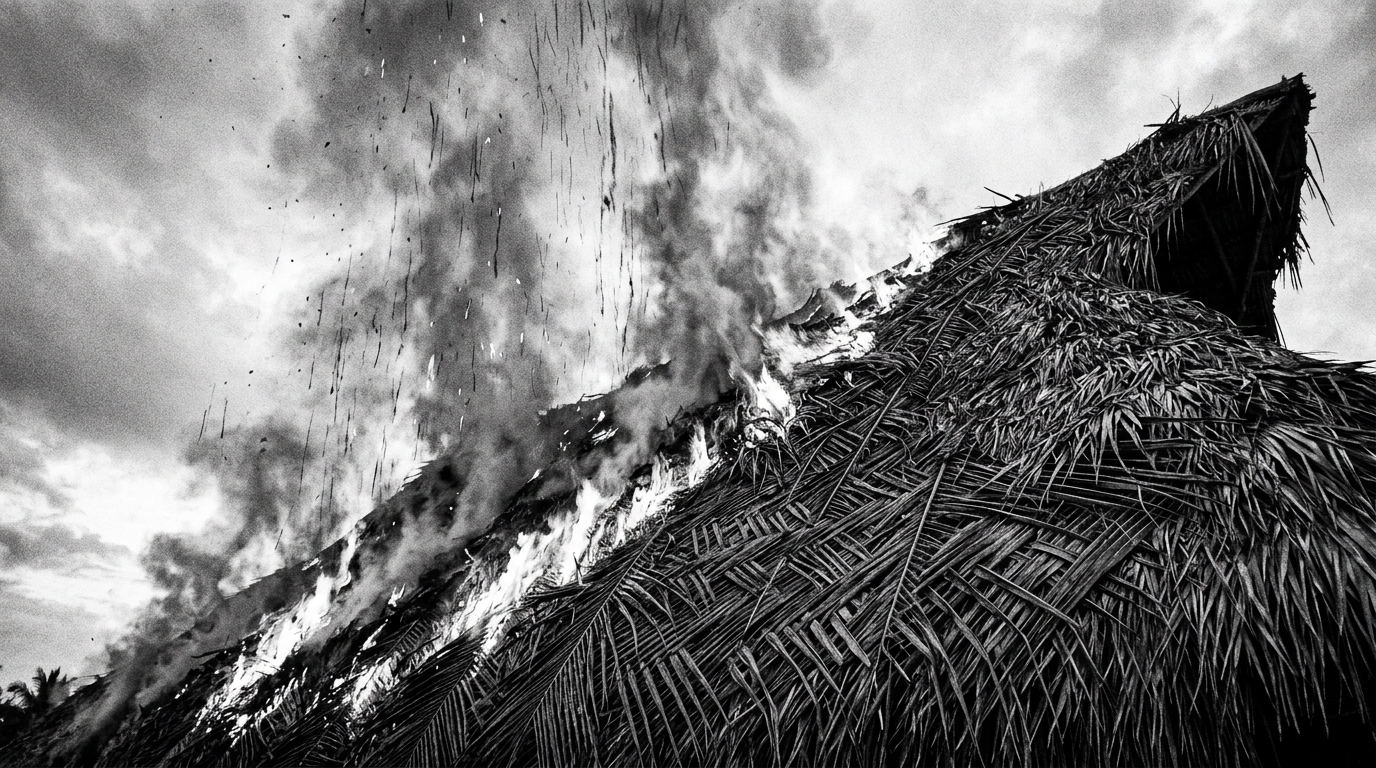
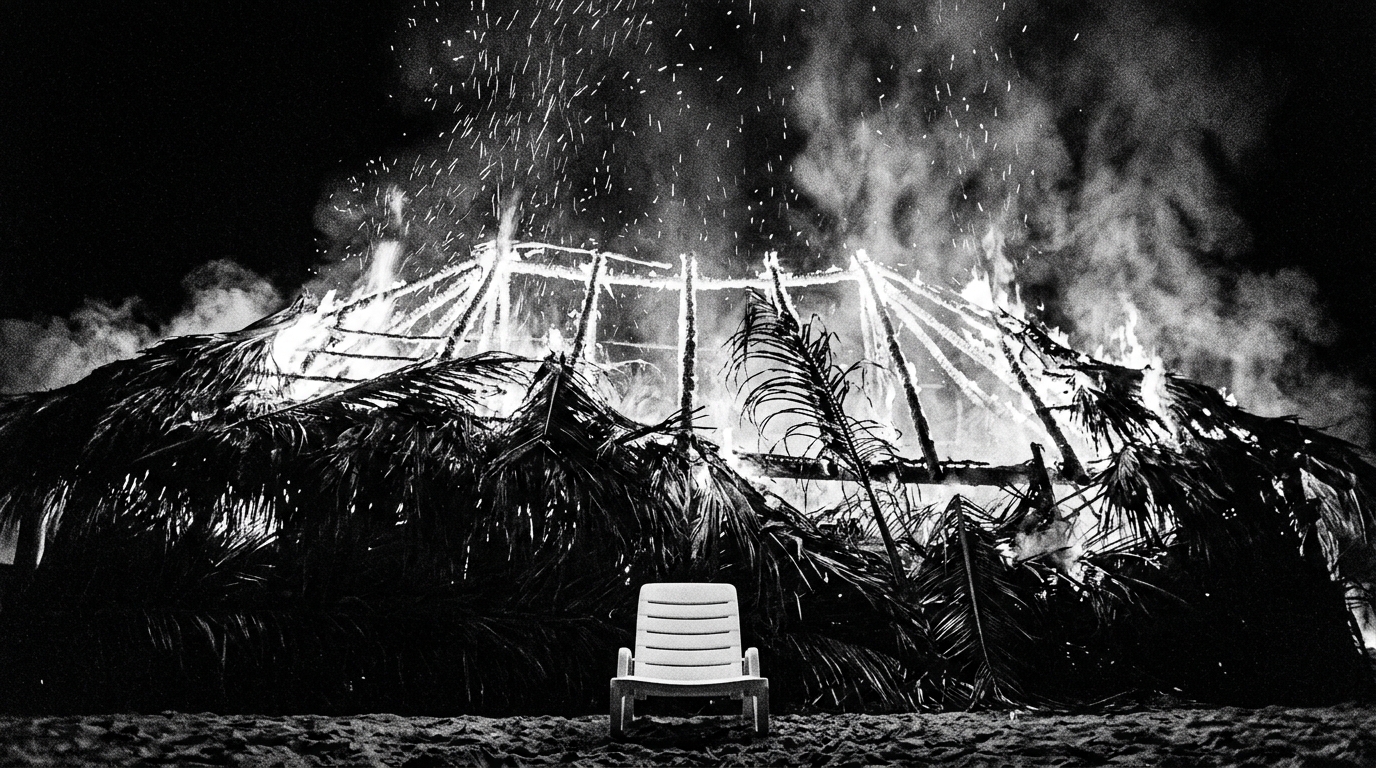
That's what happened Friday night in Bayahibe, Dominican Republic. The Viva Dominicus Beach by Wyndham... over 600 rooms, running at 84% occupancy... caught fire and was almost completely destroyed. One guest, a 46-year-old Italian tourist, died. Three more were hospitalized. Six others were treated on scene. Roughly 1,700 guests had to be evacuated and relocated to other hotels and nearby housing. Dominican authorities say the fire spread through palm thatch roof structures, pushed by strong winds. The cause is under investigation, but the mechanism isn't a mystery. Thatch burns. Wind spreads fire. And when your building materials are essentially kindling with a view, the margin between "small kitchen fire" and "total loss" is measured in minutes, not hours.

Let me be direct about something that the press coverage is going to dance around. Thatched roofs and palm-frond construction are an aesthetic choice that guests associate with the tropical resort experience. They're also a known fire risk that has destroyed properties across the Caribbean, Mexico, and Southeast Asia for decades. This isn't new information. Every operator running a property with significant thatch elements knows this. Every insurer knows this. The question is always whether the cost of mitigation (fire-retardant treatments, enhanced suppression systems, compartmentalization, emergency egress upgrades) is treated as a real line item or something that gets pushed to "next year's budget" until there is no next year.

Here's what I know from 40 years of this. The insurance will eventually pay out (probably... and the claim process on a total loss of this magnitude with a fatality will be brutal and slow). The sister property next door is still operating. Dominican authorities are saying tourism continues as normal. All of that is true and all of it is beside the point for the operator. What matters is this: a guest is dead. A building that was a going concern at dinner time was rubble by morning. And somewhere in the chain of ownership and management, there were people who knew... or should have known... that the speed at which this type of structure can be lost is fundamentally different from conventional construction. Every resort operator with thatch, wood-frame, or similar construction needs to look at three things this week: your fire suppression coverage (not what the certificate says... what actually works), your evacuation plan for full occupancy at 2 AM (not the binder in the office... the drill your staff can execute in the dark), and your building materials assessment relative to your insurance requirements. If there's a gap between what your insurer assumes about your construction and what's actually on the roof, close it now.

The Dominican Republic attracted 5.6 million visitors in the first five months of this year. This is a massive tourism economy, and this fire isn't going to stop that. But for the individual operators in Bayahibe and across the Caribbean, the lesson is simple and it's one I've seen ignored at a dozen properties in my career: the thing that makes your resort look like paradise is sometimes the same thing that can take it away in an hour. You either spend the money on mitigation or you bet that it won't happen to you. That family in Bayahibe just found out what happens when the bet doesn't pay off.

Operator's Take

If you're running a resort property with thatched roofs, palapa structures, or any significant combustible architectural elements, stop reading and go pull your fire safety file. Not Monday. Today. Three things: First, verify your fire suppression systems cover every structure, not just the main building... pool bars, beach pavilions, restaurant palapas, all of it. Second, run a tabletop evacuation exercise for full-occupancy, middle-of-the-night scenarios with your department heads within the next two weeks. Your plan is only as good as your newest employee's ability to execute it under pressure. Third, call your insurance broker and confirm that your policy reflects your actual construction materials and current replacement cost. If your last assessment was pre-COVID, it's wrong... construction costs are up 30-40% in most Caribbean markets. Bring this to your ownership group yourself, with the cost of mitigation AND the cost of what just happened in the DR. This is what I call the Invisible P&L... the costs that never appear on your financial statements until they show up as a total loss. The $50K you spend on fire-retardant treatment and suppression upgrades is the cheapest insurance you'll ever buy.
Read full analysis → ← Show less
Source: Google News: Resort Hotels
A Guest Died in a Resort Fire. The Thatched Roof Was the Accelerant Everyone Already Knew About.

A Guest Died in a Resort Fire. The Thatched Roof Was the Accelerant Everyone Already Knew About.

A fire tore through Viva Wyndham Dominicus Beach on Friday, killing an Italian tourist and evacuating 1,690 guests. The cause is under investigation, but the construction material that let it spread isn't a mystery... it's the same palm thatch that's burned at Caribbean resorts three times in two years.

Available Analysis

I watched a resort burn once. Not this one. Different island, different decade. But the same sick feeling in my stomach as I stood in a parking lot watching flames eat through a roof structure that everyone knew was a fire risk and nobody had done anything about because it looked beautiful in the brochure photos. That's the thing about thatched roofs in the Caribbean. They're gorgeous. Guests love them. They photograph like a dream. And when they catch fire on a windy day, they burn like they were designed to.

Friday morning in Bayahibe, a fire ripped through the Viva Wyndham Dominicus Beach resort and killed Francesca Valentino, a 46-year-old Italian tourist who was on vacation. Nine more people were injured. Nearly 1,700 guests were evacuated and relocated to other properties. The Dominican Republic's Emergency Operations Center says the fire spread rapidly due to strong winds and the resort's palm-thatch roof construction. The cause is still under investigation, but the mechanism isn't a mystery to anyone who's been paying attention. This is the third significant resort fire involving thatched construction in the Dominican Republic in less than two years. Cap Cana lost 11 villas in July 2025. Club Med Punta Cana took significant damage in September 2024. Same materials. Same story. Same preventable acceleration.

Here's what bothers me most. The Dominican Republic welcomed 5.6 million tourists in the first five months of this year. It's the Caribbean's top destination. And yet... general travel advisories from multiple governments flag "uneven regulation" in the tourism industry, potential gaps in safety inspections, and staff training that may not meet international standards. That's diplomatic language for something operators understand plainly: the regulatory framework hasn't kept pace with the development boom. When you're building and operating resorts at scale in a market with that kind of demand, the temptation is to move fast and let the aesthetics drive the design. Thatched roofs are the look. They signal "tropical paradise." They also signal "I will burn extremely fast under conditions that occur regularly in a tropical climate." Those two things coexist in the same structure, and someone has to reconcile them before another family gets a phone call they shouldn't have to receive.

The brand response here matters, and right now there isn't much of one. Wyndham Hotels & Resorts hasn't commented publicly. The adjacent Viva Wyndham Dominicus Palace (same chain, not damaged) continues to operate normally. The stock barely moved. And the local authorities are already reassuring everyone that "tourist activities in Bayahibe remain unaffected." I understand why they're saying that. Tourism is the economy. But "unaffected" is a word that rings hollow when a woman is dead and 1,700 people just had the worst day of their vacation. The operational question isn't whether Bayahibe is safe for tourists. It's whether every resort in the Caribbean using combustible roofing materials has a fire suppression plan, an evacuation plan, and construction standards that account for the fact that wind and thatch and fire are a combination that kills people. Because we keep learning this lesson and we keep not learning it.

If you operate or own resort properties anywhere... Caribbean, Mexico, Southeast Asia, anywhere that uses natural roofing materials for the aesthetic... this is your wake-up call, and it's the third one in two years. Don't wait for the fourth. The investigation in Bayahibe will eventually produce a cause. But the acceleration mechanism is already known. The question is what you're going to do about the structure you're operating right now, today, before the wind picks up.

Operator's Take

If you manage or own a property with thatched, palm, or any natural-material roof structures, pull your fire suppression documentation this week. Not next month. This week. Verify your sprinkler coverage specifically under those structures. Check when your last fire marshal inspection occurred and whether it addressed combustible roofing. Review your evacuation plan... can you move your entire guest count to alternate shelter within 30 minutes? The Dominicus Beach team relocated 1,690 people, which is an operational achievement under horrific circumstances, but that evacuation plan existed because someone thought about it before Friday. If yours doesn't exist or hasn't been drilled in the last 12 months, fix that before you do anything else. And if you're an owner looking at a development or renovation that includes natural roofing materials for "the look," price fire-retardant treatment, enhanced suppression systems, and compartmentalized roof sections into the budget right now. The aesthetic isn't worth the liability. I promise you it isn't.

Read full analysis → ← Show less
Source: Google News: Resort Hotels
Jamaica Just Slapped a 15% Tax on Airbnb Hosts. Every Caribbean Hotelier Should Be Watching.

Jamaica Just Slapped a 15% Tax on Airbnb Hosts. Every Caribbean Hotelier Should Be Watching.

Jamaica's parliament approved a 15% consumption tax on short-term rentals effective April 2027, and while traditional hoteliers are celebrating the "level playing field," the tech and compliance infrastructure to actually collect this tax doesn't exist yet.

So here's what actually happened. Jamaica's House of Representatives passed a 15% General Consumption Tax on Airbnb-style short-term rentals, effective April 1, 2027. On the surface, this looks like the regulation that traditional hotel operators across the Caribbean have been screaming for. Airbnb hosts who've been operating outside the tax framework are now... theoretically... going to pay the same rate as the guy running a 200-key resort with a full compliance department. The short-term rental market in Jamaica went from roughly 59,500 guests in 2017 to over 800,000 in 2024, generating J$32 billion for property owners. That kind of growth without taxation was always going to end somewhere.

But here's the question nobody seems to be asking: how exactly does Jamaica plan to collect this? I've spent enough time evaluating hotel technology infrastructure to know that "passing a tax" and "collecting a tax" are two very different engineering problems. Airbnb can build collection into its platform (they already do this in dozens of jurisdictions). But Jamaica's short-term rental market isn't just Airbnb. It's Vrbo, it's direct bookings through WhatsApp, it's the guy down the road renting his second property through a Facebook group. A previous attempt to make registration and licensing mandatory for STR operators got stalled because the industry pushed back. So now you've got a tax with no registration system underneath it. That's like installing a PMS with no property to manage... the software exists, but there's nothing feeding it data.

Look, I've consulted with hotel groups working through STR regulation in markets where the rules changed overnight. What actually happens is this: the platforms comply (because they have to... they're visible), the professional operators comply (because they're already in the system), and the informal operators... the ones who represent a massive chunk of the market... just keep doing what they've been doing. The tax creates a two-tier system where compliant operators get more expensive and non-compliant operators get more competitive. That's the opposite of leveling the playing field.

The other piece that's getting buried: this isn't just about STRs. Jamaica also raised the GCT on ALL tourism activities from 10% to 15%, effective the same date. The Jamaica Hotel and Tourist Association actually rejected this increase, arguing it makes the island less competitive against other Caribbean destinations. So traditional hoteliers got the STR regulation they wanted... and a 50% tax increase they didn't. The government's projecting J$11.4 billion annually from the broader increase, partly to recover from Hurricane Melissa. That math makes sense from a fiscal perspective. Whether it makes sense from a tourism competitiveness perspective is a completely different calculation.

For anyone building or evaluating technology for STR compliance, tax collection, or revenue management in the Caribbean... this is the beginning of a wave, not an isolated event. Every Caribbean destination watching Jamaica is going to learn from what works and what doesn't. The platforms will adapt (they always do... Airbnb has compliance infrastructure for this). The question is whether the regulatory technology catches up to the regulatory intent. In my experience, it rarely does on the first try. And the operators caught in the middle... the small hosts who can't afford a tax consultant, the boutique hoteliers absorbing a higher rate... they're the ones who feel the gap between policy and implementation.

Operator's Take

If you're running a hotel in the Caribbean... Jamaica or anywhere else in the region... here's the move. Don't celebrate this as the end of the STR competitive problem. It's one step. The operators who actually benefit are the ones who use this window to sharpen their direct booking strategy, because when STR prices go up 15%, some of those guests start comparison shopping against traditional hotels again. You've got 11 months before this takes effect. Use them. Audit your rate positioning against the STR comp set in your market right now. If you've been pricing defensively against Airbnb, this is your moment to test whether you have room to push rate. And if you're in a market where your government is watching Jamaica... get in front of the conversation. The worst version of STR regulation is the version that gets written without operator input. I've seen this movie before. Be in the room when the script gets written.

— Mike Storm, Founder & Editor
Read full analysis → ← Show less
Source: Google News: Airbnb
Sandals Is Spending $200M to Renovate Three Resorts. The Hurricane Made Them Do It Right.

Sandals Is Spending $200M to Renovate Three Resorts. The Hurricane Made Them Do It Right.

Sandals turned a forced hurricane closure into a $200 million blank-canvas renovation across three Jamaica properties. The interesting question isn't whether the rooms look better... it's what happens to the tech stack when you rebuild everything from the ground up.

So here's the thing about renovating a hotel while it's open: you can't. Not really. You can phase it. You can wall off corridors and apologize to guests and run construction crews on schedules that theoretically don't overlap with check-in. But anyone who's lived through a renovation knows the real cost isn't the drywall... it's the compromises. You're always working around something. The PMS stays because migrating it mid-operation is suicidal. The WiFi infrastructure stays because nobody's ripping cable while guests are sleeping. The kitchen equipment stays because you can't serve 800 covers from a temporary setup for six months.

Hurricane Melissa closed three Sandals properties in October 2025. All three. Fully. No guests, no operations, no workaround schedules. And that's actually the most interesting part of this $200 million story. Adam Stewart called it a "true blank canvas," and from a technology and infrastructure perspective, he's not wrong. When was the last time a major resort operator had the opportunity to gut three properties simultaneously... pull every cable, replace every system, rethink every workflow... without a single guest complaint or a single night of revenue to protect? That almost never happens. Hurricane damage is devastating, obviously. But the closure window it creates is something money alone can't buy.

The reopening timeline tells you something too. Sandals South Coast comes back November 2026. Royal Caribbean and Montego Bay follow in December 2026. That's 13-14 months of construction. For context, I consulted with a 220-key resort last year that tried to do a full technology overhaul... new PMS, new POS, new guest-facing WiFi, new in-room entertainment... while staying open. Eighteen months. Constant delays because you can't take the network down during a sold-out weekend. They ended up running parallel systems for four months because the cutover kept getting pushed. The total tech budget overran by 40%. Sandals doesn't have that problem. When the building is empty, your implementation timeline is your actual implementation timeline. No phasing. No compromises. No parallel systems.

Look, the $200 million number gets the headlines, but the real question for anyone watching this space is what Sandals does with the infrastructure layer. New accommodation categories, redesigned pools, updated dining... that's the pretty stuff. The stuff guests photograph. But underneath all of it, what are they doing with the operational backbone? Are they running modern cloud-native property management or bolting a new UI onto legacy architecture? Are they deploying IoT room controls that actually work at Caribbean humidity levels (and I ask that specifically because I've seen three different smart-room systems fail in tropical climates... the hardware just dies)? Are they building a network infrastructure that can handle 800 guests streaming simultaneously, or are they going to have the same WiFi complaints in a $200 million shell? A renovation this thorough is either an opportunity to build the resort technology stack of 2030 or it's a $200 million cosmetic job with the same operational friction underneath. I genuinely don't know which one Sandals is doing. The press materials don't say. They never do.

The other thing worth watching: Sandals still has five Jamaican properties running while these three are dark. That's five properties absorbing displaced demand, displaced staff, and displaced brand expectations for over a year. The operational pressure on those properties is real. And when the renovated three reopen at (presumably) higher rate tiers... because you don't spend $200 million to charge the same price... the rate differential within the Sandals Jamaica portfolio is going to create its own set of problems. Guests who booked the "old" Sandals Negril rate are going to walk into a renovated Montego Bay next door and wonder why they're getting 2024 product at 2027 prices. That's a brand consistency challenge that no amount of pool redesign solves.

Operator's Take

Here's what I'd take from this if you're running a resort property or any hotel staring down a major renovation. The lesson from Sandals isn't the $200 million... it's the closure. If you have a renovation coming and you're planning to phase it while staying open, run the math on what that phasing actually costs you. Not just the construction premium for working around guests. The technology compromises. The systems you can't replace because you can't take them offline. The training gaps because half your staff is managing the construction chaos instead of learning the new workflows. Sometimes closing for 90 days costs less than 18 months of half-measures. I've seen this movie before. Talk to your ownership group about whether a full closure... even a short one... gets you to a better product faster and cheaper than the phase-it-and-pray approach.

— Mike Storm, Founder & Editor
Read full analysis → ← Show less
Source: Google News: Resort Hotels
End of Stories