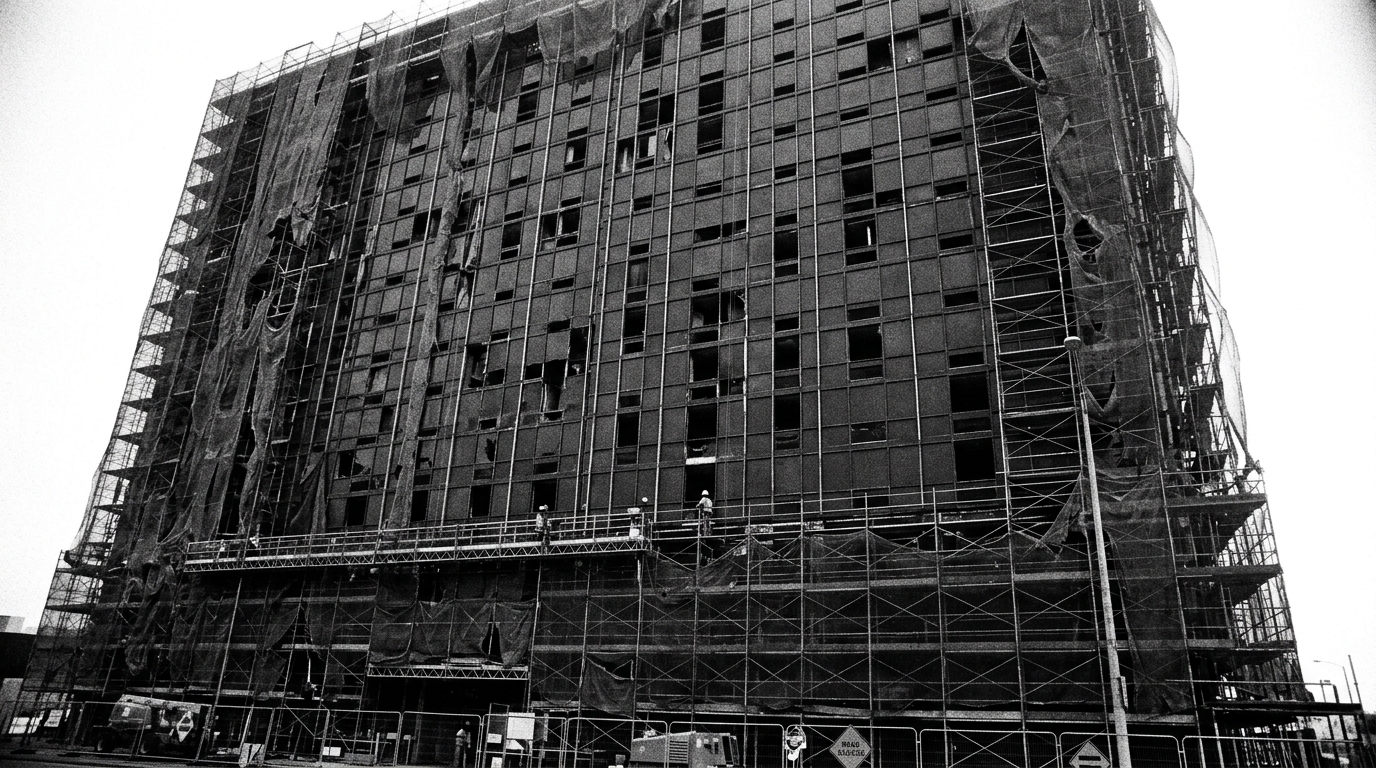
14,000 Cladding Fixes on a Brand-New Hotel. That's Not a Punch List. That's a Warning.
A 189-key Hilton in the UK needs 14,000 exterior panel fixes barely a year after opening, and the contractor is eating the cost. If you think this is just a British construction story, you haven't looked at your own building envelope lately.
A 23-story, 189-key Hilton opened in late 2024 as the crown jewel of a £540 million mixed-use development in Woking, England. Panels started falling off the building in 2021... three years before the hotel even opened. Let that sit for a second. The cladding was failing during construction, and they opened anyway. A temporary fix last spring addressed about 2,000 of the roughly 4,000 exterior panels. Now the permanent solution requires installing over 14,000 revised fixings across the entire facade. Six months of work. Road closures. And the main contractor, Sir Robert McAlpine, is footing the bill under their design-and-build contract.
Here's where this gets interesting for anyone who operates or owns a hotel built in the last decade. The UK has been dealing with building envelope failures since the Grenfell Tower tragedy in 2017, and the regulatory response has been massive... combustible cladding bans on buildings over 18 meters, extended specifically to hotels in December 2022. Remediation costs across the UK run £1,318 to £2,656 per square meter. The government has committed £5.1 billion, but the estimated total bill is £16.6 billion. Those numbers tell you the scope of the problem. And while this specific failure isn't about combustibility (it's about panels physically detaching from the building), the underlying lesson is the same: building envelope failures on newer properties are not theoretical risks. They're happening. Regularly.
I've seen this pattern play out stateside more times than I'd like. A property opens with fanfare, the punch list supposedly gets cleared, and eighteen months later you've got water intrusion behind the curtain wall or facade panels that weren't rated for the actual wind load at elevation. The contractor points at the architect. The architect points at the specs. The owner's lawyer points at everyone. Meanwhile, the GM is dealing with road closures, scaffolding that makes the entrance look like a construction site, and guests asking if the building is safe. The revenue impact of six months of scaffolding on a 189-key property isn't theoretical... it's real money walking across the street to a competitor that doesn't look like it's under renovation.
What makes the Woking situation instructive is the ownership structure. The local borough council owns the hotel through a holding company. Hilton operates it under a management agreement and collects a fee. The council doesn't receive hotel income directly... it flows through the holding entity, which pays Hilton. So when the cladding fails, the management company keeps collecting its fee (their contract doesn't care about your facade), the contractor absorbs the remediation cost (for now... these things have a way of ending up in court), and the owner... the council, backed by taxpayers... holds the risk on any revenue disruption during six months of construction. That's the alignment gap in three sentences. The entity absorbing the pain isn't the entity that built the building or the entity operating it.
If you own or manage a property built in the last 15 years, especially anything above four stories with a modern rainscreen or curtain wall system, this is your wake-up call. Not to panic. To inspect. Building envelope warranties have specific timelines and specific exclusion language. If you haven't had an independent facade inspection (not from the original contractor... independent), you're trusting the people who built it to tell you whether they built it right. I've been around long enough to know how that usually works out.
If you're a GM or asset manager at a property built after 2010 with any kind of panel facade system, pull your original construction warranty this week. Check what's covered, what's excluded, and when it expires. Then schedule an independent building envelope inspection... not through your contractor, through a third-party facade consultant. The cost is negligible compared to the alternative. If you're at a managed property, bring this to your owner proactively with the inspection scope and cost already figured out. This is what I call the CapEx Cliff... deferred envelope maintenance doesn't announce itself gradually. It announces itself when panels start hitting the sidewalk. The owner who gets ahead of this looks like they're running the building. The one who waits for the phone call from risk management looks like they weren't paying attention.