Today · Sep 19, 2026
SVC Is Paying 6% to Borrow Against Its Best Assets. That's the Distress Premium in One Number.

SVC Is Paying 6% to Borrow Against Its Best Assets. That's the Distress Premium in One Number.

Service Properties Trust just securitized 158 retail properties for $745 million at a weighted average coupon of 5.96%, using $1.1 billion in collateral to retire 8.375% notes. When your best assets only buy you a 240-basis-point improvement, the balance sheet is telling you something the press release won't.

$745 million in net-lease mortgage notes, backed by 158 retail properties appraised at $1.1 billion, at a weighted average coupon of 5.96%. The collateral-to-debt ratio is 1.48x. That's the number that tells you where SVC actually stands. A healthy REIT doesn't pledge $1.1 billion in assets to raise $730 million net. A healthy REIT issues unsecured debt. SVC can't, or won't, because the unsecured market has already priced them out.

Let's decompose the structure. Class A notes ($220 million) carry a 5.157% coupon with a AAA rating. Class B ($375 million) at 5.795%, rated AA. Class M ($150 million) at 7.549%, rated BBB. That bottom tranche at 7.5% is barely cheaper than the 8.375% senior unsecured notes this deal is designed to retire. The blended savings come almost entirely from the AAA and AA tranches... which exist only because SVC encumbered $1.1 billion in collateral to get them. The projected annual interest savings of $14 million ($0.08 per share) sound reasonable until you recognize what was traded for them: 158 unencumbered properties that previously sat in the unsecured asset pool backing all of SVC's other debt. The secured creditors just moved to the front of the line. Everyone else moved back.

This is SVC's second net-lease securitization (the first was $610 million in February 2023). Combined with the $500 million equity offering announced March 30, 2026, at what the market described as distressed share prices, SVC has now executed three distinct capital raises across 37 months to address its debt stack. The equity raise generated approximately $542 million to redeem $550 million in notes due 2027. This securitization retires $700 million in 8.375% notes due 2029. The pattern is clear: SVC is laddering down its maturities one instrument at a time, burning collateral and diluting equity holders with each step. The quarterly distribution sits at $0.01 per share. A penny. That tells you how much free cash flow is available after debt service.

For context, SVC owns 94 hotels alongside its 760 retail properties and has targeted $1.1 billion in hotel dispositions (125 properties) through 2025. The securitized assets here are the retail net-lease side, not lodging. That's intentional. The travel centers and net-lease retail generate $84 million in predictable annual minimum rents, making them securitizable. The hotel portfolio, managed by Sonesta (which RMR also manages), doesn't carry the same debt-market credibility. SVC is essentially mortgaging its stable assets to buy time for its unstable ones. Every asset pledged as securitization collateral is one fewer asset available for future borrowing, future sales, or future restructuring flexibility.

The 2029 redemption call option embedded in the notes is the quiet detail worth watching. SVC can redeem at par starting March 2029, which aligns with the original maturity of the 8.375% notes being retired. If SVC's credit profile improves by then, they refinance at lower rates and the securitization was a bridge. If it doesn't improve, they're locked into 5.96% blended cost on encumbered assets through 2031 while holding a shrinking pool of unencumbered collateral. The optionality only works in the upside case. In the downside case, the flexibility is already spent.

Operator's Take

Here's what this means if you're operating one of SVC's 94 hotels or you're watching their disposition pipeline for acquisition opportunities. SVC is in balance sheet triage. They aren't investing in their hotel portfolio... they're funding debt retirement by pledging their best non-hotel assets and diluting shareholders at a penny distribution. If you're a GM at an SVC-owned property, your CapEx requests are competing with $1.2 billion in debt maturities. Plan accordingly. If you're an acquirer watching SVC's $1.1 billion hotel disposition target, understand the leverage... they need to sell. That's not a negotiating position, that's a balance sheet reality. Bring your offer, but bring your diligence too, because deferred maintenance at properties owned by a capital-starved REIT is usually worse than the seller's disclosure suggests. This is what I call the CapEx Cliff... when the owner's financial distress becomes the asset's physical distress, and the next buyer inherits both.


— Mike Storm, Founder & Editor
Read full analysis → ← Show less
Source: Google News: Service Properties Trust
Fertitta's $7 Billion Caesars Bid Is a $34 Per Share Bet on $11 Billion in Someone Else's Debt

Fertitta's $7 Billion Caesars Bid Is a $34 Per Share Bet on $11 Billion in Someone Else's Debt

Tilman Fertitta's reported $34 per share offer for Caesars values the equity at roughly $7 billion, but the enterprise he's actually buying carries north of $30 billion in obligations. The cap rate math on this deal tells a very different story than the headline.

Fertitta's $34 per share offer prices Caesars equity at approximately $7 billion. The equity is the smallest piece of what he's buying. Caesars carried roughly $11 billion in net debt at year-end 2025, plus $1.2 billion in annual lease payments to VICI Properties. Back-of-envelope enterprise value: north of $30 billion. The $7 billion headline is the number they want you to see. The $30 billion-plus is the number that determines whether this deal works.

Let's decompose this. Caesars reported four consecutive quarters of net losses through 2025. The stock hit a five-year low before takeover speculation inflated it. Annual free cash flow exceeds $3 billion, which is the asset's saving grace and likely the entire basis for Fertitta's thesis. At $30 billion-plus enterprise value against $3 billion in free cash flow, the buyer is paying roughly 10x FCF. That's not cheap for an overleveraged gaming company with a digital division (Caesars Digital, built on the $3.7 billion William Hill acquisition) that hasn't proven it can hit its $500 million adjusted EBITDA target. The question isn't whether Caesars generates cash. It does. The question is whether it generates enough cash to service the debt, fund the lease obligations, maintain the physical plant across dozens of properties, AND deliver a return to the new equity holder.

Icahn's competing $33 per share bid is instructive. He already has two board seats. He pushed the 2020 Eldorado-Caesars merger that created this entity in the first place. When Icahn circles back to an asset he helped assemble, it usually means he sees value the market is mispricing... or he sees pieces worth more sold separately than kept together. Fertitta's portfolio (Golden Nugget casinos, the restaurant empire) overlaps with Caesars in Atlantic City, Lake Charles, Lake Tahoe, and Laughlin. Overlap means forced divestitures. Forced divestitures under regulatory pressure rarely maximize seller value. Someone will get those properties at a discount. That's where the secondary deal flow lives.

I audited a gaming company's management contracts once where the parent looked healthy at the consolidated level. Property by property, three of the twelve assets were carrying the other nine. The "portfolio premium" the market assigned was really a blending exercise that obscured which locations were destroying value. Caesars owns or operates over 50 properties. The consolidated free cash flow number is real. The per-property dispersion is where the risk hides, and nobody outside the company has clean visibility into it.

Fertitta is currently serving as U.S. Ambassador to Italy, with his COO handling negotiations. Not for the politics... for the governance structure: a $30 billion-plus enterprise value transaction being negotiated by an operator whose principal is in a diplomatic post. The deal isn't imminent and isn't guaranteed. But if it closes, hotel-adjacent investors should watch the divestiture list closely. Overlapping markets will produce forced sales. Forced sales produce buying opportunities. The real transaction here isn't Fertitta buying Caesars. It's the dozen smaller transactions that will follow.

Operator's Take

Look... this isn't a hotel deal on its surface, but if you operate in any market where Caesars and Golden Nugget overlap (Atlantic City, Lake Charles, Laughlin, Lake Tahoe), pay attention to what comes next. Regulatory-forced divestitures create supply-side disruption. Properties change hands, management companies change, brand standards shift, and your comp set reshuffles overnight. If you're in one of those markets, pull your STR data now and know exactly which Caesars-affiliated properties sit in your comp set. When those properties hit a transition period... and they will... your rate strategy needs to reflect the temporary softness across the street, not react to it after the fact. Get ahead of this with your revenue team before the dominoes start falling.

— Mike Storm, Founder & Editor
Read full analysis → ← Show less
Source: Google News: Caesars Entertainment
Host Hotels Gained 23% in Six Months. The Strategy Behind It Is More Interesting Than the Stock Price.

Host Hotels Gained 23% in Six Months. The Strategy Behind It Is More Interesting Than the Stock Price.

Host Hotels outpaced the hotel industry by 4x over six months, but the real signal isn't in the share price... it's in what they sold, what they kept, and what that tells you about where the smart institutional money thinks hotel value actually lives right now.

So Host Hotels dumps two Four Seasons properties for $1.1 billion in February, flips a St. Regis for $51 million in January, offloads a couple more branded assets for $237 million the year before... and the stock goes UP 23% while the rest of the hotel industry crawls forward at 5.7%. That's not a stock story. That's a capital allocation thesis, and it's worth understanding whether you own hotel stock or not, because the logic underneath it applies to anyone who owns or operates a hotel asset.

Here's what Host is actually doing. They're selling properties where the future CapEx requirement is high relative to the RevPAR growth potential, and they're redeploying into luxury and upper-upscale assets in markets where affluent leisure demand is outpacing supply. Maui alone is projected to deliver $120 million in EBITDA for 2026, up from $111 million last year. That's not some abstract portfolio optimization exercise... that's a bet that wealthy travelers will keep paying premium rates in supply-constrained resort markets, and that urban full-service hotels with aging physical plants and massive PIP exposure are the wrong side of the trade. Whether you agree with that thesis or not, you should understand it, because it's shaping what institutional buyers will pay for your asset class.

Look, I consult with hotel groups on technology decisions, not investment strategy. That's Jordan's lane. But when the largest lodging REIT in the country is essentially saying "we'd rather sell a branded urban hotel and buy back our own stock at $15.68 per share than hold that asset through its next renovation cycle," that tells you something about how sophisticated owners are evaluating the total cost of brand affiliation. They bought those two Four Seasons for $925 million combined. Sold for $1.1 billion. The headline says "profit." The real question is whether the buyer's renovation and operating cost assumptions will hold in a market where construction costs, labor, and brand mandates keep escalating. I talked to an owner last month who told me his PIP estimate came in 40% higher than what the brand quoted during the franchise sales process. Forty percent. That gap between what brands project and what properties actually spend is the hidden variable in every hotel investment model, and it's getting wider.

The $525-$625 million CapEx budget Host has planned for 2026 is the number that should make operators pay attention. That's not maintenance spend... that's "transformational capital programs" with Hyatt and Marriott. Translation: they're rebuilding properties to meet evolving brand standards and guest expectations, and they have the balance sheet ($2.4 billion in liquidity) to do it without selling assets under pressure. Most independent owners and smaller REITs don't have that luxury. When a brand mandate arrives with a renovation timeline and a cost estimate that assumes you have institutional-grade access to capital, and you don't... the math breaks. Fast.

What Host's run tells you, regardless of whether you own their stock, is that the hotel investment market is bifurcating. Assets with high RevPAR ceilings, low supply growth, and affluent demand drivers are attracting premium capital. Everything else is getting repriced by buyers who are running the same stress tests Host is running... and reaching the same conclusions. If your property sits in the "everything else" category, the question isn't whether this trend affects you. It's whether you're ahead of it or behind it.

Operator's Take

Here's what I want you to do this week if you're running a property that competes for institutional capital... or might need to someday. Pull your trailing 12-month CapEx spend and compare it to what your brand or management company says you'll need over the next 3-5 years. Then compare that number to your realistic RevPAR growth assumption... not the brand's projection, your actual comp set performance. If the renovation cost exceeds 10x the incremental annual revenue it's supposed to generate, you need to have a real conversation with your owner about whether the current flag justifies the investment or whether the smart money play is to explore alternatives before the next PIP cycle forces your hand. Host is making these decisions with a $2.4 billion war chest. You're making them with whatever's in the reserve. Start the conversation now, not when the brand sends the letter.

— Mike Storm, Founder & Editor
Read full analysis → ← Show less
Source: Google News: Host Hotels & Resorts
Casino Entertainment Isn't a Sideshow Anymore. It's the Whole Strategy.

Casino Entertainment Isn't a Sideshow Anymore. It's the Whole Strategy.

Regional casinos are stacking their entertainment calendars like they're competing with Live Nation, not each other. If you're a non-gaming hotel within three miles of one, your weekend demand pattern just got rewritten and nobody sent you the memo.

I worked with a casino resort years ago where the entertainment director had more budget authority than the rooms division VP. I thought it was backwards. Took me about six months to realize he was the single biggest demand driver in the building. Every show night, F&B revenue spiked 40%. Room nights attached to ticket purchases ran at ADRs 15-20% above the house average. The guy booking comedians and tribute bands was generating more profitable revenue than the loyalty program. And he knew it.

That's what's happening industry-wide right now, and this two-week entertainment blitz across regional casino properties is just the surface. The real shift underneath is strategic. Casinos figured out something that took the rest of hospitality too long to learn... people will drive 90 minutes and book a room for an experience they can't get at home. Not for a bed. Not for a pool. For a reason to go. Live music, comedy, residencies... these aren't amenities bolted onto a gaming floor anymore. They're the primary acquisition channel for a guest who might never touch a slot machine. The $329 billion annual economic footprint of U.S. casinos isn't built on gaming alone. It's built on giving people a reason to show up, stay overnight, eat three meals, and maybe (maybe) gamble.

Here's what nobody in the non-gaming hotel world is talking about enough. If you're operating within the demand radius of a casino property that's running 365 days of programmed entertainment, your comp set just changed whether you updated your STR report or not. That casino isn't just competing for your leisure traveler on Saturday night. It's creating demand patterns that reshape your entire market's booking curve. Show nights generate compression you didn't create and can't control. Dark nights create softness you didn't cause. Your revenue manager needs to be tracking that entertainment calendar the same way they track convention bookings and local events... because for a growing number of secondary and tertiary markets, the casino IS the convention center, the arena, and the downtown entertainment district rolled into one.

The casino operators investing in this aren't doing it because they love music. They're doing it because the math on entertainment-driven stays is better than the math on gaming-only visits. Length of stay goes up. Cross-property spend goes up. The guest profile skews younger and more diverse, which is exactly the demographic traditional gaming has been losing. One major operator publicly committed to daily live entertainment across their properties... 365 days, no dark nights. That's not a programming decision. That's a business model pivot. And the properties doing it well are running entertainment P&Ls that would make a standalone venue jealous, because the show doesn't have to profit on its own. It just has to fill rooms and restaurants.

For the casino GMs and ops directors reading this... you already know the operational complexity of show nights. The staffing surge for F&B. The security protocols. The housekeeping wave the next morning. The noise complaints from the guest in 412 who didn't know there was a concert. The challenge isn't booking the acts. It's executing the full guest experience around them without burning out your team or blowing your labor budget on overtime every weekend. The properties winning this game are the ones who've built show-night staffing into their base operating model, not the ones treating every event like a special occasion that requires a fire drill.

Operator's Take

If you're a GM at a non-gaming hotel within a 10-mile radius of a casino running aggressive entertainment programming, pull that casino's event calendar right now and map it against your booking pace for the next 90 days. You should be yielding show nights the way you yield around citywide conventions... rate fences up, minimum stays where the demand supports it. If you're a casino ops director, stop budgeting entertainment nights as exceptions. Build the staffing model around 4-5 show nights per week as your baseline, because that's where this is headed. Your labor cost goes up, but your RevPAR premium on those nights should more than cover it. If it doesn't, the entertainment isn't driving enough room demand and that's a programming problem, not a staffing problem. Track the attach rate... tickets to room nights. That number tells you everything about whether your entertainment spend is an investment or a vanity project.

Read full analysis → ← Show less
Source: Google News: Casino Resorts
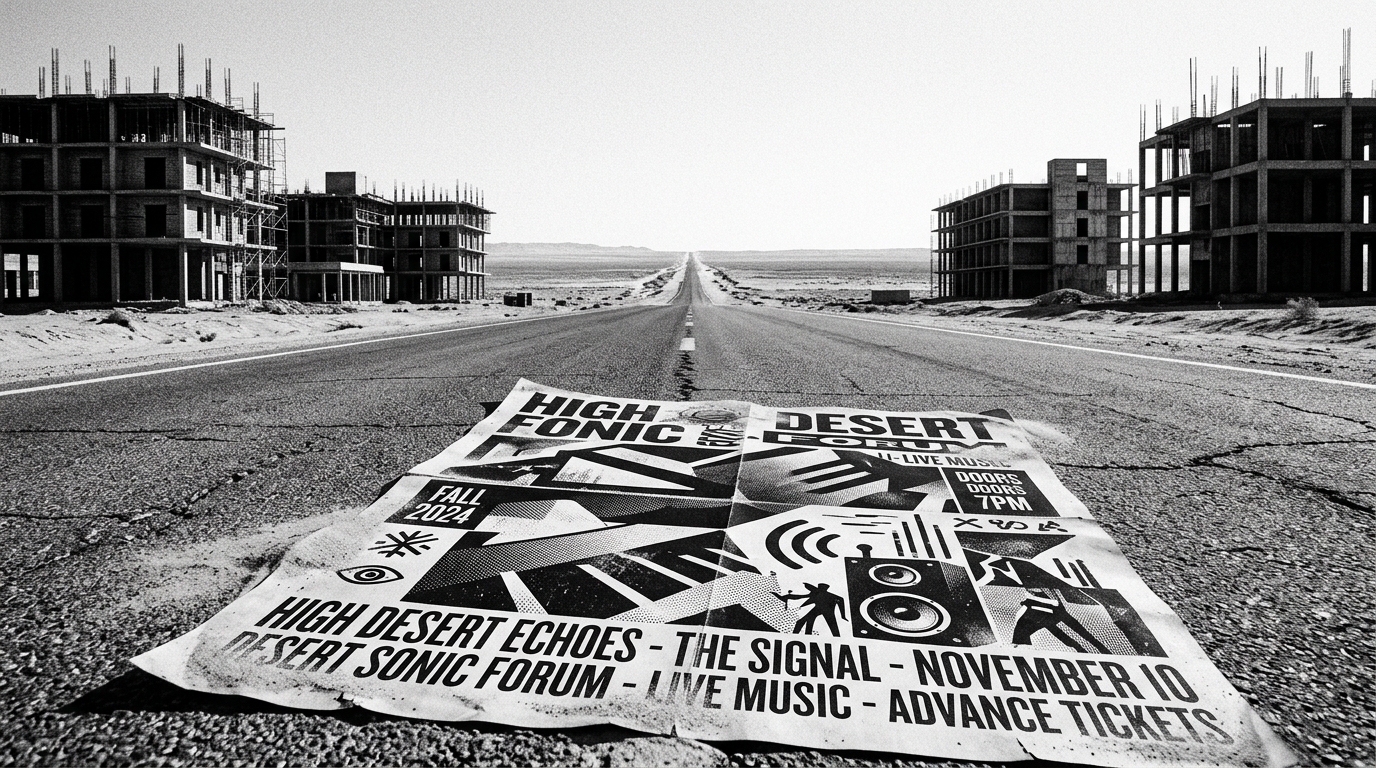
Five Hotels Are Coming to Victorville. The Live Music Scene Is Why That Bet Might Work.

Five Hotels Are Coming to Victorville. The Live Music Scene Is Why That Bet Might Work.

The Mojave Desert's growing live music circuit is pulling visitors into markets where five new hotels are under construction and a 155-room property just sold for $41 million. The question isn't whether the demand is real... it's whether operators in these corridors know how to capture it before it drives past them.

So here's something most hotel tech and ops people aren't paying attention to: the Mojave Desert is quietly building a year-round entertainment infrastructure that's starting to look like a real demand generator. Not Coachella-scale (that's a different animal in a different valley), but a distributed network of venues... a 7,000-square-foot live music hall in Yucca Valley doing 4-5 shows a week, established spots pulling national touring acts through Joshua Tree corridor, multi-day festivals popping up across Twentynine Palms. This isn't a seasonal blip. This is programming.

And the hotel development pipeline is responding. Victorville alone has five hotels in planning... a 152-room Residence Inn, an 87-room Holiday Express, a 119-room Hampton Inn, a 112-room property near US-395, and a 113-room Woodspring Suites that just got planning commission approval in April 2025. A Fairfield Inn opened last May. An Avid is under construction. And the big one: a 155-room Holiday Inn got acquired for $41 million by a company planning to rebrand it as a robot-powered Courtyard by Marriott. That's roughly $264K per key for a select-service conversion in a secondary desert market. Someone is making a very specific bet about where demand is headed.

Here's where my brain goes, though. The technology layer underneath all of this is... basically nonexistent. I consulted with a hotel group last year near a regional entertainment corridor, and their demand forecasting didn't account for event calendars at all. Not partially. Not poorly. Just didn't. Their RMS was pricing Tuesday the same whether there was a 500-person concert three miles away or not. The Mojave corridor has this exact problem at scale. You've got venues generating predictable, recurring demand patterns (weekly shows, monthly festivals, seasonal peaks), and the hotels capturing that overflow are mostly running static pricing strategies built for highway transient traffic. That's leaving money on the table... not in theory, but literally, every show night.

Look, the demand signal here is real. Six million annual visitors to the broader Mojave region. $51 million in visitor spending at the National Preserve alone, with $15.6 million going to hotels. The global desert tourism market is projected to nearly double by the early 2030s, with event-driven tourism as a recognized growth segment. But demand without capture infrastructure is just cars driving through your market to someone else's hotel. The properties that will win in this corridor are the ones integrating local event data into their revenue management systems, building packages around show nights, and adjusting their digital presence to show up when someone searches "hotel near Pappy and Harriet's" at 4 PM on a Saturday. That last one sounds basic. It's not. Most PMS and CRS setups in secondary markets aren't configured to respond to that kind of real-time intent. The systems assume the demand pattern is the demand pattern. In an entertainment-driven market, the demand pattern changes every week based on who's playing.

The Airbnb data tells the other side of this story. Victorville has 70 active listings with a 121% year-over-year supply increase, but only 35.4% occupancy and $191 ADR. That's a market where alternative accommodations are flooding in but not performing well... which actually suggests the demand is there for traditional hotels that can capture it properly. The STR operators are seeing the signal but don't have the infrastructure (or the location) to convert it consistently. Hotels do. If they're paying attention. If their tech stack is configured for it. That's a big "if" for most properties in these markets.

Operator's Take

If you're running a select-service property anywhere near an entertainment corridor... desert, mountain town, anywhere with recurring live events pulling 300-plus people... here's what to do this week. Call your RMS vendor and ask specifically whether their system can ingest a local event calendar as a demand variable. Most can't. If yours can, set it up. If it can't, you need a manual process: someone on your team tracking the venue calendars within a 30-mile radius and flagging show nights for rate adjustments. I've seen properties pick up 15-20% rate lift on event nights just by knowing the event was happening. This is what I call the Three-Mile Radius at work... your revenue ceiling is set by what's happening in the miles around your property, not your room count. The venues are doing the marketing for you. Your job is to be ready when the guest searches for a place to sleep after the show.

— Mike Storm, Founder & Editor
Read full analysis → ← Show less
Source: Google News: Casino Resorts
Marriott Bonvoy's KrisFlyer Deal Got 50% Better. It's Still Not Good Enough.

Marriott Bonvoy's KrisFlyer Deal Got 50% Better. It's Still Not Good Enough.

Marriott just improved its KrisFlyer miles-to-points conversion rate by 50% and raised the annual transfer cap to 250,000 miles. The question is whether "less terrible" is really a loyalty strategy or just a press release dressed up as progress.

Available Analysis

I have sat through more loyalty program partnership announcements than I care to count, and they all follow the same script. Two logos on a slide. A quote from a managing VP about "reinforcing the value of loyalty." A conversion ratio that sounds impressive until you actually do the math. Marriott Bonvoy and Singapore Airlines' KrisFlyer just gave us a textbook example... improved the conversion from 2 KrisFlyer miles for 1 Bonvoy point to 4 miles for 3 points, and raised the annual transfer cap from 180,000 to 250,000 miles. A 50% improvement. Genuinely. And independent analysts are still calling it "terrible value" compared to redeeming those same KrisFlyer miles for flights. So let's talk about what "better" actually means when the baseline was this low.

Here's what's really happening. Marriott added 43 million new members in 2025, bringing the total to 271 million, with loyalty penetration at 68% of worldwide room bookings. Those are extraordinary numbers. But scale creates its own problem... when your loyalty program is that massive, the marginal value of each new partnership announcement shrinks. You're not acquiring new members with a slightly improved KrisFlyer conversion. You're giving existing members one more reason not to let their points expire. That's retention maintenance, not growth strategy. And retention maintenance doesn't generate the kind of incremental revenue at property level that justifies the press release energy Marriott just spent on this. (I've watched brands celebrate partnership announcements that moved exactly zero needles at the hotels actually delivering the loyalty promise. The champagne is always better at headquarters than at the front desk.)

The broader play is more interesting than this specific announcement, though. Marriott has been methodically building Bonvoy into a lifestyle ecosystem... Uber, Starbucks, Ethiopian Airlines, and now a sweetened KrisFlyer deal, all within recent months. They just launched their 39th brand, Lefay, a luxury wellness concept. The strategic intent is clear: make Bonvoy so embedded in a member's daily life that switching to Hilton Honors or IHG One Rewards feels like changing your phone number. That's smart. That's what a program with 271 million members should be doing. But for the owner of a 180-key Courtyard who's paying loyalty assessments and reservation fees that eat 15-20% of top-line revenue, the question isn't whether Bonvoy is becoming a lifestyle platform. The question is whether that lifestyle platform is putting heads in YOUR beds at a rate that justifies what you're paying for it. And the answer to that question varies wildly by market, by property type, and by comp set... which is exactly the conversation the brand doesn't want to have, because they measure success at the portfolio level and you feel it at the property level.

What nobody is saying out loud is this: the 68% loyalty penetration number that Marriott loves to cite is a double-edged sword. When two-thirds of your bookings come through your loyalty program, that's not just engagement... that's dependency. Every one of those bookings comes with a cost structure attached. And when the brand keeps adding partnership conversion pathways (even modestly improved ones like this KrisFlyer deal), they're increasing the pool of points in circulation, which increases redemption pressure on properties, which means more award nights at below-market rates displacing revenue bookings. The bigger the ecosystem gets, the more the individual hotel subsidizes the enterprise. I sat in a franchise review once where an owner asked the brand rep to quantify the incremental revenue his specific property received from the airline partnership program. The silence lasted about eight seconds. Then someone changed the subject to the new lobby design standards.

The KrisFlyer improvement is fine. It's genuinely better than it was, and for a KrisFlyer member sitting on miles about to expire, converting to Bonvoy points for a hotel stay is now a marginally less painful option. But if you're an owner or operator watching Marriott announce partnership after partnership, brand 39, lifestyle ecosystem expansion... you should be asking one question that never appears in these press releases: what is my property's actual return on loyalty participation, after all fees, after award night displacement, after the cost of the standards required to maintain brand compliance? If you can answer that question with a number you're comfortable with, great. If you can't answer it at all, that's the problem.

Operator's Take

Here's what I want you to do this week if you're running a Marriott-flagged property. Pull your loyalty contribution report for Q1. Not the brand's version... yours. Calculate total loyalty-related costs as a percentage of room revenue: franchise fees, loyalty assessments, reservation fees, the whole stack. Then calculate the percentage of your bookings that came through Bonvoy at a rate below what you'd have gotten through your other channels. This is what I call the Brand Reality Gap... the distance between the brand's portfolio-level success story and your property-level economics. If that gap is widening year over year, you need that number in your pocket before your next franchise review. Not to fight the brand. To have the conversation from a position of knowing your own math. The GM who walks in with "my total brand cost is 17.3% of room revenue and my loyalty-driven ADR is $14 below my direct booking ADR" is the GM who gets listened to. The one who walks in saying "it feels expensive" gets a brochure about the new partnership with KrisFlyer.

— Mike Storm, Founder & Editor
Read full analysis → ← Show less
Source: Google News: Marriott
Wynn's $5.1B UAE Bet Implies a 3.3% Yield on a Market That Doesn't Exist Yet

Wynn's $5.1B UAE Bet Implies a 3.3% Yield on a Market That Doesn't Exist Yet

Wynn just resumed construction on a $3.3M-per-key integrated resort in a country where commercial gaming has zero operating history. The cap rate math only works if you believe the UAE becomes a $5B gaming market... and that Wynn captures a third of it.

Available Analysis

$5.1 billion divided by 1,542 keys is $3.3 million per key. That's the number. Not the construction timeline, not the geopolitical pause, not the spire going up later this year. $3.3 million per key for a resort in a gaming jurisdiction that has never processed a single legal bet.

Let's decompose what that per-key price is actually buying. Wynn holds 40% equity in the joint venture ($1.1 billion committed, $200 million upfront, $900 million over time). RAK Hospitality Holding holds 59%. A $2.4 billion construction facility... the largest hospitality financing in UAE history... covers the debt side. As of late 2025, roughly $3.4 billion of the $5.1 billion budget was spent or committed. The project is past the point of financial retreat. This isn't a decision anymore. It's a trajectory.

The bull case requires three assumptions to hold simultaneously. First, that the UAE gaming market reaches the $3-5 billion annual revenue range analysts project. Second, that Wynn captures roughly 33% of that market (their stated target). Third, that the 2-5 year competitive moat holds before MGM or others secure Abu Dhabi licenses. If all three hold, you're looking at $1-1.7 billion in annual gaming revenue for this single property, which makes the per-key cost defensible. If any one of them breaks... the yield math gets uncomfortable fast. A $5.1 billion asset generating $1 billion needs to flow through at roughly 30% to NOI to hit a 6% return on cost. That's aggressive for a first-year operation in a new regulatory environment.

The construction pause (attributed to regional security concerns around Iranian attacks) lasted approximately two weeks in early March. Wynn confirmed design and operational planning continued during the halt. The Q1 2027 opening target remains intact. What's more telling than the pause itself is how the market reacted: Wynn stock dropped 10% on the tension, recovered partially on resumption. The equity market is pricing geopolitical risk into this asset in real time. That's not a one-time event. That's a permanent feature of the risk profile for any operator deploying capital in the Gulf.

One detail buried in the project structure deserves attention. Wynn has already announced a second joint venture (Janu Al Marjan Island) opening late 2028 directly adjacent to the main resort. That's a signal about demand confidence... or about the need to control the competitive perimeter before someone else builds next door. I've seen this pattern in other markets where a first-mover pours capital into surrounding parcels not because the demand model requires it, but because the alternative is letting a competitor set up across the street. At $3.3 million per key on the flagship, Wynn cannot afford rate compression from an adjacent property it doesn't control.

Operator's Take

Look... this isn't your comp set. Nobody reading this is building a $5.1 billion integrated resort. But here's why it matters to you. When a 1,542-key luxury property with a casino floor opens in a market that's been pulling high-net-worth travelers from Europe and Asia for a decade, that changes the gravity of global luxury hospitality. If you're running upper-upscale or luxury in the Gulf, the Mediterranean, or the Indian Ocean resort markets, start watching your forward group bookings for late 2027. That's when diversion starts showing up in your data. This is what I call the Three-Mile Radius except at a global scale... Wynn isn't competing with your three-mile comp set, but if you're selling $800 ADR beach resort nights to GCC and European travelers, they're absolutely competing for your guest. Get your revenue team modeling scenarios now while you still have time to adjust positioning and rate strategy before this thing opens its doors.

— Mike Storm, Founder & Editor
Read full analysis → ← Show less
Source: Google News: Wynn Resorts
Atlantic City's New Casino Boss Has One Job. Three NYC Casinos Are About to Eat His Lunch.

Atlantic City's New Casino Boss Has One Job. Three NYC Casinos Are About to Eat His Lunch.

The New Jersey Casino Association just installed a new president at the exact moment three licensed NYC casinos are projected to siphon 20-30% of Atlantic City's gaming revenue. The timing isn't coincidence... it's a countdown clock with a name on it.

Available Analysis

I worked a casino resort once where the GM kept a framed photo of the competing property they'd just beaten in RevPAR index on his office wall. Motivation, he called it. Six months later, a new casino opened 40 miles away and took 18% of his table game revenue in the first quarter. That photo came down real fast. You don't get to pick which competition you prepare for.

George Goldhoff just stepped into the presidency of the Casino Association of New Jersey, and the timing tells you everything about the job. He's the president and CEO of Hard Rock Atlantic City, which means he's now the public face of an industry about to get hit by something it hasn't faced since Pennsylvania opened casinos and carved up AC's customer base a generation ago. Three NYC casino licenses were approved in December 2025... Resorts World, Hard Rock Metropolitan Park, and Bally's in the Bronx. Resorts World is expected to have table games running by mid-2026. That's not next year. That's weeks from now. The other two are targeting 2030 and mid-2030s respectively, but let's be clear about what's happening... the first punch is already in the air.

Here's where the math gets brutal. Atlantic City's nine casinos generated $2.89 billion in gross gaming revenue in 2025. CBRE's base case projects the mature NYC market at $4.7 billion annually. Industry analysts are projecting AC could lose 20-30% of its casino revenue. Run that against $2.89 billion and you're looking at $578 million to $867 million walking out the door. That's not a competitive adjustment. That's an existential event for properties already operating on tight margins. And here's the part that makes your head spin... Goldhoff's own parent company, Hard Rock International, is one of the three groups building in NYC. So the guy leading Atlantic City's defense has a company that's simultaneously building the weapon aimed at Atlantic City. I've seen this kind of structural conflict before. It never resolves cleanly.

The silver lining everyone keeps pointing to is diversification... AC's pivot to a "year-round resort destination" beyond gaming. The industry has poured over a billion dollars into property upgrades over the past five years. That's real money and real effort. But there's a hard truth underneath the optimism. Atlantic City's iGaming revenue ($2.91 billion) already surpassed its land-based casino revenue for the first time in 2025. That tells you where the puck is going. The digital player doesn't need to drive to AC. They never did. And the casino floor player who was making the trip from Brooklyn or Queens? They're about to have a $500 million casino 20 minutes from home. The beach and boardwalk are wonderful assets. They are not a moat against a casino you can see from the subway.

What nobody's talking about is the labor impact. When NYC casinos start hiring (and they will... thousands of positions across three properties), they're going to pull from the same regional talent pool. AC already struggles with staffing. Now imagine competing for dealers, hosts, food and beverage staff, and hotel operations talent against properties in New York City that can offer higher wages, shorter commutes for most of the metro workforce, and the cachet of working in Manhattan (or at least Queens). The revenue threat is the headline. The labor drain is the story underneath it that could actually accelerate the decline faster than the revenue models predict.

Operator's Take

If you're running a casino hotel in Atlantic City, this isn't a five-year problem. Resorts World's table games are months away from opening. You need a customer retention strategy that isn't "hope they keep coming." Pull your player database right now and identify every high-value guest with a New York metro zip code. That's your vulnerable segment. Build a contact plan for those guests before they get a direct mail piece from Resorts World (and they will). If you're on the hotel operations side, start benchmarking your compensation packages against what NYC properties will offer... because your best dealers and your best front desk agents are about to get recruited. The properties that survive this are the ones that move first, not the ones that wait to see how bad it gets. I've seen this movie before. The sequel is always worse than the original.

Read full analysis → ← Show less
Source: Google News: Casino Resorts
They Blew Up a 326-Room Luxury Hotel. And Built Something With Fewer Rooms.

They Blew Up a 326-Room Luxury Hotel. And Built Something With Fewer Rooms.

Swire Properties imploded the 26-year-old Mandarin Oriental Miami on Sunday to replace it with a $1 billion development featuring just 121 hotel rooms... plus 228 residences priced up to $100 million each. The hotel business was never the point.

Available Analysis

I watched a guy tear down a perfectly good Holiday Inn once. Mid-90s, secondary market, the building was maybe 20 years old. Ownership group looked at the land value, looked at the room revenue, looked at the trajectory of both lines, and said "the dirt is worth more than the business." Everybody thought they were crazy. They weren't. They understood something most hotel operators never want to admit... sometimes the highest and best use of a hotel site isn't a hotel.

Sunday morning in Miami, Swire Properties turned a 326-room Mandarin Oriental into a pile of rubble in less than 20 seconds. Controlled implosion. The building opened in 2000. Twenty-six years old. By hotel lifecycle standards, that's middle age... not end of life. You don't blow up a 26-year-old luxury hotel on Brickell Key because the building is failing. You blow it up because the math changed.

And the math here tells you everything. The replacement project is $1 billion. Two towers. The hotel component drops from 326 keys to 121. Read that again. They're spending a billion dollars to build FEWER hotel rooms. The other tower? Sixty-six stories of branded residences, 228 units, $4.9 million to $100 million each. Fifty percent of the south tower was pre-sold by mid-2025. The hotel isn't the revenue engine anymore. It's the amenity package that justifies $100 million penthouses. The Mandarin Oriental flag isn't selling room nights... it's selling a lifestyle wrapper around real estate.

This is the luxury hotel model now, and if you're paying attention, you've been watching it evolve for a decade. The hotel becomes the brand anchor for a residential play where the real money lives. Think about what Swire's VP of construction reportedly said... rates at the old hotel weren't trending upward. A 326-key luxury hotel on one of Miami's most exclusive islands, and it couldn't push rate. So they didn't try harder. They changed the entire business model. The 121 remaining hotel rooms will exist to service the brand standard, maintain the flag, and provide the infrastructure (restaurants, spa, pool, concierge) that makes someone write a $50 million check for a condo. That's not a hotel development. That's a branded residential development with a hotel component.

Here's what keeps me up about this trend. Those hundreds of hotel employees who lost their jobs when the old property closed about a year ago? The new development opens in 2030, four years from now, with roughly a third of the hotel rooms. Do the math on the staffing. Even at luxury service ratios, 121 keys doesn't employ what 326 keys employed. The residential component creates some positions, sure. But if you worked at that hotel... if you were a housekeeper, a front desk agent, a banquet server who built a career there over two decades... the building that replaces your workplace was never designed to bring you back. It was designed to sell condos to people who want the Mandarin Oriental logo on their mailbox. The economics are rational. Swire isn't wrong. But rational and painless aren't the same thing, and nobody's putting that in the press release.

Operator's Take

If you're running a luxury or upper-upscale hotel on land that's appreciated significantly since your property was built, pay attention to what just happened in Miami... because your owner already is. Swire didn't demolish a failing hotel. They demolished one that couldn't push rate in a market where the land value outran the operating income. That gap between what your dirt is worth and what your rooms generate is the number that determines whether you're operating a hotel or sitting on a future development site. If you're a GM at a high-value urban luxury property, the smartest thing you can do right now is understand your owner's basis, your land value trajectory, and whether the long-term plan includes you running a hotel or someone else selling condos. Don't wait for that conversation to come to you. Have it ready. Know where you stand.

Read full analysis → ← Show less
Source: Google News: Resort Hotels
Mandarin Oriental Miami Traded 326 Hotel Rooms for 121. The Per-Key Bet Is Staggering.

Mandarin Oriental Miami Traded 326 Hotel Rooms for 121. The Per-Key Bet Is Staggering.

Swire Properties imploded a 326-room luxury hotel and is rebuilding with 121 keys, 298 branded residences, and $1.3 billion in pre-sales already booked. The capital structure tells you exactly where luxury hospitality profit margins are migrating.

Available Analysis

Swire Properties detonated its 326-key Mandarin Oriental Miami this morning and is replacing it with 121 hotel rooms, 298 private residences, and 28 branded hotel-residences across two towers. Pre-sales across the development have already crossed $1.3 billion, including two penthouses at $49.9 million each (roughly $6,300 per square foot). The hotel component shrank by 63%. The capital committed to the site grew by multiples.

Let's decompose this. The original hotel opened in 2000 with 326 rooms. Swire's own former president said publicly that rates "were not trending upwards." That's a polite way of saying the asset was underperforming its land basis. A 326-key luxury hotel on one of Miami's most exclusive parcels couldn't generate enough NOI to justify the dirt it sat on. The new development answers that problem not by fixing the hotel... but by mostly eliminating it. The 121-key replacement isn't the revenue engine. It's the amenity that justifies $4.9 million to $17.5 million residential price points. The hotel became the loss leader for the condo play.

This is a capital allocation decision disguised as a hospitality story. When two penthouses generate $99.8 million in revenue against a hotel that needed 326 rooms to produce whatever NOI it was producing, the math is blunt. Swire is paying for a luxury hotel brand license not because the hotel will deliver strong returns on 121 keys, but because "The Residences at Mandarin Oriental" commands a pricing premium that "The Residences at Brickell Key" does not. The brand fee on 121 keys is the marketing cost for $1.3 billion in residential sales. I've audited structures like this. The hotel P&L in these mixed-use luxury developments is almost secondary... what matters is the halo effect on residential sell-through and per-square-foot pricing.

The 430 employees who lost their jobs between May and September 2025 won't appear in the pro forma for the new towers. The replacement property will employ a fraction of that headcount for 121 keys. That's the Chattanooga lesson I carry (generically speaking): the disposition math was correct for the prior asset, and the redevelopment math will likely be correct for the new one, and 430 people still cleared out their lockers. Financially sound and human-costly are not mutually exclusive categories.

For anyone holding a luxury hotel asset in a market where residential land values have outpaced hotel NOI growth... this is the template. Swire just demonstrated that the highest and best use of a trophy hotel site may be 63% fewer hotel rooms and 298 condos carrying a hospitality brand name. The question for every luxury hotel owner in Miami, Manhattan, and LA is whether their dirt is worth more than their keys. Increasingly, the answer is yes. And the brands know it... which is why Mandarin Oriental agreed to a 121-key "flagship" that would have been unthinkable as a standalone hotel deal.

Operator's Take

Here's what nobody's telling you. If you're managing a luxury or upper-upscale hotel in a top-tier urban market and your owner has been quiet about the asset's future... they're not quiet because everything's fine. They're running the same math Swire ran. Pull your trailing 12-month NOI, divide by your land's current assessed value, and compare that yield to what a residential developer would pay for the parcel. If the residential number wins (and in coastal gateway markets, it increasingly does), your job isn't to run a better hotel. It's to be the GM who understands the transition and positions yourself to manage through it... or manage the next thing. Don't wait for your owner to tell you the building's coming down. Bring them the comp. Bring them Brickell Key. Show them you see the same math they do.

— Mike Storm, Founder & Editor
Read full analysis → ← Show less
Source: Google News: Resort Hotels
Host Hotels Sold $1.1 Billion in Properties. The Buyers Believe Something the Sellers Don't.

Host Hotels Sold $1.1 Billion in Properties. The Buyers Believe Something the Sellers Don't.

Host Hotels just exited two Four Seasons assets at a 14.9x EBITDA multiple while analysts cheer the capital recycling strategy. The question nobody's asking is what the buyers see in those properties that a $14 billion REIT decided wasn't worth keeping.

Available Analysis

I sat in a meeting once... had to be 15 years ago... where an asset manager explained why selling a trophy property at the top of the cycle was "brilliant capital allocation." The GM of that hotel, a 22-year veteran who'd built the team from scratch, just stared at the table. He wasn't arguing the math. He was mourning the thing the math couldn't measure. Six months later the new owners spent $18 million repositioning a hotel that was already performing. Sometimes selling says more about the seller's thesis than the buyer's.

Host Hotels just moved $1.1 billion in Four Seasons assets (the Orlando and Jackson Hole properties) at what they're calling an 11% unlevered IRR and a 14.9x EBITDA multiple. Wall Street loves it. UBS bumped their target to $20. Barclays followed. Truist is sitting at $23 with a Buy rating. The stock's up nearly 48% over the past year, blowing past the S&P by 17 points. The narrative is clean: sell non-core assets, return capital to shareholders ($860 million last year between buybacks and dividends), focus the portfolio on luxury and upper-upscale properties you want to own for the next decade. On paper, it's textbook REIT discipline.

But here's what's nagging at me. They sold TWO Four Seasons properties. Four Seasons. The brand that basically prints money in destination markets. Jackson Hole and Orlando aren't exactly secondary markets struggling for demand. Host is telling you they can redeploy that capital at higher returns elsewhere... and maybe they can. Their "Transformational Capital Programs" with Marriott and Hyatt are supposed to reposition existing assets, and they've got $19 million in operating guarantees from those brands to offset renovation disruption in 2026. That's smart structuring. But when you sell a Four Seasons in Jackson Hole, you're not just selling a hotel. You're selling the future rate power of one of the most supply-constrained luxury markets in North America. The buyer is betting that rate ceiling keeps rising. Host is betting they can manufacture better returns through renovation and repositioning of what they're keeping. One of them is going to be wrong.

The 2026 guidance tells an interesting story if you look past the headline. They're projecting 2.0% to 3.5% comparable RevPAR growth... solid but not spectacular. Adjusted EBITDAre guidance of $1.74 to $1.8 billion actually shows a potential dip from the $1.757 billion they just posted in 2025. Read that again. They beat guidance by 8.5% last year, the stock ripped, analysts upgraded... and the midpoint of their 2026 EBITDA guidance is essentially flat. That's not bearish. But it's not the growth story the stock price is telling you either. Meanwhile, wage inflation is running about 5% in 2026 across the upper-tier segment. When your RevPAR growth ceiling is 3.5% and your labor costs are climbing 5%, the flow-through math gets uncomfortable fast. That $1.8 billion top-end EBITDA target assumes they thread the needle on expense management at properties simultaneously undergoing major renovations. Anyone who's ever run a hotel during a renovation knows that "managed disruption" is an oxymoron invented by people who've never apologized to a guest about construction noise at 7 AM.

The analyst upgrades are real, and the capital allocation story is compelling if you believe the cycle holds. Host has a 2.6x leverage ratio and $2.4 billion in liquidity... that's a fortress balance sheet by lodging REIT standards. But I've seen this movie before. REIT sells trophy assets at peak valuations, stock gets rewarded, everybody high-fives... and then the cycle turns and you're sitting there wishing you still had the irreplaceable asset in the irreplaceable market. The question for 2026 isn't whether Host is well-managed (they are). It's whether "capital recycling" is strategy or whether it's what happens when you run out of organic growth and need to manufacture earnings through transaction activity. The buyers of those Four Seasons properties are making a generational bet on luxury travel demand. Host is making a portfolio optimization bet. History tends to favor the people who buy the things that can't be replicated.

Operator's Take

If you're a GM or operator at a Host-managed property, here's the reality check. Those "Transformational Capital Programs" are coming, and the $19 million in brand operating guarantees sounds generous until you realize that's spread across multiple properties and it's meant to offset disruption... not eliminate it. Run your own disruption model. Every major renovation I've ever managed cost more in lost revenue and guest satisfaction damage than the corporate proforma projected. If you're at a property on the renovation list, get in front of your regional VP now with your own realistic timeline and revenue impact estimate. Don't wait for the brand's version. This is what I call the Renovation Reality Multiplier... the actual disruption timeline is always longer, messier, and more expensive than the one in the presentation. Build your staffing plan and guest communication strategy for the worst case, not the base case. And if you're at a property that's NOT on the renovation list, pay attention to what happens at the properties that are. That's your preview of what's coming.

Read full analysis → ← Show less
Source: Google News: Host Hotels & Resorts
MGM Fed 1,400 TSA Workers to Keep Vegas Running. That's Not Charity. That's the P&L Talking.

MGM Fed 1,400 TSA Workers to Keep Vegas Running. That's Not Charity. That's the P&L Talking.

When the government shutdown left 1,000 TSA agents at Harry Reid Airport working without pay, MGM didn't send thoughts and prayers... they sent 1,400 lunches. The interesting part isn't the generosity. It's what it tells you about how exposed your revenue is to things completely outside your control.

I managed a casino resort once during a government shutdown back in the mid-2010s. Different shutdown, same movie. The moment TSA lines started creeping past 90 minutes at the airport, our reservation cancellations spiked within 48 hours. Not because guests couldn't get there. Because they saw the news coverage of people standing in line for two hours and decided it wasn't worth the hassle. Perception killed us faster than reality did.

So when I read that MGM delivered 1,400 lunches and 700 hygiene kits to unpaid TSA workers at Harry Reid International during this latest shutdown... I don't see a feel-good corporate responsibility story. I see a company doing the math. The American Hotel & Lodging Association pegs the industry cost of a government shutdown at roughly $31 million a day. The U.S. Travel Association says the broader travel economy bleeds about a billion a week. MGM's lunch bill was probably $15,000 to $20,000. Maybe less. That's not philanthropy. That's one of the cheapest risk mitigation strategies I've ever seen. Keep the TSA agents fed and showing up, keep the security lines under 30 minutes, keep the planes landing on time, keep 150,000 hotel rooms in Las Vegas occupied. The return on that investment is absurd.

And here's the part that should bother every operator who isn't in Las Vegas. While Harry Reid was running smooth because the resort industry stepped up, airports in other cities were a mess. Long lines. Delays. Frustrated travelers deciding to stay home. If you're running a hotel in a market where nobody thought to feed the TSA... you ate the cancellations while Vegas kept humming. That 45% of consumers who told AHLA they'd change travel plans because of shutdown disruptions? Those aren't hypothetical people. Those are the bookings that disappeared from your March pace report with no explanation other than "demand softened." Demand didn't soften. Demand got rerouted to markets that kept their airports functional.

This is one of those stories that reveals a vulnerability most of us don't spend enough time thinking about. Your revenue depends on an airport that depends on federal employees who can go weeks without a paycheck every time Congress can't get its act together. That's your supply chain. And unlike your linen vendor or your food distributor, you can't switch to a backup. You've got one airport. Maybe two if you're lucky. And every TSA agent who calls in sick because they can't afford gas to get to work is a longer security line, a missed connection, a cancelled trip, and a room that sits empty tonight.

MGM understood something that most hotel companies still haven't internalized: the infrastructure around your property IS your property. The airport, the roads, the transit system, the workforce that operates all of it. When any piece of that breaks, your P&L feels it before your brand's corporate office even notices. Vegas figured this out because Vegas has to... the entire city is a single-industry economy built on people getting on planes. But the principle applies everywhere. Your hotel doesn't exist in isolation. It exists inside a system. And the cheapest thing you can do is make sure the weakest link in that system doesn't snap.

Operator's Take

Look... if you're a GM in any market that depends on air travel (and that's most of you), here's what I'd do this week. Find out who your local TSA Federal Security Director is. Introduce yourself. Build the relationship now, before the next shutdown. Because there will be a next one. If your hotel has F&B, figure out what it costs you to provide meals to federal workers at your local airport during a disruption. Run the number against one night of lost occupancy. You'll find it's not even close. A few hundred dollars in food buys you goodwill, community visibility, and an airport that keeps functioning. And if you're part of a local hotel association, get this on the agenda now. MGM did this alone because MGM can. Most of us need to do it together. The properties that build these relationships before the crisis are the ones that don't lose three points of occupancy when Congress decides to play chicken with the budget again.

Read full analysis → ← Show less
Source: Google News: MGM Resorts
Hilton's Malaysia Bet Is Bigger Than One Hotel... It's a Template

Hilton's Malaysia Bet Is Bigger Than One Hotel... It's a Template

Hilton just opened the first of five Malaysian properties planned for 2026, dropping 261 keys into a market adding nearly 4,000 rooms. The math behind this move tells you everything about where the major brands think the next decade of growth lives.

Five hotels in one country in one year. That's not a development pipeline. That's an invasion plan. Hilton opened its Shah Alam Glenmarie property this week... 261 rooms, 17 meeting spaces, an Olympic-sized pool, direct access to a championship golf course. And it's just the first domino. They've got 17 new properties across six Southeast Asian countries queued up through 2027, including a Waldorf Astoria and a Conrad in Kuala Lumpur by late this year. When a brand starts deploying luxury flags in a market, they're not testing the water. They've already decided.

Here's what caught my eye. The Klang Valley is adding roughly 3,800 new hotel rooms by the end of this year. Malaysia's hospitality market is valued at about $49 billion and projected to hit $77 billion by 2031 (a 7.76% CAGR, which is real growth, not inflation-adjusted fantasy). Occupancy in KL and the broader valley already exceeded pre-pandemic levels through the first three quarters of 2024. So the demand signal is there. But 3,800 new rooms into any market is going to compress ADR growth in the near term... that's just supply and demand. The brands know this. They're playing the long game, betting that Malaysia's position as Southeast Asia's most-visited destination (which it achieved in 2025) isn't a blip.

I've seen this exact playbook before. A brand identifies a high-growth secondary international market, drops a full-service flag with heavy MICE capability as the anchor, then follows it with lifestyle and luxury flags to capture the top of the market while select-service fills in behind. It worked in parts of the Middle East. It worked in India. It's working in certain Southeast Asian gateway cities. The pattern is always the same... the first hotel isn't about that hotel's P&L. It's about establishing the loyalty ecosystem in the market so every subsequent opening has lower customer acquisition cost. That 874-square-meter ballroom seating 650? That's not a meeting space. That's a customer acquisition engine for every Hilton property within 200 kilometers.

What the press releases never mention is the operator reality on the ground. I talked to a GM running a branded property in a similar high-growth Asian market a few years back. His biggest challenge wasn't demand... it was finding 200 trained hospitality workers in a market where every major brand was hiring simultaneously. Malaysia just ranked as the best workplace for Hilton in 2026, which tells you they know talent competition is the real constraint. You can build all the hotels you want. If you can't staff them to brand standard on a sold-out Saturday night with a 500-person wedding in the ballroom, the TripAdvisor scores will eat you alive within six months.

The luxury segment is projected to grow at 13.74% CAGR through 2031 in Malaysia. That's where the real margins live, and that's why Hilton is bringing Waldorf and Conrad into KL. But here's the question nobody's asking... can the local ownership groups absorb the PIP requirements and FF&E standards that come with luxury flags in a market where construction and materials costs are climbing? The franchise fee is the headline number. The capital requirement is the real number. And if you're an owner being pitched one of these flags right now, you need to stress-test the projections against a scenario where that 3,800-room supply wave compresses your RevPAR by 8-12% in years one and two. Because that's not pessimism. That's arithmetic.

Operator's Take

If you're running a branded property anywhere in Southeast Asia right now, pay attention to the talent pipeline before you worry about the demand pipeline. Hilton didn't win that "Best Workplace" award by accident... they're playing the staffing game because they know that's the bottleneck in high-growth markets. Start investing in your employer brand today, not when you can't fill shifts. And if you're an owner being pitched a flag in any of these expansion markets, demand actual performance data from comparable openings... not projections. Ask for the year-two numbers from their last five openings in similar markets. If they won't show you, that tells you everything.

Read full analysis → ← Show less
Source: Google News: Hilton
Houston's STR Crackdown Before the World Cup Is a Brand Positioning Test for Every Hotel in Town

Houston's STR Crackdown Before the World Cup Is a Brand Positioning Test for Every Hotel in Town

Houston just became the first major unzoned U.S. city to regulate short-term rentals, and the timing is not accidental... 500,000 World Cup visitors are about to land, and the question isn't whether hotels benefit. It's which ones are ready to capture the demand that STR operators are about to fumble.

So Houston finally did it. After years of being the Wild West of short-term rentals (no zoning, no registration, no accountability), the city passed a comprehensive STR ordinance, started accepting registrations last August, and flipped the enforcement switch to "on" as of April 1. Registration fee: $275 per property. Fines for operating without one: $100 to $500 per day. Platforms like Airbnb and Vrbo are required to pull non-compliant listings within 10 days of city notification. And every operator has to collect and remit hotel occupancy tax quarterly... the same tax that branded hotels have been paying all along. You know what that sound is? That's the playing field leveling, and it's about time. But here's the part that matters more than the regulation itself: the timing. Houston hosts seven FIFA World Cup matches between June 14 and July 4. Projected visitors: 500,000. Projected local economic impact: somewhere north of $1.4 billion. Airbnb is literally paying first-time hosts a $750 bonus to list their homes. And into this demand tsunami, the city drops a regulatory framework that a significant chunk of casual STR operators either don't understand, aren't prepared for, or will simply ignore until they get fined. Some of those listings are going to disappear. The demand isn't going anywhere.

I've watched this exact pattern play out in other host cities before major events. A brand VP I used to work with once told me, "Regulation doesn't kill supply... it redistributes it." She was right. What happens is the bottom 20-30% of STR inventory (the party houses, the unlicensed garage apartments, the hosts who never collected a dime of occupancy tax) either scramble to comply or go dark. The top-tier professional STR operators adapt and survive. And the demand that would have gone to those bottom-tier listings? It flows back to hotels. But only to hotels that are positioned to catch it. That's the part nobody's talking about.

If you're an owner or a GM in the Houston market right now, the question you should be asking isn't "will the World Cup be good for my hotel?" (Of course it will. Seven matches. 500,000 visitors. The math is obvious.) The question is: what are you doing RIGHT NOW to make sure the guests who would have booked a sketchy Airbnb in Montrose end up at your property instead? Because those guests aren't traditional hotel bookers. They're younger. They're international. They want flexibility, personality, and value... and they've been trained by STR platforms to expect a certain kind of experience. If your pre-arrival communication is a confirmation email from 2019 and your lobby feels like a waiting room, you're not capturing that demand. You're watching it drive past to the Marriott down the street that updated its mobile check-in and put a mural in the lobby bar. This is a brand positioning moment, and it's happening whether you're ready or not.

Here's the other thing the regulation tells us (and this is where I get protective). The city is requiring human trafficking awareness training for STR operators. They're mandating 24-hour emergency contacts. They're prohibiting STRs from advertising as event spaces. You know why? Because the unregulated STR market in Houston had a real public safety problem. Shootings at rental properties made the news as recently as January. The mayor called short-term rentals a "serious problem." These regulations aren't anti-business... they're an admission that an unregulated accommodation market is dangerous. And for every branded hotel operator who has been collecting HOT, maintaining fire code compliance, training staff on safety protocols, and absorbing the cost of all of it while the house next door undercuts you with zero oversight? This is vindication. Expensive, slow, incomplete vindication... but vindication. The question is whether the city has the resources to actually enforce any of it. (I have opinions about that, and none of them are optimistic. Enforcement is the promise. Execution is the test. Sound familiar?)

The smart play for Houston hotel operators... especially independents and soft-branded properties in leisure-heavy submarkets... is to treat this summer like the brand audition of a lifetime. Your comp set just got smaller (some STR supply is going offline). Your demand pool just got bigger (half a million soccer fans). And your differentiation story just got easier to tell (you're legal, you're safe, you're professional, you collect the tax, you have a front desk at 2 AM). But you have to actually TELL that story. Update your OTA profiles. Push your direct booking channels. Rethink your rate strategy for those seven match windows... and don't leave money on the table by pricing like it's a normal June. It's not a normal June. It's not even close.

Operator's Take

Here's what nobody's telling you... if you're running a hotel in the Houston metro, you have about 90 days to capture demand that's being shaken loose from the STR market. Don't wait for the World Cup to start. Get your rate strategy locked for June 14 through July 4 NOW. Call your revenue management team tomorrow and model what happens when 15-20% of STR supply goes non-compliant. If you're independent, this is your moment to outposition the brands on flexibility and personality. If you're branded, use the loyalty engine. Either way, the guests are coming. The only question is whether they're coming to you or to the guy down the street who's already moving.

— Mike Storm, Founder & Editor
Read full analysis → ← Show less
Source: Google News: Airbnb
Andaz Lisbon Is Beautiful. The Question Is Whether the Promise Survives Tuesday.

Andaz Lisbon Is Beautiful. The Question Is Whether the Promise Survives Tuesday.

Hyatt just opened its sixth European Andaz in one of the continent's hottest luxury markets, and the renderings are gorgeous. But 170 keys in Lisbon's Baixa at $350+ a night is a very specific bet on a very specific guest... and I have questions about whether the "locally attuned" brand promise can actually be delivered at property level.

Let me tell you what I love about this opening, because I genuinely do love some of it. Lisbon is a spectacular market right now... RevPAR running 15% above 2019 levels in real terms, US traveler volume up nearly 90% in four years, hotel values climbing 7.8% in 2024 alone. If you're going to plant a lifestyle flag somewhere in Southern Europe, Lisbon makes sense. The Baixa location overlooking Praça do Comércio is the kind of setting that sells itself on Instagram before the guest even checks in. Five historic buildings including a former bank headquarters? That's the kind of physical canvas that gives a lifestyle brand actual substance to work with instead of just mood lighting and a playlist. I get it. I do.

Now here's where my filing cabinet starts whispering. Hyatt has been on an absolute tear with luxury and lifestyle... they've grown lifestyle room count by 400% since 2017, which is genuinely impressive, and they're targeting 50+ luxury and lifestyle openings by the end of this year. But speed creates a specific risk for a brand like Andaz, which lives or dies on the "locally attuned" promise. That phrase means something when you have a GM who's deeply connected to the local market, when your F&B reflects actual neighborhood culture and not a corporate interpretation of it, when your staff can tell a guest where to find the best pastel de nata within walking distance because they actually go there on their day off. It means nothing when it's a line in the brand standards manual being executed by a team that was hired six weeks before opening. I've sat in enough pre-opening meetings to know the difference, and the difference is everything. The question isn't whether Andaz Lisbon will be beautiful (it will be... the renderings are stunning and the design team has real credentials). The question is whether a guest paying $400 a night during peak season will feel "locally attuned" or will feel "nice hotel with Portuguese tiles and a cocktail menu that references Pessoa."

Here's what the press release doesn't mention. Lisbon has 39 hotel projects in the pipeline adding 2,900 rooms by the end of 2027... a 10% supply increase, with most of it targeting upscale and luxury. That's a lot of new inventory chasing the same high-value traveler. Andaz Lisbon needs to be not just good but distinctly, memorably different from every other lifestyle-luxury option coming online in this market over the next 18 months. And "distinctly different" is the hardest promise to keep when you're a global brand operating at scale. I watched a brand VP pitch a similar "every property tells its own story" concept a few years ago, and an owner in the back of the room raised his hand and asked, "So who's writing the story? You or my GM?" The room got very quiet. It was the right question then and it's the right question now.

The World of Hyatt angle is interesting and underreported. Category 6, 21,000 points off-peak... that's genuinely accessible for loyalty members, which means Hyatt is betting that loyalty-driven bookings will provide a meaningful base. Smart, if the loyalty contribution actually materializes at the projected level (and if you've read this column before, you know how I feel about projected loyalty contribution versus actual loyalty contribution... the variance should come with a warning label). For the owner, Feuring, the math needs to work not just in Lisbon's current hot market but in the stress-test scenario where that 10% supply increase starts compressing ADR. The property opened roughly two years behind its initial 2024 projection, which means the proforma has already been rewritten at least once. I'd love to see what the original revenue assumptions looked like compared to where they are now.

What I'll be watching: Can Andaz Lisbon pass the Deliverable Test in month six, not month one? Month one is the soft opening glow, the curated press trips, the GM personally greeting every guest. Month six is when three housekeepers call out sick on the same Saturday, when the "signature welcome ritual" gets compressed to a nod because there's a queue of 12 at the desk, when the locally sourced breakfast menu runs into a supply chain hiccup and someone has to make a decision about substitutions. That's when you find out if the brand promise is real or if it's brand theater with better architecture. I'm rooting for real. Lisbon deserves real. The guests paying $400 a night certainly deserve real. But I've been to this movie before, and the third act is always about execution, never about design.

Operator's Take

Here's the deal for those of you running independent or boutique properties in European leisure markets. Hyatt bringing Andaz into Lisbon (and they're not done... count on more European lifestyle openings this year) means the big brands are now directly competing for your guest. The guest who used to seek you out because they wanted "something different" now has a loyalty-point-funded "something different" option backed by a global reservation system. If you're an independent in a market where new luxury supply is coming online, audit your guest experience this week... not the physical product, the human delivery. That's the only thing the big brands can't replicate with a renovation budget.

— Mike Storm, Founder & Editor
Read full analysis → ← Show less
Source: Google News: Hyatt
Paradise City's $151M Hotel Grab Is a Casino Play Wearing a Hyatt Badge

Paradise City's $151M Hotel Grab Is a Casino Play Wearing a Hyatt Badge

When a Korean casino operator pays $151 million for a 501-room hotel tower and slaps a Hyatt Regency flag on it, the press release says "luxury and healing." The spreadsheet says "comp rooms." Let's talk about what's actually happening here.

I've seen this movie before. Different continent, different currency, but the same plot. A casino operator runs out of hotel rooms to comp to their players, watches revenue walk across the street to a competitor, and suddenly discovers a deep passion for "luxury hospitality experiences." Paradise Co. just paid roughly $301,000 per key for the old Grand Hyatt Incheon west tower, rebranded it Hyatt Regency Incheon Paradise City, and opened the doors March 9th. The marketing copy talks about "igniting new dreams of luxury and healing for global travelers." The analyst reports from IBK Securities and Hanwha tell a different story... comp room inventory just jumped from 150 to 650. That's not a hotel strategy. That's a casino feeding program.

And look, it's a smart casino feeding program. Paradise City was losing ground to Jeju Dream Tower in the second half of 2025 specifically because they didn't have enough rooms to house the Chinese tour groups that drive mass-market table revenue. When you're a foreigner-only casino operation and you can't put heads in beds, you're leaving money on the felt. Paradise Co. posted KRW 181.2 billion in casino sales for January and February of 2026... a 26.1% year-over-year jump... with a weak won making Korea cheaper for Japanese and Chinese visitors. The timing of this acquisition is not accidental. They need bodies in that casino, and bodies need pillows.

Here's what's interesting from a brand perspective. Hyatt gets to add 501 keys to their system count (total Paradise City inventory now sits at 1,270 rooms across Hyatt-branded properties), collect management fees, and book the growth in their Asia-Pacific pipeline... all without deploying a dollar of their own capital. That's the asset-light playbook working exactly as designed. Hyatt reported 7.3% net rooms growth for 2025 and 9% RevPAR growth in their luxury segment. Deals like this are how you keep those numbers moving. The question nobody in the Hyatt earnings call is going to ask is whether the Hyatt Regency brand gets diluted when 501 rooms are functionally operating as casino support inventory. Because a hotel where a significant chunk of your occupancy comes from comped casino patrons doesn't run like a typical Hyatt Regency. The F&B demands are different. The housekeeping patterns are different. The noise complaints are... different.

I sat in on a casino resort conversion once where the operator kept telling the brand team "we're a hospitality company that happens to have a casino." The brand team nodded along. Six months in, the GM was fielding calls at 3 AM about guests who'd been at the tables for 14 hours and were now having loud arguments in the hallway. The brand standards manual didn't have a chapter for that. The point isn't that casino hotels are bad. The point is that they're a fundamentally different operating model, and wrapping them in lifestyle marketing language about "healing journeys" doesn't change what happens on the ground floor at 2 AM.

For the Hyatt faithful watching the pipeline numbers, this is a net positive. More rooms, more fee income, more Asia-Pacific presence. For Paradise Co., this is about getting their casino revenue back on track after ceding the top spot in Korean foreigner-only gaming. The $151 million acquisition price looks reasonable when you calculate the incremental gaming revenue those 500 additional comp rooms could generate... analysts are projecting longer patron stays and higher drop amounts. But if you're an owner or operator in the Asia-Pacific market watching this and thinking "integrated resort partnerships are the future," pump the brakes. This works because Paradise Co. has a captive demand generator bolted to the hotel. The casino IS the distribution channel. Without it, you're paying $301K per key for a rebranded airport-adjacent hotel tower in Incheon and hoping Hyatt's loyalty engine fills the gap. That's a very different bet.

Operator's Take

If you're managing or owning a hotel adjacent to a casino operation anywhere in Asia-Pacific, pay attention to the comp room math here. Paradise City quadrupled their comp inventory from 150 to 650 rooms... that's the number that matters, not the brand flag. Ask your casino partner exactly how many room-nights per month they need and what they're willing to guarantee. If you're a Hyatt operator watching the pipeline, understand that not all 501 of those keys are going to show up as traditional transient or group bookings in your comp set data. Casino-fed hotels skew every benchmark, so adjust accordingly when you're comparing your property's performance against the region.

Read full analysis → ← Show less
Source: Google News: Hyatt
$100M Resort Lagoon Bet Is Really a Story About What Your Owners Want Next

$100M Resort Lagoon Bet Is Really a Story About What Your Owners Want Next

Woodbine just dropped nine figures on a Crystal Lagoons installation and luxury villas at a Hill Country Hyatt. The press release is about amenities. The real story is about what happens when resort owners decide "renovated rooms" isn't enough anymore.

A hundred million dollars. That's what Woodbine Development and its partners spent transforming a Hill Country Hyatt into something that looks more like a Caribbean destination than a Texas resort. A 2.2-acre crystal lagoon. Five standalone villas at $2,800 a night. Over 100,000 square feet of event space. A Toptracer golf range. And here's the number that should make every resort operator in the Sun Belt sit up straight... this comes on top of a $35 million renovation they already did back in 2013. The ownership group has put roughly $135 million into a 522-key property in 13 years. That's about $260,000 per key in total reinvestment. Let that sink in.

I've seen this movie before. Not at this scale, but the plot is the same. An ownership group looks at their comp set, looks at their rate ceiling, and realizes that room renovations alone aren't moving the needle anymore. So they go big. Really big. The kind of big that makes other owners in the market either excited or nauseous depending on their capital position. I sat in a meeting once with an owner who'd just toured a competitor's new pool complex. He was quiet the whole drive back. Then he turned to me and said, "We're either spending $8 million or we're selling. There's no middle anymore." He wasn't wrong. And that was for a pool. Not a lagoon.

Here's what the press release doesn't tell you. Crystal Lagoons technology isn't cheap to maintain. The filtration systems, the chemical treatment, the staffing to manage a 2.2-acre body of water that guests are going to treat like their personal swimming pool... those are real operating costs that hit your P&L every single month. The capital expenditure is the headline. The ongoing OpEx is the story. And at $310 for a standard room and $2,800 for a villa, the revenue mix math has to work perfectly. You need those villas occupied at rates that justify the build-out, and you need the lagoon to drive enough incremental demand on the rooms side to cover its own cost of operation. San Antonio hit $23.4 billion in tourism economic impact last year with nearly 37 million visitors. The demand is real. The question is whether the cost to capture that demand at the premium tier pencils out over a 10-year horizon.

What's actually smart about this play is the event space. The 5,600-square-foot waterfront venue... that's where the money is. Group business with a lagoon backdrop commands a rate premium that individual leisure guests can't match. A resort GM I worked with years ago used to say the pool sells the room but the ballroom pays the mortgage. If Woodbine is running this correctly, those villas and that lagoon are the Instagram marketing that fills Rancher Hall with corporate buyouts at $400 a head. That's the real revenue engine. The lagoon is the lure. The events are the hook.

For every resort owner watching this unfold... and you're watching, I know you are... the takeaway isn't "I need a lagoon." The takeaway is that the arms race in resort amenities has entered a new phase. IHG is putting a Kimpton in Fredericksburg. Hilton's bringing Waldorf Astoria to the same area. The luxury and upper-upscale segment in central Texas is about to get crowded fast. If you're sitting on a resort property in a secondary or tertiary market and your last major capital investment was a room refresh in 2019, your owners need to have an honest conversation about whether you're competing or coasting. Because the gap between those two things just got a lot wider... and a lot more expensive to close.

Operator's Take

If you're a resort GM in any Sun Belt market, pull your five-year capital plan this week and have a real conversation with your ownership group. Not about lagoons. About differentiation. What is the one thing your property offers that nobody else in your comp set can match? If the answer is "nothing," that's your problem. If you're running group sales, study what this waterfront event space concept does to rate premiums in San Antonio over the next 12 months. That's your benchmark for pitching your own outdoor venue investment. The math on amenity-driven rate premiums is the only argument that moves owners right now.

Read full analysis → ← Show less
Source: Google News: Hyatt
Pebblebrook's Q1 Earnings Date Is Routine. The Numbers Behind It Aren't.

Pebblebrook's Q1 Earnings Date Is Routine. The Numbers Behind It Aren't.

Pebblebrook just scheduled its Q1 2026 earnings call for April 29. The real story is what Q4 2025 already told us about a REIT trading at a 35% discount to NAV while quietly engineering a cash flow inflection.

Pebblebrook's Q4 2025 Adjusted FFO came in at $0.27 per diluted share, beating consensus by 25.81%. Revenue missed by 6.35% at $320.96 million. That divergence is the whole story. A REIT that's shrinking its top line and growing its bottom line is telling you exactly where management's attention is... and it's not on revenue growth. It's on cost structure, capital discipline, and debt reduction.

Let's decompose the Q4 numbers. Same-Property Hotel EBITDA rose 3.9% to $64.6 million on RevPAR growth of 2.9%. Out-of-room revenue grew 5.5%. The EBITDA beat the company's own midpoint by $2.2 million. That's flow-through discipline, not revenue expansion. Two dispositions generated $116.3 million in proceeds, $100 million of which went straight to debt paydown. They also closed a $450 million unsecured term loan maturing in 2031, replacing a $360 million facility due in 2027. Maturity extension plus deleveraging. The capital structure is being rebuilt while no one's watching.

The full-year 2025 net loss of $62.2 million includes $48.9 million in impairment charges from those dispositions. Strip the impairments and the operating loss narrows to $13.3 million. That's a REIT with 44 hotels and roughly 11,000 keys approaching breakeven on a GAAP basis while carrying $525 million in completed redevelopment capital. The 2026 outlook projects net income between negative $10.4 million and positive $3.6 million. The midpoint is essentially zero... which means 2026 is the year the redevelopment program either proves its thesis or doesn't. Same-Property RevPAR guidance of 2.25% to 4.25% growth and Adjusted FFO of $1.50 to $1.62 per share implies the company is pricing in modest recovery without heroic assumptions.

Here's what the earnings announcement doesn't surface. PEB closed Q4 at roughly $12.24 after a 7.15% post-earnings pop. Full-year 2026 FFO guidance midpoint of $1.56 puts the stock at approximately an 8x multiple. For a portfolio concentrated in urban and resort lifestyle assets with a freshly completed $525 million redevelopment cycle, that's cheap... unless you believe urban full-service is permanently impaired. The Q1 2026 outlook of $0.19 to $0.23 Adjusted FFO per share implies continued seasonality pressure, but the projected Q1 RevPAR growth of 7.5% to 9.0% suggests real momentum in markets like San Francisco that drove Q4 outperformance. The Palogic Value Fund withdrawing its activist campaign in February tells you something too. Either they got what they wanted behind closed doors, or they looked at the same math I just walked through and decided the thesis was already playing out.

The Q1 call on April 29 will matter for one reason. Capital allocation. With the redevelopment program largely complete, Pebblebrook's 2026 CapEx drops to normalized levels. That creates discretionary free cash flow that either goes to debt reduction, share repurchases at an 8x FFO multiple, or opportunistic acquisitions. The answer to that question reprices the stock. Everything else is noise.

Operator's Take

Here's why this matters even if you don't own PEB stock. When a major lifestyle REIT shifts from capital deployment mode to harvest mode, their operating expectations at property level change. If you're managing a Pebblebrook asset, expect tighter scrutiny on flow-through and GOP margin... they just proved to Wall Street they can beat earnings on cost discipline, and they're going to want that story to continue. Get ahead of your Q1 operating review. Know your cost-per-occupied-room number cold, because that's what the asset management call is going to be about.

— Mike Storm, Founder & Editor
Read full analysis → ← Show less
Source: Google News: Pebblebrook Hotel Trust
Portland Marriott Waterfront Sells for $30M. Someone Paid $82.7M in 2013.

Portland Marriott Waterfront Sells for $30M. Someone Paid $82.7M in 2013.

A 506-key downtown Portland Marriott just traded at $59 per key. That number tells you everything about what's happening in distressed urban hotel markets right now... and what the buyer is betting on.

$30 million for a 506-key full-service Marriott on the waterfront in Portland. That's $59,288 per key. The previous owner paid $82.7 million in 2013 and refinanced with a $71 million loan in 2018. They stopped making payments in February 2024. The loss here is total. Not partial. Total.

Let's decompose this. A $71 million loan on a property that just sold for $30 million means the lender ate roughly $41 million (before fees, carrying costs, receivership expenses). The equity from the 2013 acquisition... gone. Every dollar. The per-key price implies the buyer is underwriting this at something close to a 10-12% cap rate on current NOI, or (more likely) they're pricing off a recovery scenario where Portland's upper upscale segment climbs back toward pre-pandemic RevPAR. That segment is still down over 22% from 2019 levels. Occupancy has dropped 11 points. The buyer, linked to a New York-based opportunistic fund that has acquired 68 hotel properties, is not buying today's cash flow. They're buying optionality on a city that might recover in 3-5 years. "Might" is doing a lot of work in that sentence.

The Portland context makes this worse. Downtown office vacancy hit 34.6% in late 2025. Retail vacancy: 32%. The 20 largest office buildings in Portland collectively lost nearly 70% of their market value since 2019. Leisure and hospitality employment in the county is still 15% below pre-pandemic. This isn't a hotel problem. This is a city problem. A 506-key convention-oriented Marriott needs group business, corporate transient, and a functioning downtown to generate the NOI its capital structure requires. Portland is delivering none of those at pre-pandemic levels.

I audited a distressed hotel sale once where the new buyer's pro forma assumed a 40% NOI increase within 36 months. When I asked what operational changes justified that assumption, the answer was "market recovery." That's not underwriting. That's a prayer with a spreadsheet attached. The buyer here may have a more sophisticated thesis (their fund has done $24 billion in gross real estate acquisitions), but the fundamental question remains: what specifically changes in downtown Portland that turns a $30 million basis into a profitable hold? The Marriott management agreement is long-term, which means fees are fixed regardless of whether the asset earns its cost of capital. The new owner is paying Marriott either way.

The real number for anyone watching distressed hotel transactions: 63.8% value destruction in 13 years on a branded, full-service, waterfront asset in a top-40 market. That's the data point. If you're an asset manager holding upper upscale hotels in challenged urban cores (and you know which cities I'm talking about), this comp just reset your downside scenario. Check again.

Operator's Take

Here's what I'd tell you if we were talking. If you're an owner or asset manager sitting on a full-service hotel in a downtown market that hasn't recovered... Portland, San Francisco, a handful of others... stop using 2019 comps for your hold analysis. They're fiction now. Run your downside off current trailing NOI, not the recovery you're hoping for. And if your debt service coverage is getting tight, have the conversation with your lender NOW, not after you've missed a payment. The guy who owned this Portland asset waited. It cost him everything.

— Mike Storm, Founder & Editor
Read full analysis → ← Show less
Source: Google News: Marriott
Hyatt's All-Inclusive Power Play Already Happened. Here's What You Missed.

Hyatt's All-Inclusive Power Play Already Happened. Here's What You Missed.

A recycled "coming soon" headline about a resort that opened in 2019 is masking the real story: Hyatt bought the operator, sold the dirt, kept the management contracts, and locked in 50-year fee streams. If you're an owner watching this playbook, you should be taking notes... and asking hard questions.

Let me save you a click. That "groundbreaking family-friendly luxury resort coming soon to the Dominican Republic" headline floating around? The Hyatt Ziva Cap Cana opened in December 2019. It's been operating for over six years. The fact that this press language is still circulating tells you something about how brand marketing works... the announcement cycle never actually ends, it just keeps recycling itself until someone notices. (Someone noticed.)

But here's why I'm writing about it anyway, because underneath the stale headline is one of the most aggressive asset-light conversions in recent hospitality history, and most people aren't connecting the dots. Hyatt acquired Playa Hotels and Resorts for roughly $2.6 billion in June 2025, including $900 million in debt. That gave them 15 all-inclusive resorts, eight of which were already flying Hyatt Ziva and Zilara flags. Six months later... six months... Hyatt flipped 14 of those 15 properties to Tortuga Resorts (a KSL Capital Partners and Rodina joint venture) for approximately $2 billion, retained $200 million in preferred equity, locked in up to $143 million in performance earnouts, and signed 50-year management agreements on 13 of the 14 properties. Read that again. They bought the operator, stripped the real estate, kept the fee stream, and walked away with half a century of management revenue locked in before most owners finished reading the press release. That is not a resort opening story. That is a masterclass in asset-light execution, and whether you admire it or it makes your stomach turn depends entirely on which side of the table you're sitting on.

Now here's where my brand brain starts asking the uncomfortable questions. Fifty-year management agreements. Fifty. I've been in franchise development. I've written brand standards. I've sat across the table from owners who signed 20-year franchise agreements and felt like they were signing away their firstborn. Fifty years is generational. That means the owner group (Tortuga, backed by institutional capital) is betting that Hyatt's brand relevance, distribution power, and loyalty contribution will hold for five decades. And Hyatt is betting that they never have to actually own the building again while collecting fees through every cycle, every downturn, every renovation, every shift in consumer behavior between now and 2075. The question nobody's asking is... what does the performance guarantee look like? Because I've read enough management agreements to know that "long-term" often means "favorable to the manager." If the loyalty contribution underperforms, if the all-inclusive segment softens, if Cap Cana falls out of favor with the luxury traveler (and destinations do fall out of favor... ask anyone who was bullish on Cancun in 2008), who absorbs that risk? Not the company collecting the management fee. The company holding the real estate. Always.

I watched a family lose their hotel once because the franchise projections promised 35-40% loyalty contribution and the actual number came in at 22%. The brand wasn't lying exactly... they were projecting optimistically, which is what brands do when franchise fees are on the line. But optimism doesn't make your debt service payment. Tortuga's investors are presumably more sophisticated than a multi-generational family ownership group, and $2 billion suggests they've done the math. But I still want to see the underwriting, because the all-inclusive segment is hot right now... Hyatt's entire Inclusive Collection strategy (Apple Leisure Group in 2021, the Bahia Principe joint venture in 2024, now Playa) is built on the assumption that demand for branded all-inclusive luxury is secular, not cyclical. That's a big assumption. Consumer travel preferences shifted dramatically twice in five years. Fifty years is a long time to be right.

Here's what I think is actually happening, and it's bigger than one resort in the Dominican Republic. Hyatt is building a toll road. They don't want to own the cars or pave the asphalt. They want to collect the fee every time someone drives through. The Playa acquisition, the immediate real estate sale, the 50-year agreements... this is the template. Every owner, every developer, every asset manager watching the all-inclusive space should understand that when a major brand says "we're expanding our inclusive collection," what they mean is "we're expanding our fee base and you're providing the capital." That's not inherently bad. Brands provide distribution, loyalty traffic, operational standards, purchasing power. But if you're the owner, you need to know exactly what you're paying for and exactly what you're getting. Not the projected number. The actual number. Pull the FDD. Compare the projections from three years ago to the actuals today. The variance will tell you everything the brand presentation won't. My filing cabinet doesn't lie. Neither does yours, if you're keeping one. (You should be keeping one.)

Operator's Take

Look... if you're an independent resort owner in the Caribbean or Mexico watching Hyatt stack 50-year management deals across the all-inclusive segment, here's your move. Pull every FDD you can get your hands on for branded all-inclusive properties and compare projected loyalty contribution to actual delivery at year three. That number is your reality check. If a brand rep shows up with a conversion pitch and projections north of 30% loyalty contribution, make them show you five comparable properties that are actually hitting that number today. Not projected. Actual. If they can't... you have your answer.

— Mike Storm, Founder & Editor
Read full analysis → ← Show less
Source: Google News: Hyatt
End of Stories