Today · Jun 13, 2026
Wynn's $5.1B UAE Bet Survived a Drone Scare. The Real Risk Is in the Cap Rate.

Wynn's $5.1B UAE Bet Survived a Drone Scare. The Real Risk Is in the Cap Rate.

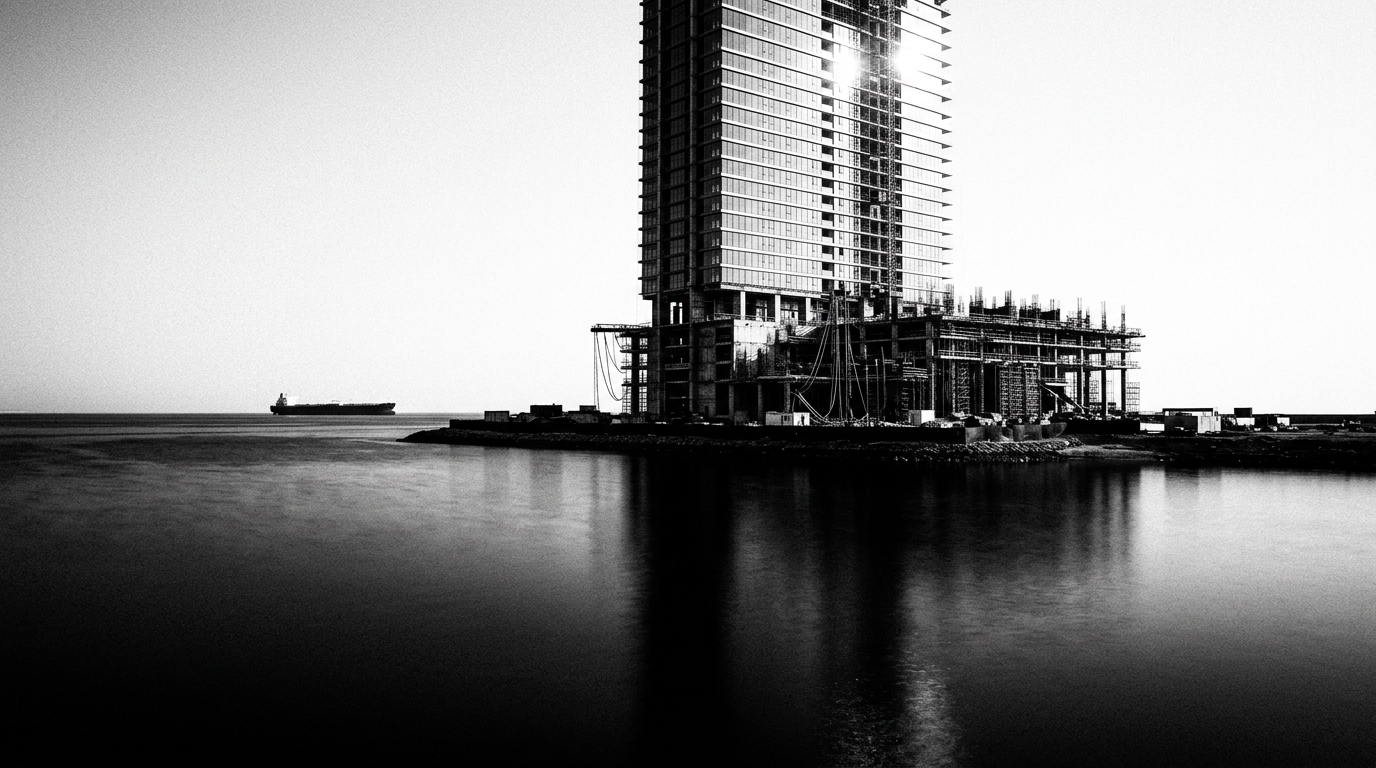
Wynn resumed construction on its $5.1 billion Al Marjan Island casino after a brief pause for Iranian drone strikes, and analysts shrugged it off as "overblown." The 40% equity stake, 15-year exclusive license, and $3.3M per-key price tag tell a more complicated story about what this project needs to return.

$5.1 billion for 1,542 keys. That's $3.3 million per key on an integrated resort that hasn't taken a single booking yet in a country that has never operated a legal casino. Wynn holds 40% of the equity, which puts their exposure at roughly $1.08 billion on the equity side alone against a $2.4 billion construction facility that is the largest hospitality financing transaction in UAE history. The drone scare is the headline. The capital structure is the story.

Let's decompose the revenue assumption. Analysts project minimum gross gaming revenue of $1.33 billion annually, with a range of $1.0 billion to $1.66 billion. One estimate suggests the project could generate 40-50% of Wynn's total EBITDA by 2028. That's an extraordinary concentration of future earnings in a single asset, in a market with zero operating history for legal gaming, protected by a 15-year exclusive license that assumes the regulatory framework remains stable across multiple geopolitical cycles. The gaming floor is 225,000 square feet... roughly 4% of gross floor area. The rest of the $5.1 billion is hotel, F&B, retail, marina, and event space that needs to perform at ultra-luxury RevPAR in a destination that is 50 minutes from Dubai International. That's not a walk-in market. That's a fly-in market priced at fly-in rates.

The construction pause lasted days, not weeks. Wynn's stock dropped 10.5% over the month surrounding the Iran-UAE tensions, which Stifel called "overblown" while reiterating a buy rating at $150 (later raised to $160). The market's quick recovery tells you something about how investors are pricing geopolitical risk in the Gulf... they're discounting it almost entirely, treating the drone strikes as a transient event rather than a structural risk factor. I've audited international hospitality projects where the political risk premium was baked into the debt covenants. A 47% debt-funded mega-resort in a region with active military tensions typically carries a wider spread. The $2.4 billion syndicated facility would be worth examining for its covenant structure and force majeure provisions (those documents tell you what the lenders actually believe about risk, which is often different from what the equity analysts say on calls).

Here's what the headline doesn't tell you. MGM has applied for a gaming license in Abu Dhabi. Wynn CEO Craig Billings expects two additional casino projects to be licensed in the UAE, projecting $3.0 to $5.0 billion in combined GGR from competitors alone. That 15-year exclusive license is for Ras Al Khaimah specifically... not the UAE. The first-mover advantage is real, but it's geographically bounded. When Abu Dhabi and potentially Dubai open gaming, the demand model for a fly-in destination 50 minutes from DXB changes meaningfully. The $3.3 million per key only works if the revenue assumptions hold against a competitive set that doesn't exist yet but will by 2029.

Two-thirds of the $5.1 billion budget is spent or committed. At 66.7%, this project is past the point of abandonment economics... you finish it or you write off $3.4 billion. That's not a criticism. That's the math of mega-project development. Spring 2027 opening means the first full operating year will be the market's first real data point on whether legal gaming in the Gulf generates the $1.33 billion floor or something closer to the $1.0 billion low end. A $330 million annual variance on GGR alone flows directly to whether that 40% equity stake was visionary or expensive. The analysts are pricing in the vision. The debt covenants are pricing in the risk. One of them is right.

Operator's Take

Look... this one isn't about your property. It's about your owners and your investment committee. If you're at a management company that operates or is pursuing international luxury deals, the Wynn UAE project is repricing what "development risk" means in hospitality right now. A $3.3M per-key integrated resort in a market with zero gaming operating history, funded at 47% debt, with geopolitical risk the market is choosing to ignore... that's a case study in concentration risk. If your ownership group is evaluating international development or if your REIT is looking at gaming-adjacent assets, pull the comp: $5.1 billion, 1,542 keys, 15-year exclusive license, Spring 2027 opening. Then ask what happens to your own pipeline assumptions when Abu Dhabi and Dubai start licensing competitors. The first-mover story is compelling until the second mover shows up with a better location.

— Mike Storm, Founder & Editor
Read full analysis → ← Show less
Source: Google News: Wynn Resorts
Wynn's $5.1B UAE Bet Implies a 3.3% Yield on a Market That Doesn't Exist Yet

Wynn's $5.1B UAE Bet Implies a 3.3% Yield on a Market That Doesn't Exist Yet

Wynn just resumed construction on a $3.3M-per-key integrated resort in a country where commercial gaming has zero operating history. The cap rate math only works if you believe the UAE becomes a $5B gaming market... and that Wynn captures a third of it.

Available Analysis

$5.1 billion divided by 1,542 keys is $3.3 million per key. That's the number. Not the construction timeline, not the geopolitical pause, not the spire going up later this year. $3.3 million per key for a resort in a gaming jurisdiction that has never processed a single legal bet.

Let's decompose what that per-key price is actually buying. Wynn holds 40% equity in the joint venture ($1.1 billion committed, $200 million upfront, $900 million over time). RAK Hospitality Holding holds 59%. A $2.4 billion construction facility... the largest hospitality financing in UAE history... covers the debt side. As of late 2025, roughly $3.4 billion of the $5.1 billion budget was spent or committed. The project is past the point of financial retreat. This isn't a decision anymore. It's a trajectory.

The bull case requires three assumptions to hold simultaneously. First, that the UAE gaming market reaches the $3-5 billion annual revenue range analysts project. Second, that Wynn captures roughly 33% of that market (their stated target). Third, that the 2-5 year competitive moat holds before MGM or others secure Abu Dhabi licenses. If all three hold, you're looking at $1-1.7 billion in annual gaming revenue for this single property, which makes the per-key cost defensible. If any one of them breaks... the yield math gets uncomfortable fast. A $5.1 billion asset generating $1 billion needs to flow through at roughly 30% to NOI to hit a 6% return on cost. That's aggressive for a first-year operation in a new regulatory environment.

The construction pause (attributed to regional security concerns around Iranian attacks) lasted approximately two weeks in early March. Wynn confirmed design and operational planning continued during the halt. The Q1 2027 opening target remains intact. What's more telling than the pause itself is how the market reacted: Wynn stock dropped 10% on the tension, recovered partially on resumption. The equity market is pricing geopolitical risk into this asset in real time. That's not a one-time event. That's a permanent feature of the risk profile for any operator deploying capital in the Gulf.

One detail buried in the project structure deserves attention. Wynn has already announced a second joint venture (Janu Al Marjan Island) opening late 2028 directly adjacent to the main resort. That's a signal about demand confidence... or about the need to control the competitive perimeter before someone else builds next door. I've seen this pattern in other markets where a first-mover pours capital into surrounding parcels not because the demand model requires it, but because the alternative is letting a competitor set up across the street. At $3.3 million per key on the flagship, Wynn cannot afford rate compression from an adjacent property it doesn't control.

Operator's Take

Look... this isn't your comp set. Nobody reading this is building a $5.1 billion integrated resort. But here's why it matters to you. When a 1,542-key luxury property with a casino floor opens in a market that's been pulling high-net-worth travelers from Europe and Asia for a decade, that changes the gravity of global luxury hospitality. If you're running upper-upscale or luxury in the Gulf, the Mediterranean, or the Indian Ocean resort markets, start watching your forward group bookings for late 2027. That's when diversion starts showing up in your data. This is what I call the Three-Mile Radius except at a global scale... Wynn isn't competing with your three-mile comp set, but if you're selling $800 ADR beach resort nights to GCC and European travelers, they're absolutely competing for your guest. Get your revenue team modeling scenarios now while you still have time to adjust positioning and rate strategy before this thing opens its doors.

— Mike Storm, Founder & Editor
Read full analysis → ← Show less
Source: Google News: Wynn Resorts
Wynn Just Resumed a $5.1 Billion Bet in a Country That Legalized Casinos Two Years Ago

Wynn Just Resumed a $5.1 Billion Bet in a Country That Legalized Casinos Two Years Ago

Construction on Wynn Al Marjan Island is back online after a geopolitical security pause, and the $5.1 billion integrated resort is still targeting a Spring 2027 opening. The part that should keep every luxury operator up at night isn't the drone threat... it's what happens to rate ceilings across the Gulf when the UAE's first licensed casino opens its doors.

Available Analysis

I worked with a GM once who took a job opening a brand-new resort in a market with zero comparable product. No comp set. No STR data worth using. No historical demand pattern. Just a shiny building, a fat pre-opening budget, and a theory. He told me something I never forgot: "Opening a hotel without a comp set is like playing poker in the dark. You might win big. But you won't know why, and you won't be able to repeat it." That property did fine, eventually. But the first 18 months were brutal because every assumption in the pro forma was exactly that... an assumption.

That's what I keep thinking about with this Wynn Al Marjan Island project. Construction paused briefly in March over security concerns... drone debris near the site, regional tensions, the kind of thing that makes insurance underwriters earn their keep. Now it's back up and running. The 70-story tower topped out in December. They're targeting Spring 2027. And look... from a pure construction standpoint, the project appears to be executing. Two-thirds of the $5.1 billion budget spent or committed. Financing locked at $2.4 billion in debt against 53% equity. Over 18,000 construction jobs created. The building is going up.

But here's the thing nobody in the trade press seems to want to say out loud: Wynn is building a 1,530-key integrated resort with 225,000 square feet of gaming floor in a country that removed gambling from its civil code two years ago. The regulatory authority is brand new. The gaming license (the first and currently only one in the UAE) was issued in October 2024. The revenue projections... $1.63 billion net revenue, $465 million EBITDA, gaming at 73-89% of total revenue... are modeled on a market that doesn't exist yet. There is no trailing data. There is no comparable operation in the Gulf. The analysts projecting $1 billion to $1.66 billion in gross gaming revenue are smart people making educated guesses about a customer base that has never had legal access to a casino in this region before. That's not analysis. That's a thesis. And the difference between a thesis and a business plan is about $5.1 billion.

Now, do I think this could work? Actually, yes. The bones of the thesis are sound. Ultra-wealthy GCC clientele who currently fly to Monaco, Macau, or London to gamble... you give them a luxury option two hours from Riyadh and one hour from Dubai, with the Wynn name on it, and you've got something. Ras Al Khaimah is projecting 5.3 million annual visitors by 2030, up from 1.2 million in 2023. Land prices on Al Marjan Island have nearly tripled since 2021. The demand signal is real. But demand signal and stabilized NOI are two very different things, and the gap between them is where fortunes get made or destroyed. Wynn holds 40% equity. RAK Hospitality Holding has 59%. The geopolitical risk that just caused this construction pause? That's not a one-time event. That's the operating environment. Every revenue projection needs to be stress-tested against a world where regional tensions don't go away... because they won't.

The security halt itself was brief and managed correctly. Wynn communicated with both governments, implemented safety protocols, got people back to work. That's execution. I'm not worried about the construction team. I'm thinking about the operator who's going to open 1,530 keys, hire 4,000-plus people, and try to deliver a Wynn-level guest experience in a market with zero institutional muscle memory for integrated resort operations. The building is the easy part. The next 18 months of pre-opening hiring, training, and culture-building in a region where gaming hospitality has never existed at this scale? That's where the real risk lives. And that risk doesn't show up in a construction update press release.

Operator's Take

If you're running a luxury or upper-upscale property anywhere in the Gulf, start paying very close attention to what this does to talent. Wynn needs 4,000-plus permanent employees by Spring 2027, and they're going to recruit aggressively from every five-star hotel in the UAE. That's your housekeeping supervisors, your F&B managers, your front office leads... anyone with integrated resort experience or high-end service training becomes a target. Run your retention numbers now. Know who you can't afford to lose. If you're an owner with Gulf-region assets, ask your management company what their retention strategy looks like in a market where a new Wynn is about to start recruiting. Don't wait for the job postings to hit LinkedIn. By then you're already backfilling instead of protecting.

Read full analysis → ← Show less
Source: Google News: Wynn Resorts
Wynn Has $3.4 Billion in the Ground in a War Zone. Construction Continues.

Wynn Has $3.4 Billion in the Ground in a War Zone. Construction Continues.

Wynn evacuated part of its development team from the UAE after Iranian missile strikes, but the $5.1 billion Al Marjan Island project keeps building toward a 2027 opening. The question every casino resort operator should be asking isn't whether it opens... it's what happens to the insurance, the timeline, and the talent pipeline when your mega-project sits under an air defense umbrella.

Available Analysis

I worked with a guy years ago who was overseeing a resort renovation in a hurricane zone. Category 2 brushed the coastline mid-build. Didn't hit the property directly, but it scattered half his subcontractors back to the mainland and his insurance carrier wanted to renegotiate everything. The physical damage was minimal. The project delay and the cost escalation from that one storm added 11% to his total budget. He told me afterward: "The building was fine. The spreadsheet got destroyed."

That's the lens I'm looking at this Wynn story through. Not whether the concrete's still standing on Al Marjan Island... it is. Construction hasn't stopped. The hotel tower topped out in December. Interior work is underway. Wynn's people on the ground in Ras Al Khaimah are apparently still pouring floors and hanging drywall. The company has $3.4 billion committed on a $5.1 billion project, which means they're roughly two-thirds through the spend. You don't walk away from that. You can't walk away from that. The financial gravity of a project this size makes retreat nearly impossible regardless of what's happening in the airspace above you.

But here's what I keep turning over. Since February 28th, the UAE has intercepted over 400 ballistic missiles, nearly 2,000 drones, and 15 cruise missiles. Hotels in Dubai have reportedly been hit. Wynn evacuated design and development team members... the specialized talent you need for the finish work that turns a concrete shell into a $5.1 billion luxury resort. The construction crews are still there (largely local workforce, which makes sense operationally), but the people who make decisions about finishes, FF&E installation, brand standards, the guest experience details that justify a Wynn rate... some of those people are working remotely now. From somewhere that isn't a war zone. And anyone who's ever managed a complex build knows the difference between being on-site and being on a video call. Remote oversight on a project this intricate, at this stage, with this budget... that's not the same thing and everybody in the industry knows it.

The stock tells part of the story. WYNN is down roughly 20% over 90 days. Analysts are trimming price targets but keeping buy ratings, which is Wall Street's way of saying "we believe in the thesis but we're nervous about the timeline." The projected $1.3 billion in annual gross gaming revenue assumes the UAE becomes a regulated gaming destination that attracts the kind of international high-net-worth traffic that currently flows to Macau, Singapore, and London. That thesis was compelling six months ago. It's still compelling on paper. But "on paper" and "under missile defense systems" are two very different operating environments. The question isn't whether the UAE gaming market materializes... it's whether the 2027 opening timeline holds, what the cost overruns look like when you're building through a conflict, and whether the luxury leisure traveler who's supposed to fill 1,500 rooms is going to book a trip to a destination that was in the news for intercepting Iranian cruise missiles.

This is what I call the Shockwave Response... and in this case, the shockwave is still ongoing, which makes it worse than a single event. A hurricane passes. A pandemic eventually ends. An active military conflict between a neighboring state and the country where your $5.1 billion asset sits... that doesn't have a timeline anyone can predict. Wynn's public posture is exactly what you'd expect: commitment to the project, commitment to employee safety, construction continues. And I believe them. But somewhere in a conference room in Las Vegas, someone is running scenarios on what a six-month delay costs, what happens to the lender syndicate that provided $2.4 billion in construction financing if the security situation deteriorates further, and what the insurance landscape looks like for a luxury resort that opened during or immediately after a regional war. Those are the conversations that don't make the press release.

Operator's Take

Look... most of you aren't building $5 billion casino resorts in the Middle East. But the principle here is universal and it's one I've applied at every scale. If you have any capital project underway right now, in any market with elevated risk (and that includes natural disaster zones, not just war zones), pull your insurance policy this week and read the force majeure and delay clauses. Know exactly what's covered and what isn't before something happens, not after. If you're in a management company with any international pipeline, understand who's on the ground, what the evacuation protocols are, and what "construction continues" actually means when your specialized talent is remote. And if you're an investor watching WYNN right now thinking this is a buying opportunity because the long-term UAE gaming thesis is intact... you might be right. But price in an 18-month delay, a 15-20% cost overrun, and a slower-than-projected ramp to that $1.3 billion GGR number. The thesis surviving and the timeline surviving are two different bets.

Read full analysis → ← Show less
Source: Google News: Casino Resorts
End of Stories