Today · Jul 15, 2026
Three Hyatt Hotels in Riyadh by Year-End. The Promise Is Easy. The Delivery Is Everything.

Three Hyatt Hotels in Riyadh by Year-End. The Promise Is Easy. The Delivery Is Everything.

Amsa Hospitality, Artal Hotels, and Hyatt just signed an MoU for three properties in Riyadh, including two conversions and a new build, all targeting 2026 openings. The real question isn't whether they can flag them fast enough... it's whether anyone's stress-tested what happens when 320,000 new rooms chase the same demand.

Available Analysis

Let me tell you what catches my eye about this deal, and it's not the press release.

Three hotels in Riyadh... one new-build all-suite with 70 keys, one 131-key full-service, one 99-key property on Takhassusi Street... all flagged under Hyatt's portfolio, all managed by Amsa Hospitality for owner Artal Hotels, all supposedly opening by the end of 2026. That's roughly 300 keys dropping into a market where Saudi Arabia's licensed tourism accommodations jumped 22.7% year-over-year in Q1 alone. Riyadh's occupancy is sitting around 60-62%. And the Kingdom has committed to delivering 320,000 new hotel rooms by 2030 at a projected cost of $37.8 billion. So the question every brand executive should be asking (and the one I guarantee is NOT in the MoU) is: what does the owner's return look like when all of that supply actually shows up?

I've spent enough years in franchise development to recognize the choreography here. Hyatt wants to triple its Saudi room count by 2030. Amsa Hospitality, founded just a few years ago, is positioning itself as the local operator who understands both the Arabian market and global brand standards. Artal Hotels owns the real estate. Everyone gets a press release. Everyone gets a logo on the rendering. But the person holding the real risk... that's Artal. They own the buildings. They carry the debt. They absorb the downside if Riyadh's ADR (currently around $225) compresses under the weight of all that shiny new upscale supply flooding the market. Hyatt collects fees. Amsa collects management fees. And if the Vision 2030 demand projections come in at 80% of target instead of 100%? The fees still get paid. The owner adjusts. (The owner always adjusts. That's what owners do. It's just that nobody mentions that part during the signing ceremony.)

Here's what I want to know, and what neither the press release nor the MoU will tell you. Two of these three properties are conversions. That means existing buildings being repositioned under a Hyatt flag. Conversions are where I've seen the most spectacular gaps between brand promise and brand delivery, because the building doesn't care what logo you put on it. The building is what it is. Can a converted property in Al Sahafa deliver whatever Hyatt experience standard applies here... the service culture, the F&B programming, the room product... by December? With a workforce that's being developed in real time in a market where every major international brand is competing for the same hospitality talent? I sat in a brand review once for a conversion deal on a similar timeline, and the development team kept saying "the physical product is 90% there." I asked what the other 10% was. Turns out it was the kitchen, the HVAC in the meeting space, and the entire loyalty integration. Ten percent can be the whole ballgame.

The Saudi market is real. The growth trajectory is real. The $111 billion projected market size by 2034 is a number that makes every brand's development team salivate. But I've watched enough of these gold-rush markets to know that the brands who win aren't the ones who plant flags fastest... they're the ones whose flags actually mean something when the guest walks through the door. Hyatt has appointed dedicated Saudi leadership. They're clearly serious. But serious intent and operational delivery are two different documents, and the distance between them is measured in training hours, staffing ratios, and whether anyone has run a realistic demand model that accounts for every other brand doing exactly the same thing in exactly the same city at exactly the same time. Saudi Arabia's hotel market is projected to grow at nearly 9% annually. That's extraordinary. It's also the kind of number that makes people stop asking hard questions... and hard questions are the only ones worth asking when someone else's family business is on the line.

Vision 2030 is one of the most ambitious hospitality development programs in modern history, and the capital flowing into Riyadh is genuinely unprecedented. I'm not skeptical of the market. I'm skeptical of the math that assumes every new flag will perform to projection in a market adding supply at this pace. The brands will be fine... they're always fine, because fee income doesn't require occupancy to hit 75%. The owners who financed these deals based on optimistic demand curves? That's who I think about. That's who I always think about.

Operator's Take

Here's the deal for anyone watching the Middle East pipeline from the operating side. If you're a management company being courted to operate in Saudi Arabia right now, run your own demand model. Do not rely on the brand's projections or the government's tourism targets. Build a downside scenario where Vision 2030 tourism numbers come in at 70% of target, and see if your fee structure still makes the deal viable for the owner... not just for you. If you're an owner considering a flag in Riyadh or any high-growth Saudi market, get the brand's actual loyalty contribution data from comparable properties already operating in the Kingdom, not projections from properties in Dubai or Doha. This is what I call the Brand Reality Gap... brands sell promises at scale, properties deliver them shift by shift, and the distance between the two is where owners get hurt. Before you sign, know the distance.

— Mike Storm, Founder & Editor
Read full analysis → ← Show less
Source: Google News: Hotel Industry
Hyatt's Alila Just Picked Hakone. The Tech Stack for 60 Keys With Private Onsen Will Be Brutal.

Hyatt's Alila Just Picked Hakone. The Tech Stack for 60 Keys With Private Onsen Will Be Brutal.

Alila's first Japan property promises 60 rooms with private hot spring baths, Kengo Kuma design, and a 2028 opening in Hakone. The question nobody's asking is what technology infrastructure actually looks like when your guest experience depends on plumbing, not pixels.

So Hyatt is bringing Alila to Hakone, Japan. Sixty keys. Private natural hot spring bath in every room. Kengo Kuma designing the thing. Opening 2028. And every hotel tech publication is going to write about the "digital guest journey" and the "smart room experience" and whatever other buzzwords get clicks this week.

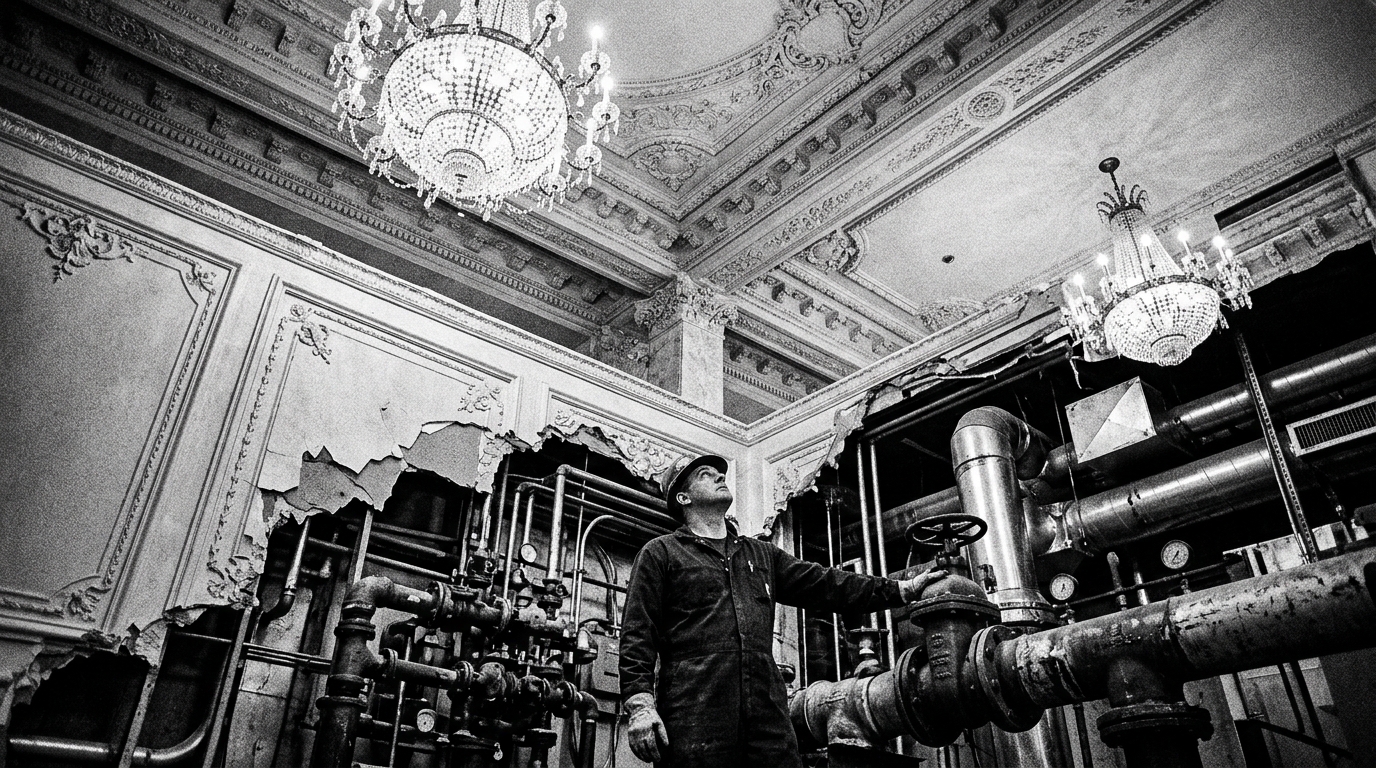
I want to talk about something else entirely. I want to talk about what happens when you try to wire a luxury technology stack into a property where the core guest experience is... water. Hot water from the earth, piped into 60 individual rooms, each one requiring its own temperature monitoring, flow management, and maintenance alert system. I consulted with a resort group in Southeast Asia last year that had individual plunge pools in every villa. Their "smart room" system looked gorgeous in the demo. In production, the pool temperature sensors threw false alerts every 90 minutes because humidity in the mechanical spaces exceeded what the hardware was rated for. The engineering team disabled the alerts within a month. So now you've got a $200K monitoring system that nobody monitors. That's hotel tech in a nutshell.

Here's what actually matters about Alila Hakone from a technology perspective. This is Hyatt's 10th brand in Japan, joining 22 existing hotels across nine brands. That means Hyatt already has a regional tech infrastructure... PMS standards, loyalty integration requirements, revenue management platforms. But Alila isn't a Hyatt Place. The operational technology for a 60-key ultra-luxury onsen resort has almost nothing in common with the tech stack running a 300-key Grand Hyatt in Tokyo. The PMS needs to handle kaiseki dining reservations with multi-course timing. The guest profile system needs to capture bathing preferences (temperature, minerals, timing) that don't exist as fields in any standard loyalty platform. The spa booking engine needs to manage gender-separated and mixed-gender thermal facilities with capacity limits that change by time of day. None of this is in the standard Hyatt tech playbook. So either they build custom (expensive, slow, maintenance-heavy) or they force-fit existing platforms (cheap, fast, terrible guest experience). I've watched this exact decision get made at four different luxury brands expanding into non-standard property types. They almost always choose force-fit first, realize it doesn't work about eight months post-opening, and then spend 2x building custom anyway.

The building itself is going to be a technology challenge that most people aren't thinking about. Hakone sits inside a national park. The Sengokuhara area has volcanic geology, dense forest cover, and infrastructure that wasn't designed for modern bandwidth requirements. You're putting a luxury resort into a location where the cellular signal might be inconsistent and the nearest fiber trunk line serves a town of maybe 4,000 people. Kengo Kuma's design philosophy is minimalist integration with nature... which is beautiful and also means the architecture probably won't accommodate the cable pathways, equipment rooms, and antenna placements that a modern hotel technology stack requires without some very creative engineering. My family's hotel has 1978 wiring that kills WiFi on the second floor. Now imagine that problem, but the building is deliberately designed to disappear into a mountainside.

Look, I'm not saying Alila Hakone won't be stunning. It probably will be. Kengo Kuma doesn't do mediocre. And the Japan luxury hotel market is projected to grow from about $7.3 billion to over $10 billion by 2034, with 42.7 million international visitors in 2025 alone... so the demand is real. Hilton is putting an LXR property in Hakone for the same reason. But the technology conversation around properties like this always focuses on the guest-facing stuff... the app, the digital key, the in-room tablet. The actual technology challenge is infrastructure. It's the monitoring systems for 60 individual hot spring feeds. It's the network architecture in a building designed to look like it has no technology in it. It's the integration between a hyper-local Japanese hospitality operation and a global loyalty platform that was built for business travelers in Chicago. The Dale Test question here is brutal: when the hot spring feed to room 215 drops below temperature at 2 AM, what does the system do, and can the one person on duty fix it without calling an engineer?

Operator's Take

If you're running or developing any resort property where the core experience depends on physical systems... pools, springs, specialized F&B, spa facilities... your technology vendor conversation needs to start with infrastructure, not guest-facing features. Ask your vendor what happens during a sensor failure at 2 AM with minimum staffing. If the answer involves "call support," that's not a solution for a 24/7 operation. For anyone watching Hyatt's expansion into Japan (10 brands, targeting a doubled portfolio over the next decade), pay attention to how they handle the tech integration at Alila versus their urban properties. That gap between what works at a convention hotel and what works at a 60-key mountain resort is where your own technology decisions should be calibrated. Don't let a vendor sell you a platform built for one property type when you're operating another.

— Mike Storm, Founder & Editor
Read full analysis → ← Show less
Source: Google News: Hyatt
Hyatt's CEO Just Sold 25% of His Stock. The Timing Says More Than the Filing.

Hyatt's CEO Just Sold 25% of His Stock. The Timing Says More Than the Filing.

Mark Hoplamazian sold 120,000 shares for $23.8 million while Hyatt traded near its 52-week high and a month after an Investor Day promising "differentiation at scale." The gap between what a CEO tells investors and what he does with his own portfolio is worth decomposing.

$23.8 million in Hyatt stock, sold across four trading days at prices between $195.96 and $205.23 per share. That's 120,000 shares, a 25% reduction in CEO Mark Hoplamazian's direct holdings, executed while the stock sat within 1% of its 52-week high of $206.86. The filing says "discretionary open-market transaction." The timing says something more specific.

Let's decompose this. On May 28, Hoplamazian stood in front of investors and outlined Hyatt's path to 90% asset-light earnings, 6-7% net rooms growth, and a strategy built on "premium brands, emotionally driven loyalty, and AI-powered personalization." The company simultaneously authorized another $1 billion in share repurchases. One month later, the CEO reduced his personal position by a quarter. The company is buying. Its CEO is selling. Both things can be rational. Both things should be stated plainly.

The defense is straightforward and probably accurate: the stock ran 50% in a year, he's diversifying, executives sell for estate planning and liquidity. I've audited enough insider transaction patterns to know that a single sale, even a large one, isn't predictive. Hoplamazian still holds 356,089 shares directly, plus whatever indirect and deferred positions exist. He's not heading for the exit. He's taking chips off the table at what he apparently considers a favorable price. The question for investors is whether his assessment of "favorable" aligns with theirs.

Here's what the headline doesn't tell you. Hyatt's Q1 2026 showed 5.4% comparable system-wide RevPAR growth and an EPS beat. Strong numbers. But the full-year guide is 2-4% RevPAR growth, which is a meaningful deceleration. Analysts have a consensus "buy" with price targets averaging $179-$194... below where the stock traded when Hoplamazian sold. When the CEO sells at a price above what analysts think the stock is worth, that's not a scandal. It's information.

The 382,000 shares sold over the past twelve months with zero purchases is the more revealing data point. Insider selling is noisy. Insider buying is signal. The absence of buying, sustained over a year during which the company presented its most bullish strategic vision, is the number I'd circle if this were an audit workpaper.

Operator's Take

Here's what nobody's telling you... this doesn't change your Monday morning. Insider selling at the C-suite level is a capital markets story, not an operations story. But if you're an owner or asset manager with Hyatt-flagged properties, pay attention to the gap between the Investor Day narrative and the full-year RevPAR guide. The company is projecting 2-4% growth for the year after posting 5.4% in Q1. That deceleration has implications for your loyalty contribution assumptions and your fee calculations. Pull your trailing twelve-month brand cost as a percentage of total revenue. If you're north of 15%, stress-test your numbers against the low end of that guide, not the high end. The CEO just told you what he thinks about the stock price. Listen.

— Mike Storm, Founder & Editor
Read full analysis → ← Show less
Source: Google News: Hyatt
Hyatt Just Put Grand Hyatt on an All-Inclusive Menu. The Owners Better Hope the Math Isn't Fantasy.

Hyatt Just Put Grand Hyatt on an All-Inclusive Menu. The Owners Better Hope the Math Isn't Fantasy.

The first Grand Hyatt all-inclusive opens for bookings in Los Cabos at $500 a night and 55,000 World of Hyatt points. The question isn't whether the resort looks stunning... it's whether the franchise projections that convinced the owner to build a 301-key all-inclusive in a market flooding with luxury supply will hold up three years from now.

Available Analysis

I grew up watching my dad deliver brand promises that somebody else wrote on a PowerPoint slide in a corporate office 1,500 miles from his lobby. So when I see Hyatt announcing that Grand Hyatt is now an all-inclusive brand... not just a Grand Hyatt with a meal plan bolted on, but a genuine all-inclusive repositioning of one of their flagship nameplates... I have feelings. And the feelings are complicated, because this is simultaneously one of the smartest brand moves I've seen in years and one of the most dangerous bets an owner can make right now. Let me explain both, because both are true, and pretending otherwise helps nobody.

The smart part first, because credit where it's due. Hyatt spent roughly $5.3 billion acquiring Apple Leisure Group and Playa Hotels & Resorts to build an all-inclusive machine, and they've been running it through their Inclusive Collection labels... Dreams, Secrets, Breathless... brands that perform well but don't carry the same weight as the core Hyatt portfolio. Putting "Grand Hyatt" on an all-inclusive property is a statement. It says this isn't a side hustle. It says the all-inclusive model has earned a seat at the grown-up table. And frankly, the numbers support the confidence... 7.4% Net Package RevPAR growth in Q1 2026 for their all-inclusive portfolio, outperforming most of their traditional segments. Hyatt looked at where the money is moving and followed it. That's not revolutionary. That's competent strategy executed well. (I know, I know... "competent strategy executed well" doesn't make for a sexy press release. But in this industry, it's rarer than you'd think.)

Now the dangerous part. This 301-key resort in Los Cabos is owned by Parks Hospitality Holdings, which means someone who is not Hyatt is holding the real estate risk on a property where the all-inclusive model demands massive operational complexity... 11 dining outlets, 6 pools, a championship golf course, 20,000-plus square feet of event space... all of which have to be staffed, maintained, and delivered at a quality level that justifies a $500-per-night cash rate. That's not a room rate. That's a promise that every meal, every drink, every pool towel, every interaction will feel like $500 a night. I've watched owners take on that kind of promise before. I sat across from a family once who flagged with a major brand, took on millions in PIP debt based on projections that turned out to be optimistic by a third, and lost everything when actual loyalty contribution came in at 22% instead of the promised 35-40%. The grandmother was at that meeting. She didn't say anything. She didn't have to. And here's what keeps me up at night about this Los Cabos property... Hyatt is simultaneously announcing a Park Hyatt all-inclusive in Riviera Maya with the same opening timeline. Two ultra-luxury all-inclusive properties, same company, same region, same target guest, launching within months of each other. If you're the owner of the Grand Hyatt, you're not just competing with Secrets and Dreams and every other all-inclusive in the Caribbean basin. You're competing with Hyatt's own Park Hyatt down the coast. At what point does internal portfolio strategy become internal cannibalization? (I've seen this movie before. The brand calls it "complementary positioning." The owners call it "fighting over the same guest with different logos.")

Here's the part that nobody's talking about, and it matters more than the renderings. Hyatt has been very clear about their asset-light strategy... they want 80% of EBITDA from fees, and they plan to sell off the Playa properties they just acquired. That means Hyatt's financial exposure to whether this all-inclusive model actually delivers is increasingly limited to franchise and management fees. The owner holds the building, the debt, the staffing headaches, the F&B cost volatility, the seasonal demand swings. Hyatt holds the brand and the loyalty pipe. When Net Package RevPAR grows 7.4%, both parties celebrate. When it doesn't... and in a market like Los Cabos where luxury supply is expanding rapidly, "when" is the right word, not "if"... the owner absorbs the hit while Hyatt still collects fees. This is what I call the Brand Reality Gap, and it's never wider than in the all-inclusive space, where the brand promise is literally everything the guest consumes for the duration of their stay. Every undercooked steak, every slow pool bar, every spa appointment that runs 10 minutes late is the brand failing in real time. And the owner pays for both the failure and the fee.

I want this to work. I genuinely do. The all-inclusive model is evolving in the right direction, and Hyatt has earned the right to push Grand Hyatt into this space. But I've read enough FDDs to know that the projections in the sales pitch and the actuals three years later are often two very different documents. If you're an owner being courted for an all-inclusive conversion or a ground-up build under any luxury flag right now, pull out your calculator before you pull out your checkbook. Ask for actuals, not projections. Ask what the loyalty contribution was at comparable properties after 24 months, not what the model says it should be. And ask yourself the question I ask about every brand concept... can this survive a slow Tuesday in the off-season with three call-outs and a kitchen that's running behind? Because that Tuesday is coming. It always does.

Operator's Take

Here's my take for anyone running or developing an all-inclusive property right now. This Hyatt move is going to generate a wave of franchise pitches from every major brand trying to get into the all-inclusive space... and most of those pitches will come with projections built on best-case demand curves. Don't fall in love with the rendering. Pull the actual Net Package RevPAR data from comparable properties in the same market for the last 36 months. Calculate your total brand cost as a percentage of total revenue... fees, assessments, loyalty costs, mandated vendors, all of it. If that number exceeds 18%, you need the brand to be delivering a revenue premium that justifies it with actuals, not promises. And if you're already operating an all-inclusive in Mexico or the Caribbean, watch the supply pipeline in your market like your P&L depends on it. Because it does.
— Mike Storm, Founder & Editor
Read full analysis → ← Show less
Source: Google News: Hyatt
Sunstone Sells Its 821-Key San Francisco Hyatt for $279M. Blackstone's Buying the Recovery Bet.

Sunstone Sells Its 821-Key San Francisco Hyatt for $279M. Blackstone's Buying the Recovery Bet.

Sunstone is calling $340,000 per key an "attractive private market value" for a lower-yielding asset it's owned for 13 years. The more interesting question is what Blackstone sees at a 3.5% cap rate that Sunstone decided wasn't worth waiting for.

Available Analysis

Let me tell you what I love about this deal, and it has nothing to do with the press release.

Sunstone bought this property in 2013 for $262.5 million when it had 802 rooms. They poured $50 million into it during the pandemic (which, by the way, was a gutsy call... renovating a massive downtown convention hotel while San Francisco was basically a ghost town). They added 19 keys, modernized the asset, and now they're selling it for $279 million to Blackstone. So after 13 years of ownership, $50 million in capital investment, and all the operational headaches that come with running an 821-room full-service hotel in a market that spent four years being the poster child for urban hospitality distress... Sunstone is walking away with a gross gain of roughly $16.5 million on the sale price alone. Before you account for accumulated depreciation, deferred maintenance reserves, and the time value of having $262.5 million tied up for over a decade. That is not exactly a victory lap.

But here's where it gets interesting, and where I think the brand implications matter more than the transaction itself. Sunstone's CEO called this a "lower yielding asset," and the numbers back him up... $104.47 million in trailing revenue, $2.84 million in net income. That's a net income margin under 3% on a property that just went through a $50 million renovation. The 21.4x EBITDAre multiple and 1.02% cap rate tell you Blackstone isn't buying what this hotel IS right now. They're buying what it COULD be. And that "could be" story is entirely dependent on San Francisco's recovery narrative... the Super Bowl bump earlier this year, FIFA matches coming through, convention business slowly rebuilding. Blackstone is essentially underwriting a market turnaround at scale, which is what Blackstone does. They buy the cycle. The question for brand watchers is whether Hyatt keeps the flag. Blackstone has a history of rebranding acquisitions when the math supports it, and at a 3.5% cap rate, every basis point of fee structure matters. If I were in Hyatt's franchise development office right now, I'd be making sure that management agreement is airtight, because a buyer paying this kind of multiple has very specific NOI expectations, and brand fees are one of the first things a sophisticated owner scrutinizes when yields are thin.

What Sunstone is doing with the proceeds tells you everything about their conviction level on this asset versus their own stock. They've already deployed nearly $70 million into buybacks... $40.5 million in common stock at $9.24 per share and $27.8 million in preferred stock at $20.37 per share. That's a company telling you, in the clearest possible language, "we think our stock is cheaper than our hotels." And when a REIT is repurchasing preferred at a discount to liquidation value, that's not a subtle signal. That's a flashing neon sign that says management believes the public market is mispricing their portfolio. For anyone tracking Sunstone's broader strategy (and if you're a brand partner of theirs, you should be), this is capital recycling aimed squarely at shrinking the share count and consolidating value, not at acquiring new assets. They bought the Hyatt Regency San Antonio Riverwalk for $230 million in 2024. They sold the Hilton New Orleans St. Charles for $47 million in 2025. The pattern is clear... exit lower-yield urban assets, buy or hold higher-yield assets in stronger markets, and buy back stock when it's cheap. If your brand is flagged on one of Sunstone's "lower yielding" properties, this should be a wake-up call.

The San Francisco market context makes this even more layered. RevPAR in the city was still below 2019 levels through 2024, though January 2026 showed a 12.2% RevPAR jump. The Hilton Union Square and Parc 55 sold in late 2025 for less than half their peak valuation. The Hyatt Centric Fisherman's Wharf moved at $253,000 per key in May 2025. So Sunstone getting $340,000 per key for the Regency is actually a relative win compared to what other sellers in this market have achieved recently. But "better than the worst comps in a distressed market" is a different story than "strong return on a 13-year hold." I've watched brands celebrate conversion announcements and flag placements in recovering urban markets as if the recovery is guaranteed. It's not. And the owners who are buying these assets at thin cap rates are the ones who will push hardest on every line item of the brand cost structure when the recovery takes longer than their underwriting assumed. (It always takes longer than the underwriting assumes. Always.)

This deal is a clean illustration of something I see constantly in brand strategy... the gap between what a flag is worth to the brand (distribution, fees, loyalty contribution) and what it's worth to the owner (NOI after all costs, including the brand's costs). At a 3.5% cap rate with sub-3% net income margins, every dollar of franchise fee, every loyalty assessment, every brand-mandated vendor cost is coming under a microscope. Blackstone didn't get to be Blackstone by accepting fee structures without negotiation. If Hyatt wants to keep this flag... and they should, it's a prominent urban asset... they need to be ready for a very different conversation than they had with Sunstone.

Operator's Take

Here's what matters if you're watching this from inside the business. Sunstone just told you, with their wallet, that they'd rather own their own stock at $9.24 a share than own an 821-key full-service hotel in San Francisco generating sub-3% net income margins. If you're a GM or an operator at a REIT-owned, full-service urban property with similar yield profiles, understand that your asset is being evaluated the same way right now. This is what I call the False Profit Filter... a property can show $104 million in revenue and still not generate enough real return to justify the capital tied up in it. Don't wait for your owner or asset manager to run the math. Run it yourself. Know your property's net income margin after all brand costs, and know how it compares to what the REIT could earn by redeploying that capital elsewhere. That's the conversation that determines your property's future, and you want to be the one who brings it up first... with a plan, not a reaction.

— Mike Storm, Founder & Editor
Read full analysis → ← Show less
Source: Google News: Hyatt
Hyatt's 8,000 Bonus Points Promo Is a Band-Aid on a Devaluation Wound

Hyatt's 8,000 Bonus Points Promo Is a Band-Aid on a Devaluation Wound

A month after hiking award costs at 112 properties, Hyatt is dangling a summer bonus that maxes out at roughly $130 in value. The question isn't whether your guests will register for this... it's whether the loyalty math still works for the owner paying the assessment.

Available Analysis

Let me paint you a picture. You're an owner. You've been paying loyalty program assessments for years... assessments that keep creeping up, by the way, always justified by "member engagement" and "share of wallet" and whatever the latest Investor Day slide deck calls it. Your brand just told 66 million loyalty members that their points are worth less than they were a month ago... 112 hotels moved to higher award tiers in May, only 24 moved lower, and the effective devaluation on peak redemptions hit as high as 67% depending on the property. Members are not happy. The travel blogs are not kind. And now, five weeks later, the brand's big move is a summer promotion offering up to 8,000 bonus points (that's about $112 to $136 in redemption value, depending on whose valuation you use) spread across multiple stays with a requirement that you don't even start earning until your second qualifying stay. This is the loyalty equivalent of sending flowers after you forgot the anniversary. It's a gesture. It is not a strategy.

Here's where I get sharp about this, because I've sat through enough franchise development presentations to know how this game works. Hyatt held its Investor Day on May 28th. The message was clear... World of Hyatt is a "meaningful financial engine," membership is up 18% to 66 million, and members generate a 20-point higher share of spend than non-members. Beautiful story. Compelling slides. But the subtext of a loyalty devaluation followed by a modest bonus promotion is something every owner should read carefully: the brand is optimizing the program for the brand's economics, not yours. When the cost of honoring redemptions gets too high, they raise the point requirements. When member sentiment dips, they offer a promotion that costs relatively little to fund but generates a headline. The owner pays the assessment either way. The owner absorbs the rate parity restrictions either way. And the owner watches their guests... the loyal ones, the ones who specifically chose this flag because of the program... do the math and wonder if they should be loyal somewhere else.

I watched a family lose their hotel because franchise sales projections didn't match reality. That experience lives in every brand evaluation I do now. So when I look at this promotion, I'm not evaluating whether 8,000 points is generous (it's not... and the "beginning on your second stay" structure means most leisure travelers will earn 2,000 to 4,000 points at best, which is essentially nothing). I'm evaluating whether the loyalty program is still delivering what it promises to the people funding it. Hyatt's own numbers say members drive higher spend. Great. But what's the cost to achieve that spend? What's the total loyalty assessment as a percentage of revenue at your specific property? And is the incremental revenue from loyalty members actually exceeding that cost, or are you subsidizing a program that looks great at the portfolio level and breaks even (or worse) at the property level? The filing cabinet doesn't lie. Pull your actual loyalty contribution numbers from the last three years and compare them to what you were told when you signed. I'll wait.

And here's the part that should really bother owners... the CEO just sold 120,000 Class A shares in June. I'm not saying that means anything specific (executives sell stock for all kinds of reasons, and reading tea leaves from insider transactions is a hobby, not analysis). But the optics of a loyalty devaluation, followed by a modest make-good promotion, followed by executive share sales, all within a 30-day window... that's a sequence that deserves attention, not dismissal. If I were advising an ownership group with Hyatt-flagged properties right now, I'd be asking a very specific question: is this loyalty program still a net positive for MY asset, or am I paying for a system that primarily benefits the brand's ability to tell Wall Street a growth story? Those are two very different things, and the answer matters more than any 8,000-point promotion.

The broader pattern here is one I've seen play out across every major loyalty program in the last decade. The programs get bigger (66 million members!), the points get worth less (five-tier pricing!), the assessments stay the same or increase, and the promotional gestures get smaller while the press releases get louder. At some point, "loyalty" stops being a competitive advantage for the property and becomes a cost of doing business that primarily serves the franchisor's investor narrative. I think we're closer to that point than most brands want to admit. And I think owners who aren't running their own loyalty ROI analysis... not the brand's version, their own... are flying blind with someone else's hands on the throttle.

Operator's Take

If you're an owner with a Hyatt flag, this week is the week to pull your actual loyalty contribution data and run it against your total program costs... not just the franchise fee, but assessments, reservation fees, rate parity impact, and any brand-mandated vendor costs tied to the loyalty platform. Calculate total loyalty cost as a percentage of total revenue. Then compare your loyalty-driven occupancy to what you'd realistically capture without the flag. This is what I call the Brand Reality Gap... the distance between what the brand sells at the development table and what actually shows up in your P&L year after year. If the gap is widening, that's a conversation you need to have before your next franchise renewal, not during it. Don't wait for the brand to hand you the analysis. They won't. Their math and your math are not the same math.

— Mike Storm, Founder & Editor
Read full analysis → ← Show less
Source: Google News: Hyatt
Hyatt's Biggest Risk Was Never the Hotels. It Was the Family Name on the Door.

Hyatt's Biggest Risk Was Never the Hotels. It Was the Family Name on the Door.

Thomas Pritzker's exit as Hyatt's Executive Chairman wasn't a retirement... it was a reputational emergency triggered by decade-old associations that no technology stack or governance framework could have flagged in time. The real question for every hotel company with a founder's name on the building is what happens when the brand IS a person.

So here's something nobody in hotel tech talks about: the single biggest point of failure in your entire technology ecosystem isn't your PMS, your channel manager, or your rate-push logic. It's a person. Specifically, the person whose name is synonymous with the brand. And no vendor on earth sells a product that mitigates that risk.

Thomas Pritzker stepped down as Executive Chairman of Hyatt in February after DOJ documents exposed communications with Jeffrey Epstein spanning from at least 2010 to early 2019... years after Epstein's 2008 conviction. The board moved fast. Mark Hoplamazian took the chairman title. The stock actually went up (Hyatt beat Q1 earnings with $0.63 EPS against $0.58 expected, and HSBC upgraded them to a Buy with a $212 target). From a pure systems perspective, the transition was clean. Leadership change, governance committee statement, continuity of operations. Textbook.

But here's what actually interests me about this story. Every hotel company I've ever consulted with has some version of a disaster recovery plan for their technology. Redundant servers. Failover protocols. Backup PMS procedures for when the primary goes down at 2 AM. I've built some of these systems myself. And yet... nobody builds a disaster recovery plan for when the PERSON at the top becomes the vulnerability. The Pritzker name isn't just on the org chart. It's on the architecture prize. It's woven into the foundation that supports it. When that name becomes associated with something catastrophic, the blast radius isn't a system outage you can patch. It's a brand integrity problem that touches every touchpoint simultaneously... every lobby, every booking engine, every loyalty email, every investor call. There's no webhook for that.

Look, I'm a technology guy. I evaluate systems. And what I see here is a governance architecture that had a single point of failure running for 46 years (Pritzker's involvement dates to 1980). No redundancy. No automated monitoring for reputational risk signals that were apparently sitting in public and semi-public records for over a decade. Bernstein analysts are now saying his exit "incrementally reduces long-standing control hurdles" and opens the door to a potential mega-merger or sale. Which means the market is telling you that the family control structure wasn't just a governance feature... it was a governance constraint that was actively suppressing strategic optionality. The system is performing better now that the component has been removed. That should make every family-controlled hotel company very uncomfortable.

The technology angle nobody's discussing is this: we live in an era where every association, every communication, every connection is eventually discoverable. The DOJ documents that surfaced here included emails, scheduling entries, references in contact books. This is data. It existed in systems. It was retrievable. And yet Hyatt's board... with all their governance technology, all their compliance frameworks, all their risk committees... didn't act until the data became public. The monitoring failed. Not the technology monitoring. The human monitoring. The part where someone in the room says "we have a problem and we need to deal with it before it deals with us." I've seen this pattern with hotel technology deployments too. The data is always there. The alert is always available. The failure is always someone deciding not to look.

Operator's Take

Let me be direct. This story isn't about Hyatt's day-to-day operations... their Q1 numbers were strong and the leadership transition looks clean. But if you're running a property for a family-owned hotel company, or you work for any organization where the brand and the founder are inseparable, this is your wake-up call. Go to your owner or your board and ask one question: "If our name became a headline tomorrow for the wrong reason, what's our 72-hour plan?" Not a PR plan. An operational continuity plan. Who communicates to staff? Who handles guest-facing messaging? Who talks to your franchise partners? If the answer is "we'd figure it out," you don't have a plan... you have a hope. And I've seen enough systems fail at midnight to know that hope is not architecture.

— Mike Storm, Founder & Editor
Read full analysis → ← Show less
Source: Google News: Hyatt
Hyatt Just Told Wall Street Its Loyalty Program Is a Bank. Owners Should Read the Fine Print.

Hyatt Just Told Wall Street Its Loyalty Program Is a Bank. Owners Should Read the Fine Print.

Hyatt's Investor Day pitched World of Hyatt as a $105 million credit card revenue engine by 2027, complete with a sweeping points devaluation and 78 new price tiers. The question nobody in the room asked is what happens to the owner whose guest just realized their points don't go as far as they used to.

Available Analysis

I sat in a franchise review once where the brand VP spent forty-five minutes presenting the loyalty program's "enhanced value proposition" to a room full of owners. Beautiful slides. Gorgeous charts showing membership growth, contribution percentages, engagement metrics. When he finished, an owner in the back row... a woman who'd been running hotels since before this VP had his first internship... raised her hand and asked one question: "Who is the customer here? Me or the member?" The room went very quiet. The VP smiled and said "both." She didn't smile back.

That's the question Hyatt just answered at its Investor Day, and the answer wasn't "both." It was Wall Street.

Let's be clear about what happened on May 28th. Hyatt stood in front of analysts and presented World of Hyatt... 66 million members strong, growing 18% year-over-year... as a "meaningful financial engine." Credit card and third-party loyalty fees projected to hit $105 million in EBITDA by 2027, doubling from $50 million in 2025. A new award chart with 78 price levels (seventy-eight!). Some top properties now costing 67% more points to redeem. And the pièce de résistance: a $1 billion increase to share repurchase authorization, bringing the total to roughly $1.5 billion. The message to investors was unmistakable... this loyalty program isn't a guest benefit with financial upside. It's a financial instrument with a guest benefit attached. And those are very, very different things.

Now here's what makes this fascinating and a little infuriating. Hyatt has historically been the loyalty program that punched above its weight. Smaller footprint (roughly 1,500 properties compared to Marriott's 9,000-plus), but consistently higher perceived value per point. That perception was Hyatt's competitive moat for owners. It's what justified the pitch in franchise sales... "yes, our distribution is smaller, but our members are more engaged, they spend more, and they come back." Chase cardholders spend 28% more and stay 221% more nights than non-cardholders. Those are real numbers. That's real value at property level. But a 67% increase in redemption cost at top-tier properties doesn't protect that moat... it drains it. You're telling your most loyal, highest-spending guests that the currency they've been earning is worth less than it was yesterday. And you're doing it while standing in front of investors talking about how much money you're going to make from the devaluation. The cognitive dissonance is breathtaking. (Mark Hoplamazian called member reaction "overall positive." I have read a lot of FDDs in my career. I know what optimistic framing sounds like. That was optimistic framing.)

Here's where it gets personal for owners. Hyatt is targeting 8-12% CAGR on core gross fees and projecting adjusted EBITDA of $1.4-$1.6 billion through 2028, with an asset-light earnings mix exceeding 90% on a pro forma basis by 2027. Read that again. Ninety percent asset-light. That means Hyatt's financial future is built almost entirely on fees collected from properties it doesn't own. Your property. Your capital. Your PIP debt. Your risk. Their fee stream. And now, their loyalty program is being restructured to maximize credit card revenue and minimize points liability... which is great for Hyatt's balance sheet and great for the stock price (up 46% total shareholder return over the past year, P/S ratio of 5.3x against an industry average of 1.7x). But what does it do for the owner in Tulsa whose guests just discovered that their points don't stretch to a free night anymore? What does it do for the GM who has to explain to a Globalist member at 10 PM why their suite upgrade "isn't available" when what really happened is the redemption economics changed? The brand promise and the brand delivery are two different documents, and they just got further apart.

The international co-branded credit card expansion... Germany, Spain, the UK, Japan, Mexico... tells you where the growth thesis lives. It's not in your hotel. It's in the wallet. Hyatt is building a financial services business that happens to have hotels attached. That's not inherently wrong (Marriott has been doing a version of this for years, and their stock has done fine). But it requires a level of honesty with owners that I haven't seen yet. If the loyalty program's primary purpose is now generating credit card fee revenue for the parent company, then the franchise sales conversation needs to change. The projected loyalty contribution percentages need to reflect the new redemption math, not the old one. And the FDD needs to show owners what happens when your best guests start comparing their points value to Hilton's... because they will. They already are.

Operator's Take

Here's what I'd tell any GM or owner flagged with Hyatt right now. Pull your loyalty contribution numbers from the last 12 months... actual room nights, actual revenue, actual percentage of total. Then run them against the new redemption tiers. If your property sits in one of those categories that just got 40-67% more expensive to redeem into, you need to understand what that does to repeat visit patterns over the next 18 months. This is what I call the Brand Reality Gap... Hyatt is selling Wall Street a story about a financial engine, and you're the one who has to deliver the guest experience when that engine runs over your best customers. Don't wait for your franchise business consultant to bring this up. Pull the data yourself, build a one-page impact summary, and bring it to your owner or asset manager before the next quarterly review. The operator who shows up with the analysis already done is the one who looks like they're running the business. And if you're an owner being pitched a Hyatt conversion right now, ask the development team one question: "Show me actual loyalty contribution data from comparable properties, not projections." Then compare what they show you to what's in your filing cabinet from three years ago. The variance will tell you everything.

— Mike Storm, Founder & Editor
Read full analysis → ← Show less
Source: Google News: Hyatt
Hyatt Is Building a Loyalty Moat. The Question Is Who's Paying for the Shovel.

Hyatt Is Building a Loyalty Moat. The Question Is Who's Paying for the Shovel.

Morningstar says Hyatt's loyalty program and new brands are expanding its high-end advantage, and the stock just hit an all-time high. But when you sit on the owner's side of the table and calculate what "advantage" actually costs per key, the math gets a lot less glamorous.

Available Analysis

Let me tell you what I keep thinking about every time another analyst note drops about Hyatt's "growing brand edge." I keep thinking about a franchise review I sat in years ago where the brand executive spent 45 minutes on loyalty contribution numbers and the owner across the table finally said, "That's great. Now tell me what I get to keep." The room got very quiet. It's always quiet when someone asks that question.

So here's where we are. World of Hyatt just crossed 63 million members, up 19% year over year, and loyalty members now account for nearly half of all occupied rooms globally. The expanded Chase credit card deal is projected to push loyalty-related EBITDA from roughly $50 million in 2025 to $105 million by 2027. The stock closed at an all-time high of $193.06 on June 5th. Hyatt Studios has 50-plus executed deals. Unscripted by Hyatt launched with 40 properties in active discussion. The pipeline hit a record 129,000 rooms. If you're reading the investor presentation, this is a company firing on every cylinder. And honestly? A lot of it is genuinely smart strategy. Hyatt has done something that most brands talk about and very few accomplish... they've built a loyalty program that travelers actually value, with a fixed award chart and elite benefits that don't feel like they were designed by someone who's never stayed in a hotel. That matters. It's real differentiation in a sea of programs that all blur together. I grew up watching my dad deliver brand promises, and this is one of the few where the promise and the product are actually close to aligned.

But here's the part the Morningstar note doesn't spend much time on, and it's the part that keeps me up. Hyatt is targeting 90% asset-light earnings by 2026. They've sold $1.5 billion in owned properties at a 13.3x multiple, retained the management agreements, and shifted the capital risk entirely to the people buying in. Every new brand... Studios, Unscripted, the ATONA ryokan concept in Japan... is another fee stream for Hyatt corporate and another capital commitment for an owner. When you layer franchise fees, PIP capital, brand-mandated vendor costs, loyalty assessments, reservation system fees, and marketing contributions, total brand cost for many Hyatt properties is pushing well north of 15% of revenue. The question I'd ask any owner being pitched one of these conversions or new-build deals is the same one that owner asked in that franchise review: after the brand takes its cut, after the management company takes theirs, after FF&E reserves and debt service... what do YOU get to keep? I've read hundreds of FDDs. The variance between projected loyalty contribution and actual delivery three years later should be criminal. And right now, with Hyatt aggressively filling "white spaces" across segments, the risk of brand overlap within their own portfolio is real. Is Unscripted genuinely differentiated from JdV by Hyatt? Can a team in a secondary market deliver the "lifestyle" experience with two people at the front desk? (You already know the answer to that one.)

I want to be clear... I'm not anti-Hyatt. I think their luxury positioning is strong. The 8.5% RevPAR growth in the luxury segment in Q1 tells you high-end travel demand is resilient, and Hyatt has placed itself squarely in that lane. The 6-8% projected annual rooms growth through 2028 is ambitious but not delusional. What concerns me is the pace of brand proliferation at the upper-midscale and upscale tiers, where the owner profile is very different from a Park Hyatt investor, and the margin for error on franchise projections is razor thin. When a brand doubles its loyalty EBITDA through a credit card partnership, that's corporate revenue. When an owner signs a 20-year franchise agreement based on a sales projection that came out of the same presentation... that's someone's family business on the line. I've watched that movie. I know how it ends when the projections don't hold.

The brilliance of Hyatt's strategy is real, and it's mostly accruing to Hyatt. The question every owner needs to answer before signing is whether enough of that brilliance flows through to the property level... or whether you're funding someone else's all-time stock high with your capital and your risk.

Operator's Take

If you're an owner being pitched a Hyatt conversion or new-build right now, do one thing before you sign anything: pull the FDD, find the loyalty contribution projections, and compare them against actual performance data from existing franchisees in comparable markets. Not the top performers... the median. Then run your pro forma at that median number instead of the sales team's number. If the deal still works, great. If it only works at the optimistic projection, you're not investing... you're betting. And I've seen too many families lose that bet. Get your own franchise attorney to calculate total brand cost as a percentage of revenue... fees, assessments, mandated vendors, all of it. If that number exceeds 16-17%, you need the loyalty contribution to be delivering meaningfully above what you'd capture as an independent or under a softer flag. Demand the data. The filing cabinet doesn't lie.

— Mike Storm, Founder & Editor
Read full analysis → ← Show less
Source: Google News: Hyatt
Hyatt Has Four Hotels Where Competitors Have 14. HSBC Thinks That's a Buy Signal.

Hyatt Has Four Hotels Where Competitors Have 14. HSBC Thinks That's a Buy Signal.

HSBC just upgraded Hyatt to a buy with a $212 target, betting that 151,000 rooms in the pipeline and a massive gap in secondary markets means the company is just getting started. The question nobody's asking is whether "whitespace" looks as attractive from the owner's side of the franchise agreement as it does from the analyst's spreadsheet.

Available Analysis

Let me tell you what "whitespace opportunity" actually means when you strip away the investor presentation polish. It means Hyatt averages four hotels in the markets where it operates. Its competitors average fourteen. That's not a gap. That's a canyon. And HSBC looked at that canyon and said "buy"... setting a $212 price target, projecting 12% upside, and bumping their EBITDA forecast by 2.4% for the next two years. The stock ticked up 1.6% on Thursday, trading near its 52-week high. Wall Street loves this story. I grew up in hotels, and I have questions.

Here's the part the upgrade doesn't wrestle with. Hyatt's plan to fill that whitespace depends on two new brands... Hyatt Studios and Hyatt Select... designed as "network fillers" for secondary and tertiary markets. Network fillers. That phrase tells you everything about who this strategy is really for. It's for the loyalty program. It's for the system contribution number. It's for the investor narrative that says "we're growing where we're not." It is NOT, fundamentally, for the owner in Boise or Greenville or Chattanooga who's about to take on a flag, a PIP, a standards package, and franchise fees that will run 15-20% of total revenue when you add up everything the FDD spreads across twelve different line items. I've read hundreds of FDDs. The variance between projected and actual loyalty contribution should be criminal. And when a brand tells you it's entering a market where it has no presence, that loyalty contribution number is the one you should stress-test hardest, because there is no local demand history to validate it. You're buying a projection built on a national average applied to a market that doesn't look like the national average. I watched a family lose their hotel because of exactly that math.

The financial story is genuinely strong, and I want to be clear about that because I'm not a cynic... I'm protective. Hyatt posted 5.4% comparable system-wide RevPAR growth in Q1. Their adjusted diluted EPS of $0.63 beat estimates by more than 10%. They're projecting 6-7% net rooms growth and $1.155 to $1.205 billion in adjusted EBITDA for 2026, with a long-range target of 11-16% annual EBITDA growth through 2028. They just added a billion dollars to their share repurchase authorization, bringing the total to $1.5 billion. The asset-light pivot is real... over 80% of earnings from management and franchise fees. For the investor, this is a clean, fee-driven growth engine with a less-price-sensitive customer base (HSBC's words, and they're not wrong about the upper-upscale and luxury traveler being stickier in a downturn). But here's what I always come back to: asset-light for the company means asset-heavy for somebody. That somebody is the owner. And the owner's return after management fees, franchise fees, FF&E reserves, capital expenditures, and debt service is a very different story than the company's EBITDA growth rate.

So the question isn't whether Hyatt can fill the whitespace. They can. They have the pipeline (151,000 rooms, up 9.4% year-over-year, representing 40% of existing supply), the brand architecture, the loyalty engine, and the conversion playbook. The question is whether the owners filling that whitespace will earn a return that justifies the cost of affiliation, particularly in the secondary and tertiary markets where demand patterns are thinner, labor is just as expensive, and the World of Hyatt member walking through your door in Wichita is a very different revenue event than the one walking through the Grand Hyatt in Manhattan. The brand promise and the brand delivery are two different documents. I spent fifteen years on the promise side. Now I read both.

Can the concept survive a Tuesday in Tulsa with two people at the front desk and a loyalty contribution running eight points below the projection your franchise salesperson showed you? That's the Deliverable Test. And until I see actual performance data from the first wave of Hyatt Studios and Hyatt Select openings... not projections, not illustrative outlooks, but real trailing-twelve-month numbers from real owners in real secondary markets... I'd tell any owner being pitched this conversion to smile politely, take the FDD home, and compare the projections to what the brand actually delivered at comparable properties three years into their agreements. (You might need to ask around. The brand won't hand you that comparison voluntarily.) The filing cabinet doesn't lie. The investor presentation sometimes does... not maliciously, but optimistically, which in this industry can cost you the same amount.

Operator's Take

If you're an independent owner in a secondary or tertiary market getting a call from Hyatt development right now... and you will, because that pipeline doesn't fill itself... here's what to do before you sign anything. First, get the total cost of affiliation as a percentage of projected revenue. Not the franchise fee. Everything. Loyalty assessments, reservation fees, marketing contributions, technology mandates, PIP capital. If that number exceeds 15% of revenue, you need the brand's loyalty contribution to be extraordinary to justify it. Second, ask for actual performance data from comparable Hyatt Studios or Hyatt Select properties that have been open at least 18 months. If they can't provide it because the brand is too new, you're the guinea pig, and you should price your deal accordingly. Third, stress-test every projection against a 20% shortfall on loyalty contribution. If the deal still works at 80% of what they're promising, consider it. If it breaks... walk. This is what I call the Brand Reality Gap. Brands sell promises at scale. Properties deliver them shift by shift. Make sure you can deliver this one before you sign for it.

— Mike Storm, Founder & Editor
Read full analysis → ← Show less
Source: Google News: Hyatt
Pritzker Trusts Just Sold $17M in Hyatt Shares. Five Days After Investor Day.

Pritzker Trusts Just Sold $17M in Hyatt Shares. Five Days After Investor Day.

Four Pritzker family trusts unloaded 93,000 Class B shares of Hyatt the same week the company unveiled a $1 billion buyback and its asset-light future. The timing tells a story the press release never will.

Let me set the scene for you. May 28th, Hyatt holds its Investor Day. The message is clean, confident, forward-looking... 90% asset-light earnings, premium brand expansion, a fresh $1 billion share repurchase authorization. The kind of presentation that makes analysts nod and institutional investors feel warm. Five days later, four Pritzker family trusts sell 93,000 Class B shares for a combined $17.4 million. And here's the detail that matters most: each of those Class B shares carries ten votes. When they transfer, they convert to Class A... one vote. So this isn't just a liquidity event. It's a voting power reduction, drip by drip, from the family that built this company and still controls roughly 88-90% of the vote.

Now, before anyone panics (and I can already hear the group chat lighting up), let's put this in proportion. The Pritzker family holds north of 50 million Class B shares. Selling 93,000 is less than 0.2% of that position. This is not a fire sale. This is not a family heading for the exits. This is, almost certainly, trust administration... estate planning, diversification, the kind of thing families with multi-generational wealth do as routinely as you and I pay the electric bill. One of the trusts, ECI Trust, fully exited its Class B position with this sale, which tells you it was likely a smaller, purpose-specific vehicle that had run its course. Routine. Boring, even. Except the timing is anything but boring, and in brand perception (which is what I do for a living), timing IS the message, whether you intended it or not.

Here's what I keep coming back to. Hyatt's entire narrative right now is about the future... asset-light growth, fee-based revenue streams, premium positioning. And that narrative is credible. The strategy is sound. But when the founding family sells shares the same week the company tells the market "we've never been more confident," it creates a dissonance that sophisticated investors notice even if they dismiss it. It's the same dynamic I've seen play out with brand launches... you can have the most beautiful positioning deck in the world, but if the delivery team does something contradictory the same week you present it, the market remembers the contradiction, not the deck. (This is why I always told development teams: control the calendar. Never let competing signals share the same news cycle.) Add to that the fact that Hyatt's Chief Commercial Officer sold 8,200 shares on May 29th and a director sold 1,119 shares on May 26th, and you've got a pattern that looks... well, it looks like people who know the company best are taking money off the table right after telling everyone else to put money on.

For owners flagged with Hyatt, here's the honest read. This changes nothing about your franchise agreement, your PIP timeline, your loyalty contribution, or your brand standards. Zero. The Pritzkers are not leaving. Their voting control remains overwhelming. The asset-light strategy is intact. The $1 billion buyback is real and already in motion... Hyatt repurchased $135 million in Q1 alone. But if you're an owner evaluating a new Hyatt flag, or an investor looking at Hyatt-branded assets, you should understand the dual-class structure for what it is: a governance arrangement where one family controls the strategic direction of a publicly-traded company with less than half the economic equity. That's not inherently bad (it's actually provided remarkable strategic consistency), but it means the family's moves deserve scrutiny because their moves ARE the company's direction in a way that's true of almost no other major hotel company.

The analyst consensus sits at "Moderate Buy" with a $191 target against a $186 trading price. The stock barely flinched on this news, and it probably shouldn't have. But I'll say this... I keep annotated franchise disclosure documents in a filing cabinet organized by year, and I pay just as close attention to what the family behind a brand does with its own money. Not because one transaction tells the story. Because the pattern over time always does. And patterns start with individual data points that everyone dismisses as routine.

Operator's Take

Look... if you're a Hyatt franchisee, this does not change your Monday morning. Your brand relationship, your loyalty delivery, your standards package... all the same today as last week. But here's what I'd tell you to do anyway. Understand the dual-class share structure of the company whose flag is on your building. Know that the Pritzker family controls nearly 90% of the vote with roughly 45% of the economic interest. That's not a problem until it is. And when you're in your next franchise review or PIP negotiation, remember that the people setting your capital requirements are the same people whose family trusts are methodically diversifying out of the stock. That's their right. But it's your right to ask whether the brand's long-term incentives are truly aligned with yours. If you're evaluating a new Hyatt flag today, don't let the Investor Day optimism substitute for your own stress-test on loyalty contribution actuals versus projections. Pull the real numbers. The filing cabinet doesn't lie.

— Mike Storm, Founder & Editor
Read full analysis → ← Show less
Source: Google News: Hyatt
Hyatt Is Selling Podcast Seats to Tennis Fans. The Loyalty Math Is What Matters.

Hyatt Is Selling Podcast Seats to Tennis Fans. The Loyalty Math Is What Matters.

Hyatt's new "Player's Box" podcast tapings let World of Hyatt members buy seats at live events in Paris, London, and New York. With 66 million members and gross fees of $333 million last quarter, the question isn't whether this is clever marketing... it's whether experiential spending actually flows back to property-level RevPAR.

Hyatt is charging tennis fans for seats at live podcast tapings hosted by WTA players, bookable through its World of Hyatt platform at properties in three gateway cities. The program is free to join. The experiences are not. Hyatt's Q1 2026 gross fees hit $333 million. System-wide RevPAR grew 5.4%. The loyalty base expanded 18% year-over-year to 66 million members. Those are the numbers the press release wants you to see.

Let's decompose what this program actually is. Hyatt is converting hotel event space into ticketed entertainment venues, collecting revenue on the experience, and routing the transaction through its loyalty infrastructure so every purchase generates member data and (presumably) point accrual obligations. The member gets a live event. Hyatt gets engagement metrics, incremental ancillary revenue, and a data point connecting that member to a specific interest profile. The property hosting the event gets... what, exactly? A banquet space booking at whatever internal rate Hyatt negotiates with itself, plus potential F&B spillover. That's the question nobody in the press release is answering.

I've analyzed enough loyalty program economics to know the pattern. The platform captures the margin. The property captures the cost. When a hotel in Paris hosts a 200-seat podcast taping, someone is staffing it, cleaning it, managing the AV, and absorbing the operational disruption to normal banquet revenue. Hyatt's August 2025 partnership with Way to consolidate experiential offerings onto a single digital platform tells you where the economics are being centralized. The booking, the data, the ancillary margin... all flow through Hyatt's platform. The labor and logistics flow through the property's P&L. If the hosting property is managed by Hyatt, the misalignment is internal. If it's franchised, the owner should be asking for the split.

The strategic logic is sound at the corporate level. Premium leisure drove Hyatt's Q1 outperformance. Luxury all-inclusive net package RevPAR grew 7.4%. Tying experiential access to loyalty membership is a proven acquisition channel (66 million members didn't materialize by accident). Hyatt's investor day last week emphasized premium brand positioning and differentiation at scale. Selling podcast seats at tennis tournaments is differentiation. Whether it's differentiation that produces a measurable RevPAR premium at the hosting property or just a brand-level engagement metric... that's the decomposition that matters.

The per-property calculation is straightforward. Take the ancillary revenue generated by the event at your specific hotel. Subtract the fully loaded cost of hosting (labor, space opportunity cost, AV, incremental housekeeping). Compare the net to what you'd have earned renting that space to a corporate client or wedding. If the net is positive, it's a good program. If the net is negative but the loyalty acquisition value compensates over a 12-month window, it's defensible. If the net is negative and nobody can quantify the loyalty value at property level... you're subsidizing a brand marketing campaign with your banquet margin.

Operator's Take

Here's what to do if your property gets tapped to host one of these experiential events... and this applies to any brand, not just Hyatt. Before you say yes, run the real math. What does that event space generate on a normal Tuesday? What's the fully loaded labor cost to execute the event (not the estimate from the brand team... your actual cost with your actual staffing)? If the brand is routing ticket revenue through their platform, what's your share? Get that number in writing before the production crew shows up. I've seen this movie before with brand activations... the corporate deck shows "incremental exposure" and the property P&L shows incremental cost. Make the brand quantify the value at YOUR property, not at the portfolio level. Portfolio averages don't pay your invoices.

— Mike Storm, Founder & Editor
Read full analysis → ← Show less
Source: Google News: Hyatt
393 Keys in Tianjin. Zero Clarity on What the Tech Stack Actually Looks Like.

393 Keys in Tianjin. Zero Clarity on What the Tech Stack Actually Looks Like.

Hyatt just opened a 393-room select-service property inside a Chinese healthcare-and-transit megadevelopment, and the press release is full of "smart climate control" and "high-speed Wi-Fi" without a single detail about how any of it actually works at scale.

So Hyatt Place just opened in Tianjin, 393 rooms, plugged into a high-speed rail station and wrapped inside something called Perennial Healthcare City... a mixed-use development combining hospitality, healthcare, senior living, and commercial space. The press materials mention smart climate control, high-speed Wi-Fi, floor-to-ceiling windows, an all-day dining concept, and access to over 3,000 square meters of shared meeting space across the broader complex. Sounds great. Reads great. And tells you absolutely nothing about the technology infrastructure that has to make all of this function simultaneously.

Here's what I actually want to know. When you're running 393 rooms inside a multi-use complex that includes a healthcare facility and senior living... what does your network architecture look like? Because healthcare-grade connectivity requirements and hotel guest WiFi are fundamentally different animals. Healthcare systems need guaranteed uptime, segmented networks, compliance with data handling regulations that vary by jurisdiction. Hotel WiFi needs to handle 600 devices streaming at peak hours without a guest calling down to say their Zoom keeps dropping. Running both of those inside one integrated development means either you've built genuinely separate infrastructure (expensive, correct) or you're sharing backbone and praying the bandwidth math works out (cheaper, dangerous). The press release doesn't say. It never does.

The "smart climate control" mention is the one that really gets me. I consulted with a hotel group last year that rolled out IoT-based room controls across a 280-key property. Beautiful concept. Guests could adjust temperature, lighting, and curtains from an app. Except the system relied on a cloud connection for every command, and when the property's internet had a latency spike (which happened roughly twice a week because the building's wiring was 15 years old), guests would tap the app and nothing would happen for 30 seconds. You know what guests do when the app doesn't work? They call the front desk. You know what the front desk can't do? Remotely fix a cloud-dependent IoT timeout. The property ended up leaving physical thermostats in every room as a fallback. Two climate control systems. One of which exists solely because the other one can't be trusted. That's what "smart" actually means at property level when nobody stress-tests the infrastructure.

Look, Hyatt's broader China strategy makes sense on paper. They just signed a master franchise deal with Huanyue International to push Hyatt Select across mainland China. They're chasing an asset-light model targeting 80% of earnings from management and franchise fees. The Tianjin market has been through some correction... star-rated hotels dropped from 49 to 41 between 2023 and 2024... which means there's potentially less competition and room for a well-positioned select-service product near a major transit hub. The location logic isn't wrong. Transit-oriented development is a legitimate thesis, especially in a market where high-speed rail drives enormous traffic volume. But a good location thesis and a good technology deployment are two completely different things, and one of them gets a press release while the other gets tested at 2 AM when the night engineer is the only person in the building.

The question I'd ask if I were evaluating this property's tech stack: who owns the technology infrastructure in a shared development? Is Hyatt running its own systems independently, or is it dependent on Perennial Holdings' building management platform for things like climate, access control, and network backbone? Because in every integrated development I've seen, the answer to "who's responsible when the system goes down" is some version of "it depends on which system" followed by 45 minutes of finger-pointing while a guest stands in a room that won't cool below 78 degrees. Integration across a mixed-use complex isn't a feature. It's a risk that needs to be managed with clear ownership boundaries and local fallback systems. And until someone tells me those exist here, the "smart" amenities are marketing copy, not operational capability.

Operator's Take

Here's the thing for any of you operating inside mixed-use or integrated developments... whether it's transit-oriented, healthcare-adjacent, or just a hotel attached to a convention center. Get your technology infrastructure ownership in writing. Not a handshake. Not "the developer handles the backbone." A written document that says who owns what system, who's responsible for uptime, and what happens when building-wide infrastructure fails and your guests are the ones feeling it. If you're sharing network backbone with a non-hospitality tenant, run your own bandwidth stress test at peak load before you trust their numbers. And if you've got IoT room controls... smart thermostats, app-based lighting, any of it... make sure there's a physical fallback that works when the cloud doesn't. Your guests don't care about your architecture. They care that the room is 68 degrees when they walk in.

— Mike Storm, Founder & Editor
Read full analysis → ← Show less
Source: Google News: Hyatt
Disney Just Opened Its Booking Engine to a Hyatt. Every Off-Site Hotel in Orlando Should Be Paying Attention.

Disney Just Opened Its Booking Engine to a Hyatt. Every Off-Site Hotel in Orlando Should Be Paying Attention.

The Hyatt Regency Grand Cypress can now be booked as part of a Walt Disney World vacation package directly through Disney's website. That sounds like a nice press release... until you think about what it means for the 400-plus other hotels within shuttle distance of the Magic Kingdom that just lost a competitive edge they didn't know they had.

Available Analysis

I've seen this movie before. Not with Disney specifically, but with the pattern underneath it. A dominant demand generator in a market... a convention center, a casino, a theme park... decides to extend its booking ecosystem to include a select few third-party properties. And everyone focuses on the property that got picked. The real story is what happens to the properties that didn't.

Xenia Hotels & Resorts owns the Hyatt Regency Grand Cypress. They paid $205.5 million for it back in 2017. That's roughly $252K per key for an 815-room resort sitting on 1,500 acres with a Jack Nicklaus golf course and a Michelin-recommended restaurant. It was already one of the strongest off-site plays in the Orlando market. Now Disney is letting guests book it directly through disneyworld.com as part of a bundled vacation package... theme park tickets, hotel, shuttle transportation, one checkout. That's not a marketing partnership. That's distribution infrastructure. Disney just handed this property a booking channel that reaches tens of millions of vacation planners who never leave the Disney ecosystem to shop. Think about that. A family planning a Disney trip goes to Disney's website, and instead of only seeing Disney-owned resorts at $400-600 a night, they now see a Hyatt option that probably comes in lower with arguably better amenities. Complimentary shuttles to the Transportation and Ticket Center, EPCOT, and Disney Springs included.

Here's what nobody in the press releases is talking about. Disney doesn't do this out of generosity. They do this because their own resort inventory has constraints... pricing, availability, capacity during peak periods... and every family that gets sticker shock and books off-site entirely is a family that might not buy the ticket bundle, might not book through Disney's channel, might not spend as much in-park. By pulling a high-quality off-site property INTO the Disney booking funnel, they keep the guest inside their commercial ecosystem even when the guest sleeps somewhere else. That's brilliant, frankly. And it should terrify every other off-site hotel operator in the Orlando market who's been competing on proximity and shuttle service as their differentiator. Because proximity and shuttle service just became table stakes for the property Disney chose... and irrelevant advantages for the ones they didn't.

I worked in a market once where the convention center started a "preferred hotel" program. Five properties got listed on the convention center's website with direct booking links. Those five saw a measurable lift in group business within 90 days. The other 30 hotels in the comp set? Their sales teams suddenly had to work twice as hard to get the same leads they used to get organically. Nobody's hotel got worse. The distribution landscape just shifted underneath them overnight. That's what's happening in Orlando right now, except the demand generator isn't a convention center with 200,000 attendees a year. It's Walt Disney World with 58 million.

The financial terms between Disney and Hyatt/Xenia haven't been disclosed, and they won't be. But make no mistake... there's a cost baked in somewhere. Commission structure, rate parity requirements, brand standards for the shuttle experience, something. Disney doesn't give away shelf space on their booking platform for free. The question for Xenia's asset management team is whether the incremental demand justifies whatever that cost turns out to be. For an 815-key resort property, even a 3-4 point occupancy lift from Disney channel bookings could move the NOI needle significantly. And for every other off-site hotel operator in Orlando who just watched a competitor get handed the most powerful leisure booking channel in the country... the question is what you're going to do about it before your next budget cycle.

Operator's Take

If you're running an off-site hotel in the Orlando market, this changes your competitive position whether you acknowledge it or not. The Hyatt Regency Grand Cypress just got access to a demand channel you can't buy your way into. Your move is to audit your own value proposition honestly this week. What are you offering Disney-bound guests that they can't get at the Grand Cypress with a Disney shuttle included? If the answer is "lower rate," that's a race to the bottom. If you have something real... location, a specific amenity, a family experience, a loyalty play... double down on it in your OTA descriptions, your Google profile, your direct booking messaging. And watch your comp set data like a hawk over the next two quarters. The shift won't show up in one month's STR report. It'll show up in your booking pace for Q4 and holiday season. See it coming before it arrives.

Read full analysis → ← Show less
Source: Google News: Hyatt
Hyatt Spent 13 Months Rebuilding Zilara Cancun. The Real Test Starts Now.

Hyatt Spent 13 Months Rebuilding Zilara Cancun. The Real Test Starts Now.

A 310-suite adults-only all-inclusive goes dark for over a year, reopens with speakeasies and hydrotherapy and 12 redesigned dining venues. The question isn't whether the renovation is beautiful... it's whether the brand promise survives the first full summer at 90% occupancy with a labor market that doesn't care about your mood board.

Available Analysis

Let me tell you what I see when I read a renovation announcement like this one. I see the renderings. I see the press release language about "blending modern luxury with local character." I see the 23-seat speakeasy and the 10-guest interactive Mexican culinary experience and the reconfigured pool area with more shaded spaces. And all of it sounds gorgeous... genuinely. I've been in this business long enough to know when a renovation is cosmetic and when it's real, and shutting down a 310-suite resort for 13 months is not a paint job. That's a commitment. That's someone writing a very large check and saying "we're doing this right." I respect that. But here's where my brain goes immediately, because I've sat on both sides of this table: the renovation is the easy part. You hire designers, you pick finishes, you build beautiful things. The hard part is the morning after opening night, when the promise on the website meets the reality of a Tuesday in July with three call-outs in the kitchen and a guest who paid $800 a night expecting the speakeasy experience they saw on Instagram.

Hyatt has been building toward this moment for years. The Apple Leisure Group acquisition. The $2.6 billion Playa Hotels & Resorts deal last June. The addition of 22 Bahia Principe resorts to the Inclusive Collection just weeks ago. They now operate over 150 resorts and 55,000 rooms in this space, and the all-inclusive market is projected to nearly double from $67.4 billion to $134.8 billion by 2034. The strategy is clear: own the luxury all-inclusive segment before everyone else figures out it's the fastest-growing corner of hospitality. And the Zilara Cancun renovation is the showcase property... the one that's supposed to prove the thesis. A 23-guest speakeasy called Bokeh. A 10-person interactive dining concept. Twelve redesigned restaurants. This isn't a hotel renovation. This is a brand statement. And brand statements are my favorite thing to stress-test, because the gap between what a brand promises and what a property delivers is where owners get hurt.

Here's the question I keep coming back to: who is this for, and can you actually staff the experience they're promising? A 23-seat speakeasy requires a dedicated mixologist (probably two, if you're running it six nights a week with any consistency). A 10-guest interactive culinary experience requires a chef who can cook AND perform AND engage in a language the guest speaks. Twelve dining venues across 310 suites means you're running roughly one restaurant for every 26 rooms, which is an extraordinary F&B ratio that requires extraordinary labor depth. In the Mexican Caribbean. Where every luxury resort within 20 miles is competing for the same talent pool. Where the premiumization trend means every property is trying to hire the same bilingual sommelier and the same Instagram-worthy pastry chef. I've watched three different brands try to deliver "intimate, curated dining experiences" (and yes, I'm using "curated" with full awareness of the irony) in markets where staffing those experiences consistently is the single hardest operational challenge. The first month looks incredible. The photos are perfect. By month four, the speakeasy is closed two nights a week "for private events" that don't exist, and the interactive dinner is running with a sous chef who's lovely but doesn't have the same magic as the person they hired for the launch.

This is what I call the Brand Reality Gap... and it's wider in all-inclusive than anywhere else in hospitality. Because the promise is total. You're not selling a room and hoping the guest finds a good restaurant nearby. You're selling the room, the food, the drinks, the spa, the pool experience, and the vibe, all wrapped in a single rate that the guest paid before they arrived. Every leak in that journey... every restaurant that's slightly underwhelming, every pool bar that's understaffed at 2 PM, every spa appointment that gets rescheduled... erodes the perceived value of the entire stay. The guest didn't pay separately for dinner, so they can't rationalize a bad meal as "well, at least the room was nice." It's all one product. Which means the renovation has to deliver everywhere, simultaneously, every day. That's a spectacular operational challenge, and the press release doesn't mention it once.

I want this to work. I genuinely do. The all-inclusive segment deserves a luxury standard-bearer, and Hyatt has the infrastructure and the ambition to be that. The 13-month closure tells me they weren't cutting corners on the physical product. But physical product is maybe 40% of a brand promise. The other 60% is people, training, consistency, and the thousand small decisions that happen between 6 AM and midnight that no designer can blueprint and no rendering can capture. My dad spent 30 years delivering brand promises that headquarters dreamed up in conference rooms. He'd look at those 12 dining venues and that 23-seat speakeasy and say something like, "Beautiful. Now show me your staffing plan for August." And he'd be right. He was always right about that part.

Operator's Take

Here's what I'd say to anyone running or developing an all-inclusive property right now. The Zilara renovation is going to reset guest expectations across the Mexican Caribbean... whether you're a Hyatt property or not. Guests who see those 12 redesigned restaurants and that speakeasy concept are going to walk into YOUR resort and wonder why your lobby bar has one bartender and a laminated menu. If you're competing in that corridor, audit your F&B labor model this month. Not your food cost... your talent pipeline. Can you staff your signature experiences seven nights a week through peak season without burning out the three people who actually deliver the magic? If the answer is no, you don't have a staffing problem. You have a promise problem. Scale the promise to what you can deliver consistently, because guests will forgive a smaller menu executed perfectly before they'll forgive a 12-venue concept where half the restaurants feel like an afterthought by September.

— Mike Storm, Founder & Editor
Read full analysis → ← Show less
Source: Google News: Hyatt
Hyatt's 5.5% RevPAR Growth Looks Great. The Owners Funding It Have Questions.

Hyatt's 5.5% RevPAR Growth Looks Great. The Owners Funding It Have Questions.

Hyatt just posted record gross fees and a record pipeline while selling off hotels as fast as it can sign disposition papers. If you're an owner inside that system, the celebration on the earnings call and the reality on your P&L might be telling very different stories.

Available Analysis

Let me tell you what this earnings call actually sounded like if you're an owner and not an analyst.

Hyatt reported 5.5% system-wide RevPAR growth, record gross fee revenue of $262 million, a pipeline that just crossed 129,000 rooms, and a loyalty program that grew 22% to 46 million members. The press release practically had confetti falling out of it. And then, tucked a little further down, Adjusted EBITDA dropped 5.9%. The company sold three owned hotels for $535 million in a single quarter, pushing total dispositions to $1.5 billion toward a $2 billion goal. The stock price loves this. The "asset-light transformation" narrative is humming. But here's the question I keep coming back to, the one I've been asking since I sat brand-side watching this exact playbook develop in real time: when the company that sets your standards, mandates your vendors, and controls your loyalty program is actively exiting the business of actually owning hotels... whose interests are they optimizing for?

Because the math gets interesting when you pull it apart. That 5.5% RevPAR growth is real, and the all-inclusive resorts segment at 11% net package RevPAR growth is genuinely impressive. Luxury and upper-upscale, which represent roughly 70% of Hyatt's global rooms, are riding a legitimate wave of high-end travel demand (leisure transient from premium customers was up about 7%). The World of Hyatt membership surge to 46 million is the kind of number that justifies franchise fees in a brand pitch. But RevPAR growth without margin growth is a treadmill, and Adjusted EBITDA declining nearly 6% while revenue metrics climb tells you that the cost to achieve those numbers is rising faster than the top line. Higher real estate taxes, higher wages, transaction costs from the dispositions themselves... those don't hit the fee-collecting parent company the same way they hit the owner writing the checks. Hyatt collects fees on the RevPAR. The owner absorbs the cost to produce it. That gap is the story the headline doesn't tell you.

And then there's the pipeline. A record 129,000 rooms in development, 10% year-over-year growth, 5.5% net rooms growth. These are the numbers that make Wall Street salivate because they represent future fee streams. Every room in that pipeline is a room that will pay Hyatt franchise fees, loyalty assessments, reservation system charges, and brand-mandated technology costs for 15-20 years. For the owners entering those agreements, the question isn't whether Hyatt's brand is strong (it is, particularly in luxury and lifestyle after the Standard International and Mr & Mrs Smith acquisitions). The question is whether the total cost of brand affiliation, which for many full-service and lifestyle properties pushes well past 15% of revenue, is justified by the revenue premium. I've read hundreds of FDDs. The variance between what gets projected during the franchise sales process and what actually materializes three years later should be criminal. That filing cabinet doesn't lie.

Here's what I think is actually happening, and it's not sinister, it's just structural. Hyatt has made a strategic bet that the future of their business is collecting fees on other people's real estate, not owning real estate themselves. That's a rational corporate strategy. It reduces capital risk, generates predictable cash flow, and produces the kind of return on invested capital metrics that analysts reward. The $388 million in share repurchases this quarter alone tell you where the disposition proceeds are going... back to shareholders, not back into properties. But if you're an owner inside that system, you need to understand that the company setting your standards has fundamentally different economic incentives than you do. They're optimizing for fee revenue and pipeline growth. You're optimizing for NOI and asset value. Those goals overlap sometimes. They diverge more often than the brand relationship committee wants to admit.

The luxury wave is real. The demand for experiential, high-end travel is well-documented and Hyatt is positioned better than most to capture it. But positioning and delivery are two different documents, and the owners who are going to thrive inside this system are the ones who understand exactly what that 5.5% RevPAR growth costs them to produce... and whether the brand is delivering enough incremental demand to justify every dollar of the fee stack. The ones who just read the headline and feel good about it? I've watched that movie before. I know how it ends at the FDD.

Operator's Take

Here's what I'd say to any owner or GM inside the Hyatt system right now. Pull your total brand cost as a percentage of gross revenue... every fee, every assessment, every mandated vendor charge, the loyalty contribution number, all of it. Then compare that against your actual loyalty-driven revenue, not the number from the franchise sales deck, your actual production from World of Hyatt members. If you're north of 15% in total brand cost and your loyalty contribution is south of 30%, you need to have a very honest conversation about what you're paying for versus what you're getting. This is what I call the Brand Reality Gap... brands sell promises at scale, properties deliver them shift by shift. That 46 million loyalty member number is impressive at the system level. The question is how many of those members are walking through YOUR lobby. Run the math before your next franchise review, not after.

— Mike Storm, Founder & Editor
Read full analysis → ← Show less
Source: Google News: Hotel RevPAR
Hyatt's CEO Says No Consumer Pullback. Your Select-Service P&L Might Disagree.

Hyatt's CEO Says No Consumer Pullback. Your Select-Service P&L Might Disagree.

Mark Hoplamazian told Bloomberg there are "no signs whatsoever" of consumers pulling back on travel. He's not wrong about his portfolio... but if you're running anything below upper-upscale, his reality and yours are diverging faster than most people realize.

Available Analysis

I watched the clip of Hoplamazian on Bloomberg and my first thought was... he's telling the truth. His truth. Hyatt posted 5.4% system-wide RevPAR growth in Q1 2026. Luxury brands globally are crushing it. International RevPAR was up over 8%. Greater China alone was up 12%. Their all-inclusive net package RevPAR jumped 7.4%. If you're sitting in Hoplamazian's chair, looking at Hoplamazian's numbers, the consumer is doing just fine. Better than fine.

But here's the thing about running a company that has deliberately spent the last several years sprinting toward luxury and asset-light... you stop seeing what's happening below you. Not out of arrogance. Out of portfolio composition. Hyatt's results are increasingly a report on what affluent and upper-affluent travelers are doing with their discretionary spend. That's a real data set. It's just not YOUR data set if you're a 150-key Courtyard in a secondary market where business transient has been soft for two quarters and your OTA mix is creeping past 40%. Wyndham reported a 1% decline in global RevPAR the same quarter. U.S. RevPAR actually declined 0.3% in 2025... the first non-recessionary decline we've seen. Those two things can both be true at the same time, and they are. What we're watching is a K-shaped recovery that's been forming for a while now finally showing its teeth.

I've seen this movie before. I've seen it from multiple seats in the theater. Around 2018, 2019, the luxury segment was running hot while economy was already softening, and every CEO on an earnings call was talking about the health of the consumer. They were talking about THEIR consumer. The person spending $450 a night at a lifestyle resort in Scottsdale is not the same person deciding between driving and flying to visit family and maybe grabbing a Hampton along the way. When a CEO of a company with 66 million loyalty members (up 18% year over year) and a pipeline weighted toward luxury and all-inclusive says "no pullback"... understand what he's actually measuring. He's measuring demand from a segment that hasn't pulled back yet. That's accurate. It's also incomplete as a picture of the industry.

The number that should bother you isn't in the headline. It's buried in Hyatt's own outlook. They're projecting a $25 million decline in their Distribution segment adjusted EBITDA for the full year... driven by lower demand into Mexico from security concerns. That's a real-world demand destruction event happening inside the same company whose CEO just said there's no pullback. There's always a footnote. Always. And the footnote is usually where the interesting story lives. Meanwhile, their full-year comparable RevPAR guidance is 2% to 4%. That's a wide range. The midpoint of 3% barely keeps pace with operating cost inflation for most properties. If you're an owner who hears "no signs of pullback" and takes your foot off the gas on cost management... that range is going to find you.

Look, I'm not here to argue with Hoplamazian's data. His data is solid. Hyatt had a strong quarter. Gross fees up 8.6%, adjusted EBITDA up 2.1% (2.9% adjusted for asset sales), $2.2 billion in total liquidity. The machine is working for the people inside the machine. What I am here to tell you is that a CEO going on Bloomberg and declaring consumer strength based on a luxury-weighted, internationally diversified, asset-light portfolio should not be confused with an industry-wide signal. It's not. If anything, the widening gap between luxury performance and the rest of the industry is the story nobody's telling on these earnings calls. Because it doesn't fit the narrative. The narrative is confidence. The reality, for a lot of operators I talk to, is a grinding fight for every point of rate and every occupied room.

Operator's Take

If you're a GM at a select-service or midscale property, do not let your ownership group read this headline and think the coast is clear. This is what I call the National Number Trap... Hyatt's 5.4% RevPAR growth is their weather report, not yours. Pull your comp set data this week. Look at your actual rate growth versus your actual expense growth, line by line. If your expenses are outpacing your rate gains (and for most of you they are), you need to have that conversation with your owner before they call you about an earnings headline that has nothing to do with your property. Run your trailing 90-day flow-through. If revenue grew 3% and GOP grew less than 2%, you're on a treadmill. Name it. Quantify it. And bring the plan to fix it before someone else brings the question.

Read full analysis → ← Show less
Source: Google News: Hyatt
Hyatt Just Made 112 Hotels More Expensive to Book With Points. The Free Night Certificate Shrink Is the Real Problem.

Hyatt Just Made 112 Hotels More Expensive to Book With Points. The Free Night Certificate Shrink Is the Real Problem.

Hyatt's new five-tier award chart sends 112 hotels up in category while only 24 go down, and 14 properties just fell off the free night certificate map entirely. The loyalty program that was supposed to be the last honest one in the industry is starting to look a lot like everyone else's.

Available Analysis

I watched a franchise owner cry once. Not dramatically... just quietly, at a table in a hotel restaurant after a brand conference session about "enhancing member value." He'd built his entire revenue strategy around loyalty contribution. His flag had just announced a points devaluation that meant the guests who used to book his property on certificates would now need to go somewhere cheaper or pay cash. He wasn't losing a benefit. He was losing a booking channel. And nobody on that stage had mentioned what this meant for owners like him.

That's what I thought about when I read Hyatt's announcement this week. Starting May 20th, 136 hotels are changing free night price categories. The headline ratio tells you everything: 112 going up, 24 going down. That's not a rebalancing. That's inflation with a press release. And the new five-tier structure (they're replacing the three-tier Off-Peak/Standard/Peak system with five levels called Lowest, Low, Moderate, Upper, and Top) expands redemption levels from 24 to 40. More tiers means more flexibility for the brand... and less predictability for the member. A Category 8 property that used to top out at 45,000 points per night could now hit 75,000 at the "Top" level. That's a 67% increase. Category 7 goes from 35,000 to a potential 55,000. Hyatt's SVP of Global Marketing and Loyalty says the "trajectory of the value of our points is not changing." I've read hundreds of brand communications in my career, and I have a filing cabinet full of projections that aged exactly like that sentence is going to age.

Here's the part that should make owners pay attention, not just points enthusiasts. Fourteen hotels just got bumped out of Category 1-4 free night certificate eligibility. That certificate is one of the primary reasons people carry the World of Hyatt credit card. It's one of the primary reasons those cardholders book Hyatt properties in the first place. When a property like a Hyatt Regency in a major market loses certificate eligibility, the brand just quietly removed a demand driver from that hotel's toolbox. The guest who used to redeem a free night there will now redeem it somewhere else... or not at all. The brand still collects loyalty program assessments from the owner. The owner just lost a piece of the value those assessments were supposed to buy. This is what I call the Brand Reality Gap... the brand sells the program at portfolio level, but the individual property absorbs the consequences shift by shift, booking by booking.

And let's be honest about what the five-tier system really is. Hyatt has been the last major chain holding the line on a published award chart while Marriott and IHG moved to dynamic pricing. This announcement lets Hyatt keep saying "we have a chart" (technically true) while building in so much flexibility between Lowest and Top that the chart becomes almost decorative. The spread between the floor and ceiling of a single category is now wide enough to functionally behave like dynamic pricing on high-demand nights. It's clever positioning. It's also exactly the kind of thing I spent 15 years helping brands package when I was on the other side of the table. You don't call it a devaluation. You call it "more precise alignment with demand." You don't say the points are worth less. You say you're "reinforcing long-term stability." The language is beautiful. The math is not.

The bigger question for owners (and this is the one nobody in brand marketing wants to answer): does the loyalty program still deliver enough incremental revenue to justify total brand cost? Because total brand cost isn't just the franchise fee. It's franchise fees plus loyalty assessments plus reservation system fees plus marketing contributions plus rate parity restrictions plus PIP capital. For many branded properties, that total exceeds 15-20% of revenue. And if the loyalty program that's supposed to be the crown jewel of the value proposition is systematically reducing redemption opportunities at your specific property while increasing them at aspirational resorts... you're paying for someone else's demand generation. That's not a partnership. That's a subsidy. And the next time your brand rep sits across from you and talks about "the power of the network," you should ask them exactly how many certificate-eligible nights your property lost in this round of changes. Bring a calculator. The silence will be informative.

Operator's Take

Here's what to do this week. If you're a Hyatt-flagged owner or GM, pull up the list of 136 affected hotels and check whether your property moved categories or lost free night certificate eligibility. If you lost certificate eligibility, quantify how many certificate redemption nights you had in the last 12 months... that's your exposure number, and you need it before your next brand review. If you moved up a category, model what happens to loyalty-driven bookings when the point cost to your guest just jumped 30-50%. Loyalty guests don't disappear... they redirect. Figure out where yours are going. And if you're in PIP negotiations or approaching a franchise renewal, this is another data point for the "what am I actually getting for my fees" conversation. Don't wait for the brand to bring it up. You bring it, with the numbers, and make them show you the math on contribution versus cost. That's how you run the business.

— Mike Storm, Founder & Editor
Read full analysis → ← Show less
Source: Google News: Hyatt
Hyatt's Loyalty Overhaul Isn't Dynamic Pricing. It's Dynamic Pricing With a Chart.

Hyatt's Loyalty Overhaul Isn't Dynamic Pricing. It's Dynamic Pricing With a Chart.

Hyatt is replacing its three-tier award system with five tiers that push top redemptions up 67%, and they want you to believe keeping a published chart makes this fundamentally different from what Marriott and Hilton did. The architecture tells a different story.

Available Analysis

So let's talk about what this actually does.

Hyatt is swapping its off-peak, standard, and peak redemption tiers for a five-level system... Lowest, Low, Moderate, Upper, and Top. That creates 78 possible redemption price points across their award charts. At the top end, a Category 8 property goes from 45,000 points at peak to 75,000 points at the new "Top" tier. That's a 67% increase. Category 7 moderate-tier rates jump from 40,000 to 55,000... a 37.5% bump. And yes, some Category 1 properties drop from 3,500 to 3,000 on the lowest tier, which is the part they'll put in the marketing email.

Here's the thing. Hyatt keeps saying "we're not going dynamic." They're pointing at the published chart like it's a badge of honor. And look, I get the distinction they're making. Marriott and Hilton moved to fully variable pricing where you have no idea what a room will cost in points until you search. Hyatt is saying "we have fixed thresholds, we just have more of them now, and which one you get depends on demand." But when you go from 3 tiers to 5 tiers across every category, what you've actually built is a step-function approximation of dynamic pricing. It's the same destination with extra stops along the way. The chart is the fig leaf.

The real question (and the one nobody in loyalty blog land seems to be asking) is what this means for the properties themselves. Loyalty program fees paid by hotel owners increased 3.9% from 2023 to 2024... outpacing both rooms-occupied growth and revenue growth. World of Hyatt membership hit roughly 46 million, up 22% year-over-year. More members, higher fees, and now the brand is telling those members their points are worth less at the properties owners are paying more to support. I talked to a hotel controller last month who told me he spends more time reconciling loyalty program charges than any other line item on his P&L. "It's like a subscription I never signed up for that keeps getting more expensive," he said. That math gets harder to justify when the program simultaneously devalues what it's delivering to the guests who are supposed to be the reason you're paying into it in the first place.

The architecture piece is what actually interests me. Going from 3 tiers to 5 isn't a UI update... it's a pricing engine change. Somewhere in Hyatt's system, there's a demand signal feeding into a tier-assignment algorithm that decides whether tonight is "Low" or "Upper" for a given property. That's a revenue management system for points. And the thing about revenue management systems is they get tuned over time. The spread between "Lowest" and "Top" in Category 8 right now is 3,000 to 75,000 points. That's a 25x range. You don't build a 25x range if you're planning to keep most nights in the middle. You build it because you want the flexibility to push pricing wherever demand takes it. The chart isn't a constraint. It's a permission structure.

What Hyatt has done is build the infrastructure for fully dynamic pricing while maintaining the PR position that they haven't. The chart stays published. The tiers stay named. And the algorithm underneath gets to move the needle wherever it wants within those tiers. It's genuinely clever engineering from a corporate strategy perspective. But if you're an owner paying escalating loyalty assessments, you should understand what you're funding... a system that's designed to extract maximum point-cost from the guests your fees are supposed to be attracting. The five-tier chart isn't transparency. It's a more granular lever.

Operator's Take

If you're an owner in a Hyatt flag, pull your loyalty contribution data for the last 24 months and put it next to your loyalty assessment costs for the same period. Not the percentage... the actual dollar amounts. Then look at the trend line. Loyalty fees are growing faster than loyalty-driven revenue at most properties I've talked to, and this redemption overhaul doesn't change that equation in your favor. It makes each redeemed stay cost the guest more points, which means fewer redemptions at your property, which means less loyalty-driven occupancy to justify the fees you're paying. Bring this analysis to your next ownership meeting before the brand sends their version of the story. The operator who shows up with the math already done is the one who controls the conversation about whether the program is delivering value or just delivering invoices.

— Mike Storm, Founder & Editor
Read full analysis → ← Show less
Source: Google News: Hyatt
$70M for 1,100 Rooms Sounds Like a Commitment. The Real Question Is Who's Holding the Bag.

$70M for 1,100 Rooms Sounds Like a Commitment. The Real Question Is Who's Holding the Bag.

The Hyatt Regency Denver just wrapped a $70 million renovation on a convention center hotel owned by a quasi-governmental nonprofit, and the per-key math tells a very different story than the press release about "natural wood and stone materials."

Available Analysis

Let me tell you what caught my eye about this one, and it wasn't the illuminated bathroom mirrors.

The Hyatt Regency Denver just finished a $70 million top-to-bottom renovation of all 1,100 guestrooms, hallways, elevator landings, plus a new 891-square-foot meeting room called Summit Five (because when you already have 60,000 square feet of event space, what's another 891 between friends). Fourteen months of construction, completed while the hotel stayed fully operational, floor by floor, timed to coincide with the property's 20th anniversary. That part is impressive... genuinely. Running a 1,100-key convention hotel through a gut renovation without closing is an operational marathon, and whoever managed the logistics deserves a drink. But here's where my brand brain starts doing the thing it does.

$70 million across 1,100 keys is roughly $63,600 per key. For context, that's a significant renovation... not a soft goods refresh, not a lipstick job. The earlier breakdown from January 2025 estimated $40 million in construction and $26 million in FF&E, which tells you the bones got touched, not just the surfaces. And the owner here isn't a private equity group or a REIT calculating IRR on a whiteboard. It's the Denver Convention Center Hotel Authority, a quasi-governmental nonprofit, with Plant Holdings NA leasing to Hyatt. So the question I always ask... "what does this cost the owner?"... has a very different flavor when the "owner" is a public authority whose mission is anchoring a convention district, not maximizing distributions to LPs. The risk tolerance is different. The return expectations are different. And the person who ultimately absorbs the cost if this doesn't generate the projected RevPAR lift? That's the taxpayer-adjacent entity, not the flag on the building. Hyatt operates. Hyatt collects fees. Hyatt gets a freshly renovated asset to sell against. The authority holds the debt.

And let's talk about the Denver market for a second, because timing matters. Denver saw occupancy declines running from roughly September 2024 through August 2025, softened further by a federal government shutdown in October 2025 that kneecapped group business. The market is expected to stabilize in 2026 with modest occupancy improvement and rate growth resuming by late spring... which means this renovation is landing right at the inflection point. Best case, the renovated product rides the recovery wave and the $63,600 per key looks prescient. Worst case, the recovery is slower than projected and you've got a beautiful new hotel competing for the same convention business that hasn't fully bounced back. I've watched three different convention center hotels renovate into a soft market, and two of them spent the first 18 months post-renovation running promotions to fill the house instead of commanding the premium the new product deserved. The third one worked... but it had a convention center expansion happening simultaneously that created new demand. Denver does have a convention center expansion in the pipeline, which is promising. But "in the pipeline" and "generating room nights" are not the same sentence.

Here's the thing I keep coming back to. This is the Hyatt asset-light model in its purest form. Hyatt's record pipeline of 129,000 rooms as of Q1 2024 is built on exactly this arrangement... partners fund the capital, Hyatt operates and collects management fees, the brand gets to showcase a gleaming renovation in its marketing materials. And for a quasi-governmental authority whose mandate is keeping a convention district vibrant, that arrangement might genuinely make sense... the ROI calculation includes economic impact, tax revenue, convention bookings that benefit the whole district, not just the hotel P&L. But for any private owner watching this headline and thinking "maybe I should do a similar renovation at my convention-adjacent hotel"... please run the numbers through your lens, not theirs. A public authority can absorb a longer payback period because the externalities justify the spend. You probably can't. USB-C charging ports and illuminated mirrors are lovely. They are not, by themselves, a revenue strategy.

The sustainability angle is worth noting... they claim 90% of old furniture was repurposed and recycled materials went into the new shower pans. That's specific enough to be credible, and honestly, it's the kind of detail that matters increasingly to convention planners making venue decisions for Fortune 500 clients. If it helps win two or three major group bookings a year, it pays for itself. If it's just a line in the press release, it's decoration. (I'd love to see the actual diversion data. I always would.)

Operator's Take

Here's what I want you to think about if you're running a large full-service or convention hotel that's staring down a PIP or a major renovation cycle. $63,600 per key is real money, and in this case it's being spent by a public authority with different return requirements than you have. Before you use this as a benchmark in your own CapEx conversation, understand the ownership structure behind it. If you're a private owner or a management company presenting renovation options to your ownership group, bring the comp but explain the context... this is a quasi-governmental entity anchoring a convention district, not a traditional hotel investment thesis. Run your own payback model against your actual trailing RevPAR, your actual market recovery trajectory, and your actual debt terms. And if your brand is pointing to renovations like this one as evidence that "other owners are investing," push back with one question: what's the projected RevPAR index gain, and what happens if it takes 24 months instead of 12 to materialize? The renovation that wins is the one with a realistic ramp timeline, not the one with the best renderings.

— Mike Storm, Founder & Editor
Read full analysis → ← Show less
Source: Google News: Hyatt
End of Stories