Today · May 23, 2026
Affinity Paid $400M for Primm in 2007. Now It's Worth the Land Under It.

Affinity Paid $400M for Primm in 2007. Now It's Worth the Land Under It.

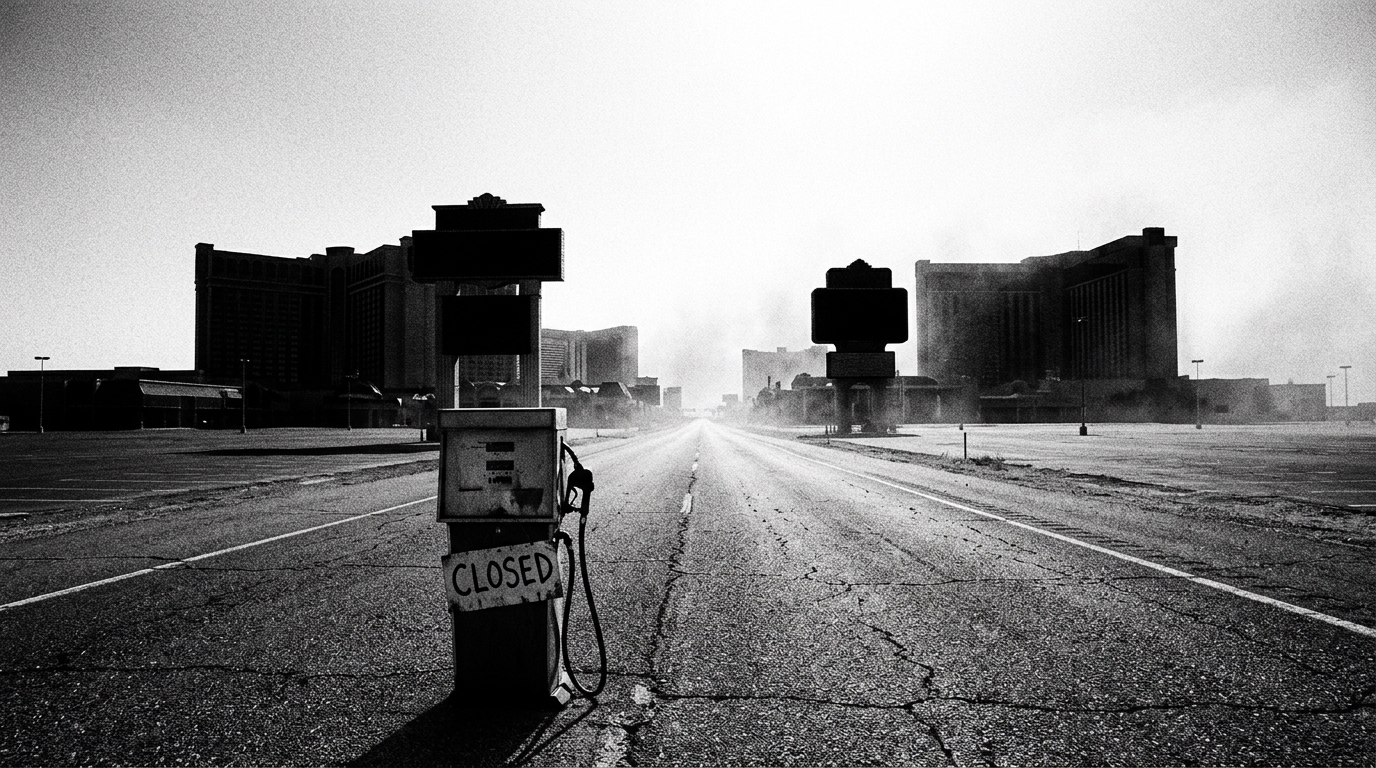
A $400 million casino resort complex on I-15 is shutting down entirely by July 4, including the gas stations that were supposed to be its survival strategy. The cap rate math on that original acquisition tells you everything about what happens when a thesis dies and nobody writes down the asset.

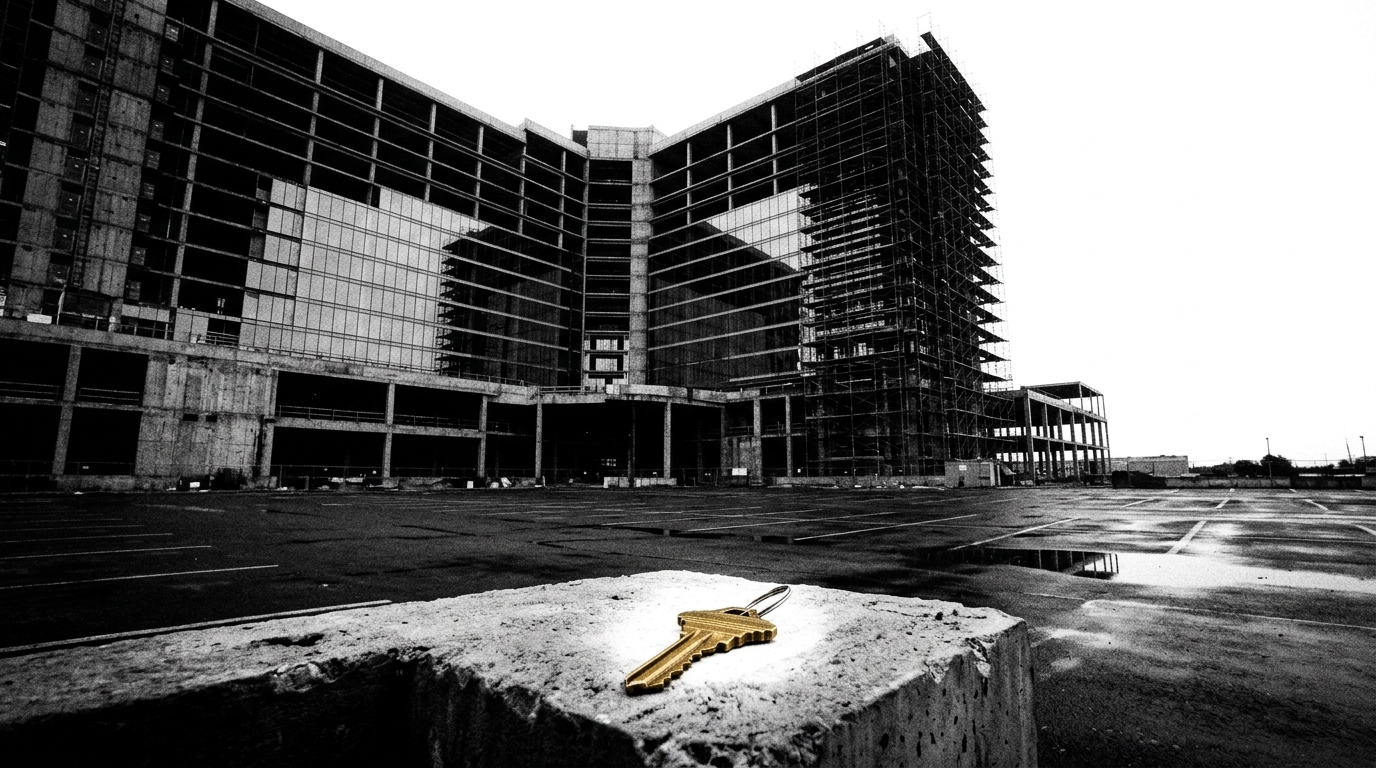
Affinity Gaming paid $400 million for Primm Valley Resorts in 2007. Three casino hotels, gas stations, a truck stop, retail, 500-plus acres straddling the California-Nevada border on I-15. By July 4, 2026, every single operating asset will be dark. Zero revenue. 344 employees terminated. The implied write-down from that 2007 basis is close to total.

Let's decompose this. A $400 million acquisition in 2007 for what was essentially a highway-dependent gaming and hospitality complex. Even at peak, Primm's economics were built on a thesis that Southern California gamblers needed a state-line stop. Tribal casinos in California killed that thesis slowly, then COVID accelerated the timeline. Affinity's own general counsel admitted post-pandemic traffic couldn't support three casinos. They closed Whiskey Pete's in 2024. Buffalo Bill's in 2025. Now the remaining resort, the gas station, and the Flying J truck stop. The strategic retreat became a full evacuation in 24 months.

The part that should make every asset manager pause: in February 2025, Affinity's CEO publicly stated the plan was to reposition Primm as a "travel resource" and expand the travel-center businesses. Fourteen months later, they're closing the travel centers. That's not a strategy revision. That's a capitulation. When leadership publicly commits to a repositioning thesis and then abandons it within a year, the financial deterioration was either faster than they modeled or the thesis was never stress-tested against a realistic downside. I've audited portfolios where the repositioning deck looked great and the trailing cash flow told a completely different story. The deck always loses to the cash flow.

50,000 cars pass Primm daily. That number sounds like it should support at least a gas station and truck stop. Clark County officials and the Primm family (who own roughly 200 of the 215 acres) are actively trying to find operators for the fuel operations. This is where it gets interesting from an investment perspective. Affinity owns approximately 15 acres. The Primm family owns the rest. The land value is real... I-15 frontage between the two largest metro areas in the region doesn't become worthless because a casino operator couldn't make the numbers work. Somebody will operate fuel and food on that corridor. The question is at what basis, under what lease structure, and who captures that value. It won't be the entity that paid $400 million in 2007.

The 344 employees, including those being evicted from company-provided housing by July 6, are absorbing the full downside of a capital allocation decision made 19 years ago by a different owner at a different price. An owner I worked with once told me the hardest part of a disposition isn't the math. It's the people who built their lives around an asset that the math says shouldn't exist anymore. He wasn't wrong. The math on Primm stopped working years ago. The people kept showing up anyway.

Operator's Take

Here's what I want you to take from Primm if you're running or owning a highway-dependent hospitality asset. The demand thesis is the entire business. When tribal gaming killed Primm's reason to exist, no amount of repositioning, rebranding, or "travel center expansion" could manufacture a replacement thesis. If your property depends on a single demand driver... a military base, a plant, a seasonal traffic pattern, a border-crossing dynamic... stress-test what happens when that driver declines 30%. Not might decline. When it declines. Because Primm's ownership had 15 years of declining signals and still paid $400 million at the peak. Run your own version of that math before someone else runs it for you.

— Mike Storm, Founder & Editor
Read full analysis → ← Show less
Source: Google News: Casino Resorts
Boyd Gaming Built a $250M Casino in 2008. They Blew It Up 18 Years Later for Housing Lots.

Boyd Gaming Built a $250M Casino in 2008. They Blew It Up 18 Years Later for Housing Lots.

The Eastside Cannery wasn't some relic from the Rat Pack era... it was younger than most iPhones when they brought the demolition crew in. When a quarter-billion-dollar asset becomes more valuable as dirt, that's not a Vegas story. That's an ownership story every operator should understand.

I watched a guy build a house once. Custom job. Took him two years, cost him everything he had, and he was so proud of it he threw a party the night they finished the landscaping. Eleven years later, the neighborhood had shifted, the schools had changed, the demographics weren't what the original pro forma assumed. He sold it to a developer who scraped it and put up townhomes. He told me, "The house was fine. The house was great, actually. The market just decided it didn't need my house anymore." He wasn't angry. He was tired. There's a difference.

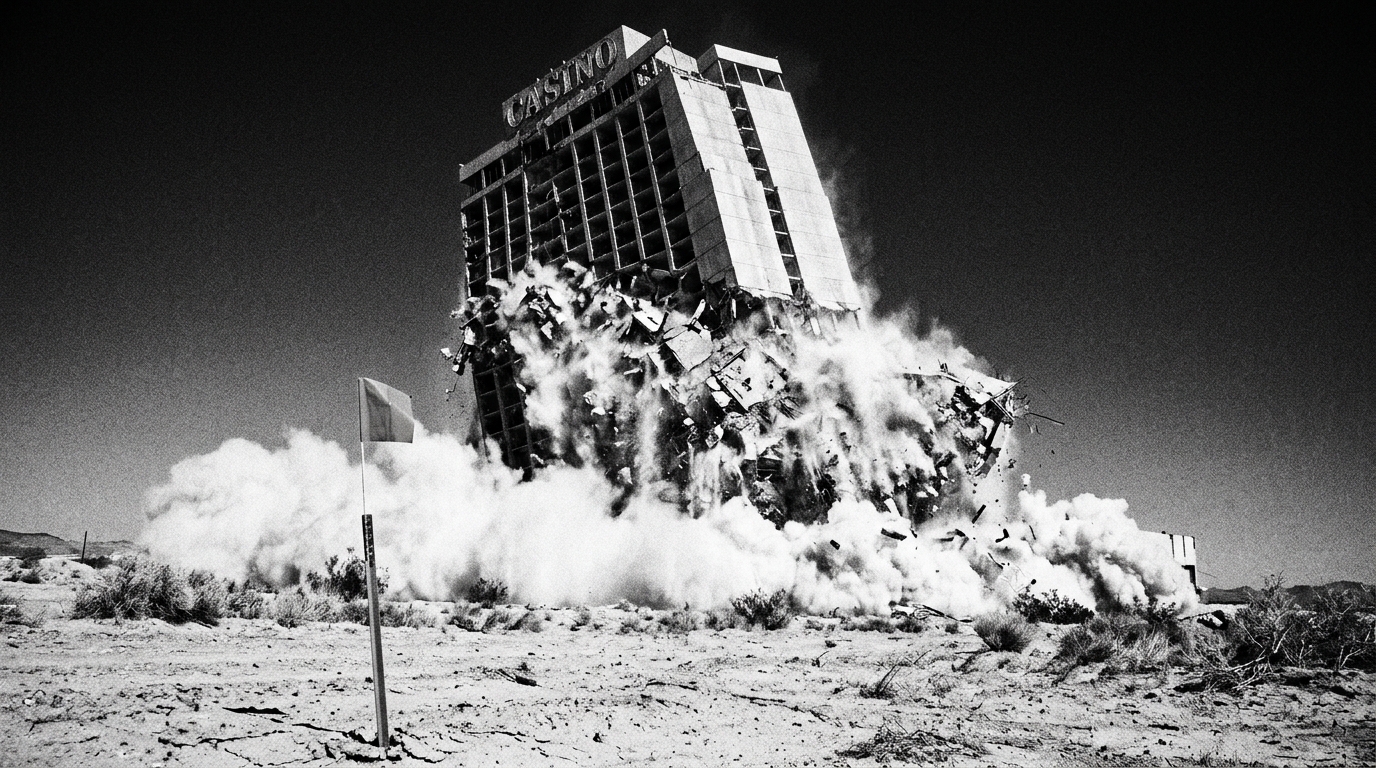
That's the Eastside Cannery. A $250 million casino-hotel that opened in the summer of 2008... which, if you remember your economic history, was roughly the worst possible moment to open anything that required discretionary spending from locals. Bill Wortman built it on Boulder Highway to serve the east side of town. Boyd Gaming picked it up in 2016 as part of their Cannery Casino Resorts acquisition. COVID shut it down in March 2020. And here's the part that should make every owner in America pause: Boyd never reopened it. Not in 2021 when Vegas was roaring back. Not in 2022. Not ever. Six years of just... sitting there. Dark. Until they imploded the tower on March 5th and announced they're selling the land for housing.

Eighteen years old. That's it. The Tropicana lasted 67 years before they brought the wrecking ball. The Dunes made it 38. The Eastside Cannery didn't even get old enough to rent a car. And the reason Boyd gave... "insufficient market demand"... is four words that carry about $250 million worth of pain. Because somewhere in a filing cabinet, there's an original feasibility study for that property that said the east side of Las Vegas needed another casino-hotel. That study was wrong. Or it was right for a moment and the moment passed. Either way, a quarter of a billion dollars in construction costs evaporated, and the highest and best use of the land turned out to be residential lots. Not a renovation. Not a rebrand. Not a repositioning. Housing.

Here's what I keep thinking about. Boyd is a sophisticated operator. They didn't make this decision emotionally. They looked at the cost to reopen (deferred maintenance on six years of vacancy alone would be staggering), the capital required to bring it back to competitive condition, the market demand on Boulder Highway versus the Strip versus their other locals properties... and the math said the building was worth more as rubble than as a going concern. That's what I call the CapEx Cliff in action. There's a point where deferred maintenance and market obsolescence cross a line, and the asset doesn't just decline in value... it becomes a liability. Boyd saw that line. Six years of darkness will do that to a building. The mechanicals alone, the HVAC, the plumbing, the electrical... sitting dormant for six years in the desert isn't preservation. It's decay in slow motion. By the time you factor in the PIP-equivalent investment to make it operational again, plus the revenue uncertainty in a locals market that apparently didn't miss it enough to matter, the math tips toward demolition. Every month that building sat dark, the cliff got steeper.

This isn't really a Las Vegas story. It's a story about what happens when market assumptions shift underneath a real estate investment and nobody can will them back. I've seen this in smaller scale at properties across the country... a select-service that opened into a market that grew differently than the demand study predicted, an independent that got squeezed when three branded competitors showed up within two miles. The scale here is dramatic because it's Vegas and it's $250 million. But the principle is universal. Your asset's value isn't set by what you spent building it. It's set by what the market around it decides it needs. And sometimes the market decides it doesn't need you at all.

Operator's Take

If you're an owner sitting on a property that's been underperforming since COVID and you keep telling yourself "the market will come back"... look at the Eastside Cannery and ask yourself the honest question. Not the hopeful question. The honest one. Run the real numbers on what it would cost to bring your asset back to competitive condition versus what the land or the exit is worth today. I'm not saying sell everything. I'm saying stop falling in love with sunk costs. Boyd spent $250 million building that property and they still had the discipline to say "this is worth more as dirt." If a publicly traded company with sophisticated asset management can walk away from a quarter-billion-dollar investment, you can at least run the scenario. Talk to your broker. Talk to your lender. Know your number. Because the worst position in hospitality isn't owning a bad asset... it's owning a bad asset and pretending it's a good one because you remember what it cost to build.

Read full analysis → ← Show less
Source: Google News: Casino Resorts
Mandarin Oriental Miami Traded 326 Hotel Rooms for 121. The Per-Key Bet Is Staggering.

Mandarin Oriental Miami Traded 326 Hotel Rooms for 121. The Per-Key Bet Is Staggering.

Swire Properties imploded a 326-room luxury hotel and is rebuilding with 121 keys, 298 branded residences, and $1.3 billion in pre-sales already booked. The capital structure tells you exactly where luxury hospitality profit margins are migrating.

Available Analysis

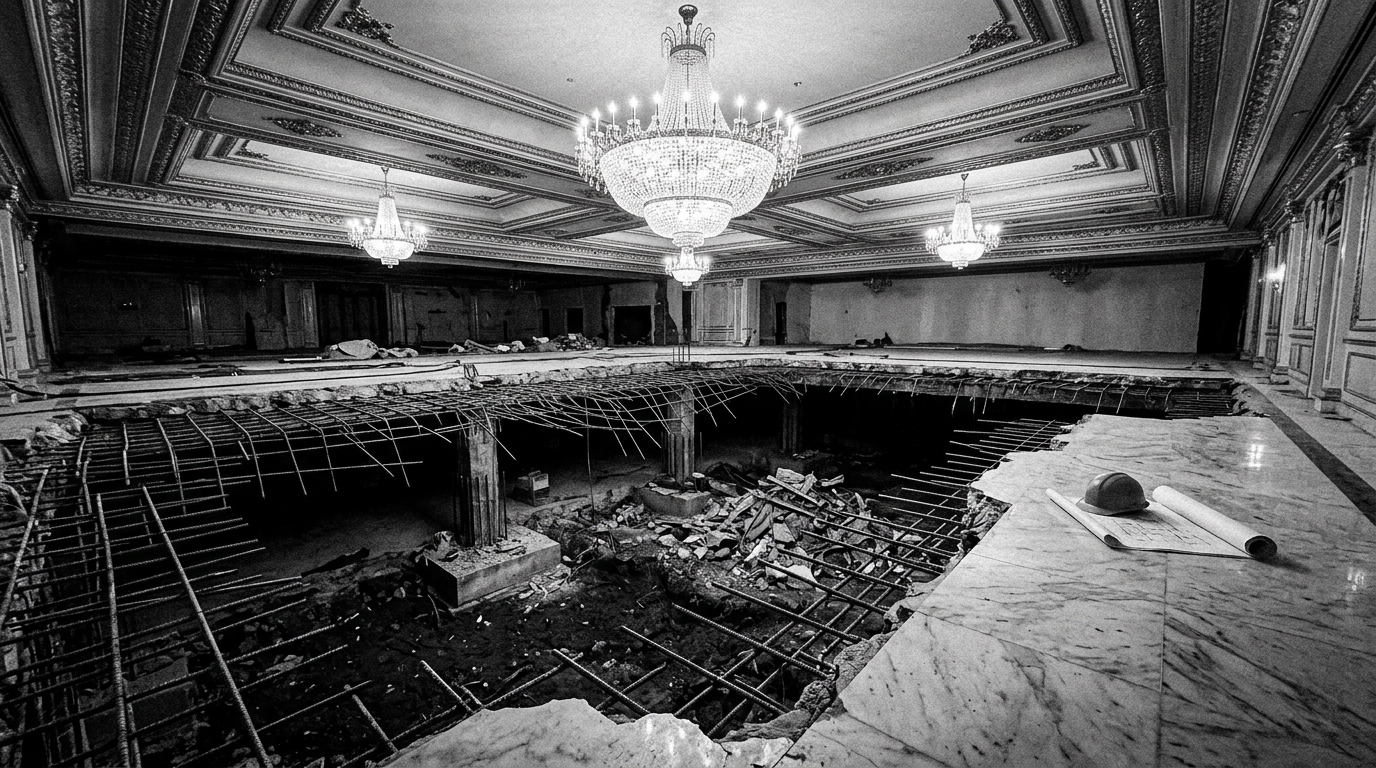
Swire Properties detonated its 326-key Mandarin Oriental Miami this morning and is replacing it with 121 hotel rooms, 298 private residences, and 28 branded hotel-residences across two towers. Pre-sales across the development have already crossed $1.3 billion, including two penthouses at $49.9 million each (roughly $6,300 per square foot). The hotel component shrank by 63%. The capital committed to the site grew by multiples.

Let's decompose this. The original hotel opened in 2000 with 326 rooms. Swire's own former president said publicly that rates "were not trending upwards." That's a polite way of saying the asset was underperforming its land basis. A 326-key luxury hotel on one of Miami's most exclusive parcels couldn't generate enough NOI to justify the dirt it sat on. The new development answers that problem not by fixing the hotel... but by mostly eliminating it. The 121-key replacement isn't the revenue engine. It's the amenity that justifies $4.9 million to $17.5 million residential price points. The hotel became the loss leader for the condo play.

This is a capital allocation decision disguised as a hospitality story. When two penthouses generate $99.8 million in revenue against a hotel that needed 326 rooms to produce whatever NOI it was producing, the math is blunt. Swire is paying for a luxury hotel brand license not because the hotel will deliver strong returns on 121 keys, but because "The Residences at Mandarin Oriental" commands a pricing premium that "The Residences at Brickell Key" does not. The brand fee on 121 keys is the marketing cost for $1.3 billion in residential sales. I've audited structures like this. The hotel P&L in these mixed-use luxury developments is almost secondary... what matters is the halo effect on residential sell-through and per-square-foot pricing.

The 430 employees who lost their jobs between May and September 2025 won't appear in the pro forma for the new towers. The replacement property will employ a fraction of that headcount for 121 keys. That's the Chattanooga lesson I carry (generically speaking): the disposition math was correct for the prior asset, and the redevelopment math will likely be correct for the new one, and 430 people still cleared out their lockers. Financially sound and human-costly are not mutually exclusive categories.

For anyone holding a luxury hotel asset in a market where residential land values have outpaced hotel NOI growth... this is the template. Swire just demonstrated that the highest and best use of a trophy hotel site may be 63% fewer hotel rooms and 298 condos carrying a hospitality brand name. The question for every luxury hotel owner in Miami, Manhattan, and LA is whether their dirt is worth more than their keys. Increasingly, the answer is yes. And the brands know it... which is why Mandarin Oriental agreed to a 121-key "flagship" that would have been unthinkable as a standalone hotel deal.

Operator's Take

Here's what nobody's telling you. If you're managing a luxury or upper-upscale hotel in a top-tier urban market and your owner has been quiet about the asset's future... they're not quiet because everything's fine. They're running the same math Swire ran. Pull your trailing 12-month NOI, divide by your land's current assessed value, and compare that yield to what a residential developer would pay for the parcel. If the residential number wins (and in coastal gateway markets, it increasingly does), your job isn't to run a better hotel. It's to be the GM who understands the transition and positions yourself to manage through it... or manage the next thing. Don't wait for your owner to tell you the building's coming down. Bring them the comp. Bring them Brickell Key. Show them you see the same math they do.

— Mike Storm, Founder & Editor
Read full analysis → ← Show less
Source: Google News: Resort Hotels
Host Hotels Sold $1.1 Billion in Properties. The Buyers Believe Something the Sellers Don't.

Host Hotels Sold $1.1 Billion in Properties. The Buyers Believe Something the Sellers Don't.

Host Hotels just exited two Four Seasons assets at a 14.9x EBITDA multiple while analysts cheer the capital recycling strategy. The question nobody's asking is what the buyers see in those properties that a $14 billion REIT decided wasn't worth keeping.

Available Analysis

I sat in a meeting once... had to be 15 years ago... where an asset manager explained why selling a trophy property at the top of the cycle was "brilliant capital allocation." The GM of that hotel, a 22-year veteran who'd built the team from scratch, just stared at the table. He wasn't arguing the math. He was mourning the thing the math couldn't measure. Six months later the new owners spent $18 million repositioning a hotel that was already performing. Sometimes selling says more about the seller's thesis than the buyer's.

Host Hotels just moved $1.1 billion in Four Seasons assets (the Orlando and Jackson Hole properties) at what they're calling an 11% unlevered IRR and a 14.9x EBITDA multiple. Wall Street loves it. UBS bumped their target to $20. Barclays followed. Truist is sitting at $23 with a Buy rating. The stock's up nearly 48% over the past year, blowing past the S&P by 17 points. The narrative is clean: sell non-core assets, return capital to shareholders ($860 million last year between buybacks and dividends), focus the portfolio on luxury and upper-upscale properties you want to own for the next decade. On paper, it's textbook REIT discipline.

But here's what's nagging at me. They sold TWO Four Seasons properties. Four Seasons. The brand that basically prints money in destination markets. Jackson Hole and Orlando aren't exactly secondary markets struggling for demand. Host is telling you they can redeploy that capital at higher returns elsewhere... and maybe they can. Their "Transformational Capital Programs" with Marriott and Hyatt are supposed to reposition existing assets, and they've got $19 million in operating guarantees from those brands to offset renovation disruption in 2026. That's smart structuring. But when you sell a Four Seasons in Jackson Hole, you're not just selling a hotel. You're selling the future rate power of one of the most supply-constrained luxury markets in North America. The buyer is betting that rate ceiling keeps rising. Host is betting they can manufacture better returns through renovation and repositioning of what they're keeping. One of them is going to be wrong.

The 2026 guidance tells an interesting story if you look past the headline. They're projecting 2.0% to 3.5% comparable RevPAR growth... solid but not spectacular. Adjusted EBITDAre guidance of $1.74 to $1.8 billion actually shows a potential dip from the $1.757 billion they just posted in 2025. Read that again. They beat guidance by 8.5% last year, the stock ripped, analysts upgraded... and the midpoint of their 2026 EBITDA guidance is essentially flat. That's not bearish. But it's not the growth story the stock price is telling you either. Meanwhile, wage inflation is running about 5% in 2026 across the upper-tier segment. When your RevPAR growth ceiling is 3.5% and your labor costs are climbing 5%, the flow-through math gets uncomfortable fast. That $1.8 billion top-end EBITDA target assumes they thread the needle on expense management at properties simultaneously undergoing major renovations. Anyone who's ever run a hotel during a renovation knows that "managed disruption" is an oxymoron invented by people who've never apologized to a guest about construction noise at 7 AM.

The analyst upgrades are real, and the capital allocation story is compelling if you believe the cycle holds. Host has a 2.6x leverage ratio and $2.4 billion in liquidity... that's a fortress balance sheet by lodging REIT standards. But I've seen this movie before. REIT sells trophy assets at peak valuations, stock gets rewarded, everybody high-fives... and then the cycle turns and you're sitting there wishing you still had the irreplaceable asset in the irreplaceable market. The question for 2026 isn't whether Host is well-managed (they are). It's whether "capital recycling" is strategy or whether it's what happens when you run out of organic growth and need to manufacture earnings through transaction activity. The buyers of those Four Seasons properties are making a generational bet on luxury travel demand. Host is making a portfolio optimization bet. History tends to favor the people who buy the things that can't be replicated.

Operator's Take

If you're a GM or operator at a Host-managed property, here's the reality check. Those "Transformational Capital Programs" are coming, and the $19 million in brand operating guarantees sounds generous until you realize that's spread across multiple properties and it's meant to offset disruption... not eliminate it. Run your own disruption model. Every major renovation I've ever managed cost more in lost revenue and guest satisfaction damage than the corporate proforma projected. If you're at a property on the renovation list, get in front of your regional VP now with your own realistic timeline and revenue impact estimate. Don't wait for the brand's version. This is what I call the Renovation Reality Multiplier... the actual disruption timeline is always longer, messier, and more expensive than the one in the presentation. Build your staffing plan and guest communication strategy for the worst case, not the base case. And if you're at a property that's NOT on the renovation list, pay attention to what happens at the properties that are. That's your preview of what's coming.

Read full analysis → ← Show less
Source: Google News: Host Hotels & Resorts
AHIP's FFO Hit Zero in 2025. The Debt-to-EBITDA Ratio Is the Number That Should Worry You.

AHIP's FFO Hit Zero in 2025. The Debt-to-EBITDA Ratio Is the Number That Should Worry You.

American Hotel Income Properties sold 18 hotels for $161 million last year and still posted a $74 million net loss. The portfolio is shrinking, the leverage ratio is climbing, and the convertible debentures come due in nine months.

Available Analysis

AHIP generated normalized diluted FFO of exactly $0.00 per unit in 2025, down from $0.19 in 2024. That's not a rounding error. That's a REIT that sold 18 properties for $160.9 million in gross proceeds, used the cash to pay down debt, and still couldn't produce a cent of distributable income for unitholders.

Let's decompose what happened. Total revenue dropped from $256.9 million to $187.8 million (a 26.9% decline), which you'd expect from a portfolio shrinking by 18 assets. Same-property revenue held flat at $154.7 million, so the remaining hotels aren't collapsing. But NOI fell 32.8% to $49.3 million, and the margin compressed 230 basis points to 26.3%. That margin compression on a same-store flat revenue base tells you expenses are eating the portfolio from inside. RevPAR held around $101. The cost to achieve that $101 is what moved.

The balance sheet is where this gets structurally interesting. Debt-to-gross-book-value improved slightly to 48.7%. Management will point to that number. I'd point to debt-to-EBITDA, which jumped to 9.4x from 8.0x. That means AHIP reduced debt slower than earnings deteriorated. They're selling assets to pay down loans, but the assets they're selling apparently contributed more to EBITDA than the debt they retired. That's a liquidation where the math gets worse with each transaction, not better. Eight more properties are under contract for $137.3 million expected to close by Q2 2026. The question is whether those dispositions finally flip the ratio... or accelerate the problem.

The capital stack has its own clock ticking. AHIP redeemed $25 million of Series C preferred shares in March 2026. The remaining preferreds now carry a 14% dividend rate (up from 9%). And $50 million in 6% convertible debentures mature December 31, 2026. As of March 24, unrestricted cash was approximately $12 million. The pending $137.3 million in asset sales is the bridge to those obligations. If closings slip or pricing adjusts, the runway shortens fast.

I've analyzed enough REIT wind-downs to recognize the pattern. Management frames it as "high-grading the portfolio." The unit buyback at CAD $0.43 signals they believe the stock trades below NAV. Maybe it does. But a REIT producing zero FFO, carrying 9.4x leverage, facing a December debenture maturity, and paying 14% on its remaining preferreds isn't optimizing. It's racing the clock. The remaining portfolio (select-service, secondary U.S. markets, RevPAR around $101) needs margin recovery that the 2025 operating data doesn't support. Check again.

Operator's Take

Here's what this one is really about. If you're an asset manager or owner holding select-service hotels in secondary U.S. markets... the exact profile AHIP is selling out of... pay attention to the pricing on those 18 dispositions. $160.9 million across 18 properties averages roughly $8.9 million per asset. Back into the per-key math on your own basis and compare. These are motivated-seller prices, and they're resetting comps in your market whether you're selling or not. If you're refinancing this year, your lender is looking at these trades. If your NOI margin is compressing on flat RevPAR the way AHIP's did (230 basis points in one year), run your expense lines now. Don't wait for the quarterly. The cost pressure in this segment is real and it's not waiting for your budget cycle. This is what I call the False Profit Filter... AHIP's same-store revenue looked stable, but the margin told the truth. Flat revenue with rising costs isn't stability. It's erosion with good PR.

— Mike Storm, Founder & Editor
Read full analysis → ← Show less
Source: Google News: Hotel REIT
Park Hotels Lost $283M Last Year. The Stock Chart Is the Least of the Owner's Problems.

Park Hotels Lost $283M Last Year. The Stock Chart Is the Least of the Owner's Problems.

A "death cross" technical signal is getting attention for Park Hotels & Resorts, but the real deterioration is in the fundamentals: a net loss of $283 million, S&P leverage concerns, and 2026 guidance that assumes the world cooperates.

Park Hotels & Resorts posted a full-year net loss of $283 million in 2025, reversing $212 million in net income the prior year. That's a $495 million swing. Q4 diluted EPS came in at negative $1.04 against consensus of positive $0.46. The stock trades at $10.70 on a $2.19 billion market cap. Someone flagged a "death cross" on the chart. The chart is the symptom. The financials are the disease.

Let's decompose what's happening. The core portfolio grew RevPAR 6%. The non-core portfolio declined 28%. That's not a mixed result. That's two completely different businesses inside one REIT, and the underperforming half is dragging the consolidated numbers into negative territory. Park's stated strategy is to sell $300-$400 million in non-core assets. They've executed $120 million so far at 21x multiples. The question is whether dispositions at that pace close the gap before the leverage problem becomes a ratings problem. S&P already revised the outlook to negative in October 2025, citing expected adjusted leverage above 5.5x through 2026. That's the downgrade threshold. Park is operating on the wrong side of it.

The 2026 guidance tells you what management is pricing in: adjusted EBITDA of $580-$610 million, adjusted FFO of $1.73-$1.89 per share, and RevPAR growth of flat to 2%. CapEx drops from $310-$330 million to $200-$225 million. That decline looks like discipline until you remember $108 million of it is the Royal Palm South Beach closure (offline from H2 2025 through Q2 2026, projected to double its EBITDA to $28 million at stabilization). The stabilization assumption requires 15-20% return on invested capital. In Miami. In 2027. That's an optimistic base case layered on top of a guidance range that already assumes cooperative demand conditions.

I've seen this portfolio structure before at a REIT I analyzed years ago. Core assets generating real returns, non-core assets bleeding value, and a disposition timeline that always takes longer than the investor deck suggests. The 45 hotels sold for $3 billion since 2017 sounds like execution. But the non-core drag persisting this deep into the cycle tells you either the remaining assets are harder to sell or the bid-ask spread has widened. Neither is good for an owner staring at a negative S&P outlook. Ten analysts have this at "Hold" with a $11.36-$11.67 target. Truist just raised to $12. That's a rounding error above current price, not a vote of confidence.

The death cross is a chart pattern. It tells you what already happened. The 10-K tells you what's about to happen: a REIT grinding through $200M+ in CapEx, carrying leverage above its own rating threshold, betting on Miami stabilization and FIFA 2026 tailwinds in select markets. If both bets hit, the stock is cheap at $10.70. If either misses, that negative outlook converts to a downgrade, the cost of capital goes up, and the disposition math gets worse. Park's intrinsic value estimates range from $14 to $17 depending on who's modeling. The market is at $10.70. That gap is either opportunity or the market telling you something the models haven't priced in yet.

Operator's Take

Here's what I'd say if you're at a property Park is looking to sell. Your timeline just got shorter. A REIT operating above its downgrade threshold with a negative outlook doesn't have the luxury of patience on dispositions... they need the proceeds. If you're the GM of a non-core Park asset, get your trailing 12 NOI tight, your deferred maintenance documented honestly, and your story straight for the next buyer's due diligence team. The new owner will bring their own management company. I've seen this movie enough times to know that the operator who has clean books and a credible narrative about upside is the one who gets retained. The one who's been coasting because "corporate handles it" is the one who gets the call 60 days after close. Don't wait for the memo. Prepare like the sale is happening this quarter.

— Mike Storm, Founder & Editor
Read full analysis → ← Show less
Source: Google News: Park Hotels & Resorts
Ashford Hospitality Trust Is Carrying $2.6 Billion in Floating Rate Debt at 7.7%. Do the Math.

Ashford Hospitality Trust Is Carrying $2.6 Billion in Floating Rate Debt at 7.7%. Do the Math.

Ashford Hospitality Trust's $325 million mortgage default, suspended preferred dividends, and 95% floating-rate debt at a 7.7% blended rate tell a story that every hotel REIT investor should be stress-testing against their own portfolio right now.

$2.6 billion in outstanding loans. 95% floating rate. 7.7% blended average interest rate. A $325 million mortgage default on eight hotels. Preferred dividends suspended across nine series. A CFO retiring. A special committee exploring "strategic alternatives." A stock down 59.46% over twelve months. That's Ashford Hospitality Trust in March 2026. The numbers don't require interpretation. They require triage.

Let's decompose the capital structure because the headline understates the problem. The Highland mortgage loan ($723.6 million after a $10 million paydown) matures July 9, 2026. That's 106 days from today. The Morgan Stanley pool loan ($409.8 million) hit its initial maturity this month, with two one-year extension options to March 2028... options that come with conditions the company may or may not meet. And the $395 million loan that defaulted in February wasn't a surprise liquidity event. Subsidiaries failed to make principal payments and failed to provide a replacement interest rate cap. That's not bad luck. That's a capital structure running out of air.

The disposition strategy tells you where this is headed. Six hotels sold for $145 million. Three more under agreement for $194.5 million. That's $339.5 million in gross proceeds against $2.6 billion in debt. Even if every sale closes at the agreed price (and distressed sellers rarely get full value in a rising-rate environment), the math doesn't clear the balance sheet. It buys time. Time has a cost too... projected 2026 CapEx of $90-$110 million, up from $70-$80 million in 2025, means the assets still in the portfolio need capital just to hold their position. The full-year 2025 net loss was $215 million on $1.1 billion in revenue. That's a negative 19.5% margin to common equity holders.

I've audited portfolios in this condition. The pattern is identifiable. When a REIT suspends preferred dividends, forms a special committee, and starts selling assets into a market with wide bid-ask spreads, the common equity is pricing in one of two outcomes: a recapitalization that dilutes existing shareholders to near-zero, or a portfolio sale where the buyer captures the discount between replacement cost and acquisition price. The Portnoy Law Firm investigation tells you which outcome the plaintiff's bar is betting on. Neither outcome is good for current common shareholders. Both outcomes create opportunity for someone else.

The real number here isn't the stock price. It's the spread between AHT's blended interest rate (7.7%) and its portfolio's stabilized yield. Q4 2025 adjusted EBITDAre was $40.4 million. Annualize that (recognizing seasonality makes this rough) and you get approximately $160 million against $2.6 billion in debt. That's a 6.2% debt yield on a 7.7% cost of capital. The portfolio is generating less than it costs to finance. Every quarter that persists, equity erodes. The special committee isn't exploring strategic alternatives because they want to. They're exploring them because the math leaves no other option.

Operator's Take

Let me be direct. If you're managing an AHT-flagged property right now, your world may change in the next 90-180 days. Ownership transitions are coming... either through disposition or through whatever the special committee recommends. Here's what you do: get your trailing 12-month financials clean and defensible, because the next owner or asset manager is going to audit every line. If you've been deferring maintenance or running lean on FF&E to hit a cash flow target for the current ownership, document what needs to be spent and why. The GMs who survive ownership transitions are the ones who walk in with a clean operational picture and a capital needs list that's honest, not the ones who've been dressing up the numbers. This is what I call the False Profit Filter... when the profits on paper were created by starving the asset's future, the next owner sees it immediately. Be the operator who was telling the truth all along, not the one who has to explain why the HVAC failed six weeks after the sale closed.

— Mike Storm, Founder & Editor
Read full analysis → ← Show less
Source: Google News: Hotel REIT
Hilton Bayfront St. Pete Sells for $288K Per Key. The Buyer Isn't Keeping the Hotel.

Hilton Bayfront St. Pete Sells for $288K Per Key. The Buyer Isn't Keeping the Hotel.

Kolter Group is paying $96 million for a 333-room Hilton in downtown St. Petersburg, and the per-key math only makes sense if you stop thinking about it as a hotel transaction. This is a land play dressed in a room key, and it tells you something uncomfortable about where real estate value is heading in coastal Florida markets.

$96 million for a 333-room hotel built in 1972. That's $288,288 per key. On trailing hotel operations alone, that number is aggressive for an upper-upscale property in St. Pete. It stops being aggressive the moment you realize Kolter Group isn't buying a hotel. They're buying three acres of DC-1 zoned waterfront land in one of the fastest-appreciating downtown corridors in the Southeast. The hotel is what happens to be sitting on it.

Let's decompose this. Ashford Hospitality Trust acquired this property in 2004 as part of a 21-property, $250 million portfolio deal. That's roughly $11.9 million per property on average (not all equal, but directional). They're exiting a single asset for $96 million two decades later. Net of selling expenses, Ashford walks away with approximately $95.3 million in cash, nearly all of which goes to a mortgage lender. That last detail matters. Ashford isn't cashing a $95 million check. They're retiring $94.7 million in debt. For a REIT carrying negative equity and sustained losses, this isn't an opportunistic sale. It's triage.

Kolter's playbook is already visible. They bought the adjacent 1.65-acre parking lot from Ashford in 2019 for $17.5 million and turned it into Saltaire, a 35-story condo tower that opened in 2023. Now they're assembling the rest of the block. Three acres of waterfront with high-density zoning in a market where residential towers are selling... that's the asset. The 333 rooms and 47,710 square feet of meeting space are a placeholder. The Hilton flag is temporary.

The per-key number here is a trap for anyone trying to use it as a comp. If you're benchmarking hotel acquisitions in the Tampa-St. Pete market, $288K per key for a 1972 build with a 2014 renovation implies a cap rate that only works if you're underwriting significant NOI growth. Kolter isn't underwriting NOI growth. They're underwriting demolition and a residential tower. This is a land transaction priced per key because the land currently has a hotel on it. The moment it clears the hospitality comp set and enters the residential development comp set, $32 million per acre for prime downtown waterfront starts to look like exactly what it is... a market bet on St. Pete's trajectory, not a hotel investment thesis.

One more number worth noting. Tampa-St. Pete hit all-time high RevPAR in 2023, with ADR surpassing $170 and occupancy in the low 70s. The market is performing. This hotel could operate. But "could operate" and "highest and best use" are different calculations, and Kolter did the second one. That's the story. When the land under a performing hotel is worth more as condos than as rooms, the hotel loses. Every time.

Operator's Take

Here's what I'd bring to my owner unprompted if I ran a hotel within three miles of this site. First, you're about to lose 333 rooms and 47,000+ square feet of meeting space from your comp set. That changes your supply picture. If you compete for group business in downtown St. Pete, your leverage just improved... start having the rate conversation now, before the hotel goes dark. Second, if you own waterfront or near-waterfront hotel land in any appreciating Florida market, get a current land appraisal separate from your hotel valuation. Know both numbers. Because somewhere, a developer is already doing that math on your parcel. Third, for anyone using this as a transaction comp... don't. This is a land deal. Your per-key benchmarks end where the demolition permit begins.

— Mike Storm, Founder & Editor
Read full analysis → ← Show less
Source: Google News: Hilton
Xenia Sold Dallas at $204K Per Key. The $80M They Didn't Spend Tells the Real Story.

Xenia Sold Dallas at $204K Per Key. The $80M They Didn't Spend Tells the Real Story.

Xenia's Q4 numbers look clean on the surface... EPS beat, RevPAR up 3.9%, aggressive buybacks at $12.59 a share. But decompose the Fairmont Dallas disposition and the 2026 CapEx guidance, and you start seeing a REIT that's quietly choosing which assets to feed and which to starve.

Available Analysis

Xenia Hotels reported $0.45 EPS against a $0.04 consensus estimate, which looks like a massive beat until you realize the gap is almost entirely driven by disposition gains and timing, not operational outperformance. Same-property RevPAR grew 3.9% in 2025. Adjusted EBITDAre came in at $258.3 million across 30 properties and 8,868 rooms. Those are the numbers they want you to see. The number I want you to see is $203,670 per key on the Fairmont Dallas sale... and the $80 million in near-term CapEx the buyer now owns.

Let's decompose that Dallas transaction. A 545-room full-service asset sold for $111 million. At face value, $204K per key for a Fairmont in a major metro looks thin. Then you learn Xenia disclosed approximately $80 million in near-term capital expenditure needs on the property. Add that to the purchase price and the effective basis for the buyer is closer to $350K per key, which starts to make sense for a luxury-branded asset in Dallas. For Xenia, the math was straightforward: sell at $204K and let someone else write the $80M check, or keep the asset and deploy capital into a property that was about to consume roughly 72% of its sale price in renovations. They chose the exit. I've seen this exact calculus at three different REITs. The asset that looks fine on trailing NOI but has a CapEx cliff hiding behind the curtain... that's the one smart owners sell before the market figures it out.

The buyback program tells you where management thinks the real value is. Xenia repurchased 9.35 million shares in 2025, including 6.66 million shares at a weighted average of $12.59. The stock traded around $14.72 as of mid-March 2026. Management is effectively saying the portfolio is worth more than the market price, and they'd rather buy their own equity than acquire new hotels. That's a conviction trade. The 2026 guidance projects adjusted FFO per share up 7% to $1.89 at the midpoint, with same-property RevPAR growth of 1.5% to 4.5%. The range is wide enough to drive a truck through, which tells you management isn't sure whether the group and corporate transient recovery holds or softens.

One data point that should make asset managers recalculate: $1.4 billion in total debt at a weighted average interest rate of 5.51%. On 8,868 rooms, that's roughly $158K in debt per key, with annual interest expense running close to $77 million. Against $258.3 million in Adjusted EBITDAre, that's a debt service coverage ratio around 3.4x, which is comfortable but not generous if RevPAR growth lands at the low end of guidance. The $70-80 million in planned 2026 CapEx across 30 properties averages roughly $2.3-2.7 million per property... not transformational spend. This is maintenance and targeted upgrades, not repositioning. Meanwhile, the COO sold $3.2 million in stock on February 27. Insider sales aren't inherently bearish (executives have tax bills and mortgages like everyone else), but zero insider purchases against $3.2 million in sales over three months is a data point worth noting.

The real question for anyone watching Xenia isn't whether 2025 was good. It was adequate. The question is whether a 30-property luxury and upper-upscale portfolio carrying $158K per key in debt, guided for mid-single-digit RevPAR growth, and spending $2.5 million per property in CapEx, is building long-term asset value or managing a controlled glide. The Dallas exit suggests management knows the answer for at least some of these properties. The buyback suggests they think the market is undervaluing the ones they're keeping. Both things can be true. Check again.

Operator's Take

Here's what nobody's telling you about REIT disposition math, and it applies whether you're running one of Xenia's 30 properties or any hotel owned by a publicly-traded company. When a REIT sells a property with $80M in deferred CapEx and immediately plows the proceeds into share buybacks, that's the clearest signal you'll get about capital allocation priorities. If you're a GM at a REIT-owned asset and your capital request keeps getting pushed to "next cycle," go pull your owner's most recent earnings call transcript. Look at the buyback numbers. Look at the CapEx guidance per property. Do the division. If they're spending more per share on buybacks than per key on your building, that's not a temporary delay... that's a strategy. And your job is to run the best operation you can with the capital you're actually going to get, not the capital you were promised. Run your FF&E reserve balance against your actual replacement schedule this week. Know your number before someone else decides it for you.

— Mike Storm, Founder & Editor
Read full analysis → ← Show less
Source: Google News: Xenia Hotels
Park Hotels Lost $1.04 Per Share in Q4. The Core Portfolio Tells a Different Story.

Park Hotels Lost $1.04 Per Share in Q4. The Core Portfolio Tells a Different Story.

Park Hotels & Resorts posted a massive Q4 miss driven by $248 million in impairment charges on non-core assets, but the headline obscures what's actually happening: a REIT deliberately burning down part of its portfolio to concentrate on properties generating 90% of its EBITDA.

Available Analysis

Park Hotels reported a $(1.04) diluted loss per share in Q4 2025 against a consensus estimate of $0.06. That's a $1.10 miss. On the surface, that's catastrophic. Decompose it and the picture changes. The loss is driven almost entirely by $248 million in impairment expense on the Non-Core portfolio... assets the company has been signaling it wants to exit. Strip the impairment, and Q4 revenue hit $629 million, beating estimates by $6-8 million. This is a REIT using write-downs to accelerate a portfolio reshaping strategy, not a REIT in distress.

The two-portfolio divergence is the real number. Core RevPAR grew 3.2% year-over-year to $210.15. Exclude the Royal Palm Miami (closed for a $108 million renovation since mid-May 2025), and Core RevPAR was up 5.7%. Non-Core RevPAR declined 28%. That's not a rounding error. That's a portfolio with a structural fault line running through it, and management is choosing to stand on the side that's rising. The 21-property Core portfolio generates roughly 90% of adjusted Hotel EBITDA. The Non-Core properties are being marked to reality... which, in accounting terms, means someone finally admitted what the operating data has been saying for quarters.

Full-year 2025 Adjusted EBITDA came in at $609 million, down from $652 million in 2024. A 6.6% decline. The 2026 guidance range of $580-$610 million implies, at the midpoint, another 2.3% decline. RevPAR guidance is flat to up 2%. I've audited enough REIT projections to know that "flat to up 2%" in the current macro environment (first widespread U.S. RevPAR declines since 2020, softening government travel, sticky cost inflation) is management saying "we don't have great visibility and we're not going to pretend we do." That's honest. It's also not optimistic.

Here's what I'd focus on if I were modeling this. Park spent nearly $300 million on capital improvements in 2025. The Royal Palm alone is $108 million, with reopening expected Q2 2026. That's a significant concentration of renovation capital in a single asset during a period of margin compression. The renovation caused a $4 million EBITDA headwind in Q4. The real question is what the stabilized yield looks like 18-24 months post-opening. An owner told me once that renovation math only works if the market you're reopening into is the market you underwrote when you closed. The macro uncertainty CEO Thomas Baltimore acknowledged in the earnings call... geopolitical risk, policy-driven demand shifts... suggests that assumption deserves stress-testing.

The Longleaf Partners Small-Cap Fund exited its Park position earlier in 2025, citing it as a detractor. One institutional exit doesn't make a thesis. But it's a data point. The 2026 guidance implies Adjusted FFO per share of $1.73-$1.89. At Park's recent trading range, that's roughly a 10-11x multiple on the midpoint. Not cheap for a REIT guiding to flat-to-modest growth with 28% RevPAR erosion in its non-core book. The core portfolio is performing. The question is whether the market gives Park credit for the portfolio it's building or punishes it for the portfolio it's exiting. Right now, it looks like the latter.

Operator's Take

Here's what nobody's telling you about the Park Hotels story... this is the playbook for every REIT that's about to start shedding properties in secondary markets. If you're a GM at a non-core asset inside any hotel REIT portfolio, pay attention to impairment charges in the quarterly filings. That's the canary. The write-down happens before the disposition announcement, and by the time the sale closes, new ownership is bringing in their own team. This is what I call the False Profit Filter running in reverse... the impairment isn't creating a loss, it's finally admitting the loss was already there. If your owners are holding upper-upscale assets in gateway markets, the math still works. If they're holding anything that looks like Park's non-core book... aging, secondary market, declining demand... the conversation about exit timing needs to happen now, not after the next write-down.

— Mike Storm, Founder & Editor
Read full analysis → ← Show less
Source: Google News: Park Hotels & Resorts
A $53.8M Hotel Site Becomes a $1B+ Mixed-Use Bet. Let's Check the Math.

A $53.8M Hotel Site Becomes a $1B+ Mixed-Use Bet. Let's Check the Math.

Claros Mortgage Trust is sitting on a defaulted loan for a demolished hotel site in Rosslyn, and their solution is a 1,775-unit residential development with a 200-room hotel tucked inside. The per-unit economics tell a story the press release doesn't.

Available Analysis

The former Key Bridge Marriott site sold for $53.8M in 2018. The land is now assessed at roughly $47.5M. That's an 11.7% decline in assessed value over seven years on a 5.5-acre parcel in one of the most visible locations in the D.C. metro. The previous owner's redevelopment plans, approved by Arlington County in 2020, expired in July 2025 after years of financial distress. The building was condemned as a public nuisance in May 2024. Squatters had to be removed by police in 2023. This is what happens when a hotel asset dies and nobody moves fast enough.

Now Quadrangle Development, acting as consultant for the lender holding the defaulted first-lien mortgage, proposes "Potomac Overlook": five buildings, 1,775 residential units, 200-room hotel, phased delivery starting 2027 or 2028. The North Rosslyn Civic Association estimates the project at $1B+. Let's decompose that. A billion dollars across 1,775 residential units and a 200-key hotel implies roughly $500K+ per residential unit in total development cost (assuming the hotel component runs $250K-$350K per key, which is reasonable for this market). Those are numbers that only work if Rosslyn's residential absorption holds and the county's vision for a mixed-use corridor actually materializes. The buyer is pricing in a future that doesn't exist yet.

The hotel component is the interesting footnote. 200 keys on a site that used to be a 585-room Marriott. That's a 66% reduction in hotel inventory on the parcel. The math is telling you something: the highest and best use of this land is no longer primarily hospitality. A 1959-era full-service hotel couldn't justify its footprint against residential density economics in a market where multifamily commands the returns. I audited a portfolio once where three assets in similar gateway locations were all quietly shifting their redevelopment models from hotel-anchored to residential-anchored. Same conclusion every time. The hotel becomes the amenity, not the asset.

The lender's position here is worth watching. Claros Mortgage Trust didn't choose this outcome. They're holding a defaulted loan on a demolished building, and Quadrangle is their path to recovery. The $53.8M basis from 2018 (Woodbridge Capital plus Oaktree Capital) is almost certainly impaired. Whatever Claros recovers depends entirely on the rezoning approval, construction financing, and absorption timeline. Phased delivery over "several years" starting in 2027 or 2028 means the lender won't see meaningful recovery until 2029 at the earliest. That's 11 years from acquisition to potential liquidity. The original equity is gone. The question is how much of the debt survives.

For hotel investors tracking gateway market land values, the signal is clear. A prime 5.5-acre site with Potomac River frontage, adjacency to Georgetown, and metro access couldn't sustain a hotel-first redevelopment through two ownership cycles. The 200-key hotel in the new plan exists because the county's sector plan requires mixed-use activation, not because the hotel economics demanded it. When a site this good defaults twice before anyone builds a hotel on it again, the market is telling you what the land wants to be. Check again.

Operator's Take

Here's what this means if you're sitting on an aging full-service asset in a gateway market. The land under your hotel may be worth more as residential than it will ever be worth as hospitality... and every year you delay that conversation, the basis gets worse. Look at what happened here: $53.8M in 2018, condemned by 2024, demolished by 2025, and the lender is now hoping to claw back recovery through a billion-dollar residential play. If your asset is pre-1980 construction in a market where multifamily is commanding $500K+ per unit in development costs, get a disposition analysis done this quarter. Not next year. This quarter. The math doesn't get more favorable with time.

— Mike Storm, Founder & Editor
Read full analysis → ← Show less
Source: Google News: Marriott
Park Hotels' 2026 EBITDA Guide Tells You Exactly What Ownership Is Betting On

Park Hotels' 2026 EBITDA Guide Tells You Exactly What Ownership Is Betting On

Park Hotels is guiding $580-$610M in Adjusted EBITDA for 2026 after posting $609M in 2025, which itself was a 6.6% decline from 2024's $652M. The headline says "modest growth." The math says something more complicated.

Available Analysis

Park Hotels & Resorts posted $609M in Adjusted EBITDA for 2025, down from $652M in 2024. Their 2026 guide is $580-$610M. The midpoint of that range is $595M... which is a decline from 2025, not growth. The only scenario where 2026 shows improvement over 2025 is if they hit the top of the range exactly. That's a very specific definition of "modest growth."

Let's decompose what's actually happening. Comparable RevPAR fell 2% in 2025. They took $318M in impairment charges on non-core hotels. They spent nearly $300M in capital expenditures, including $110M in Q4 alone. They sold five properties for $198M. And in January 2026, they closed on a 193-room property in downtown Los Angeles for roughly $13M... which is $67K per key for an urban full-service asset. That per-key number tells you everything about what the buyer thought of the asset's income potential (and what Park thought about its future in their portfolio).

The strategic thesis is straightforward: sell the bottom, renovate the middle, concentrate on the top. Since spinning off from their parent company in 2017, Park has disposed of 51 hotels for over $3B. The remaining 34-property portfolio (roughly 23,000 rooms) leans upper-upscale and luxury, with 21 "Core" hotels generating approximately 90% of Hotel Adjusted EBITDA. The $100M renovation on their South Beach asset is the flagship bet... management expects it to double that property's EBITDA to nearly $28M once stabilized, implying a 15-20% return on invested capital. That's a strong projected return. I'd want to see the stabilized number before I celebrated it (projected ROI on renovations has a way of compressing once you account for the ramp period and displacement revenue loss that somehow never makes it into the investor presentation).

The part that should concern REIT investors: the 2026 CapEx plan is another $230-$260M. Combined with 2025's $300M, that's over half a billion dollars in two years of capital deployed into the portfolio. The FFO guide of $1.73-$1.89 per share sits against a stock trading around $13. That's a 13-14.5% FFO yield, which looks generous until you factor the leverage profile and the consensus "Reduce" rating from 13 analysts. When the majority of the Street says reduce and the FFO yield is that high, the market is pricing in risk that the company's own guidance doesn't fully articulate.

The 2025 net loss of $(277M) is mostly noise... $318M in impairment charges will do that. But impairment charges aren't nothing. They're management's admission that the carrying value of certain assets exceeded their recoverable amount. Translation: some of these hotels are worth less than what the books said. The dispositions confirm it. When you sell a property at 17x trailing EBITDA and the buyer is getting it for $67K per key, the seller isn't extracting premium. The seller is exiting.

Operator's Take

Look... if you're an asset manager or an owner watching Park's playbook, there's a lesson here that goes beyond one REIT's earnings call. They're spending half a billion dollars in two years on renovations while simultaneously selling assets at what I'd call "thank you for taking this off our hands" pricing. That tells you the spread between premium assets and commodity assets is widening. If you own upper-upscale or luxury in a gateway market, this is your moment to invest in your product and capture rate. If you own a 20-year-old select-service in a secondary market with a PIP coming due, Park just showed you what the institutional money thinks your asset class is worth. Have that conversation with your lender now, not later.

— Mike Storm, Founder & Editor
Read full analysis → ← Show less
Source: Google News: Park Hotels & Resorts
Swansea's Delta Marriott Sale Is a Textbook Exit Before the Supply Wave Hits

Swansea's Delta Marriott Sale Is a Textbook Exit Before the Supply Wave Hits

A 121-key Delta Hotels by Marriott in South Wales hits the market after a freshly completed refurb and a convenient switch from corporate management to franchise. The timing tells a more interesting story than the listing.

The long leasehold on the 121-key Delta Hotels by Marriott Swansea is on the market through Christie & Co at an undisclosed price. The property completed a multi-million-pound renovation in 2023 and transitioned from Marriott-managed to a franchise agreement in May 2025. Those two facts, in that order, are the entire story.

Let's decompose what's actually happening. An owner (or leaseholder) spent capital on a full refurb, then decoupled the management relationship from Marriott corporate, converting to a franchise structure that makes the asset dramatically easier to trade. Franchise agreements transfer. Management contracts don't... not cleanly, not cheaply. Stripping the management layer and selling a franchised leasehold with fresh soft goods is how you maximize exit value. This is a packaged sale. The 2023 refurb reduces the buyer's near-term CapEx risk. The 2025 franchise conversion reduces the buyer's structural complexity. Both de-risk the acquisition, which means the seller can price accordingly.

The timing is worth more attention than the listing itself. Swansea Council is actively marketing two new hotel sites... one adjacent to the Civic Centre, one next to the Swansea Arena (150 keys, rooftop bar, the whole pitch). Neither has broken ground. A 132-key Premier Inn nearby just traded in early February backed by a £9.6M loan from ASK Partners, which establishes comparable investor appetite. Selling now, with proven demand and zero new competitive supply, is a calculated exit window. Selling in 18 months, with construction cranes visible from the property and pre-opening rate pressure from two new competitors, is a different conversation entirely.

The broker is framing this around regional economic growth and demand for "high quality hotel accommodation." That's the sell-side narrative. The buy-side math needs to account for what 271 potential new keys (the Premier Inn already traded, plus two council-backed developments) do to a market where a 121-key branded asset is currently well-positioned. RevPAR compression in secondary UK coastal markets after supply additions is well-documented. An owner I spoke with last year described buying into a "regeneration story" as "paying full price for tomorrow's market with today's money." He wasn't wrong.

The real number nobody's quoting is the per-key price on this leasehold. Until that's disclosed, the cap rate assumption embedded in the ask is unknowable. But the structure tells you what to watch. A post-refurb, franchise-converted leasehold in a market about to absorb new supply... the buyer is pricing in continued rate growth in a submarket where Marks & Spencer just closed its city center store (92 jobs, announced days before this listing). Hospitality and retail don't always move together. But when the retail anchor across the street goes dark, the "regeneration premium" in your underwriting deserves a stress test.

Operator's Take

Look... if you're an owner sitting on a recently renovated, branded asset in a secondary market where new supply is coming, pay attention to this seller's playbook. Convert from management to franchise, clean up the P&L, and go to market BEFORE the cranes show up. That exit window closes faster than you think. I've seen operators wait 12 months too long because they wanted "one more good year" of trailing numbers... and by then the comp set has changed and your buyer's underwriting just got a lot more conservative. If you're the buyer on this one, run the numbers with 250+ new keys in the market. If the deal only works at current occupancy, the deal doesn't work.

— Mike Storm, Founder & Editor
Read full analysis → ← Show less
Source: Google News: Marriott
End of Stories