Airbnb's Anti-Party Tech Flagged 20,000 Bookings Last July 4th. Three People Still Got Shot in Louisville.
A shooting at a Louisville Airbnb exposes the gap between platform-level safety algorithms and what actually happens at 1 AM in a residential neighborhood. The technology question nobody's asking isn't whether the filter works... it's what "works" means when the failure mode is a gunshot wound.
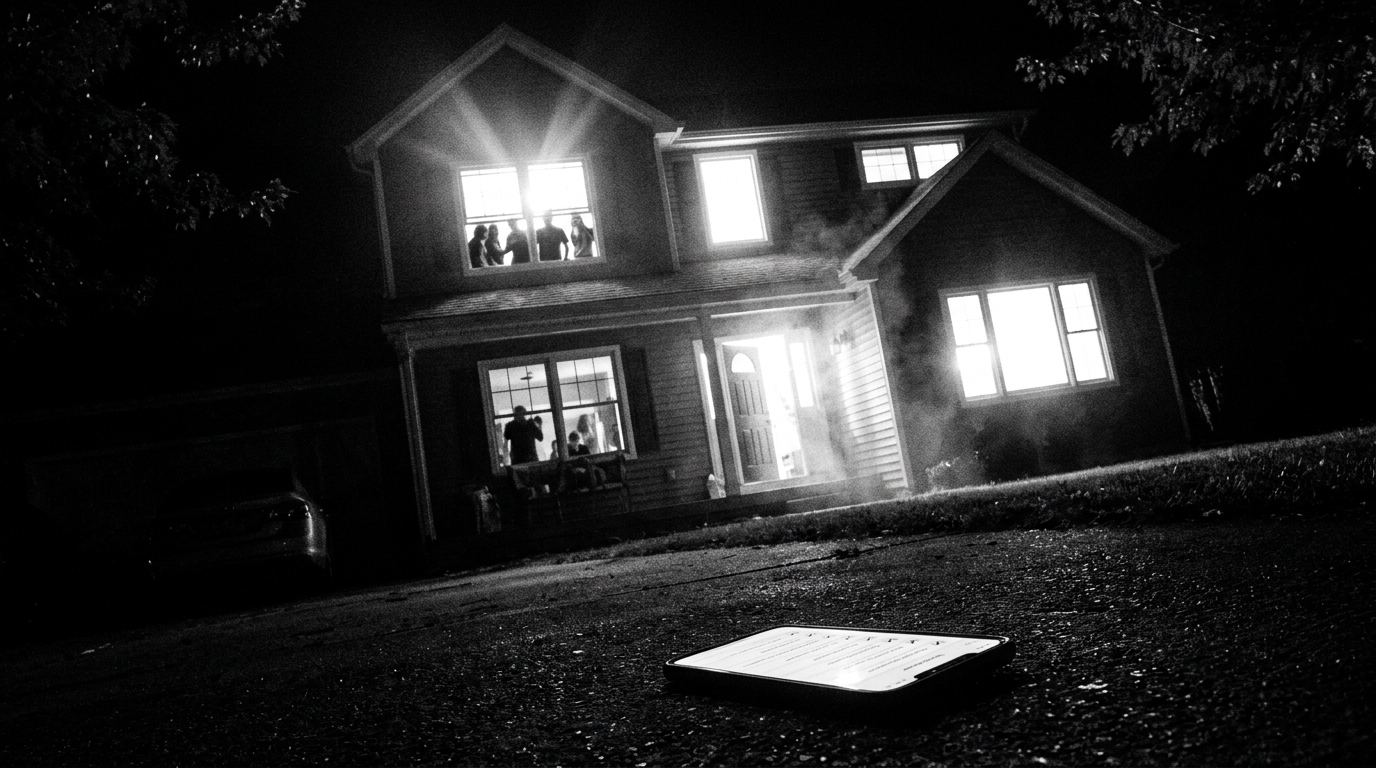
So Airbnb has this anti-party system. It scans for risk signals... last-minute bookings, entire-home reservations, guests who live close to the listing, short stays. It flags them, redirects them, sometimes blocks them outright. The company says it stopped over 20,000 people from booking entire-home listings over July 4th weekend last year. They're activating it again this week for the fifth consecutive year. And on June 22nd, three people got shot at a house party in Louisville's Butchertown neighborhood at an Airbnb that was booked fraudulently by an adult using someone else's identity. The system didn't catch it. Because the system wasn't designed to catch it.
Look, I've built risk-detection systems. Not for parties... for rate integrity, for booking fraud, for distribution anomalies. And here's what I know about algorithmic filters: they catch the patterns they're trained on. Last-minute booking from a local address? Sure, flag it. But a booking made weeks in advance, by an adult with a valid ID and a real credit card, for a property that allows it? That sails right through. The owners themselves said the reservation was placed in May by someone named "Mary" whose credentials traced back to a parent of one of the kids at the party. That's not a system failure in the traditional sense. That's a human exploiting the gap between what the algorithm measures and what actually matters. Every system I've ever built has had that gap. The question is what happens when the gap has real-world consequences, and in this case the consequences were three gunshot victims at 1 AM on a Monday.
The owners are responding with operational controls... banning one-night stays, blocking bookings from guests within a 20-mile radius. Those are the Dale Test answers. Not algorithmic. Not scalable. Just practical rules that a human can enforce and verify. Louisville's Councilman Ken Herndon is pushing for a mandatory two-night minimum citywide, which is basically the same idea codified into law. And honestly? These blunt-instrument policies will probably do more to prevent the next party than any machine learning model, because they eliminate the booking pattern entirely rather than trying to score its risk probability. The technology industry loves sophistication. Operations loves things that work at 2 AM when nobody's monitoring a dashboard.
Here's what this actually is for hotel operators, though. Every time one of these incidents makes local news (and a shooting at a short-term rental absolutely makes local news), it reshapes the regulatory conversation in that market. Louisville already tightened its STR ordinance in late 2023... registration fees went from $100 to $250, non-owner-occupied rentals in residential zones now require a Conditional Use Permit that takes 4-6 months and costs $1,260 to file. A shooting accelerates that trajectory. More restrictions mean fewer STR units operating legally, which means less supply competing with traditional hotels in that market. If you're running a hotel in Louisville or any mid-size city dealing with similar STR friction, the competitive math just shifted slightly in your favor. Not because of anything you did. Because the platform's safety infrastructure has a gap it can't close with code.
The uncomfortable truth about Airbnb's anti-party technology is the same uncomfortable truth about every predictive system I've ever evaluated: it optimizes for the detectable pattern, not the actual risk. A 73% reduction in party-related incidents (Airbnb's claimed UK number) sounds great until you realize the remaining 27% includes the incidents where someone got creative enough to beat the filter. And "got creative" in this case means a parent handed their ID to a teenager. That's not sophisticated fraud. That's a Tuesday. The technology is real, the effort is genuine, but the gap between "reduced" and "solved" is exactly where people get hurt.
If you're running a hotel in a market where STR regulation is tightening... and that's most mid-size cities right now... get in front of your local council conversations. Not to lobby against Airbnb (that ship has sailed). But to make sure your property is positioned as the safe, regulated, insured alternative when the next incident hits local news. Pull your STR comp set data from AirDNA or whatever tool you're using and track the active listing count in your three-mile radius quarter over quarter. When permits get harder to get and minimum-stay requirements go up, some of those listings disappear. That displaced demand goes somewhere. Make sure it finds you. Update your direct booking messaging to emphasize 24/7 staffing, security, and professional management. You'd be surprised how many leisure travelers booking STRs have never thought about what happens when something goes wrong at 1 AM. Now they're thinking about it.