Today · Mar 31, 2026
Four Seasons Is Selling $35K Nights Inside a 1936 Beach House. And It's Not Even the Boldest Part.

Four Seasons Is Selling $35K Nights Inside a 1936 Beach House. And It's Not Even the Boldest Part.

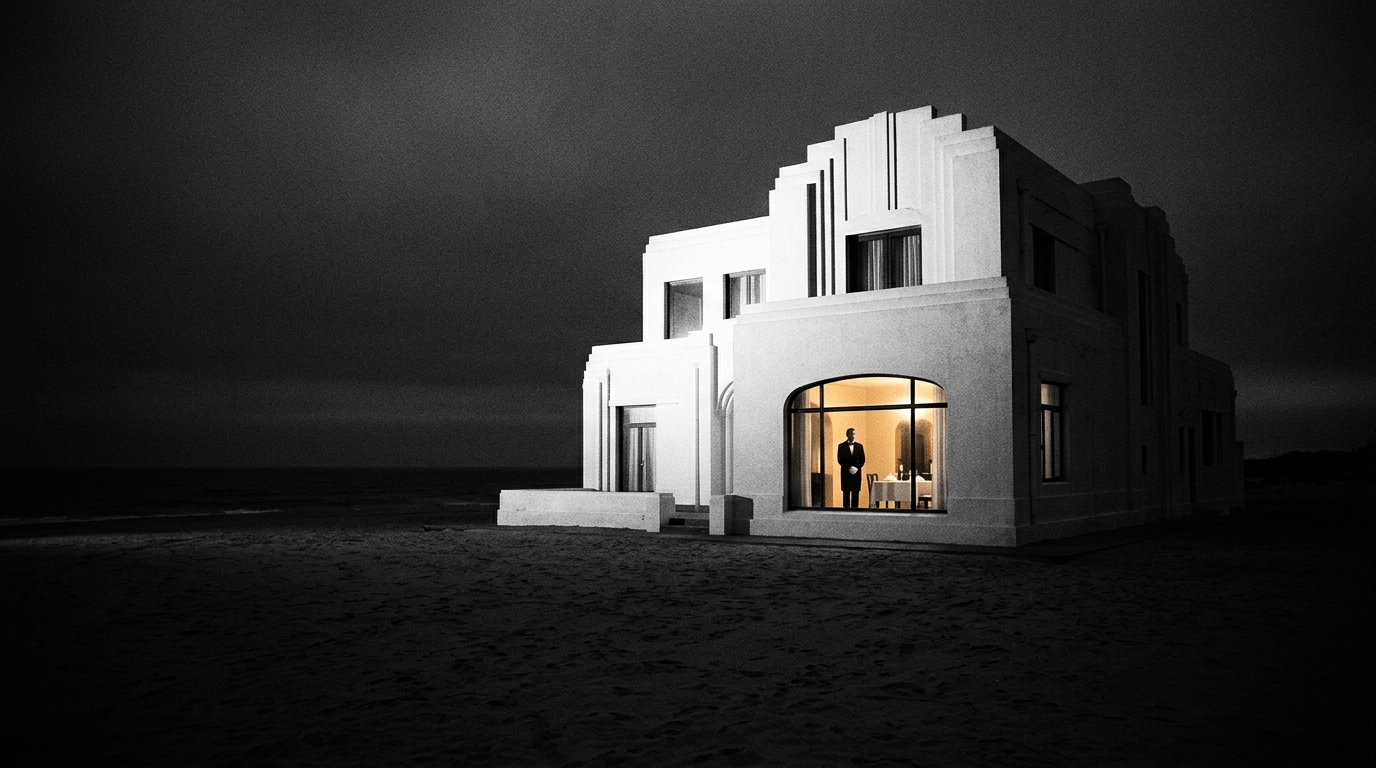
Four Seasons just turned a 90-year-old oceanfront cottage at The Surf Club into a four-bedroom private villa with a butler, a chef, and a pool nobody else can touch. The real play isn't the villa... it's a residential strategy that now generates $2.1 billion a year and is quietly rewriting how luxury hotels make money.

Available Analysis

I worked with a luxury resort GM years ago who told me something I've never forgotten. He said the wealthiest guests don't want more amenities. They want fewer people. The pool doesn't need to be bigger. The restaurant doesn't need another Michelin star. They just want to feel like nobody else exists. That stuck with me because it runs completely counter to how most of us were trained. We were taught that service means anticipation, presence, visibility. But at the very top of the market... the real top... service means disappearing until you're summoned.

That's what Four Seasons just built in Surfside, Florida. A 5,200-square-foot, four-bedroom oceanfront villa inside a restored 1936 structure at The Surf Club. Private pool. Private beach entrance. Private chef. Butler. Underground parking so you never have to walk through a lobby. They've essentially created a $30-40K per night experience (based on comparable pricing at the property) where the whole point is that you never interact with the hotel at all... unless you want to. It's a hotel that doesn't feel like a hotel. And that's entirely by design.

Here's why this matters beyond the obvious "rich people gonna rich" reaction. Four Seasons reported $2.1 billion in gross residential sales in 2024. Sixty-five percent of their development pipeline now includes a residential component. They're projecting 90 standalone residential properties by 2030, up from 56 today. Those aren't hotel numbers. Those are real estate development numbers. And the margins on branded residential management are fundamentally different than the margins on room nights. You're not filling 365 nights a year. You're selling or renting a handful of ultra-premium units with service fees attached, and the owner of that villa is paying Four Seasons to manage it whether anyone's sleeping in it or not. The recurring revenue model is the play. The villa is just the packaging.

What makes The Surf Club villa interesting operationally is what it says about labor allocation at the top of the luxury segment. A four-bedroom private villa with a dedicated chef, butler, and housekeeping team isn't supplementing the hotel's existing staff... it's creating a parallel operation. You're running a private household inside a hotel campus. The staffing model, the training model, the quality control model... all different. I've seen luxury properties try to stretch their existing teams across these kinds of ultra-premium offerings and it always shows. The guest paying $35K a night can tell when their butler was pulling pool towels an hour ago. Four Seasons presumably understands this, but the operators who try to copy this playbook at a lower price point are going to learn that lesson the hard way.

The bigger strategic picture is this. Four Seasons is betting that the future of luxury hospitality isn't hospitality at all... it's branded lifestyle management. The yacht launched last week. The residential pipeline is exploding. This villa sits inside a development called Seaway at The Surf Club where apartments have sold for up to $44 million. They're not competing with Ritz-Carlton or Rosewood for room nights anymore. They're competing with private estate ownership and winning by offering the one thing a standalone mansion can't provide... a Four Seasons service infrastructure you don't have to build and manage yourself. That's a powerful value proposition for someone with $30 million to spend on a home. And it's a business model that most hotel companies can't replicate because they don't have the brand permission to charge what Four Seasons charges.

Operator's Take

Let me be direct. If you're running a luxury or upper-upscale property, the lesson here isn't "go build a private villa." You can't. The lesson is what's happening to the top of the market and how it trickles down to your comp set. Four Seasons is pulling their highest-value guests out of the traditional hotel inventory entirely... into private residences, villas, yachts. That means the ultra-luxury traveler who used to book your Presidential Suite three times a year might be booking a branded residence instead. If you're in a market where Four Seasons (or Aman, or Rosewood) is expanding residential, check your suite booking pace against two years ago. If it's soft, now you know why. The play for the rest of us is this: figure out what "private" and "exclusive" mean at YOUR price point. You don't need a $35K villa. But a 250-key property that carves out a club floor with dedicated staff, separate check-in, and a curated experience that feels walled off from the main hotel... that's the accessible version of what Four Seasons just built. The demand for privacy and separation isn't limited to billionaires. It just costs different at different levels.

Read full analysis → ← Show less
Source: Google News: Four Seasons
What a Mumbai Bar Takeover at Grand Hyatt Gurgaon Actually Teaches About Hotel F&B

What a Mumbai Bar Takeover at Grand Hyatt Gurgaon Actually Teaches About Hotel F&B

A cocktail bar pop-up at a luxury hotel in India sounds like fluff news. It's not. It's a blueprint for how hotels can stop losing the F&B battle to independent restaurants... if they're willing to let someone else drive.

A Mumbai cocktail bar called Late Checkout just did a two-night takeover at Bar Musui inside the Grand Hyatt Gurgaon. Specialty cocktails with names like "Missing Trust Fund" and "Main Character Energy." À la carte pricing. Two nights and done. On the surface, this is a lifestyle press release. Beneath it, there's something worth paying attention to... especially if you're running a hotel where the bar has become an afterthought that happens to have a liquor license.

Here's what caught my eye. Chrome Asia Hospitality, the group behind Late Checkout, is planning takeovers in 20 cities this year. Twenty. They're not doing this for fun. They're building a touring model... essentially a concert circuit for cocktail bars. And the hotels hosting these events aren't doing it out of charity either. Grand Hyatt Gurgaon just hired an Assistant Director of F&B specifically known for driving international bar takeovers. They promoted their Executive Chef in January with a mandate for "culinary innovation and experiential dining." This isn't a one-off event. It's a deliberate F&B strategy. They're renting credibility they can't build fast enough internally, and honestly... that's smart.

I knew a beverage director once at a 400-room full-service who spent $80,000 redesigning his lobby bar menu. New glassware. New garnish program. Staff training for six weeks. RevPAR in the bar went up about 4%. Then a local restaurant group did a three-night pop-up in his space (his idea, to his credit), and the bar did more covers those three nights than it had done in any full week that quarter. The pop-up cost him almost nothing. The local press alone was worth more than his entire redesign budget. He looked at me afterward and said, "I just learned that my guests don't want MY bar to be better. They want something they can't get anywhere else, for a limited time, and then tell their friends about." That's the insight buried in this Gurgaon story.

The Indian market is moving fast on this. Bar takeovers are becoming a legitimate channel in what's reportedly a $55 billion alcobev market. Liquor brands sponsor these events as marketing. The visiting bar gets exposure in a new city. The hotel gets foot traffic, social media buzz, and a reason for local diners to walk through the lobby... which is the hardest thing for any hotel bar to achieve. The average guest who's already checked in will visit your bar. The local who has 40 restaurant options on their phone will not... unless you give them a reason. A two-night exclusive with a buzzy Mumbai bar is a reason. Your Tuesday night happy hour with discounted well drinks is not.

Look, this specific event is in India and involves a Grand Hyatt. I get it. Most of the people reading this aren't managing luxury properties in Gurgaon. But the model translates everywhere. The principle is simple and it works at any scale: stop trying to be great at F&B by yourself if you don't have the team, the budget, or the local credibility to pull it off. Find someone who already has it. Give them your space for a night or a weekend. Split the upside. Your bar becomes a destination instead of a holding pen for guests who don't want to leave the building. Your team learns techniques they'd never pick up in a brand training module. And your F&B line on the P&L starts looking like a revenue center instead of a cost center with a garnish budget. The hotels that figure this out... the ones willing to let go of the idea that they have to own every experience under their roof... are going to win the F&B game. The ones that keep running the same cocktail menu with the same undertrained bartender and the same $14 mojito? They're going to keep wondering why nobody sits at the bar.

Operator's Take

If you're a GM at a full-service property where your bar revenue has been flat for two years, call the best independent bar or restaurant operator within 50 miles of your hotel this week. Propose a one-night or two-night takeover. You provide the space, the staff, and the liquor license. They bring the concept, the menu, and the social media following. Split the revenue or charge a flat hosting fee... either way you win. This is what I call the Brand Reality Gap playing out in F&B: your brand gives you a bar template, but the local operator gives you a reason for people to actually show up. Start small. One event. Measure covers, check average, and social impressions against your best normal night. The numbers will make the argument for you.

Read full analysis → ← Show less
Source: Google News: Hyatt
Your F&B Outlet Isn't a Cost Center. It's Your Entire Strategy Now.

Your F&B Outlet Isn't a Cost Center. It's Your Entire Strategy Now.

A Courtyard in Bengaluru just refreshed its rooftop cocktail menu, and nobody in the U.S. is paying attention. They should be... because the math on F&B as a revenue driver has quietly flipped, and most operators are still running the old playbook.

Here's a headline that 90% of American hotel operators are going to scroll past: a Courtyard by Marriott in Bengaluru updated its rooftop bar menu. New cocktails. Small plates. A resident DJ. Sounds like a press release you'd delete before your second cup of coffee.

Don't delete it. Because what's actually happening in India right now is the canary in the coal mine for every branded hotel operator running F&B as an afterthought. In Indian hotels, food and beverage revenue has climbed to 42.6% of total income... up from 36.6% a decade ago. Room revenue? Dropped from 57.2% to 50.9% in the same period. Read those numbers again. F&B isn't supplementing the rooms business anymore. It's propping it up. And in Bangalore specifically, bar revenue jumped 12% in average per cover in the first half of 2024. That's not a trend. That's a structural shift in where the money comes from.

I managed a full-service property years ago where the owner wanted to shut down the restaurant entirely. "It's bleeding money," he told me. And he wasn't wrong... on the P&L it looked like a disaster. But I pulled the guest satisfaction scores and the rate premium data, and that restaurant was the reason we were running $18 above comp set on ADR. Kill the restaurant, kill the rate premium. The F&B line item was red. The total property NOI was black BECAUSE of that red line item. Most owners never connect those dots because the reporting doesn't make them.

What Marriott is doing in India... treating a Courtyard rooftop bar as a destination, hiring a 20-year veteran chef, building cocktail programs around storytelling and local culture... that's not a marketing stunt. That's a revenue strategy. They're pulling locals into the building. They're creating reasons for guests to spend on-property instead of walking to the restaurant next door. And they're doing it at the Courtyard tier, not the Ritz-Carlton. That matters. Because if the math works at a Courtyard in Bengaluru, it works (or should work) at a Courtyard in Nashville or Austin or Denver. The question is whether U.S. operators have the imagination to execute it or whether they'll keep running a grab-and-go market and wondering why their ancillary revenue is flat.

Here's what nobody's telling you: the brands are watching India's F&B numbers very closely. When F&B crosses 40% of total revenue at scale, the playbook changes. Brand mandates around food and beverage concepts, vendor requirements, design standards... all of that is coming. If you're a GM at a select-service or compact full-service property in the U.S., you've got maybe 18-24 months before your brand starts asking why your bar program looks like it was designed in 2014. Get ahead of it now. Look at your F&B capture rate. Look at your local traffic. Look at what the independent boutique down the street is doing with their lobby bar that's pulling your guests out the door every Friday night. The answer isn't a $500,000 renovation. The answer is a point of view... about what your food and beverage operation is actually FOR.

Operator's Take

If you're running a branded property with any kind of F&B component... even a bar, even a breakfast operation... pull your F&B revenue as a percentage of total revenue for the last three years. If that number isn't moving up, you're leaving money on the table. Call your chef or F&B manager this week and ask one question: "What would we do differently if we treated this outlet like a standalone restaurant competing for local business?" The answers will cost you almost nothing to implement. The cost of doing nothing is watching your ancillary revenue flatline while the boutique hotel two miles away steals your guests every evening.

Read full analysis → ← Show less
Source: Google News: Marriott
End of Stories