Today · Sep 9, 2026
A Guest Got Filmed Having Sex in an Airbnb. Hotels Should Be Talking About This.

A Guest Got Filmed Having Sex in an Airbnb. Hotels Should Be Talking About This.

A man in Northern Ireland just got four months in jail for secretly recording a couple in a short-term rental and posting the footage online. If you're competing against Airbnb in your market, the privacy gap between your property and theirs just became a selling point you're probably not using.

So a 22-year-old in Northern Ireland secretly filmed two people having sex in an Airbnb, then posted it on social media. He got four months. The judge called it "malicious and wicked." The footage was out there before anyone even knew it existed.

Let's talk about what this actually means for our side of the business.

Airbnb banned all indoor cameras in April 2024. Every single one, regardless of disclosure or location. And look... that was the right call. But here's the thing about policy versus architecture: Airbnb can write whatever rules it wants. There is no physical infrastructure to enforce them. No security team walking the halls. No front desk agent noticing something off. No housekeeping staff entering the unit between guests who might spot a device that shouldn't be there. The enforcement mechanism for Airbnb's camera ban is basically the honor system. The enforcement mechanism for guest privacy at a hotel is a locked door, controlled key access, professional staff, and (in most cases) actual security cameras in public areas pointed at hallways... not bedrooms. That's not a talking point. That's architecture. And architecture beats policy every single time.

The research on this is actually pretty striking. Properties that get safety-related reviews on Airbnb see occupancy drops of 1.5% to 2.4% and nightly rate declines around 1.5%. Guests who personally experience a safety issue are 60% less likely to rebook on the platform. That's not sentiment... that's booking behavior. And incidents like this one don't stay local. They go viral (this one literally did, because the perpetrator made sure of it). Every time a story like this breaks, there's a window where travelers are actively reconsidering their default choice between "hotel" and "rental." Most hotels do nothing during that window. They should.

I talked to a GM last month who competes against 40+ Airbnb listings within a two-mile radius of his 110-key select-service. He'd never once mentioned privacy or security in his marketing. Not on the website. Not in the booking confirmation. Not at check-in. "We just assume people know hotels are safer," he told me. They don't. Travelers default to whatever is cheapest or most convenient unless you give them a reason to think differently. Privacy is a reason. Professional staffing is a reason. Controlled access is a reason. But you have to actually say it. Not in a fear-mongering way (that backfires). In a "here's what you get when you stay with us" way. The Dale Test question here is straightforward: if something goes wrong at 3 AM in an Airbnb, who do you call? If something goes wrong at 3 AM in your hotel, someone is already there.

Northern Ireland is now consulting on new regulations for short-term rentals, including potential new statutory categories and certification requirements. That regulatory momentum is building in markets everywhere... from New York to Barcelona to Tokyo. And every time it builds, the operational cost gap between running a legal short-term rental and running a hotel narrows. Which means the price advantage that drove Airbnb's growth gets thinner. Which means service, safety, and privacy become bigger differentiators. Hotels have always had these advantages. They've just been terrible at articulating them. This is the kind of story that gives you a reason to start.

Operator's Take

Here's what I'd do this week if I'm a GM competing against short-term rentals in my comp set. Pull up your website and your booking confirmation email. Search for the words "privacy," "security," "staffing," or "24-hour." If none of them appear, you're leaving your strongest competitive advantage unspoken. Add a single line to your confirmation: "Our property is staffed around the clock with professional team members and secure key-card access to all guest floors." That's not marketing fluff... that's a fact, and right now it's a fact that matters more than usual. Don't attack Airbnb by name. You don't need to. Just state what you provide. Let the guest connect the dots. They will.
— Mike Storm, Founder & Editor
Read full analysis → ← Show less
Source: Google News: Airbnb
A Guest Was Secretly Filmed in an Airbnb Bedroom. 55% of Hosts Still Have Indoor Cameras.

A Guest Was Secretly Filmed in an Airbnb Bedroom. 55% of Hosts Still Have Indoor Cameras.

A man in Northern Ireland just got four months in jail for hiding a camera in an Airbnb and sharing the footage online. That's the crime story... the industry story is that an August 2025 survey found more than half of Airbnb hosts still use indoor cameras despite the platform banning them over two years ago.

Available Analysis

So here's the question nobody in short-term rental tech is answering: if Airbnb banned all indoor cameras in April 2024, and 55% of hosts are still running them as of last August, what exactly does "banned" mean?

A 22-year-old in Northern Ireland just got four months in prison for planting a hidden camera in an Airbnb bedroom, recording a couple having sex, and then distributing the footage across social media group chats. The judge called it malicious. It is. But the individual crime isn't what should concern this industry. What should concern this industry is the infrastructure gap between Airbnb's stated policy and what's actually happening inside the properties on its platform. An IPX1031 survey from August 2025 found that 47% of guests reported finding a camera during their stay... up from 25% in 2023. One in five of those cameras was in a bedroom or bathroom. And here's the part that should really bother you: a CNN investigation from July 2024 found that Airbnb, as a matter of practice, doesn't typically notify law enforcement when guests report hidden cameras. Think about that for a second. The platform knows. The platform doesn't call the cops. The guest has to do that themselves.

Look, I'm a technology guy. I evaluate systems. And what I see here is a platform that shipped a policy update the way a bad vendor ships a software patch... they pushed the announcement, got the press coverage, and never built the enforcement mechanism. There's no verification layer. There's no inspection protocol. There's no technical solution scanning for active devices on a property's network (and yes, those tools exist... they're not perfect, but they exist, and Airbnb has the engineering talent to build something better than nothing). The "ban" is a terms-of-service checkbox. It's the digital equivalent of a "please don't" sign. I consulted with a vacation rental management company last year that was genuinely trying to comply with the policy across 200 units. Their biggest frustration? Airbnb provided zero tools to help them verify compliance in properties they managed on behalf of individual owners. No audit checklist. No device-detection guidance. No integration with smart home platforms to flag undisclosed cameras. Just... "don't do it." That's not enforcement. That's hope.

For traditional hotel operators, this is actually a competitive positioning story hiding inside a crime story. Hotels have surveillance in public areas, disclosed and regulated. Hotels do NOT have cameras in guest rooms. Ever. That's not a policy... it's a fundamental operational principle backed by decades of case law, brand standards, and basic human decency. And yet most hotel marketing departments aren't saying a word about this advantage because they don't want to acknowledge the short-term rental competitive set. That's a mistake. When a jury in South Carolina awards $45 million to guests who were secretly recorded by a property owner, and when survey data shows nearly half of short-term rental guests are finding cameras in their units, "your privacy is guaranteed in our hotel" isn't a scare tactic. It's a fact. And facts are the best marketing there is.

The technology failure here runs deeper than cameras. It's a platform architecture problem. Airbnb built a marketplace, not a managed hospitality operation. Marketplaces scale by reducing friction for sellers (hosts). Managed operations scale by enforcing standards. Those two models are fundamentally in tension, and the camera ban exposed exactly where that tension breaks. You can't enforce physical-space standards through a software platform when you have zero physical presence at the properties on your platform. Hotels solved this decades ago... it's called a brand inspection program, and for all the grief we give PIPs and QA audits, at least there's a human being who walks the property and checks. Airbnb has no equivalent. They can't. Their model doesn't support it. Which means every time they announce a safety or privacy policy, they're making a promise their architecture can't keep. And that's a technology assessment, not a moral judgment.

Operator's Take

Here's what I'd do with this if I were running a hotel right now. Pull your marketing team into a room and have a real conversation about privacy as a brand differentiator. Not fearmongering... facts. "No cameras in guest rooms. Ever. That's not our policy. That's our promise." Put it on your website. Put it in your booking confirmation email. If you're in a leisure market where you're competing directly with short-term rentals for family travelers and couples, this is a message that lands. You're not attacking Airbnb... you're stating what makes a hotel a hotel. And if you're running a property with any kind of smart-room technology (smart speakers, IoT thermostats, connected TVs), audit it this week. Make sure your guests know exactly what's connected, what it does, and what it doesn't do. Transparency is the whole game right now. Be the transparent option.

— Mike Storm, Founder & Editor
Read full analysis → ← Show less
Source: Google News: Airbnb
A Family Found Their Own Photo Inside an Airbnb. Hotels Have Entered the Chat.

A Family Found Their Own Photo Inside an Airbnb. Hotels Have Entered the Chat.

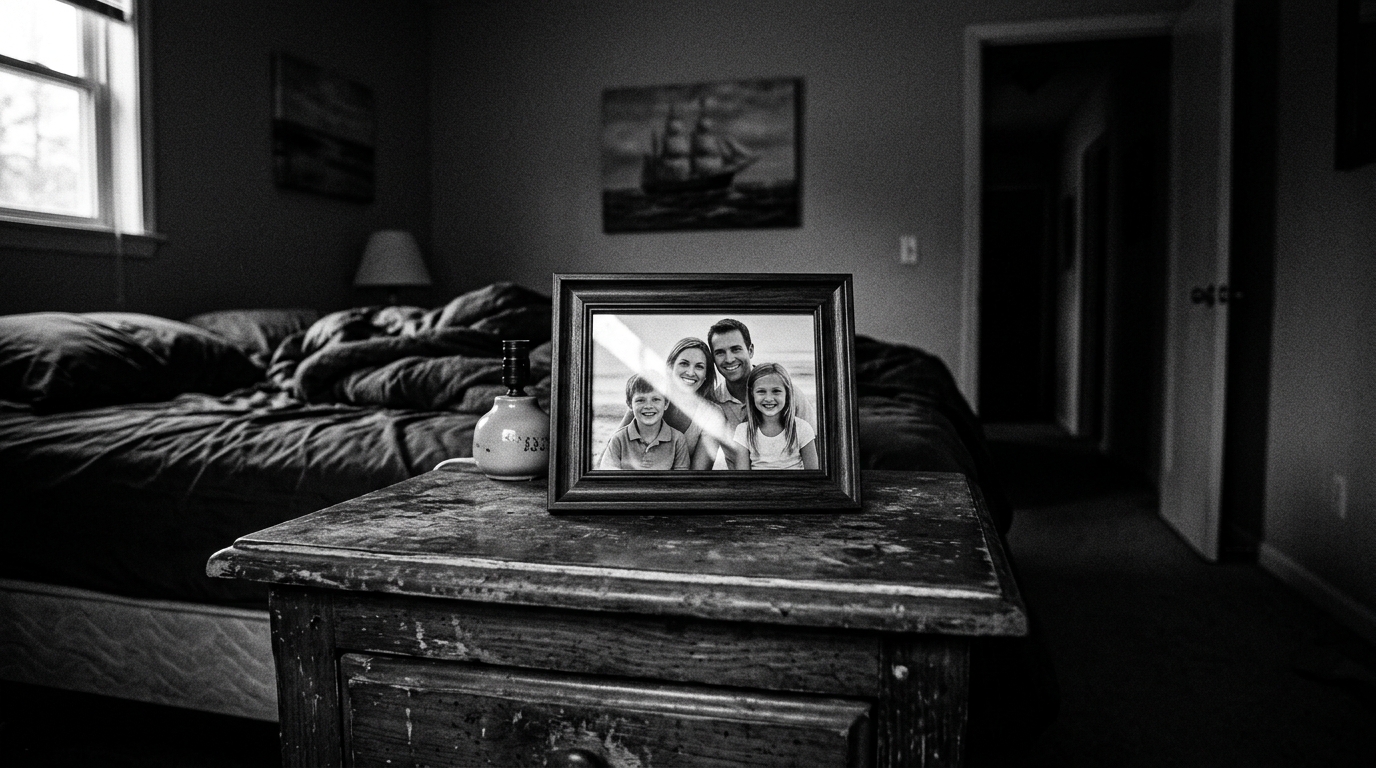
A family checking into an Oceanside Airbnb allegedly discovered a photograph of themselves already displayed inside the rental. For every hotel operator who's ever had to explain why their rates are higher than the listing down the street, this is the story you've been waiting to tell.

So here's the setup. A family books an Airbnb in Oceanside, California. They walk in, they're settling in, and they find a photo of themselves... inside the unit. Already there. Before they arrived. Let that sit for a second. However this happened... whether a previous host interaction, a social media scrape, some glitch in how guest data gets handled... the result is the same. A family walked into a place they'd never been and their own faces were looking back at them.

Look, I spend most of my time evaluating hotel technology systems, and the first thing I think about with any platform is: who owns the data, what happens with it, and what's the failure mode? Airbnb banned indoor surveillance cameras back in April 2024, which was the right move. But cameras aren't the only privacy vector. Hosts receive guest names, phone numbers, and message threads the moment a reservation confirms. That's a lot of personal information flowing to individuals with zero institutional oversight, no compliance training, and no IT department. When a hotel collects your data, there's a PMS with access controls, a privacy policy backed by legal, and (usually) a corporate data retention standard. When an Airbnb host collects your data, there's... a person. With a printer, apparently.

This is the part that matters for hotel operators. The short-term rental pitch has always been "authentic, personal, local." And most of the time that works fine. But "personal" cuts both ways. The same decentralization that makes Airbnb feel charming is the same decentralization that means nobody's auditing what individual hosts do with guest information between stays. Hotels have standardized security protocols not because they're better people... because they're accountable institutions with brand standards, franchise agreements, and legal exposure that forces them to take data handling seriously. That's not a marketing advantage anyone talks about. It should be.

I talked to a hotel group last month that was losing direct bookings to short-term rentals in a coastal market. Their response was to compete on price. Wrong move. The competitive advantage for hotels has never been price... it's trust infrastructure. Your guest's photo isn't going to show up on the nightstand when they check in (and if it does, you've got a much bigger problem and probably a lawsuit). Your security cameras are disclosed and positioned in public areas. Your data handling has a chain of custody. That's boring. It's also exactly what a family in Oceanside wishes they'd had.

The question nobody's asking is whether platforms like Airbnb can actually enforce privacy standards across millions of individual hosts operating independently. The answer is obviously no... not at the granular level where this kind of thing happens. They can ban cameras. They can write policies. But they can't audit every property, every host interaction, every piece of guest data that flows through the system. Hotels can't perfectly either, but the institutional structure at least creates accountability. When something goes wrong at a hotel, there's a GM, a management company, a brand, and a legal team. When something goes wrong at an Airbnb, there's a help center ticket. That gap is real. And for the first time in a while, it's visible to consumers in a way that a policy document never made it.

Operator's Take

Here's what to do with this. If you're running a hotel in any market where short-term rentals are eating your lunch, this story is a gift. Not to gloat... to reframe. Your next marketing push, your next response to "why should I book with you instead of Airbnb," your next owner conversation about competing on rate... this is the counterargument. You're not selling a room. You're selling institutional trust. Data security, privacy standards, professional oversight. Put that language on your website. Train your front desk to articulate it when a guest mentions they "usually do Airbnb." And if you're a GM who's been asked to cut rate to compete with the listing across the street, bring this story to that conversation instead. You compete on what they can't replicate... accountability. That's your moat. Use it.

— Mike Storm, Founder & Editor
Read full analysis → ← Show less
Source: Google News: Airbnb
End of Stories