Today · Jul 26, 2026
Circa's Slot Party Is a Vendor Subsidy Dressed Up as a Guest Event. And It's Brilliant.

Circa's Slot Party Is a Vendor Subsidy Dressed Up as a Guest Event. And It's Brilliant.

Circa's second annual Slotapalooza got seven gaming manufacturers to fund over $77,000 in free play giveaways on Circa's casino floor. The real genius isn't the party... it's who's actually paying for it.

I worked with a casino F&B director years ago who had a saying I never forgot: "The best promotion is the one where somebody else buys the drinks." He wasn't talking about comps. He was talking about getting vendors so invested in your success that they'll fund your marketing for you. He'd get liquor distributors to sponsor tasting events, food purveyors to underwrite chef's table dinners... the property got the traffic, the vendor got the exposure, and the guests never knew the difference. Everybody won. That guy understood something most operators never figure out.

Derek Stevens figured it out too. Circa's Slotapalooza... which ran last Saturday... had seven gaming manufacturers (AGS, IGT, Konami, Light & Wonder, and three others) showing up with their own free play vouchers, their own giveaway prizes, and their own promotional budgets. ATI alone brought $25 free play vouchers for 400 guests plus a $10,000 giveaway. Bluberi, IGT, Interblock, and Light & Wonder each covered 200 vouchers and $5,000 in prizes. Circa put up a $15,000 tournament prize pool and the event framework. The manufacturers funded a massive chunk of the $77,000-plus in total giveaways. That's not a slot tournament. That's a trade show where the attendees think they're at a party.

And here's what makes this smart beyond the obvious cost shift. Every one of those manufacturers wants their games played. They want the data. They want the handle pulls. They want to prove to Circa (and every other casino watching) that their titles drive engagement. So they're not just subsidizing the event... they're subsidizing Circa's product evaluation. Stevens is essentially getting paid to test-drive inventory. The first Slotapalooza in 2025 was smaller ($20,000 in free play, $5,000 in hot seat raffles). The fact that the manufacturer participation roughly tripled in year two tells you the vendors saw ROI. They came back bigger. That's the validation.

Look... this isn't complicated strategy. It's relationship management executed at a level most properties never attempt. The average casino GM looks at a slot tournament and sees a marketing line item. Stevens looks at it and sees a platform where he can align vendor incentives with guest acquisition and floor optimization simultaneously. The adults-only positioning helps here too. You're not competing with families wandering through on the way to a show. Everyone on that floor is there to play. The manufacturers know exactly who they're reaching.

The scalability question is whether this model travels. A downtown Vegas casino with Stevens' personality and vendor relationships can pull this off. Can a regional casino in Biloxi or a tribal property in Connecticut replicate it? Maybe. But only if they understand what this actually is. It's not an event budget. It's a vendor partnership structure. The event is just the delivery mechanism. If you treat it like a party, you'll spend your own money and wonder why it didn't work. If you treat it like a platform, you'll get your vendors to fund the party for you. Big difference.

Operator's Take

If you're running a casino floor (any size, any market) and you're still funding slot promotions entirely out of your own marketing budget, stop and take a hard look at your manufacturer relationships. Call your slot reps this week. Not the account managers... the regional reps who actually have promotional budgets to deploy. Ask them what co-op marketing dollars they have available for Q3 and Q4. You'll be surprised how much is sitting there unspent because nobody asked. Structure it as a win for them: guaranteed play time on their titles, data on handle metrics, visibility with your players. You're not asking for a handout. You're offering a stage. Start small... a single-manufacturer spotlight night, maybe $2,000-$3,000 in co-funded free play. Prove the traffic, prove the engagement, then scale it. The goal isn't to replicate Slotapalooza. The goal is to stop spending your own dollars on things your vendors would happily pay for if you gave them a reason.

Read full analysis → ← Show less
Source: Google News: Casino Resorts
Five Aces Won $118K at Horseshoe. The Bigger Story Is the $808M Month Behind It.

Five Aces Won $118K at Horseshoe. The Bigger Story Is the $808M Month Behind It.

A Pai Gow progressive hit at Horseshoe Las Vegas makes a nice headline, but the real signal is what's happening underneath... Strip gaming revenue just posted its eighth-highest month ever, and the operators paying attention are asking very different questions than the ones celebrating jackpot photos.

A woman from LA sat down at a Pai Gow table at Horseshoe Las Vegas last Sunday night, drew five aces with a joker, and walked away $118,005 richer. Good for her. Genuinely. That's a life-changing Tuesday morning when the direct deposit clears.

But here's what caught my eye. She was in town for the World Series of Poker. Which means she's exactly the kind of guest that makes a casino-resort GM's week... a motivated traveler with discretionary income, booking a room during a major event, spending time on the gaming floor. She's not an anomaly. She's the prototype of what's driving the Strip right now. May 2026 gaming revenue on the Strip hit $807.9 million, up 13.2% year-over-year. That's the eighth-highest month ever recorded for that corridor. Baccarat alone surged 59%. The Caesars CFO went on record saying the Strip is in "great shape" after a sluggish 2025. Those aren't jackpot-winner press releases. Those are structural indicators.

I've seen this movie before. The jackpot story is the shiny object... the thing that gets shared on social media and makes people in Omaha think about booking a Vegas trip. And honestly, that's fine. That IS the marketing. Progressive jackpots exist precisely to generate these moments. A portion of every wager feeds the pool, the number grows, someone eventually hits, and the casino gets a press release that costs them nothing because the players funded the prize themselves. It's one of the most elegant marketing mechanisms in the business. But if you're an operator... if you're running rooms, F&B, entertainment, or anything adjacent to the gaming floor... the jackpot isn't your story. The $808 million month is your story. The 13.2% year-over-year growth is your story. The baccarat surge tells you something specific about WHO is coming and WHAT they're spending on.

And here's the context that makes this even more interesting. Caesars is in the middle of a $17.6 billion merger with Fertitta Entertainment that'll take them private. MGM just formed a special committee to evaluate an $18 billion buyout offer. The Cosmopolitan opened a remodeled high-limit room with $5 million linked slot progressives. These aren't isolated events. The smart money is looking at Strip performance data and making enormous bets (no pun intended) on the trajectory. When you see two of the largest gaming companies in the world simultaneously moving toward going private while revenue numbers are posting near-record months... that tells you the people with the deepest access to the data believe there's significant upside that public markets aren't pricing in. Or at least upside they'd rather capture without quarterly earnings calls.

For those of us who've operated in markets where gaming drives the room night, the lesson is always the same. Follow the floor. When table game revenue surges, high-end F&B follows. When slot volume climbs, mid-market rooms fill. When baccarat spikes 59%, your premium suite inventory should already be priced accordingly. The jackpot photo is for Instagram. The revenue trend is for your forecast.

Operator's Take

If you're running a property on or near the Strip, pull your May and June gaming-adjacent revenue and compare it to the same period in 2025. The Strip just posted 13.2% year-over-year gaming growth, and if your rooms revenue and F&B aren't moving with it, you've got a capture rate problem worth diagnosing this week. Look at your rate strategy around marquee gaming events like WSOP... these guests have higher ancillary spend than your typical convention attendee, and if you're pricing rooms without factoring gaming floor revenue contribution, you're leaving money on the table. For GMs at non-gaming properties in the Las Vegas market, the rising tide is real, but it lifts the boats closest to the action first. Know your comp set's rate moves and make sure you're not the last property to adjust.

Read full analysis → ← Show less
Source: Google News: Caesars Entertainment
A $276K Jackpot Is a Press Release. The $17.6 Billion Acquisition Behind It Is the Story.

A $276K Jackpot Is a Press Release. The $17.6 Billion Acquisition Behind It Is the Story.

Caesars is trumpeting a Fourth of July table game jackpot at Harrah's while quietly heading toward the biggest ownership change in casino-hotel history. If you're running a property in the Caesars portfolio, the jackpot isn't what should be keeping you up tonight.

I worked with a casino hotel GM years ago who had a saying every time corporate sent out a press blast about some big slot hit or table game payout. He'd read it, set it down, and say "That's nice. Now what are we actually doing about next Tuesday?" He wasn't being dismissive. He understood something that a lot of people outside the business don't... jackpot announcements are marketing. They're not operations. They're not strategy. They're billboards.

So yes, a Let It Ride player hit a $276,533 mega progressive at Harrah's Las Vegas on the Fourth of July. Royal flush. Good for him. Genuinely. That's a life-changing hit for a lot of people, and the guy flew in from Hawaii to play on Independence Day, which is about as Vegas as it gets. But if you're reading this as an operator, an asset manager, or anyone with skin in a Caesars-flagged property, the jackpot is the least interesting thing happening at that company right now.

Here's what matters. Caesars Entertainment is sitting on a GAAP net loss of $502 million for fiscal year 2025. The digital side is thriving... $374 million in Q1 2026 revenue, $69 million in adjusted EBITDA from iGaming alone. But the physical casino-hotel portfolio, the part that employs your team and serves your guests, is under pressure. Analysts have been trimming fair value estimates. Regional properties are grinding against lease costs. Vegas itself is seeing muted growth expectations. And then on May 28th, Fertitta Entertainment announced an all-cash acquisition of the entire company for approximately $17.6 billion. That's not a renovation. That's not a brand refresh. That's a change of everything.

If you've been through an acquisition of this scale (and I've been through a few), you know exactly what's coming. New ownership means new priorities. New cost targets. New opinions about which properties are keepers and which are candidates for repositioning or disposition. Fertitta runs a tight operation... Landry's, Golden Nugget, the restaurant empire. They know how to squeeze margin out of hospitality assets. That's not a criticism. It's a fact. And facts have consequences for the people working inside those buildings. The linked progressive jackpot strategy that Caesars built... connecting tables across multiple properties to create bigger payouts... that's a smart player acquisition tool. But it's also an investment. New ownership is going to look at every investment through their own lens, and "we've always done it this way" is not a sentence that survives an acquisition.

The jackpot headline is designed to make you think everything's fine. Business as usual. Guests winning. Caesars delivering. And on the surface, that's true. But underneath, a $17.6 billion transaction is about to reshape one of the largest casino-hotel portfolios in the country. The GM I knew would read this story, set it down, and ask the same question he always asked. "That's nice. Now what are we actually doing about next Tuesday?" If you work in or around Caesars properties, next Tuesday just got a lot more complicated.

Operator's Take

If you're a GM or department head at any Caesars-affiliated property, this is the time to get your house in order. Not panic... preparation. New ownership evaluates properties based on trailing performance, and the numbers you're putting up right now are the numbers that determine whether your property is a "core hold" or a "strategic review" asset. Pull your flow-through reports. Know your GOP margin versus comp set. If you're outperforming, build the narrative and have it ready. If you're underperforming, figure out why and start fixing it before someone with a Fertitta badge asks the question for you. The people who survive ownership transitions aren't the ones who wait for direction. They're the ones who show up with answers before anyone asks the question.

Read full analysis → ← Show less
Source: Google News: Caesars Entertainment
Your HVAC System Is About to Become Your Guest Experience Strategy This Weekend

Your HVAC System Is About to Become Your Guest Experience Strategy This Weekend

Clark County just issued a smoke advisory for the 4th of July weekend, and if you're running a hotel in Las Vegas with outdoor pools, rooftop bars, or balcony views, your air handling system is now the most important piece of technology in your building.

So here's something most hotel tech conversations never touch: what happens when the air outside your building becomes a guest complaint?

Clark County's Division of Air Quality put out a smoke advisory running July 4 through July 6. The cause is what you'd expect... thousands of fireworks across the valley, plus two wildfires still burning in Lincoln County about 140 miles northeast. One of those fires, the Grapevine, is over 26,000 acres and only 41% contained. The other is mostly handled. But the fireworks smoke alone is enough to degrade air quality across the entire Las Vegas Valley for the better part of three days. For anyone with respiratory issues, the recommendation is simple: stay inside.

Now think about what "stay inside" means for a hotel. Your pool deck, your outdoor dining, your rooftop bar, your cabana experience... all of it becomes a liability instead of an amenity. And here's the technology angle nobody's talking about: your HVAC system was probably not designed to be your primary guest experience tool. Most hotel air handling units are sized for climate control, not air filtration during sustained poor air quality events. I consulted with a resort property last summer that had wildfire smoke roll in for four days. Their fresh air intake was pulling particulate-laden air directly into the lobby. Guests were complaining about the smell indoors. The engineering team's fix? They taped furnace filters over the intake vents. Literal tape. It worked (kind of), but that's not a system... that's a prayer.

The real question for any Las Vegas property this weekend is whether your building management system can actually switch to recirculation mode without turning your corridors into a stuffy, stale mess. Most older properties on the Strip and downtown have BMS controls that technically allow this, but the interfaces are ancient, the staff who know how to use them are on a holiday skeleton crew, and nobody's tested the switchover since the last time someone thought about it (which was probably never). This is a Dale Test problem. When one engineer is on shift at 2 AM on July 4th and guests are calling about smoke smell in their rooms, can that person actually adjust the system? Or does it require a controls contractor who isn't answering the phone because it's a holiday?

The properties that handle this well will be the ones that already have indoor air quality monitors feeding data to their BMS... and there are maybe a dozen of those in the entire valley. Everyone else is going to find out about the smoke when the front desk phone starts ringing. The technology gap here isn't sexy. It's not AI. It's not a guest-facing app. It's whether your building can detect that the outside air is bad and respond without a human noticing first. That's infrastructure. That's the unsexy stuff that actually matters when the air quality index spikes and you've got 400 rooms full of people who paid $350 a night to have a good time.

Look, this advisory happens almost every year in Vegas around the 4th. It's predictable. And yet I'd bet that fewer than 10% of hotel engineering teams in Clark County have a written protocol for poor air quality events. No checklist for switching HVAC modes. No pre-positioned portable HEPA units for the lobby. No guest communication template. No plan for redirecting pool guests to indoor alternatives. The technology exists to handle all of this proactively. The implementation doesn't, because nobody thinks about air quality as a hotel technology problem until guests are coughing in the hallway.

Operator's Take

If you're running a property in Las Vegas this weekend, here's what to do before Friday morning. Walk down to engineering and ask one question: can we switch our air handling to full recirculation mode, and does the person on shift Saturday night know how to do it? If the answer to either is no, you have a problem you can still fix in 48 hours. Get your HVAC contractor on the phone today... not tomorrow, today... and get the procedure documented. Pull your portable fans and any HEPA filters you have out of storage and stage them in the lobby and fitness center. Draft a one-paragraph guest communication about indoor air quality for your front desk team to use proactively. This is what I call the Invisible P&L at work... the smoke advisory itself costs you nothing, but a hundred one-star reviews mentioning "smelled like smoke in the hallway" will cost you for months. The hotels that win this weekend won't be the ones with the best fireworks view. They'll be the ones where guests walk inside and take a clean breath.

— Mike Storm, Founder & Editor
Read full analysis → ← Show less
Source: Google News: Caesars Entertainment
Caesars at $31 a Share. MGM at $48.30. Two Strip Giants Go Private in the Same Month.

Caesars at $31 a Share. MGM at $48.30. Two Strip Giants Go Private in the Same Month.

Fertitta is absorbing $11.9 billion in Caesars debt to pay $5.7 billion in equity; Diller is offering $48.30 per share for the MGM stock he doesn't already own. The per-key math on these deals tells you exactly what each buyer believes about Las Vegas... and one of them is making a very expensive bet on a state that hasn't legalized casino gambling yet.

Available Analysis

$17.6 billion for Caesars. More than $18 billion for MGM. Two deals, announced within five days of each other, covering 23 Strip properties between them. Let's decompose both, because the headline numbers obscure what's actually happening in each capital structure.

Fertitta's Caesars deal is $5.7 billion in equity on top of $11.9 billion in assumed debt. That debt-to-equity ratio is roughly 2:1. The $31 per share price represents a 49% premium to pre-rumor trading, which sounds generous until you realize Caesars was trading at those depressed levels precisely because the market had already priced in the debt overhang. Fertitta isn't paying a 49% premium for the business. He's paying a 49% premium for the stock of a company the market had largely given up on. Those are different things. The "go-shop" period runs until July 11, and the fact that the board accepted $31 when earlier indications were $32-$34 suggests the competing-bid pipeline is thin (or the board doesn't believe a higher offer survives the debt assumption).

The MGM proposal is structurally different. Diller's People Inc. already owns 26.1% of outstanding shares. The $48.30 offer covers the remaining 73.9%, at a 24.1% premium to the 30-day VWAP. This is a take-private by an existing controlling shareholder, which means the governance dynamics are entirely different from the Caesars deal. Diller has board representation. He's been inside the numbers since 2020. The question for minority shareholders isn't whether $48.30 is fair in a vacuum. It's whether the largest shareholder, who has access to forward-looking operating data you don't have, is offering you a price that reflects what he knows the assets will generate under private ownership. I've audited enough related-party transactions to know that the answer is almost never "yes, this is perfectly fair to the minority."

The financing tells the real story on risk. Caesars' deal requires $4-5 billion in new debt financing plus $2-3 billion in equity, layered on top of $11.9 billion in existing obligations. That's a company that has carried unsustainable leverage for nearly two decades being taken private by an operator whose thesis depends on (a) folding Golden Nugget and Landry's restaurant brands into Caesars properties across the portfolio, and (b) a bet on Texas gambling legalization that hasn't happened yet. Strip that Texas optionality out and stress-test this against a 15-20% revenue decline. The debt service coverage gets uncomfortable fast. MGM's structure is cleaner. People Inc. takes majority control at 50.1%, brings in minority investors, total debt around $5.6 billion. Less than half the leverage load. If you're evaluating which of these two deals survives a downturn, the math favors MGM by a wide margin.

One detail that deserves more attention than it's getting: the Culinary Union covers tens of thousands of employees across both portfolios. New ownership structures don't void existing contracts, but they change the negotiating dynamics for the next round. A private Caesars carrying $16+ billion in total obligations has a very different posture at the bargaining table than a public company with analyst coverage and reputational exposure. Private companies negotiate harder because they negotiate quieter. That's not speculation. That's pattern recognition from every leveraged hospitality buyout I've studied.

Both deals are bets that these assets are worth more under private ownership than public markets currently reflect. The difference is the margin of error. Diller's MGM bid has room to be wrong. Fertitta's Caesars bet requires being right about nearly everything, including a legislative outcome in a state he doesn't control. The per-key price across these combined portfolios will set the reference point for every major gaming transaction for the next three years. If you're holding gaming-adjacent hotel assets on the Strip or in regional markets where these operators compete, your comp set just shifted.

Operator's Take

Let me be direct. If you're running a non-gaming hotel on the Strip or in any market where Caesars or MGM properties sit in your comp set, you need to understand what private ownership means for your competitive landscape. Private operators optimize for cash flow, not stock price. That means aggressive rate management, tighter cost control, and F&B repositioning that could pull share from your restaurants. Fertitta doesn't collect hotel properties... he runs restaurants and casinos, and he's about to put Landry's concepts into Caesars venues across the portfolio. If you compete for the dining dollar in any of those markets, model the impact now. For anyone holding gaming-exposed hotel REITs or LP positions, run your stress test against 2008-2009 Strip RevPAR declines and check whether $16 billion in Caesars obligations survives that scenario. Don't wait for the rating agencies to tell you what you already know.

— Mike Storm, Founder & Editor
Read full analysis → ← Show less
Source: Google News: Caesars Entertainment
Lisa Vanderpump Just Put Her Name on 188 Rooms. Caesars Is Betting You'll Care.

Lisa Vanderpump Just Put Her Name on 188 Rooms. Caesars Is Betting You'll Care.

The Vanderpump Hotel opens on the Strip as Caesars converts The Cromwell into a celebrity-branded boutique casino property. The real question isn't whether the design is beautiful... it's whether a reality TV brand can sustain a $400+ ADR when Vegas visitor numbers are already sliding.

Available Analysis

I worked with a GM once who took over a boutique property that had just been "reimagined" around a celebrity chef partnership. Beautiful lobby. Custom everything. The owner was thrilled for about six months... right until they realized the celebrity's name brought people to the restaurant but didn't move room nights. The hotel was gorgeous and half-empty on Tuesdays. The chef's face was on the building. The debt was on the owner's balance sheet.

That's the story I keep thinking about with The Vanderpump Hotel, which opened this week on the Las Vegas Strip. Caesars took The Cromwell... 188 keys, corner of Las Vegas Boulevard and Flamingo, one of the best intersections in American hospitality... gutted it, and handed the brand identity to Lisa Vanderpump. Reality TV star. Restaurateur. Now, apparently, hotelier. She's calling it a "jewel box." Caesars is calling it an "incredible milestone." They launched with a 600-drone light show. There's a cocktail lounge named after her dead dog. There's a Bravo TV series coming. The whole thing is engineered for maximum attention.

And look... I'm not going to pretend the attention won't work, at least initially. Vanderpump has a genuine following. Her Cocktail Garden at Caesars Palace has performed since 2019. She understands design and she understands how to create an environment people want to photograph. In a town that runs on spectacle, that's not nothing. But here's the part that nags at me. This is 188 rooms on a Strip where visitor numbers dropped 1.8% year-over-year last month. Occupancy is down to 83.1%. Nevada casino net income fell 34.8% in fiscal 2025, and Strip properties specifically saw an 81.2% decline. That's the market this "jewel box" is opening into. And the Fertitta acquisition of Caesars... $17.6 billion agreed in May... means every property in the portfolio is about to get scrutinized through Tilman Fertitta's famously unforgiving financial lens. You think Fertitta is going to keep funding 600-drone shows if the RevPAR doesn't justify the conversion cost?

The deeper question is one this industry has been circling for years. Celebrity branding works brilliantly for restaurants and bars because those are impulse experiences... you walk by, you recognize the name, you walk in. Hotels are different. Hotels require a booking decision, usually made days or weeks in advance, driven by rate, location, loyalty points, and (increasingly) OTA positioning. Does "Vanderpump" move that needle enough to command a rate premium over, say, The Cosmopolitan or Encore or any of the other boutique-ish options within a mile? At 188 keys, the margin for error is thin. You don't need to fill a lot of rooms, but you need to fill them at the right rate, every night, or the per-key economics on a full Strip renovation start looking very uncomfortable. Celebrity gets you the opening weekend. Operations get you year two.

The thing that actually interests me most is what this says about Caesars' strategy right before they get acquired. They're not building new. They're rebranding existing inventory with celebrity partnerships to create differentiation without ground-up development costs. That's smart in theory. In practice, it means you're betting the celebrity's relevance outlasts the renovation cycle. Vanderpump is 65. Her audience skews to a very specific demographic. What happens in five years when the Bravo series is over and the next generation of Vegas visitors has never seen an episode of anything she's been on? You've got a beautifully designed 188-room boutique hotel named after someone they have to Google. I've seen this movie before. The set design is always gorgeous. The third-act financials are where it gets interesting.

Operator's Take

If you're running a boutique or lifestyle property in a competitive urban market, watch this one closely but don't copy it. Celebrity branding is a shortcut to awareness, not a substitute for operational excellence, and the economics only work if the name consistently drives rate premium above what the location would command on its own. For those of you in Vegas specifically... the Strip numbers are soft and getting softer. This is not the time to chase flash. This is the time to stress-test your rate strategy against an 81% occupancy scenario and make sure your cost structure survives it. If you're an owner being pitched any kind of celebrity or influencer brand partnership, ask one question before anything else: "Show me the three-year trailing performance data on properties where this brand is already operating." If they can't... and they usually can't... you're buying a hypothesis with renovation dollars. That's what I call the Brand Reality Gap. The promise gets the press release. The property gets the P&L.

Read full analysis → ← Show less
Source: Google News: Resort Hotels
Las Vegas Gaming Revenue Is 24% of Total Resort Revenue. The Pool Party Is the Business Now.

Las Vegas Gaming Revenue Is 24% of Total Resort Revenue. The Pool Party Is the Business Now.

Las Vegas's largest resort operators now generate roughly three-quarters of their revenue from non-gaming sources, with individual dayclubs pulling over $1 million on a single Saturday. The question for hotel investors isn't whether this model works in Vegas... it's what happens when the visitor count drops 7.5% while you're charging premium prices.

Gaming revenue on the Las Vegas Strip hit a record $8.82 billion in 2025. MGM Resorts derived 23.4% of total revenue from gaming operations. Caesars: 27.6%. Wynn: 24.1%. The rest (rooms, F&B, entertainment, retail, and yes, dayclubs) now accounts for roughly 75 cents of every dollar these companies collect.

That inversion has been building for 25 years. Non-gaming revenue surpassed gaming on the Strip in 1999. By 2015, it was 65.3% of total revenue. The trajectory hasn't reversed. What's changed is the composition of that non-gaming bucket. Encore Beach Club reportedly generates over $1 million in revenue on Saturdays. A single dayclub. One day of the week. Nevada collected $1.22 billion in combined gaming and live entertainment taxes in 2025, with the Live Entertainment Tax running 10% on admission, food, and merchandise at venues under 7,500 capacity. The state itself has restructured its fiscal apparatus around the entertainment economy.

Here's the number that should concern anyone underwriting a Las Vegas asset right now: overall tourism declined 7.5% in 2025 versus 2024. Hotel occupancy, ADR, and RevPAR all decreased. The lowest annual visitor total since 2021. Strip premium pricing is cited as a primary factor. Off-Strip casinos offering value-oriented experiences are growing. So you have a market that broke records on gaming revenue and simultaneously lost visitors. That's a concentration risk. The high-value customer is spending more. The volume customer is leaving. I've analyzed portfolios where this exact pattern preceded a sharp correction... not because the top line collapsed, but because the customer base narrowed until one macro shock exposed the fragility.

The "dayclub economy" framing is catchy, but decompose it. A dayclub generating $11 million annually at a resort collecting billions is a rounding error on the P&L. It's a high-margin rounding error (F&B margins on bottle service are extraordinary), but the strategic significance is in what it signals about customer acquisition, not what it contributes to NOI. The dayclub is the funnel. The room night at $500+ ADR is the revenue. The $400 dinner reservation is the revenue. The show ticket is the revenue. When you're modeling a Vegas asset, the dayclub isn't a line item. It's a marketing expense that happens to generate income.

The risk I'd flag for anyone holding or acquiring Strip-exposed assets: this model requires a specific consumer. Young, high-disposable-income, experience-motivated, price-insensitive. That consumer showed up in 2023 and 2024. In 2025, with visitor volume down 7.5% and the Culinary Union publicly attributing the decline to rising prices, the question is whether the pricing elasticity has been tested to its limit. Record gaming revenue masking a tourism decline is not a sign of strength. It's a warning that the base is narrowing. And narrow bases break.

Operator's Take

Look... if you're an owner or asset manager with Strip-adjacent or Las Vegas exposure, the record gaming revenue headline is not your friend. Pull your trailing 12-month visitor mix data. What percentage of your occupied rooms are tied to the high-spend entertainment customer versus the traditional leisure tourist? If that ratio has shifted more than 10 points in two years, you're concentrating risk whether you realize it or not. Run a stress test at 15% visitor decline with current ADR. If your debt service coverage breaks below 1.25x in that scenario, you need to have a conversation with your lender before your lender has a conversation with you. The pool party economy works until it doesn't, and a 7.5% visitor drop in a record revenue year is the canary.

— Mike Storm, Founder & Editor
Read full analysis → ← Show less
Source: Google News: Casino Resorts
Wynn Just Proved the Luxury Playbook Still Works. Most Hotels Can't Run It.

Wynn Just Proved the Luxury Playbook Still Works. Most Hotels Can't Run It.

Wynn's Las Vegas operations threw off $232 million in property EBITDAR last quarter on $662 million in revenue, and the company's net income jumped 66% year over year. The question worth asking isn't how they did it... it's what happens when everyone else tries to copy the formula without the infrastructure to deliver.

Available Analysis

I worked with a casino GM years ago who had a phrase he used every time corporate sent down a new "premium experience initiative." He'd read the memo, set it on his desk, and say, "Great. Now send me the staff." He wasn't being difficult. He was being honest. You can mandate luxury. You can't mandate the 200 things that have to happen per shift to actually deliver it.

Wynn's first quarter tells a story that looks simple on the surface. $1.86 billion in operating revenue, up from $1.7 billion a year ago. Net income of $120.5 million... a 66% jump over Q1 2025's $72.7 million. Las Vegas was the engine, pulling in $661.9 million in revenue and $232.5 million in Adjusted Property EBITDAR. Macau contributed meaningfully (Wynn Palace alone generated $659 million in revenue), Encore Boston Harbor kicked in $205 million, and the company still found room to buy back $54 million in stock while paying its dividend. Craig Billings is talking about EBITDAR growth, gaming market share gains, and progress on a $3.9 billion integrated resort in the UAE. By any standard measure, it's a strong quarter.

But here's where I start paying closer attention. Las Vegas EBITDAR margins came in around 35.1%. Overall group margins actually compressed to about 30.3%, down year over year. Macau margins sat at 28.2%, with analysts pointing to intense promotional activity and new premium supply as the culprits. So even Wynn... a company that has spent decades perfecting the luxury casino-resort model, with properties purpose-built to extract maximum non-gaming revenue from high-net-worth guests... is feeling margin pressure. They're growing the top line and still having to fight for every point of profitability on the bottom. That's not a crisis. But it's a signal.

Here's what I think gets missed in the Wynn headlines every quarter. This company operates at an altitude that maybe two or three other hospitality organizations in the world can sustain. The consistency of service delivery, the capital investment cycle, the programming ("Only at Wynn" isn't a marketing slogan... it's an operational commitment backed by real dollars), the ability to attract and retain staff who can execute at that level night after night. That's not a strategy you can download from a brand playbook. It's institutional muscle built over decades. And when I see other operators (or brands, or ownership groups) look at Wynn's numbers and decide they're going to "go luxury" or "premiumize the experience"... I've seen that movie before. It usually ends with a beautiful lobby renovation, the same staffing levels, and a TripAdvisor review that says "nice hotel, terrible service."

The real lesson from Wynn's quarter isn't that luxury works. It's that luxury only works when you fund every layer of the operation that makes the promise real. Their Las Vegas non-gaming revenue continues to grow because they reinvest constantly... not just in hard product but in the humans who deliver the experience. That $232 million in Las Vegas EBITDAR isn't magic. It's the return on a commitment that most ownership groups aren't willing to make and most management companies aren't structured to sustain. Meanwhile, the Macau margin compression is a reminder that even at this level, competitive pressure is relentless. If Wynn is grinding for basis points in Macau, imagine what the mid-scale operator is facing in their comp set.

Operator's Take

This one's for GMs and owners at upper-upscale and luxury properties who keep hearing from their brand or management company that "premiumization" is the path to higher margins. Before you greenlight that lobby bar renovation or sign off on the "elevated guest experience" initiative, run this math on your own property: What's your current EBITDAR margin? Because Wynn... the gold standard... is running 35% in Vegas and 30% blended. If you're sitting at 28% and someone's telling you that spending $2 million on a redesign will get you to "Wynn-level ADR," ask them one question: "Where's the staffing plan?" Luxury without the labor model to deliver it isn't an upgrade. It's a more expensive way to disappoint people. This is what I call the Flow-Through Truth Test. Revenue growth from a premium repositioning only matters if enough of it actually reaches your GOP line after you've funded the service delivery that makes the premium real. Don't chase Wynn's top line without understanding what they spend to earn it.

Read full analysis → ← Show less
Source: Google News: Wynn Resorts
Wynn's $592 ADR in Vegas Is the Luxury Ceiling. Everyone Else Is Fighting for the Floor.

Wynn's $592 ADR in Vegas Is the Luxury Ceiling. Everyone Else Is Fighting for the Floor.

Wynn just posted a 12.3% ADR jump in Las Vegas while its Macau margins quietly compressed and Boston slipped backward. The Q1 earnings look like a jackpot until you decompose which properties are actually generating returns for the equity holder.

Available Analysis

Wynn Resorts posted $1.86 billion in Q1 2026 operating revenue, up 9.2% year-over-year. Net income nearly doubled to $120.5 million. Adjusted Property EBITDAR hit $562.4 million. The headline is strong. The decomposition is more interesting.

Las Vegas carried this quarter. Operating revenues rose $36.6 million to $661.9 million. Adjusted Property EBITDAR grew to $232.5 million. ADR climbed 12.3% to $592. RevPAR up nearly 10%. Casino revenues up 9%. March was a record. The convention calendar helped (CONEXPO alone moves needles in that market), but this isn't just event-driven... Wynn's luxury positioning is pulling rate in a way that widens the gap between the top of the Strip and everything below it. The company claims its EBITDAR per hotel room has grown at nearly three times the rate of Strip competitors since 2019. That's not a rising tide. That's stratification.

The rest of the portfolio tells a different story. Wynn Palace in Macau posted $203.8 million in Adjusted Property EBITDAR, up from $161.9 million, driven by a 32% increase in mass market table drop. But VIP turnover declined 9.9%, and consolidated margins compressed from 31.3% to 30.3%. Wynn Macau's EBITDAR dropped $14.6 million on flat revenue. Encore Boston Harbor's EBITDAR fell $6.9 million. Two of the four reporting segments moved backward. The portfolio-level number obscures a concentration problem... Las Vegas is doing the heavy lifting and the other properties are along for the ride.

Capital allocation adds another layer. Wynn repurchased 528,667 shares for $53.8 million during the quarter at roughly $102 per share (the stock trades near the same level now). The $0.25 quarterly dividend is modest. The real capital story is forward-looking: $3.9 billion committed to the UAE project with ~40% equity exposure, and $900-$950 million for a 432-suite tower at Wynn Palace. That's significant development spend funded while two of four segments are declining. The UAE project targets a 2027 opening. The Macau tower starts construction in H2 2026 with a 2.5-year build. Neither generates revenue for years. The equity holder is betting that Las Vegas keeps performing at this level long enough to bridge the gap.

Adjusted diluted EPS came in at $1.25 against a $1.26 consensus. A penny miss on a revenue beat. Deutsche Bank cut its price target from $144 to $137 the next morning. The stock dipped 0.67% after hours. The market's message is clear: strong top line, fine, but show us the margin story and explain how $4.8 billion in development spend generates returns when half your current portfolio is flat or declining. That's not a bearish read. It's just the math.

Operator's Take

Look... Wynn's $592 ADR is the number that should be on every luxury and upper-upscale operator's whiteboard this week. Not because you're going to hit it. Because it tells you where the ceiling is in the strongest urban luxury market in America, and it gives you a reference point for your own rate strategy. If you're running a 300-key upper-upscale on the Strip or in any top-10 convention market, pull your Q1 ADR growth and compare it to 12.3%. If you're not keeping pace with the top of your comp set, rate erosion isn't happening because of the market... it's happening because of positioning. The other thing worth noting: Wynn is pouring billions into development while two of its four segments are going sideways. That's a luxury play with a long fuse. If you're an owner looking at a major capital project right now, stress-test the revenue assumptions against what happens if your best-performing asset cools off by even 10%. Because Wynn can absorb that. Most of us can't.

— Mike Storm, Founder & Editor
Read full analysis → ← Show less
Source: Google News: Wynn Resorts
MGM's Vegas EBITDAR Dropped 8% While Macau Grew. That's Not a Blip.

MGM's Vegas EBITDAR Dropped 8% While Macau Grew. That's Not a Blip.

MGM just posted its first Las Vegas revenue growth in three quarters and somehow still watched profits shrink. If you think that's just a Vegas problem, you haven't been paying attention to what's happening to operating margins across the entire industry.

Available Analysis

I worked with a casino hotel operator once who used to say "revenue is vanity, profit is sanity, and cash flow is reality." He had it stitched on a pillow in his office. I thought it was corny until I watched his property post record topline numbers three quarters in a row while the owner quietly started shopping the asset. The revenue looked great. The margins were bleeding out underneath.

That's what I see when I look at MGM's Q1 numbers. Las Vegas Strip resorts pulled in $2.2 billion in net revenue... a slight year-over-year increase and the first growth since Q3 2024. Good headline. But adjusted EBITDAR for those same properties dropped 8% to $749 million. Occupancy slid from 94% to 92%. ADR stayed flat at $257. RevPAR fell 2% to $238. They grew the topline and lost ground on profitability at the same time. That's not a market story. That's a cost story.

And the cost story is ugly. Canadian visitation is down 30-40% (which hits your midweek mix hard at properties like Luxor and Excalibur). Self-insurance costs are climbing. Operating expenses are expanding faster than revenue. Meanwhile, consolidated net income dropped from $149 million to $125 million even though total company revenue grew 4% to $4.5 billion. The math here is simple... they're spending more to make more, and the "more" on the expense side is winning. This is what I call the Flow-Through Truth Test. Revenue growth that doesn't reach the bottom line isn't growth. It's activity.

Now look at the strategic response. All-inclusive packages at Luxor and Excalibur (apparently a significant portion of those bookings are first-time Vegas visitors... which tells you something about the rate quality of that demand). A gaming streaming lounge at Park MGM. The Northfield Park sale for $546 million to redeploy capital. Share buybacks. These are all reasonable moves in isolation. But zoom out and you see a company that's essentially subsidizing a softening domestic market with proceeds from asset sales and strength in Macau. MGM China posted $1.1 billion in net revenue, up 9%, driven by a 14% jump in visitor arrivals and 19% growth in daily mass gaming revenue. Macau is genuinely recovering. Vegas is genuinely struggling to hold margin. One geography is masking the other in the consolidated numbers, and if you're only reading the headline, you're missing that.

Here's the part that should make every operator in Vegas pay attention... the analyst consensus is still "buy" with a $43 target, but the smart money is modeling a 2% decline for MGM's Vegas segment for the rest of 2026. The broader casino hotel industry is projecting 0.3% revenue growth with declining profits. That's not a recovery. That's a plateau with deteriorating economics. And MGM is arguably the best-positioned operator on the Strip. If their flow-through is under pressure with 92% occupancy and a $257 ADR, think about what's happening at properties without that scale, without Macau, without a digital business growing 43% year-over-year. The operators who are watching this and thinking "that's a Vegas problem, not my problem" are the ones who always get surprised when the same dynamics show up in their market six months later.

Operator's Take

If you're running a casino or large full-service property in any major market, pull your expense growth versus revenue growth for the last three quarters and put them side by side. If expenses are growing faster... even by a point or two... you've got the same disease MGM has, just without the Macau offset. Look specifically at insurance costs and labor. Those are the two lines eating margin industry-wide right now. For GMs at branded properties watching Canadian visitation dry up, don't wait for corporate to adjust your forecast... model a 30% decline in that segment yourself and figure out what fills the gap, because "all-inclusive value packages" is code for "we're buying occupancy with rate." That works for exactly one quarter before it retrains your market. And if you're an owner looking at Vegas exposure, the $546 million Northfield Park sale tells you something about how MGM views the relative value of domestic gaming assets right now. They're selling. Ask yourself why.

Read full analysis → ← Show less
Source: Google News: Resort Hotels
The Las Vegas Buffet Isn't Dying. It's Been Dead for Years. MGM Grand Just Made It Official.

The Las Vegas Buffet Isn't Dying. It's Been Dead for Years. MGM Grand Just Made It Official.

MGM Grand's buffet survived 33 years, a pandemic, and the slow erosion of everything that made it worth running. The real question isn't why they're closing it... it's what the 15,000 square feet of prime Strip real estate becomes next, and what that tells you about where casino F&B is actually headed.

Available Analysis

I worked with a casino F&B director years ago who used to walk the buffet line every morning before service. Not tasting. Counting. He'd count the steam table pans, estimate the food cost on what was about to go out, and then look at the reservation sheet. One morning he turned to me and said, "We're putting out $11,000 worth of food for maybe $8,000 worth of covers. And that's a good day." He lasted another year before they eliminated the position entirely.

That's the buffet business in one sentence. And it's been that sentence for a long time.

MGM Grand shutting down its buffet after 33 years isn't a surprise. It's a formality. The buffet model was designed for a casino economy that doesn't exist anymore... one where gaming generated 75% of revenue and the all-you-can-eat spread was a calculated loss leader to keep people on the floor longer. That math flipped two decades ago. Non-gaming revenue (dining, entertainment, retail, conventions) now drives roughly 75% of the take at most major Strip properties. When the buffet was subsidized by slot coin, it made sense. When it has to justify itself on its own P&L... it doesn't. Caesars was reportedly hemorrhaging $3 million a year on its buffets before COVID gave everyone permission to pull the plug without the PR hit.

Here's what interests me more than the closure itself. MGM says there are "no immediate plans for the space." Fifteen thousand square feet of prime floor space at one of the most heavily trafficked properties on the Strip, and nobody has a plan for it yet. That either means the plan isn't public yet (likely), or the internal conversation about what replaces the buffet model is genuinely unresolved (also possible, and more interesting). Look at what other operators have done with their old buffet footprints... ARIA went to a food hall concept. Rio did the same. The pattern is clear: replace one giant low-margin operation with multiple smaller high-margin ones. More variety, better per-square-foot revenue, and you eliminate the labor nightmare of running a buffet (which requires a small army of cooks, line attendants, and runners for every service).

What gets lost in the "buffets are dead" narrative is who actually misses them. It's not the high rollers. It's the middle-market visitor... the family from Ohio, the convention attendee looking for a predictable meal at a known price, the repeat guest who's been coming to Vegas for 20 years and remembers when $15 got you a prime rib dinner. That guest is being slowly priced off the Strip, and the buffet closure is just one more signal. When you replace a $33 buffet with a food hall where a decent meal runs $55-65 per person, you've made a choice about who your property is for. That's fine. Just be honest about the choice you're making. The remaining half-dozen buffets on the Strip are going to get very crowded... and then someone's going to raise their prices because they can. And the cycle continues.

This isn't about nostalgia. It's about watching an entire category of F&B get rationalized out of existence because the per-square-foot math doesn't compete with the alternatives. And that same math is coming for every hotel F&B operation that can't justify its footprint. If you're running a breakfast buffet at a full-service property right now and your food cost is north of 38% with a labor model that requires six people per service... this is your story too. Different scale. Same math. Same ending unless you redesign it.

Operator's Take

If you're running any form of buffet or all-you-can-eat service at a full-service or resort property, pull your per-cover food cost and your labor-per-service-hour this week. Not the monthly average... the daily breakdown. You're going to find two or three service periods where you're underwater, and those are the ones to redesign first. Convert to a la carte, go to a focused menu with higher margins, or shrink the footprint and repurpose the square footage for grab-and-go or a branded concept that actually pencils. The days of justifying a money-losing food operation because "guests expect it" are over. Guests expect value. Give them value in a format that doesn't bleed your P&L dry. This is what I call the Flow-Through Truth Test... your F&B top line can look healthy while your flow-through is getting murdered by waste, labor, and a model built for a different era. Run the real numbers. Then make the call.

Read full analysis → ← Show less
Source: Google News: MGM Resorts
Vegas Just Lost Another Buffet. The Strip Is Down to Seven.

Vegas Just Lost Another Buffet. The Strip Is Down to Seven.

MGM Grand's buffet closes May 31 after 33 years, and the math behind why it's disappearing tells you everything about where casino F&B is headed... and what it means for every hotel operator still clinging to a food concept that doesn't earn its square footage.

Available Analysis

I worked with a GM years ago who ran a 400-room casino hotel with a buffet that lost money every single month. Every. Single. Month. He knew it. His controller knew it. His F&B director knew it. But every time someone floated the idea of closing it, the same argument came back: "It drives gaming traffic." Nobody could prove it. Nobody could quantify the exact dollar amount a $34.99 all-you-can-eat dinner contributed to the slot floor. But the buffet stayed open for another six years because nobody wanted to be the person who killed the sacred cow and watched gaming revenue dip... even though gaming revenue was already dipping for entirely different reasons.

That's the story of the MGM Grand Buffet, which is shutting down May 31 after 33 years. And it's the story of a Las Vegas Strip that once had somewhere around 35 casino buffets and is about to have seven. Seven. Think about that for a second. The buffet was THE iconic Vegas dining experience for decades... the thing tourists talked about, the thing locals hit on their birthday, the thing that made a $200 room rate feel like a deal because you could eat yourself into a coma for $40. Now it's a relic. The MGM Grand version was running $32.99 on weekdays, $43.99 for weekend brunch, open five days a week (already a concession... a full-service buffet that takes two days off is a buffet that's already dying), and carrying a 3.5-star Google rating. That tells you everything. When your signature dining experience is getting outscored by the Denny's on Tropicana, the conversation is over.

Here's what's actually happening, and it's not complicated. Buffets are extraordinarily labor-intensive. You need cooks across multiple stations, you need runners, you need someone managing food waste that would make a sustainability consultant cry. The food cost alone on a well-run buffet is 35-40%, and "well-run" is doing a lot of work in that sentence. Add labor at today's rates in a market like Vegas, and you're looking at a concept that breaks even on a good day and hemorrhages on a slow Tuesday. Meanwhile, that same square footage converted to a branded restaurant or food hall concept... like what they did at Aria with Proper Eats... generates higher revenue per square foot with better margins and actually enhances the property's positioning instead of dragging it toward "discount dining." MGM isn't doing this because they hate tradition. They're doing this because the P&L demanded it five years ago and they finally stopped arguing.

What should concern operators outside Vegas is the broader principle. Every hotel has a version of this... an amenity, a service, a space that exists because "we've always had it" or because someone once believed it drove ancillary revenue that nobody ever actually measured. Your breakfast buffet at a full-service property. Your business center that nobody uses. Your pool bar that's staffed for eight hours and busy for two. The question isn't whether those things are nice to have. The question is whether the square footage and labor hours they consume could generate more revenue and better guest satisfaction in a different configuration. And if you've never run that analysis, you're making the same decision by inertia that Vegas made for two decades.

And MGM also just closed Le Cirque at the Bellagio. That's not a buffet. That's a five-star restaurant. So this isn't just about killing cheap dining options. It's about a fundamental rethink of what F&B should look like inside a casino resort. The era of "we need one of everything" is ending. The era of "what earns its space?" is here. And that's a question every operator in every segment should be asking about every square foot of their building.

Operator's Take

If you're running F&B at any full-service hotel... casino or not... pull the revenue-per-square-foot number on every food and beverage outlet you operate. Not revenue. Revenue per square foot. Then pull the labor cost per cover. If any outlet is running below $150 per square foot annually and above $12 in labor per cover, you've got a space that's costing you money while pretending to be an amenity. Don't wait for your ownership group to ask the question. Run the analysis yourself, build two or three alternative use scenarios for that space, and bring the conversation to your next ownership meeting with numbers already attached. The operators who get ahead of this look like strategists. The ones who wait until the owner reads about MGM closing another restaurant look like they weren't paying attention.

Read full analysis → ← Show less
Source: Google News: MGM Resorts
Caesars Is Selling Vegas Rooms at Half Price. That's Not a Promotion. That's a Demand Signal.

Caesars Is Selling Vegas Rooms at Half Price. That's Not a Promotion. That's a Demand Signal.

When a major operator bundles 50% room discounts with free drinks, meals, and parking, the question isn't what guests save. It's what the trailing RevPAR data already told you about where Las Vegas yield is heading through 2026.

Available Analysis

Las Vegas Strip ADR fell 5.0% to $183.52 in 2025. RevPAR dropped 8.8% to $147.30. Visitor volume declined 7.5% year-over-year. Now Caesars is offering up to 50% off across eight properties with a booking window through March 2027. That's not a summer sale. That's a twelve-month rate concession dressed in promotional language.

Let's decompose the "Inclusive Summer Package" at $200 per night. That rate includes the room, resort fees, taxes, bottomless drinks, two meals per day, two High Roller tickets, self-parking, and a 20% cabana discount. Back out the resort fee (typically $45-55 at Caesars properties), taxes, the F&B cost on two meals and unlimited drinks, the admission tickets, and parking. The net room revenue to the house is somewhere south of $100. On a property that was averaging $183 ADR twelve months ago. The $300 package (two nights plus $200 F&B credit) works out to $50 per night net room after the credit. These aren't yield-enhancing promotions. They're occupancy plays with negative rate implications.

MGM is running parallel discounts (up to 55% off for Rewards members). When two operators controlling roughly 60% of Strip inventory both discount aggressively for the same season, that's not competitive positioning. That's market-level price discovery. The Strip is repricing. Caesars reports Q1 2026 on April 28. Their Las Vegas segment did $440 million in adjusted EBITDAR in Q1 2024 at 97.6% occupancy. The interesting number next week won't be EBITDAR. It'll be the occupancy and ADR composition underneath it, and whether the promotional mix is compressing what would otherwise be a stable topline.

The structural problem isn't summer heat. June 2025 saw visitor volume drop 11.3% year-over-year, with occupancy falling 6.5 percentage points to 78.7%. CEO Tom Reeg called last summer "soft" and expected a rebound in H1 2026. Offering half-price rooms in April for stays through March 2027 doesn't read like a company that found the rebound. It reads like a company still looking for it. The question for anyone analyzing Caesars' debt load ($12B-plus in long-term obligations) is how many quarters of promotional rate compression the EBITDAR coverage ratios can absorb before the capital structure conversation changes.

I've seen this pattern at three different gaming REITs during cycle turns. The promotional cadence accelerates. The per-night package math gets more creative. Management frames it as "driving visitation" and "capturing share." Then the quarterly filing lands and flow-through tells the real story. Revenue held. Margins didn't. Watch the Q1 print on April 28. Not the headline. The segment detail.

Operator's Take

Here's what I'd do if I were an asset manager with Strip-adjacent or Las Vegas market exposure right now. Pull your comp set RevPAR index for the last 90 days and compare it against the same period in 2024 and 2019. If your index is declining while your occupancy holds, you're in a rate race to the bottom and you need to know where your floor is before someone else sets it for you. This is what I call the Rate Recovery Trap... you cut rate to fill rooms today, and you spend the next year retraining the market to pay what you were worth before the cut. If you're not in Vegas but you're in a leisure-driven market watching the same demand softness, the playbook is identical. Know your breakeven occupancy at current rate, know it at a 15% ADR discount, and have both numbers ready before you start chasing volume with promotions that look smart in the booking engine and ugly on the P&L.

— Mike Storm, Founder & Editor
Read full analysis → ← Show less
Source: Google News: Resort Hotels
MGM Just Killed the Buffet. Your F&B Sacred Cow Is Next.

MGM Just Killed the Buffet. Your F&B Sacred Cow Is Next.

The MGM Grand Buffet lasted 33 years before the math finally caught up with it. If you're still running a dining concept because "guests expect it," you might want to check whether those guests are actually paying for it.

Available Analysis

I worked with a GM once who kept a breakfast buffet running for three years after the numbers said to kill it. Every monthly P&L review, same story... food cost north of 40%, labor hours that didn't pencil, waste that would make you sick if you thought about it too long. Every month he'd say the same thing: "But the guests love it." Finally the owner pulled the trigger. Guess what happened to guest satisfaction scores? Nothing. They didn't move. Not down, not up. The thing he was terrified of losing wasn't driving what he thought it was driving.

That's MGM right now, except at a scale that makes my breakfast buffet story look like a rounding error. The MGM Grand Buffet... open since 1993, charging $32 to $43 a head... closes May 31st. Le Cirque at Bellagio, nearly 28 years of white tablecloths, goes dark in August. International Smoke, Julian Serrano Tapas, Della's Kitchen, Avenue Café... all shuttered in the last 18 months. This isn't a restaurant having a bad quarter. This is a company systematically dismantling dining concepts that no longer earn their square footage. And here's what's interesting: MGM isn't replacing most of them with anything yet. The buffet space has "no immediate plans." They're not in a hurry. They'd rather have dead square footage than bleeding square footage. That tells you how bad the economics were.

The buffet model was built for a casino floor where gambling was 70% of revenue and cheap food was the bait that kept people pulling handles. Gambling is now roughly 25% of casino revenue on the Strip. The economics inverted and nobody wanted to say it out loud because the buffet was an icon. Icons are expensive. The labor alone on a buffet operation that size... cooks, runners, cleaning, the sheer volume of prep... is staggering. Food waste at buffet scale is a line item that would give most independent operators chest pains. And the guest who's paying $38 for a buffet lunch in 2026 is not the guest who's going to drop $500 at the tables afterward. That guest is eating at a celebrity chef concept and spending $300 on dinner before they ever sit down at blackjack. MGM figured this out. The Netflix Bites replacement for Avenue Café tells you exactly where they think the margin lives... experiential, branded, Instagram-worthy, higher check average, lower waste.

Here's what nobody's connecting. MGM is on track with a $200 million EBITDA enhancement plan, with over $150 million expected from revenue actions and cost savings. They bought back $494 million in stock in Q1 2025 alone, then authorized another $2 billion in repurchases. That's a company telling Wall Street: "We know where the fat is, and we're cutting it." The buffet isn't a cultural loss to MGM's finance team. It's a line on a spreadsheet that finally got zeroed out. The Joël Robuchon stays open. CARBONE Riviera is coming to Bellagio. The strategy is crystal clear... kill the volume-driven, low-margin, high-waste concepts and replace them with high-margin, high-experience dining that reinforces the rate premium on the rooms above.

And if you think this is just a Vegas story, you're not paying attention. Every full-service hotel in America has at least one F&B concept running on nostalgia instead of numbers. The restaurant that "defines the property." The lounge that "guests expect." The room service menu that loses money on every ticket but nobody wants to be the one who kills it. MGM just gave you permission. The question isn't whether your sacred cow should go. The question is whether you have the guts to do the math first and the honesty to act on what it tells you.

Operator's Take

If you're a GM or F&B director at a full-service property, pull your outlet-level P&L this week... not the rolled-up food and beverage line, the individual outlet detail. I want you looking at food cost percentage, labor hours per cover, and revenue per available square foot for every concept you're running. Compare that to what the same square footage would generate as a grab-and-go, a branded partnership, or even a leased space. This is what I call the False Profit Filter... some of those outlets look like they're contributing because the allocation model spreads costs around, but when you isolate the true performance, they're underwater and they've been underwater for years. You don't need to kill anything tomorrow. But you need to know the number. Because your owner is going to see this MGM headline and start doing the math themselves, and you want to be the one who already has the answer, not the one scrambling to defend a concept you haven't stress-tested since 2019.

Read full analysis → ← Show less
Source: Google News: MGM Resorts
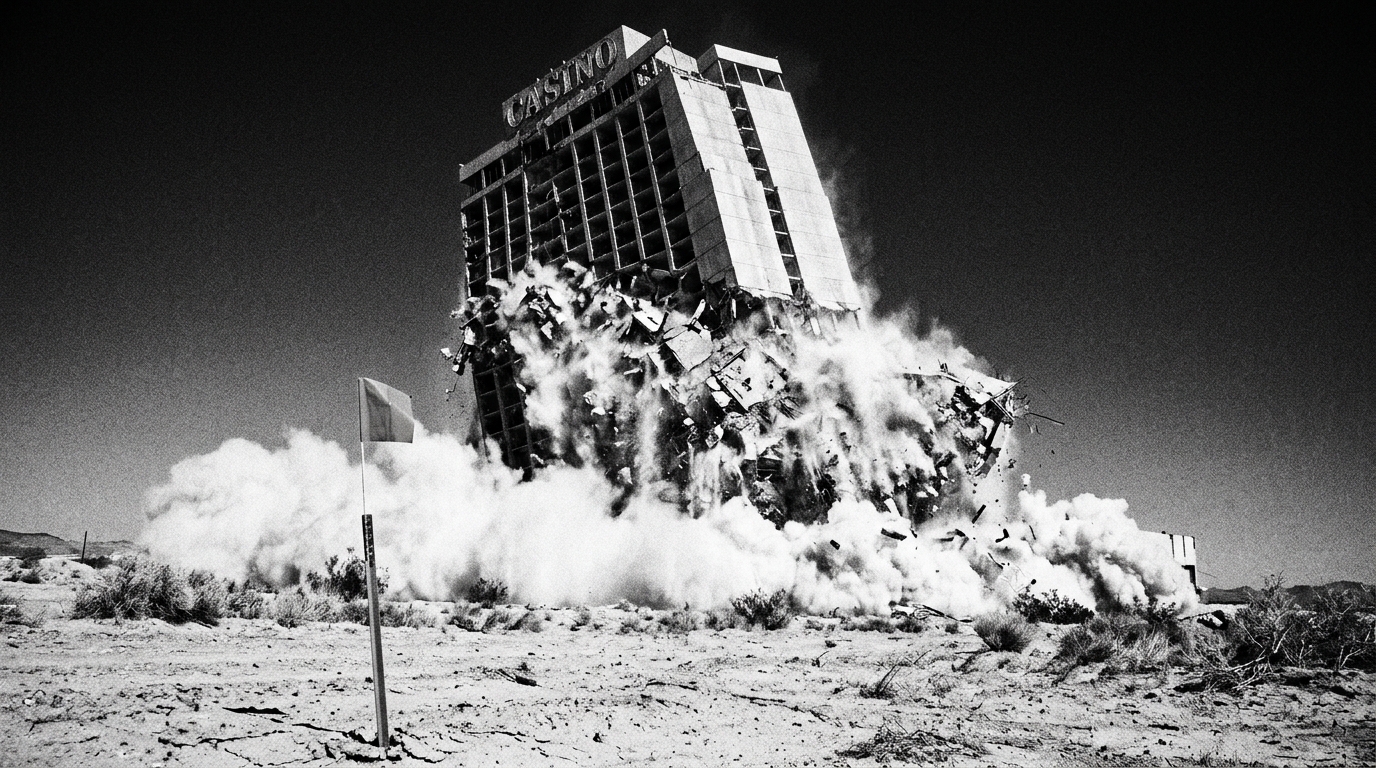
Boyd Gaming Built a $250M Casino in 2008. They Blew It Up 18 Years Later for Housing Lots.

Boyd Gaming Built a $250M Casino in 2008. They Blew It Up 18 Years Later for Housing Lots.

The Eastside Cannery wasn't some relic from the Rat Pack era... it was younger than most iPhones when they brought the demolition crew in. When a quarter-billion-dollar asset becomes more valuable as dirt, that's not a Vegas story. That's an ownership story every operator should understand.

I watched a guy build a house once. Custom job. Took him two years, cost him everything he had, and he was so proud of it he threw a party the night they finished the landscaping. Eleven years later, the neighborhood had shifted, the schools had changed, the demographics weren't what the original pro forma assumed. He sold it to a developer who scraped it and put up townhomes. He told me, "The house was fine. The house was great, actually. The market just decided it didn't need my house anymore." He wasn't angry. He was tired. There's a difference.

That's the Eastside Cannery. A $250 million casino-hotel that opened in the summer of 2008... which, if you remember your economic history, was roughly the worst possible moment to open anything that required discretionary spending from locals. Bill Wortman built it on Boulder Highway to serve the east side of town. Boyd Gaming picked it up in 2016 as part of their Cannery Casino Resorts acquisition. COVID shut it down in March 2020. And here's the part that should make every owner in America pause: Boyd never reopened it. Not in 2021 when Vegas was roaring back. Not in 2022. Not ever. Six years of just... sitting there. Dark. Until they imploded the tower on March 5th and announced they're selling the land for housing.

Eighteen years old. That's it. The Tropicana lasted 67 years before they brought the wrecking ball. The Dunes made it 38. The Eastside Cannery didn't even get old enough to rent a car. And the reason Boyd gave... "insufficient market demand"... is four words that carry about $250 million worth of pain. Because somewhere in a filing cabinet, there's an original feasibility study for that property that said the east side of Las Vegas needed another casino-hotel. That study was wrong. Or it was right for a moment and the moment passed. Either way, a quarter of a billion dollars in construction costs evaporated, and the highest and best use of the land turned out to be residential lots. Not a renovation. Not a rebrand. Not a repositioning. Housing.

Here's what I keep thinking about. Boyd is a sophisticated operator. They didn't make this decision emotionally. They looked at the cost to reopen (deferred maintenance on six years of vacancy alone would be staggering), the capital required to bring it back to competitive condition, the market demand on Boulder Highway versus the Strip versus their other locals properties... and the math said the building was worth more as rubble than as a going concern. That's what I call the CapEx Cliff in action. There's a point where deferred maintenance and market obsolescence cross a line, and the asset doesn't just decline in value... it becomes a liability. Boyd saw that line. Six years of darkness will do that to a building. The mechanicals alone, the HVAC, the plumbing, the electrical... sitting dormant for six years in the desert isn't preservation. It's decay in slow motion. By the time you factor in the PIP-equivalent investment to make it operational again, plus the revenue uncertainty in a locals market that apparently didn't miss it enough to matter, the math tips toward demolition. Every month that building sat dark, the cliff got steeper.

This isn't really a Las Vegas story. It's a story about what happens when market assumptions shift underneath a real estate investment and nobody can will them back. I've seen this in smaller scale at properties across the country... a select-service that opened into a market that grew differently than the demand study predicted, an independent that got squeezed when three branded competitors showed up within two miles. The scale here is dramatic because it's Vegas and it's $250 million. But the principle is universal. Your asset's value isn't set by what you spent building it. It's set by what the market around it decides it needs. And sometimes the market decides it doesn't need you at all.

Operator's Take

If you're an owner sitting on a property that's been underperforming since COVID and you keep telling yourself "the market will come back"... look at the Eastside Cannery and ask yourself the honest question. Not the hopeful question. The honest one. Run the real numbers on what it would cost to bring your asset back to competitive condition versus what the land or the exit is worth today. I'm not saying sell everything. I'm saying stop falling in love with sunk costs. Boyd spent $250 million building that property and they still had the discipline to say "this is worth more as dirt." If a publicly traded company with sophisticated asset management can walk away from a quarter-billion-dollar investment, you can at least run the scenario. Talk to your broker. Talk to your lender. Know your number. Because the worst position in hospitality isn't owning a bad asset... it's owning a bad asset and pretending it's a good one because you remember what it cost to build.

Read full analysis → ← Show less
Source: Google News: Casino Resorts
MGM Fed 1,400 TSA Workers to Keep Vegas Running. That's Not Charity. That's the P&L Talking.

MGM Fed 1,400 TSA Workers to Keep Vegas Running. That's Not Charity. That's the P&L Talking.

When the government shutdown left 1,000 TSA agents at Harry Reid Airport working without pay, MGM didn't send thoughts and prayers... they sent 1,400 lunches. The interesting part isn't the generosity. It's what it tells you about how exposed your revenue is to things completely outside your control.

I managed a casino resort once during a government shutdown back in the mid-2010s. Different shutdown, same movie. The moment TSA lines started creeping past 90 minutes at the airport, our reservation cancellations spiked within 48 hours. Not because guests couldn't get there. Because they saw the news coverage of people standing in line for two hours and decided it wasn't worth the hassle. Perception killed us faster than reality did.

So when I read that MGM delivered 1,400 lunches and 700 hygiene kits to unpaid TSA workers at Harry Reid International during this latest shutdown... I don't see a feel-good corporate responsibility story. I see a company doing the math. The American Hotel & Lodging Association pegs the industry cost of a government shutdown at roughly $31 million a day. The U.S. Travel Association says the broader travel economy bleeds about a billion a week. MGM's lunch bill was probably $15,000 to $20,000. Maybe less. That's not philanthropy. That's one of the cheapest risk mitigation strategies I've ever seen. Keep the TSA agents fed and showing up, keep the security lines under 30 minutes, keep the planes landing on time, keep 150,000 hotel rooms in Las Vegas occupied. The return on that investment is absurd.

And here's the part that should bother every operator who isn't in Las Vegas. While Harry Reid was running smooth because the resort industry stepped up, airports in other cities were a mess. Long lines. Delays. Frustrated travelers deciding to stay home. If you're running a hotel in a market where nobody thought to feed the TSA... you ate the cancellations while Vegas kept humming. That 45% of consumers who told AHLA they'd change travel plans because of shutdown disruptions? Those aren't hypothetical people. Those are the bookings that disappeared from your March pace report with no explanation other than "demand softened." Demand didn't soften. Demand got rerouted to markets that kept their airports functional.

This is one of those stories that reveals a vulnerability most of us don't spend enough time thinking about. Your revenue depends on an airport that depends on federal employees who can go weeks without a paycheck every time Congress can't get its act together. That's your supply chain. And unlike your linen vendor or your food distributor, you can't switch to a backup. You've got one airport. Maybe two if you're lucky. And every TSA agent who calls in sick because they can't afford gas to get to work is a longer security line, a missed connection, a cancelled trip, and a room that sits empty tonight.

MGM understood something that most hotel companies still haven't internalized: the infrastructure around your property IS your property. The airport, the roads, the transit system, the workforce that operates all of it. When any piece of that breaks, your P&L feels it before your brand's corporate office even notices. Vegas figured this out because Vegas has to... the entire city is a single-industry economy built on people getting on planes. But the principle applies everywhere. Your hotel doesn't exist in isolation. It exists inside a system. And the cheapest thing you can do is make sure the weakest link in that system doesn't snap.

Operator's Take

Look... if you're a GM in any market that depends on air travel (and that's most of you), here's what I'd do this week. Find out who your local TSA Federal Security Director is. Introduce yourself. Build the relationship now, before the next shutdown. Because there will be a next one. If your hotel has F&B, figure out what it costs you to provide meals to federal workers at your local airport during a disruption. Run the number against one night of lost occupancy. You'll find it's not even close. A few hundred dollars in food buys you goodwill, community visibility, and an airport that keeps functioning. And if you're part of a local hotel association, get this on the agenda now. MGM did this alone because MGM can. Most of us need to do it together. The properties that build these relationships before the crisis are the ones that don't lose three points of occupancy when Congress decides to play chicken with the budget again.

Read full analysis → ← Show less
Source: Google News: MGM Resorts
A Scorpion Stung a Guest in His Hotel Room. The Lawsuit Isn't the Expensive Part.

A Scorpion Stung a Guest in His Hotel Room. The Lawsuit Isn't the Expensive Part.

A Las Vegas visitor got stung by an Arizona bark scorpion in his hotel room and is now eyeing litigation. The sting will heal. The operational failure that let it happen is the kind of thing that quietly eats a property alive from the inside out.

Let me tell you what this story is really about. It's not about a scorpion. It's not even about a lawsuit. It's about the thousand small decisions that determine whether a guest finds a venomous arachnid in their bed or doesn't.

A visitor from Los Angeles checked into an off-Strip casino hotel last May and got stung on the arm by an Arizona bark scorpion... the most venomous species in the country. His roommate caught it on video before killing it. The guest says he never got an apology. Now, almost a year later, he's talking to a lawyer. The same attorney, by the way, who represented a guest stung multiple times at a major Strip resort back in 2023. That guest claimed PTSD and filed a lawsuit alleging the hotel was dismissive and unapologetic. See the pattern? It's not just the sting. It's the response after the sting. That's where properties turn a bad night into a six-figure problem.

Here's what nobody's telling you about pest control in desert markets. Every hotel in southern Nevada knows scorpions exist. Every single one. The Mojave Desert didn't sneak up on anybody. Which means the question isn't "could this happen?" The question is "what's your program, how often do you inspect, and what does your team do in the first 90 seconds after a guest reports it?" I worked with a GM years ago in a desert market who had pest control on a biweekly rotation and still found a scorpion in an electrical panel during a routine walk. His response? He sealed every ground-floor penetration point in the building within a week, added monthly inspections for the lower floors, and trained his front desk team on exactly what to say and do if a guest ever reported a critter. Cost him maybe $8,000 total. He never had an incident reach a lawyer. Not once in seven years.

The bed bug litigation wave that's hit Vegas properties since 2022 should have been the wake-up call. Multiple Strip and off-Strip hotels have faced complaints and lawsuits over pest issues in the last few years. The legal theory is premises liability... the hotel has a duty to provide a safe, habitable environment, and in a region where scorpions are endemic, "we didn't know" isn't a defense. Nevada courts expect you to take reasonable precautions against known dangers. If your pest management vendor comes quarterly and you're in a market where bark scorpions are part of the ecosystem, a plaintiff's attorney is going to have a very good day explaining to a jury why quarterly wasn't enough.

But here's the thing that will cost you more than the settlement. The video. The guest's roommate recorded the scorpion in the room. That footage lives forever. It gets shared. It gets embedded in news stories (it already has). One guest with a phone and a legitimate grievance can do more damage to your online reputation than a year of five-star reviews can repair. And when potential guests Google your property and find scorpion footage... they don't read the part where you upgraded your pest control program afterward. They just book somewhere else.

Operator's Take

If you're running a property anywhere in the Sun Belt... Vegas, Phoenix, Texas, Southern California... pull your pest control contract this week and read it line by line. How often are they treating? Are they inspecting interior spaces or just perimeter spraying? Do they specifically address scorpions, or is it a generic program? Then walk your ground-floor rooms and look at every exterior wall penetration... pipes, conduit, HVAC lines. Bark scorpions enter through gaps smaller than a credit card. Seal them. Total cost for caulking and expanding foam on a 200-key property is under $2,000 in materials. Now train your front desk on the response protocol: immediate room move, genuine apology, manager on scene within minutes, incident documented with photos, and a follow-up call the next day. The pest is a facilities problem. The lawsuit is almost always a service recovery failure. Fix both.

Read full analysis → ← Show less
Source: Google News: Casino Resorts
Wall Street Is Repricing Casino Hotels. Your Comp Set Might Be Next.

Wall Street Is Repricing Casino Hotels. Your Comp Set Might Be Next.

Jefferies just downgraded Las Vegas Sands and trimmed Wynn's target in the same week, and the reasoning has nothing to do with dice... it's about margin pressure, occupancy softness, and a tourism environment that should worry every operator within three miles of the Strip.

I worked with a casino resort GM once who had a saying he'd repeat every time the analysts published their quarterly notes: "Wall Street doesn't know what room 1412 smells like, but they set the price of the building." He wasn't wrong. And this week, the analysts are setting prices again... and the direction should make you pay attention even if you've never dealt a hand of blackjack in your life.

Jefferies dropped Las Vegas Sands from Buy to Hold and slashed their price target from $72 to $61. Same day, they trimmed Wynn's target from $161 to $150 but kept the Buy rating. The stated reasons sound like analyst-speak until you translate them into operator language. For Sands, the downgrade centers on their strategic pivot toward "premium mass" players in Macau... which sounds like growth but actually means higher reinvestment costs, more promotional spend, and thinner margins. They're chasing a customer segment that costs more to acquire and more to keep. Wynn's Las Vegas properties saw occupancy decline and RevPAR soften in Q4 2025 even while ADRs ticked up 2.2%. EBITDAR margin fell 320 basis points year over year. Read that again. They pushed rate, lost heads in beds, and the margin still contracted. That's not a rate strategy problem. That's a demand problem dressed up in a higher ADR.

Here's why this matters if you're nowhere near a casino floor. When the big integrated resorts in Las Vegas start showing occupancy pressure and margin compression, it doesn't stay contained. These properties drive citywide conventions, airlift, entertainment spending, and restaurant traffic. When Wynn's rooms are softer, the 200-key select-service three miles from the convention center feels it inside 90 days. When Sands is spending more on promotions to attract gamblers in Macau, that capital isn't flowing into the non-gaming amenities that drive the broader tourism ecosystem. The ripple moves outward. It always does.

The Macau picture is more nuanced than the headlines suggest. Sands beat estimates in Q4 2025... $3.65 billion in revenue, $0.85 EPS against a $0.77 consensus. Singapore's Marina Bay Sands posted a record $2.92 billion in adjusted property EBITDA for the full year, up 42%. These aren't distressed companies. But the analyst concern isn't about last quarter. It's about next year's margin structure. Macau gaming revenue is projected to grow 5-6% in 2026, mostly from mass-market and slots, with VIP revenue softening. If you're Sands pivoting toward premium mass, you're investing in a segment where everyone else is also investing, in a market growing mid-single digits, while your Singapore expansion (IR2) is tilting toward non-gaming additions with inherently lower returns. The math works until it doesn't. And analysts are starting to pencil in the "doesn't."

What I keep coming back to is this: Wynn pushed ADR 2.2% and still lost margin. That's the canary. When a luxury operator with pricing power this strong can't flow rate increases through to the bottom line, cost pressures are winning. Labor, energy, food costs, insurance... the usual suspects. And if it's happening at properties with $400+ ADRs and world-class yield management, imagine what it looks like at your $159 select-service where your rate ceiling is a lot lower and your cost floor is roughly the same. The tourism environment that Jefferies is calling "choppy" in Vegas doesn't stop at the city limits. Secondary and tertiary markets that depend on discretionary travel are next. They're always next.

Operator's Take

If you're running a hotel in a market that depends on leisure and discretionary travel... Vegas, Orlando, Nashville, any convention-heavy city... pull your trailing 90-day flow-through report right now. Not revenue. Flow-through. If your ADR is up but your GOP margin is flat or contracting, you're on the same treadmill Wynn is on, just at a different price point. This is what I call the Flow-Through Truth Test. Revenue growth that doesn't reach the bottom line isn't growth... it's activity. Run your actual cost-per-occupied-room against where it was 12 months ago. If it's moved more than your rate, you have a margin problem that no amount of yield management is going to fix. The answer is on the expense side, and the time to address it is before your next ownership review, not during it.

Read full analysis → ← Show less
Source: Google News: Wynn Resorts
The Luxor Buffet Is Gone. Your F&B Sacred Cow Might Be Next.

The Luxor Buffet Is Gone. Your F&B Sacred Cow Might Be Next.

MGM just closed one of the last affordable buffets on the Strip, and the timing alongside their new all-inclusive package at Luxor tells you exactly where casino F&B strategy is headed. If you're still running a loss-leader restaurant because "guests expect it," this is your wake-up call.

I worked with a casino F&B director years ago who kept a spreadsheet he called "The Lie." It tracked every food outlet in the building... actual food cost, labor, waste, revenue per cover, the works. One column was labeled "What We Tell Ownership" and the next was "What It Actually Costs." The buffet was always the biggest gap between those two columns. Every single month. He'd show it to me sometimes after his shift, shaking his head. "We lose eleven dollars a cover and call it a marketing expense. At what point does the marketing expense become just... an expense?"

That question finally got answered at the Luxor. MGM shut down the buffet on March 30th. It was running breakfast and lunch only, $31.99 a head, one of the cheapest options left on the Strip. And here's what makes this interesting... it wasn't just a closure. It was a swap. One week before they pulled the plug, MGM announced an all-inclusive package at the Luxor starting at $330 for a two-night stay that bundles dining at Diablo's Cantina, Pyramid Café, Public House, and Backstage Deli. They didn't eliminate the value proposition. They restructured it so the guest pays upfront and the revenue flows to outlets where MGM actually controls food cost, labor, and margin. That's not a retreat from affordable dining. That's a financial engineering move disguised as a menu change.

The Strip is down to eight buffets total. Half of them are still MGM properties. The ones that survived... Bacchanal at Caesars, the Wynn buffet... repositioned as premium experiences at $70-80 per person. They're destinations, not loss leaders. Everything in the middle is disappearing, replaced by food halls like Block 16 at the Cosmopolitan and Proper Eats at ARIA. Food halls need fewer cooks, generate less waste, and let you rotate concepts without a full restaurant buildout. The math is brutal for traditional buffets... you need bodies to run a buffet line, bodies to bus it, bodies to keep it stocked, and the guest is incentivized to eat as much as possible. In a labor market where you can't staff a normal restaurant, running an all-you-can-eat operation at $32 a head is basically setting money on fire in a very organized fashion.

But here's what this really means for operators outside of Vegas, because this pattern isn't unique to the Strip. Every hotel in America has at least one F&B outlet that exists because "guests expect it" rather than because it makes financial sense. The breakfast buffet that costs you $14 per cover in food and labor while you charge $22. The lobby bar that's staffed from 4 PM to midnight but only does real volume from 6 to 9. The room service menu that requires a dedicated line cook for twelve covers a night. These are all versions of the same decision MGM just made at the Luxor. The question isn't whether the outlet is popular. The question is whether the revenue it generates (directly and indirectly) justifies the fully loaded cost of running it. And "we've always had it" is not a financial justification... it's inertia with a menu.

What MGM did right is they didn't just kill the buffet and leave a hole. They redirected the value into a bundled package that captures the spend upfront and steers it to better-margin outlets. That's the template. If you're going to eliminate a loss leader, you need to replace the PERCEPTION of value, not just the outlet. The guest who came to the Luxor for the $32 buffet wasn't coming for the food. They were coming for the deal. MGM is now selling them a different deal that happens to be more profitable. Same psychology. Better economics.

Operator's Take

If you're an F&B director or a GM with a money-losing outlet you've been defending with "it drives room bookings" or "guests expect it"... pull the P&L on that outlet this week. Not the revenue line. The fully loaded cost including allocated labor, food waste, utilities, and the management hours you spend dealing with it. Then ask yourself the MGM question: can I replace this with something that delivers the same guest perception of value at half the operating cost? A curated grab-and-go, a local restaurant partnership, a bundled package that redirects spend to your profitable outlets. The answer doesn't have to be "close it tomorrow." But the answer can't keep being "we've always had it." That's what I call the False Profit Filter... some of these outlets look like they're contributing when they're actually starving your margins and you've just gotten used to the pain. Bring the real number to your owner before they read about MGM's move and start asking questions you haven't prepared for.

Read full analysis → ← Show less
Source: Google News: MGM Resorts
Las Vegas Is Selling Itself Like a Cruise Ship Now. That's a $183 ADR Admitting Defeat.

Las Vegas Is Selling Itself Like a Cruise Ship Now. That's a $183 ADR Admitting Defeat.

Resorts World and MGM are bundling rooms, meals, and entertainment into all-inclusive packages for the first time on the Strip. When two of the biggest operators in Las Vegas start pricing like Caribbean resorts, the question isn't whether it works... it's what the 7.5% visitor decline already cost them.

Available Analysis

MGM's new all-inclusive package at Luxor and Excalibur starts at $330 for a two-night stay for two guests, inclusive of rooms, resort fees, three meals per day, show tickets, and parking. Resorts World is charging $150 per person per night as an add-on at Conrad Las Vegas, bundling valet, dining at five restaurants, pool access, and nightclub entry. Two very different price points targeting two very different segments. Same underlying signal.

Las Vegas ADR fell 5% to $183.52 in 2025. Occupancy dropped 3.3 points to 80.3%. RevPAR declined 8.8% to $147.30. Visitation was down 7.5% to roughly 38.5 million. Those aren't soft numbers. That's a market repricing itself. And when you bundle a room, three meals, a show, a roller coaster ride, and parking into a $82.50-per-night-per-person package (which is what MGM's deal works out to), you're not creating value. You're obscuring rate erosion behind a more palatable wrapper.

Let's decompose the MGM deal. $330 for two nights, two guests. That's $82.50 per person per night. Subtract meals (even conservatively, $40/day per person at MGM's mid-tier restaurants), show tickets (face value $50-80 each, split across two nights), parking ($18-20/night), and resort fees ($39-51/night depending on property). The implied room rate after backing out the bundled components is somewhere between $0 and $40 per night. That's not a premium hospitality product. That's inventory liquidation with better packaging. MGM's profit margins were 1.2% in 2025, down from 4.3% in 2024. Bundling at this price point doesn't fix that margin compression. It accelerates it... unless the bet is that bundled guests spend significantly more on gaming, which is the only scenario where this math survives a spreadsheet.

Resorts World's Conrad play is structurally different and more defensible. At $150 per person per night on top of room rate, it's an ancillary revenue capture tool, not a rate substitution. The property keeps its ADR intact and monetizes F&B, nightlife, and pool access that might otherwise go underutilized. That's a yield management decision, not a distress signal. The two-guest minimum and the summer booking window (May 26 through September 8) suggest they're targeting couples during a historically softer period. If Conrad is running 70% occupancy in July, capturing an incremental $300 per room night in bundled spend from guests who were coming anyway is accretive. The question is attachment rate. If 15% of summer bookings add the package, the numbers work. If it's 5%, it was a press release.

The broader implication is what concerns me. Las Vegas has spent two decades moving upmarket... higher ADR, premium experiences, $500-a-night rooms that didn't exist in 2005. An all-inclusive model works in the opposite direction. It trains the consumer to think in total cost, not nightly rate. It makes comparison shopping easier (which benefits the buyer, not the seller). And it creates a floor that becomes very difficult to raise once established. An owner I spoke with last year put it simply: "Once you teach a guest your price includes everything, try charging them for something next year." MGM is forecasting 15.23% annual earnings growth. I'd want to see Q1 2026 results (due April 29) before I believed bundling at Luxor and Excalibur contributes to that rather than diluting it.

Operator's Take

Here's what I want every operator in a competitive leisure market to understand about this. Las Vegas just gave your guests a new reference point. When MGM bundles two nights, meals, shows, and parking for $330... that's the number your leisure traveler is comparing you to, whether you're in Vegas or not. If you're running a resort or a leisure-heavy property anywhere in the Sun Belt, pull your summer package pricing right now and stress-test it against this. Not to match it... you can't, and you shouldn't try. But know what the consumer is seeing. Second thing: if your brand or management company starts floating "all-inclusive" or "bundled experience" ideas for your property, run the math on implied room rate after you back out the component costs. If the implied rate is below your breakeven, that's not a package... that's a subsidy. I've seen this movie before. Somebody packages their way into volume and out of margin, and 18 months later you're trying to retrain the market to pay rack rate again. That's what I call the Rate Recovery Trap. You cut rate to fill rooms today, and you spend the next year retraining the market to pay what you were worth before the cut. Know your floor before someone else sets it for you.

— Mike Storm, Founder & Editor
Read full analysis → ← Show less
Source: Google News: Resort Hotels
End of Stories