Boyd Gaming Built a $250M Casino in 2008. They Blew It Up 18 Years Later for Housing Lots.
The Eastside Cannery wasn't some relic from the Rat Pack era... it was younger than most iPhones when they brought the demolition crew in. When a quarter-billion-dollar asset becomes more valuable as dirt, that's not a Vegas story. That's an ownership story every operator should understand.
I watched a guy build a house once. Custom job. Took him two years, cost him everything he had, and he was so proud of it he threw a party the night they finished the landscaping. Eleven years later, the neighborhood had shifted, the schools had changed, the demographics weren't what the original pro forma assumed. He sold it to a developer who scraped it and put up townhomes. He told me, "The house was fine. The house was great, actually. The market just decided it didn't need my house anymore." He wasn't angry. He was tired. There's a difference.
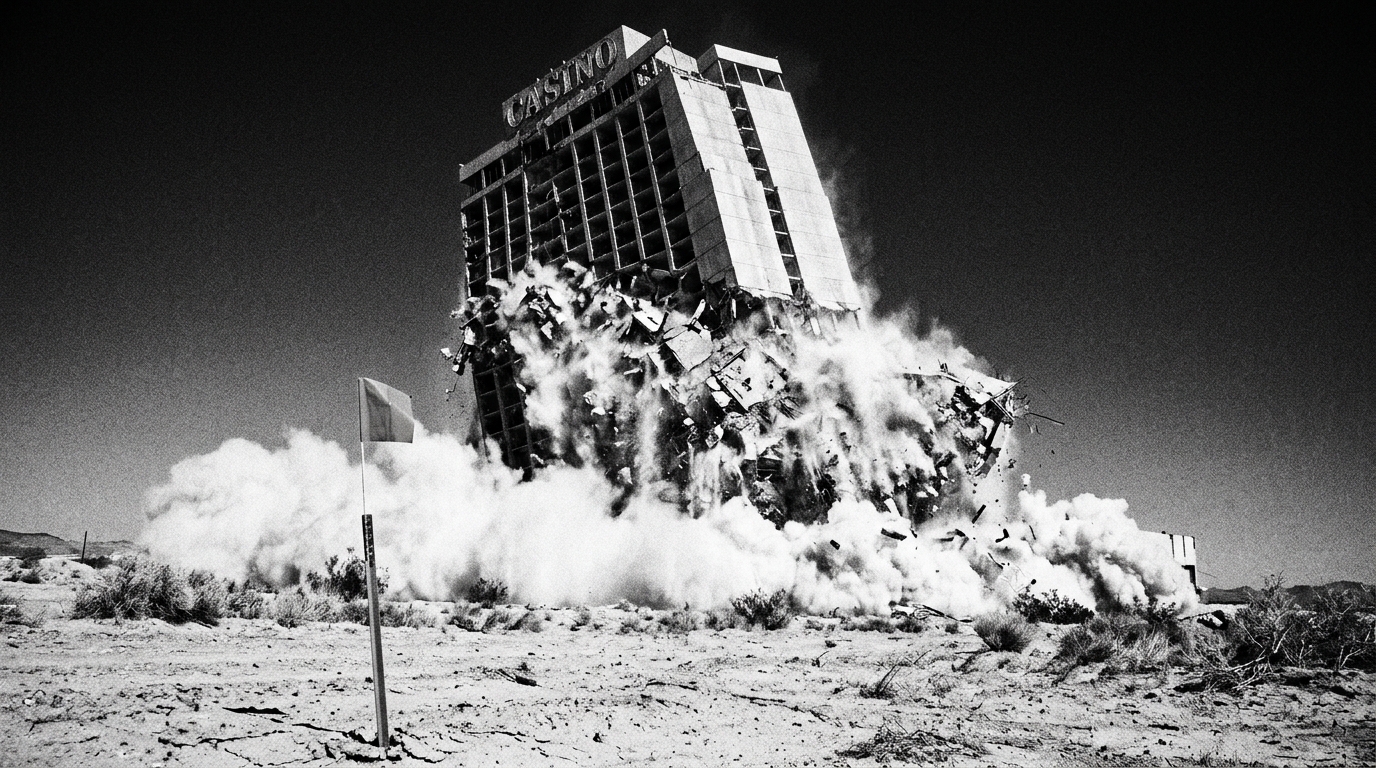
That's the Eastside Cannery. A $250 million casino-hotel that opened in the summer of 2008... which, if you remember your economic history, was roughly the worst possible moment to open anything that required discretionary spending from locals. Bill Wortman built it on Boulder Highway to serve the east side of town. Boyd Gaming picked it up in 2016 as part of their Cannery Casino Resorts acquisition. COVID shut it down in March 2020. And here's the part that should make every owner in America pause: Boyd never reopened it. Not in 2021 when Vegas was roaring back. Not in 2022. Not ever. Six years of just... sitting there. Dark. Until they imploded the tower on March 5th and announced they're selling the land for housing.
Eighteen years old. That's it. The Tropicana lasted 67 years before they brought the wrecking ball. The Dunes made it 38. The Eastside Cannery didn't even get old enough to rent a car. And the reason Boyd gave... "insufficient market demand"... is four words that carry about $250 million worth of pain. Because somewhere in a filing cabinet, there's an original feasibility study for that property that said the east side of Las Vegas needed another casino-hotel. That study was wrong. Or it was right for a moment and the moment passed. Either way, a quarter of a billion dollars in construction costs evaporated, and the highest and best use of the land turned out to be residential lots. Not a renovation. Not a rebrand. Not a repositioning. Housing.
Here's what I keep thinking about. Boyd is a sophisticated operator. They didn't make this decision emotionally. They looked at the cost to reopen (deferred maintenance on six years of vacancy alone would be staggering), the capital required to bring it back to competitive condition, the market demand on Boulder Highway versus the Strip versus their other locals properties... and the math said the building was worth more as rubble than as a going concern. That's what I call the CapEx Cliff in action. There's a point where deferred maintenance and market obsolescence cross a line, and the asset doesn't just decline in value... it becomes a liability. Boyd saw that line. Six years of darkness will do that to a building. The mechanicals alone, the HVAC, the plumbing, the electrical... sitting dormant for six years in the desert isn't preservation. It's decay in slow motion. By the time you factor in the PIP-equivalent investment to make it operational again, plus the revenue uncertainty in a locals market that apparently didn't miss it enough to matter, the math tips toward demolition. Every month that building sat dark, the cliff got steeper.
This isn't really a Las Vegas story. It's a story about what happens when market assumptions shift underneath a real estate investment and nobody can will them back. I've seen this in smaller scale at properties across the country... a select-service that opened into a market that grew differently than the demand study predicted, an independent that got squeezed when three branded competitors showed up within two miles. The scale here is dramatic because it's Vegas and it's $250 million. But the principle is universal. Your asset's value isn't set by what you spent building it. It's set by what the market around it decides it needs. And sometimes the market decides it doesn't need you at all.
If you're an owner sitting on a property that's been underperforming since COVID and you keep telling yourself "the market will come back"... look at the Eastside Cannery and ask yourself the honest question. Not the hopeful question. The honest one. Run the real numbers on what it would cost to bring your asset back to competitive condition versus what the land or the exit is worth today. I'm not saying sell everything. I'm saying stop falling in love with sunk costs. Boyd spent $250 million building that property and they still had the discipline to say "this is worth more as dirt." If a publicly traded company with sophisticated asset management can walk away from a quarter-billion-dollar investment, you can at least run the scenario. Talk to your broker. Talk to your lender. Know your number. Because the worst position in hospitality isn't owning a bad asset... it's owning a bad asset and pretending it's a good one because you remember what it cost to build.