Today · Jun 9, 2026
Fertitta's $17.6B Caesars Bet Runs Through Every State Gaming Board. Pennsylvania Just Raised Its Hand.

Fertitta's $17.6B Caesars Bet Runs Through Every State Gaming Board. Pennsylvania Just Raised Its Hand.

Tilman Fertitta's all-cash acquisition of Caesars looks like a hospitality mega-merger on paper. But the real bottleneck isn't the deal structure... it's the state-by-state regulatory gauntlet that could drag this into 2027 and beyond, and the technology integration nobody's talking about yet.

So here's what's actually happening beneath the headline. Fertitta Entertainment is buying Caesars for roughly $17.6 billion in enterprise value... $31 per share in cash, plus the assumption of over $11 billion in existing Caesars debt. That $31 represents a 49% premium to where the stock sat on February 25th before the buyout rumors started circulating. The financing reportedly stacks $2 to $3 billion in equity against $4 to $5 billion in new borrowing against combined assets. And Pennsylvania's gaming control board just publicly confirmed that Caesars hasn't even submitted the required petition for change of control yet. For a deal announced May 28th, that's... not great optics on the regulatory front.

Look, I get the excitement. Fertitta combining Golden Nugget casinos, Landry's restaurants, and Caesars' 65-million-member loyalty database sounds like a tech integrator's dream. On paper. But I've been through enough system mergers to know what this actually looks like at property level. You've got Caesars running one loyalty platform, one PMS ecosystem, one sportsbook infrastructure. Golden Nugget runs its own. Landry's has restaurant tech that was never designed to talk to hotel systems. Someone is going to sit in a room and say "we'll unify everything on a single platform" and show a beautiful architecture diagram with arrows pointing in all the right directions. I've built those diagrams. I've also watched them fall apart when they hit production environments with legacy systems that haven't been updated since 2019. The "seamless integration" of a 65-million-member database with Fertitta's existing restaurant and casino loyalty infrastructure is a multi-year, multi-hundred-million-dollar technology project that nobody in this deal announcement is quantifying. Because quantifying it would make the synergy projections look a lot less impressive.

Here's the piece that matters for operators. Every state where Caesars holds a gaming license requires its own regulatory approval for this change of control. Pennsylvania is just the first to make noise about it publicly. Caesars operates Harrah's Philadelphia plus multiple online casino and sportsbook licenses in the state. Each approval process has its own timeline, its own investigation requirements, and its own political dynamics. The deal isn't expected to close until 2027, and honestly, that timeline feels optimistic given the number of jurisdictions involved. Meanwhile, there's a go-shop period running until July 11th where Caesars can entertain competing offers (Carl Icahn reportedly floated something around $33 per share previously). So for the next month-plus, this deal isn't even locked.

What nobody's asking is what happens to the technology teams and operational staff during this regulatory limbo. I consulted with a casino resort group a few years back that went through a similar multi-state approval process for a much smaller acquisition. The uncertainty period lasted 14 months. During that time, they lost 30% of their IT staff to competitors who could actually promise job stability. The people who build and maintain the systems... the ones who know where the legacy code bodies are buried... they don't wait around for regulators to make up their minds. They update their LinkedIn profiles and take calls from recruiters. And when the deal finally closes and someone says "okay, now integrate everything," the institutional knowledge that would have made that integration survivable is already gone. That's the invisible cost of a regulatory gauntlet this long.

The Deutsche Bank downgrade to Hold tells you what the financial markets actually think about this. The analysts aren't betting on a competing bid. They're aligning their price targets to $31 and essentially saying "this is the ceiling, take the money." Fertitta's dual role as U.S. Ambassador to Italy adds another layer of complexity... he's limited in direct business involvement, which means the operational vision for combining these entities is being managed by proxy during the most critical planning phase. For the 50-plus Caesars properties and however many Golden Nugget locations that will eventually need to operate as one company... the technology decisions being made (or not made) right now during this limbo period will determine whether this merger creates actual value or just consolidates debt under a bigger tent.

Operator's Take

If you're running a property inside the Caesars ecosystem right now, the single most important thing you can do is document everything about your current tech stack, vendor contracts, and integration dependencies. Don't wait for the new ownership to ask... build that inventory now. In every acquisition I've seen, the operators who walked into the transition meeting with a complete picture of their systems, their costs, and their pain points were the ones who kept their seats at the table. The ones who waited to be told what to do got told to leave. If you're at a competing casino resort watching this play out... this is your hiring window. Caesars' best technology people are nervous right now, and nervous people take phone calls. Reach out before July.

— Mike Storm, Founder & Editor
Read full analysis → ← Show less
Source: Google News: Caesars Entertainment
People Inc. Bids $48.30 Per Share for MGM. The Stock Already Trades Above It.

People Inc. Bids $48.30 Per Share for MGM. The Stock Already Trades Above It.

Barry Diller's People Inc. offered $18 billion for MGM Resorts, but the market immediately priced the stock past the bid, which tells you everything about what Wall Street thinks this offer is actually worth.

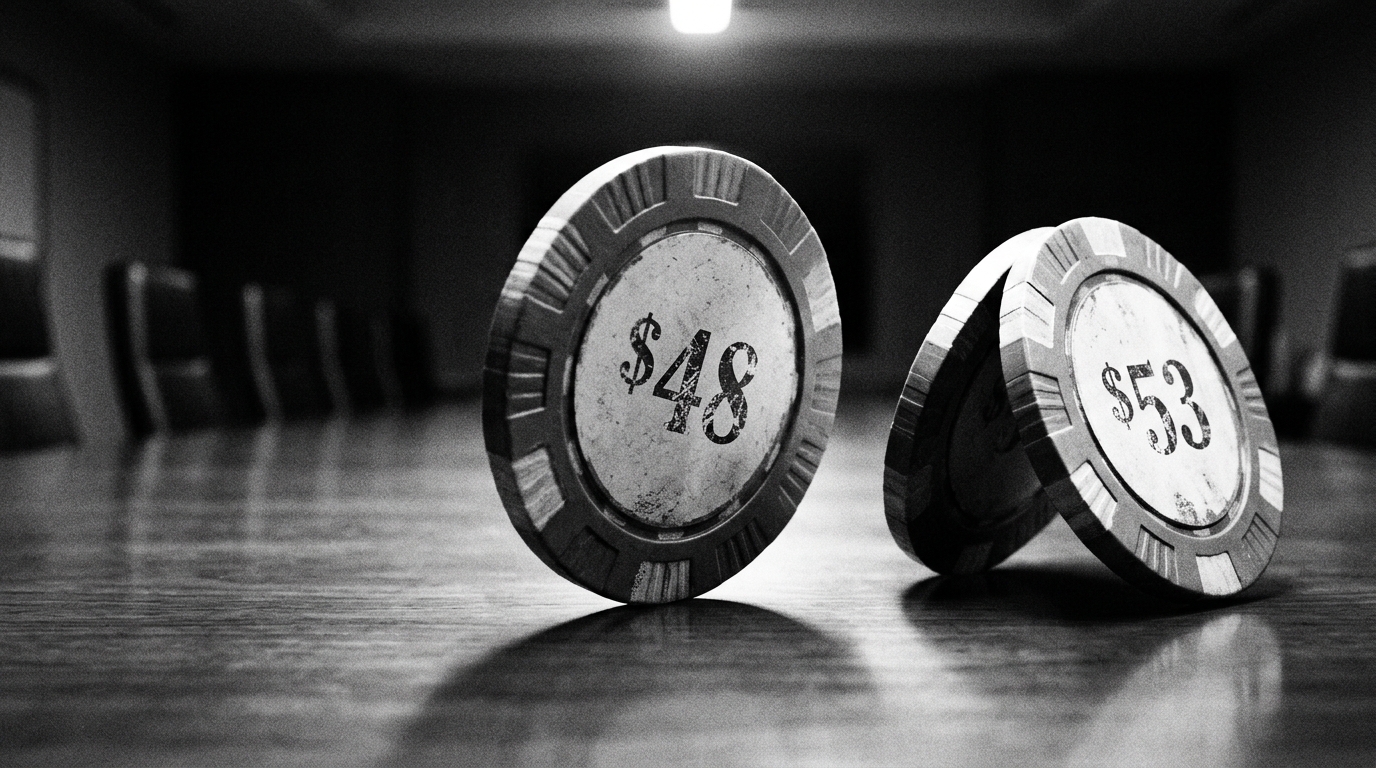
$48.30 per share. That's People Inc.'s opening bid for the roughly 74% of MGM Resorts it doesn't already own. The implied enterprise value sits around $18 billion. MGM closed above $50 on the news. The spread between offer and market price is the market's way of saying: not enough.

Let's decompose this. People Inc. already holds 26% of MGM's voting shares. At $48.30, the actual cash outlay for the remaining stake is approximately $9.2 billion. The implied EV/EBITDAR multiple lands around 5.5x on 2027 projected earnings. Two weeks ago, Fertitta's bid for Caesars priced at 6.6x. Apply that same multiple to MGM and you're looking at something closer to $83.85 per share. The gap between $48.30 and $69 is not a rounding error. It's $5.3 billion in equity value that Diller is hoping the board leaves on the table.

The timing is instructive. MGM just sold Northfield Park for $546 million, generating $420 million in net cash. Q1 revenue came in at $4.45 billion (beat), while EPS missed at $0.49. BetMGM continues to grow. The digital business is the part of this story that makes the 5.5x multiple look almost insulting... you're pricing a gaming company with a scaling digital sportsbook at a multiple below its brick-and-mortar peer. An owner I advised on a mixed-use deal once told me, "when someone offers to buy your best asset at your worst asset's price, they're not making a deal... they're making a bet you won't notice." That applies here.

The structural question is the BetMGM joint venture with Entain. It's a 50/50 split. A full People Inc. takeover restructures the governance around that asset, and Entain's interests don't automatically align with Diller's. Any valuation of MGM that doesn't independently price the digital business is incomplete. Stifel has MGM at $50-$55. Truist set a $55 target. Neither of those figures accounts for what a bidding war or a strategic premium for BetMGM control would do.

This is a first move, not a final offer. Diller knows the board will reject $48.30 (the stock already told him that). The real signal is that gaming's consolidation wave... Caesars, now MGM... is repricing the entire sector. For anyone holding gaming-adjacent hospitality assets, the comp set for your next appraisal just shifted. Check your cap rate assumptions against what acquirers are actually paying per dollar of EBITDAR. The answer may surprise you.

Operator's Take

Let me be direct. If you're running a property inside the MGM portfolio or operating near one, the deal itself doesn't change your Monday morning. But the valuation math changes your Tuesday afternoon conversation with your owner. Gaming-sector M&A is repricing what hospitality assets are worth in mixed-use and entertainment corridors. If you're anywhere near a casino market... Las Vegas, Atlantic City, regional gaming hubs... pull your trailing 12-month NOI and run it against the multiples these deals are implying. Then bring that analysis to your ownership group before they read the headline and form their own opinion without your context. The operator who walks in with the comp set data and says "here's what this means for our asset" is the one who looks like they're running the business.

— Mike Storm, Founder & Editor
Read full analysis → ← Show less
Source: Google News: MGM Resorts
Caesars Has Been Bought and Sold Four Times Since 1999. The Fifth Time Won't Fix What's Broken.

Caesars Has Been Bought and Sold Four Times Since 1999. The Fifth Time Won't Fix What's Broken.

Multiple bidders are circling Caesars Entertainment at $33-$34 per share, but the company is sitting on nearly $12 billion in debt, annual losses north of half a billion dollars, and a landlord relationship with VICI Properties that makes the whole thing feel less like an acquisition and more like inheriting someone else's mortgage.

Available Analysis

I worked with a guy years ago who bought a 200-key full-service property at a foreclosure auction. Got it for what he called "a steal." Spent the next three years discovering why it was priced that way... deferred maintenance in every system, a management contract he couldn't exit for 18 months, and a ground lease with escalators that ate his NOI improvement before he ever saw a dime. He told me once, "I didn't buy a hotel. I bought somebody else's problems at a discount." He wasn't wrong.

That's what I think about every time I see another round of Caesars takeover speculation. Tilman Fertitta at $34 a share. Carl Icahn at $33. The stock popped 19-20% when the news broke back in February, and everybody got excited because Wall Street loves deal activity. But let's talk about what you're actually buying here. You're buying $11.9 billion in debt (and depending on how you count lease obligations, it's north of $20 billion). You're buying a company that lost $502 million on a GAAP basis in 2025... worse than the $278 million loss the year before. You're buying Las Vegas revenue that declined 4.7% year-over-year. And you're buying a relationship with VICI Properties that essentially means you're running someone else's real estate portfolio while they collect guaranteed rent whether you have a good quarter or not.

Now look... the digital side is genuinely interesting. $1.41 billion in revenue, up 21% year-over-year, with adjusted EBITDA that more than doubled to $236 million. They're targeting $500 million in digital EBITDA by the end of this year. That's a real business. The question is whether a potential acquirer is paying for the digital upside or getting stuck with the brick-and-mortar baggage. And the honest answer is you can't separate them. The whole point of Caesars' loyalty ecosystem is that digital and physical feed each other. Spin off the digital piece and you diminish both. Keep them together and you're carrying properties where the company is reportedly struggling to cover rent.

This is the fourth time Caesars has been through this dance since 1999. Fourth. And every time, the buyer comes in with a thesis about unlocking value, restructuring the balance sheet, and "rationalizing the portfolio." Every time, the debt load and the operational complexity eat the thesis alive. Fertitta is a legitimate operator... the man built a real hospitality and gaming empire. But he also has significant geographic overlap with Caesars in Atlantic City, Lake Tahoe, and Laughlin, which means regulatory headaches before he even gets to the balance sheet. And he's currently serving as a U.S. ambassador, which means his COO is doing the actual negotiating. I've been in enough deals to know that when the principal isn't in the room, things move differently.

Here's what nobody's asking: what happens to the 50,000+ employees working at Caesars properties if this goes through? Every ownership change I've ever lived through (and I've lived through plenty) comes with the same playbook. That's a polite word for layoffs, restructuring, and brand standards that change overnight. The people pouring drinks at Caesars Palace and cleaning rooms in Atlantic City and working the cage at a regional casino in Mississippi aren't reading Casino.org. But their lives are on the table in this negotiation, and they're the last ones anyone in the deal room is thinking about.

Operator's Take

If you're running a property that competes with a Caesars casino-hotel in your market, pay attention to what happens over the next 90 days but don't change your strategy yet. Ownership transitions at this scale create 12-18 months of internal chaos... capital gets frozen, renovation timelines slip, management attention goes to integration instead of guest experience. That's not a reason to get aggressive on rate, but it is a reason to double down on service quality and local relationships that a distracted competitor can't match. For those of you in casino-adjacent hotels that rely on Caesars properties to drive traffic to your market, start stress-testing your revenue mix. If a new owner decides to "rationalize" (close or rebrand) a regional Caesars property near you, your demand generator just disappeared. Know what percentage of your business depends on that traffic before someone else makes that decision for you.

Read full analysis → ← Show less
Source: Google News: Caesars Entertainment
End of Stories