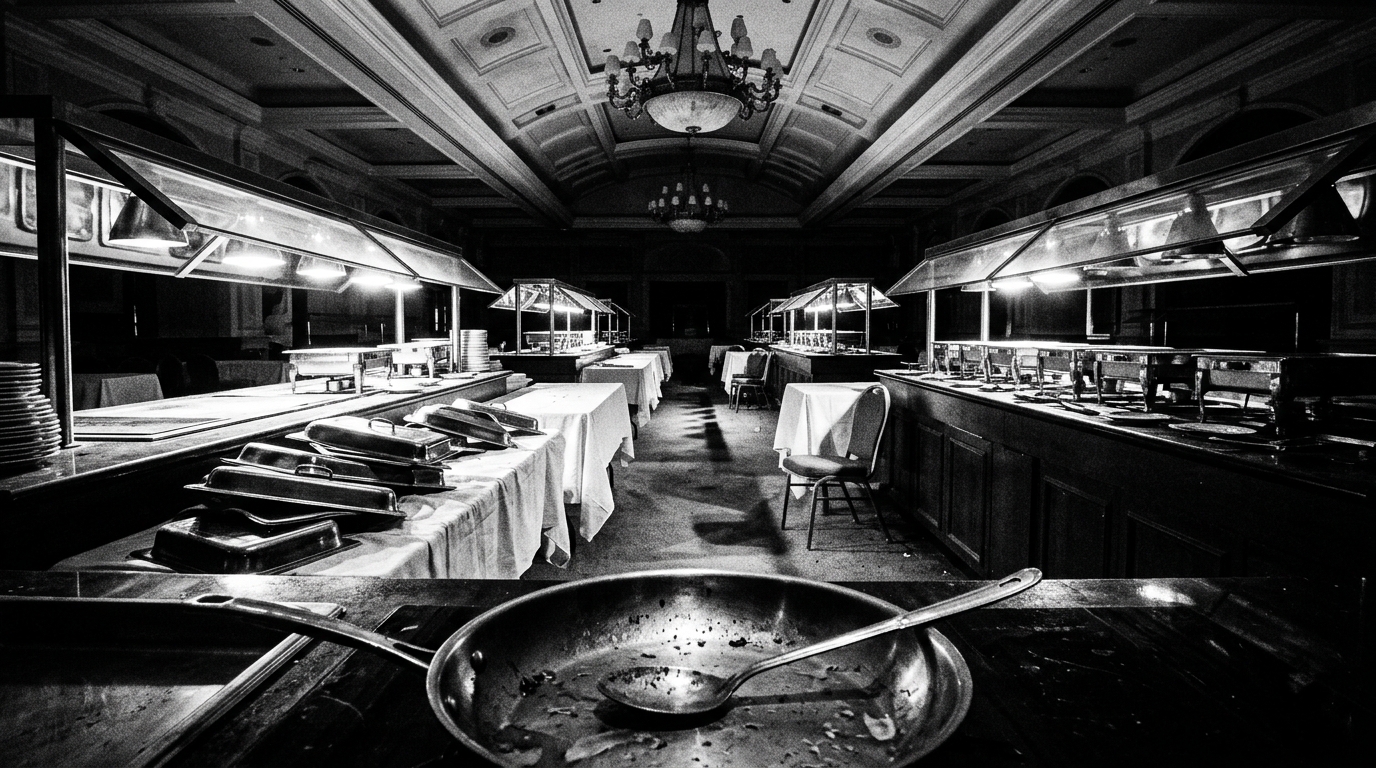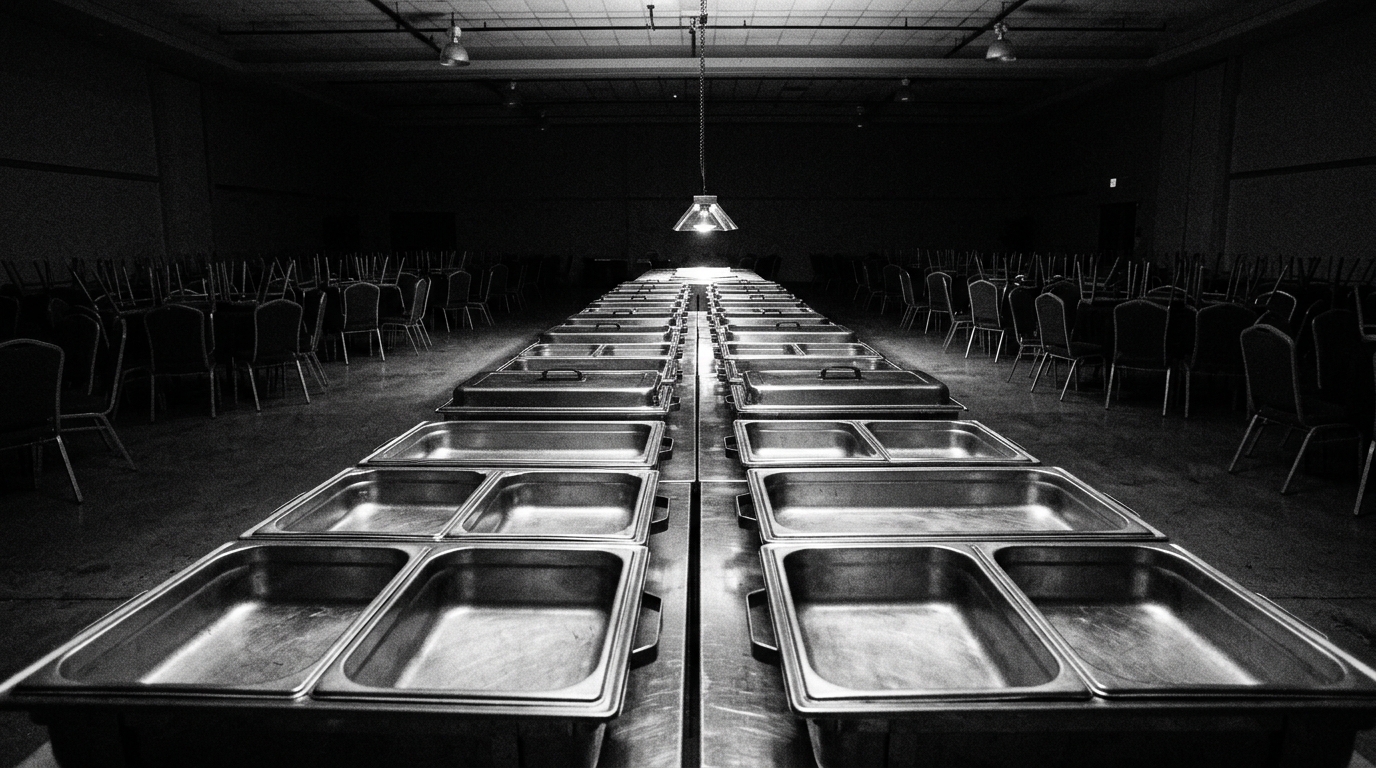
The Las Vegas Buffet Isn't Dying. It's Been Dead for Years. MGM Grand Just Made It Official.
MGM Grand's buffet survived 33 years, a pandemic, and the slow erosion of everything that made it worth running. The real question isn't why they're closing it... it's what the 15,000 square feet of prime Strip real estate becomes next, and what that tells you about where casino F&B is actually headed.
I worked with a casino F&B director years ago who used to walk the buffet line every morning before service. Not tasting. Counting. He'd count the steam table pans, estimate the food cost on what was about to go out, and then look at the reservation sheet. One morning he turned to me and said, "We're putting out $11,000 worth of food for maybe $8,000 worth of covers. And that's a good day." He lasted another year before they eliminated the position entirely.
That's the buffet business in one sentence. And it's been that sentence for a long time.
MGM Grand shutting down its buffet after 33 years isn't a surprise. It's a formality. The buffet model was designed for a casino economy that doesn't exist anymore... one where gaming generated 75% of revenue and the all-you-can-eat spread was a calculated loss leader to keep people on the floor longer. That math flipped two decades ago. Non-gaming revenue (dining, entertainment, retail, conventions) now drives roughly 75% of the take at most major Strip properties. When the buffet was subsidized by slot coin, it made sense. When it has to justify itself on its own P&L... it doesn't. Caesars was reportedly hemorrhaging $3 million a year on its buffets before COVID gave everyone permission to pull the plug without the PR hit.
Here's what interests me more than the closure itself. MGM says there are "no immediate plans for the space." Fifteen thousand square feet of prime floor space at one of the most heavily trafficked properties on the Strip, and nobody has a plan for it yet. That either means the plan isn't public yet (likely), or the internal conversation about what replaces the buffet model is genuinely unresolved (also possible, and more interesting). Look at what other operators have done with their old buffet footprints... ARIA went to a food hall concept. Rio did the same. The pattern is clear: replace one giant low-margin operation with multiple smaller high-margin ones. More variety, better per-square-foot revenue, and you eliminate the labor nightmare of running a buffet (which requires a small army of cooks, line attendants, and runners for every service).
What gets lost in the "buffets are dead" narrative is who actually misses them. It's not the high rollers. It's the middle-market visitor... the family from Ohio, the convention attendee looking for a predictable meal at a known price, the repeat guest who's been coming to Vegas for 20 years and remembers when $15 got you a prime rib dinner. That guest is being slowly priced off the Strip, and the buffet closure is just one more signal. When you replace a $33 buffet with a food hall where a decent meal runs $55-65 per person, you've made a choice about who your property is for. That's fine. Just be honest about the choice you're making. The remaining half-dozen buffets on the Strip are going to get very crowded... and then someone's going to raise their prices because they can. And the cycle continues.
This isn't about nostalgia. It's about watching an entire category of F&B get rationalized out of existence because the per-square-foot math doesn't compete with the alternatives. And that same math is coming for every hotel F&B operation that can't justify its footprint. If you're running a breakfast buffet at a full-service property right now and your food cost is north of 38% with a labor model that requires six people per service... this is your story too. Different scale. Same math. Same ending unless you redesign it.
If you're running any form of buffet or all-you-can-eat service at a full-service or resort property, pull your per-cover food cost and your labor-per-service-hour this week. Not the monthly average... the daily breakdown. You're going to find two or three service periods where you're underwater, and those are the ones to redesign first. Convert to a la carte, go to a focused menu with higher margins, or shrink the footprint and repurpose the square footage for grab-and-go or a branded concept that actually pencils. The days of justifying a money-losing food operation because "guests expect it" are over. Guests expect value. Give them value in a format that doesn't bleed your P&L dry. This is what I call the Flow-Through Truth Test... your F&B top line can look healthy while your flow-through is getting murdered by waste, labor, and a model built for a different era. Run the real numbers. Then make the call.