Today · Jul 30, 2026
Airbnb Just Became Your Guest's Car Service. And You Didn't Even Know It Happened.

Airbnb Just Became Your Guest's Car Service. And You Didn't Even Know It Happened.

Airbnb's new private car transfer service through Welcome Pickups is live in 125 cities, and it's not really about rides... it's about owning the guest journey from airport to checkout, which is exactly the territory hotels have been slowly surrendering for a decade.

Available Analysis

So here's what actually happened. Airbnb cut a deal with a company called Welcome Pickups to offer private car transfers directly inside the Airbnb app. Book a stay, tap a button, and a driver meets you at the airport with your name on a sign. 125 cities. Average rating from the pilot: 4.96 out of 5. No extra Airbnb fee... Welcome Pickups sets the price, Airbnb takes a revenue share. Clean. Simple. And if you're running a hotel, this should bother you more than it probably does right now.

Look, this isn't about car rides. Nobody at Airbnb sat around thinking "you know what the world needs? Another airport transfer option." This is about something much bigger and much more deliberate. Since May 2025, Airbnb has been methodically bolting services onto its platform... grocery delivery through Instacart, hotel bookings, and now ground transportation. CEO Brian Chesky has said publicly he wants "one app and one brand, where every part of the trip makes the other parts stronger." That's not a mission statement. That's an architecture diagram. And every service they add is another reason a traveler never has to leave the Airbnb ecosystem to plan, book, or experience a trip. The hotel industry has a word for this when brands do it. It's called "loyalty ecosystem lock-in." Airbnb just doesn't use a points program to do it.

Here's what I keep coming back to. Welcome Pickups already partners with over 1,500 hotels. They're not new to hospitality... they've been providing airport transfers as a white-label service for properties for years. So the technology works. The driver network exists. The operational model is proven. What Airbnb did isn't build something new. They plugged into something that already worked and made it native to their booking flow. That's the part that should make technology people pay attention, because the integration pattern here is smart. Guest books a stay, transfer option surfaces contextually in the Trips tab, booking is completed in the same interface. No app-switching. No separate confirmation emails. No friction. It's the kind of UX that hotel tech vendors have been promising for a decade and mostly failing to deliver (because "seamless" is easy to say in a pitch deck and brutally hard to build against a PMS from 2014).

The real question is what this means for how hotels think about the guest journey. For years, the industry has talked about "owning the guest experience" while systematically outsourcing pieces of it. OTAs own the booking. Google owns the search. Airlines own the flight. And now Airbnb is making a play for the transfer... which, if you think about it, is the guest's literal first physical experience of their trip. The moment they land. The first impression. Hotels that offer airport shuttles or partner with car services know how powerful that touchpoint is. A driver holding a sign with your name is not just logistics. It's brand experience. And Airbnb just claimed it.

I talked to a hotelier last month who told me his property's concierge used to arrange 30-40 airport transfers a week through a local car service. Revenue share, guest loyalty touchpoint, the whole thing. He said that number has dropped to maybe 15 in the last year because guests are arranging their own rides through apps before they even check in. "By the time they get to my front desk," he said, "half the trip is already planned and none of it went through us." That's the pattern here. It's not that Airbnb's car service is going to destroy hotel revenue. It's that every service Airbnb adds is another micro-decision the guest makes outside the hotel's influence. And micro-decisions compound. Airbnb is playing a long game... Chesky has floated the idea that Services and Experiences could eventually drive over $1 billion in annual revenue... and the game is about making Airbnb the default interface for the entire trip, not just the room.

Operator's Take

Here's what I'd actually do this week. If your property offers airport transfers, car service partnerships, or any kind of transportation coordination for guests... audit how many guests are actually using it versus six months ago. If that number is declining, you're already losing the touchpoint and you need to understand why. For independents especially, this is about defending the pieces of the guest journey you can still own. Talk to your car service partner about making the booking process easier... text-based confirmation, pre-arrival scheduling, something that doesn't require the guest to call a front desk and wait on hold. The bar just got set by an app that does it in two taps. If you're a branded property, bring this up with your revenue team. Not as a panic item... as a competitive intelligence item. Airbnb is systematically building the full-trip platform that hotel brands have been talking about for years. The question isn't whether they'll succeed. It's whether your brand is going to respond with a real product or another PowerPoint.

— Mike Storm, Founder & Editor
Read full analysis → ← Show less
Source: Google News: Airbnb
Airbnb Now Picks You Up at the Airport. Hotels Still Can't Get the WiFi Right.

Airbnb Now Picks You Up at the Airport. Hotels Still Can't Get the WiFi Right.

Airbnb just launched pre-booked airport rides in 125 cities through a third-party partner, and the move has nothing to do with transportation and everything to do with what happens when a platform decides it owns the entire guest journey... including the parts hotels forgot to compete for.

So here's what Airbnb actually did. They partnered with a company called Welcome Pickups... a Greece-based transportation provider that's been doing airport transfers since 2014... and integrated pre-booked private car service directly into the Airbnb app across 125 cities. Guest books a stay, the app offers a ride from the airport, destination is pre-filled, driver monitors your flight arrival time, done. The pilot ran earlier this year across Europe and Asia with an average rating of 4.96 out of 5. They're planning U.S. and Canada expansion later in 2026.

Let's talk about what this actually does. This isn't Airbnb building a ride-hailing network. They didn't build anything. They plugged in an existing service through what is almost certainly a fairly standard API integration with a revenue share on gross bookings. Welcome Pickups sets the price. Airbnb takes a cut. No additional fee to the guest. From a technical standpoint, this is not impressive. It's a booking widget with a pre-filled destination field and a flight-tracking hook. I've built harder things for a 90-key independent. What IS interesting... and what most of the coverage is missing... is what it signals about how Airbnb thinks about the guest relationship versus how hotels think about it.

Airbnb launched "Airbnb Services" back in May 2025. Private chefs, personal training, spa treatments, 260 cities. Now airport transfers. CEO Brian Chesky has been saying publicly that Services and Experiences could eventually contribute a billion dollars or more in annual revenue. They reported 12% year-over-year revenue growth to $2.8 billion in Q4 2025 and a 16% increase in gross booking value to $20.4 billion. This is a company that is systematically wrapping services around the accommodation booking... not because any single service is a massive revenue driver yet, but because each one makes it harder for the guest to leave the ecosystem. That's the play. Every additional service booked through the app is another reason the guest doesn't open a hotel's website, doesn't call the concierge, doesn't even think about the alternative. And hotels? Most hotel apps crash if you try to request extra towels.

Look, I'm not going to pretend a pre-booked car service from the airport is revolutionary technology. It's not. But the strategy underneath it deserves serious attention. Airbnb is building what amounts to a guest operating system... accommodation, experiences, dining, now transportation... and they're doing it asset-light by integrating third-party providers through revenue share deals. The barrier to entry for each individual service is low. The cumulative effect of wrapping ten services around a booking is enormous. Meanwhile, I consulted with a hotel group last year that spent eight months trying to get their PMS to talk to their loyalty program. Eight months. For one integration. Airbnb just added airport rides to 125 cities while hotels are still arguing about whether to upgrade their property WiFi infrastructure.

The Dale Test question here is actually interesting in reverse. When Airbnb's car service fails (driver doesn't show, flight delay isn't tracked, app glitches), the guest contacts Airbnb support... where AI agents are already handling a third of English-language customer service issues. When a hotel guest's airport shuttle fails, the night auditor is on the phone trying to find a cab company at midnight. Who has the better recovery path? For the first time in a while, I'm not sure the answer is the hotel. And that should bother every operator reading this.

Operator's Take

Here's what I'd be doing if I were running a property right now. Stop thinking about Airbnb as a competitor for room nights and start thinking about them as a competitor for the guest relationship. They're not just selling beds anymore... they're selling the trip. If your property offers any kind of airport transportation (shuttle, car service, partnership with a local provider), make sure it's bookable before arrival, ideally at the time of reservation. If it's not in your booking confirmation email, it doesn't exist. And if you're an independent competing for the same leisure traveler Airbnb is targeting... look at what services you're NOT offering that you could bundle through local partnerships. A local driver, a restaurant reservation service, a guided experience. You don't have to build the tech. You have to own the conversation before the guest opens someone else's app.

— Mike Storm, Founder & Editor
Read full analysis → ← Show less
Source: Google News: Airbnb
A 1965 Hotel Just Renovated Everything Except What Makes It Work. That's the Lesson.

A 1965 Hotel Just Renovated Everything Except What Makes It Work. That's the Lesson.

The Mauna Kea Beach Hotel's renovation kept its retro soul while updating every guest room, and it's a masterclass in what most renovation projects get exactly backwards. The question is whether your next PIP is building something guests remember or just replacing things they never noticed.

So a travel blogger discovers the Mauna Kea Beach Hotel on the Big Island, raves about the retro vibe, the beach, the manta rays... and the internet does its thing. Standard content. But here's what caught my attention as someone who's evaluated renovation projects for independent owners: this is a property that just completed a full room renovation and the thing people are talking about is the stuff they didn't touch.

The building is from 1965. Laurance Rockefeller built it. And whoever ran the renovation made a decision that I see maybe one out of ten hotel ownership groups actually make... they kept the identity. The retro character, the architectural bones, the relationship between the building and the beach and the natural environment (including manta rays that show up at night because the property lighting draws plankton). They renovated the rooms. They modernized where modernization serves the guest. And they left alone the things that make people write blog posts and tell their friends. That's not accidental. That's strategy.

I consulted with an ownership group last year that was going through a $6M renovation on a 140-key coastal property. The brand wanted them to gut the lobby and install their latest "signature arrival experience"... modular furniture, digital check-in kiosks, a coffee bar concept that looks identical in Savannah and Sacramento. The owners pushed back. Their lobby had character. Guests mentioned it in reviews constantly. The brand's response? "Consistency across the portfolio matters more than individual property identity." That sentence should be printed on a warning label.

Look, this is where most renovation conversations go sideways. The PIP comes down. The brand says update everything to current standards. The contractor quotes $35,000-$50,000 per key. The ownership group writes the check. And nobody in that chain asks the one question that actually matters: what do guests remember about this property, and are we about to destroy it? The Mauna Kea's renovation is interesting not because of what they spent (I don't have their numbers). It's interesting because of the discipline they showed in deciding what NOT to change. In a market where Hawaii hotel rates are growing a moderate 2-4% this year and the total lodging tax burden just hit approximately 19% with the new TAT increase, you need differentiation that justifies premium pricing. Manta rays and a 1965 Rockefeller building do that. A renovated room that looks like every other renovated room does not.

The technology angle here is the one nobody's discussing. That manta ray experience... guests gathering at night to watch rays feed in the hotel's lit waters... is essentially a zero-technology, zero-labor-cost amenity that drives social media content, repeat visits, and word-of-mouth at a level that no guest-facing app or "digital experience platform" will ever match. I've evaluated hundreds of guest experience technologies. The best "technology" I've ever seen at a hotel was a guy at a 200-key resort in Florida who built an Adirondack chair fire pit area with $800 in materials. It became the single most photographed spot on the property. Showed up in 40% of their social mentions. No API. No monthly subscription. No vendor support contract. Sometimes the highest-ROI investment is understanding what your property already has and not screwing it up.

Operator's Take

Here's what I want you to do if you've got a renovation or PIP coming up in the next 18 months. Before the architect draws a single line, walk your property with your three best front desk agents and your two longest-tenured housekeepers. Ask them one question: "What do guests talk about?" Not what they complain about... what they TALK about. The thing they mention at checkout. The thing they photograph. The thing they tell the front desk they loved. Write those down. That's your "do not touch" list. Everything else is fair game for renovation. But if your PIP is about to bulldoze the one thing that makes your property worth remembering, you bring that list to your owner and you make the case for preservation. Because a $4M renovation that eliminates your competitive identity isn't an upgrade... it's an expensive way to become forgettable.

— Mike Storm, Founder & Editor
Read full analysis → ← Show less
Source: Google News: Resort Hotels
Four Seasons Sells You the Pillow You Already Slept On. And It's Working.

Four Seasons Sells You the Pillow You Already Slept On. And It's Working.

Four Seasons built one of the largest hotel retail businesses in North America by betting that guests would pay premium prices to recreate the hotel sleep experience at home. The interesting part isn't the comforter... it's what this revenue stream tells you about who's actually monetizing brand equity and who's leaving it on the nightstand.

I once watched a guest at a property I was running physically strip the pillowcase off a pillow to find the manufacturer's tag. She wanted that exact pillow. Not something similar. That one. She'd had the best sleep of her life (her words, not mine) and she was ready to pay whatever it cost to take that feeling home with her.

We didn't sell pillows. We didn't have a retail program. We didn't even have a card on the nightstand pointing her somewhere. She left a five-star review about the sleep and a three-star review about everything else, which tells you exactly where the emotional value was concentrated. That was probably $200 in retail revenue walking out the front door with a roller bag and a lot of goodwill we never captured.

Four Seasons figured this out years ago. They launched their "at home" retail platform back in 2019 and by all accounts it's become one of the largest hospitality retail operations in North America. Bedding, linens, mattresses starting at $2,750, robes, towels... 97% of their retail sales come from sleep and bath products. When they dropped resort towels in 2023, 93% sold in two weeks and 78% of buyers were new customers. New customers. People who hadn't stayed at a Four Seasons but wanted to feel like they had. That's brand monetization at a level most hotel companies never even attempt.

Here's what this means for the rest of us. Four Seasons operates in a universe most hotel operators will never touch... ultra-luxury, massive brand equity, guests who don't flinch at a $2,750 mattress. But the principle underneath it scales all the way down. Every hotel has a sleep product. Every hotel has guests who love that sleep product. Almost no hotel captures that moment of peak emotional satisfaction and converts it to revenue. The guest checks out, goes home, buys a random comforter on Amazon that shows up in a box, and the hotel gets nothing. Four Seasons understood that the moment between "I love this bed" and "I wonder where I can buy this" is worth real money. They built infrastructure around that moment. Most operators haven't even acknowledged it exists.

And look... this isn't about launching a retail empire. Most properties don't have the brand weight or the operational bandwidth to run an e-commerce platform. But a QR code on the nightstand that links to a curated page of your actual bedding products? A front desk team trained to answer "where can I buy this pillow?" with something other than a shrug? A simple affiliate arrangement with your linen vendor? These are not heavy lifts. They're the kind of marginal revenue capture that adds up across thousands of room nights and costs almost nothing to implement. The guest is literally asking you to sell them something. The only question is whether you're listening.

Operator's Take

If you're a GM at an independent or a soft-branded property, do one thing this month: find out exactly what bedding products are in your rooms and set up a way for guests to buy them. That doesn't mean building an online store. It means a card on the nightstand or a QR code that links somewhere... your own landing page, the manufacturer's site with an affiliate code, even a PDF with product names and links. Talk to your linen vendor about a referral arrangement. Four Seasons moves 97% of their retail through sleep and bath products because that's where the emotional peak of the stay lives. Your guests have the same peak. You're just not capturing it. This costs almost nothing to test, it generates revenue on stays that already happened, and it turns your room into a showroom you're already paying for. Start with the pillow. Everyone always asks about the pillow.

Read full analysis → ← Show less
Source: Google News: Four Seasons
Disney's Pop Century Is a 3,000-Room Warning About What "Value" Actually Costs

Disney's Pop Century Is a 3,000-Room Warning About What "Value" Actually Costs

Disney's Pop Century Resort is pulling in 87% occupancy and record per-capita spending while guests publicly rate it 3 out of 10. That gap between the revenue line and the experience line is a story every hotel operator has lived... and most have lived to regret.

Available Analysis

I worked with a GM once who ran a 400-room property that printed money. Occupancy north of 85% year-round. ADR climbing every quarter. Ownership was thrilled. The GM wasn't. He kept telling anyone who'd listen that the building was running hot but the experience was running cold... deferred soft goods, a food outlet that closed too early, a pool that needed resurfacing. His phrase was "we're mining the goodwill." He was right. It took about 18 months for the online scores to catch up with reality, and another six months after that for the revenue to follow. By the time ownership approved the spend to fix it, they were chasing the problem instead of preventing it.

That's the story at Disney's Pop Century right now, just at a scale most of us will never operate. Over 3,000 keys. 87% occupancy across the Walt Disney World resort portfolio. Record per-capita guest spending up 4% in the most recent quarter. The Experiences segment just posted $10 billion in revenue for a single quarter. By every financial metric that matters to the people reading the earnings call, this property is performing. But the guests living in the rooms are telling a different story. Reviews citing rooms that feel like motels. Stained soft goods. A single food court for 3,000-plus rooms that runs out of eggs by mid-morning. Pool restrictions that prevent guests from using the larger pool at the adjacent resort. A guest had their belongings removed from their room before checkout. One reviewer gave it a 3 out of 10. These aren't catastrophic failures. They're the slow accumulation of a thousand small cuts that tells you an operation is coasting on demand instead of earning it.

Here's what makes this interesting beyond the Disney bubble. Pop Century is the purest example of something I've seen at every level of this business... the dangerous moment when occupancy and revenue convince ownership (or in this case, a $200 billion corporation) that the product is fine. The math looks right. The guest is still showing up. So the short-staffed food outlet stays short-staffed. The soft goods replacement gets pushed another quarter. The pool policy that annoys everyone stays because changing it costs money or creates liability. Each individual decision is defensible. The aggregate effect is a property that's slowly hollowing itself out. Disney can afford to fix this (they're spending billions on resort refurbishments across the portfolio through 2027, and Pop Century just finished a round of work). But the fact that they completed refurbishment work and guests are STILL reporting these issues tells you something. The refresh addressed the cosmetics. It didn't address the operation.

This is what I call the False Profit Filter. The quarterly numbers look great because demand is so strong that the guest absorbs the friction. But every disappointed guest who posts a 3-out-of-10 review, every family that tells friends "stay somewhere else next time," every parent who watches their kid's face when the pool they wanted is off-limits... that's future revenue being spent today. You're booking against brand equity that took decades to build, and you're drawing down the account faster than you're replenishing it. Disney has enough brand equity to absorb this for a while. Most of us don't. If you're running a property where the revenue looks strong but the guest scores are soft, you're in the same movie. Disney just has a bigger screen.

The leadership shakeup is worth watching. Thomas Mazloum just took over as Chairman of Disney Experiences, and his background is luxury hospitality. That's not an accident. When a company that runs value resorts hires a luxury operator to oversee the portfolio, they're telling you they know the experience gap exists. The question is whether institutional momentum (3,000 rooms, billions in revenue, a guest who keeps showing up regardless) is stronger than one executive's instinct to fix the product. I've seen that fight play out dozens of times. The executive with taste versus the spreadsheet that says everything's fine. The spreadsheet usually wins until it doesn't. And when it stops winning, it stops all at once.

Operator's Take

If you're a GM at a property running high occupancy with softening review scores, do something this week before the lines cross. Pull your last 90 days of guest complaints and sort them not by category but by frequency. The thing that shows up 40 times matters more than the thing that shows up twice at high volume. Then calculate what one point of TripAdvisor or Google score movement means to your ADR... at most properties it's $3-7 per point, which on a 200-key hotel at 75% occupancy is $165K-$385K annually. Take that number to your owner or asset manager not as a request for capital but as a risk calculation. "Here's what we're earning now. Here's what we lose if we drop a point. Here's the $60K spend that prevents it." That's the conversation that gets approved. The one about "guest experience" doesn't.

Read full analysis → ← Show less
Source: Google News: Resort Hotels
A Guy Paid £30 to Sleep in a Garage. That's Your Competition Now.

A Guy Paid £30 to Sleep in a Garage. That's Your Competition Now.

A viral TikTok of a British traveler's £30-per-night Airbnb garage stay just hit 2.8 million views, and the guy loved it. If you're running a budget hotel and think your product sells itself, this is the wake-up call about what "good enough" actually looks like in 2026.

So a guy books a converted garage in northern England for £30 a night. Not a guest house. Not a flat. A garage. With a bed, a shower, a microwave, complimentary snacks, and a radiator. He posts a video. 2.8 million people watch it. His review? "Pleasantly surprised."

Let's talk about what this actually does to the conversation.

Look, I'm not here to tell you Airbnb is eating your lunch... you already know that. Airbnb had 133 million nights booked in Q1 2024 alone, with active listings growing 17% year-over-year. Their "Rooms" category, which launched in 2023 specifically for private rooms and weird little spaces like this, averages $67 a night globally, and nearly 80% of those listings come in under $100. That's not a niche anymore. That's a distribution channel for literally anyone with a spare room, a garage, or a garden shed and $200 worth of IKEA furniture. The barrier to entry for competing with your 90-key select-service just dropped to "owns a power drill and has WiFi."

Here's what actually bothers me about this story. It's not the garage. It's the 2.8 million views. That's not a booking... that's marketing. Free, viral, authentic marketing that no hotel brand could buy. When was the last time someone posted a TikTok of their Hampton Inn stay and 2.8 million people watched it? (I'll wait.) The guest experience at this garage was so unexpectedly good relative to expectations that it became content. That's the formula: low price plus exceeded expectations equals organic reach that no PMS, no RMS, no "AI-powered guest engagement platform" can replicate. This guy's host spent maybe £2,000 converting a garage and is now getting global visibility for free. I consulted with a hotel group last year that spent $45,000 on a social media campaign and got 12,000 impressions. Twelve thousand. The garage got 2.8 million because it told a better story.

The technology angle here is simple and uncomfortable. The platforms that enable this... Airbnb's listing tools, their review system, their search algorithm that surfaces novelty... are getting better at matching weird supply with willing demand. Every year the tools get easier, the hosts get smarter, and the definition of "acceptable accommodation" expands. You can't out-technology this. You can't out-platform it. The only thing a hotel can do that a garage can't is deliver consistency, professional service, and operational reliability at scale. That's it. That's your moat. And if your front desk software crashes at midnight, if your WiFi drops on the second floor because the building's wired with 1978 electrical (trust me, I know this problem intimately), if your "complimentary breakfast" runs out of eggs by 9:15... your moat just drained.

The Dale Test applies here, weirdly. When this garage host's radiator breaks at 2 AM, he walks downstairs and fixes it. When your HVAC fails at 2 AM, what's the recovery path? If the answer involves a service ticket, a 48-hour response window, and a guest who posts a one-star review before breakfast... a guy sleeping in a garage is delivering a more reliable guest experience than your branded hotel. That should keep someone up at night.

Operator's Take

Here's what I'd tell every GM at a limited-service or economy property right now. Stop competing on price with Airbnb. You will lose. A garage with a £30 rate and zero labor costs has margins you cannot touch. What you CAN compete on is the thing they can't fake... reliability, consistency, and a human being who solves problems in real time. So audit your own guest experience this week with fresh eyes. Walk in like a stranger. Book on your own website. Check in at 10 PM. Try the WiFi in every corner of the building. Eat the breakfast. If any part of that experience is worse than a well-converted garage, you've got work to do before your next brand review. The question isn't whether garages are real competition. The question is whether your property delivers enough above "garage with snacks" to justify three times the rate. If you can't answer that in one sentence, that's your Monday morning problem.

— Mike Storm, Founder & Editor
Read full analysis → ← Show less
Source: Google News: Airbnb
Airbnb Is Spending Millions on Marketing Stunts. Hotels Keep Spending Millions on PMS Migrations.

Airbnb Is Spending Millions on Marketing Stunts. Hotels Keep Spending Millions on PMS Migrations.

Airbnb just turned a $21 million Malibu beach house into a free Hannah Montana sleepover for ten lucky guests. The technology strategy behind these "Icons" stunts is worth studying... not because hotels should copy it, but because it exposes how badly our industry misallocates its own marketing tech budgets.

So Airbnb is giving away ten free one-night stays at the actual Malibu house from Hannah Montana. Zero dollars per person. Four guests max. You submit a request, you hope you get picked, and if you do, you sleep in a $21 million beachfront property for free while Disney simultaneously drops a 20th anniversary special on Disney+ and Hulu. The earned media value on something like this is enormous. The actual cost to Airbnb? Basically nothing... maybe the operational expense of staging the property and managing ten bookings over eleven days. That's it. That's the whole spend.

Here's what actually interests me about this. Airbnb launched its "Icons" program back in May 2024. Barbie DreamHouse. The house from Up. Now Hannah Montana. Each one generates millions of impressions, dominates social feeds for a week, and reinforces a single message: Airbnb is where you go for experiences you can't get anywhere else. The technology underneath is dead simple... it's a booking request form, a curation layer, and a content engine. Nothing revolutionary. No AI. No "seamless integration." Just a platform that understands what actually drives consumer behavior (nostalgia, exclusivity, shareability) and builds lightweight tech to deliver it. Meanwhile, I consulted with a hotel group last quarter that spent $180,000 migrating to a new PMS and still can't get their rate-push logic to work correctly across three properties. The system crashes during night audit at least once a week. They were told implementation would take 90 days. They're at month seven.

Look, I'm not saying hotels should start offering free Hannah Montana sleepovers. That's not the point. The point is the ratio of technology investment to marketing outcome. Airbnb builds a simple booking mechanism around a cultural moment and gets coverage in every major outlet for a week. Hotels pour six and seven figures into back-of-house systems that guests never see, never feel, and that frequently make operations worse during the transition. The technology priorities are inverted. We spend on infrastructure that should work invisibly (and often doesn't), and we underinvest in the guest-facing tech that actually drives demand and differentiation. Airbnb's CEO said in Q2 2025 that the company is "going significantly more aggressively into hotels." That's not just a distribution play. It's a signal that the same experiential marketing engine that powers Icons is coming for traditional lodging. And most hotels are going to respond by... upgrading their CRM? Buying another chatbot?

The uncomfortable question is this: what's your property's version of an Icon? Not a $21 million beach house, obviously. But what's the one thing about your hotel that someone would post about without being asked? If you can't answer that in one sentence, you have a positioning problem that no PMS, no RMS, and no "AI-powered guest engagement platform" is going to fix. The technology that matters most right now isn't the stuff running in your server room. It's the stuff that gives a guest a reason to choose you over the listing three swipes away on their phone. Airbnb figured that out and built the lightest possible tech to support it. Hotels keep building heavy and wondering why nobody notices.

Operator's Take

Walk your building this week. Phone in hand. Find three things a guest would actually photograph without being asked... not the lobby art you paid a designer to pick, not the branded amenity kit. The thing they'd stop and pull their phone out for. Can't find three? That's your real technology gap. Not the PMS. Not the channel manager. And before you sign your next vendor contract... one question. Does this tool help a guest choose my hotel, or does it just help me run it slightly more efficiently? Both matter. But Airbnb isn't eating leisure market share because their back-end is cleaner. They're winning because booking feels like something worth talking about. Your counter-move isn't a bigger tech stack. It's a sharper story. Figure out what yours is before someone else writes it for you.

— Mike Storm, Founder & Editor
Read full analysis → ← Show less
Source: Google News: Airbnb
Airbnb Isn't Selling Rooms Anymore. It's Selling Feelings. And That Should Worry You.

Airbnb Isn't Selling Rooms Anymore. It's Selling Feelings. And That Should Worry You.

Airbnb's free Hannah Montana stays generate more press than your entire marketing budget ever will. The question for independent operators isn't whether this is silly... it's what happens when your competitor stops selling sleep and starts selling nostalgia.

So Airbnb is giving away ten free one-night stays in a $21 million Malibu mansion decked out to look like Hannah Montana's house. Sequined closet and everything. Zero dollars per person. And before you laugh this off as a gimmick that has nothing to do with your 150-key property... stop. Because this is actually a technology and distribution story disguised as a pop culture stunt, and the underlying architecture matters more than the wigs.

Here's what this actually is. Airbnb launched its "Icons" category back in May 2024 as a permanent product line... not a one-off PR play. They've done the Barbie DreamHouse. Shrek's swamp. A night inside a Mexico City stadium. These aren't revenue generators (they're literally free or capped at $100). They're brand infrastructure. Airbnb CEO Brian Chesky has been explicit about this... he's building what he calls a "full-fledged lifestyle brand" that extends beyond lodging. The Hannah Montana thing isn't about ten guests in Malibu. It's about the 50 million people who see it on Instagram, associate Airbnb with something emotional, and think of Airbnb first the next time they travel. That is a distribution weapon. And whatever Airbnb spent on property rental, decoration, staffing, and the Disney partnership to pull this off, it's almost certainly a fraction of what a hotel company would spend on a Super Bowl ad to achieve a fraction of the same cultural penetration. The stays are free to guests. The production costs are not. But the math still works in Airbnb's favor, and that's the point.

Look, I evaluate technology platforms for a living. And what I see when I look at Airbnb's Icons strategy is a company that has figured out something most hotel technology vendors haven't... the product isn't the room. The product is the story the guest tells afterward. That's a fundamentally different architecture. Not in the code (though Airbnb's booking and request system for these limited drops is genuinely clever from an engagement standpoint). In the business model. Hotels sell inventory. Airbnb is selling identity. And the technology stack behind that... the recommendation engines, the social sharing hooks, the request-to-book friction that creates scarcity... is purpose-built to make the platform stickier than any loyalty program I've ever evaluated.

Now here's where it gets uncomfortable for hotel operators. Airbnb's Q4 2025 earnings call was all about AI integration and "broader transformation beyond short-term rentals." Mizuho slapped an Outperform rating on them in January 2026 citing their AI product strategy. This company is not standing still. They're investing in technology that makes their platform smarter, more personalized, and harder to compete with on discovery. Meanwhile, I talk to independent hotel operators every week who are still fighting with their PMS vendor about a channel manager integration that was supposed to be "seamless" six months ago (it wasn't... it never is). The technology gap between what Airbnb is building and what most hotels are operating on is not shrinking. It's accelerating. And stunts like the Hannah Montana house are the visible tip of something much larger and much more strategic than they appear.

The honest take? You can't out-gimmick Airbnb. You don't have Disney partnerships and $21 million mansions. But you can learn from what they're doing right at the systems level. They're investing in emotional differentiation, not rate wars. They're building technology that creates stories, not just transactions. If your tech stack does nothing but manage inventory and push rates... if there's no mechanism for creating a guest experience that someone wants to talk about afterward... you're bringing a spreadsheet to a storytelling fight. And the storytellers are getting better every quarter.

Operator's Take

Here's what I want you to think about this week. Not the Hannah Montana thing specifically... the principle underneath it. Airbnb just generated global press coverage for what is, relative to traditional media spend, a remarkably efficient marketing investment. Your marketing line item last year probably bought you some digital ads and a website refresh that maybe moved the needle 2-3%. I'm not saying copy the gimmick. I'm saying audit your guest experience for one thing: is there a single moment in a stay at your property that a guest would photograph, share, or tell a friend about? If the answer is no, that's your real competitive gap... not rate, not inventory, not distribution. It's that nobody talks about you after they leave. Find that moment. Build it. It doesn't cost $21 million. It might cost $500 and some creativity from your team. But start there, because the platforms that are eating your lunch figured this out five years ago.

— Mike Storm, Founder & Editor
Read full analysis → ← Show less
Source: Google News: Airbnb
Disney Just Built a Velvet Rope Around Its Bus System. Every Resort Operator Should Be Watching.

Disney Just Built a Velvet Rope Around Its Bus System. Every Resort Operator Should Be Watching.

Disney World is now checking credentials before you can board a bus to its hotels, and they're calling it temporary. It's not temporary. It's the clearest signal yet that the biggest operator in hospitality is done pretending all guests are equal.

Available Analysis

I once worked with a resort GM who had a beautiful pool deck, a destination restaurant, and a lobby bar that was packed every night. Problem was, about a third of the people at that pool and half the people at that bar weren't staying at the hotel. They were guests from the budget property next door who figured out they could walk through the parking lot and enjoy $300-a-night amenities on a $129 budget. His paying guests noticed. His reviews started mentioning "crowded" and "hard to get a chair." He finally put up a wristband system. The budget hotel guests were furious. His actual guests? Their satisfaction scores jumped within a month.

That's what Disney just did, except with buses. Starting this past weekend, if you want to ride Disney transportation from Disney Springs to a resort hotel, you scan your MagicBand or your digital room key. No reservation? No ride. They'll check for dining reservations and activity bookings too, but the message is crystal clear... these buses are for people paying $600-plus a night, not for day-trippers who parked at Disney Springs for free and figured they'd hitch a ride to the Grand Floridian.

Disney is calling this a "temporary" measure for the Easter and Spring Break surge. They said the same thing when they tested it over Christmas. Here's what 40 years in this business has taught me about "temporary" operational changes at large hospitality companies... if it works, it's permanent. And this one works. When you're running a segment that just crossed $10 billion in quarterly revenue for the first time, and your resort bookings for the fiscal year are pacing up 5%, you don't go back to an open-door policy that dilutes the experience for the guests generating that revenue. The verification infrastructure is built. The cast members are trained. The data is being collected. This is a pilot program wearing a seasonal costume.

The bigger story isn't about buses. It's about the explicit tiering of the hospitality experience within a single ecosystem. Disney is spending $60 billion over ten years on its parks and resorts. They're adding complimentary parking for resort guests, 30-minute early theme park entry, free water park admission on check-in day. Every one of those moves widens the gap between on-property and off-property. Every one makes the on-property rate premium feel more justified. And now they're using transportation access... the most basic operational function... as a sorting mechanism. You're either in the system or you're outside it. That's not a crowd management tactic. That's a business model.

Look... I know what some of you are thinking. "Mike, this is Disney. They operate at a scale and with a captive audience that has nothing to do with my 200-key property." Fair. But the principle is universal. Every hotel operator in America is dealing with some version of this problem... non-guests using your amenities, your parking, your lobby, your WiFi, your restrooms. The question has always been whether the friction of enforcement is worth the improvement in guest experience. Disney just answered that question with $10 billion worth of confidence. They built a digital verification system, trained their front-line staff to enforce it, accepted the negative PR from day-trippers, and bet that paying guests would reward them for it. That's what I call the Price-to-Promise Moment... that instant where the guest paying a premium decides the rate was worth it. Disney just decided that moment happens when a resort guest boards a bus without waiting behind 40 people who aren't paying for the privilege. And they're probably right.

Operator's Take

If you're running a resort, a full-service property, or anything with amenities that attract non-guests, pay attention to what Disney is doing with verification infrastructure, not just policy. They built a system where a MagicBand scan instantly confirms guest status. You probably don't have that... but your PMS does generate digital keys, and your front desk does issue wristbands. Sit down this week and map every amenity touchpoint where non-guests dilute the experience for paying guests. Pool deck. Fitness center. Lobby bar during peak hours. Parking. Then calculate what a simple verification system would cost versus what your guest satisfaction scores say about "crowding" or "wait times." If you're charging $250-plus a night and your guests are competing with the public for a pool chair, you're giving away the very thing that justifies your rate. Your guests won't complain to your face. They'll complain on TripAdvisor. And they won't come back.

Read full analysis → ← Show less
Source: Google News: Resort Hotels
Disney and Airbnb Are Giving Away Hotel Nights. And the Entire Industry Should Be Taking Notes.

Disney and Airbnb Are Giving Away Hotel Nights. And the Entire Industry Should Be Taking Notes.

Disney just turned a $21 million Malibu beach house into a free Airbnb listing to promote a 20-year-old kids' show. The marketing genius isn't the giveaway... it's what it reveals about where "hospitality" is heading when entertainment companies start thinking like hoteliers.

A retired night auditor I used to work with had a saying whenever corporate would roll out some flashy new loyalty promotion. He'd look at the rate sheet, look at me, and say "So we're giving away the room and calling it strategy. Got it." He wasn't wrong then. But I'm starting to wonder if Disney and Airbnb might actually be onto something he and I never considered.

Here's what happened. Disney and Airbnb partnered to offer ten free one-night stays at the actual Malibu oceanfront home used in the exterior shots of "Hannah Montana." Four bedrooms, five bathrooms, $21 million property, normally renting for $60,000 to $80,000 a month. They recreated the fictional interior... including the rotating closet. The cost to the guest? Zero dollars. The cost to Disney? Whatever the lease and staging ran them. The return? A "Hannah Montana 20th Anniversary Special" that pulled 6.3 million views in three days on Disney+ and Hulu. Nearly a 1,000% spike in catalog streaming. Over half a billion hours of content consumed globally. Spotify streams of the show's songs up 600-700%. All from ten free nights in a house that isn't even a hotel.

Now here's where this gets uncomfortable for anyone running an actual hotel. Disney didn't need rooms revenue. They didn't need ADR. They didn't need flow-through. They needed attention, and they bought it at a fraction of what a traditional media campaign would cost. Ten nights at a property that rents for roughly $2,000 a night (prorated from the monthly)... call it $20,000 in opportunity cost, maybe $50,000-$75,000 all-in with staging and production. For that, they got global media coverage, billions of streaming minutes, and a cultural moment that reinforced Disney+ subscriptions more effectively than any ad buy could. The math on that is embarrassing for everyone who's ever spent six figures on a "brand awareness campaign" and gotten a PDF report full of impressions data that means nothing.

What worries me isn't the stunt itself. It's the trend it represents. Entertainment companies, lifestyle brands, and tech platforms are getting better at creating "hospitality experiences" that have nothing to do with operating hotels... and the press eats it up. Airbnb doesn't carry the linen cost. They don't manage the labor. They don't deal with the plumbing in a 1978 building. They curate the story, collect the booking, and let someone else handle the 2 AM problems. And increasingly, that model... the one where the experience is the product and the room is just the stage set... is what consumers are talking about, sharing on social media, and choosing over traditional hotel stays. Not always. Not yet for business travel. But for the leisure guest under 35 who grew up watching Hannah Montana? That's your future customer, and Disney just showed them that the most exciting "hotel stay" in America this month isn't at a hotel at all.

The silver lining, if you want one, is that Disney and Airbnb can't scale this. Ten rooms. Ten nights. It's a publicity stunt, not a business model. But the underlying principle... that the story around the stay matters as much as the stay itself... that's something every operator can learn from. The properties I've seen thrive over the last five years aren't the ones with the best rooms. They're the ones with the best narrative. The ones where guests feel like they're part of something, not just sleeping somewhere. You don't need a $21 million beach house and a Disney IP license to create that. You need a point of view. You need a reason to exist beyond "we have beds and we're near the highway." That part is free. And it's the part most hotels still haven't figured out.

Operator's Take

Look... this one isn't about changing your rate strategy or your tech stack. It's about paying attention to how the guest's definition of "worth staying at" is shifting underneath us. If you're running a select-service or a lifestyle property, take 30 minutes this week and ask yourself one question: what would a guest say about your hotel that they couldn't say about the one across the street? If the answer is nothing... that's your real competitive problem. Not OTA commissions, not labor costs, not your PIP. This is what I call the Price-to-Promise Moment. Every stay has one moment where the guest decides the rate was worth it. Disney manufactured that moment with a rotating closet and a nostalgia play. You need to find yours. Walk your property tonight. Find the thing that could be your story. Then tell it better than anyone else in your comp set.

Read full analysis → ← Show less
Source: Google News: Airbnb
Awards Don't Fix Your Guest Experience. Your Team Does.

Awards Don't Fix Your Guest Experience. Your Team Does.

Hilton Kota Kinabalu just swept three regional travel awards, and the press release credits "passion, dedication, and hospitality excellence." The part worth paying attention to is what made that possible... and why most properties can't replicate it no matter how many brand standards they follow.

I worked with a GM once who had a wall of awards in his office. Plaques, trophies, framed certificates from every travel publication and industry group you can name. Beautiful wall. Impressive collection. His TripAdvisor scores were a 3.8. I asked him about the gap and he said, without a hint of irony, "Guests don't understand what we're doing here." That was the problem in one sentence. He was performing excellence for the judges and forgetting the people actually sleeping in the beds.

So when I see a property like Hilton Kota Kinabalu pick up a bronze from Sabah's tourism awards, a Luxury Lifestyle Award, and TTG's Best Hotel Sabah recognition... my first question isn't "how impressive is this?" It's "does the guest data back it up?" In this case, it actually does. A 4.5-star average across more than 1,200 TripAdvisor reviews tells you something the awards committee can't... that the consistency is real, not performative. That's a 304-key property delivering at a high level shift after shift. You don't maintain 4.5 stars at that volume by accident. You maintain it because somebody built a culture where the housekeeper on the third floor cares as much about the experience as the GM does.

Here's what I think the real story is, and it has nothing to do with Kota Kinabalu specifically. Hilton is pushing hard into luxury and lifestyle across Southeast Asia... nearly 4,000 new rooms announced, a stated goal of growing that segment by 50%. They just signed a Conrad in Mongolia. LXR debuted in Australia. Analysts are lifting price targets. The pipeline is aggressive. But pipelines are blueprints. What actually determines whether those 4,000 rooms become award-winning properties or mediocre ones wearing a luxury badge is what happens at property level. It's the GM who hires the right people and then gets out of their way. It's the ownership group (in this case, Pekah Hotels) that invests in the physical product AND the team operating it. The building was renovated in 2016... that's a decade-old refresh now. Which means the experience holding those scores up isn't new furniture. It's people.

That's the part that doesn't scale the way a brand wants it to scale. You can standardize a lobby design. You can mandate a check-in script. You can roll out a global training platform. But you cannot manufacture the thing that separates a 4.5-star property from a 3.8-star property... which is a team that gives a damn, led by someone who gives a damn first. I've seen 500-key flagged properties with every brand resource available underperform 90-key independents run by an owner who walks the floors every morning. The difference is never the brand. The difference is always the people in the building.

Hilton's growth story in Asia Pacific is compelling. The macro trends support it... rising affluence, growing demand for experiential travel, investor appetite for hospitality assets. But if you're an owner looking at a Hilton luxury flag for a new development in the region, don't get seduced by the pipeline numbers and the award headlines. Ask who's going to run this thing. Ask what the labor market looks like in your specific city. Ask what happens when the GM they promised you for pre-opening gets reassigned to a higher-priority project. Because the awards Kota Kinabalu won aren't a Hilton story. They're a people story. And people don't come standard with the franchise agreement.

Operator's Take

If you're a GM at a branded property and your guest scores aren't where they need to be, stop waiting for the next brand initiative to fix it. Walk your property tonight. Talk to the person working the desk. Ask your housekeeping supervisor what they need that they're not getting. The properties winning awards consistently aren't the ones with the biggest renovation budgets... they're the ones where leadership is visible, the team feels supported, and someone is paying attention to the details every single shift. This is what I call the Brand Reality Gap. Brands sell promises at scale. Properties deliver them shift by shift. Your brand can hand you standards manuals and training modules all day long. What they can't hand you is a culture where your team takes ownership of the guest experience. That's on you. Build it or lose to the property down the street that already has.

Read full analysis → ← Show less
Source: Google News: Hilton
Hotels Don't Need More Spreadsheet Jockeys Calling Themselves Hoteliers

Hotels Don't Need More Spreadsheet Jockeys Calling Themselves Hoteliers

Elizabeth Mullins lit up LinkedIn by drawing a line between people who sit close to the business and people who've actually carried it. She's right, but the problem goes deeper than titles... it's an industry that's systematically replacing memory-makers with margin-chasers, and the guests can feel it.

I hired a banquet captain once who had this thing he did. Every wedding reception, about 20 minutes before the cake cutting, he'd walk the perimeter of the room. Not checking on service. Not looking at table settings. He was reading the energy. He could tell you which table was having the best time, which uncle was about to get too loud, and exactly when to dim the lights for the first dance so the moment landed perfectly. He'd been doing banquets for 22 years. Never managed a P&L in his life. Never sat in a brand review. Never used the word "stakeholder." But that man was a hotelier in every way that matters... because he understood that his job wasn't serving food. His job was making sure a bride remembered the best night of her life.

Elizabeth Mullins, president of Evermore Hotels, posted something this week that hit a nerve. She drew a line... a clear, unapologetic line... between asset managers who use the language of hospitality and operators who've actually lived it. "You don't become a hotelier because you sit close to the business," she wrote. "You become one because you've carried it." And she's right. But I want to take it further, because the problem isn't just people borrowing a title. The problem is an industry that has structurally incentivized everyone in the chain to care about everything except the thing that actually matters... the guest's experience.

Look at how the money flows. REITs own the buildings (roughly $72 billion in enterprise value across publicly traded hotel REITs), and they're legally structured to be passive investors focused on real estate returns. They have to distribute 90% of taxable income as dividends. Their job is asset value. Period. Third-party management companies run the operations, collecting base fees of 2-6% of revenue whether the guest had a magical stay or a forgettable one. Their real incentive? Don't lose the account. Brands collect franchise fees, loyalty assessments, reservation charges, marketing contributions... often north of 15-20% of a property's total revenue... and their primary concern is system-wide consistency and net unit growth, because that's what Wall Street rewards. So who in that chain wakes up in the morning thinking about whether the bride remembers her wedding? Who's thinking about the blues club in the basement, or the comedian at the front desk, or the moment a guest walks in and feels something they didn't expect? Nobody's comp plan is built around that. And that's how you lose the plot.

I got a message this week from a young banquet manager at a luxury property in Nashville. She asked me what was the greatest catalyst for my success in hospitality. And I sat with that question for a while, because the honest answer isn't a strategy or a mentor or a lucky break. It's that I fell in love with one specific thing early in my career... making memories. Not the corporate version of "creating memorable experiences" that shows up in brand decks. The real thing. The actual work of building something a guest carries with them for years. When I opened my restaurant, every server was a student at Second City. Three years later, I put a blues club in the basement. In Las Vegas, I brought property-specific entertainment out onto the street. Everything I did was in service of that one idea... give people something they can't get anywhere else, something they'll talk about at dinner next week, something worth more than 5,000 loyalty points or a 15% discount on their next stay. That was my fuel. And I'd tell that young manager the same thing... find the one thing about this business that lights you up, and let it drive everything else. Because the systems around you are not going to do it for you. The REIT doesn't care about your passion. The management company cares about your labor percentage. The brand cares about your compliance score. Your passion is yours to protect.

Here's what worries me. When over 60% of room nights at the major brands are booked through loyalty programs, and when brand proliferation means there are now so many flags that the average traveler can't tell the difference between three of them from the same parent company... the industry has made a bet. The bet is that consistency and points are more valuable than surprise and delight. That standardization beats soul. And for a while, the math supports it. Loyalty contribution drives bookings, bookings drive RevPAR, RevPAR drives asset value, asset value drives REIT returns. Everybody gets paid. But somewhere in that chain, the guest stopped being a person having an experience and became a metric in a contribution report. And the people who actually know how to make a hotel feel alive... the banquet captain reading the room, the GM who walks the property at 6 AM because she can feel when something's off before the data shows it, the night auditor who remembers every regular's name... those people are being managed by systems designed by people who've never done what they do. Mullins is right. The title "hotelier" isn't something you assign yourself. It's something the work gives back to you. And right now, the work is being defined by people who've never done it.

Operator's Take

Here's what I'd tell that young banquet manager in Nashville, and what I'd tell every operator reading this. Find your thing. Not the company's thing. Not the brand's thing. YOUR thing... the part of this business that makes you forget to check the clock. Then protect it like your career depends on it, because it does. The people who last 30 years in this business aren't the ones who optimized their way to the top. They're the ones who cared about something specific and let that caring make them dangerous. If you're a GM right now feeling squeezed between an owner who only sees the cap rate and a brand that only sees the compliance checklist, remember this... you are the last line of defense between your guest and a completely forgettable stay. That's not a burden. That's a privilege. And nobody on a conference call in a regional office is going to give you permission to use it. You just have to use it.

Read full analysis → ← Show less
Source: Commissioned
A Platinum Elite Guest Got Stranded in a Crisis Zone and Demanded Late Checkout. This Is the Whole Loyalty Problem in One Story.

A Platinum Elite Guest Got Stranded in a Crisis Zone and Demanded Late Checkout. This Is the Whole Loyalty Problem in One Story.

A Marriott Bonvoy Platinum member with over 1,000 lifetime nights got stranded by cartel violence in Puerto Vallarta and took to Reddit to complain about not getting a 4 PM late checkout at a Westin resort. The hotel offered a 2 PM checkout and a hospitality suite, but the guest wanted his "earned" benefit... and the internet's reaction tells you everything about where loyalty programs actually break down.

Available Analysis

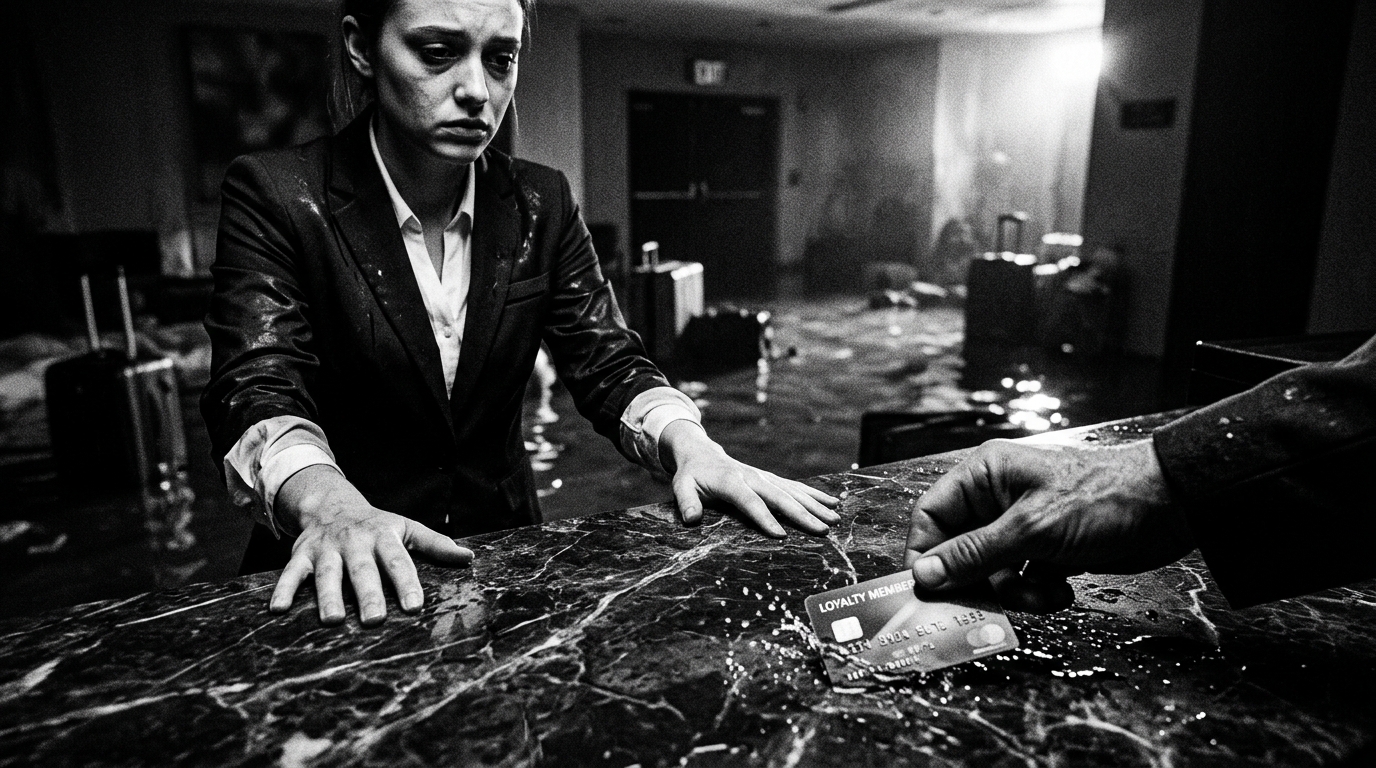
I once watched a guest walk up to a front desk during a hurricane evacuation and demand his suite upgrade. Power was intermittent. Half the staff had gone home to take care of their families. The lobby smelled like wet carpet because the loading dock had flooded. And this guy, rain-soaked, rolling his Tumi through two inches of standing water, looked at the front desk agent and said, "I'm a top-tier member. I was promised a suite." The agent... a 23-year-old kid who'd been on shift for 14 hours... just stared at him. The manager stepped in. She handled it. I've never forgotten the look on that kid's face. It was the moment hospitality broke for him, just a little.

So when I read about a Platinum Elite member with 1,000 lifetime Marriott nights getting stranded during cartel violence in Puerto Vallarta and going to Reddit to complain that the Westin wouldn't give him a guaranteed 4 PM late checkout... look, I understood him and I was exhausted by him at the same time. Here's the thing most people reading this story are missing. The guest wasn't technically wrong about his benefit. And the hotel wasn't wrong to deny it. Marriott Bonvoy's own terms say the 4 PM late checkout is guaranteed at most properties but subject to availability at resort and convention hotels. The Westin Puerto Vallarta is a resort. The hotel offered 2 PM checkout and access to a hospitality suite. That's not a property failing a loyal guest. That's a property operating within policy while simultaneously dealing with a security crisis that shut down roads and airports. The U.S. government was telling citizens to shelter in place. And this guy's grievance was about his checkout time.

But here's where I'll push back on everyone laughing at the guest, too. The brands created this monster. They did. They built programs that train guests to see loyalty status as a contract rather than a relationship. "Earn 50 nights, receive these guaranteed benefits." The word "guaranteed" does heavy lifting in that sentence. It creates an expectation that is absolute, not contextual. And then the fine print says "except at resorts, convention hotels, and these other property types where it's subject to availability." The guest with 1,000 nights isn't reading the fine print every trip. He's been conditioned over years to believe his status means something immovable. The brand sold him that belief... it's the entire engine of the loyalty program. And then when reality collides with the promise, the property-level team absorbs the anger. Not the brand. Not Bethesda. The front desk agent at the Westin who's probably also worried about whether she can get home safely.

This is what I call the Brand Reality Gap. The brand sells the promise at scale... glossy, clean, aspirational. The property delivers it shift by shift, with real humans, during real situations that no brand standards manual anticipated. Cartel violence wasn't in the training module. Airport closures weren't in the late checkout policy exception flowchart. And yet the front desk team had to figure it out in real time while a guest with 1,000 nights stood there feeling like his loyalty was being disrespected. The gap between the promise and the delivery is always widest during a crisis. And the person standing in that gap is never the one who made the promise.

The internet roasted this guest. Fine. He probably deserved some of it. But I'd rather talk about what this reveals structurally. Loyalty programs have evolved from "thank you for your business" into transactional entitlement engines. The guest didn't ask for help getting home safely. He didn't ask the hotel to coordinate with the embassy or arrange alternative transportation. He asked for his benefit. Because that's what the program trained him to value. When your loyalty architecture teaches guests that status equals contractual rights, don't be surprised when they invoke those rights during a crisis. The program designed this behavior. The property inherited the consequences.

Operator's Take

If you're a GM at a branded resort or convention hotel, go read your brand's loyalty terms right now... specifically the exceptions for your property type. Know exactly which "guaranteed" benefits are actually subject to availability at your location, because your front desk team needs to be able to explain that clearly and confidently when a top-tier member pushes back. Script it. Role-play it. Do it before something goes sideways, not during. And here's the bigger one... build a crisis hospitality playbook that goes beyond checkout times. When your area faces a weather event, civil unrest, or any situation that strands guests, your team should already know the answer to "what do we offer?" before anyone asks. Hospitality suites, meal vouchers, transportation coordination, embassy contact info... have the list ready. Because the guest who feels genuinely taken care of during a crisis becomes your most loyal advocate. The guest who gets a policy recitation becomes a Reddit post.

Read full analysis → ← Show less
Source: Google News: Marriott
A Retired Police Dog Just Became Hyatt's Smartest Brand Move This Quarter

A Retired Police Dog Just Became Hyatt's Smartest Brand Move This Quarter

The Park Hyatt Canberra just installed a retired bomb-sniffing dog as its permanent "ambassadog." Sounds like fluff. It's not. This is a masterclass in earned media that most GMs can't replicate... and shouldn't try to.

Let me tell you what happened. A Park Hyatt in Canberra, Australia took in a retired Australian Federal Police detection dog named Pixel... seven years old, decorated career, calm temperament... and gave her a title, a bed, and a job greeting guests in the lobby. The GM said it "aligns with our philosophy of creating a welcoming and memorable experience." The AFP superintendent said the dog deserves a comfortable retirement. Everyone smiled. The press ate it up.

And here's the thing... it's actually smart. Not in the way the press release tells you (heartwarming partnership, blah blah). It's smart because this hotel just generated international media coverage for the cost of dog food and a vet bill. That's an ROI most marketing directors would commit crimes for. Think about what earned media like this costs to manufacture. A single placement in a national outlet runs $15-20K in PR agency fees if you're buying the strategy and the pitching. This story ran everywhere. Local papers, travel blogs, social media... the kind of organic reach that a $50K digital campaign can't touch. And it reinforces the exact positioning a Park Hyatt needs: we're not a cookie-cutter luxury box, we're a property with personality and a story you'll tell at dinner.

But here's where I pump the brakes. I've seen this movie before. A GM at a boutique property I knew years ago adopted a rescue cat as the hotel's "resident feline ambassador." Great idea. Guests loved it. TripAdvisor reviews mentioned the cat by name. Then a guest had an allergic reaction. Then another guest complained the cat was on the lobby furniture. Then the health department had questions about the breakfast area. Within eight months, the cat was living at the GM's house and the hotel was dealing with a handful of one-star reviews from people who came specifically to see the cat and were told it was "no longer in residence." The PR giveth and the PR taketh away.

The Canberra property has an interesting wrinkle here. Their published pet policy explicitly states they don't allow pets except service animals. So Pixel is either an exception they'll need to formalize, or they're quietly shifting toward the pet-friendly positioning that Park Hyatt Melbourne rolled out in May 2025 with dog-friendly rooms. Either way, someone in brand standards had to sign off on this, which tells you Hyatt sees the pet-inclusive trend as worth the operational complexity. And it IS complex. Liability. Allergens. Housekeeping protocols. Guest complaints from the anti-dog crowd (they exist, and they write very detailed reviews). None of that is in the press release.

Look... I'm not against this. I think it's clever. I think the GM in Canberra knows exactly what he's doing. But the lesson for most operators isn't "go adopt a dog." The lesson is that the best marketing doesn't look like marketing. It looks like a story people want to tell. The question is whether you have the operational discipline to sustain the story after the cameras leave and you're the one picking up after a seven-year-old dog at 6 AM on a Tuesday. Because that's not a press release. That's a job.

Operator's Take

If you're a GM at an independent or a soft-branded property and you're thinking about a resident animal program... slow down. Talk to your insurance carrier first, your health department second, and your housekeeping team third. Have a written protocol for allergic guests, a dedicated line item for veterinary care, and an exit strategy for when (not if) something goes sideways. The marketing upside is real. The liability is also real. Don't let a cute headline convince you to skip the boring operational work that makes it sustainable.

Read full analysis → ← Show less
Source: Google News: Hyatt
Hilton's AI Trip Planner Is a Distribution Play, Not a Guest Experience Play

Hilton's AI Trip Planner Is a Distribution Play, Not a Guest Experience Play

Hilton just launched a generative AI trip planner on its website, and everyone's talking about the guest experience. They're looking at the wrong thing. This is about who owns the booking funnel... and what that means for your property's cost per acquisition.

So Hilton rolled out its "AI Planner" in beta on March 10, and the press release is full of the usual language about reimagining the travel experience and putting guests first. Let's talk about what this actually does.

It's a conversational search tool on Hilton.com. You tell it you want a family trip to San Diego in July, it suggests properties, maybe packages, maybe experiences. It's built on a large language model (almost certainly OpenAI's, given Hilton's existing ChatGPT ad pilot partnership), and it's designed to keep you on Hilton.com instead of bouncing to Google, Expedia, or Booking.com to do your trip research. That's the game. Not "reimagining travel." Capturing demand earlier in the funnel and converting it on owned channels. Which, honestly? That's a smart play. I just wish they'd say it out loud instead of wrapping it in experience language.

Here's why this matters if you're an operator. Hilton moved 90% of its enterprise tech to the cloud between 2020 and now. That's not a vanity stat... that's infrastructure that lets them iterate fast. They're also working with Google on AI-model booking integration. When you combine an on-site AI planner, a Google partnership, and an OpenAI relationship, what you're looking at is Hilton building a distribution moat. The 2026 guidance projects 1-2% system-wide RevPAR growth. That's modest. The way you juice returns on modest RevPAR growth is you reduce cost of acquisition. Every booking that starts and finishes on Hilton.com instead of going through an OTA saves the system $15-40 per reservation depending on the channel. At Hilton's scale (over 7,800 properties), even a 2-3% shift in channel mix is worth hundreds of millions annually. That's the real number here. Not "enhanced guest experience." Channel economics.

Now here's where I get skeptical. I talked to an operations director last week who's running three branded select-service properties. He asked me a simple question: "Does this AI planner know that my pool is closed for renovation until April?" The answer, almost certainly, is no. Not yet. These tools are trained on marketing content and structured data feeds. They're great at saying "this property has a rooftop bar and is near the convention center." They're terrible at real-time operational context... the stuff that actually determines whether a guest shows up and has a good experience. The pool is closed. The restaurant changed hours. The shuttle doesn't run on Sundays anymore. That gap between what the AI promises and what the property delivers? That's where your 1-star reviews come from. And the AI doesn't get the review. You do.

Look, I'm not saying this is vaporware. Hilton has the engineering talent and the cloud infrastructure to build something real. Marriott's doing the same thing with natural language search. IHG partnered with Google. Expedia's been doing conversational planning since 2023. The industry is moving this direction and Hilton would be negligent not to move with it. But the question nobody's asking is: what's the property-level feedback loop? When the AI planner makes a recommendation that's wrong (and it will... every system fails eventually), who catches it? Your front desk agent at 11 PM? Is there a mechanism for GMs to flag inaccurate AI-generated descriptions? Because if there isn't, you've built a beautiful booking engine that occasionally lies to guests and leaves the property to clean up the mess. The Dale Test question here is straightforward: when this thing tells a guest your hotel has a feature it doesn't have, what happens next? If the answer involves a guest standing at your front desk saying "but the website told me," then the technology isn't ready. It's a demo feature being deployed as a production feature.

Operator's Take

Here's what you need to do this week. If you're a GM at a Hilton-branded property, go to Hilton.com right now and ask the AI planner to recommend your hotel. See what it says about your property. If it mentions amenities that are closed, hours that are wrong, or experiences you can't deliver... document it and send it up the chain immediately. Don't wait for a guest to find out before you do. This is a distribution tool, not a magic wand. Your job is to make sure the promise matches the delivery... and right now, nobody at corporate is checking that at property level. You are the quality control. Act like it.

— Mike Storm, Founder & Editor
Read full analysis → ← Show less
Source: Google News: Hilton
Women Control 82% of Travel Decisions. So Why Are We Still Designing Hotels Like They Don't?

Women Control 82% of Travel Decisions. So Why Are We Still Designing Hotels Like They Don't?

IHG is making noise about women shaping hospitality in 2026. The real question is why it took this long for anyone to state the obvious... and whether the industry will actually change anything at property level.

Available Analysis

Here's a number that should make every GM in the country stop and think: women make 82% of all travel decisions. Not 82% of leisure decisions. Not 82% of family trip decisions. 82% of ALL travel decisions, including who books the room, which brand gets the loyalty, and whether that property gets a repeat visit or a one-star review. That's not a trend piece. That's your revenue base.

IHG put out some statements last week through their Holiday Inn Express marketing team about women shaping hospitality as consumers and emerging leaders. And look... I'm glad someone at a major brand is saying it out loud. But I've been in this business 40 years, and I can tell you the gap between a brand saying "women are important to our strategy" and a property actually changing how it operates is roughly the same distance as the gap between a brand's PowerPoint and a Tuesday night at a 180-key select-service with three people on staff. Women make up 52% of the hospitality workforce. They hold 30% of leadership roles. Seven percent of CEOs. Those numbers tell you everything you need to know about how seriously the industry has taken this up to now.

I knew an area director once... sharp operator, 20 years in the business, ran some of the best-performing properties in her region. She told me something I never forgot: "The brands survey guests and segment them into personas. I just watch the lobby for 30 minutes. Women traveling alone check the locks, check the lighting in the parking lot, and check whether the front desk agent makes eye contact or stares at a screen. That's your brand experience right there. No persona deck required." She was right. And the fact that she was an area director instead of a divisional VP had nothing to do with her ability and everything to do with the same broken system my industry has been running since I started.

IHG committed $30 million over five years to their LIFT program, which is supposed to support underrepresented groups in hotel ownership, including women. Thirty million sounds like a big number until you realize IHG has over 6,000 hotels globally. That's roughly $5,000 per property spread across five years. A thousand bucks a year per hotel. I spend more than that on lobby coffee. The real investment isn't a corporate program with an acronym. It's the decisions happening every day at property level... who gets promoted to AGM, who gets sent to the revenue management training, who gets tapped for the GM pipeline. That's where careers are built or buried, and no $30 million fund changes that unless the people making those decisions actually change how they think.

Here's what frustrates me. The $73 billion in annual U.S. travel spending by women isn't new money. It's money that's BEEN flowing through our properties while we designed lobbies, amenities, lighting, parking lot layouts, fitness centers, and service protocols primarily through a lens that didn't prioritize the person making the booking decision. The women-over-50 travel market alone is $214 billion, projected to hit $519 billion by 2035. That's not an emerging segment. That's THE segment. And if your property still has a dimly lit hallway between the elevator and the parking garage, and your fitness center has three broken treadmills and no lock on the door, and your front desk team hasn't been trained on the difference between being friendly and being attentive... you're leaving money on the table. Not because a brand told you to care about women travelers. Because 82% of booking decisions are being made by someone who notices things you stopped seeing years ago.

Operator's Take

Here's what I'd do this week if I were still running a property. Walk the building at 10 PM as if you're a woman checking in alone for the first time. Parking lot lighting, hallway sightlines, elevator visibility from the front desk, lock hardware, peephole height, fitness center security. Write down everything that feels wrong. Then fix the cheap stuff immediately (lighting, signage, lock batteries) and put the rest on a capital request with the number attached. Your ownership group doesn't need a gender studies lecture... they need to hear that 82% of booking decisions are made by someone who just walked that same path and decided whether to come back. This is what I call the Price-to-Promise Moment. Every stay has one moment where the guest decides the rate was worth it... for the majority of your bookers, that moment might be whether they felt safe walking to their room. Design for that.

Read full analysis → ← Show less
Source: Google News: IHG
$20 Coffee Pods and $180 Cocktails: Hotels Have Forgotten What Business They're In

$20 Coffee Pods and $180 Cocktails: Hotels Have Forgotten What Business They're In

When your in-room coffee costs more than the guest's lunch and two drinks at a show require a payment plan, you haven't found a revenue strategy. You've found the fastest way to teach your best customers to spend their money somewhere else.

I knew a food and beverage director once who had a phrase he used every time ownership pushed him to bump menu prices. He'd say "there's a difference between charging what something's worth and charging what you think you can get away with." The first one builds a business. The second one works exactly once.

That's what I thought about when I saw what's happening at some of these properties right now. Twenty bucks for a Nespresso pod at a Grand Hyatt. A hundred and eighty dollars for two cocktails and two waters at a show venue inside an MGM property in Vegas... and that includes a $25 "admin fee," which is my new favorite euphemism for "because we can." Look, I understand ancillary revenue. I've managed the P&L. I know what F&B margins look like and I know how hard it is to move the needle when your labor costs are running 35% and your food costs are climbing. But there's a line between smart ancillary capture and treating your guest like an ATM with legs, and we blew past that line somewhere around the time someone decided a pod of coffee that costs $0.70 wholesale should retail for twenty dollars. The math on that markup would make a pharmaceutical company blush.

Here's what nobody in the corporate revenue optimization meeting wants to hear: this stuff doesn't exist in isolation. A guest doesn't experience the $20 coffee pod as an independent transaction. They experience it as a data point in a running calculation that goes something like this... "The room was $389. Parking was $55. The resort fee was $45. And now they want twenty bucks for coffee I make at home for thirty cents." That calculation has a tipping point, and when you hit it, you don't get a complaint. You get something worse. You get a guest who checks out, leaves a three-star review, and books the boutique independent down the street next time. You never see the damage because it doesn't show up on this month's revenue report. It shows up in next year's repeat booking rate. This is what I call the Price-to-Promise Moment... every stay has one moment where the guest decides the rate was worth it or it wasn't. A $20 coffee pod at 6 AM before a business meeting is not that moment. It's the anti-moment. It's the second the guest decides they got played.

What's telling is that MGM's own CEO admitted last fall that aggressive pricing (his words, not mine) had alienated customers. He specifically referenced $12 Starbucks coffee on property. Said they'd "lost control of the narrative." They did price corrections. And now we're seeing $180 for two drinks at a show venue. So either the corrections didn't reach every outlet, or the definition of "corrected" is more generous than I'd use. Meanwhile, Hyatt is pulling back loyalty benefits and moving to a five-tier award pricing system that's going to cost members more points for the same rooms. So the message to your best, most loyal guests is... we're going to charge you more for the room AND more for the coffee once you get there. That's a bold strategy. I've seen it before. It doesn't end well.

The real problem is structural. When you go asset-light (which Hyatt is aggressively doing... 80% of earnings from fees is the target), you're collecting management and franchise fees whether the guest comes back or not. The owner eats the repeat-booking decline. The brand collects the same percentage. So who exactly has the incentive to protect the guest relationship? The brand will tell you they do. But the brand isn't the one who decided to charge $20 for a coffee pod. That decision was made at property level, by someone trying to hit a margin number, probably one that was set by an asset manager or an owner who's trying to cover the franchise fees, the loyalty assessments, the reservation fees, and the PIP debt. Everyone in the chain is rational. And the guest still pays $20 for coffee. That's the machine working as designed. Which should terrify every owner reading this, because the machine is designed to extract, not to build loyalty.

Operator's Take

If you're a GM or a property-level F&B director, audit every single ancillary price point in your hotel this week. Not next month. This week. Calculate the markup on your top 20 highest-margin in-room and outlet items and ask yourself one question: if a guest posted this price on social media with a photo, would it make you proud or make you cringe? Because that's exactly what's happening... every overpriced coffee pod is one iPhone photo away from being your next TripAdvisor disaster. If you're an owner, understand that your brand partner's fee structure incentivizes them to push revenue up regardless of what it does to guest sentiment. That's your asset taking the long-term hit, not theirs. Set pricing guardrails in your management agreement if you haven't already. The $20 coffee pod isn't a revenue strategy. It's a reputation loan you're going to repay with interest.

Read full analysis → ← Show less
Source: Google News: Hyatt
The Best Hotels I Ever Ran Didn't Have Half the Stuff You'd Expect

The Best Hotels I Ever Ran Didn't Have Half the Stuff You'd Expect

A $5.1 million deal in India just proved what every great operator already knows... you don't need a spa, a rooftop bar, and a celebrity chef to be the best hotel in your market. You need to be ruthlessly perfect at the things you actually do.

I worked with a GM years ago who took over a 45-key property that had no pool, no restaurant, no fitness center, and a lobby you could cross in six steps. The previous operator had spent two years trying to get ownership to fund an expansion... add a breakfast room, build out a small meeting space, maybe squeeze in a hot tub somewhere. Couldn't get the capital. So this GM did something different. She took what she had and made every single inch of it flawless. The beds were perfect. The WiFi was bulletproof. The front desk team knew every repeat guest by name within two stays. Within 18 months that property was indexing 20 points above its comp set on rate. No pool. No restaurant. No meeting space. Just absolute precision on the things that were actually there.

That's the core of what CoStar is getting at with this "superstar hotel" concept, and it's something I've been saying for decades. The industry has this obsession with amenity checklists... like guests are walking around with a clipboard scoring you on how many things you offer. They're not. They're scoring you on how the experience FEELS. And feeling comes from execution, not from square footage. Samhi Hotel Investments just picked up a 70% stake in RARE India... 67 heritage and experiential properties... for roughly $5.1 million. That's about $76,000 per property. They're not buying buildings. They're buying a brand that figured out how to make guests feel something without a $40 million capital stack behind every door. Asset-light, experience-heavy. And honestly? That math should terrify every full-service operator who's been hiding behind their amenity count instead of actually delivering.

Here's what nobody wants to say out loud. The luxury segment is growing at something like 11.5% CAGR through 2032, and the properties capturing most of that growth aren't the ones with the longest list of features. They're the ones with the clearest identity. The two-speed market data from earlier this month tells the story... luxury up roughly 3% in RevPAR while economy drops over 4%. But "luxury" doesn't mean what it meant 15 years ago. It used to mean more. More amenities, more staff, more square footage, more everything. Now it means less... but better. Less noise. Less friction. Less of the generic stuff every hotel has and more of the specific thing only YOUR hotel does. Some people are calling it "quiet luxury" or (and I hate this term) "hushpitality." I just call it doing fewer things and doing them right. Which is, by the way, exactly how the best operators I've known have always run their houses. The industry is finally catching up to what good GMs figured out on their own.

The trap I see operators fall into... and I've fallen into it myself... is confusing guest expectations with amenity requirements. Your guest doesn't expect you to have a spa. Your guest expects that if you HAVE a spa, it's excellent. If you have a restaurant, the food is worth ordering. If you have a fitness center, the equipment works and the room doesn't smell like 2014. Every amenity you add is a promise you're making. And every mediocre amenity is a broken promise the guest experiences in real time. I've seen this movie at three different full-service properties where the ownership group kept adding features... lobby bar, grab-and-go market, coworking space, rooftop terrace... and the TripAdvisor scores kept going DOWN. Because the staff was stretched thinner across more touchpoints, and the guest could feel it. You're not adding value. You're adding surface area for failure.

So here's the question every operator should be asking right now, regardless of what segment you're in. Not "what should we add?" but "what are we doing that we're not doing well enough?" That 45-key property I mentioned didn't win by adding. It won by subtracting everything that wasn't excellent and then making what remained absolutely bulletproof. The global market is moving this direction whether you like it or not. Guests are telling you with their wallets... they'll pay a premium for a focused, authentic experience over a bloated, mediocre one. Every time. The math on this is clear. A property with four amenities executed at a 9 out of 10 will outperform a property with eight amenities executed at a 6 every single day of the week. Stop adding. Start perfecting.

Operator's Take

If you're a GM at a select-service or boutique property and you've been losing sleep over what you DON'T have... stop. Walk your property tomorrow morning and score every single guest touchpoint from 1 to 10. Be honest. Anything below an 8, that's your project. Not a renovation. Not a capital request. Just relentless focus on making what you already have work perfectly. Your owners don't need to spend $2 million on a lobby bar. They need you to make sure the $200,000 you're already spending on the guest experience is actually landing. That's the competitive advantage nobody can copy with a checkbook.

Read full analysis → ← Show less
Source: Google News: CoStar Hotels
Hilton's AI Planner Is Live. Let's Talk About What It Actually Does.

Hilton's AI Planner Is Live. Let's Talk About What It Actually Does.

Hilton just launched a generative AI concierge on its website that recommends destinations and compares properties. The question nobody's asking: what happens when AI-generated suggestions don't match what the property can actually deliver?

So Hilton rolled out an AI-powered trip planner on hilton.com yesterday... beta first, full rollout by March 17. The tool lets guests ask questions about destinations, compare properties, explore amenities, and get "curated recommendations" instead of using traditional search filters. It's a chatbot for booking, basically. And before anyone calls this revolutionary, let's talk about what it actually does and what it doesn't.

What it does: it sits on top of Hilton's portfolio of properties and brands and uses generative AI to answer natural-language questions. "Where should I take my family in Florida with a pool and near the beach?" Instead of clicking through filters, you get a conversational response. That's genuinely useful for the inspiration phase of travel planning... the part where someone doesn't know exactly what they want yet. Hilton has 243 million Honors members generating enormous amounts of preference data, and if they're feeding that into the recommendation engine, the personalization potential is real. I'll give them credit for that. The architecture makes sense (assuming they've built proper guardrails around hallucination, which... we'll see).

What it doesn't do yet: display lowest award rates or find cheapest dates for points bookings. That's a pretty significant gap for a tool aimed at Honors members. It also can't book for you... it recommends, you still have to go through the normal flow. And here's what the press release definitely doesn't mention: what happens when the AI recommends a property based on amenity descriptions that are outdated, or when it suggests a "boutique lifestyle experience" at a property that's mid-PIP and has half its F&B shuttered? I talked to a GM last month who told me his brand's own website still listed a restaurant that closed eight months ago. Now imagine an AI confidently recommending that property specifically because of its dining options. The data quality problem doesn't go away because you put a chatbot in front of it. It gets worse, because the guest arrives with AI-validated expectations instead of just website-browsing expectations. That's a harder recovery at the front desk.

Look, I get why Hilton is doing this. They've identified 41 AI use cases internally. Analysts are re-rating the stock as "tech-adjacent" (whatever that means... it trades at $303 with a $69.6B market cap, and they returned $3.3 billion to shareholders last year). The competitive pressure from AI search engines eating into direct booking is real... if a traveler asks ChatGPT "where should I stay in Nashville" and gets an answer before they ever visit hilton.com, Hilton loses the top of the funnel. Building their own AI planner is a defensive play as much as an offensive one. Smart strategy. But strategy and execution are two very different things, and execution here means every single property's data has to be accurate, current, and specific enough for an AI to make trustworthy recommendations. That's not a technology problem. That's an operations problem across thousands of properties.

The real question for operators: does this change anything at property level right now? Honestly, not much. But it will. If Hilton's AI planner starts driving booking decisions based on amenity descriptions, service offerings, and guest reviews, then the accuracy of your property's digital footprint just became a revenue driver in a way it wasn't before. The properties that keep their listings updated, their amenity descriptions current, and their review responses sharp will get recommended. The ones that don't... won't. And you won't even know why your booking pace dropped, because the AI made the decision before the guest ever saw your property page. That's new. And it should make every Hilton-flagged GM slightly uncomfortable... in a productive way.

Operator's Take

If you're running a Hilton-flagged property, go check every amenity, service, and F&B description on your brand listing this week. Not next month. This week. Because an AI is about to start making recommendations based on that data, and if your pool is closed for renovation or your restaurant changed hours six months ago and nobody updated the system, you're going to get guests arriving with expectations you can't meet. That's not a technology problem... that's a front desk problem at 11 PM. The GM who keeps their digital footprint current wins this game. The one who doesn't is going to wonder why the phones stopped ringing.

— Mike Storm, Founder & Editor
Read full analysis → ← Show less
Source: Google News: Hilton
Hyatt's Kosher Breakfast Fiasco Is a Masterclass in How Not to Cut Elite Benefits

Hyatt's Kosher Breakfast Fiasco Is a Masterclass in How Not to Cut Elite Benefits

A Grand Hyatt resort just told guests that only Jewish customers could access a specific breakfast venue... and what sounds like discrimination is actually something much more common and much more instructive: a brand quietly gutting loyalty perks while the front desk takes the heat.

Let me set the scene for you because this one is genuinely remarkable. You're a World of Hyatt Globalist... top tier, the status you earned by spending thousands of nights and tens of thousands of dollars with this brand. You walk up to the front desk at the Grand Hyatt Baha Mar in Nassau and ask about your complimentary breakfast options. And the person behind the desk tells you that the kosher food truck on the beach? That's only available to "Jewish/Kosher customers." Everyone else gets the buffet. The one with the hour-long wait. You blink. You ask again. Same answer. And now you're standing in a lobby in the Bahamas wondering if you've accidentally wandered into a Larry David episode.

Here's the thing... this isn't actually religious discrimination (though the optics are spectacular). It's a dietary accommodation that got run through the world's worst game of telephone. The hotel used to let Globalists choose from three breakfast venues: the Regatta buffet, Cafe Madeline, or Knosh, a kosher food truck. Someone in revenue management or F&B looked at the cost of honoring elite breakfast across three outlets and decided to funnel everyone to the high-volume buffet. Smart cost play. But you can't force kosher-keeping guests to eat at a non-kosher buffet... that's a genuine religious accommodation issue. So the food truck stayed open for guests with dietary restrictions. Completely logical. And then someone had to explain this policy to a front desk agent, who explained it to a guest, who explained it to the internet, and now we're here. The brand promise just leaked all over the lobby floor, and housekeeping doesn't have a mop for this one.

But I want you to look past the comedy for a second (and it IS comedy... the comments section is full of people announcing their sudden interest in converting, which, honestly, fair) because underneath the absurdity is a pattern I've been watching accelerate across every major brand. This is benefit degradation, and it's happening everywhere. The club lounge at this property closed during COVID and never reopened. That's not unusual... I've tracked dozens of properties across multiple flags where "temporary" closures became permanent, where made-to-order breakfast became grab-and-go, where elite perks got quietly downgraded while the loyalty program's marketing materials stayed exactly the same. The promise didn't change. The delivery did. And the gap between those two documents is where owner trust goes to die. This particular incident landed the same week Hyatt announced a massive devaluation of its points program... moving to a five-tier award chart that increases top-tier redemption costs by up to 67%. That's not a coincidence. That's a strategy. Squeeze the loyalty members from both ends: make the points worth less AND make the on-property benefits thinner. The brand captures the savings. The property-level team absorbs the guest anger.

And THAT is what I want every owner and GM reading this to understand. The person who decided to cut breakfast options at the Baha Mar isn't the one standing at the desk trying to explain a policy that sounds like it was drafted by a committee that never met a guest. Your front desk team is the delivery mechanism for brand decisions made in conference rooms where nobody has to look a Globalist member in the eye and say "actually, that benefit you earned? We've restructured it." I sat in a franchise review once where a brand executive described benefit reductions as "experience optimization." The owner across the table just stared at him. Didn't say a word. The silence was louder than anything I've heard in a boardroom. That's what this is. Experience optimization. For the brand's P&L. Not for the guest. Not for the owner.

If you're an owner at a full-service branded property, you need to audit your elite benefit delivery right now... not because of this specific incident, but because the trend is accelerating and your front desk is going to be the one explaining it. Map every elite perk your brand promises against what your property actually delivers. Find the gaps before a guest finds them and posts about them. And when the brand sends down the next "program enhancement" that's really a cost reduction dressed in marketing language? Run the numbers on what it saves the brand versus what it costs you in guest satisfaction and repeat bookings. Because here's what the press release about Hyatt's new award chart won't tell you: every point devaluation, every benefit reduction, every "streamlining" of elite perks shifts the burden of guest disappointment from the brand to the property. You're the face of a promise someone else decided to break.

Operator's Take

Here's what nobody's telling you about the loyalty benefit cuts rolling across every major flag right now. Your brand is saving money. You're absorbing the guest complaints. If you're a GM at a branded full-service property, pull your elite benefit standards document this week and compare it line by line to what you're actually delivering. Then call your brand rep and ask one question: "When you reduced this benefit, did you reduce my loyalty assessment?" I already know the answer. So do you. Document the gap, because when your owner asks why guest satisfaction scores are dropping among your highest-value guests, you need to show them it wasn't your decision... it was the brand's.

— Mike Storm, Founder & Editor
Read full analysis → ← Show less
Source: Google News: Hyatt
End of Stories