A Platinum Elite Guest Got Stranded in a Crisis Zone and Demanded Late Checkout. This Is the Whole Loyalty Problem in One Story.
A Marriott Bonvoy Platinum member with over 1,000 lifetime nights got stranded by cartel violence in Puerto Vallarta and took to Reddit to complain about not getting a 4 PM late checkout at a Westin resort. The hotel offered a 2 PM checkout and a hospitality suite, but the guest wanted his "earned" benefit... and the internet's reaction tells you everything about where loyalty programs actually break down.
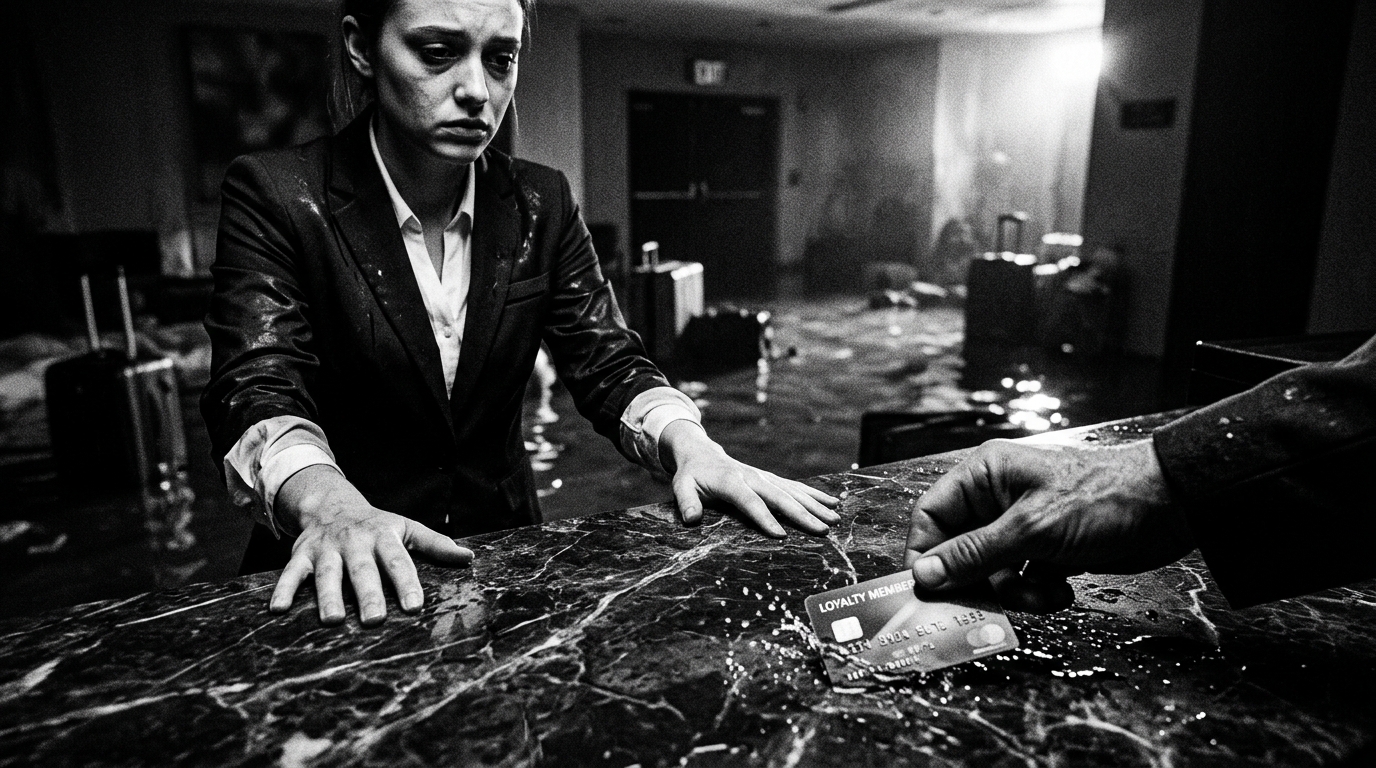
I once watched a guest walk up to a front desk during a hurricane evacuation and demand his suite upgrade. Power was intermittent. Half the staff had gone home to take care of their families. The lobby smelled like wet carpet because the loading dock had flooded. And this guy, rain-soaked, rolling his Tumi through two inches of standing water, looked at the front desk agent and said, "I'm a top-tier member. I was promised a suite." The agent... a 23-year-old kid who'd been on shift for 14 hours... just stared at him. The manager stepped in. She handled it. I've never forgotten the look on that kid's face. It was the moment hospitality broke for him, just a little.
So when I read about a Platinum Elite member with 1,000 lifetime Marriott nights getting stranded during cartel violence in Puerto Vallarta and going to Reddit to complain that the Westin wouldn't give him a guaranteed 4 PM late checkout... look, I understood him and I was exhausted by him at the same time. Here's the thing most people reading this story are missing. The guest wasn't technically wrong about his benefit. And the hotel wasn't wrong to deny it. Marriott Bonvoy's own terms say the 4 PM late checkout is guaranteed at most properties but subject to availability at resort and convention hotels. The Westin Puerto Vallarta is a resort. The hotel offered 2 PM checkout and access to a hospitality suite. That's not a property failing a loyal guest. That's a property operating within policy while simultaneously dealing with a security crisis that shut down roads and airports. The U.S. government was telling citizens to shelter in place. And this guy's grievance was about his checkout time.
But here's where I'll push back on everyone laughing at the guest, too. The brands created this monster. They did. They built programs that train guests to see loyalty status as a contract rather than a relationship. "Earn 50 nights, receive these guaranteed benefits." The word "guaranteed" does heavy lifting in that sentence. It creates an expectation that is absolute, not contextual. And then the fine print says "except at resorts, convention hotels, and these other property types where it's subject to availability." The guest with 1,000 nights isn't reading the fine print every trip. He's been conditioned over years to believe his status means something immovable. The brand sold him that belief... it's the entire engine of the loyalty program. And then when reality collides with the promise, the property-level team absorbs the anger. Not the brand. Not Bethesda. The front desk agent at the Westin who's probably also worried about whether she can get home safely.
This is what I call the Brand Reality Gap. The brand sells the promise at scale... glossy, clean, aspirational. The property delivers it shift by shift, with real humans, during real situations that no brand standards manual anticipated. Cartel violence wasn't in the training module. Airport closures weren't in the late checkout policy exception flowchart. And yet the front desk team had to figure it out in real time while a guest with 1,000 nights stood there feeling like his loyalty was being disrespected. The gap between the promise and the delivery is always widest during a crisis. And the person standing in that gap is never the one who made the promise.
The internet roasted this guest. Fine. He probably deserved some of it. But I'd rather talk about what this reveals structurally. Loyalty programs have evolved from "thank you for your business" into transactional entitlement engines. The guest didn't ask for help getting home safely. He didn't ask the hotel to coordinate with the embassy or arrange alternative transportation. He asked for his benefit. Because that's what the program trained him to value. When your loyalty architecture teaches guests that status equals contractual rights, don't be surprised when they invoke those rights during a crisis. The program designed this behavior. The property inherited the consequences.
If you're a GM at a branded resort or convention hotel, go read your brand's loyalty terms right now... specifically the exceptions for your property type. Know exactly which "guaranteed" benefits are actually subject to availability at your location, because your front desk team needs to be able to explain that clearly and confidently when a top-tier member pushes back. Script it. Role-play it. Do it before something goes sideways, not during. And here's the bigger one... build a crisis hospitality playbook that goes beyond checkout times. When your area faces a weather event, civil unrest, or any situation that strands guests, your team should already know the answer to "what do we offer?" before anyone asks. Hospitality suites, meal vouchers, transportation coordination, embassy contact info... have the list ready. Because the guest who feels genuinely taken care of during a crisis becomes your most loyal advocate. The guest who gets a policy recitation becomes a Reddit post.