A $200 Treehouse Is Airbnb's Hottest NC Listing. Your Hotel Is Losing to a Fire Pit and Farm Animals.
Airbnb's most wishlisted property in North Carolina isn't a luxury condo or a beach house... it's a treehouse on a 40-acre farm charging $200 a night, 25 miles from Charlotte. The uncomfortable question for every hotel operator in the market isn't whether this matters, but why you can't name what makes your property worth remembering.
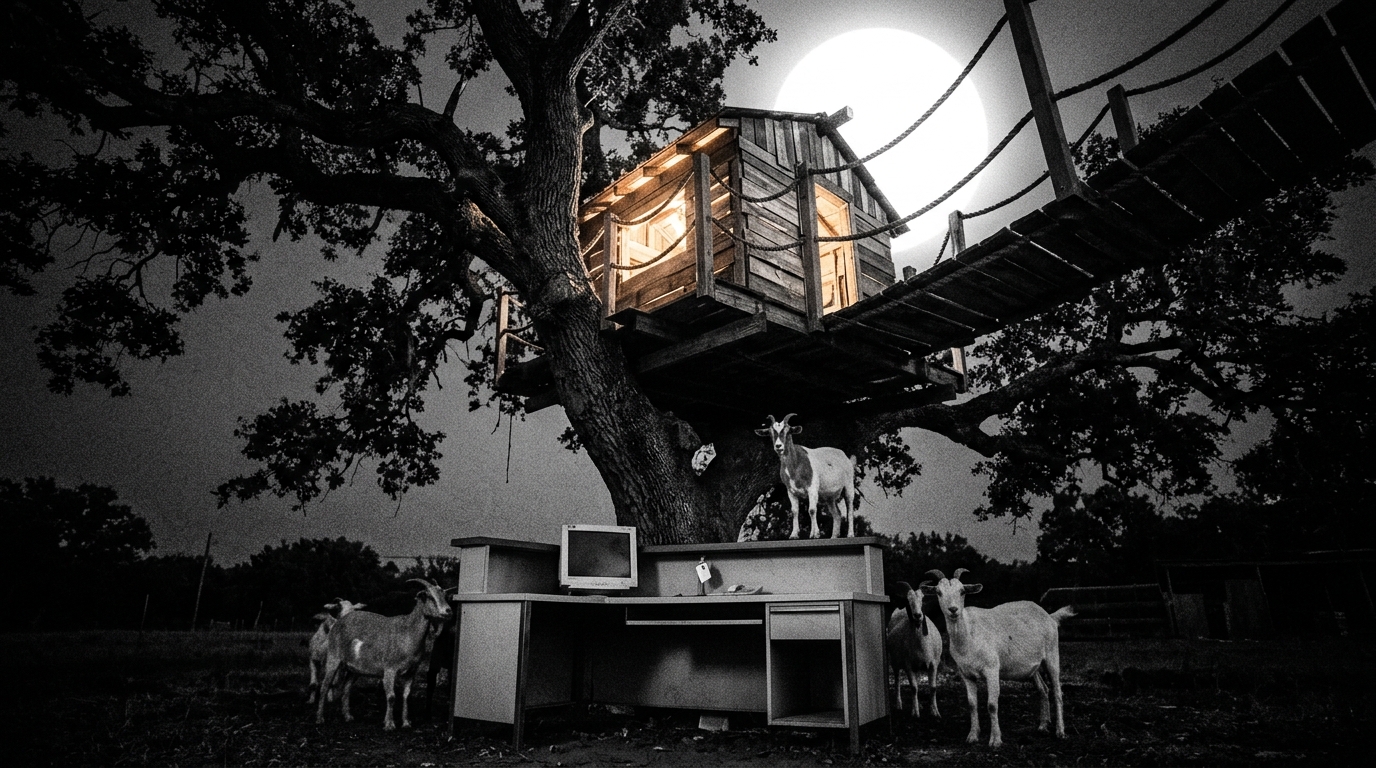
So here's what's happening. Airbnb just flagged a "Romantic Treehouse Glamping on 40-Acre Farm" in Concord... about 25 miles northeast of uptown Charlotte... as its most in-demand property in all of North Carolina. Not most booked. Most wishlisted. Meaning more people saved this listing to their "I want to go there" list in 2025 than any other property in the state. A treehouse. With a fire pit, a pond, and farm animals. At $200 a night.
Look, I'm not going to pretend this is some existential threat to the Charlotte hotel market. It's not. Charlotte's hotel ADR was running around $126 through mid-2024, occupancy at 65.9%, RevPAR at $83. Those are real numbers driven by convention traffic, corporate travel, and Panthers games... not by people who want to pet goats. But here's what actually matters about this story, and it's the thing nobody in hotel tech or hotel operations wants to talk about honestly: Airbnb isn't winning the "unique stays" category because their technology is better. They're winning because their hosts understand something fundamental about what travelers actually want to buy. The hosts of this treehouse describe it as "more luxurious than camping but cooler than a hotel." That positioning... that single sentence... is sharper than most brand decks I've read in the last five years.
And this isn't a one-off. Last year, the most wishlisted NC property was a luxury dome in the mountains. The year before that, a sky-high treehouse in a small town about 33 miles from Charlotte, at $175 a night. The pattern isn't "people like treehouses." The pattern is that travelers are actively seeking experiences that feel distinct, and they're willing to drive 30 miles past your lobby to find one. Meanwhile, Charlotte's hotel market actually showed a monthly occupancy decline of about 13% year-over-year through October 2025, with RevPAR dropping 15% in the same snapshot. I'm not saying a treehouse caused that (it didn't). I'm saying the demand environment is softening while the supply of alternatives... short-term rentals in Charlotte, Raleigh, and Durham are all seeing significant growth... keeps expanding.
I talked to a hotel operator last month who was losing weekend leisure bookings to a renovated barn on a vineyard 20 minutes outside his market. He showed me the Airbnb listing on his phone and said, "I can't compete with that. I have a Keurig and a parking lot." And he was right... he can't compete with THAT. But he wasn't even trying to compete with anything. His property had zero personality. No story. No reason for a guest to take a photo, tell a friend, or come back. His website looked like it was generated by the brand's template engine in 2019 (because it was). The technology existed to let him tell a better story... dynamic content, local partnerships piped into the booking flow, experience packages... and none of it was deployed. Not because the tech wasn't available. Because nobody on his team, or at his management company, or at his brand, had asked the most basic question: what is the one thing a guest will remember about staying here?
That's the actual technology problem underneath this treehouse headline. It's not that hotels need to build fire pits (please don't). It's that the platforms guests use to discover and book travel are increasingly optimized for distinctiveness. Airbnb's algorithm rewards unique amenity lists, high-quality images, and detailed experience descriptions... hosts who list 35-plus amenities and tell a visual story outperform generic listings by a mile. Hotels have access to the same tools. Revenue management systems, CRM platforms, dynamic website builders, social integration... all of it exists. The question is whether anyone at the property level is actually using those tools to create something worth wishlisting. Or whether the PMS is just processing check-ins while a treehouse 25 miles away captures the imagination your lobby never bothered to compete for.
Here's what I want you to do this week if you're running a hotel anywhere near a leisure-driven market. Pull up Airbnb and search your area. Sort by "most wishlisted" or highest-rated. Look at the top five listings. Read how they describe themselves. Look at their photos. Then go look at your own property's booking page. If your listing looks like it was written by a compliance department and photographed by someone who also shoots insurance claims... that's your problem. You don't need a treehouse. You need a story. One distinct, photographable, retellable thing about your property that gives a guest a reason to choose you over the 14 other options within three miles. This is what I call the Price-to-Promise Moment... every stay has one moment where the guest decides the rate was worth it. If you can't name yours, neither can your guest. Talk to your front desk team this week. Ask them: "What do guests say they love about us?" If the answer is "the location" or "it was clean," you've got work to do. And it doesn't cost $15,000. It costs attention.
