Hyatt's Alila Just Picked Hakone. The Tech Stack for 60 Keys With Private Onsen Will Be Brutal.
Alila's first Japan property promises 60 rooms with private hot spring baths, Kengo Kuma design, and a 2028 opening in Hakone. The question nobody's asking is what technology infrastructure actually looks like when your guest experience depends on plumbing, not pixels.
So Hyatt is bringing Alila to Hakone, Japan. Sixty keys. Private natural hot spring bath in every room. Kengo Kuma designing the thing. Opening 2028. And every hotel tech publication is going to write about the "digital guest journey" and the "smart room experience" and whatever other buzzwords get clicks this week.
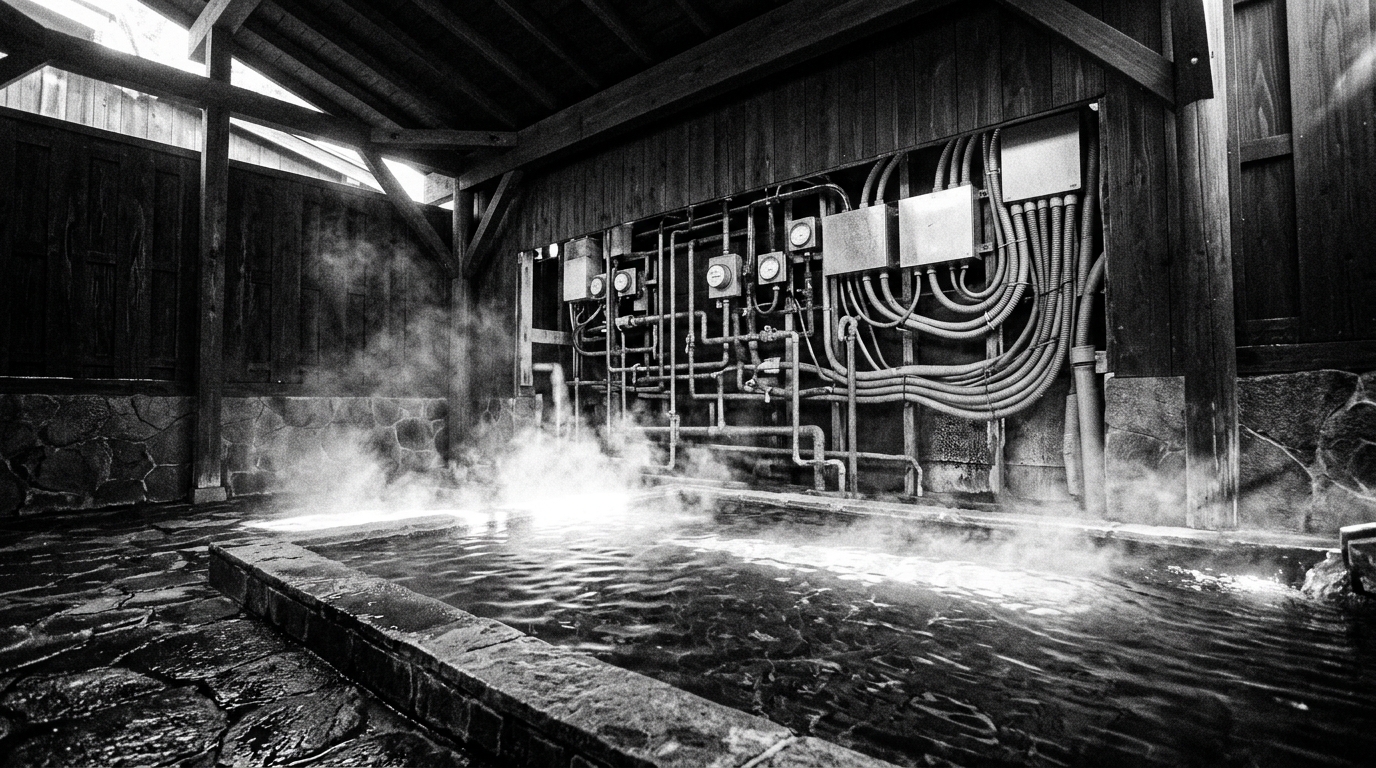
I want to talk about something else entirely. I want to talk about what happens when you try to wire a luxury technology stack into a property where the core guest experience is... water. Hot water from the earth, piped into 60 individual rooms, each one requiring its own temperature monitoring, flow management, and maintenance alert system. I consulted with a resort group in Southeast Asia last year that had individual plunge pools in every villa. Their "smart room" system looked gorgeous in the demo. In production, the pool temperature sensors threw false alerts every 90 minutes because humidity in the mechanical spaces exceeded what the hardware was rated for. The engineering team disabled the alerts within a month. So now you've got a $200K monitoring system that nobody monitors. That's hotel tech in a nutshell.
Here's what actually matters about Alila Hakone from a technology perspective. This is Hyatt's 10th brand in Japan, joining 22 existing hotels across nine brands. That means Hyatt already has a regional tech infrastructure... PMS standards, loyalty integration requirements, revenue management platforms. But Alila isn't a Hyatt Place. The operational technology for a 60-key ultra-luxury onsen resort has almost nothing in common with the tech stack running a 300-key Grand Hyatt in Tokyo. The PMS needs to handle kaiseki dining reservations with multi-course timing. The guest profile system needs to capture bathing preferences (temperature, minerals, timing) that don't exist as fields in any standard loyalty platform. The spa booking engine needs to manage gender-separated and mixed-gender thermal facilities with capacity limits that change by time of day. None of this is in the standard Hyatt tech playbook. So either they build custom (expensive, slow, maintenance-heavy) or they force-fit existing platforms (cheap, fast, terrible guest experience). I've watched this exact decision get made at four different luxury brands expanding into non-standard property types. They almost always choose force-fit first, realize it doesn't work about eight months post-opening, and then spend 2x building custom anyway.
The building itself is going to be a technology challenge that most people aren't thinking about. Hakone sits inside a national park. The Sengokuhara area has volcanic geology, dense forest cover, and infrastructure that wasn't designed for modern bandwidth requirements. You're putting a luxury resort into a location where the cellular signal might be inconsistent and the nearest fiber trunk line serves a town of maybe 4,000 people. Kengo Kuma's design philosophy is minimalist integration with nature... which is beautiful and also means the architecture probably won't accommodate the cable pathways, equipment rooms, and antenna placements that a modern hotel technology stack requires without some very creative engineering. My family's hotel has 1978 wiring that kills WiFi on the second floor. Now imagine that problem, but the building is deliberately designed to disappear into a mountainside.
Look, I'm not saying Alila Hakone won't be stunning. It probably will be. Kengo Kuma doesn't do mediocre. And the Japan luxury hotel market is projected to grow from about $7.3 billion to over $10 billion by 2034, with 42.7 million international visitors in 2025 alone... so the demand is real. Hilton is putting an LXR property in Hakone for the same reason. But the technology conversation around properties like this always focuses on the guest-facing stuff... the app, the digital key, the in-room tablet. The actual technology challenge is infrastructure. It's the monitoring systems for 60 individual hot spring feeds. It's the network architecture in a building designed to look like it has no technology in it. It's the integration between a hyper-local Japanese hospitality operation and a global loyalty platform that was built for business travelers in Chicago. The Dale Test question here is brutal: when the hot spring feed to room 215 drops below temperature at 2 AM, what does the system do, and can the one person on duty fix it without calling an engineer?
If you're running or developing any resort property where the core experience depends on physical systems... pools, springs, specialized F&B, spa facilities... your technology vendor conversation needs to start with infrastructure, not guest-facing features. Ask your vendor what happens during a sensor failure at 2 AM with minimum staffing. If the answer involves "call support," that's not a solution for a 24/7 operation. For anyone watching Hyatt's expansion into Japan (10 brands, targeting a doubled portfolio over the next decade), pay attention to how they handle the tech integration at Alila versus their urban properties. That gap between what works at a convention hotel and what works at a 60-key mountain resort is where your own technology decisions should be calibrated. Don't let a vendor sell you a platform built for one property type when you're operating another.