Today · Aug 1, 2026
Hyatt Just Spent a Year Refreshing a 122-Year-Old Hotel. The Real Test Starts Now.

Hyatt Just Spent a Year Refreshing a 122-Year-Old Hotel. The Real Test Starts Now.

Hotel Seville NoMad gives Hyatt a 348-key Beaux-Arts landmark in one of Manhattan's hottest neighborhoods under The Unbound Collection flag. The question isn't whether the lobby looks beautiful... it's whether a soft brand can deliver enough revenue premium to justify what this property costs to operate in 2026 New York.

Available Analysis

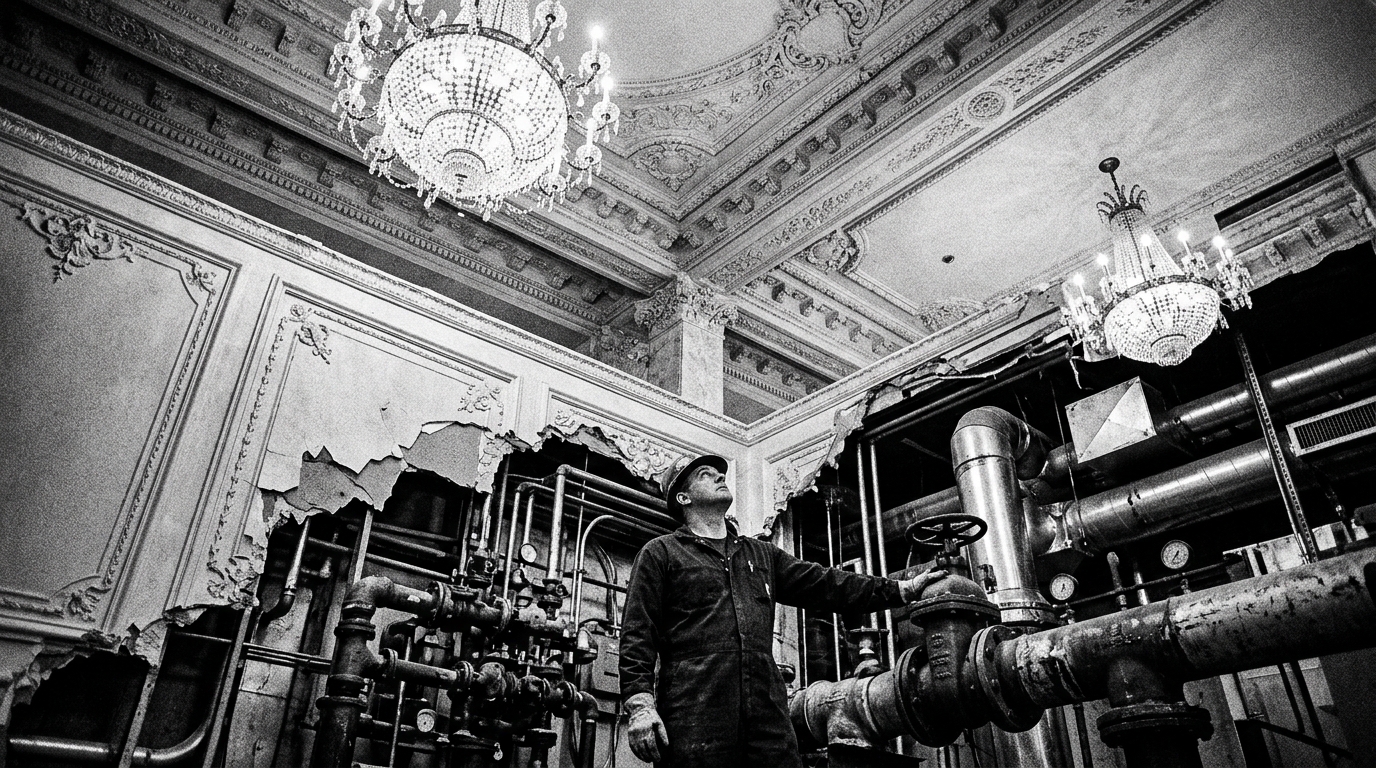
I grew up watching my dad manage historic properties, and let me tell you something nobody in brand marketing will ever put on a slide: old buildings are gorgeous liars. They photograph like dreams. Guests fall in love with the lobby, the facade, the "story." And then the chief engineer walks you through the mechanical room and shows you what it actually costs to keep a 1904 building running at four-star standards in a city where a plumber charges $280 an hour. The romance and the P&L live in different universes, and the owner is the only person who has to exist in both.

So when Hyatt rolls out Hotel Seville NoMad as the latest jewel in The Unbound Collection... 348 rooms, Beaux-Arts architecture, National Register of Historic Places, New York City landmark designation, freshly redesigned rooms and a new lobby bar called Il Bar... my first reaction isn't "how beautiful." It's "what does the total brand cost look like as a percentage of revenue, and does Hyatt's loyalty engine deliver enough to justify it?" Because that's the question that determines whether this is a strategic acquisition or a very expensive trophy. Hyatt has doubled its luxury room count since 2017 and reported 5.9% system-wide RevPAR growth in Q2 2026, with luxury leading the charge. The tailwind is real. But tailwinds don't pay for landmark-designated HVAC systems.

Here's what makes soft brand collections like Unbound fascinating and also treacherous. The whole pitch is "keep your identity, get our distribution." The property doesn't have to look like every other Hyatt. It gets to be special, distinctive, "story-worthy" (their word, not mine). And in exchange, the owner gets access to World of Hyatt loyalty members and Hyatt's reservation infrastructure. That sounds like the best of both worlds until you start doing the math on what "access" actually delivers. I've sat in franchise reviews where an owner pulled out three years of actual loyalty contribution data and compared it to what the franchise sales team projected. The gap between projected and actual should come with a warning label. Not always... some properties genuinely benefit. But "some" is not "all," and the variance is where owners get hurt. I have a filing cabinet full of FDDs that tells this story over and over, and the plot never changes.

The NoMad neighborhood is doing well. Manhattan luxury outperformed every other segment in late 2024 and into 2025, and high-end travelers are still spending. This property, with its history and its location at Madison and 29th, has genuine positioning advantages that a new-build select-service in Midtown will never touch. But positioning advantages and operational reality are two different documents. A 348-key historic property in Manhattan requires staffing levels, engineering expertise, and operating costs that would make a suburban GM's eyes water. The "property refresh" Hyatt completed (reimagined guest rooms, vintage-inspired furniture, textured materials, the whole mood board brought to life) is the easy part. The hard part is delivering a guest experience worthy of the architecture and the rate, every single night, with the labor market New York is handing you right now. Can the Tuesday night team at 11 PM deliver what the Instagram account promises at noon? That's The Deliverable Test, and it's the only test that matters.

What I'll be watching is the gap between the story Hyatt is telling and the numbers the property produces in 18 months. Because this is either a case study in how a major brand can elevate a historic property without stripping its soul (and it CAN be done... I've seen it, rarely, and it's beautiful when it works)... or it's another example of a brand acquiring something special, wrapping it in the loyalty program, and slowly homogenizing it until it's indistinguishable from every other "collection" property with a lobby bar and a local-art-on-the-walls narrative. The building has survived 122 years. The question is whether it survives the brand.

Operator's Take

If you're an owner being pitched a soft brand collection right now... Unbound, Autograph, Tribute, any of them... here's what I want you to do before you sign anything. Pull the actual loyalty contribution data from three comparable properties already in that collection. Not the projections. The actuals. Then calculate your total brand cost as a percentage of revenue... franchise fees, loyalty assessments, reservation fees, marketing fund, PIP costs, brand-mandated vendors, all of it. If that number exceeds 15% and the loyalty contribution doesn't cover at least half your acquisition cost, you need to have a very honest conversation about what you're actually buying. This is what I call the Brand Reality Gap... brands sell promises at scale, properties deliver them shift by shift, and the distance between those two things is measured in owner equity. Get the real numbers before you fall in love with the rendering.

— Mike Storm, Founder & Editor
Read full analysis → ← Show less
Source: Google News: Hyatt
Marriott's Design Hotels Found the One Word That Gets Independents to Say Yes. It's "No."

Marriott's Design Hotels Found the One Word That Gets Independents to Say Yes. It's "No."

Design Hotels just convinced an independent that previously rejected affiliation to join Marriott's network, and the pitch wasn't about loyalty points or booking volume. It was about what they promised NOT to change... which is either a brilliant distribution play or the most expensive handshake in hospitality.

So here's what's interesting about this. An independent hotel that specifically said "no" to brand affiliation... that had built its identity around NOT being part of a chain... eventually said yes to Marriott through Design Hotels. And the reason they said yes is the reason every independent owner should pay very close attention to: the pitch wasn't about conformity. It was about access without alteration.

Let me be clear about what Design Hotels actually is from a technology and distribution perspective. It's a soft brand within Marriott's portfolio that lets independents plug into Marriott Bonvoy's reservation infrastructure... the GDS connections, the loyalty member pipeline, the booking engine... without requiring a PMS migration, a brand-mandated tech stack, or the typical conversion playbook that turns your boutique hotel into a Holiday Inn with better lighting. The property keeps its name, its aesthetic, its operational identity. What it gets is distribution muscle. What Marriott gets is inventory diversity without development risk. On paper, everyone wins.

But here's where I start asking questions. "Access without alteration" sounds great in the pitch meeting. What does the actual integration look like? I've consulted with independent hotels that joined soft brand programs expecting a light touch and ended up dealing with loyalty program compliance requirements, rate parity restrictions, and technology integration demands that nobody mentioned during the courtship phase. One owner told me last year, "They said I'd keep my independence. What they meant was I'd keep my sign." The technical reality of connecting to a major loyalty ecosystem is never as simple as the sales deck suggests. There are data-sharing protocols. There are channel management requirements. There are reporting obligations. Every one of those touches your operations, your staffing, and your tech budget... whether they call it a "mandate" or a "recommendation."

Look, I actually think Design Hotels is one of the smarter distribution products in the industry right now. The model respects something that most brand programs don't... that some properties are worth more BECAUSE they're different, not in spite of it. And Marriott gets to offer Bonvoy members inventory that feels curated and special without spending a dollar on development or design. That's a genuinely good deal for Marriott. The question is whether it's a genuinely good deal for the independent. What's the total cost of participation when you add up the fees, the loyalty contribution assessment, the technology integration, and the operational overhead of reporting to a system designed for over 9,300 hotels, not 80 rooms? And what happens five years from now when the program's terms get "updated" and the independent that joined because of what WOULDN'T change suddenly finds out what will?

The real Dale Test question here is this: when the Bonvoy integration glitches at 1 AM and a loyalty member's reservation doesn't populate in your PMS... who's fixing that? Your night auditor, who's been running this property just fine without Marriott for a decade? Or a support line that treats your 40-room boutique the same as a 600-key convention hotel? I've seen this play out before with soft brand integrations. The technology works beautifully in the demo. It works mostly fine on a Tuesday in March. And then it breaks on your busiest Saturday of the year, and you find out exactly how "independent" you still are.

Operator's Take

If you're an independent owner being pitched Design Hotels or any soft brand affiliation... slow down. Before you sign, get three things in writing: total annual cost including all assessments and technology fees (not just the franchise percentage... ALL of it), a clear exit clause with a timeline that doesn't punish you, and a specific list of every system integration and reporting requirement that comes with participation. Then call two or three current members who've been in the program at least 18 months and ask them what surprised them. Not what they like. What surprised them. The pitch is always about what you keep. The contract is always about what you give up. Read the contract, not the pitch.

— Mike Storm, Founder & Editor
Read full analysis → ← Show less
Source: Google News: Hotel Industry
Marriott Just Added 1,000 Rooms Without Buying a Single Hotel. The Fee Structure Tells You Why.

Marriott Just Added 1,000 Rooms Without Buying a Single Hotel. The Fee Structure Tells You Why.

Design Hotels' largest-ever portfolio deal brings 16 Palisociety properties into Marriott Bonvoy for a fixed fee plus performance-based commission. For the owners writing those checks, the question isn't whether the distribution is worth it... it's whether the math still works when loyalty contribution lands at 22% instead of 35%.

Available Analysis

Sixteen properties. More than 1,000 rooms. Nine U.S. markets. Zero capital deployed by Marriott. Design Hotels' largest single portfolio addition gives Marriott incremental fee revenue and Bonvoy inventory across West Hollywood, Palm Springs, San Francisco, Seattle, Napa Valley, Laguna Beach, and Memphis without a dollar of acquisition risk. That's roughly 63 rooms per property on average, which means these are small, design-forward boutiques. The per-property economics matter here because the fee burden falls differently on a 50-key hotel than on a 300-key convention box.

The fee structure is a fixed charge based on room count plus a variable fee on business Design Hotels drives to the property, with optional à la carte marketing services. Palisociety's founder has been public about previously resisting these arrangements because of the fees. What changed, by his own account, was the scale argument. That's a familiar inflection point. I've audited management company financials where the operator's total brand cost (franchise fees, loyalty assessments, reservation charges, marketing fund contributions, rate parity restrictions) exceeded 15% of top-line revenue. For a 63-key boutique averaging $350 ADR in West Hollywood, even a modest fixed fee plus 3-5% on Bonvoy-driven bookings adds up fast. The question every owner in this portfolio should be modeling: what is the incremental revenue Marriott's distribution actually delivers, net of the fee, compared to the direct booking infrastructure these properties already have?

The loyalty math is the variable that makes or breaks these deals. Design Hotels properties inside Bonvoy typically offer limited elite benefits (no complimentary breakfast, no club lounge access for top-tier members). That's by design... it protects the independent experience. But it also means the loyalty contribution won't behave like a standard Marriott flag. An owner projecting 35-40% loyalty contribution based on what a Courtyard delivers is using the wrong comp. I've seen this exact miscalculation in franchise sales presentations. The projected number is technically possible. The actual number, two years in, is often 15-20 points lower. The properties that survive that gap are the ones whose direct demand was already strong enough to absorb the fee as a marketing cost rather than depending on it as a revenue lifeline.

Marriott is pushing past 100 Design Hotels properties in the Americas this year, and they just opened their 10,000th property globally. The collection strategy is clear: grow the room count, grow Bonvoy's addressable inventory, grow the fee base, deploy zero capital. For Marriott's shareholders, this is pure margin. For the property owners, it's a bet that access to 210+ million loyalty members generates enough incremental demand to justify the cost. That bet has a very different risk profile at a 63-key boutique in Laguna Beach (where leisure demand is already strong and direct channels work) than at a 50-key property in Albuquerque or Memphis (where Bonvoy distribution might genuinely unlock demand the property can't reach alone). Same deal structure, same fee schedule, sixteen different answers to whether the math works.

The honest read: this is a good deal for Marriott and a reasonable deal for Palisociety's owners in high-demand leisure markets where the incremental fee is a rounding error on a $400+ ADR. It's a riskier deal for the properties in secondary markets where the fee represents a larger share of thinner margins and the loyalty contribution is uncertain. The founder's quote about being "institutional without losing our soul" is compelling branding. But the filing cabinet doesn't care about your soul. It cares about whether the incremental revenue exceeds the incremental cost. Property by property. Month by month.

Operator's Take

If you're an independent boutique owner getting pitched a soft brand or collection deal right now, here's what to do before you sign anything. Model three scenarios for loyalty contribution: the number they project, 60% of that number, and 40% of that number. If the deal doesn't work at 40%, you need to understand exactly what happens to your cash flow in that scenario... because I've seen actual performance land there more often than anyone in franchise sales wants to admit. Second, calculate your total brand cost as a percentage of revenue, not just the franchise fee... include every assessment, every required vendor, every rate parity restriction that limits your pricing flexibility. If that number exceeds 12-14% and the brand isn't delivering occupancy you genuinely cannot get on your own, you're paying for a logo and a reservation system. Third, negotiate the exit. The terms for leaving these arrangements matter more than the terms for entering them. Get your attorney to red-line the termination clause before you celebrate the signing.

— Mike Storm, Founder & Editor
Read full analysis → ← Show less
Source: Google News: Marriott
Palisociety Just Handed Marriott 16 Hotels and Called It Independence

Palisociety Just Handed Marriott 16 Hotels and Called It Independence

Design Hotels' largest-ever portfolio addition brings 1,000+ Palisociety keys into the Marriott Bonvoy machine. The question every boutique owner should be asking isn't whether the distribution is worth it... it's what "keeping your soul" actually costs when you're paying fees to the world's largest hotel company.

Available Analysis

"Be institutional without losing our soul."

I have heard some version of that sentence at every single soft-brand pitch I've sat through in the last decade. Every. Single. One. And you know what? Sometimes it's true. Sometimes the independent operator genuinely threads the needle... keeps the vibe, keeps the design ethos, keeps the thing that made guests fall in love with the property in the first place, and layers on distribution muscle that fills rooms they couldn't fill alone. That's the dream scenario. I've seen it work maybe three times.

Here's what's happening. Palisociety, Avi Brosh's LA-based collection of design-forward boutique properties, is bringing 16 hotels and over 1,000 keys into Marriott's Design Hotels portfolio. Some of these properties will start showing up in Marriott Bonvoy as early as June 22. That's five days from now. This is the largest single portfolio addition in Design Hotels' history, spanning nine U.S. markets. And I want to be genuinely fair here... Design Hotels has historically been one of the more thoughtful soft-brand vehicles out there. They don't mandate cookie-cutter standards the way a traditional franchise flag does. The properties keep their names, their aesthetic, their operational identity. Palisociety's sub-brands (Palihouse, Palihotel, Le Petit Pali, ARRIVE) all stay intact. On paper, this is the best version of what a soft-brand relationship can look like.

But here's the part the press release left out... the part it always leaves out. What does "keeping your soul" actually mean when you're now paying fees to access Marriott's 200-million-member loyalty platform? Because that access isn't free, and the terms aren't public. And once your rate strategy, your inventory allocation, your booking flow starts running through Bonvoy, you've introduced a variable that didn't exist before. Your guest mix changes. Your direct booking percentage shifts. Your ability to control who walks through your door and why... that changes too. I sat in a franchise review once where a boutique owner looked at his first full year of loyalty contribution data and said, "So I'm paying them to send me guests who expect a different hotel than the one I'm running." He wasn't wrong. The guests who discover you through a mega-loyalty program are not always the guests your product was designed for. They're comparing you to a Westin they stayed at last month and wondering where the lounge access is (and for the record, Marriott has confirmed elite perks like complimentary breakfast and lounge access won't apply at these properties... which means you're going to have that conversation at the front desk, repeatedly, with Titanium members who didn't read the fine print).

And this is where I want every independent boutique owner watching this story to slow down and think. Because Palisociety is going to become the poster child for "see, you CAN partner with a major brand and stay independent." Every franchise development rep pitching a soft brand to a boutique operator is going to name-drop this deal for the next two years. But Palisociety has something most independents don't... 16 properties, established sub-brands, a founder with nearly three decades of operating history, and presumably the negotiating leverage that comes with bringing 1,000 keys to the table at once. Your 45-key boutique in Austin does not have the same leverage. The terms Avi Brosh negotiated are not the terms you'll get. The soul-keeping provisions in his agreement are not the soul-keeping provisions in yours. This is what I call the Brand Reality Gap... brands sell promises at scale, but properties deliver them shift by shift, and the gap between those two things is where owners get hurt.

Look, I genuinely hope this works for Palisociety. I've watched enough of these partnerships to know the good ones from the bad ones, and the ingredients here are better than most. But I've also watched three different boutique operators sign soft-brand agreements expecting distribution magic and discovering instead that the fees, the loyalty program dynamics, and the slow gravitational pull toward standardization changed their product in ways they didn't anticipate until year two. The question isn't whether Marriott's distribution can fill rooms. Of course it can. The question is whether the rooms it fills are still YOUR rooms... or whether you've become a boutique-flavored Marriott property that used to be something more specific. That's the real deliverable test here. And we won't know the answer for about 18 months.

Operator's Take

If you're an independent boutique owner who's about to get a call from a soft-brand development rep using this deal as proof of concept... slow down. Ask for actual performance data from existing Design Hotels properties that joined in the last three years. Not projections. Actuals. Loyalty contribution percentage, fee structure as a percentage of total revenue, and the net impact on direct bookings post-integration. If they can't produce that, they're selling you a story, not a strategy. And if you're already in a soft-brand relationship, pull your guest mix data from the last 12 months and compare it to pre-integration. If your loyalty-sourced guests are generating lower ancillary spend or lower satisfaction scores than your organic guests, you need to have that conversation with your brand rep now... not after renewal.

— Mike Storm, Founder & Editor
Read full analysis → ← Show less
Source: Google News: Marriott
Hilton's Curio Lands in Hawaii... But Who's Actually Doing the Math on This?

Hilton's Curio Lands in Hawaii... But Who's Actually Doing the Math on This?

Hilton's first Curio Collection in Hawaii sounds like a dream on paper. The real question is whether a 210-key new-build on Kauaʻi can deliver enough through Hilton's system to justify what Silverwest Hotels is betting on it.

So Hilton's bringing Curio Collection to Hawaii for the first time. Hale Hōkūala Kauaʻi, 210 rooms, new-build on the Garden Isle, managed by Hilton, owned by Silverwest Hotels out of Denver. Fall 2026 opening. Adjacent to a Jack Nicklaus golf course, walking distance to Kalapaki Beach, signature restaurant, 10,000 square feet of outdoor event space. On the surface? Beautiful. The renderings are going to look incredible. They always do.

But here's what I actually want to talk about. This is a soft brand play. Curio's whole pitch is "keep your individuality, get our distribution." That's the deal. And for a lot of properties it works... existing hotels that flag up for the loyalty pipeline without losing their identity. The model makes sense for conversions. A new-build is a different conversation entirely. When you're building from scratch on Kauaʻi, you're spending... what? You're looking at Hawaii construction costs, which are 30-40% above mainland averages, on a 210-key resort-tier property. Nobody's disclosed the development cost here, and that silence is loud. Because the per-key math on a new-build resort in Hawaii is going to be eye-watering, and the question is whether Hilton Honors contribution can close the gap between what this costs to build and what it earns.

Look, I consulted with an ownership group last year that was evaluating a soft brand flag for a resort property in a leisure-heavy market. The loyalty contribution projection the brand showed them was 28%. Actual delivery at comparable properties in similar markets? Closer to 18-20%. That delta... that 8-10 points of gap between what the sales team projects and what the property actually sees... is where owners get hurt. Hilton says they have 25-plus hotels in Hawaii already and nearly 10 more in the pipeline. That's a lot of Hilton Honors inventory competing for the same loyalty redemption demand. Kauaʻi has historically been underserved for points stays, which is a real opportunity. But "underserved" and "high-demand" aren't the same thing. Kauaʻi's visitor volume is fundamentally lower than Oahu or Maui. The island's appeal is its remoteness. That's also its constraint.

The technology angle here is what interests me most, honestly. Hilton just launched their AI Planner tool... a generative AI concierge... literally the same week as this announcement. So you've got a new-build resort on an island where the brand promise is "individuality" and "sense of place," and simultaneously Hilton's rolling out AI-driven guest interaction tools. How do those two things coexist? Does the AI Planner know how to recommend the poke spot in Kapa'a that only locals know about? Or does it recommend the Hilton-affiliated dining options? Because that's the tension in every soft brand... the system is designed for consistency, and the property's value proposition is its uniqueness. The technology either serves the local experience or it overrides it. I've seen implementations go both ways. The ones that override the local flavor are the ones where guests leave saying "nice hotel, felt like every other Hilton." That's a death sentence for a Curio property.

What actually matters here is whether Silverwest ran the stress test. Not the base case. Not the "Hawaii tourism is rebounding post-Maui-wildfires" case. The downside case. Hawaii leisure demand is cyclical and sensitive to airfare, exchange rates, and consumer confidence. A 210-key resort with Hawaii-level operating costs (staffing alone... try hiring a dedicated F&B team on Kauaʻi right now) needs to sustain $300-plus ADR consistently to make the numbers work. The question nobody's asking is what happens in a soft demand quarter when you're carrying resort-level fixed costs on an island with limited airlift. Silverwest's bet is that Hilton's distribution machine fills the gap. Maybe it does. But I'd want to see the actual loyalty contribution numbers from comparable Curio resorts, not the projections... before I'd sleep well on this one.

Operator's Take

Here's what I'd tell any independent resort owner in Hawaii right now. Hilton putting a Curio flag on Kauaʻi tells you exactly where the brands are headed... they want your leisure markets, and they're willing to build new if you won't convert. If you're running an unflagged resort on any of the islands, you need to know your true cost of customer acquisition versus what a brand would charge you for theirs. Pull your direct booking percentage, your OTA commission blended rate, and compare it to a realistic 14-16% total brand cost. That's the math that tells you whether flagging up makes sense or whether you're better off investing that same money in your own direct channel. Don't wait for the pitch meeting to run the numbers... run them now so you know your position before the franchise sales rep shows up.

— Mike Storm, Founder & Editor
Read full analysis → ← Show less
Source: Google News: Hilton
Hyatt's Unbound Collection Turns 10. Four New Properties. Same Old Question for Owners.

Hyatt's Unbound Collection Turns 10. Four New Properties. Same Old Question for Owners.

Hyatt is celebrating a decade of its Unbound Collection with four boutique additions across the Americas, and the brand positioning is gorgeous. Whether the economics are equally beautiful for the owners flying that flag is a conversation the anniversary press release conveniently skips.

Available Analysis

I grew up watching brand anniversaries get celebrated like weddings... beautiful venue, great champagne, speeches about the journey, and nobody mentions the prenup. Hyatt's Unbound Collection just turned 10, and to mark the occasion they've added four properties that look, on paper, like exactly what a soft brand should be: an 84-room restored art deco gem in Santa Monica, a 120-room design hotel on the Seattle waterfront with a MICHELIN distinction, a 218-suite private island resort in the Dominican Republic, and a wine-country retreat in Ontario opening this summer. These are story-worthy hotels. Distinctive. The kind of places travel editors fight over. And that's the point... because the Unbound Collection was built on the promise that independent hotels could keep their identity while accessing Hyatt's distribution engine and World of Hyatt loyalty pipeline. Ten years in, the question isn't whether the collection looks good (it does). The question is whether that loyalty pipeline delivers enough to justify what it costs the owner to be there.

Here's what I keep coming back to. Hyatt reported a record development pipeline of approximately 148,000 rooms at the end of 2025, with U.S. signings up roughly 30% year-over-year. That's impressive growth, and it signals real owner and developer appetite. But growth in a soft brand collection like Unbound means something different than growth in, say, Hyatt Place. Every Hyatt Place looks and operates within a predictable band. An Unbound property is, by definition, unique... which means the brand's ability to drive demand to THAT specific hotel depends on how well World of Hyatt members understand what they're booking. A loyalty member who redeems points at a 218-suite island resort in the Caribbean and a loyalty member who redeems at an 84-room boutique in Santa Monica are having fundamentally different experiences under the same brand umbrella. That's the beauty of a soft brand. It's also the vulnerability. Because loyalty contribution isn't just about having your name in the system... it's about whether the system sends the RIGHT guest to YOUR hotel. And that match-rate is something I've never seen a brand publish honestly.

I sat across the table from a boutique owner once who'd joined a soft brand collection two years earlier. Beautiful property, great reviews, exactly the kind of place that makes the brand's website look aspirational. His loyalty contribution was running at 19%. The brand had projected 30-35% at signing. When I asked the brand rep about the gap, the answer was "the collection is still building awareness in that market." Two years in. Still building awareness. Meanwhile, the owner was paying franchise fees, reservation system fees, loyalty assessments, and had completed a PIP that cost more than the brand's projections suggested it would. He did the math on a napkin right there at dinner... his total brand cost as a percentage of revenue was north of 16%. For 19% loyalty contribution. He looked at me and said, "I'm paying for a megaphone that's pointed at someone else's guest." He wasn't wrong.

Now, I want to be clear... the Unbound Collection isn't a bad brand. Some of these properties will thrive inside the Hyatt system, particularly the ones in markets where World of Hyatt members are already traveling and spending. Seattle waterfront? Strong loyalty market. Santa Monica? Same. A private island in the DR marketed to the points-and-aspirational crowd? That could work beautifully. The Hyatt loyalty base skews upper-upscale and luxury, and these properties fit that traveler. But the economics of a soft brand are not the economics of a hard brand, and owners need to evaluate them differently. Your RevPAR premium over going independent has to exceed your total cost of affiliation... and in a soft brand, that premium is harder to isolate because you're not getting a cookie-cutter demand generator. You're getting a curated collection where your property's performance depends partly on the strength of the collection around you. If Hyatt keeps adding the right hotels (distinctive, well-located, genuinely special), the collection gets stronger and every member benefits. If they add too many properties that dilute the identity... well, I've watched that movie with three other soft brand collections over the past decade, and it always ends the same way. The early adopters subsidize the growth, and the brand celebrates the pipeline while the owners do the math.

Hyatt's broader strategy is smart... the asset-light model, the push toward 80%+ fee-based earnings, the luxury and lifestyle emphasis. Tamara Lohan coming over from Mr & Mrs Smith to lead luxury brand strategy brings exactly the kind of curation instinct a collection like this needs. But curation requires saying no. It requires turning down franchise fees from properties that don't fit. And every brand in the history of hospitality has eventually struggled with that discipline, because growth targets and curation instincts pull in opposite directions, and growth targets report to Wall Street. Ten years is a milestone worth celebrating. The next ten will be defined by whether Hyatt can grow Unbound without breaking what made it special in the first place.

Operator's Take

If you're an independent owner being pitched the Unbound Collection (or any soft brand), do this before you sign anything: pull the actual loyalty contribution data from three to five existing properties in comparable markets. Not the projection in the franchise sales deck... the actuals. Ask for them directly. If the brand won't provide property-level loyalty contribution data, that silence tells you everything. Then calculate your total cost of affiliation as a percentage of total revenue... franchise fees, reservation fees, loyalty assessments, PIP costs amortized over the agreement term, brand-mandated vendor premiums, all of it. If that number exceeds 14-15% and your projected loyalty contribution is under 30%, you need to stress-test the downside hard. This is what I call the Brand Reality Gap... brands sell promises at scale, but your property delivers them shift by shift, and the gap between the two is where owners lose money. The Unbound Collection is a good brand. But "good brand" and "good deal for your specific property" are two completely different conversations, and only one of them matters to your bank account.

— Mike Storm, Founder & Editor
Read full analysis → ← Show less
Source: Google News: Hyatt
Hyatt's Unbound Collection Turns 10. The Question Nobody's Asking Is Whether Soft Brands Keep Their Promises.

Hyatt's Unbound Collection Turns 10. The Question Nobody's Asking Is Whether Soft Brands Keep Their Promises.

Hyatt is celebrating a decade of its Unbound Collection with four new Americas properties and a pipeline that sounds gorgeous on paper. The real test isn't whether these hotels are beautiful... it's whether the owners joining the collection are getting what they were sold five years ago.

Available Analysis

I grew up watching my dad deliver on brand promises that somebody else made. So when I see a soft brand celebrating its 10th anniversary with a press release full of words like "unmistakable individuality" and "story-worthy stays," my first instinct isn't to applaud. It's to open the filing cabinet.

Here's what Hyatt is announcing: four properties joining or coming soon to The Unbound Collection in the Americas... an 84-room restored gem in Santa Monica, a 120-room property in Seattle, a 218-suite private island resort in the Dominican Republic, and a new build in Niagara-on-the-Lake. Two more are slotted for 2027 in Savannah and Argentina. The collection is part of Hyatt's broader strategy to grow its luxury and lifestyle footprint through an asset-light model, with the company reporting 7.3% net rooms growth in 2025 and a record pipeline of roughly 148,000 rooms. Comparable system-wide RevPAR grew 4% in Q4 2025. The machine is humming. The question is... for whom?

Soft brands are seductive. And I mean that in every sense of the word. The pitch is irresistible: keep your identity, keep your name, keep the thing that makes your property special... but plug into our reservation system, our loyalty program, our global distribution. You get World of Hyatt members booking direct. You get the brand's marketing engine. You get to stay "independent" while playing on a much bigger field. It sounds like the best of both worlds because it's designed to sound that way. I spent 15 years on the side of the table designing those pitches. But here's what I learned sitting across from a family that lost their hotel because the loyalty contribution projections were fantasy: the pitch and the performance are two different documents. Always.

The Deliverable Test for soft brands is uniquely tricky. A traditional flag has standards you can audit... thread count, breakfast offering, lobby design, uniform specs. A soft brand's promise is more atmospheric. "Unmistakable individuality." How do you measure that? How do you hold the brand accountable when the whole value proposition is that they WON'T impose uniformity? What you CAN measure is what the owner actually gets in return for those franchise fees, loyalty assessments, reservation system charges, and marketing contributions. Total brand cost for properties in collections like this can easily push past 15% of revenue, and the question every independent owner considering a soft brand flag should be asking (but rarely does, because the champagne at the signing event is very good) is: what is my actual loyalty contribution percentage, and does it justify what I'm paying? Because Hyatt's all-inclusive resorts saw 8.3% growth in Net Package RevPAR last quarter. That's great. But a boutique 84-key property in Santa Monica and a private island in the Caribbean are not living in the same demand universe, and portfolio-level numbers are the brand's favorite way to avoid property-level conversations.

Ten years is a real milestone, and I'll give Hyatt this... the Unbound Collection has maintained a tighter curation than some of its competitors' soft brand portfolios (I've watched other companies dilute their "exclusive" collections to the point where "story-worthy" meant "has a lobby"). But curation at the top doesn't change the math at the property. If you're an independent owner being courted for a soft brand collection right now... any collection, not just this one... ask for actual performance data from comparable properties in the portfolio. Not projections. Actuals. Loyalty contribution percentage. Reservation system booking share. Net revenue impact after all fees. And then ask yourself: would I rather have that data, or another glass of champagne? (The champagne is always very good. The data is harder to get. That should tell you something.)

Operator's Take

Here's what I'd tell any independent owner getting the soft brand pitch right now. Before you sign anything, demand trailing 12-month loyalty contribution data from at least three comparable properties already in the collection... comparable meaning similar key count, similar market tier, similar ADR range. Not the flagship. Not the private island. YOUR comp. Then calculate your total brand cost as a percentage of revenue... franchise fees, loyalty assessments, reservation fees, marketing fund, all of it. If that number exceeds 12-15% and the loyalty contribution isn't delivering at least that much in net new revenue you wouldn't have captured independently, you're paying for a logo and a reservation system. That might still be worth it. But know the number before you pop the cork. This is what I call the Brand Reality Gap... brands sell promises at scale, but properties deliver them (and pay for them) shift by shift. The math either works at YOUR property or it doesn't.

— Mike Storm, Founder & Editor
Read full analysis → ← Show less
Source: Google News: Wyndham
IHG's 21st Brand Promises Independents They Can Keep Their Identity. They Can't.

IHG's 21st Brand Promises Independents They Can Keep Their Identity. They Can't.

IHG just launched Noted Collection, its 21st brand, targeting the 2.3 million independent upscale rooms worldwide with the pitch that owners can join the system and stay unique. I've watched this movie enough times to know where the "unique identity" goes once the standards manual arrives.

Every few years, a major flag walks into a room full of independent hotel owners and says some version of the same thing: "You don't have to change. We just want to help." The help comes with a loyalty program, a reservation system, a global sales engine, and... eventually... a standards document that starts thin and gets thicker every single year. IHG is making that pitch again with Noted Collection, brand number 21, aimed squarely at upscale and upper-upscale independents who want distribution muscle without surrendering their soul. The target? 150 properties within a decade. The addressable market they're citing? 2.3 million independent rooms globally. That's not a brand launch. That's a land grab with a velvet glove.

And look, I'm not saying the math doesn't make sense for IHG. It makes beautiful sense for IHG. Conversions accounted for 52% of their gross room openings last year and 40% of new signings. In EMEAA, where Noted Collection is rolling out first, 63% of room openings were conversions. This is their growth engine now, and it's a smart one... conversions are cheaper to sign, faster to open, and less capital-intensive than new builds when financing costs are what they are. IHG's full-year 2025 numbers tell the story: $35.2 billion in gross revenue (up 5%), adjusted EPS up 16%, and a fresh $950 million buyback that brings five-year shareholder returns past $5 billion. The machine is working. The question is whether the machine works for the independent owner who's being invited inside it, or just for the machine itself.

Here's where my filing cabinet comes in. I've tracked soft brand and collection brand launches across every major flag for years. The pitch is always the same: light touch, your identity, our platform. And in year one, that's mostly true. The standards are flexible. The brand team is accommodating. Everyone's in the honeymoon phase. By year three, the brand has enough properties to start "ensuring consistency across the collection," which is corporate for "you're about to get a standards update you didn't budget for." By year five, the owner who joined because they wanted to stay independent is getting emails about approved vendors, required technology platforms, and loyalty program assessments that have crept up 200 basis points since signing. I sat in a franchise review once where an owner of a collection-brand property pulled out his original FDD, laid it next to the current fee schedule, and said "find me the part where I agreed to this." The room got very quiet. (The brand rep changed the subject to "exciting guest journey enhancements." Naturally.)

The structural tension here is real and it's the part the press release will never address. IHG has 160 million loyalty members. That's genuinely valuable distribution for an independent owner who's tired of handing 18-22% to OTAs. But loyalty members expect loyalty benefits... upgrades, late checkout, points earning and redemption. Those aren't free. They cost the owner in room inventory, in operational complexity, in system requirements. And the "light-touch" collection model has to deliver enough consistency that an IHG One Rewards member booking a Noted Collection property in Prague has an experience that doesn't damage the broader loyalty brand. That tension between "keep your identity" and "protect our loyalty promise" is where every collection brand eventually breaks. You can be unique, or you can be consistent. Doing both requires a level of nuance that brand standards documents are structurally incapable of delivering. The brand will always, always choose consistency over uniqueness when forced to pick. And they will be forced to pick.

What I wish IHG would say (and what they never will): "We're launching this brand because the conversion economics are extraordinary for us right now, and independent owners who are stretched thin on capital are more receptive to flagging than they've been in a decade." That's honest. That's the real story. Instead we get "owner appetite for quality platforms" and whatever the brand deck is calling the guest value proposition this week. Elie Maalouf called it a "gateway to stronger performance." Maybe. But gateways go both directions, and I've watched families walk through the wrong one. The owner being pitched Noted Collection right now needs to do one thing before signing anything: find three owners who joined a similar collection brand five years ago and ask them what their total brand cost is today versus what they were told it would be at signing. Not the franchise fee. The total cost... fees, assessments, technology mandates, PIP requirements, vendor restrictions, all of it. Then compare that number to the incremental revenue the brand actually delivered. If the brand won't give you those owner references? That tells you everything. If they will, and the numbers work? Then maybe this is one of the rare cases where the collection model delivers. But you verify. You don't trust the pitch deck. The pitch deck is designed to get you to sign. The FDD is where reality lives.

Operator's Take

Here's what I'd say to any independent owner being pitched Noted Collection or any soft brand right now. Before you sit down with the franchise sales team, pull your trailing 12-month total revenue and back out what you're currently paying in OTA commissions. That's your baseline... that's the distribution cost you're trying to replace. Now ask the brand for actual (not projected) loyalty contribution percentages at comparable collection properties that have been in the system for at least three years. If they can only show you year-one numbers, they're showing you the honeymoon, not the marriage. Calculate total brand cost as a percentage of revenue... franchise fees, loyalty assessments, technology mandates, marketing fund, everything... and compare it honestly to what you're paying Expedia today. This is what I call the Brand Reality Gap. Brands sell promises at scale, but properties deliver them shift by shift, and the gap between what you're sold at signing and what you're paying in year five is where owner equity goes to die. Get the real numbers. Not the deck. The numbers.

— Mike Storm, Founder & Editor
Read full analysis → ← Show less
Source: Google News: IHG
Harlem's George Hotel Is the Tapestry Collection Test Case Every Brand Strategist Should Be Watching

Harlem's George Hotel Is the Tapestry Collection Test Case Every Brand Strategist Should Be Watching

Hilton planted a flag in Harlem with a culturally immersive soft brand... and the early execution is either a masterclass in authentic positioning or a really expensive mood board. The answer depends on whether the promise survives past the press cycle.

Let me tell you what caught my eye about this property, and it's not the cabaret show or the Black History Month panel (though those are smart). It's that someone at Hilton looked at Harlem... a neighborhood with no existing Hilton presence, a complicated relationship with gentrification, and a community board that apparently wasn't even contacted about the opening... and said "yes, this is where we're going to test whether Tapestry Collection can be more than a conversion flag for tired independents." That's either brave or reckless, and I genuinely haven't decided yet. The George Manhattan is 139 keys, which is the right size for this kind of concept. It's named after a Harlem swing dancer (George "Shorty George" Snowden, for the culture nerds) AND King George II, which is the kind of layered storytelling that works beautifully in a brand deck and means absolutely nothing if the front desk team can't tell you who either George is when a guest asks. The restaurants aren't open yet. The pool isn't open yet. The hotel launched in October 2025, and we're four months in with the F&B and amenity story still unwritten. So right now, what we're actually evaluating is a lobby bar, a fitness center, 2,000 square feet of meeting space, and a promise. I've seen this before... a property that leads with cultural narrative and programming before the physical product is complete. Sometimes it works. Sometimes you're asking guests to pay upscale rates for a construction timeline wrapped in a storytelling bow.

Here's what's interesting from a brand architecture standpoint. Tapestry Collection exists to do exactly this... collect independent-feeling properties under the Hilton umbrella so owners get the distribution engine and loyalty contribution without the cookie-cutter standards. And culturally specific positioning is genuinely a smart play for a soft brand. The global theme hotel market hit $15.29 billion in 2024 and is projected to reach nearly $22 billion by 2033. Guests want stories. They want to feel like they're somewhere, not just anywhere with a Hilton Honors sign. But (and you knew there was a but) the Deliverable Test is brutal here. Can The George deliver a culturally immersive experience that feels authentic and not performative, seven days a week, 365 days a year, with whatever staffing reality New York City hands them? A NYFW panel during Black History Month is an event. An art exhibit with a cabaret show is programming. Those are moments. What happens on a random Wednesday in July when there's no programming and a guest from Des Moines wants to understand why this hotel costs $50 more than the Hampton Inn downtown? The experience has to live in the DAILY operation, not the Instagram-worthy activations.

The Columbia University branding controversy is a red flag I want to talk about because it tells you something about execution discipline. Columbia publicly stated it has no partnership with this property. When a major university has to issue a denial about an implied association with your hotel... that's a journey leak, and it's the kind that erodes credibility fast. You're building a brand on authenticity and cultural respect, and then you're getting called out for a branding implication that wasn't earned? That's exactly the kind of thing that makes community boards (the same ones who weren't contacted about the opening, by the way) go from neutral to hostile. Sam Martinez, the GM, is a Harlem native, and that's genuinely meaningful. A GM who IS the community rather than studying the community from a brand playbook is a significant asset. I sat in a franchise review once where an owner told me his biggest competitive advantage was that his GM had coached Little League with half the local business owners. That kind of embedded credibility can't be manufactured. It can only be hired. If Hilton is smart, they'll build the entire guest experience around what Martinez knows about this neighborhood and stop trying to borrow credibility from institutions that don't want to lend it.

The real question for the owners behind this property (and for anyone watching the Tapestry Collection pipeline, which now includes upcoming openings in Costa Rica and Argentina) is whether the economics justify the cultural ambition. A 139-key upscale hotel in Harlem is competing in a market where the Renaissance New York Harlem opened in 2023 and Marriott has already been testing these waters. Total brand cost for a Tapestry property... franchise fees, loyalty assessments, reservation system fees, marketing contributions... typically runs 10-14% of revenue once you add it all up. The owner's bet is that Hilton Honors drives enough demand to justify that cost versus going truly independent. In a neighborhood where the demand generators are cultural (Apollo Theater, Studio Museum, the restaurant scene), the question is whether Hilton's loyalty base overlaps with the guest who actively CHOOSES Harlem. Because the guest who books this hotel through Hilton Honors for the points might have a very different expectation than the guest who books it because they want a culturally immersive Harlem experience. Serving both of those guests authentically, in the same 139 rooms, without diluting the promise to either... that's the tightrope. And it's the tightrope every Tapestry property walks. Most of them just don't have the cultural stakes this high.

I want this to work. I really do. A hotel that takes its neighborhood seriously, hires from the community, names itself after a swing dancer, and tries to make cultural storytelling the actual product rather than a lobby mural... that's the version of hospitality I got into this industry for. But wanting it to work and believing the execution will hold are two different things, and I learned the hard way that potential is not a strategy. The restaurants need to open. The pool needs to open. The community board needs to be brought into the conversation (yesterday, not tomorrow). And the daily guest experience... not the panels, not the exhibits, the DAILY experience... needs to deliver on a promise that is extraordinarily ambitious for a 139-key property still finishing its amenity buildout. Watch this property at month twelve, not month four. That's when the brand either proves itself or becomes another beautiful lobby with a story nobody's telling anymore.

Operator's Take

If you're an independent owner being pitched Tapestry or any soft brand collection right now... pull The George's trajectory over the next year and study it. This is the test case for whether culturally specific positioning can survive inside a loyalty-driven distribution system without becoming wallpaper. And if you're already IN a soft brand collection, take a hard look at whether your "unique story" is actually showing up in guest reviews or just in the brand deck. The story has to live at the front desk at midnight, not just in the marketing materials. If your team can't tell the story without a script, you don't have a brand... you have a brochure.

— Mike Storm, Founder & Editor
Read full analysis → ← Show less
Source: Google News: Hilton
End of Stories