Wynn Is Betting $5.1 Billion That a War Won't Derail the UAE's First Casino Resort
CBRE says a late 2027 opening for Wynn Al Marjan Island is still feasible despite an active regional conflict. The more interesting question is what "feasible" means when you're building a 1,542-key integrated resort on an island in the Persian Gulf with shipping lanes that weren't exactly designed for wartime logistics.
I sat in a development meeting once where the presenting team used the word "feasible" eleven times in forty minutes. By the end, I realized "feasible" was doing all the heavy lifting because "on schedule" couldn't show up for work. When CBRE says mid-to-late 2027 is "still feasible" for Wynn Al Marjan Island... that's what I hear. Not a lie. Not spin. Just a very specific word doing a very specific job.
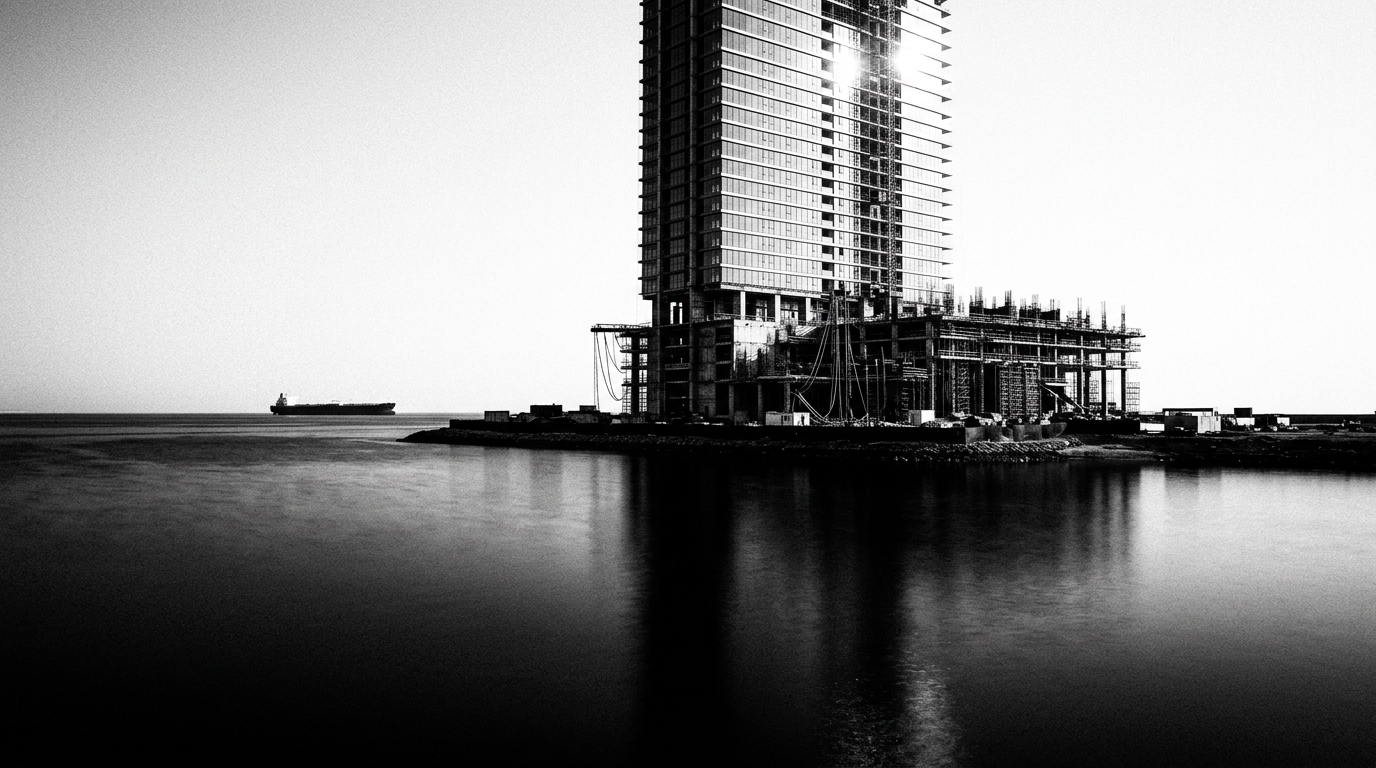
Let me be direct about the scale here. This is a $5.1 billion integrated resort... 1,542 keys, a 225,000 square foot casino floor, 22 restaurants and lounges, a convention center, a beach club, a spa, retail. Wynn has $1.01 billion of its own cash in this deal, sitting inside a 40% JV stake. They secured $2.4 billion in construction financing... the largest hospitality financing transaction in UAE history. The tower topped out late last year, structural work reported at 99.7% complete. On paper, the bones are there. But anyone who's ever opened a hotel (let alone one of the most complex integrated resorts ever attempted in a brand-new gaming market) knows that "structure complete" and "ready to welcome guests" are separated by a canyon of FF&E installation, systems integration, staff hiring, training, regulatory approvals, and a thousand details that don't show up in construction progress reports. And that canyon is harder to cross when there's an active military conflict affecting shipping routes in your region.
Here's what I keep coming back to. Ras Al Khaimah reported 670,000 visitors in the first half of 2026, with domestic tourism up 47%. That's encouraging. But the entire thesis for this project... the reason you build a $5.1 billion resort on an island in the Persian Gulf... isn't domestic tourism. It's positioning the UAE as the fourth largest gaming market in the world, projecting $3-5 billion in annual gaming revenue, drawing high-net-worth international travelers who currently fly to Macau or Singapore or Las Vegas. That thesis requires open skies, stable geopolitics, and a luxury travel market that isn't spooked by regional headlines. CBRE analysts are valuing Wynn's UAE business at $32 per share and projecting $425 million in annual free cash flow once operational. Those are real numbers built on assumptions about a future that includes peace, stability, and a functioning supply chain. Maybe that future arrives. Maybe it doesn't. "Feasible" covers both outcomes.
The part of this story that doesn't get enough attention is the first-mover dynamic. This is the first federally licensed casino resort in the UAE. Period. The regulatory framework (the GCGRA issued the operating license in October 2024) is brand new. There are no comps. No historical performance data. No established gaming culture in the region. Wynn is simultaneously building a property, training a workforce that has never operated a casino floor, educating a market that has never had legal gaming, and working inside a regulatory environment that's never been tested under real operating conditions. I've seen this movie before... not at this scale, but I've watched operators open in markets where the regulatory framework was still wet. The property opens on time (or close to it), and then the real work begins. The first two years of operation in a greenfield gaming market are essentially an extended soft opening. Revenue ramps are slower than projected. Regulatory adjustments happen in real time. The labor pool takes longer to develop than anyone budgeted for. And the investors who modeled Year 1 cash flow based on mature-market assumptions start getting uncomfortable.
Wynn just broke ground on a second project next door... a Janu-branded luxury hotel and residential development with Aman Group, slated for early 2029. They also acquired 155 additional acres on Al Marjan Island for future development. That tells you everything about their conviction. They're not hedging. They're doubling down before the first card is dealt. For Wynn shareholders, that's either visionary or reckless, and you won't know which one for about three years. For the rest of us in hospitality, this is the highest-stakes version of a question every operator faces at some point: how much do you commit to a market before the market has proven it can support you? I don't have a clean answer. But I know the operators who are paying attention now will be better positioned than the ones who wait for the opening to figure out what it means.
Look... most of you reading this aren't building $5.1 billion casino resorts in the Persian Gulf. But the pattern here is one I've seen at every scale. If you're an owner or operator evaluating a new market, a conversion, or a major renovation, ask yourself the Wynn question: am I underwriting based on proven demand or projected demand? There's nothing wrong with betting on a market's future, but you need to know which one you're doing and price your risk accordingly. For those of you running properties in markets where new international supply is coming online (and it's coming... Dubai, Saudi Arabia, even some secondary European markets), the demand assumptions behind these mega-projects will affect your comp set whether you like it or not. The $425 million in projected annual free cash flow from this one resort means billions in visitor spending that either materializes in the region or doesn't. Start thinking now about how that demand shift touches your rate strategy and your source market mix. Don't wait for the opening to figure out whether it helps you or hurts you.