Today · Sep 14, 2026
Your 2026 PIP Budget Is Already Wrong. Tariffs Added 10-15% and Nobody Updated the Spreadsheet.

Your 2026 PIP Budget Is Already Wrong. Tariffs Added 10-15% and Nobody Updated the Spreadsheet.

The effective U.S. tariff rate just hit levels not seen since the 1940s, and the majority of hotel FF&E is manufactured in the countries getting hit hardest. If you're an owner with a renovation bid older than six months, the number on that proposal no longer reflects reality.

Available Analysis

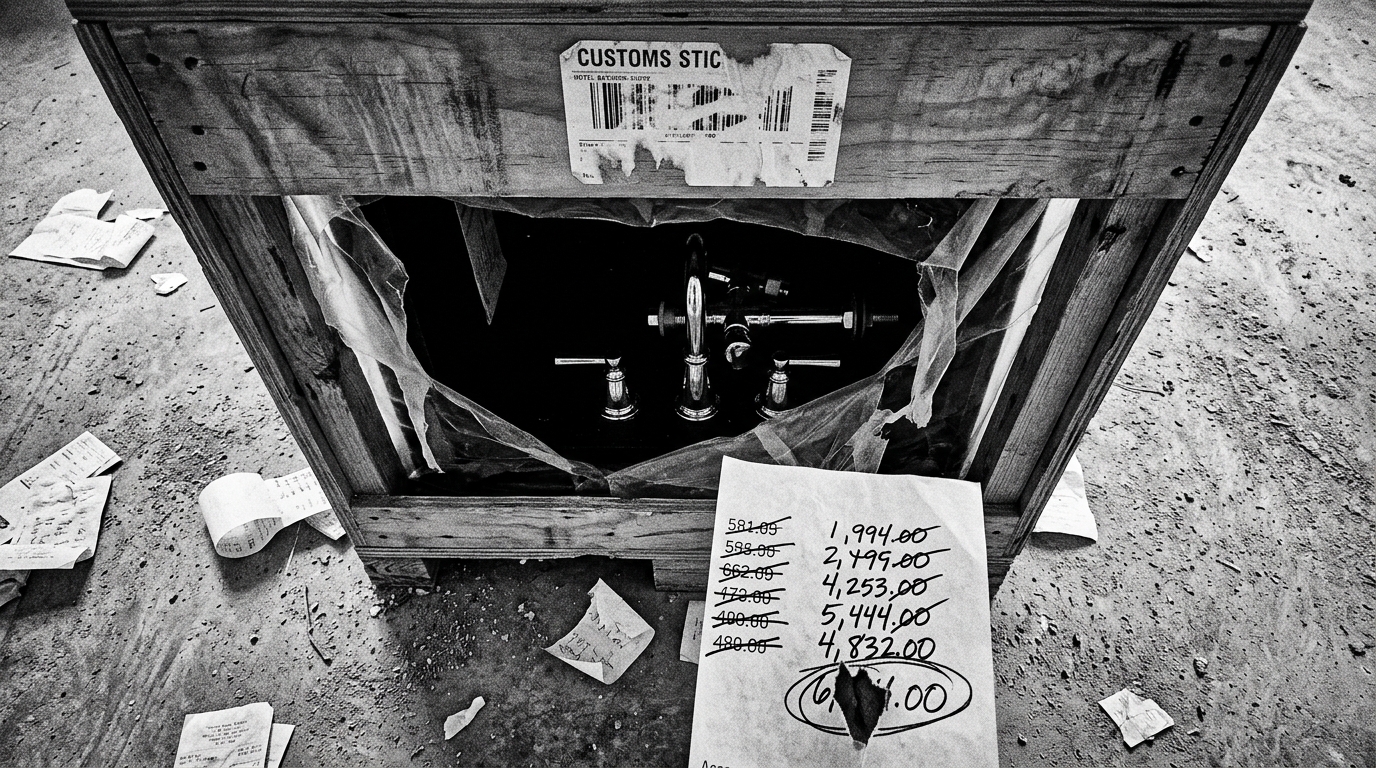
A 10-15% increase in FF&E costs on a $4M PIP is $400K-$600K of unbudgeted capital. That's the finding. Everything else is context.

The effective U.S. tariff rate is somewhere between 11.8% and 15.8% depending on whose estimate you trust (J.P. Morgan says 15.8% as of mid-April; the source article says 11.8%; the Tax Foundation had 7.7% in 2025). The precise number matters less than the direction. It was 2.3% at the end of 2024. Section 232 tariffs now apply to the full customs value of imported goods containing steel, aluminum, and copper... not just the metal content. For casegoods, lighting, plumbing fixtures, bathroom vanities, that's a structural repricing. A 25% tariff on upholstered furniture hit in October 2025. Vanities and cabinets face planned increases to 50%, postponed to 2027 but already priced into vendor hedging. Vietnam, which absorbed a significant share of FF&E production as sourcing shifted away from China, now sits at a 20% tariff rate under the July 2025 trade deal (up from 3.3%). The diversification play that owners thought protected them... didn't.

I've seen this structure before in my audit years. An owner underwrites a renovation at one cost basis, signs a franchise agreement with a PIP timeline attached, and by the time procurement starts the assumptions are stale. The franchise agreement doesn't care that tariffs moved. The PIP deadline doesn't adjust for macroeconomic shifts. The owner absorbs the variance. RW Baird's analyst pegged the increase at 5-10% on total hard costs, noting that internationally sourced materials represent 15-20% of a typical project budget. Layer tariff contingency language that contractors are now embedding into new bids, and the owner who signed a fixed-price agreement six months ago is about to get a change order that turns a viable renovation into a marginal one. Select-service developers operating on tight per-key budgets feel this first. A project underwritten at $85K per key that now costs $93K per key is a different deal. The return profile shifted. The debt coverage shifted. The equity check got bigger.

The counterargument is supply constraint. If tariffs suppress new development by making construction more expensive, existing owners in supply-limited markets see less competitive pressure over 24-36 months. That's real. But it's a portfolio-level observation, not a property-level solution. The owner staring at a $4.6M renovation that was budgeted at $4M doesn't care about theoretical supply reduction in 2028. That owner needs $600K right now or needs to cut scope... and cutting scope on a brand-mandated PIP means negotiating with a franchisor who has limited incentive to compromise (the franchise fee doesn't decline when the renovation gets cheaper).

The owners who come out of this intact will be the ones who repriced their projects this month, not next quarter. Every FF&E procurement contract signed before Q4 2025 should be stress-tested against current tariff schedules. Every PIP timeline should be evaluated for acceleration (buying materials now at today's cost) or deferral (if the franchise agreement permits it). The math on "buy now versus wait" depends on whether you believe tariffs are going higher or stabilizing. Given that USTR just initiated Section 301 investigations into 16 additional economies including every major FF&E source country... I'd price in further escalation. Check again.

Operator's Take

Here's what to do this week. If you have a PIP due in 2026 or 2027, pull your most recent procurement bid and compare it against current landed costs for your top five FF&E line items... casegoods, soft goods, lighting, plumbing, decorative. If that bid is more than 90 days old, it's stale. Get a refreshed quote and run the variance against your approved CapEx budget. If the gap is more than 5%, you need to be in front of your ownership group with three options: accelerate procurement to lock current pricing, negotiate PIP scope with your brand (get it in writing), or resize the equity commitment. Don't wait for the brand to bring this up. Don't wait for your asset manager to ask. The operator who shows up with the problem AND three solutions is the one who keeps the trust. This is what I call the Renovation Reality Multiplier... the real cost of a renovation is never the number on the original bid. It's the number after reality gets involved. And reality just got 10-15% more expensive.


— Mike Storm, Founder & Editor
Read full analysis → ← Show less
Source: InnBrief Analysis — National News
Branded Residences Are Booming. Most New Players Have No Idea What They're Selling.

Branded Residences Are Booming. Most New Players Have No Idea What They're Selling.

The branded residence pipeline has nearly tripled in a decade, and now everyone from fashion houses to football clubs wants in. The problem? Most of them have never managed a Tuesday night noise complaint, let alone a luxury living experience.

Let me tell you something about promises. A brand is a promise. I've said it a thousand times because it's true every single time. And right now, the branded residences market is absolutely drowning in promises being made by people who have no infrastructure, no operational playbook, and no earthly idea what happens after the buyer closes. The segment has exploded to an estimated 910 projects globally, nearly triple the 323 that existed in 2015, and the pipeline has another 837 contracted developments pushing toward 2032. That's a lot of promises. And the question nobody at these splashy launch events wants to answer is... who's actually going to keep them?

Here's what's happening. Developers figured out that slapping a recognizable name on a residential tower commands a 33% average premium over comparable unbranded product. In Dubai (which leads the world with 64 completed projects and 87 more in the pipeline), that premium can hit 90%. Ninety percent. So now everybody wants in. Fashion brands. Jewelry houses. Automotive companies. English Premier League football clubs, for heaven's sake. And I get it... I really do. If you're a developer looking at a 20-40% sales premium just for attaching a name, the economics are intoxicating. But here's the part the glossy renderings don't show you: hotel brands like Marriott, Accor, and Four Seasons (which still account for 79% of completed branded residence stock) didn't stumble into operational excellence. They built service systems over decades. They have SOPs for everything from how the lobby smells to how quickly maintenance responds to a leaking faucet at 2 AM. They have loyalty ecosystems that drive real value. When a fashion house decides to "extend its lifestyle vision into residential," what exactly does that mean when the elevator breaks on a Saturday night? Who's answering that call? A brand ambassador in a beautiful suit? (I've actually seen that proposed in a pitch deck. I wish I were kidding.)

I sat in a development presentation last year where a non-hospitality brand... I won't name them, but you'd recognize the logo... showed thirty minutes of mood boards, lifestyle photography, and "experiential narrative" language. Thirty minutes. I asked one question: "What are your property management standards?" The room got very quiet. Then someone said they were "in conversations with a third-party hotel operator to develop those." So let me translate that for the owners in the room: they're going to hire someone else to figure out the thing that IS the product. That's not a brand extension. That's a licensing fee attached to a hope. And the buyer paying a 33% premium is buying the hope, not the reality, because the reality doesn't exist yet.

The real danger here isn't that a few fashion-branded towers underdeliver (they will, and the buyers who can afford $3M condos will be fine... they'll just be annoyed and litigious). The real danger is dilution. When "branded residence" stops meaning "backed by decades of hospitality operational excellence" and starts meaning "has a famous name on the building," the entire segment's value proposition erodes. The premiums that legitimate hotel brands have earned through actual service delivery get undermined by rhinestone operators who can't deliver a consistent Tuesday. And here's what really keeps me up... the developers partnering with these untested brands are sometimes the same ones who'll come back to a Ritz-Carlton or a Four Seasons in three years asking why their next project's premium softened. It softened because the market learned that not all branded residences are created equal, and your last partner taught them that lesson the hard way.

This market is going to correct itself. It always does. The brands with real operational DNA (your Marriotts, your Accors, your Four Seasons) will keep commanding premiums because they can actually deliver what they promise. The fashion labels and football clubs will discover that residential management is not a licensing play... it's a 24/7/365 operational commitment that requires systems, training, staffing, and accountability. Some will adapt. Most won't. And the developers who chose partners based on Instagram cachet instead of operational capability? They'll learn the most expensive lesson in real estate: you can sell a promise once. You can only sell a delivered experience twice. The filing cabinet doesn't lie, and in five years, the performance data from this wave of non-hospitality branded residences is going to tell a very uncomfortable story.

Operator's Take

Here's what I call the Brand Reality Gap, and it applies to branded residences just as hard as it applies to hotels. Brands sell promises at scale. Properties deliver them shift by shift. If you're an owner or developer being pitched a branded residence partnership by a non-hospitality brand, ask one question before anything else: show me your property management SOPs and your service recovery protocols. If they can't produce them... if they're "still developing" those... walk away. The 33% premium only holds if the buyer's experience matches the brochure, and without operational infrastructure, it won't. Stick with brands that have been managing guest experiences for decades, not months. The premium difference between a proven hotel brand and a trendy lifestyle name might look small on the pro forma, but the execution risk gap is enormous.

— Mike Storm, Founder & Editor
Read full analysis → ← Show less
Source: Google News: CoStar Hotels
Adaptive Reuse Looks Sexy Until You See the Pro Forma

Adaptive Reuse Looks Sexy Until You See the Pro Forma

Two historic prisons — one in Nara, one in Istanbul — are becoming luxury hotels. The headlines write themselves, but the operating economics tell a different story.

Every few years we get breathless coverage of some adaptive reuse project turning an old jail or factory or schoolhouse into a boutique hotel. Great architecture porn. Fantastic Instagram content. And usually, a fucking nightmare to operate profitably.

I'm not saying these projects don't work. I've seen brilliant adaptive reuse — the Liberty Hotel in Boston (former jail), the Jaffa in Tel Aviv (former hospital complex). But for every one that pencils out, I've watched three others bleed cash because nobody properly underwrote the operational realities before the ribbon cutting.

Here's what the travel magazines won't tell you about these Nara and Istanbul projects: Historic buildings come with historic problems. Your HVAC has to work around preservation requirements. Your room layouts are dictated by century-old cell configurations. Your labor costs run 20-30% higher because nothing is standardized — every room is different, housekeeping takes longer, maintenance is custom work every single time.

When I was doing a renovation on a historic property in Chicago — not a prison, but a 1920s building with landmark status — we had to get approval for everything down to the goddamn thermostat covers. It added eight months and $400K to a project budgeted at $2.3M. Owners loved the PR. Hated the returns.

The projects that work? They've got patient capital, they're targeting 70% ADR premiums over comp set, and they've built 18-24 month ramp periods into their models. If you're thinking about adaptive reuse in your market, make sure your ownership group understands they're buying a trophy asset, not a cash cow. Those are two very different investment theses.

Operator's Take

If you're managing or developing an adaptive reuse project: Triple your contingency budget, add six months to your timeline, and make damn sure your sales team can articulate why guests will pay that ADR premium beyond "it used to be a prison." Unique architecture gets you press. Exceptional service and a compelling guest experience gets you repeat bookings. Don't confuse the two.

Read full analysis → ← Show less
Source: Google News: Luxury Hotels
End of Stories