Today · Sep 11, 2026
Hollywood's A-List Just Gave Four Seasons Seoul a Marketing Campaign Money Can't Buy

Hollywood's A-List Just Gave Four Seasons Seoul a Marketing Campaign Money Can't Buy

Christopher Nolan's 'The Odyssey' press tour turned the Four Seasons Seoul into a global stage, and the real story isn't the movie... it's what happens when a luxury hotel becomes the backdrop for a $250 million cultural event and every property in the market starts asking how to get on that list.

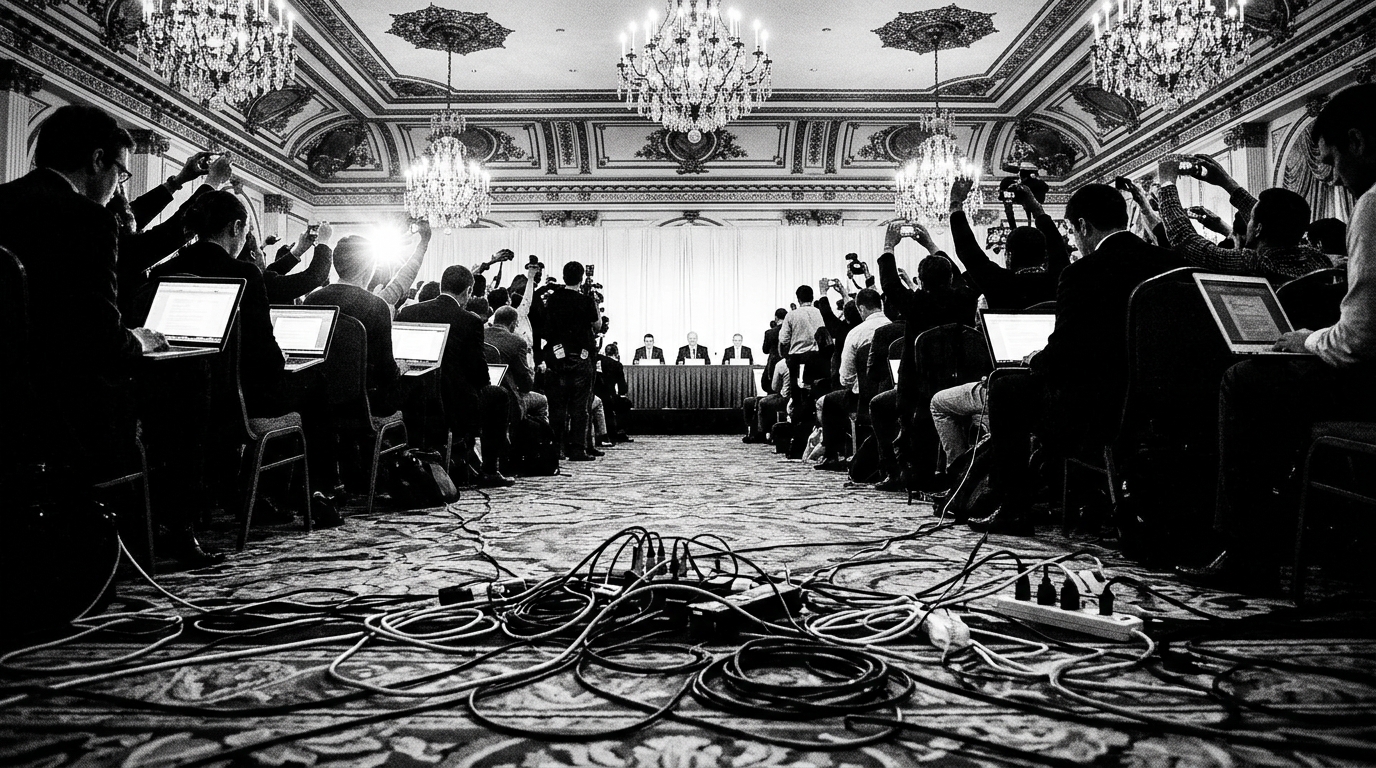
So here's something that caught my eye. Christopher Nolan, Matt Damon, and Charlize Theron rolled into Seoul for a press conference ahead of 'The Odyssey'... and where did they hold it? The Four Seasons Hotel Seoul. Not a convention center. Not a studio lot. A hotel lobby (or ballroom, more likely) became the global stage for a film with a $250 million production budget and projected $100 million opening weekend.

And I guarantee you, someone at Four Seasons corporate is already calculating the earned media value of every photo, every livestream, every social post geotagged at their property. They should be. Because this is the kind of brand amplification you literally cannot purchase. You can spend $2 million on a digital marketing campaign and not get a fraction of the global eyeballs that come from Matt Damon sitting in your lobby with 200 credentialed journalists. The question I keep coming back to, though... what technology infrastructure does a property need to actually capitalize on a moment like this? And the answer is more complicated than most hotels want to admit.

Look, I consulted with a luxury property last year that hosted a major tech company's product launch. Beautiful event. Global press coverage. And their WiFi buckled under the load within 45 minutes. Two hundred journalists trying to livestream simultaneously on infrastructure designed for 300 guests checking email and streaming Netflix. The event team had to run a mobile hotspot truck into the loading dock. The press coverage was great. The behind-the-scenes chaos was not. That's the gap nobody talks about when hotels chase these high-profile events... your building's network infrastructure was probably designed for hospitality traffic patterns, not broadcast-level media events. Simultaneous HD video uploads from 150 devices in a single ballroom is a completely different load profile than anything your access points were spec'd for.

The Four Seasons Seoul has clearly figured this out (this isn't their first time... they hosted the 'Deadpool and Wolverine' press event in 2024), and that repeat business tells you something important. They've built the operational and technical capability to handle these events reliably enough that studios keep coming back. That's a competitive moat, and it's not about the thread count or the lobby design. It's about bandwidth, AV infrastructure, security protocols for talent movement, and a staff that knows how to run a global media event without disrupting the hotel's actual guests. Most luxury properties think they can host events like this. Very few have actually stress-tested their systems under real conditions.

For the rest of the market, here's what actually matters. Seoul's hospitality sector is clearly positioning itself as a serious MICE and entertainment destination (the Hospitality South Korea Conference happened just two weeks ago at the Sofitel Ambassador). The properties that will win these events aren't the ones with the best suites... they're the ones with enterprise-grade network infrastructure, dedicated event bandwidth that doesn't compete with guest WiFi, and technical teams who understand that a press conference for a $250 million film has zero tolerance for a buffering livestream. If you're a luxury property in any major gateway city and you're not auditing your event technology capabilities right now, you're already behind the properties that are.

Operator's Take

Here's what I'd tell any GM at a luxury or upper-upscale property chasing high-profile events. Before you pitch your ballroom to the next studio or Fortune 500 company, run a real stress test on your network. Not the vendor's theoretical throughput numbers... actual simultaneous device load at the levels a media event demands. Get 100 devices streaming video in your event space at the same time and see what happens. If your WiFi infrastructure is more than five years old or your building was wired before 2010, you probably already know the answer. The properties winning these events aren't winning on aesthetics. They're winning because their technology doesn't fail when it matters most. That's the moat. Build it before you need it.
— Mike Storm, Founder & Editor
Read full analysis → ← Show less
Source: Google News: Four Seasons
£1.3 Billion to Reinvent Olympia London. 204 Hotel Rooms to Pay for It.

£1.3 Billion to Reinvent Olympia London. 204 Hotel Rooms to Pay for It.

West London's Olympia is getting a 14-acre, £1.3 billion transformation with a Hyatt Regency, concert venues, and a convention center. The question every operator should be asking is whether 204 rooms can carry the weight of an entire district's hospitality promise.

I once watched a developer walk an ownership group through a rendering of a mixed-use project... hotel, restaurants, entertainment, retail, the works. Beautiful stuff. The kind of presentation where everyone in the room starts nodding because the pictures are so good you forget to ask hard questions. One of the owners, a guy who'd been running hotels since before the developer was born, leaned back in his chair and said, "Who's the anchor tenant when the concert lets out and 4,000 people need a drink at the same time?" Nobody had an answer. They had a rendering.

That's what came to mind when I read about the Olympia London redevelopment. Let me be clear... this is an ambitious, genuinely interesting project. A £1.3 billion transformation of a 14-acre historic exhibition center into a year-round destination with a 4,000-capacity music venue, a 1,575-seat theater (the largest purpose-built theater London has seen in nearly 50 years), a new international convention center, 550,000 square feet of premium office space, over 30 restaurants and bars, and... 204 hotel rooms. A Hyatt Regency at £299 per night opening, plus a 146-room citizenM. That's 350 total keys to serve a complex projecting 10 to 15 million annual visitors. The math on that ratio is... interesting. They're projecting 75,000 visitors per day during peak events. Even if only a fraction of those need a room, you're looking at a property that will be either chronically undersized or deliberately positioned as a premium scarcity play. Neither is simple to operate.

Here's what nobody's talking about yet. When you build a 204-key hotel inside a live entertainment and convention campus, you're not running a hotel. You're running a hotel that has to function simultaneously as event overflow accommodation, business travel lodging, and leisure destination... with demand patterns that swing wildly depending on whether there's a sold-out concert, a three-day conference, or a quiet Tuesday. Revenue management for a property like this isn't just complicated. It's a completely different discipline. Your demand curves don't look like a normal urban hotel. They look like a theme park. I've managed properties adjacent to major event venues, and the staffing model alone will keep someone up at night. You need the capacity to handle 4,000 people leaving a concert and flooding your lobby bar, your restaurant, your corridors... and then handle 40% occupancy on an off night. That's two completely different hotels sharing the same building.

The financial architecture here deserves attention. Yoo Capital and Deutsche Finance International acquired the site in 2017 for £296 million. They've now secured a £1.25 billion refinancing from Deutsche Bank, replacing an £875 million Goldman Sachs development facility. That's significant debt for a project whose revenue streams are spread across hotel rooms, office leases, entertainment tickets, F&B, and convention bookings. The hotel piece is almost certainly not the primary revenue driver... it's the amenity that makes everything else work. Which means the Hyatt Regency's success or failure will be measured differently than a standalone hotel. It doesn't just need to generate its own NOI. It needs to support the value proposition of the entire campus. That's a different kind of pressure on a GM.

For Hyatt, this is part of a bigger UK expansion... over 1,000 rooms being added by 2026, with the UK as their third-largest EAME market. The MICE angle is real. Hyatt reported a 5% increase in European MICE inquiries in late 2024, and a purpose-built convention center with an attached Hyatt Regency is exactly the kind of product that books corporate events. But here's where I get cautious. Convention centers and hotels have a complicated relationship. The convention center drives demand, but the convention center's operator controls the calendar. The hotel's revenue is at the mercy of someone else's booking decisions. If you've never operated inside that dynamic, it looks like a gift. If you have, you know it's a negotiation that never ends.

Operator's Take

If you're running a hotel anywhere near a major mixed-use development or entertainment district... pay attention to how Olympia plays out over the next 18 months. This is what I call the Brand Reality Gap... the distance between the promise in the rendering and what happens shift by shift when the venue empties and your lobby fills up. The operational model for a hotel embedded in a live campus is fundamentally different from a standalone property. Your staffing has to flex harder, your F&B has to serve two completely different guest profiles (the conference attendee and the concertgoer are not the same customer), and your revenue management has to account for demand swings that make normal seasonality look gentle. If you're an owner being pitched a hotel inside a mixed-use development, ask one question before anything else: who controls the event calendar, and what's your contractual relationship with that calendar? Because your RevPAR lives and dies by someone else's programming decisions. Get that in writing before you sign anything.

Read full analysis → ← Show less
Source: Google News: Hyatt
End of Stories