Today · Mar 31, 2026
£1.1 Billion for 331 London Keys. That's £3.3 Million Per Room.

£1.1 Billion for 331 London Keys. That's £3.3 Million Per Room.

A new UAE-backed fund just committed £1.1 billion to two Mayfair hotel assets totaling 331 keys, implying a per-key figure that redefines what "luxury premium" means in London. The cap rate math on this deal tells you exactly what the buyer believes about the next decade of London hospitality.

Available Analysis

£1.1 billion committed across 237 existing keys and a 94-key development. Blended, that's roughly £3.3 million per key. Even accounting for the development site (where a significant portion of the commitment is future construction spend on a Foster & Partners tower with six luxury residences attached), the implied valuation on the operating hotel alone suggests the buyer is pricing London luxury at a cap rate somewhere south of 4%. That's not a hotel investment. That's a real estate conviction trade disguised as hospitality.

The acquirer, Evolution Investment Fund, is a BVI-registered vehicle backed by the UAE-based Shanshal family, launched in 2025. The previous owner of the operating hotel's leasehold paid over £125 million in 2014. Twelve years later, that leasehold is part of a £1.1 billion package. The seller did fine. But the buyer's math only works if you believe London luxury RevPAR will continue to outperform CPI by 8%+ annually (which it has over the past decade, per recent market data) and that Mayfair supply constraints will persist indefinitely. One of those assumptions is defensible. Both together require a level of optimism I'd want to see stress-tested against a 25-30% revenue decline scenario before committing.

Context matters here. European hotel investment hit €22.6 billion in 2025, up 30% year-on-year. London alone accounted for €1.8 billion in single-asset transactions, surpassing Paris. The ME London traded at roughly €1.6 million per key in 2024. The Six Senses London at approximately €1.7 million per key. This deal, even with the development component blended in, sits meaningfully above those comps. The buyer is either seeing something the rest of the market hasn't priced in, or they're paying a premium for trophy assets because the capital needs a home and Mayfair is where you park generational wealth. I've audited enough sovereign and family office hotel acquisitions to know that the return threshold for this type of capital is structurally different from institutional money. A 3.5% stabilized yield that would make a US REIT's board walk out of the room is perfectly acceptable when you're deploying family capital with a 30-year hold horizon and no quarterly earnings call.

One detail that deserves attention: Nadhim Zahawi, former UK Chancellor, has been appointed as a director to the acquisition entities. That's a political access hire, not an operational one. It signals the fund expects to work through planning, regulatory, and governmental channels on the development site. The 12-story Foster & Partners tower at Grafton Street is fully consented, but "fully consented" in London real estate has a way of encountering complications once construction begins. The political appointment is insurance.

PwC projects 1.8% London RevPAR growth for 2026, driven primarily by occupancy. Christie & Co noted a slight RevPAR decline of 0.4% through November 2025 due to luxury segment price sensitivity. So the buyer is entering at peak pricing into a market showing early signs of rate resistance. The math works if you're underwriting a 20-year hold with patient capital. It doesn't work if you need to refinance in five years at a higher basis. The distinction between those two scenarios is the entire story of this deal.

Operator's Take

Here's what this deal tells you if you're running or owning a hotel in a major gateway market. The capital chasing luxury hospitality right now is not yield-driven... it's preservation-driven. Family offices and sovereign-adjacent funds are buying trophy assets at cap rates that institutional buyers can't touch. That compresses pricing for everyone. If you're an owner thinking about a disposition in London, New York, Paris, or any top-tier market, the bid pool for luxury product has never been deeper. Get your appraisals refreshed. If you're on the buy side with a fund that actually needs to hit return hurdles, understand that you are now competing against capital that doesn't need returns in the same timeframe you do. Adjust your target markets accordingly... the secondary luxury markets where family office money hasn't arrived yet are where the real value is sitting right now.

— Mike Storm, Founder & Editor
Read full analysis → ← Show less
Source: Google News: Marriott
$257K Per Key for a Home2 Suites in Tampa. Check Your Basis.

$257K Per Key for a Home2 Suites in Tampa. Check Your Basis.

A PE fund just paid $32.1 million for a 125-key Home2 Suites in the Tampa market, putting the per-key price at $257K for a select-service extended-stay built in 2018. That number tells a very specific story about where cap rates are heading and who's getting priced out of the acquisition market.

$32.1 million for 125 keys. That's $256,785 per key for a Home2 Suites in Brandon, Florida, a Tampa suburb. The buyer is a Massachusetts-based PE fund that now holds roughly 14 properties and 1,952 keys. This is their third Florida acquisition.

Let's decompose this. A 2018-built extended-stay select-service in a secondary Tampa submarket at $257K per key implies a cap rate somewhere in the mid-to-low 5s on trailing NOI (the broker's language about "in-place yield" confirms the asset is cash-flowing, not a turnaround). Compare that to the Homewood Suites in the same Tampa-Brandon corridor that Apple Hospitality REIT bought in June 2025 for $149K per key. That's a 72% per-key premium in under a year for a comparable product in a comparable submarket. Either the Home2 is meaningfully outperforming, or extended-stay pricing has moved faster than most investors' underwriting models.

The math matters for anyone benchmarking acquisition targets. At $257K per key, your replacement cost analysis starts to compress. A ground-up Home2 Suites in that market runs somewhere between $180K and $220K per key depending on site work and impact fees. This buyer paid a premium to avoid the 18-24 month development timeline and the lease-up risk. That's a rational trade if you believe Tampa's demand drivers (healthcare, convention, leisure) hold. It's an expensive bet if occupancy softens even 400-500 basis points.

One thing the press release doesn't tell you: what the debt looks like. A PE fund paying $32.1 million for a select-service hotel is almost certainly using leverage. At today's rates, the debt service on this asset eats into owner cash flow fast. The trailing NOI needs to support not just the acquisition price but the cost of capital at 7%+ borrowing rates. If you back into the numbers, the property needs to generate roughly $1.8-2.0 million in NOI just to cover debt service on a 65% LTV structure before the equity sees a dollar. That's tight for 125 keys.

The real signal here isn't one deal. It's the pattern. Private equity is deploying into branded extended-stay at prices that would have seemed aggressive 18 months ago. That either means these buyers see NOI growth the rest of us haven't priced in... or the capital has to go somewhere and extended-stay is the least scary place to park it.

Operator's Take

If you own or manage an extended-stay property in a growth market, this deal just reset your comp set's valuation benchmark. Pull your trailing 12-month NOI, divide by your key count, and compare your implied per-key value against $257K. If you're north of that on performance and south of it on valuation, you have a conversation to start with your ownership group about strategic options. If you're a GM at a branded extended-stay wondering what this means... it means capital is chasing your product type, which is good for investment but also means new supply is coming. Watch your three-mile radius for construction permits. The buyers paying $257K per key today need rate integrity tomorrow, and every new flag in your comp set makes that harder.

— Mike Storm, Founder & Editor
Read full analysis → ← Show less
Source: Google News: CoStar Hotels
Hilton Bought a 179-Key Inglewood Hotel for $319K Per Key. Here's Why That Bet Only Works Once.

Hilton Bought a 179-Key Inglewood Hotel for $319K Per Key. Here's Why That Bet Only Works Once.

Chartres Lodging Group paid $57.2 million for a 179-room converted property steps from SoFi Stadium, banking on the World Cup, Super Bowl, and Olympics to justify a per-key basis that makes sense only if you believe three years of mega-events can permanently reset an Inglewood rate ceiling.

Available Analysis

I knew a GM once who took over a hotel six blocks from a brand-new NFL stadium. Opening weekend, the place was printing money. Rates he never thought he'd see in that zip code. He called me two months later and said "the stadium's dark five nights a week. What do I do with Tuesday?"

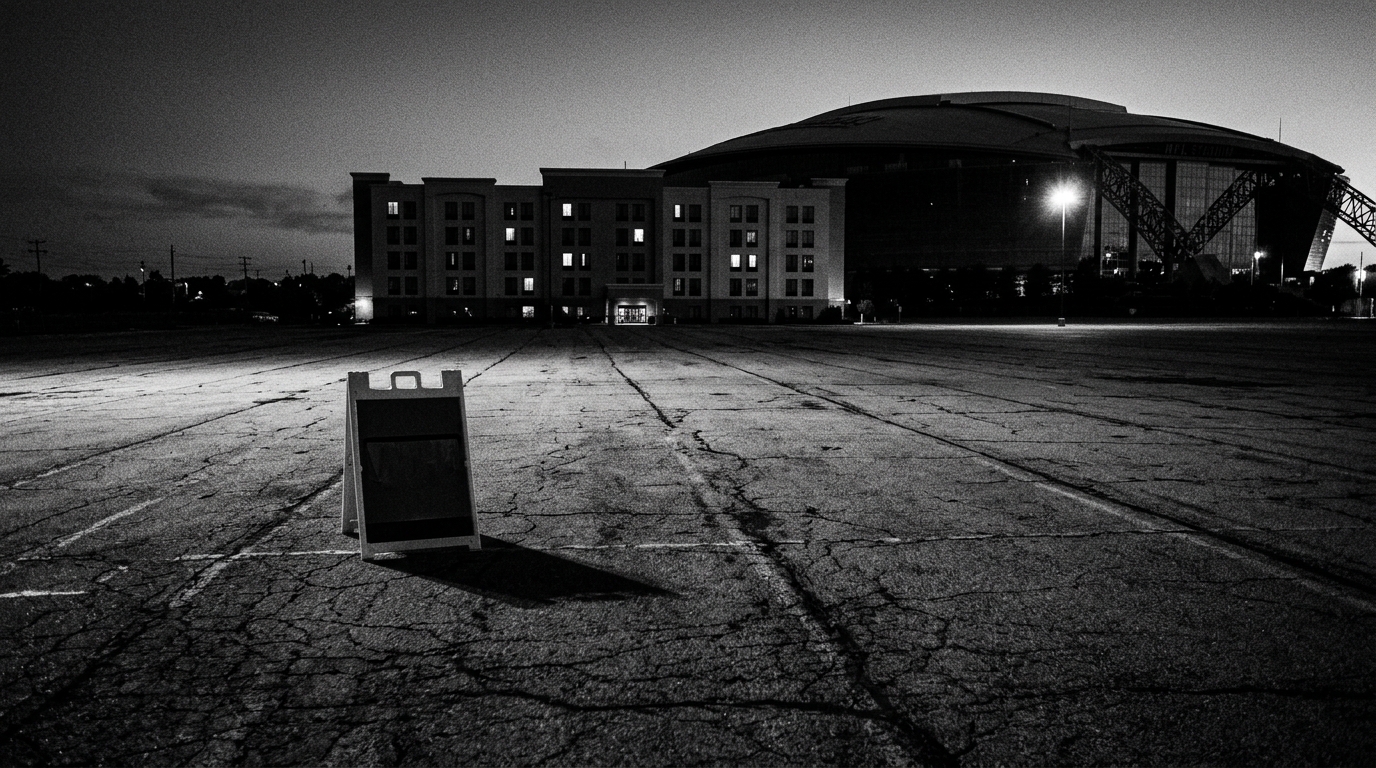
That's the question nobody in this press release is asking about The Anthem Los Angeles Stadium District, Tapestry by Hilton. And yes, that's the actual name... I counted eleven words. The property is a 179-key conversion in Inglewood, California, sitting in the shadow of SoFi Stadium, Intuit Dome, Kia Forum, and YouTube Theater. Chartres Lodging Group bought what was previously the Lüm Hotel (and before that, the Airport Park View Hotel) for $57.2 million in 2024. That's roughly $319,500 per key for a conversion. Not a ground-up build with fresh systems and a 30-year useful life ahead of it. A renovation of an existing asset that's been through at least two identity changes already. PM Hotel Group is managing. Hilton is providing the flag through Tapestry Collection. And the entire investment thesis rests on a three-year window of mega-events... FIFA World Cup in 2026, Super Bowl LXI in 2027, Olympics in 2028.

Let me be direct. The event calendar is real. Those are genuine demand generators, and anyone operating within three miles of SoFi Stadium is going to see rate spikes during those windows that look like typos on the revenue report. Published rates starting at $141 per night sound modest now, but those will be irrelevant during a World Cup match week. The real question isn't whether this hotel will have good nights. It will. The real question is what happens between the good nights. Inglewood is not Santa Monica. It's not Beverly Hills. It's not even LAX corridor, which at least has the steady base of airline crew contracts and corporate transient. The Hollywood Park development is massive (298 acres) and the long-term vision is compelling on paper, but "long-term vision" doesn't pay your monthly debt service. That $57.2 million basis has to pencil on the 280 nights a year when there isn't a Beyoncé concert or an NFL playoff game next door.

Here's what the source material tells us but doesn't connect: LA County saw a nearly 30% increase in hotel room delivery from 2024 to 2025, and international tourism to the city actually declined 8% in that same period. Meanwhile, Marriott is building a 300-room Autograph Collection property in the same Hollywood Park development... a $300 million, ground-up hotel targeting the exact same event-driven demand. So you've got rising supply, softening international demand, and a competitive set that's about to include a brand-new Marriott property with twice the rooms and fresh-build amenities. The Anthem's advantage is that it's open first. That matters. Being the established option when the World Cup arrives is worth something. But first-mover advantage has a shelf life, especially when the second mover is spending $1 million per key on a new build while you're running a conversion that's already been through multiple ownership cycles.

The Tapestry flag is the right call for what this is. It gives Chartres access to Hilton Honors distribution (which matters enormously for an Inglewood address that most leisure travelers wouldn't find on their own) without forcing a full-service brand standard that would crush operating margins on 179 rooms. The "boutique" positioning lets them keep staffing lean and F&B limited to the rooftop bar and pool concept. Smart. But the brand doesn't solve the structural challenge. When the Olympics leave town in August 2028, what is this hotel? It's a 179-key property in Inglewood competing against new supply, carrying a $319K per key basis, needing to fill 280-plus non-event nights a year at rates that justify the investment. That's the math that has to work. Not the Super Bowl math. The Tuesday in October math.

Operator's Take

If you're an owner or asset manager looking at event-adjacent acquisitions right now... and there are plenty of them hitting the market as cities gear up for World Cups, Olympics, and Super Bowls... run your underwriting against the non-event calendar first. Build your base case on the 280 ordinary nights, not the 85 spectacular ones. That $319K per key basis in Inglewood implies a required NOI somewhere north of $3.43M annually at a 6% cap rate, which means this property needs to perform dramatically above what its predecessors ever achieved at this address. Before you chase the next stadium-district deal, pull your own comp set's non-event occupancy and ADR for the last 12 months. If the base business doesn't cover your debt service without the concerts and playoffs, you don't have an investment thesis... you have a lottery ticket.

Read full analysis → ← Show less
Source: Google News: Hilton
Chatham's $156K Per Key Bet on Secondary Markets Is Smarter Than It Looks

Chatham's $156K Per Key Bet on Secondary Markets Is Smarter Than It Looks

Chatham Lodging Trust just swapped six aging hotels for six newer ones at a 10% cap rate, and the margin spread between what they sold and what they bought tells a story the headline doesn't.

$92 million for 589 rooms across Joplin, Effingham, and Paducah. That's $156,000 per key at an implied 10% cap rate on 2025 NOI. Let's decompose this.

Chatham sold six older hotels over the past 18 months for roughly $100 million. Those assets averaged 25 years old, generated $101 RevPAR, and ran 27% EBITDA margins. The six they just bought average 10 years old, produce $116 RevPAR, and deliver 42% EBITDA margins. That's a 1,500 basis point margin improvement on a nearly dollar-for-dollar capital swap. The portfolio got younger, the margins got fatter, and the net spend was essentially zero. That's not an acquisition story. That's an arbitrage story.

The 10% cap rate deserves attention. Chatham unloaded a 26-year-old asset in Q4 at a 4% cap. They're buying at 10%. The spread between disposition cap rate and acquisition cap rate is 600 basis points... which means either the sold assets were dramatically overpriced by the buyer, or the acquired assets are priced at a discount that reflects the markets they're in. Probably both. Joplin, Effingham, and Paducah aren't exactly on every institutional investor's target list, and that's precisely why Chatham found yield there. The per-key basis of $156K on Hilton-branded extended-stay with 42% margins is replacement cost math that works (you're not building those hotels today for $156K per key).

Two-thirds of the acquired rooms are extended-stay. That's the margin story. Extended-stay runs leaner on labor, housekeeping frequency is lower, and the guest profile is stickier. A portfolio I analyzed a few years ago showed extended-stay properties consistently running 800-1,200 basis points higher in EBITDA margin than comparable select-service in the same markets. Chatham's numbers confirm the pattern. The $0.10 per share in projected incremental adjusted FFO, combined with the 11% dividend bump to $0.10 quarterly, suggests management is confident the cash flow is durable... not cyclical. The dividend increase is the tell. You don't raise the dividend on acquisition-year projections unless you've stress-tested the downside.

The math works. The question is what "works" means for CLDT shareholders at current pricing. Stifel raised its target to $10.00. InvestingPro pegs fair value at $9.84. The stock trades at a high P/E with a 50 basis point bump in net debt to EBITDA from this deal. Chatham is betting that secondary market fundamentals (low new supply, reshoring demand, AI-driven data center construction) will sustain occupancy in markets that institutional capital typically ignores. If they're right, they just bought 42% margin hotels at a 10 cap while everyone else fights over 6-cap assets in gateway cities. If demand softens in these tertiary markets, there's no liquidity to exit gracefully. That's the risk the cap rate is pricing.

Operator's Take

Here's what nobody's telling you... Chatham just showed every small REIT and private owner the playbook for this cycle. Sell your tired assets while buyers still exist for them, and redeploy into newer extended-stay at double-digit caps in markets nobody's fighting over. If you're sitting on a 20-plus-year-old select-service with sub-30% margins and a PIP looming, this is your signal. The bid for aging branded hotels won't last forever, and every quarter you hold is a quarter closer to that renovation bill landing on your desk. Call your broker. Run the comp. Do the math on what your asset looks like at a 10-year hold versus a sale-and-redeploy. The answer might surprise you.

— Mike Storm, Founder & Editor
Read full analysis → ← Show less
Source: Google News: Chatham Lodging Trust
Chatham's $156K Per Key Bet on Secondary Markets Is Smarter Than It Looks

Chatham's $156K Per Key Bet on Secondary Markets Is Smarter Than It Looks

Chatham Lodging Trust just paid $92 million for six Hilton-branded hotels at a 10% cap rate in markets most REITs won't touch. The math tells a story the headline doesn't.

$156,000 per key for 10-year-old Hilton-branded extended-stay assets generating 42% EBITDA margins at a 10% cap rate. Let's decompose this.

Chatham acquired 589 rooms across six properties (two Homewood Suites, two Hampton Inn and Suites, two Home2 Suites) in Joplin, Missouri, Effingham, Illinois, and Paducah, Kentucky. RevPAR of $116. Projected $10 million in annual Hotel EBITDA, adding roughly $0.10 to adjusted FFO per share. The real number here is the 10% cap rate. In a market where institutional buyers are fighting over gateway-city assets at 6-7% caps, Chatham is buying 300-400 basis points of spread by going where the competition isn't. That's not a consolation prize. That's a thesis.

Here's what the headline doesn't tell you. Over the past 18 months, Chatham sold six older hotels for approximately $100 million. Those assets averaged 25 years old, $101 RevPAR, and 27% EBITDA margins. The portfolio they just bought averages 10 years old, $116 RevPAR, and 42% EBITDA margins. Sold old, bought new. Traded 27% margins for 42% margins. Traded $101 RevPAR for $116. The capital recycling here isn't just balance sheet management... it's a complete portfolio quality upgrade funded almost dollar-for-dollar by disposition proceeds. Net debt to EBITDA increases only 50 basis points. That's discipline.

The 11% dividend increase (to $0.10 per share quarterly) is the confidence signal. This is Chatham's second consecutive year of double-digit dividend growth. But check the 2026 guidance: RevPAR growth of negative 0.5% to positive 1.5%, adjusted EBITDA of $84-89 million, adjusted FFO of $1.04-$1.14 per share. The company is raising its dividend while guiding to essentially flat organic growth. The acquisition is doing the heavy lifting. Which means if the next deal doesn't materialize, or if these secondary markets soften, the dividend growth story gets harder to tell. An owner I spoke with last year put it simply: "A REIT that raises its dividend on acquisition math instead of organic growth is buying time. The question is what they do with it."

The contrarian case is that Chatham is early to a trade that's about to get crowded. The CEO cited reshoring manufacturing and distribution investment as demand drivers in these markets. If that thesis plays out (and there's real evidence it's playing out in secondary industrial corridors), $156K per key for Hilton-branded extended-stay looks like a steal in 24 months. If it doesn't, you own hotels in Joplin and Effingham at a 10% cap, which still cash-flows but doesn't give you much exit optionality. The 42% margins provide a cushion most select-service acquisitions don't have. The math works. The question is what "works" means if you need to sell these in five years and the buyer pool for tertiary-market hotels is exactly as thin as it is today.

Operator's Take

Look... if you're an asset manager at a small-cap REIT, study this capital recycling playbook. Chatham turned $100M in 25-year-old assets with 27% margins into $92M in 10-year-old assets with 42% margins. That's not just a trade... that's how you reposition a portfolio without diluting shareholders. If you're sitting on aging select-service assets with declining margins, this is your signal to run the disposition model now, while buyer demand for older product still exists. That window doesn't stay open forever.

— Mike Storm, Founder & Editor
Read full analysis → ← Show less
Source: Google News: Chatham Lodging Trust
Hotel Deal Flow Says Buyers Are Getting Pickier, Not Quieter

Hotel Deal Flow Says Buyers Are Getting Pickier, Not Quieter

A two-week snapshot of hotel transactions reveals a market where capital is abundant but discipline is tightening... and the per-key math tells a more interesting story than the headlines.

Highline Hospitality Partners just closed its 17th acquisition, a 298-key Marriott-flagged property in Pittsburgh, built in 2003. The price wasn't disclosed. That's the first interesting data point. When buyers don't announce the number, I start doing the math backward.

A 2003-vintage, 298-key full-service Marriott in a secondary market with planned guestroom renovations... you're likely looking at a per-key price somewhere in the $80K-$130K range depending on trailing NOI and PIP scope. Highline is a Birmingham-based shop on acquisition number 17, handing management to Avion Hospitality (which has scaled to 40 hotels across 15 states since launching in 2022... that's aggressive growth worth watching). The play here is textbook: buy an institutionally owned asset in a market with diversified demand generators, renovate the rooms, push rate. The question is whether Pittsburgh North's demand profile supports the basis plus renovation spend at today's cost of capital. I'd want to see the trailing RevPAR index before I got comfortable.

The same two-week window produced three other deals that decompose differently. AWH Partners paid $38M for a 122-key property in Healdsburg, California... that's $311K per key for a wine country boutique, which prices in a significant rate premium assumption. A French asset manager grabbed a 120-room property in Parma, Italy at €135,800 per room with a reported 7% net yield (a number I'd love to verify against actual operating statements, but at face value, that's a real return in a European market where 5% is considered healthy). And an Indian conglomerate acquired three Accor-branded hotels in the UK totaling 478 rooms. Four deals, four completely different risk profiles, four different bets on where NOI growth lives.

The pattern underneath matters more than any single transaction. PwC's 2026 deals outlook confirms what I've been seeing in the data: average deal size is shrinking, strategic buyers are leading (private equity's share of disclosed deal value dropped from roughly 60% in 2024 to about 35%), and everyone is underwriting with more discipline. Translation: there's capital. There's appetite. But buyers are stress-testing downside scenarios harder than they were 18 months ago. That's healthy. US RevPAR just turned positive for the first time since March of last year, which gives buyers a base-case tailwind... but the smart money is pricing in what happens if that tailwind stalls.

The real number to watch isn't deal volume. It's the gap between what sellers want and what buyers will pay after accounting for renovation costs, brand PIPs, elevated insurance, and debt service at current rates. That gap is why deal sizes are smaller and why disclosed prices are becoming rarer. An owner told me once, "I'm making money for everyone except myself." He wasn't wrong. At today's fee loads and capital costs, the buyer's actual return after management fees, franchise fees, FF&E reserves, and debt service can look very different from the NOI that made the deal look attractive on a one-page summary. If you're evaluating an acquisition right now, decompose past the cap rate. The cap rate is the story they want you to see. The owner's cash-on-cash after all charges is the story that matters.

Operator's Take

If you're an owner being approached by buyers right now... and some of you are... know that the market is real but disciplined. Buyers are doing deeper diligence on trailing NOI quality, not just top-line RevPAR. Get your operating statements clean, know your PIP exposure, and for the love of everything, have your capital plan documented before the first LOI shows up. The days of "we'll figure it out in diligence" pricing are over. Buyers are backing into their number from day one, and if your books aren't telling a clear story, you're leaving money on the table or killing the deal entirely.

— Mike Storm, Founder & Editor
Read full analysis → ← Show less
Source: Google News: Marriott
End of Stories