
Today · Jun 13, 2026
Adaptive Reuse Looks Sexy Until You See the Pro Forma

Adaptive Reuse Looks Sexy Until You See the Pro Forma

Two historic prisons — one in Nara, one in Istanbul — are becoming luxury hotels. The headlines write themselves, but the operating economics tell a different story.

Every few years we get breathless coverage of some adaptive reuse project turning an old jail or factory or schoolhouse into a boutique hotel. Great architecture porn. Fantastic Instagram content. And usually, a fucking nightmare to operate profitably.

I'm not saying these projects don't work. I've seen brilliant adaptive reuse — the Liberty Hotel in Boston (former jail), the Jaffa in Tel Aviv (former hospital complex). But for every one that pencils out, I've watched three others bleed cash because nobody properly underwrote the operational realities before the ribbon cutting.

Here's what the travel magazines won't tell you about these Nara and Istanbul projects: Historic buildings come with historic problems. Your HVAC has to work around preservation requirements. Your room layouts are dictated by century-old cell configurations. Your labor costs run 20-30% higher because nothing is standardized — every room is different, housekeeping takes longer, maintenance is custom work every single time.

When I was doing a renovation on a historic property in Chicago — not a prison, but a 1920s building with landmark status — we had to get approval for everything down to the goddamn thermostat covers. It added eight months and $400K to a project budgeted at $2.3M. Owners loved the PR. Hated the returns.

The projects that work? They've got patient capital, they're targeting 70% ADR premiums over comp set, and they've built 18-24 month ramp periods into their models. If you're thinking about adaptive reuse in your market, make sure your ownership group understands they're buying a trophy asset, not a cash cow. Those are two very different investment theses.

Operator's Take

If you're managing or developing an adaptive reuse project: Triple your contingency budget, add six months to your timeline, and make damn sure your sales team can articulate why guests will pay that ADR premium beyond "it used to be a prison." Unique architecture gets you press. Exceptional service and a compelling guest experience gets you repeat bookings. Don't confuse the two.
Read full analysis → ← Show less
Source: Google News: Luxury Hotels
Historical Tours Are Revenue You're Leaving on the Table at Legacy Properties

Historical Tours Are Revenue You're Leaving on the Table at Legacy Properties

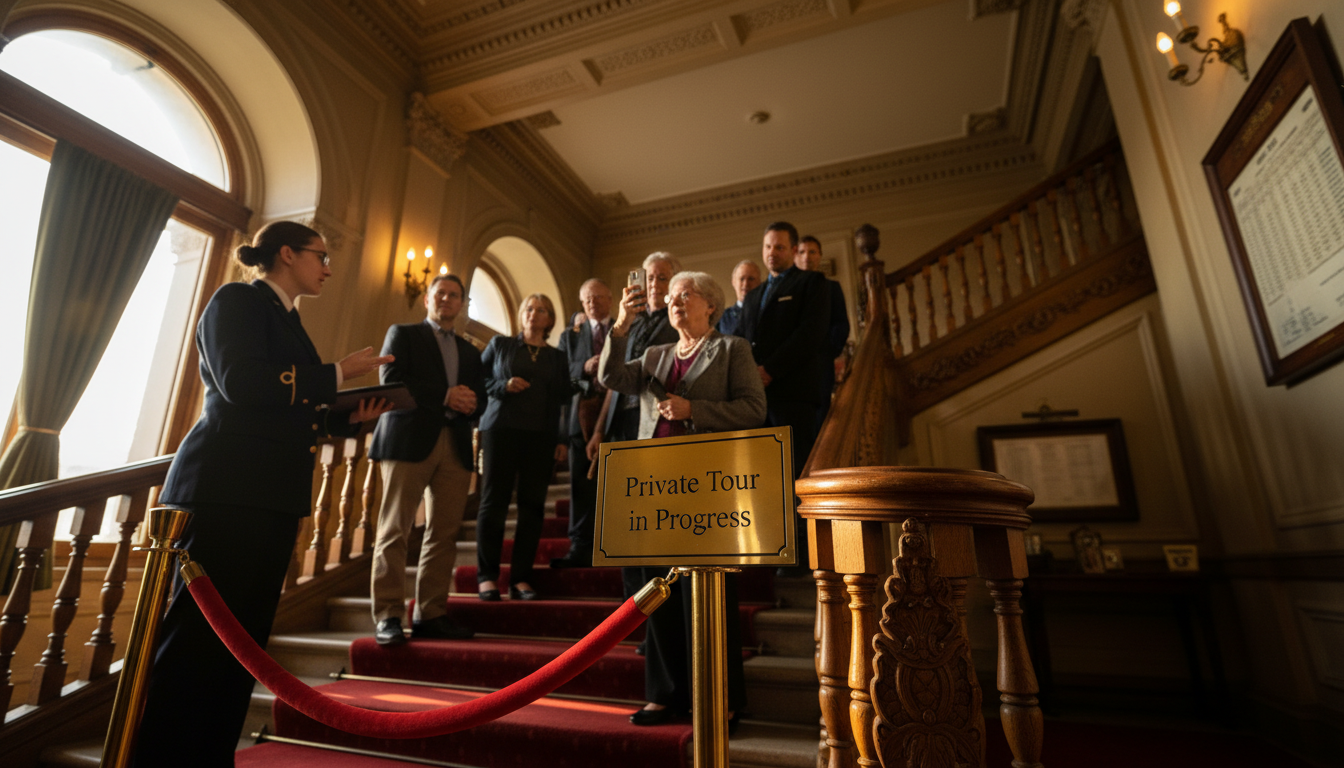
The Hotel Jerome in Aspen is partnering with the local historical society to run property tours. Before you dismiss this as boutique fluff, consider what you're missing if your property has any story worth telling.

Here's the thing nobody's telling you: if you're operating a property with 75+ years of history, you're sitting on untapped revenue and you don't even know it. The Hotel Jerome — a 140-year-old landmark in Aspen — just formalized tours with the Aspen Historical Society. Smart move. They're monetizing their story.

I've watched operators at historic properties treat their past like wallpaper. Nice to have, mentioned in marketing copy, maybe a few photos in the lobby. But they never ask the next question: who will pay to experience this? The answer is local historical societies, architecture groups, hospitality students, even competing properties doing comp shopping with context. The Jerome figured this out.

Let me be direct about the economics. A 60-minute tour priced at $25-35 per person with groups of 15-20 runs you maybe 90 minutes of staff time when you factor setup. That's $375-700 in revenue for labor cost under $50. Your marginal cost is almost nothing — you're already paying to light and climate-control those spaces. Run two tours a week and you're adding $40K-75K annually. Not transformational, but it's pure margin and it fills shoulder periods.

But the real value isn't the tour ticket. It's relationship-building with your community and creating another reason for locals to engage with your property who aren't staying overnight. Those historical society members? They have out-of-town guests. They plan events. They're retirement-age with disposable income. You're building your database and your local reputation while someone else (the historical society) does half the marketing.

The contrarian take: most "historic" hotel tours I've seen are terrible. Docent rambles about furniture for 45 minutes, skips the mechanical systems, never mentions the economics of restoration. If you're doing this, make it actually interesting. Talk about the renovation budget. Show the back-of-house. Explain why you kept the original windows or why you didn't. Give people the real story, not the sanitized brochure version.

Operator's Take

If you're running an independent with 50+ years of history in a drive-to or resort market, reach out to your local historical society this month. Propose a quarterly tour program where they handle registration and you provide the access. Price it at $30-40, split the revenue 70/30 in your favor, and make sure your F&B team has a post-tour package ready. This isn't just incremental revenue — it's community relations that actually pays.

Read full analysis → ← Show less
Source: Google News: Resort Hotels
End of Stories